Short answer
Restaurant refrigeration equipment usually includes a walk-in cooler at +1 °C to +4 °C (34–40 °F), a walk-in or reach-in freezer at −18 °C (0 °F) or colder, reach-in fridges, prep tables holding 5 °C (41 °F) or below, a blast chiller that cools food from +70 °C to +3 °C in about 90 minutes, an ice machine sized at about 1.25 kg per seat, and display fridges.
Key takeaways
- Every kitchen needs cold storage, cold holding at the line at 5 °C (41 °F) or below, and a fast way to cool cooked food.
- Most full-service restaurants above 50–60 seats need a walk-in cooler; 1.8 × 2.4 m (6 × 8 ft) to 2.4 × 3.0 m (8 × 10 ft) is typical.
- The FDA Food Code requires cooling from 57 °C to 21 °C in 2 hours and to 5 °C within 6 hours; a blast chiller does it in about 90 minutes.
- Plan about 1.25 kg (2.8 lb) of ice per restaurant seat per day, 1.75 kg per bar seat, plus 20% for peaks.
- Line equipment works in 35–43 °C (95–110 °F) heat near grills, so check the ambient rating before buying.
- Ice cream service needs soft serve at −6 °C to −4 °C, scooping cabinets at about −14 °C to −12 °C and storage at −20 °C to −25 °C.
The restaurant refrigeration equipment list
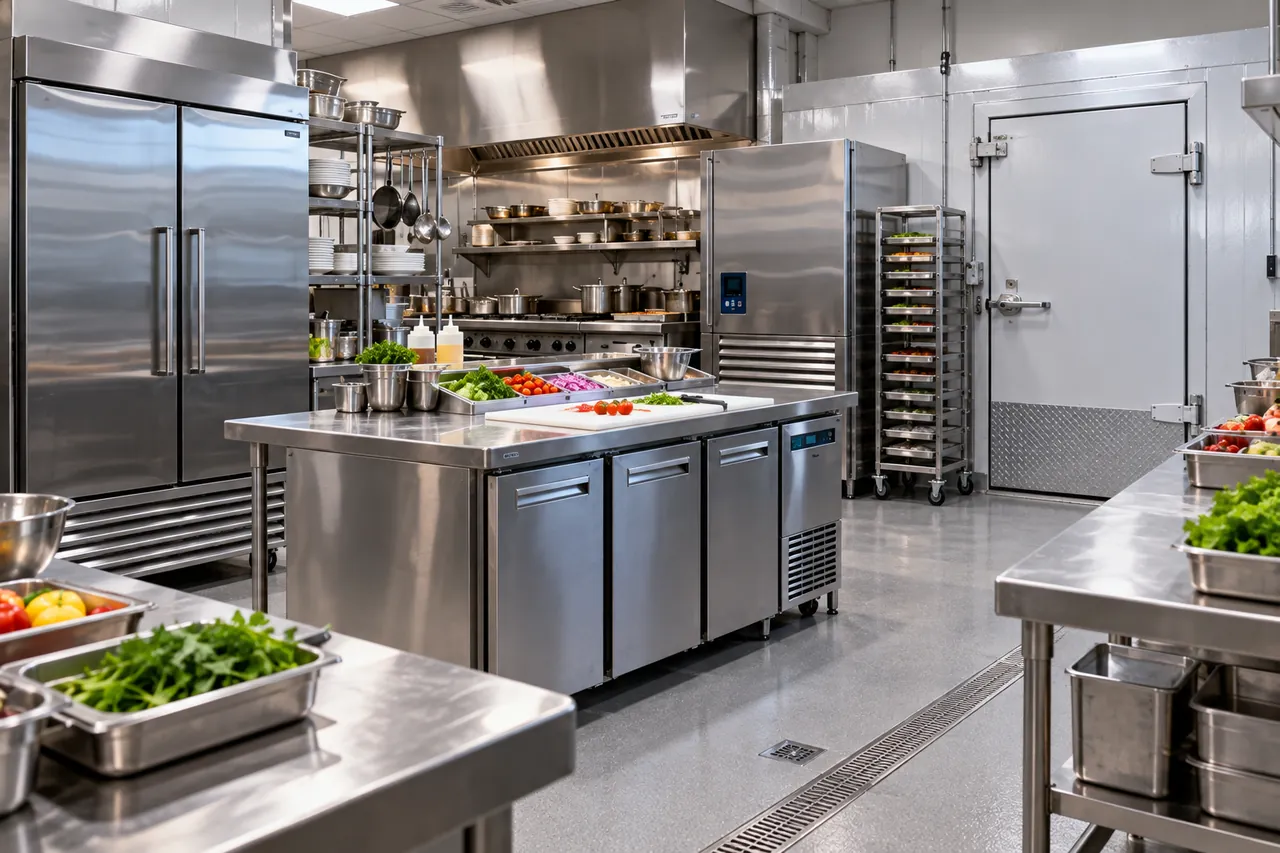
A full-service restaurant typically needs seven kinds of restaurant refrigeration equipment: a walk-in cooler, a walk-in or reach-in freezer, reach-in refrigerators, refrigerated prep tables and undercounter units on the cook line, a blast chiller, an ice machine, and front-of-house display or drinks fridges. Cafés and quick-service outlets drop some items, but every kitchen needs cold storage, cold holding at the line and a safe way to cool cooked food.
| Equipment | Where it goes | Temperature | Typical size |
|---|---|---|---|
| Walk-in cooler | Back of house, near delivery door | +1 °C to +4 °C (34–40 °F) | 1.8 × 2.4 m (6 × 8 ft) to 2.4 × 3.6 m (8 × 12 ft) |
| Walk-in or reach-in freezer | Back of house | −18 °C to −23 °C (0 °F to −10 °F) | 1–3 door reach-in, or 1.8 × 1.8 m (6 × 6 ft) walk-in |
| Reach-in refrigerator | Prep area | +1 °C to +4 °C | 1–3 doors, about 0.7–2.1 m (27–83 in) wide |
| Refrigerated prep table | Cook line, salad and pizza stations | 5 °C (41 °F) or below at the pans | 1–3 doors, 8–30 pans |
| Undercounter fridge / chef base | Under the line and grills | +1 °C to +4 °C | 0.7–1.8 m (27–72 in) wide |
| Blast chiller / shock freezer | Production kitchen | +70 °C to +3 °C in about 90 min | 5–20 trays |
| Ice machine and bin | Bar, service station or back of house | n/a | About 1.25 kg (2.8 lb) per seat per day |
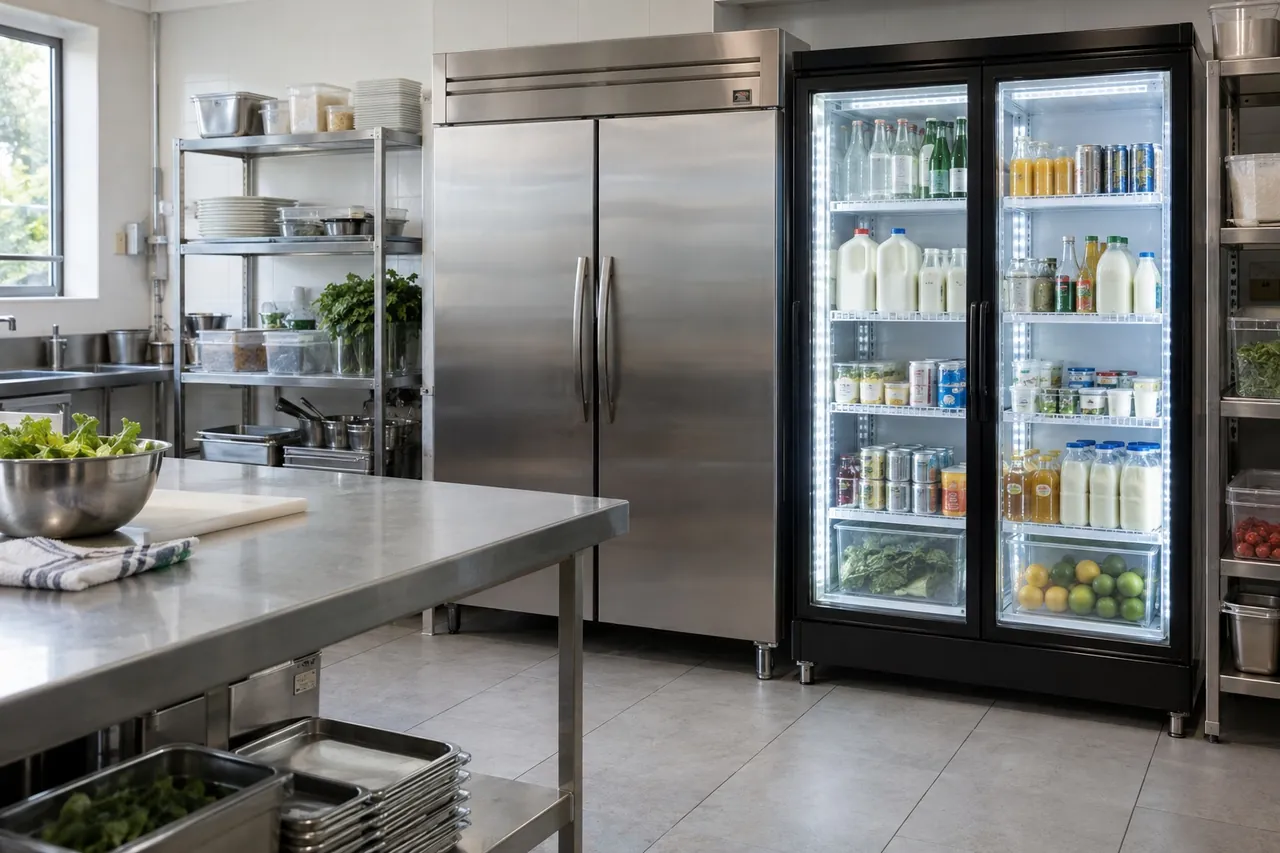
| Display or drinks fridge | Front of house, bar | +1 °C to +4 °C | 1–2 glass doors, or back bar cooler |
This is the kitchen-wide list. For detail on individual cabinets see the commercial refrigerator buying guide and the commercial freezer buying guide.
Does a restaurant need a walk-in cooler?
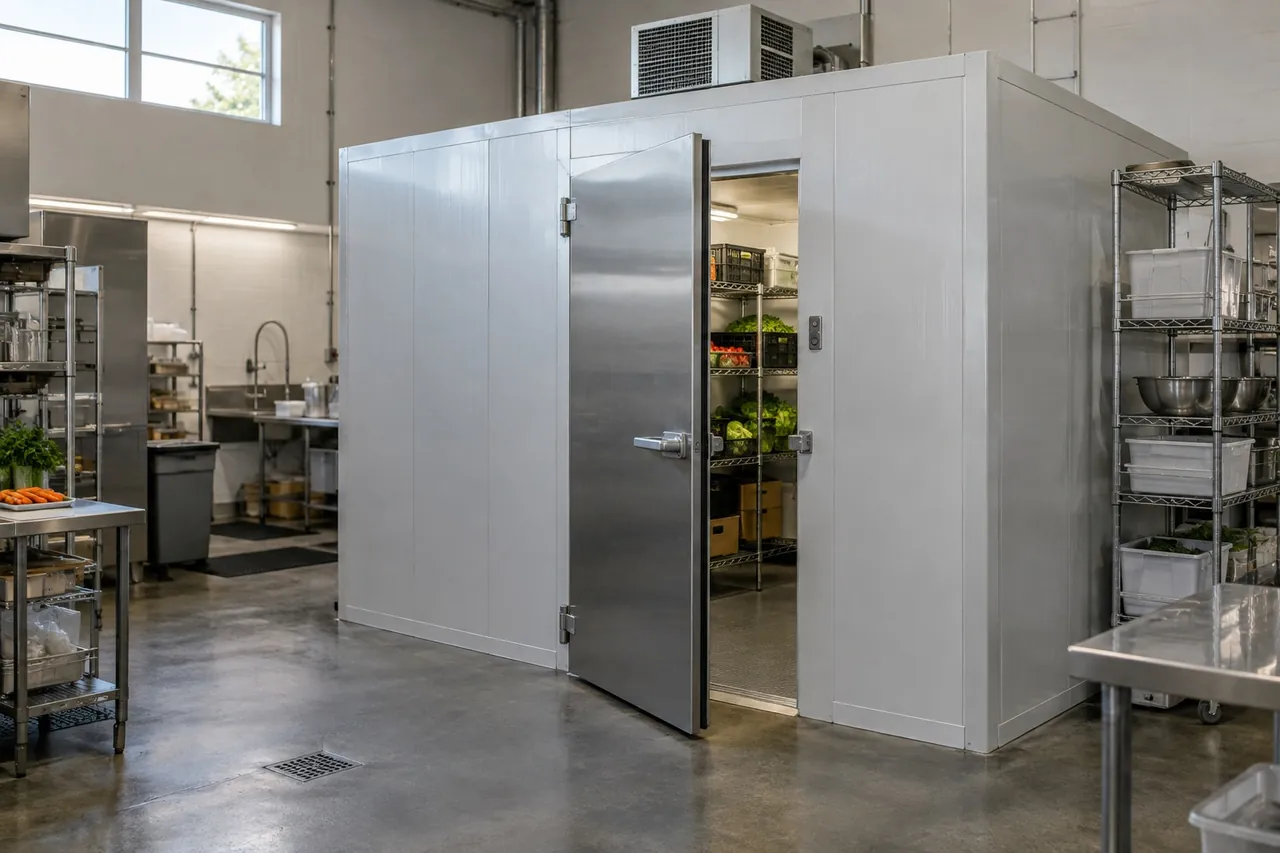
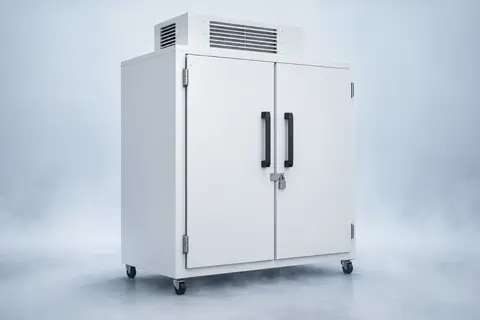
A restaurant needs a walk-in cooler once its chilled stock between deliveries no longer fits in about three reach-in doors, which for most full-service restaurants above 50–60 seats happens quickly. The walk-in is the main cooler in a restaurant: it takes deliveries in cases, holds meat, dairy and produce, and keeps reach-ins on the line small.
How to size a restaurant walk-in
- Estimate chilled stock per delivery cycle. Example: an 80-seat restaurant receiving produce and dairy three times a week holds about 400 kg (880 lb) of chilled stock at peak.
- Convert to shelf volume at about 250–350 kg of packed food per cubic metre of shelving: 400 kg ÷ 300 kg/m³ ≈ 1.3 m³ of shelving.
- Multiply by about 2–2.5 for aisle space and access: roughly 3 m³ of storage zone, which a 1.8 × 2.4 m (6 × 8 ft) walk-in with 2.2 m internal height (about 9.5 m³ gross) holds comfortably with room for growth.
- Size the refrigeration for the box with the cold room load calculator, allowing for frequent door openings.
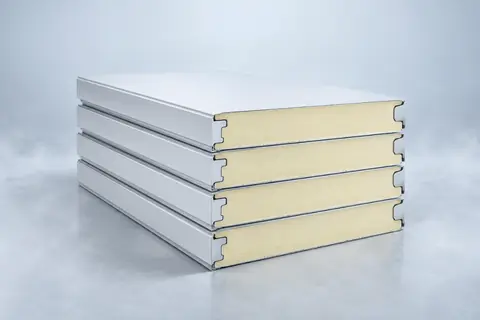
Be There supplies walk-in cooler and freezer kits with 75–200 mm PU or PIR panels, a hinged or sliding insulated door, matched condensing unit and evaporator, digital controller, lighting and fixings. A walk-in freezer needs thicker panels and an insulated floor; see walk-in cooler vs walk-in freezer and, for budgets, walk-in cooler cost.
A practical layout tip: put the walk-in cooler and freezer side by side with the freezer entered through the cooler only if the cooler door is wide and rarely blocked. Otherwise give each its own door from the corridor so the freezer door is not opened into a warm kitchen all day.
What refrigeration goes on the cook line?
The cook line needs kitchen refrigeration that holds ingredients at 5 °C (41 °F) or below within arm's reach: refrigerated prep tables at salad, sandwich and pizza stations, chef bases under griddles and charbroilers, and undercounter fridges or freezer drawers under the pass. The FDA Food Code sets 41 °F (5 °C) as the maximum cold-holding temperature for TCS food.
- Prep tables hold food pans in a refrigerated rail; the lid must be closed during quiet periods. See the prep table refrigerator guide.
- Chef bases are low refrigerated drawers designed to carry cooking equipment on top; they must be rated for the radiant heat of the line.
- Undercounter refrigerators fit below 864–914 mm (34–36 in) counters; choose front-breathing models when built in. See the undercounter refrigerator guide.
- Reach-ins in the prep area hold a day's mise en place; two-door reach-ins of about 1.3–1.4 m (52–55 in) are the common size.
Line equipment works in the hottest part of the building, often 35–43 °C (95–110 °F) near the grills, so check the ambient rating before buying. Be There does not manufacture prep tables or reach-ins; we focus on walk-ins, blast chillers, ice machines and display units, and our engineers can size the walk-in that feeds your line.
Why do restaurants need a blast chiller?
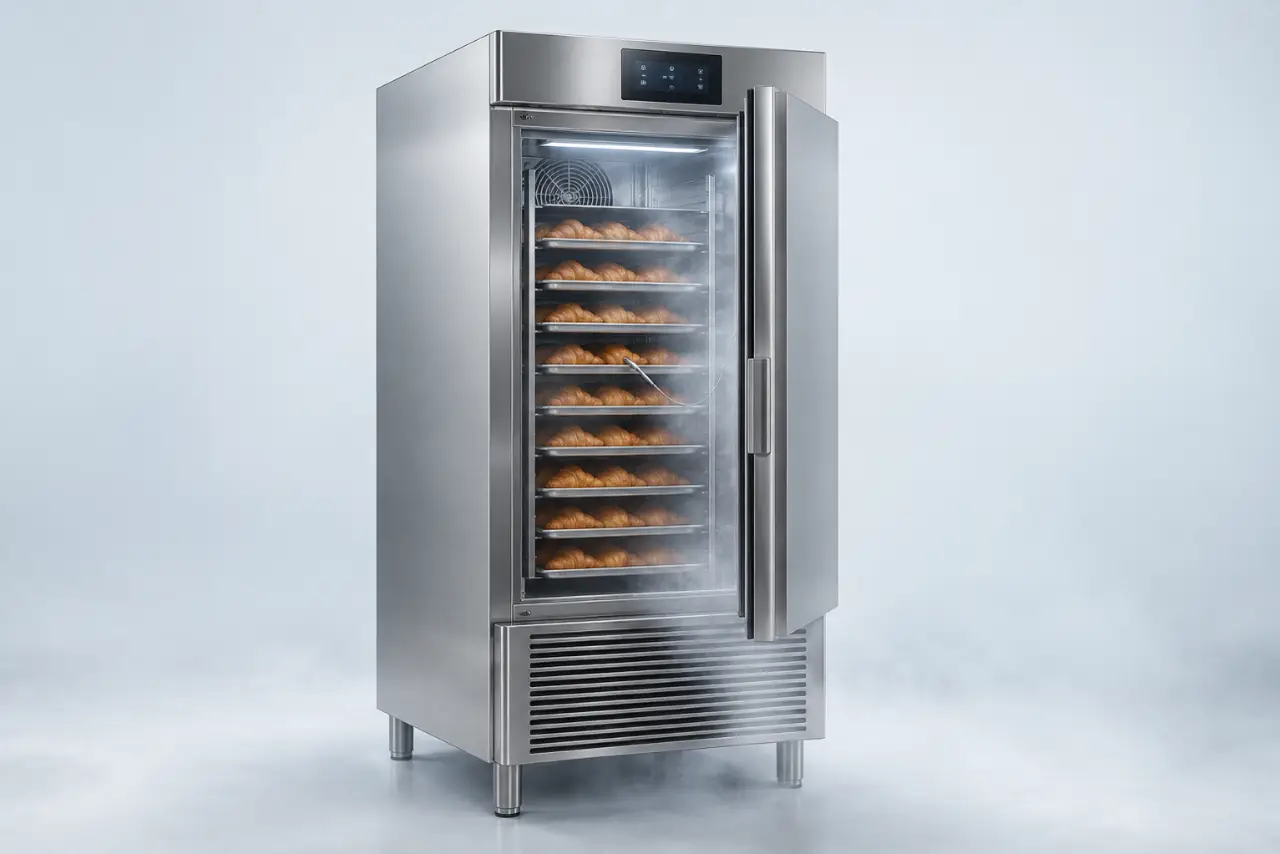
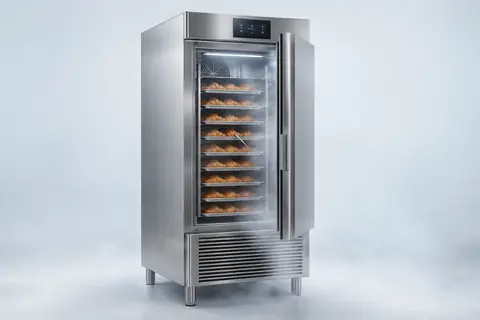
Restaurants that cook ahead need a blast chiller because a fridge cannot cool large batches fast enough to meet food safety rules. The FDA Food Code requires cooked TCS food to cool from 57 °C (135 °F) to 21 °C (70 °F) within 2 hours and to 5 °C (41 °F) within 6 hours in total; a blast chiller does the whole job in about 90 minutes.
Putting a 10 L pot of hot stock into a reach-in warms everything around it and can take most of a day to cool the centre. A blast chiller blows air at about −20 °C to 0 °C at high speed over shallow trays, using a core probe to end the cycle at +3 °C (37 °F). A shock freezer continues to −18 °C (0 °F) core in about 240 minutes, useful for portioned desserts, sauces and prepared meals.
Be There supplies reach-in and roll-in blast chillers and shock freezers from 5 to 20 trays. Read the 2-stage cooling method for the rules and blast chiller vs shock freezer to choose a model.
What size ice machine does a restaurant need?
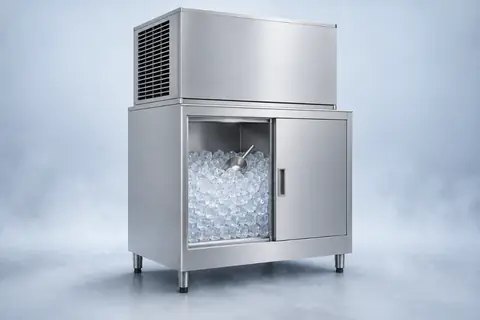
A restaurant needs about 1.25 kg (2.8 lb) of ice per seat per day, a bar about 1.75 kg (3.9 lb) per seat, plus 20% for peaks. An 80-seat restaurant therefore needs roughly 80 × 1.25 × 1.2 = 120 kg (265 lb) a day, or about 140 kg if the machine stands in a hot kitchen.
Choose half cube or full cube for drinks, nugget for soft drinks and healthcare-style service, and flake for seafood display and salad bars. Store at least half the daily demand in the bin. A small café fridge ice maker under the counter (25–60 kg per day) suits coffee shops making iced drinks. Use the ice machine size calculator, and see Be There cube ice machines (50–1,000 kg per 24 hours) and the full ice machine range up to 20 t per day.
Front-of-house fridges and café display cases
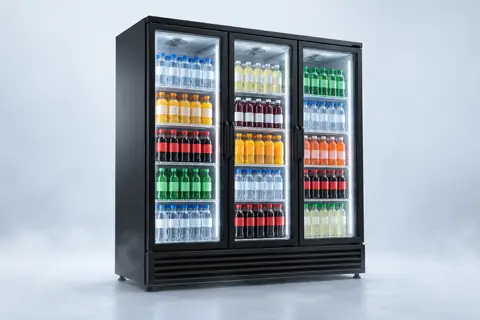
Front-of-house refrigeration sells as well as stores, so it needs glass, lighting and a tidy look: glass door drinks fridges, back bar coolers under the bar, and a café display case for cakes, sandwiches and salads at +2 °C to +5 °C (36–41 °F).
- Glass door display fridges for bottled drinks in counter-service restaurants. Be There display refrigerators come with one to four doors at +2 °C to +8 °C, LED lighting and an R290 option.
- Back bar coolers about 860–940 mm (34–37 in) high under the bar; see the back bar cooler guide.
- Café display cases and pastry showcases with gentle airflow; see the refrigerated display case guide.
Ice cream restaurant equipment
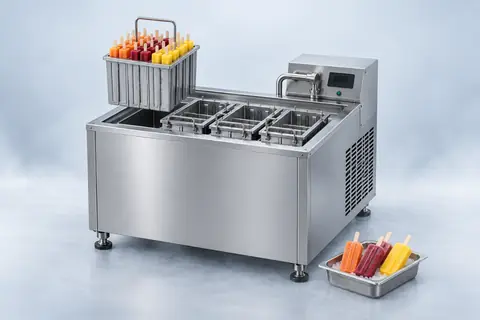
Ice cream restaurant equipment depends on the product: a soft serve machine for cones, sundaes and shakes; a dipping cabinet or display freezer for scooped hard ice cream; and a storage freezer at −20 °C to −25 °C (−4 °F to −13 °F) for tubs and novelties.
| Product | Machine or cabinet | Serving / holding temperature | Typical output |
|---|---|---|---|
| Soft serve and shakes | Tabletop or floor soft serve machine | −6 °C to −4 °C (21–25 °F) | 18–22 L/h tabletop; 25–36 L/h floor |
| Scooped hard ice cream | Dipping cabinet or glass-top display freezer | About −14 °C to −12 °C for scooping | Depends on number of tubs |
| Packaged novelties | Glass-top chest or upright display freezer | −18 °C to −24 °C (0 °F to −11 °F) | About 300–700 L chest; 400–1600 L upright |
| House-made gelato or sorbet | Batch freezer plus shock freezer | Served about −12 °C (10 °F) | Batches in 6–12 minutes |
Be There supplies soft serve machines with two flavours plus twist and refrigerated hoppers, glass-top and upright display freezers, and batch freezers for gelato. For a dedicated dessert outlet, see the ice cream shop equipment list.
Refrigeration needs by restaurant type
The same list scales up or down with the menu and seat count. These are typical starting packages, to be adjusted for delivery frequency and menu.
| Restaurant type | Cold storage | Line and service | Other |
|---|---|---|---|
| Café / coffee shop, 20–40 seats | 2-door reach-in, 1 reach-in or chest freezer | Undercounter fridge for milk, café display case | Undercounter ice maker 25–60 kg/day, drinks fridge |
| Quick service, 40–80 seats | Walk-in cooler 1.8 × 2.4 m, walk-in or 2-door freezer | Prep tables, chef bases | Ice machine 100–150 kg/day |
| Full service, 80–150 seats | Walk-in cooler 2.4 × 3.0 m, walk-in freezer 1.8 × 2.4 m | Prep tables, undercounters, 2–3 reach-ins | Blast chiller 5–10 trays, ice machine 150–250 kg/day, back bar coolers |
| Banqueting / central kitchen | Several walk-ins by product group | Roll-in reach-ins | Roll-in blast chiller and shock freezer, 250+ kg/day ice |
Restaurant cooler repair, used coolers and rentals
Most restaurant cooler repair calls come from dirty condenser coils, failing door gaskets, iced evaporators and blocked drains, all preventable with a monthly cleaning routine. Follow the commercial refrigeration maintenance checklist, and use the walk-in troubleshooting guide before calling a technician.
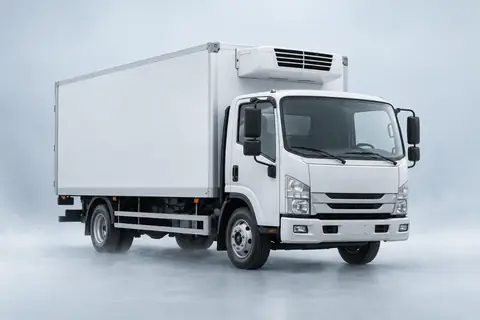
Used restaurant coolers can save money if they are under about half their service life, run on a refrigerant still serviceable in your market and pass a pull-down test; our used vs new guide lists the checks. Restaurant refrigeration rentals, such as a reefer container or mobile cold room, make sense for refurbishments, breakdowns and seasonal events, not as permanent storage.
How to choose restaurant refrigeration: checklist
Plan restaurant refrigeration from the menu and delivery schedule, then fit equipment to the space and the kitchen's heat.
- List chilled, frozen and ice needs per day from the menu and covers.
- Set delivery frequency and calculate stock per cycle for the walk-in cooler and freezer.
- Map each cook-line station and the cold-holding it needs at 5 °C (41 °F) or below.
- Add a blast chiller if you cook ahead in batches larger than a few litres.
- Size the ice machine at about 1.25 kg per seat (1.75 kg per bar seat) plus 20%.
- Check ambient ratings, voltage, drains, ventilation and condenser location.
- Confirm certification for your inspector (NSF and UL/ETL in the US, CE in Europe) and local service support.
Be There supplies the large items of a restaurant cold kitchen: walk-in cooler and freezer kits, blast chillers and shock freezers from 5 to 20 trays, cube, nugget and flake ice machines, glass door display fridges, display freezers and soft serve machines. Send your floor plan, seat count, menu type and voltage through the inquiry form and we will quote a matched package FOB, CIF or DDP.