Short answer
The FDA Food Code 2-stage cooling method requires cooked TCS food to cool from 135 °F (57 °C) to 70 °F (21 °C) within 2 hours, and from 135 °F to 41 °F (5 °C) or below within 6 hours in total. The temperature danger zone is 41–135 °F (5–57 °C).
The rule in one table
| Stage | From | To | Time limit |
|---|---|---|---|
| Stage 1 | 135 °F (57 °C) | 70 °F (21 °C) | Within 2 hours |
| Stage 2 | 70 °F (21 °C) | 41 °F (5 °C) or below | Within the remaining 4 hours (6 hours total) |
The rule comes from the US FDA Food Code, which most US states adopt for restaurants, caterers and institutional kitchens. If stage 1 is not met within 2 hours, the food must be reheated to 165 °F (74 °C) and the cooling restarted, or thrown away.
Why the danger zone matters
Bacteria that cause food poisoning, such as Clostridium perfringens and Bacillus cereus, grow fastest between about 70 °F and 125 °F. Cooked rice, beans, stocks, sauces, cooked meat and cut melons are classic TCS (time/temperature control for safety) foods. A large pot of chilli left on a bench can stay in this band for many hours because its centre loses heat slowly.
Cooling methods compared
| Method | How it works | Good for | Limits |
|---|---|---|---|
| Shallow pans | Spread food 2 inches (5 cm) deep or less, uncovered | Small batches | Takes shelf space; slow in a full fridge |
| Ice-water bath | Pot in a sink of ice water, stirred | Soups, sauces | Labour-intensive; needs lots of ice |
| Ice paddles / wands | Frozen paddle stirred through food | Stocks, liquids | Only for liquids |
| Adding ice as ingredient | Replace part of the water with ice | Soups, stocks | Recipe must allow it |
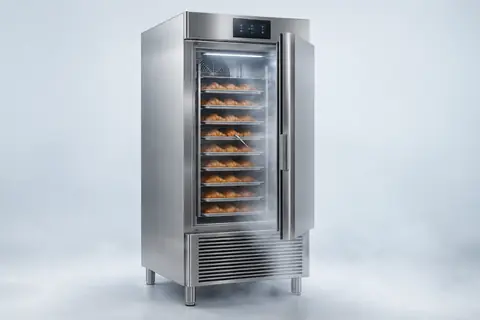
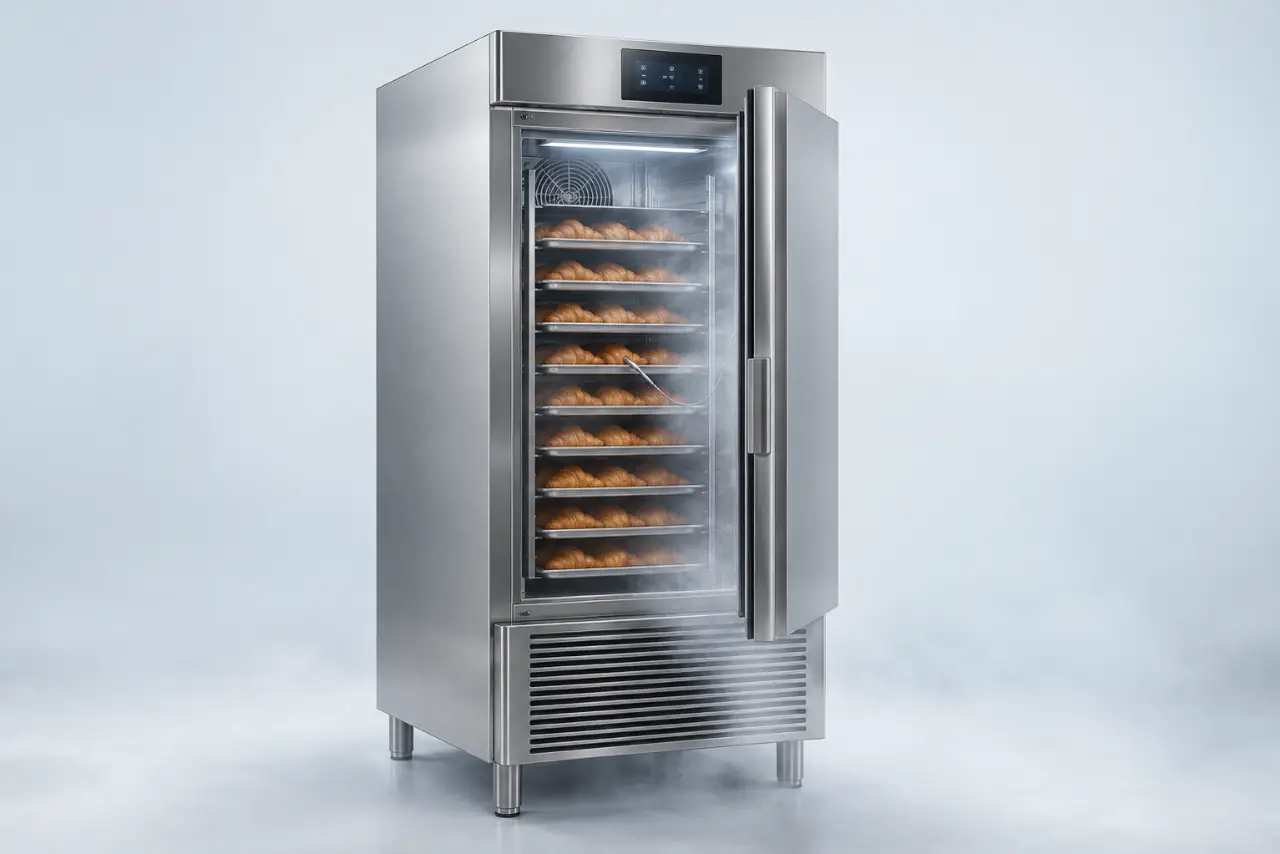
| Blast chiller | Cold air at high speed over pans; core probe controls the cycle | Any cooked food, large batches | Equipment cost; needs space and power |
How a blast chiller makes 2-stage cooling routine
A blast chiller blows air at roughly −10 °C to 0 °C (14–32 °F) over the food at high speed. Rated machines bring food from +70 °C to +3 °C (158 °F to 37 °F) in about 90 minutes, well inside both stages. A core probe in the thickest piece stops the cycle at the target and records the time, which gives you the evidence your HACCP plan and inspector ask for.
- Load food no deeper than 40–50 mm (about 2 inches) in GN pans.
- Do not cover pans until the core is below 41 °F.
- Pre-cool the empty cabinet before loading a full batch.
- Size the machine for your largest batch, with about 20% margin.
Logging and verification
Record the start time and temperature, the 2-hour reading and the final reading below 41 °F. Calibrate probe thermometers regularly in ice water (32 °F / 0 °C). Many blast chillers store cycle data and can print or export it, which saves paperwork.
Quick checklist
- Start cooling immediately after cooking.
- Portion large batches into shallow pans.
- Use a blast chiller, ice bath or ice paddle for stage 1.
- Check temperature at 2 hours: is it 70 °F or below?
- Reach 41 °F or below within 6 hours in total, then label and store.