Short answer
A walk-in freezer holds −18 °C to −25 °C (0 °F to −13 °F) and needs 100–150 mm (4–6 in) panels, an insulated floor, a heated door frame and a low-temperature condensing unit with electric defrost. A walk-in cooler, or walk-in refrigerator, holds about 0 °C to +5 °C (32–41 °F) with 75–100 mm panels and medium-temperature refrigeration.
Key takeaways
- A walk-in cooler is usually set at +1 °C to +3 °C (34–38 °F) to stay safely below the FDA Food Code limit of 5 °C (41 °F).
- A walk-in freezer is usually set at −18 °C to −23 °C (0 °F to −10 °F); ice cream storage often runs at −25 °C (−13 °F) or colder.
- Freezer panels are typically 100–150 mm thick versus 75–100 mm for coolers, and a freezer always needs an insulated floor.
- A freezer evaporator runs at about −28 °C to −32 °C and needs electric or hot-gas defrost several times a day; a cooler usually defrosts off-cycle.
- Putting the freezer door inside the cooler in a combination unit reduces warm, humid air entering the freezer.
What is the difference between a walk-in freezer and a walk-in refrigerator?
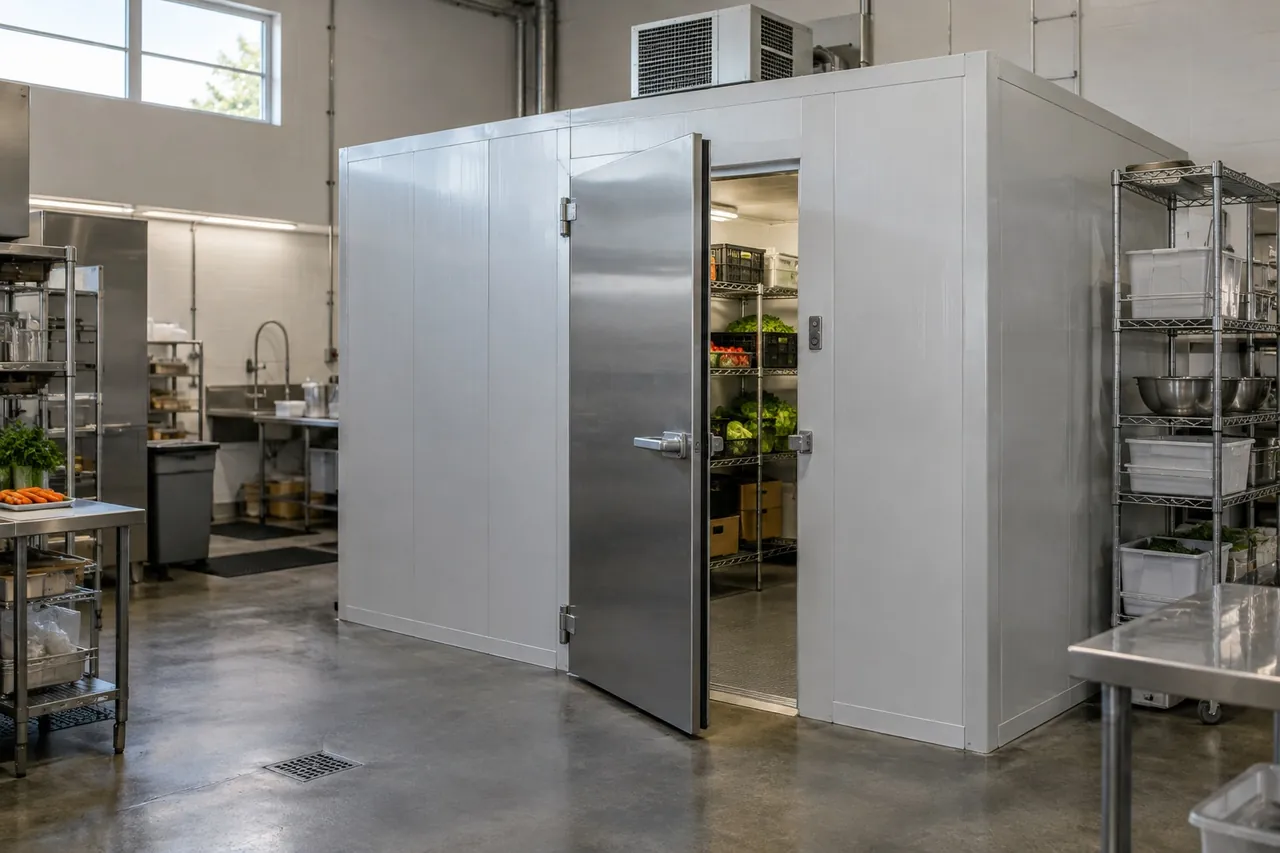
A walk-in freezer is an insulated room kept below −18 °C (0 °F) to store frozen food; a walk-in refrigerator (also called a walk-in fridge or walk-in cooler) is kept just above freezing, typically +1 °C to +5 °C (34–41 °F), to store fresh food and drinks. Both are built from the same type of insulated sandwich panels, but a freezer has to fight a temperature difference roughly twice as large.
| Feature | Walk-in cooler / fridge | Walk-in freezer |
|---|---|---|
| Room temperature | 0 °C to +5 °C (32–41 °F) | −18 °C to −25 °C (0 °F to −13 °F) |
| Panel thickness (PU/PIR) | 75–100 mm (3–4 in) | 100–150 mm (4–6 in) |
| Floor | Existing slab often acceptable | Insulated floor required; heave protection on larger ground slabs |
| Door | Standard gasket, optional heater | Heated frame and pressure-relief port |
| Evaporating temperature | About −10 °C to −5 °C | About −32 °C to −28 °C |
| Defrost | Usually off-cycle (fans run, compressor stops) | Electric or hot gas, typically 3–6 times a day |
| Relative cost (same size) | Baseline | Typically 20–40% higher |
Be There supplies both as complete walk-in cooler and freezer kits: chillers for 0 °C to +10 °C, freezers for −18 °C to −25 °C and blast rooms down to −35 °C.
How cold is a walk-in freezer, and what is the walk-in cooler temperature range?
Walk-in freezer temperature: most food-service and retail freezer rooms are set between −18 °C and −23 °C (0 °F to −10 °F). Ice cream and some seafood are kept colder, around −25 °C (−13 °F) or below, to keep texture stable. A freezer room is not designed to freeze large amounts of warm product quickly; that is the job of a blast freezer.
Walk-in cooler temperature range: the FDA Food Code requires cold-held TCS food at 5 °C (41 °F) or below, so most walk-in coolers are set at +1 °C to +3 °C (34–38 °F) to leave a margin for door openings. Produce rooms sometimes run slightly warmer with high humidity; beer and beverage coolers often run at +1 °C to +4 °C.
Whatever the set point, monitor it. A digital controller shows the air temperature at the evaporator; a separate walk-in cooler temperature sensor with Wi-Fi or a data logger records the room continuously and sends an alarm if the temperature rises, for example after a door is left open or a compressor fails. Typical alarm settings are about +8 °C (46 °F) for coolers and −12 °C (10 °F) for freezers, with a delay so that defrost cycles do not trigger false alarms.
Walk-in freezer panels, floor and door
Walk-in freezer panels and walk-in freezer wall panels use the same construction as cooler panels: a rigid PU or PIR foam core bonded between two metal skins, joined with cam-locks or tongue-and-groove joints. The difference is thickness. With a core conductivity of about 0.022 W/(m·K), 100 mm suits most coolers and 120–150 mm most freezers. Our panel thickness guide shows the heat-gain numbers, and Be There supplies cold room panels from 50 to 200 mm.
Walk-in freezer flooring
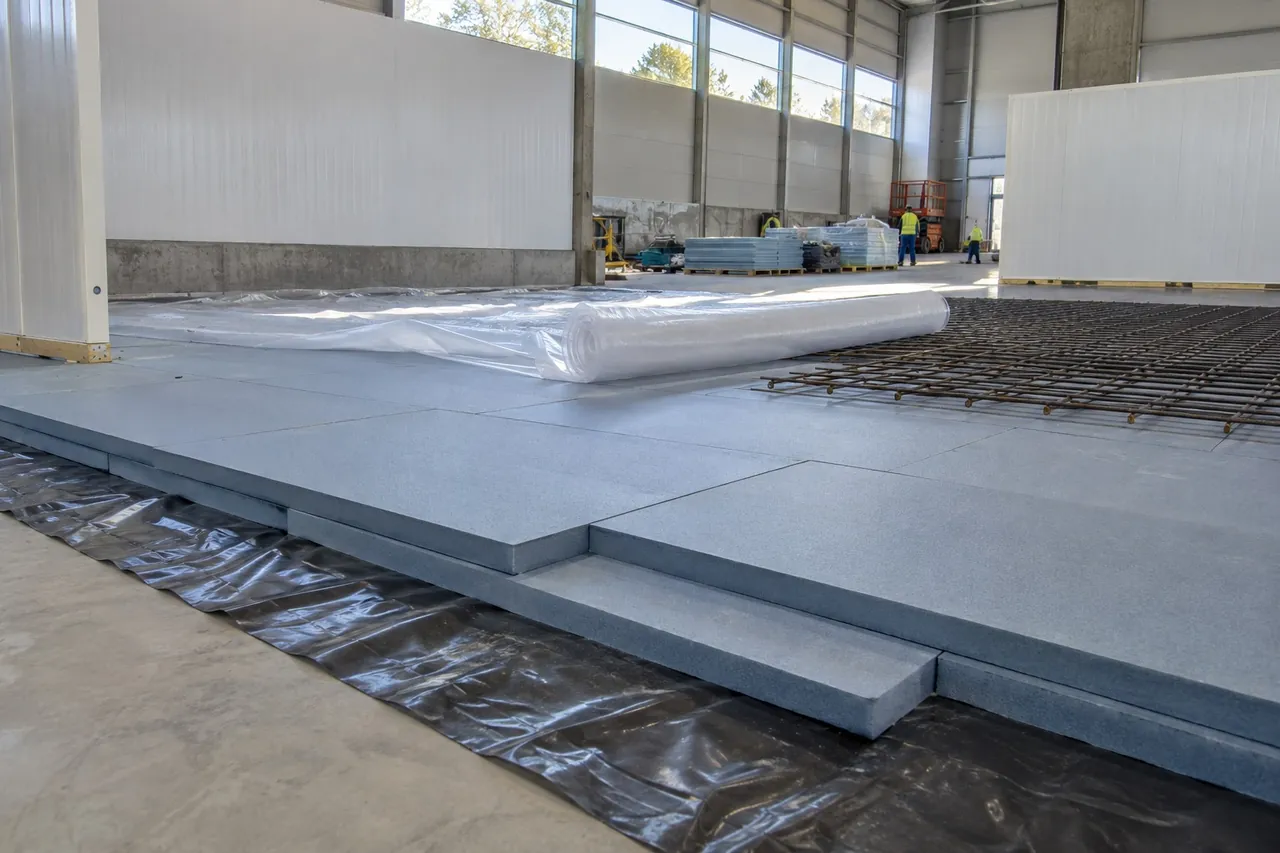
A cooler can often stand on an existing level concrete floor. A freezer cannot: without floor insulation, cold passes into the slab, the floor sweats outside the room and, on a ground slab, moisture in the soil can eventually freeze and lift the floor (frost heave). Small freezers use insulated floor panels or an insulated slab; large freezer rooms on grade add underfloor heating or ventilation. See our guide to walk-in cooler and freezer floors. Anti-slip walk-in freezer floor mats help on any floor where frost and spills occur.
Walk-in freezer door
A freezer room door has a heater wire in the frame so the gasket does not freeze to it, and a pressure-relief port that lets air equalise after the door closes. Without one, the door can be hard to reopen for a few minutes.
Walk-in freezer condensing unit, evaporator and compressor
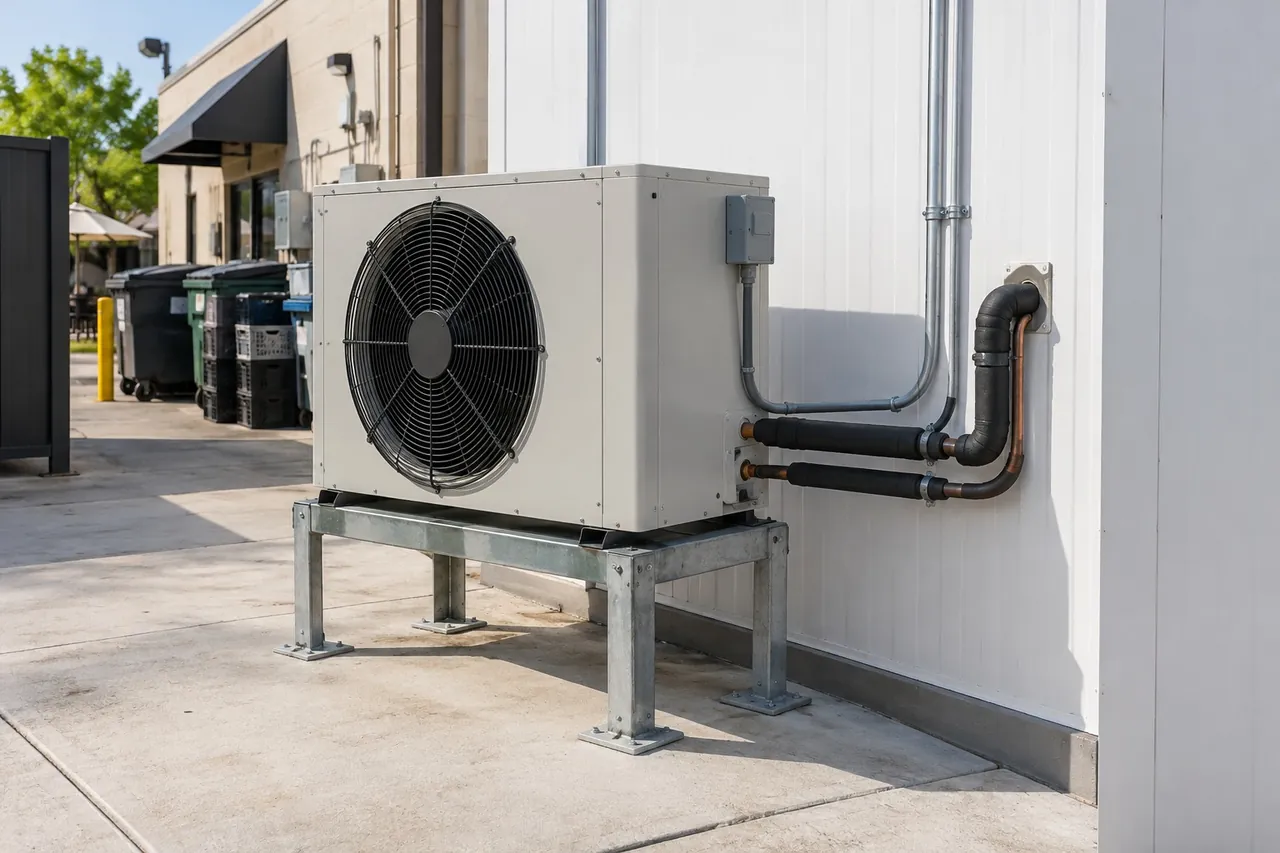
Every walk-in has the same four refrigeration parts: a compressor, a condenser (together usually called the condensing unit), an expansion device and an evaporator coil with fans inside the room. What changes is the temperature they are built for.
- Compressor: a walk-in fridge compressor is a medium-temperature model; a compressor for a walk-in freezer is a low-temperature model, usually larger in horsepower for the same box because each kilowatt of cooling at −30 °C evaporating needs more compressor work.
- Walk-in freezer condenser: rejects the room heat plus the compressor heat, so it must have free airflow and be sized for the hottest ambient on site.
- Walk-in freezer evaporator coil: wider fin spacing (often 6–7 mm) to tolerate frost, plus electric defrost heaters in the coil and drain pan, and a heated drain line.
- Controls: a defrost timer or demand defrost, fan delay after defrost and a temperature controller.
A walk-in freezer condensing unit and evaporator should always be selected together for the same refrigerant and capacity. Small rooms can use a monoblock (all-in-one) walk-in freezer refrigeration unit; larger rooms use a split system with an outdoor condensing unit. Our guide to walk-in cooler refrigeration systems compares the options.
Walk-in freezer and fridge combinations
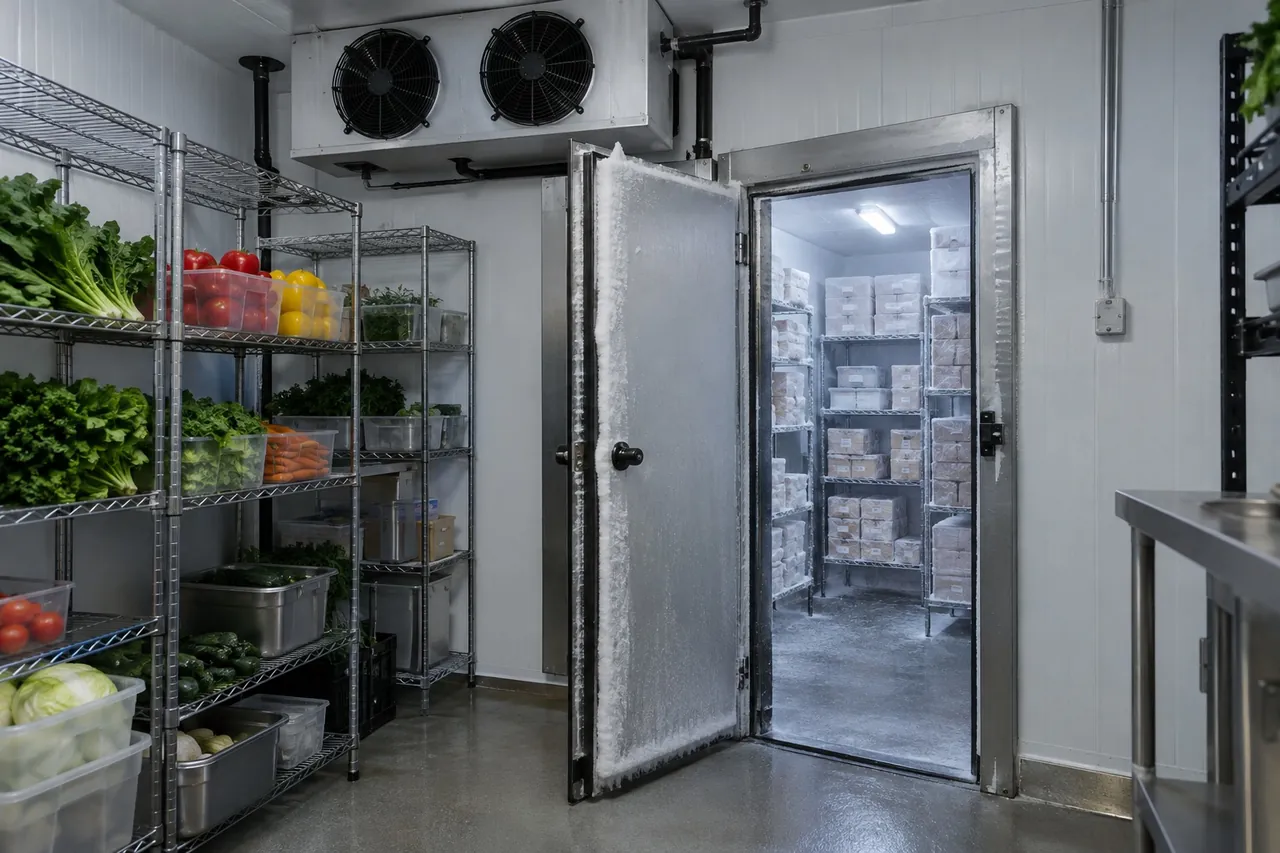
Many restaurants and shops need both, and a walk-in freezer and fridge combination built as one box saves space and money. The two rooms share a central partition wall, which should be freezer-grade thickness because it separates −20 °C from +2 °C.
There are two common layouts:
- Freezer entered through the cooler. The cooler acts as an airlock, so the air entering the freezer is cold and drier. Door heaters and defrost work less, and frost builds up more slowly. This is usually the better arrangement.
- Side-by-side with separate doors. Both rooms open to the kitchen or corridor. It is better for traffic when different staff use each room, but the freezer receives warm, humid air at every opening.
Each room needs its own refrigeration system and controller. Some installations use a single condensing unit with two compressors, but separate systems are simpler to service and keep one room running if the other fails.
The cold room and freezer room together typically split the floor area according to the menu or product mix: a full-service restaurant often needs more chilled than frozen space, while a frozen food distributor needs the opposite. Size each room from how much product it holds and receives, not from a rule of thumb.
Small, restaurant, outdoor and industrial walk-in freezers
Walk-in freezers range from home rooms to warehouse cold stores. Typical uses by size:
| Type | Typical size | Notes |
|---|---|---|
| Small walk-in freezer / home walk-in freezer | 6×6 to 8×8 ft (1.8–2.4 m) | Single-phase monoblock is common; insulated floor panels |
| Restaurant walk-in freezer | 8×8 to 10×12 ft (2.4–3.6 m) | Often combined with a cooler; split system with outdoor condenser |
| Supermarket / distributor freezer room | 12×12 to 20×40 ft (3.6–12 m) | 150 mm panels, sliding door, multiple evaporators |
| Industrial walk-in freezer | Above about 200 m² (2,000 ft²) | Insulated, heated or ventilated slab; designed by a refrigeration engineer |
An outdoor walk-in freezer or exterior walk-in freezer needs a weatherproof roof with a slope or rain cap, sealed external joints, a condensing unit rated for the local summer ambient, and in cold climates crankcase heaters and head-pressure control. Mobile walk-in freezers and walk-in freezer trailers use the same principle on wheels for events or temporary storage.
A walk-in fridge for home or a residential walk-in refrigerator is usually small, 6×6 to 6×8 ft, and the main concerns are noise and heat; a remote condensing unit outside keeps the room quiet. Luxury walk-in fridges often add glass fronts and stainless or wood finishes, but use the same panel and refrigeration principles.
Walk-in refrigerator repair and walk-in freezer maintenance
Most walk-in refrigerator repair and commercial walk-in freezer repair calls come from a short list of causes, and most can be prevented with routine maintenance:
- Iced evaporator coil: failed defrost heater, timer or termination sensor, or a door left open. Freezers suffer more than coolers.
- High head pressure: a dirty or blocked condenser, or a failed condenser fan.
- Short cycling or warm room: low refrigerant charge from a leak, or a failing compressor contactor.
- Water or ice on the floor: frozen drain line (freezers), damaged door gasket or failed door heater.
- Panel damage: impact from trolleys letting moisture into the foam.
A practical walk-in freezer maintenance routine: check and log temperatures daily, inspect door gaskets and close the door weekly, clean condenser coils every 1–3 months depending on dust, and have a technician check defrost operation, refrigerant charge, electrical connections and drains every 6 months. Commercial walk-in freezer parts that wear most are door gaskets, door heaters, fan motors, defrost heaters and contactors; keep spares for remote sites.
For a full schedule, see our commercial refrigeration maintenance checklist. Walk-in refrigerator service and repair is done by local refrigeration technicians; ask us for a recommended spare parts list when you order a Be There kit.
How to choose between a walk-in cooler and a walk-in freezer
Decide by what you store and how it arrives:
- List products and their storage temperatures. Fresh meat, dairy, produce and drinks go in a cooler at +1 °C to +5 °C; frozen food in a freezer at −18 °C or below.
- Estimate volume and daily intake. Allow space for shelving and aisles; usable storage is typically 40–60% of the room volume.
- Check whether you need a combination. If you need both, plan a freezer entered through the cooler.
- Choose panel thickness, floor and door to match the temperature, as set out above.
- Size the refrigeration from the calculated heat load with our cold room calculator, not from a horsepower rule of thumb.
- Confirm site conditions: indoor or outdoor, maximum ambient, power supply and where the condensing unit will go.
Modular walk-in freezer and cooler rooms are supplied as kits that can be enlarged or moved later. To get a quotation for a walk-in freezer, walk-in cooler or combination room, send your sizes, temperatures and power supply through our inquiry form.