Short answer
An undercounter refrigerator is a fridge built to fit beneath a standard 34–36 in (864–914 mm) counter. Residential and bar models are usually 15, 18 or 24 in (381–610 mm) wide and about 24 in deep; commercial undercounter refrigerators run 27–72 in (686–1,829 mm) wide and 29–32 in deep, holding 33–40 °F (+1 °C to +4 °C).
Key takeaways
- Most undercounter fridges are 32–34.5 in (813–876 mm) tall so they fit under a 34–36 in (864–914 mm) worktop.
- Commercial undercounter refrigerators come in 27, 48, 60 and 72 in (686–1,829 mm) widths, usually with a 29–32 in (737–813 mm) depth.
- Built-in units must be front-breathing; a rear-venting mini fridge boxed into a cabinet overheats and fails early.
- An undercounter freezer should hold −18 °C (0 °F) or colder; commercial models typically reach −18 °C to −22 °C (0 °F to −8 °F).
- ADA-compliant undercounter refrigerators are usually about 32 in (813 mm) tall to fit under a counter no higher than 34 in (864 mm).
What is an undercounter refrigerator?
An undercounter refrigerator is a refrigerator designed to sit beneath a worktop, bar top or cabinet run instead of standing as a full-height cabinet. Because it lives under a counter, it is short (usually 32–34.5 in, 813–876 mm tall), it breathes through the front kick plate, and its top is either a finished worktop or a plain lid hidden by the counter above.
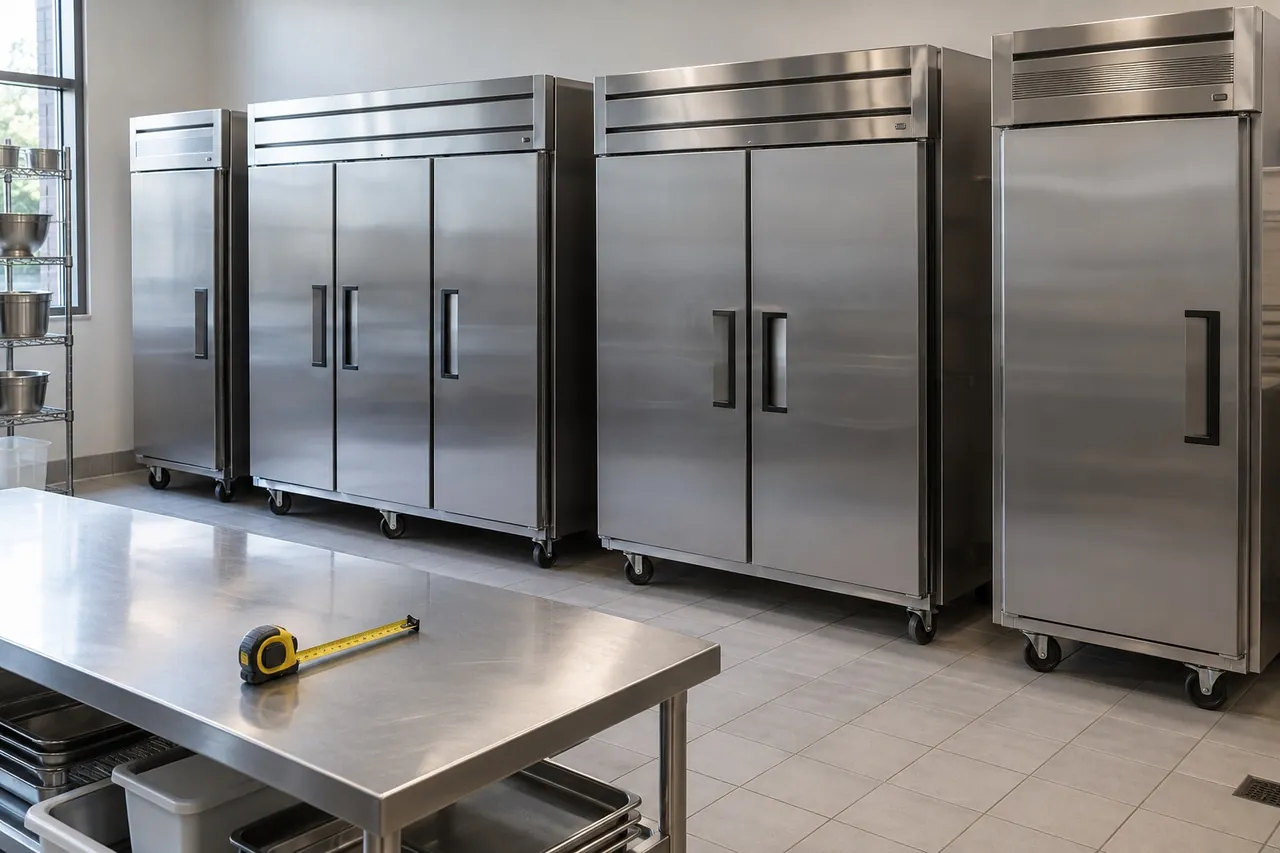
There are two broad families. A residential or bar under counter fridge is usually 15–24 in (381–610 mm) wide and holds drinks, garnishes or snacks. A commercial undercounter refrigerator (also called a reach-in undercounter, undercounter reach in cooler or lowboy fridge) is 27–72 in (686–1,829 mm) wide, built in stainless steel, and keeps prepped food at the cook line at 33–40 °F (+1 °C to +4 °C).
Undercounter units save floor space and keep ingredients within one step of the person using them. They are standard on restaurant lines, in bars, coffee shops, hotel pantries, offices and outdoor kitchens. Their limits are capacity (roughly 3–20 cu ft, 85–570 L) and heat: they sit in the hottest, tightest spots in a building, so ventilation and ambient rating matter more than on any other fridge.
This guide covers undercounter refrigerator dimensions, door and drawer layouts, under counter freezers, installation and how to choose.
Undercounter refrigerator dimensions: standard widths, heights and depths
Before you shortlist models, measure the opening: width, height under the counter, depth to the wall, and the swing space in front. Typical under counter fridge dimensions are:
| Width | Typical height | Typical depth | Typical capacity | Common use |
|---|---|---|---|---|
| 15 in (381 mm) | 34 in (864 mm) | 23–24 in (584–610 mm) | 2.5–3 cu ft (70–85 L) | Bars, ice or drink niches |
| 18 in (457 mm) | 34 in | 23–24 in | 3–3.5 cu ft (85–100 L) | Offices, home bars |
| 24 in (610 mm) | 34 in | 23–24 in | 4.5–5.5 cu ft (130–155 L) | Most residential and hospitality |
| 27–30 in (686–762 mm), 1 door | 30–34 in (762–864 mm) | 29–32 in (737–813 mm) | 6–7 cu ft (170–200 L) | Small commercial kitchens |
| 36 in (914 mm) | 30–34 in | 24–30 in | 7–9 cu ft (200–255 L) | Bars, pantries |
| 48 in (1,219 mm), 2 doors | 30–34 in | 29–32 in | 11–13 cu ft (310–370 L) | Restaurant lines |
| 60–72 in (1,524–1,829 mm), 2–3 doors | 30–34 in | 29–32 in | 15–20 cu ft (425–570 L) | Busy cook lines |
In Europe and many export markets, gastronorm (GN) counters are common: about 850–900 mm (33.5–35.5 in) high, 600 or 700 mm (24 or 27.5 in) deep and roughly 1.35, 1.8 or 2.25 m long for two, three or four sections. A GN 1/1 pan is 530 × 325 mm.
Heights above include feet or castors, which add 1–6 in (25–150 mm). Check whether the height you are quoted includes them. A 24 inch undercounter refrigerator is the most common residential size; the smallest under counter fridge widths are 15 in.
Door, drawer or lowboy? Types of under counter fridge
The layout you choose decides how fast staff can work.
| Type | How it works | Best for | Watch out for |
|---|---|---|---|
| Solid door undercounter | One to three hinged doors over wire shelves | Bulk prep storage, lowest cost | Door swing in narrow aisles |
| Drawer refrigerator | Two to six pull-out drawers sized for food pans | Cook lines, fast access without bending | Higher price; drawer runners need care |
| Lowboy / chef base | Low drawer fridge, 20–26 in (508–660 mm) tall, with a reinforced top | Griddles or charbroilers placed on top | Must be rated for equipment on top |
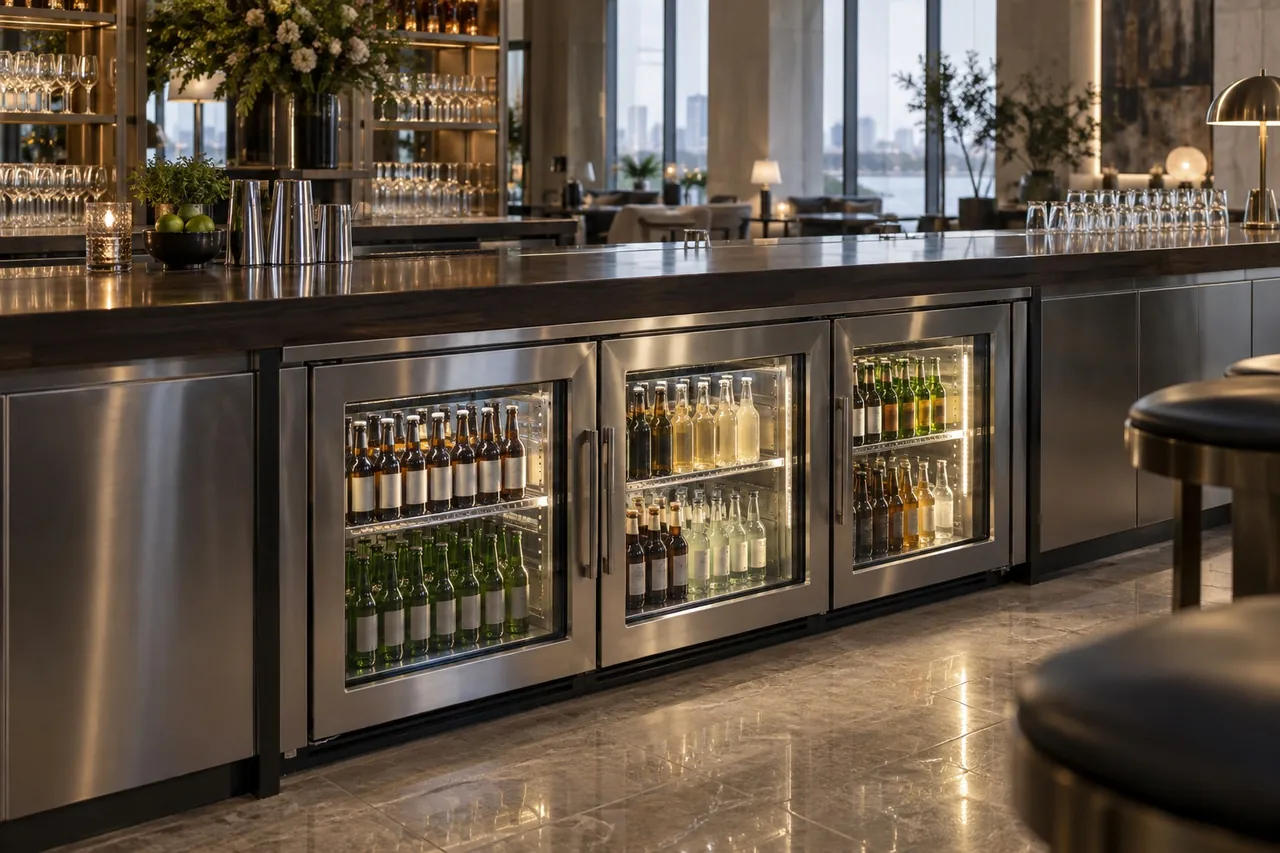
| Glass front undercounter fridge | Glass door, LED light | Bars, drinks, front-of-house display | More heat gain than solid doors |
| Shallow depth refrigerator | Depth 16–20 in (406–508 mm) | Bars, tight back counters | Less capacity per foot of width |
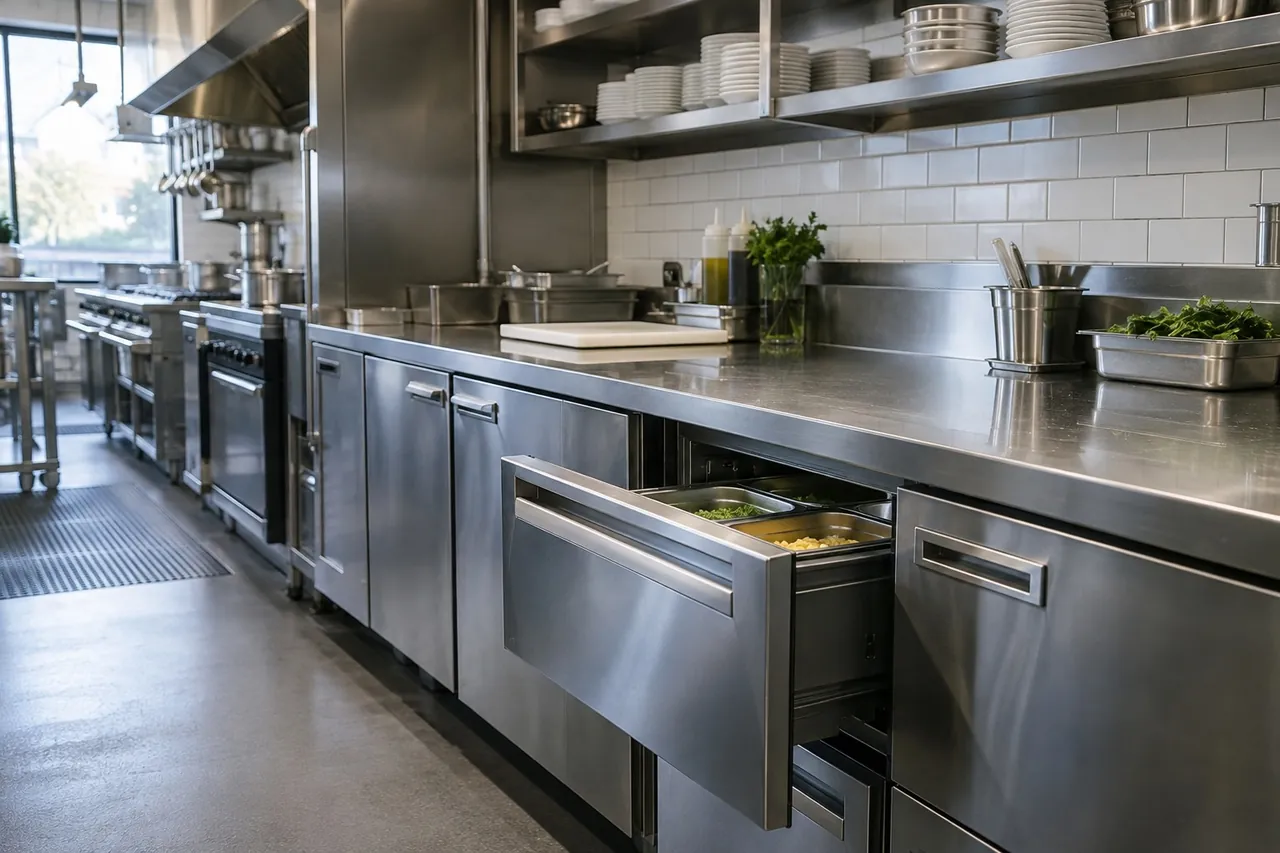
A drawer refrigerator (fridge drawers) lets a cook see and reach everything at once, and drawers lose less cold air than a door because only one drawer is opened. Under counter fridge drawers usually take 4–6 in (100–150 mm) deep GN or hotel pans. A two drawer refrigerator is about 27–36 in wide; four- and six-drawer units are 48–72 in.
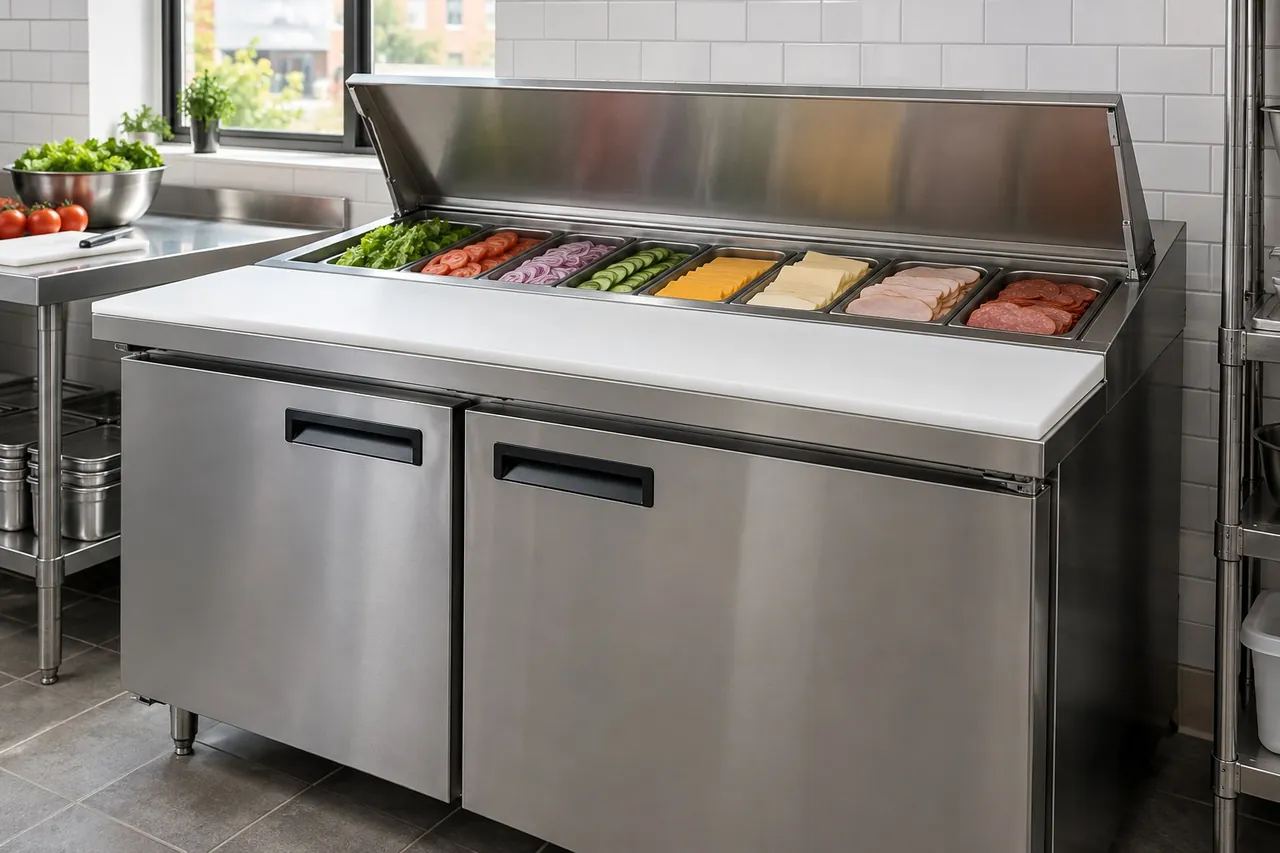
A lowboy refrigerator or low boy cooler sits lower than a counter so cooking equipment can go on top. Check the maximum top load and heat shielding. If your line also needs a refrigerated pan rail for toppings, see our refrigerated prep table guide; for bars, a glass front undercounter fridge or back bar cooler is the usual choice.
Under counter freezers and fridge-freezer combos
An under counter freezer uses the same footprint as an undercounter fridge but holds −18 °C (0 °F) or colder. Commercial undercounter freezers typically pull down to −18 °C to −22 °C (0 °F to −8 °F) and come with doors or drawers; a drawer freezer undercounter unit is popular for fries, proteins and ice cream at the line.
Points that matter for freezers more than fridges:
- Defrost. Frost-free (auto-defrost) models use fan coils and timed heaters; manual-defrost units are cheaper and colder but need regular defrosting. Our frost-free vs manual defrost guide explains the trade-off.
- Door openings. Busy freezers recover slowly. Drawers and good gaskets help.
- Under counter deep freezer. There is no true chest freezer that fits under a counter; a small chest freezer is usually 33–36 in (838–914 mm) tall and opens from the top, so it needs clear space above.
An under counter fridge and freezer combo gives you one fridge and one freezer compartment in a single cabinet, usually 48–60 in wide with separate compressors or a shared one. Two-drawer refrigerator freezer units for homes split one 24 in cabinet into a fridge drawer and a freezer drawer. They are convenient, but each compartment is small. For a full comparison of dual-temperature cabinets, see our guide to commercial fridge-freezer combos.
Some home freezer drawers include an ice maker; for commercial ice, a dedicated undercounter ice machine makes far more ice.
Built-in, under cabinet and outdoor installation: ventilation rules
Most undercounter failures are heat failures. The compressor rejects heat through a condenser; if that hot air cannot escape, the unit runs constantly, warms up and burns out.
- Front-breathing for built-in. A built in mini fridge or under cabinet mini fridge boxed in on three sides must draw and exhaust air through the front grille. A freestanding mini fridge with a rear coil is not designed for this and will overheat.
- Clearances. Follow the installation manual. Freestanding commercial units typically need 2–4 in (50–100 mm) at the back and sides; front-breathing units can be fitted tight but need the kick plate kept clear.
- Panel ready. A panel ready under counter fridge accepts a custom cabinet door front. Check the door and hinge load rating.
- Ambient temperature. Cook lines can exceed 32 °C (90 °F). Commercial units are usually rated to 38–43 °C (100–110 °F) ambient; many residential units are rated only to about 32 °C (90 °F).
- Outdoor use. An outdoor undercounter refrigerator or exterior undercounter refrigerator needs a weather-rated cabinet, sealed electrics and an ambient rating that covers your summer. Read our outdoor refrigerators and freezers guide before buying.
- Levelling and drainage. Level the cabinet so doors close; frost-free units need the condensate tray or drain accessible.
Power the unit from its own correctly rated socket, not an extension lead, and allow access for cleaning the condenser every one to three months.
Commercial vs residential: which undercounter fridge do you need?
Search results for the best undercounter refrigerator mix home, bar and restaurant models, but they are built for different jobs.
| Feature | Residential / mini fridge | Commercial undercounter |
|---|---|---|
| Typical width | 15–24 in (381–610 mm) | 27–72 in (686–1,829 mm) |
| Cabinet | Painted steel or stainless door, plastic liner | Stainless steel inside and out |
| Ambient rating | Often up to about 32 °C (90 °F) | Typically 38–43 °C (100–110 °F) |
| Recovery after door opening | Slow | Fast, forced-air coil |
| Food safety listing | Usually none | NSF/ANSI 7 in the US, CE or national mark elsewhere |
| Typical temperature | +3 °C to +5 °C (37–41 °F) | +1 °C to +4 °C (33–40 °F) |
A residential or under counter mini fridge is enough for an office, hotel room, meeting room or home bar where the door opens a few times an hour. A commercial undercounter fridge is required wherever a health inspector expects TCS food to stay at or below 41 °F (5 °C), the door opens dozens of times during service, or the kitchen is hot. In the US, inspectors look for NSF/ANSI 7 on refrigerators used for food in commercial kitchens.
The best under counter fridge for a business is the one that holds temperature at your real kitchen ambient, fits the opening with the right ventilation, and has local spare parts.
ADA, shallow depth and 18 or 15 inch undercounter refrigerators
Some sites need non-standard sizes.
ADA undercounter refrigerator
Under the 2010 ADA Standards, work surfaces in accessible spaces are typically 28–34 in (711–864 mm) high. An ADA undercounter refrigerator is therefore usually about 32 in (813 mm) tall so it fits under a 34 in counter, with controls and shelves inside the accessible reach range (15–48 in, 381–1,219 mm, above the floor). Check local accessibility codes before ordering.
Shallow depth units
A shallow depth undercounter refrigerator (16–20 in, 406–508 mm deep) suits bars and narrow back counters where a standard 24 in depth would protrude. A shallow depth mini fridge sacrifices about a quarter to a third of capacity compared with a full-depth unit of the same width.
Narrow widths
An 18 inch undercounter refrigerator or 15 inch undercounter refrigerator fills the gap beside a dishwasher or ice maker. They suit drinks and garnishes, not food prep.
Large under counter fridge
The largest under counter fridge models are 72 in (1,829 mm) commercial units with three doors or six drawers, holding about 18–20 cu ft (510–570 L).
How to choose an undercounter fridge: checklist
- Measure the opening (width, height under the counter, depth) and the space needed for door swing or drawer pull-out, usually the cabinet depth again.
- Choose door or drawers by workflow: drawers for cook lines, doors for bulk storage, glass for bars.
- Set the temperature: fridges +1 °C to +4 °C (33–40 °F), freezers −18 °C (0 °F) or colder.
- Check ventilation: front-breathing for any built-in or under cabinet installation.
- Match the ambient rating to your kitchen, bar or outdoor site.
- Confirm certification (NSF/ANSI 7 and UL/ETL for US commercial kitchens; CE or your national mark elsewhere), voltage, frequency and refrigerant.
- Plan maintenance: condenser cleaning access and spare gaskets.
Be There’s catalogue lines are upright glass door display refrigerators with one to four doors at +2 °C to +8 °C (36–46 °F), plus upright and glass-top display freezers. We do not list undercounter or drawer units as a standard line. If your kitchen, bar or shop fit-out needs undercounter units alongside upright display fridges, list the sizes in one inquiry and we will tell you clearly what we can supply. Send dimensions, temperatures, voltage and destination through our inquiry form for a quotation (FOB, CIF or DDP).