Short answer
Ice cream shop equipment falls into four groups: production machines (a 2–15 L batch freezer or 18–36 L/h soft serve machine), freezers (a dipping cabinet at −14 °C to −12 °C, storage at −20 °C to −25 °C and a −30 °C to −40 °C hardening freezer), back-of-house refrigeration at 5 °C (41 °F) or below, and smallwares, sinks and a dipper well.
Key takeaways
- Scoop shops that buy tubs need mostly freezers; artisan shops add a batch freezer and a hardening freezer at −30 °C to −40 °C.
- Dipping cabinets run at about −14 °C to −12 °C (7–10 °F); storage freezers at −20 °C to −25 °C (−4 °F to −13 °F).
- A 5 L batch freezer makes roughly 20–30 L of ice cream or gelato an hour in 6–12 minute batches.
- A tabletop soft serve machine makes about 18–22 L an hour, roughly 200–250 cones; floor models 25–36 L.
- A 3 gal (11.4 L) tub gives about 70–90 scoops of 4 fl oz; plan 2–4 days of back stock.
- Most ice cream shops need 10–25 kW of connected load; batch freezers often require 3-phase power.
What equipment does an ice cream shop need?
An ice cream shop needs four groups of ice cream shop equipment: production machines (a batch freezer or soft serve machine, unless you buy in finished tubs), freezers (a dipping or display cabinet for serving, plus storage and hardening freezers), back-of-house refrigeration for mix and toppings, and smallwares and sinks to serve and clean safely. The exact list depends on whether you make ice cream on site or buy it in.
Use this master list of ice cream parlour equipment as a starting point, then strike out what your concept does not need.
| Group | Item | Purpose | Typical specification |
|---|---|---|---|
| Production | Batch freezer | Hard ice cream, gelato, sorbet, Italian ice | 2–15 L per batch, 6–12 minutes per batch |
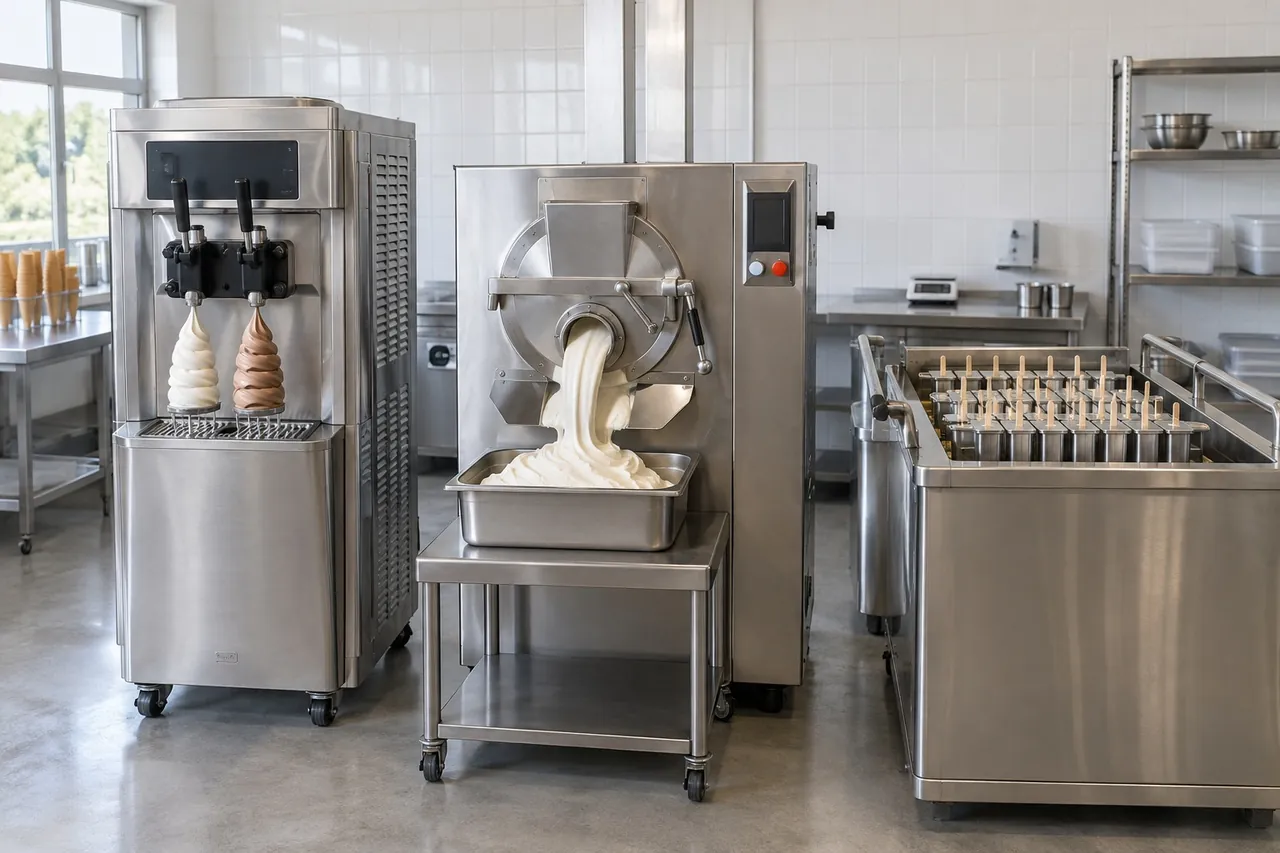
| Production | Soft serve machine | Soft serve, frozen yogurt, shakes | 18–22 L/h tabletop, 25–36 L/h floor; 2 flavours plus twist |
| Production | Pasteuriser or ageing vat (optional) | Make mix from raw ingredients | Sized to daily mix volume; many shops buy pasteurised mix |
| Freezing | Blast or hardening freezer | Harden fresh ice cream quickly | Air −30 °C to −40 °C (−22 °F to −40 °F) |
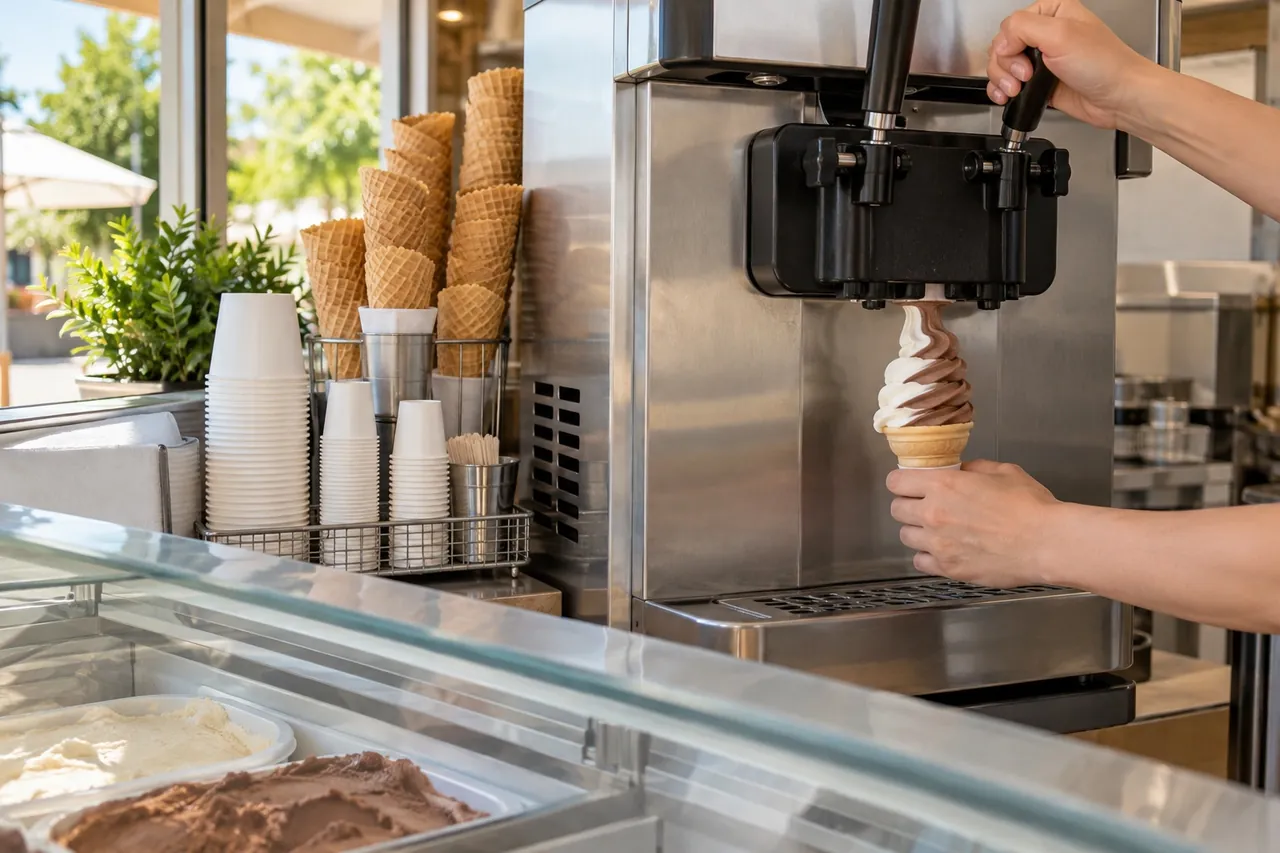
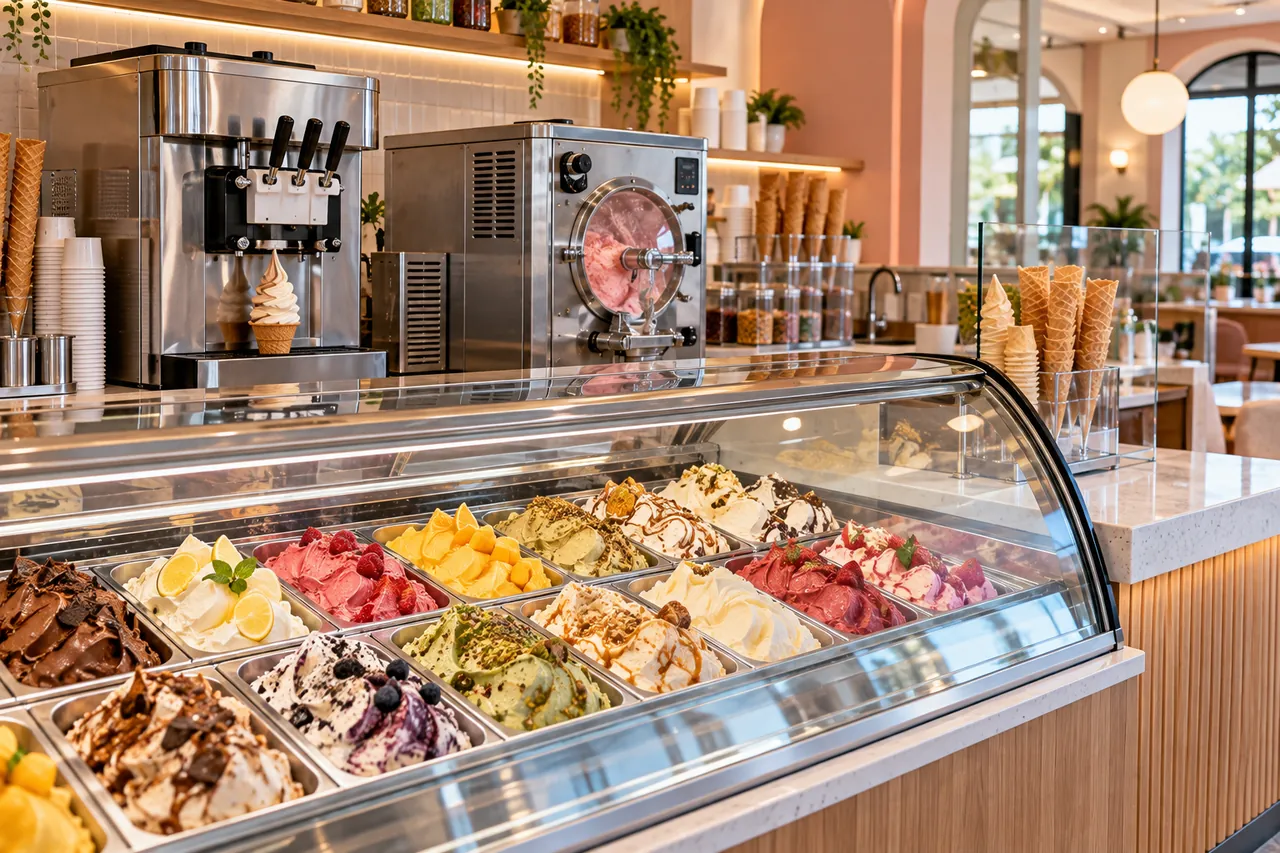
| Display | Dipping cabinet or gelato display case | Show and scoop flavours | About −14 °C to −11 °C (7–12 °F); 8–24 pans or tubs |
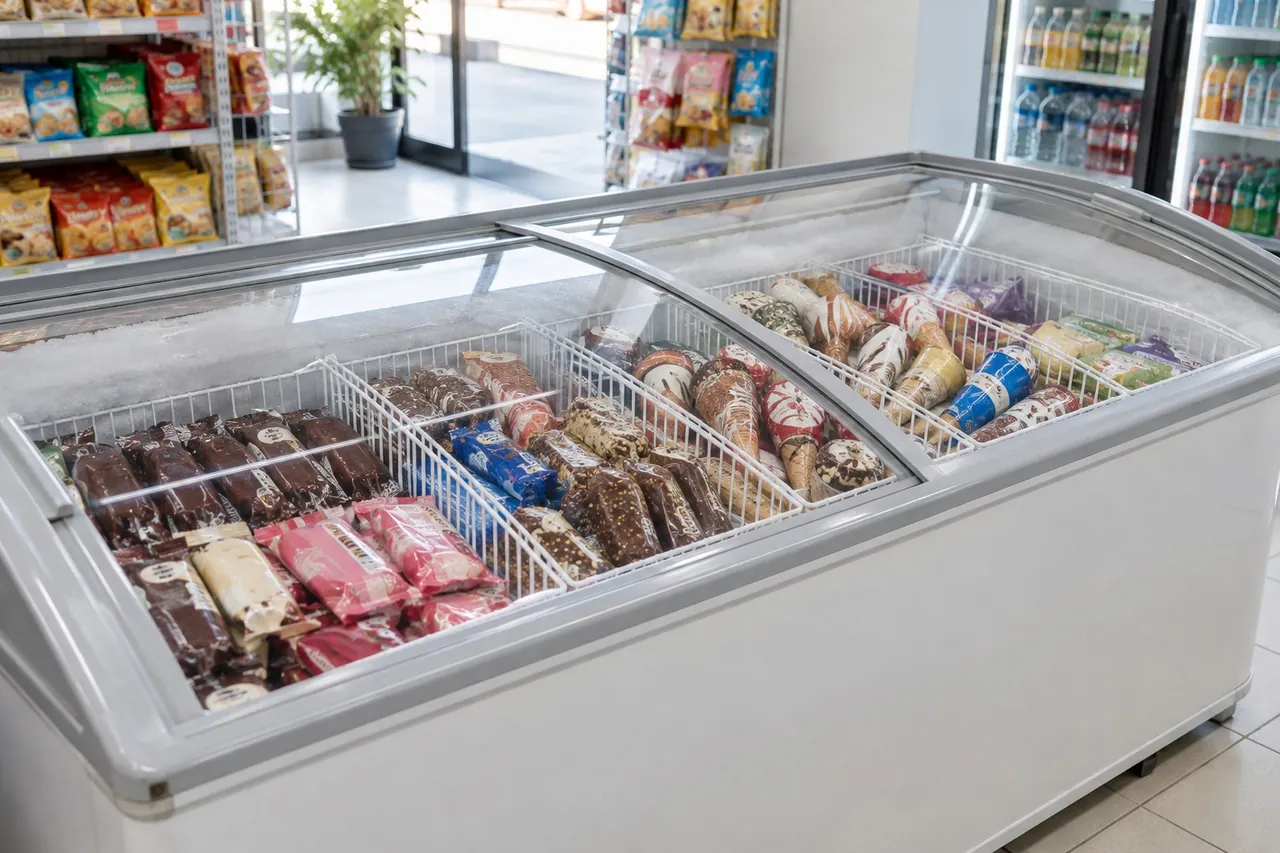
| Display | Glass-top or upright display freezer | Packaged pints, cakes, novelties | −18 °C to −24 °C (0 °F to −11 °F) |
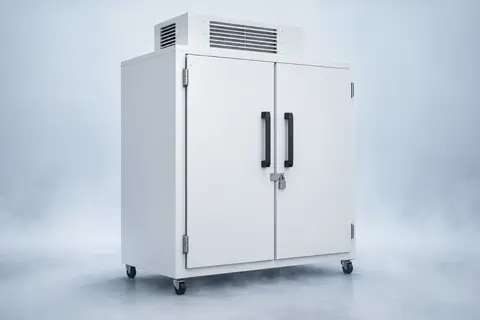
| Storage | Storage freezer or walk-in freezer | Back stock of tubs and pans | −20 °C to −25 °C (−4 °F to −13 °F) |
| Refrigeration | Reach-in or undercounter fridge | Liquid mix, milk, toppings, cream | 5 °C (41 °F) or below |
| Refrigeration | Topping rail or prep table | Fruit, sauces, cold toppings | Pans held at 5 °C (41 °F) or below |
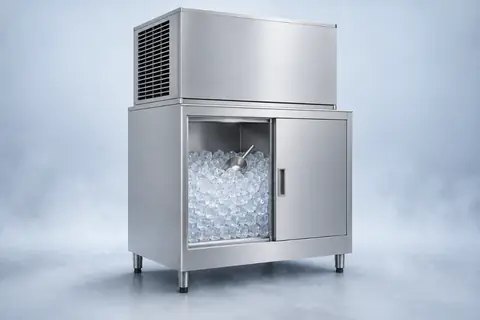
| Drinks | Ice machine, spindle mixer, blender | Shakes, floats, iced coffee | Small cube or nugget machine, 25–100 kg/day |
| Hygiene | Handwash sink, three-compartment sink, dipper well | Required by most health codes | Hot and cold water; running-water dipper well |
Which equipment do different ice cream concepts need?
A scoop shop that buys tubs needs mostly freezers; a gelato or artisan shop making its own product adds a batch freezer and hardening freezer; a soft serve or frozen yogurt store is built around soft serve machines; and a mobile truck or cart needs compact, vehicle-rated equipment. Choose your concept first, because it changes the budget more than any single machine.
| Concept | Core machines | Freezers | Power and space |
|---|---|---|---|
| Scoop shop (buys tubs) | None for production; spindle mixer, waffle cone iron | Dipping cabinet, storage freezer, novelty display freezer | Single-phase; 20–40 m² shop |
| Artisan ice cream or gelato parlour | Batch freezer, optional pasteuriser | Gelato display case, blast/hardening freezer, storage freezer or walk-in | Often 3-phase for the batch freezer; separate production area |
| Soft serve or yogurt store | 2–6 soft serve or frozen yogurt machines | Small storage freezer for toppings and cakes | Dedicated circuits per machine; mix fridge close by |
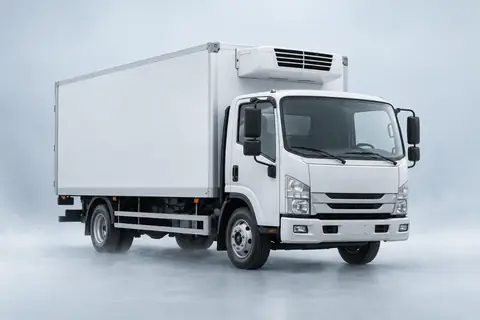
| Soft ice cream truck or cart | 1–2 soft serve machines | Chest or worktop freezer for novelties | Generator 6–12 kW; equipment rated for hot ambient |
For product-by-product machine choices, see our overview of commercial ice cream machines. Froyo concepts are covered in the frozen yogurt machine guide, and a mobile soft serve ice cream truck needs the vehicle-specific advice in our food truck refrigeration guide.
What production equipment do you need to make ice cream on site?
To make hard ice cream or gelato on site you need a batch freezer, a hardening (blast) freezer and enough refrigerated storage for mix; soft serve needs only the soft serve machine and a mix fridge. Making your own product with commercial ice cream equipment raises equipment cost but lowers cost per scoop and lets you sell a signature range.
Batch freezers
A batch freezer freezes pasteurised mix in a refrigerated cylinder while a dasher scrapes and whips it, extracting ice cream at about −7 °C to −9 °C (16–19 °F) in 6–12 minutes per batch. A 5 L batch machine makes roughly 20–30 L an hour, enough to fill a 12–16 flavour display in a morning. The same machine makes sorbet and Italian ice. Our gelato machine guide explains batch sizes, gelato recipes and overrun.
Soft serve machines
Soft serve machines freeze and dispense continuously at −6 °C to −4 °C (21–25 °F). Choose by peak servings per hour: a tabletop model makes about 18–22 L an hour (roughly 200–250 cones), a floor model 25–36 L. Refrigerated hoppers that hold mix below 5 °C (41 °F) overnight are standard on commercial models. See the soft serve machine buying guide for overrun and power details.
Hardening freezers
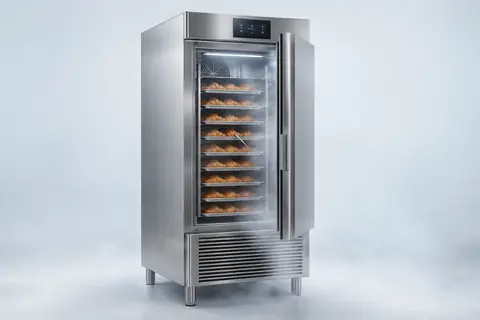
Freshly extracted ice cream is only partly frozen. Hardening it fast, in air at −30 °C to −40 °C (−22 °F to −40 °F), locks in small ice crystals and a smooth texture; leaving it in a storage freezer at −18 °C makes it coarser. A reach-in blast or shock freezer of 5–10 trays suits most parlours; producers supplying several shops step up to a roll-in model or a blast room.
How many freezers does an ice cream parlour need?
An ice cream parlour typically needs one serving display (a dipping cabinet or gelato case), one retail freezer for packaged products and cakes, and back-up storage holding 2–4 days of stock. Once storage exceeds about 2–3 m³ (70–105 cu ft), a small walk-in freezer is usually cheaper to run and easier to organise than several reach-ins.
Serving and storage need different temperatures: a scooping cabinet runs warmer so ice cream is soft enough to scoop, while storage runs colder to protect texture. The table summarises the targets; our ice cream freezer guide covers cabinet types in depth.
| Freezer | Target temperature | Typical capacity | Notes |
|---|---|---|---|
| Dipping cabinet (hard ice cream) | −14 °C to −12 °C (7–10 °F) | 8–16 tubs of about 9–11 L (2.5–3 gal) | Temper new tubs from storage for 12–24 hours |
| Gelato display case | About −14 °C to −11 °C (7–12 °F) | 12–24 pans of 5 L (360 × 165 mm) | Ventilated cases need daily defrost and pan rotation |
| Glass-top or upright display freezer | −18 °C to −24 °C (0 °F to −11 °F) | 300–700 L chest; 400–1600 L upright | Pints, novelties, cakes |
| Storage freezer or walk-in | −20 °C to −25 °C (−4 °F to −13 °F) | 2–4 days of stock | Coldest, most stable storage |
Worked example: a 12-flavour scoop shop selling 400 scoops on a peak day uses roughly five 3 gal (11.4 L) tubs, since each tub gives about 70–90 scoops of 4 fl oz (120 ml). Holding three days of stock plus the 12 open tubs means about 27 tubs, or roughly 310 L of ice cream. That fits a 500–700 L chest or upright storage freezer, allowing space for air flow and novelty stock.
What back-of-house refrigeration does an ice cream shop need?
Back of house, an ice cream shop needs a reach-in or undercounter refrigerator for liquid mix, milk, cream and cut fruit at 5 °C (41 °F) or below, a refrigerated topping rail or prep table at the service counter, and usually a small ice machine for shakes and iced drinks.
- Mix storage: soft serve and gelato mixes are TCS foods; keep them at 5 °C (41 °F) or below and plan shelf space for two or three days of mix.
- Toppings: fresh fruit, whipped cream and cheesecake pieces need refrigerated pans; dry toppings such as sprinkles and cookie crumbs can sit at room temperature.
- Ice: a 25–60 kg/day undercounter cube or nugget machine covers shakes and cold drinks in most parlours.
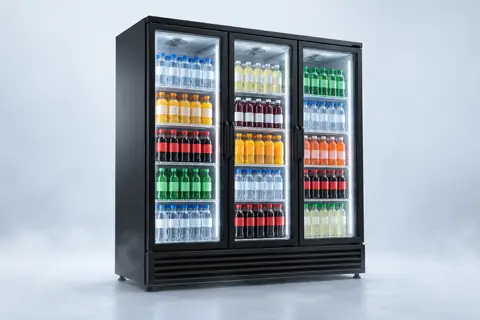
- Drinks: a glass door fridge for bottled water and soft drinks adds sales at low cost.
What ice cream shop supplies and smallwares should you buy?
Essential ice cream shop supplies include scoops in two or three sizes, gelato spades, a running-water dipper well, cone and cup holders, a spindle drink mixer and blender, a waffle cone iron if you bake cones, sauce warmers, portion scales, sinks and cleaning equipment. These are low-cost compared with freezers, but missing items slow service on day one.
- Serving tools: portion scoops sized by volume, gelato spades, sundae dishes, cone holders and cup dispensers.
- Dipper well: the FDA Food Code allows in-use scoops to be stored in running water that flushes particles away, which is the standard method in parlours.
- Drink equipment: a spindle mixer for shakes and a commercial blender for smoothies and frappés.
- Bakery: waffle cone baker and cone rolling form, if you make cones in-house.
- Warmers: hot fudge and caramel warmers with thermostatic control.
- Hygiene: handwash sink with soap and towels, three-compartment sink or dishwasher, sanitiser test strips.
- Front of house: POS, menu boards, seating and bins for cups and spoons.
Search terms such as an "ice cream stand mixer attachment" refer to domestic kitchen accessories; they are useful for recipe testing but do not replace a commercial batch freezer.
What power and layout does an ice cream shop need?
An ice cream shop typically needs 10–25 kW of connected load, more with in-house production, and should keep freezers away from ovens and direct sun, with clear air flow around every condenser. Check the supply before signing a lease: batch freezers and larger soft serve machines often need 3-phase power.
| Equipment | Typical electrical load | Supply |
|---|---|---|
| Dipping cabinet or gelato case | 0.6–1.5 kW | Single-phase |
| Glass-top or upright display freezer | 0.4–1.2 kW | Single-phase |
| Tabletop soft serve machine | 1.8–2.5 kW | Single-phase |
| Floor soft serve machine | 3–5 kW | Single or 3-phase |
| Batch freezer, 5–15 L | 2.5–7 kW | Often 3-phase |
| Reach-in blast freezer, 5–10 trays | 1.5–4 kW | Single or 3-phase |
| Waffle cone iron | 1–1.5 kW | Single-phase |
Plan the layout as a line: storage freezer to tempering to display; mix fridge next to the soft serve machines; dipper well and handwash sink within one step of the serving point. Leave 100–150 mm (4–6 in) behind refrigerated cabinets, or more as the manual states, so they do not overheat in summer.
Should you buy new or used ice cream equipment?
Used ice cream equipment can save money on simple items such as stainless tables, sinks and some freezers, but used soft serve machines and batch freezers carry more risk because worn seals, scrapers, dashers and compressors are expensive and hygiene history is hard to verify. Buy used only after a run test and a strip-down inspection.
- Check the refrigerant is still serviceable in your market and that the voltage matches your shop.
- Run freezers for 24 hours and confirm they hold their target temperature.
- For soft serve and batch freezers, check freezing cylinder condition, scraper blades, seals and gearbox noise.
- Ask for service records and confirm spare parts are still available.
Our guide to used vs new commercial refrigeration gives typical service lives and a full inspection checklist.
How to start an ice cream shop: equipment checklist
To start an ice cream shop, decide the concept, size equipment by peak hour and peak day, confirm power and permits, then order long-lead items first. A practical sequence:
- Concept: scoop shop, artisan gelato, soft serve or froyo, or mobile truck.
- Menu and volume: flavours, products and servings in your busiest hour and busiest day.
- Production: batch freezer and hardening freezer, or soft serve machines sized to peak hour.
- Display: dipping cabinet or gelato case for the flavour count; glass-top freezer for packaged goods.
- Storage: 2–4 days of stock at −20 °C to −25 °C; walk-in once you need more than 2–3 m³.
- Back of house: mix fridge, topping rail, ice machine, sinks and dipper well.
- Power and site: total kW, 3-phase availability, ventilation and drainage.
- Compliance: health permit, plan review where required, and food-equipment certification for your market.
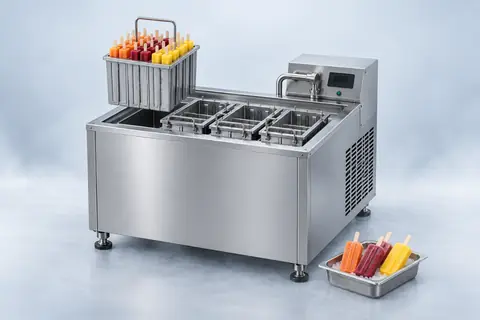
Be There is an ice cream equipment supplier for parlours and producers: soft serve machines, batch freezers and popsicle machines, glass-top and upright display freezers, blast freezers from 5 to 20 trays, walk-in freezer rooms, glass door fridges and cube and nugget ice machines. Send your concept, flavour count, expected daily servings and power supply through the inquiry form and we will propose an equipment list and quote FOB, CIF or DDP.