Short answer
A back bar cooler is a commercial refrigerator about 34–37 in (860–940 mm) high and 24–27 in (610–690 mm) deep that fits under or behind a bar. Common widths are 24 in (1 door), 48–60 in (2 doors) and 69–95 in (3 doors). It holds bottled and canned beer at about +1 °C to +4 °C (34–40 °F) and should be front-breathing for built-in use.
Key takeaways
- Standard back bar coolers are 34–37 in (860–940 mm) high so they slide under a bar top of about 42 in (1,070 mm).
- Widths step up from 24 in (610 mm) for one door to 48–60 in for two doors and 69–95 in (1,750–2,410 mm) for three doors.
- Beer for service is usually held at +1 °C to +4 °C (34–40 °F); draught systems and keg rooms are commonly set to about +3 °C (38 °F).
- Only a front-breathing cooler can be built in with near-zero side and rear clearance; a rear-vented unit needs open space behind it.
- Glass doors sell more product, solid doors save energy, and sliding doors suit aisles narrower than about 1 m (40 in).
What is a back bar cooler?
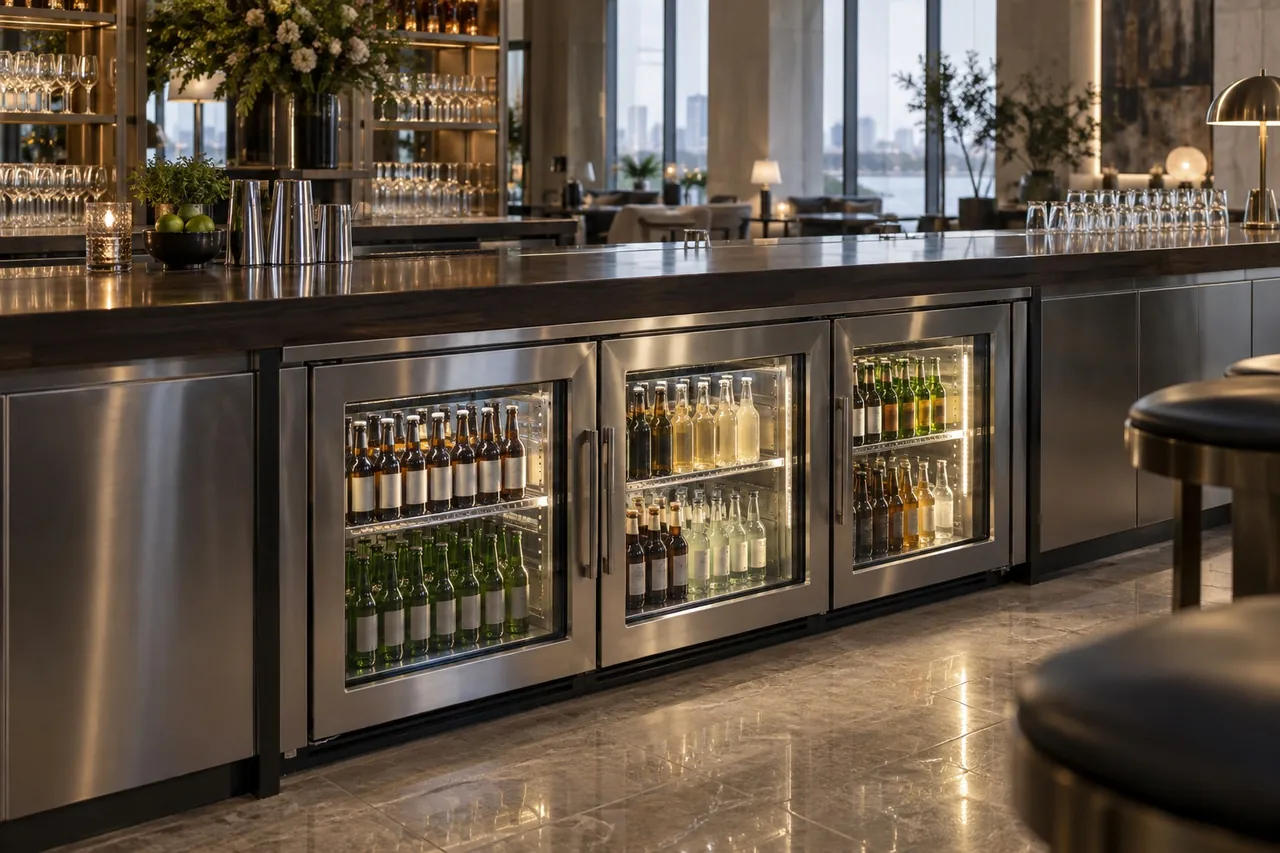
A back bar cooler is a low, wide commercial refrigerator built to sit under the back counter of a bar, pub, hotel lounge or restaurant, so bartenders can reach bottled beer, mixers, wine and garnishes without leaving their station. It is the same idea as a home bar fridge, but sized, ventilated and powered for continuous door openings during service.
Most back bar refrigerators share four traits:
- Height of about 34–37 in (860–940 mm), so they fit under a standard bar top with room for a worktop or bottle shelf above.
- Fan-forced cooling that recovers quickly after the door is opened dozens of times an hour.
- A temperature range of roughly +1 °C to +4 °C (34–40 °F), colder than most domestic fridges, because guests expect beer to be served properly chilled.
- Heavy shelves and stainless or vinyl-coated steel cabinets built for wet floors and cleaning chemicals.
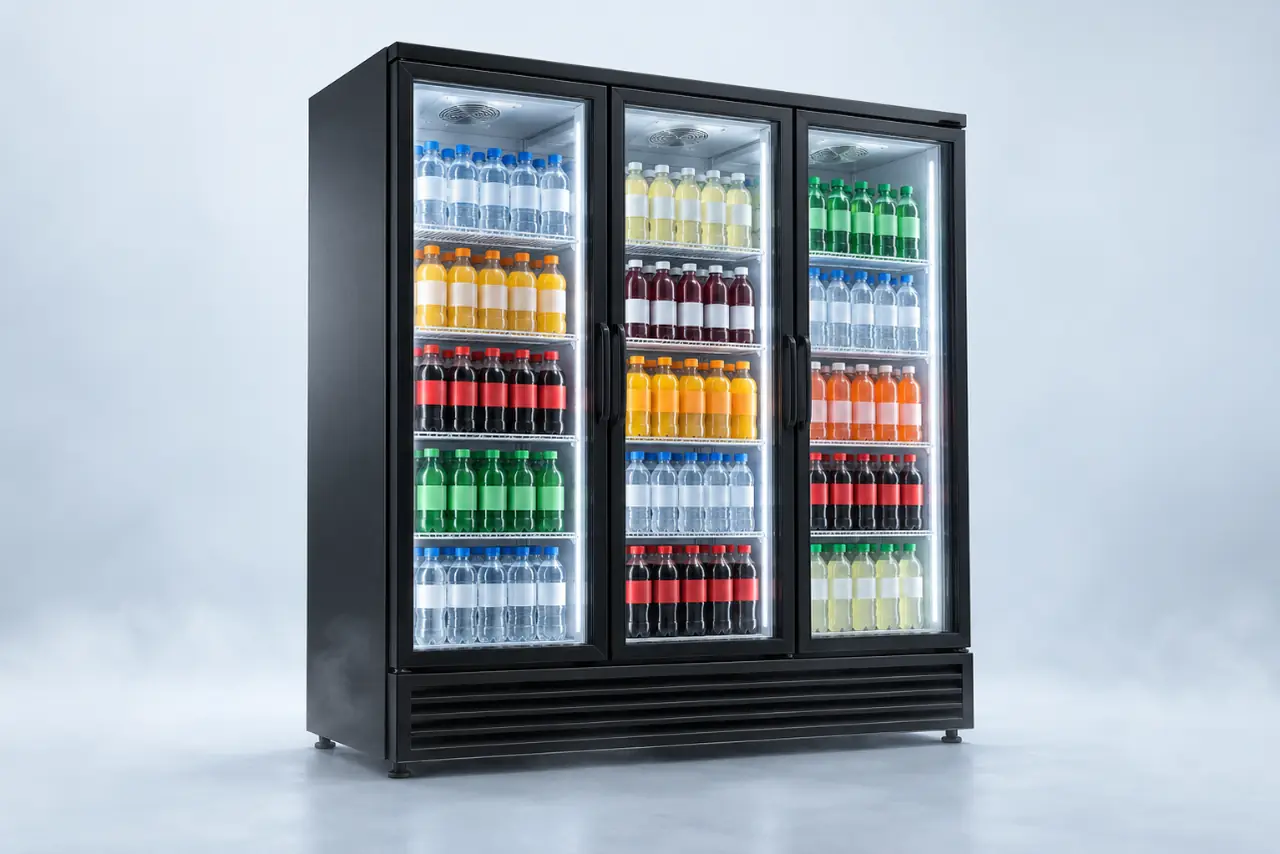
"Bar cooler", "bar beer cooler", "back bar fridge", "bar fridge refrigerator" and "commercial bar fridge" usually mean the same thing. Taller upright units with glass doors are normally called beer merchandisers or glass door display refrigerators; they hold similar temperatures but stand about 2 m (79 in) tall and belong on the shop floor or in a back room rather than under the bar.
Bar refrigerator sizes and dimensions
Bar refrigerator sizes are set mainly by the number of doors. Width is the figure you choose; height and depth are close to standard so the unit fits under the counter. The table shows typical external dimensions and usable volume. Exact figures vary by model, so always confirm on the spec sheet before you build the bar.
| Configuration | Width | Height | Depth | Usable volume (approx.) |
|---|---|---|---|---|
| 1-door (24 inch bar fridge) | 23–24 in (585–610 mm) | 33–35 in (840–890 mm) | 22–24 in (560–610 mm) | 4–6 cu ft (110–170 L) |
| 2-door back bar cooler | 48–60 in (1,220–1,525 mm) | 34–37 in (860–940 mm) | 24–27 in (610–690 mm) | 12–18 cu ft (340–510 L) |
| 3-door back bar cooler | 69–95 in (1,750–2,410 mm) | 34–37 in (860–940 mm) | 24–27 in (610–690 mm) | 19–30 cu ft (540–850 L) |
| Shallow mini bar fridge | 17–24 in (430–610 mm) | 20–34 in (510–860 mm) | 16–20 in (400–510 mm) | 1.5–4 cu ft (40–110 L) |
Three dimensions catch buyers out. First, measure the clear opening under the bar top, not the bar height, and leave 10–20 mm (½–¾ in) above the cabinet. Second, check the floor: tiled bar floors often slope to a drain, so you need adjustable legs or levelling feet. Third, check the space in front of the unit. A 24 in (610 mm) swing door needs the same clear space in front when open, plus room for the bartender.
If you need volume rather than reach, compare these sizes with upright reach-in refrigerators, which give two to three times the volume on the same floor area.
Glass door bar fridge or solid door: which is better?
A glass door bar fridge lets guests see the bottles and helps sell premium beers and mixers, so it is the default where the back bar faces the customer. A solid-door bar cooler insulates better, hides stock and uses less energy, which makes it the better choice for under-counter storage that customers never see.
| Door type | Best for | Trade-offs |
|---|---|---|
| Glass swing doors | Customer-facing back bars, premium bottle display | Needs double or low-E glass and LED lighting; more heat gain than solid doors |
| Solid swing doors | Under-counter stock, service bars, kitchens | No merchandising; lowest running cost |
| Sliding doors (glass or solid) | Narrow aisles behind the bar, high-traffic stations | Only half the width opens at once; tracks need cleaning |
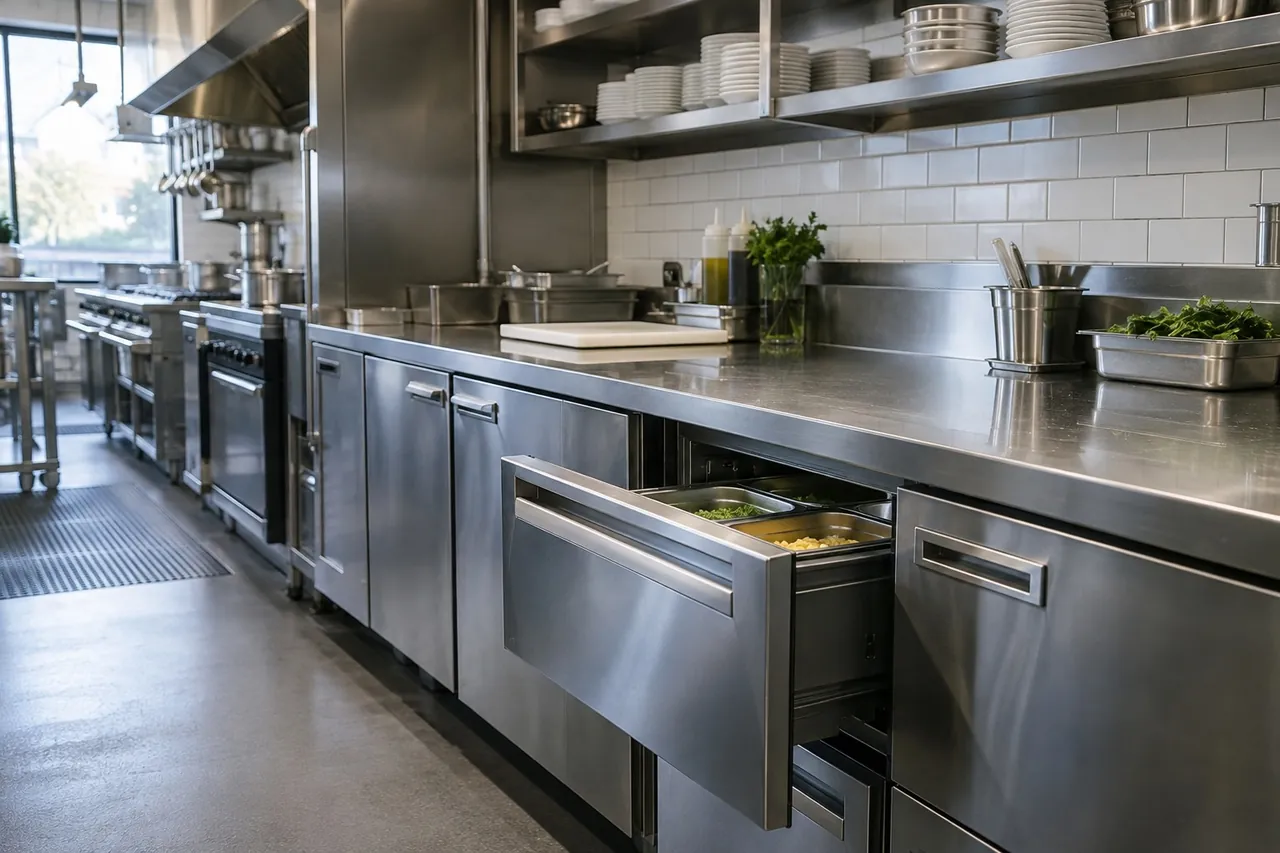
| Drawers | Garnishes, mixers and cocktail stations | Higher price per litre; best for small items |
Use sliding doors where the working aisle behind the bar is narrower than about 1 m (40 in), because an open swing door blocks the next bartender. A bar refrigerator glass door should be at least double-glazed; in humid climates, heated or low-E glass stops condensation from fogging the view. For late-night venues, a lockable beer fridge with keyed doors protects stock after close.
The same glass, lighting and heated-frame choices apply to tall merchandisers. Our glass door display fridge buying guide explains low-E glass, LED lighting and certification in more detail.
Undercounter bar refrigerator placement and ventilation
An undercounter bar refrigerator or under counter bar fridge fails most often because it cannot breathe. The compressor rejects heat through a condenser, and if that hot air is trapped in a closed bar cabinet the unit runs constantly, ices up or trips out on high pressure.
Front-breathing vs rear-vented
A front-breathing cooler draws air in and exhausts it through a grille at the bottom front, so it can be built in with little or no clearance at the sides, back and top. A rear-vented model, like most domestic bar fridges, typically needs 50–100 mm (2–4 in) of open space at the back and top. Never box a rear-vented unit into joinery.
Placement rules that prevent callbacks
- Keep the front grille clear of kick plates, bins and crates.
- Do not place the cooler next to a glass washer, coffee machine or undercounter ice machine that exhausts warm air into the same space.
- Check the ambient rating: a bar in a hot climate or on an open terrace needs a unit rated for at least 32 °C (90 °F), often higher.
- Give the unit its own grounded socket on the correct voltage and frequency; extension leads cause voltage drop at start-up.
- Plan access to the condenser grille so staff can brush it clean every month.
Most back bar coolers evaporate defrost water in a heated tray or with hot gas, so they do not need a floor drain, but confirm this on the spec sheet before installation.
Commercial beer fridge vs home bar fridge: which is best?
The best beer refrigerator for a bar is the one that recovers temperature fast after door openings, is rated for your room temperature and carries the approvals your inspector expects. That is why a commercial beer fridge costs more than a home unit of the same size.
| Feature | Commercial bar fridge | Home or mini bar fridge |
|---|---|---|
| Typical setpoint | +1 °C to +4 °C (34–40 °F) | About +3 °C to +7 °C (37–45 °F) |
| Cooling | Fan-forced, sized for frequent openings | Often static; slow recovery |
| Ambient rating | Usually 32 °C (90 °F) or higher | Often 16–32 °C (61–90 °F) |
| Build | Steel cabinet, heavy-duty shelves, lock | Lighter cabinet and shelves |
| Approvals | Food-equipment and electrical listings for commercial use | Household appliance marks only |
A home beer cooler refrigerator is enough for an office, a staff room or a private bar opened a few times a day. For a venue that pours during service, buy commercial. The same applies to a commercial mini bar fridge in hotel rooms, which must run quietly and reliably around the clock. In the US, look for NSF/ANSI 7 sanitation listing plus UL or ETL electrical listing; in Europe, look for CE marking. Ask whether the unit uses R290 refrigerant, which has a GWP of about 3 and is now the normal choice for new plug-in cabinets in many markets, as our R290 vs R404A guide explains.
A wine and beer fridge combo or dual-zone model makes sense when you sell wine by the glass: keep beer at about +3 °C (38 °F) and white wine at about +7 °C to +10 °C (45–50 °F) in the second zone. A coffee bar refrigerator for milk must hold +5 °C (41 °F) or below to meet food-safety rules.
When to move up to a 3 door beer cooler or walk-in beer cooler
A back bar cooler holds a shift's worth of stock. When you run out mid-service or the cellar is far away, step up the storage chain:
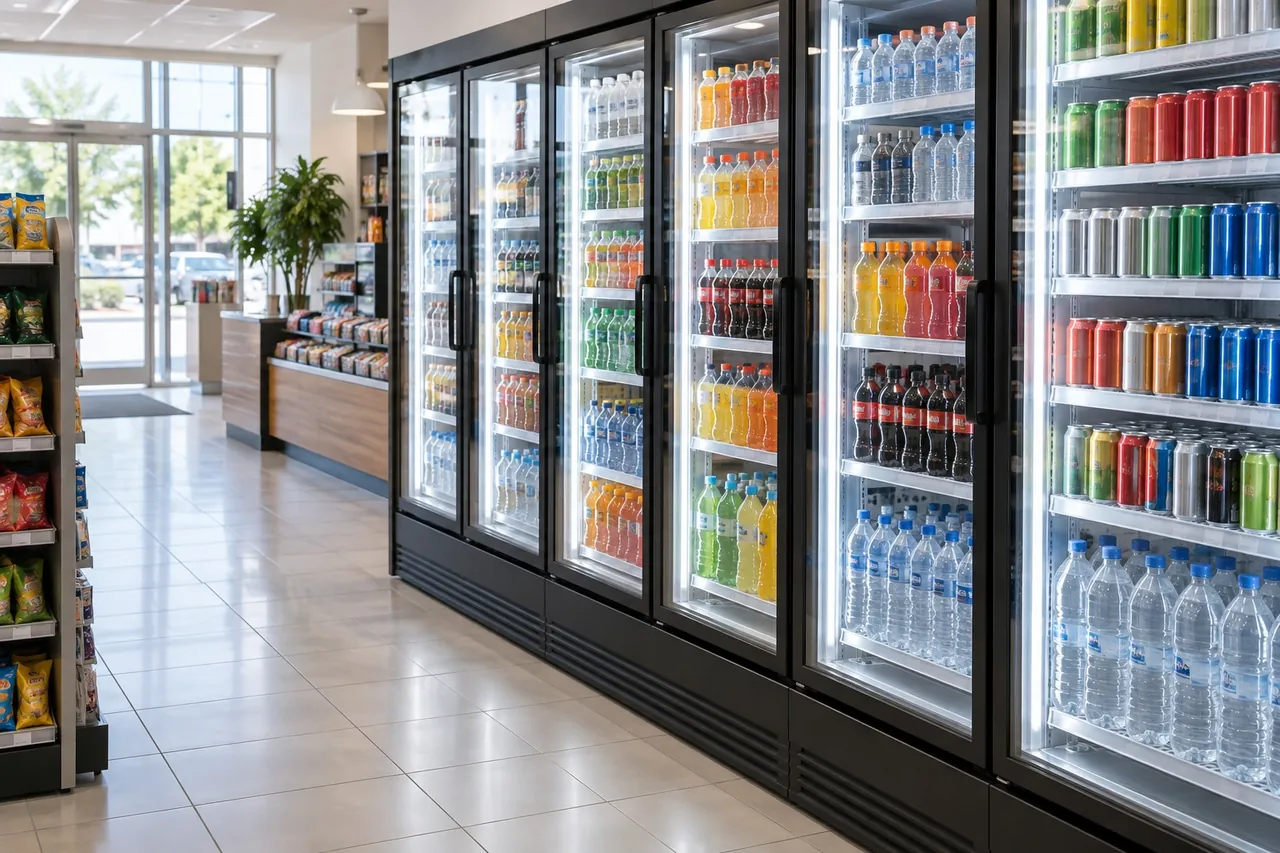
- Upright glass door beer coolers with one to four doors suit bottle shops, convenience stores and back rooms. These retail beer coolers stand about 2 m (79 in) high and hold far more cases per square metre of floor than a back bar unit. Be There supplies them as commercial display refrigerators holding +2 °C to +8 °C (36–46 °F), with LED lighting and an R290 option.
- A 3 door beer cooler in upright form is about 1.6–1.9 m (63–75 in) wide and is a common choice for a liquor store wall.
- A walk in beer cooler or walk in keg cooler becomes worthwhile once you store more than a handful of kegs or several pallets of cases.
Keg rooms are commonly held at about +3 °C (38 °F), the temperature most draught systems are balanced for. A US half-barrel keg holds 15.5 US gal (58.7 L) and measures about 16 in (410 mm) across and 23 in (590 mm) high, so plan floor space and shelf height around that footprint. A small walk-in of 2 × 2 m (6.5 × 6.5 ft) can hold roughly 15–20 half-barrels on the floor, depending on the door and aisle.
Be There supplies complete walk-in cooler kits with 75–100 mm PU or PIR panels, an insulated door and a matched condensing unit. Size the refrigeration from the box volume, panel thickness and daily deliveries, not from floor area alone.
Outdoor bar coolers, beer coolers on wheels and salad bar fridges
Several search terms sound like back bar coolers but describe different equipment. Here is how to tell them apart.
Outdoor beer coolers
Outdoor bar coolers for terraces, pool bars and beer gardens need a higher ambient rating, typically 38–43 °C (100–110 °F), a weather-resistant stainless cabinet, sealed electrics and shade. A standard indoor back bar cooler in direct sun will struggle to hold +4 °C (40 °F) on a hot afternoon. Ask for the ambient rating in writing before you order.
Beer coolers on wheels
Mobile bars and events use castor-mounted coolers. Check that the castors lock, that the unit runs on the power available on site and that it is pre-chilled before it moves, because plug-in cabinets pull warm stock down slowly.
Bar fridge and freezer
A bar fridge and freezer combination is useful for frozen garnishes or chilled glasses. Glass frosters run well below 0 °C (32 °F), so they are a separate cabinet, not a setting on a beer cooler.
Salad bar fridges
Salad bar refrigerators and salad bar coolers are open-top units that keep pans of food at +5 °C (41 °F) or below for self-service, behind a sneeze guard. They are closer to prep tables than to bar coolers; our refrigerated prep table guide covers them.
How to choose a back bar cooler: buyer's checklist
Work through this list before you request quotes for bar coolers. Each point maps to a line on the spec sheet or proforma invoice.
- Measure the space: clear width, clear height under the bar top, depth to the wall and the aisle in front.
- Pick door count and type: 1, 2 or 3 doors; glass or solid; swing, sliding or drawers; locks if needed.
- Confirm ventilation: front-breathing for built-in installation, rear-vented only with open space behind.
- Set the temperature: +1 °C to +4 °C (34–40 °F) for beer; add a second zone only if you serve wine by the glass.
- Check the ambient rating against the hottest day behind your bar or on your terrace.
- Match the power supply: voltage, frequency and plug type for your country.
- Ask for the refrigerant and approvals: R290 where allowed, plus NSF and UL/ETL in the US or CE in Europe.
- Plan the cellar: if you also need upright merchandisers or a walk-in beer cooler, quote them together to share freight.
Be There manufactures upright glass door display fridges and walk-in cold rooms for bars, shops and distributors. If you need low-height back bar coolers, send your dimensions, door type, voltage and quantity through the inquiry form and we will confirm what we can supply and quote FOB, CIF or DDP.