Short answer
A refrigerated display case is a glass-fronted cabinet that shows food to customers while holding it cold. Bakery and cake cases run at about +2 °C to +5 °C (36–41 °F), deli cases at 0 °C to +4 °C (32–40 °F), fresh meat cases at −1 °C to +2 °C (30–36 °F) and gelato cases at about −14 °C to −11 °C (7–12 °F). Choose by product and climate class.
Key takeaways
- Food-safety rules such as the FDA Food Code require chilled ready-to-eat food on display to stay at 5 °C (41 °F) or below.
- Fresh red meat keeps colour and weight best at about −1 °C to +2 °C (30–36 °F) with high humidity and gentle, gravity-style airflow.
- Fan-assisted (ventilated) cases hold temperature more evenly and recover faster; static cases dry unwrapped food less.
- ISO 23953 rates display cabinets in test rooms such as climate class 3 (25 °C, 60% RH) and class 4 (30 °C, 55% RH), so check the class against your shop.
- Bread should not be refrigerated: staling is fastest at fridge temperatures, so bread showcases are ambient while cream cakes must be chilled.
What is a refrigerated display case?
A refrigerated display case is a cabinet with glass on the customer side that keeps food chilled while it is on sale. It does two jobs at once: it holds a safe temperature, and it presents cakes, pastries, deli meats, cheese, salads, meat or desserts so customers can see what they are buying.
Display cases differ in four ways:
- Service style: serve-over (staff serve from the back) or self-service (customers open a door or reach in).
- Glass: curved glass for a classic bakery look, or straight (square) glass for a modern counter and slightly more usable space.
- Cooling: static (gravity) or fan-assisted, with a built-in (plug-in) or remote condensing unit.
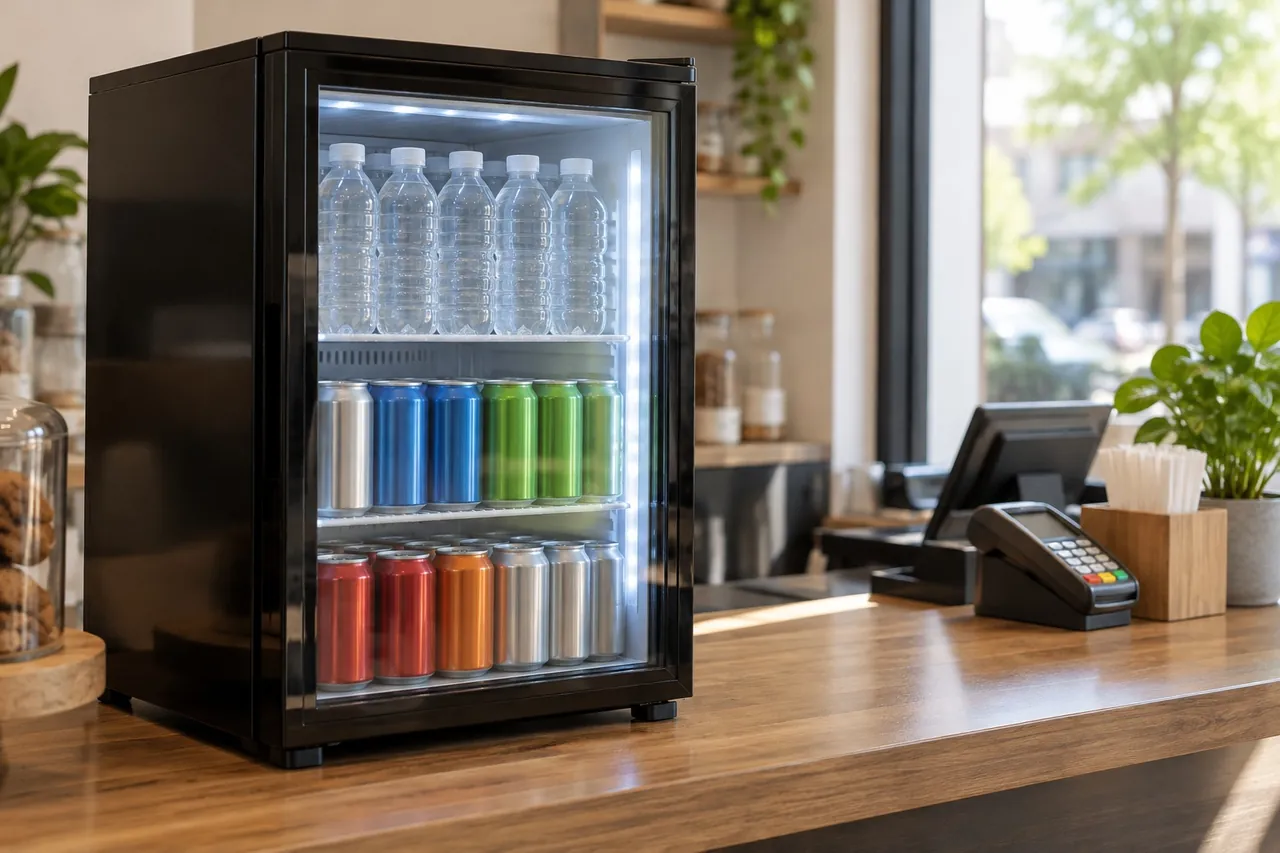
- Format: floor standing display case, countertop refrigerated display case or tall upright cabinet.
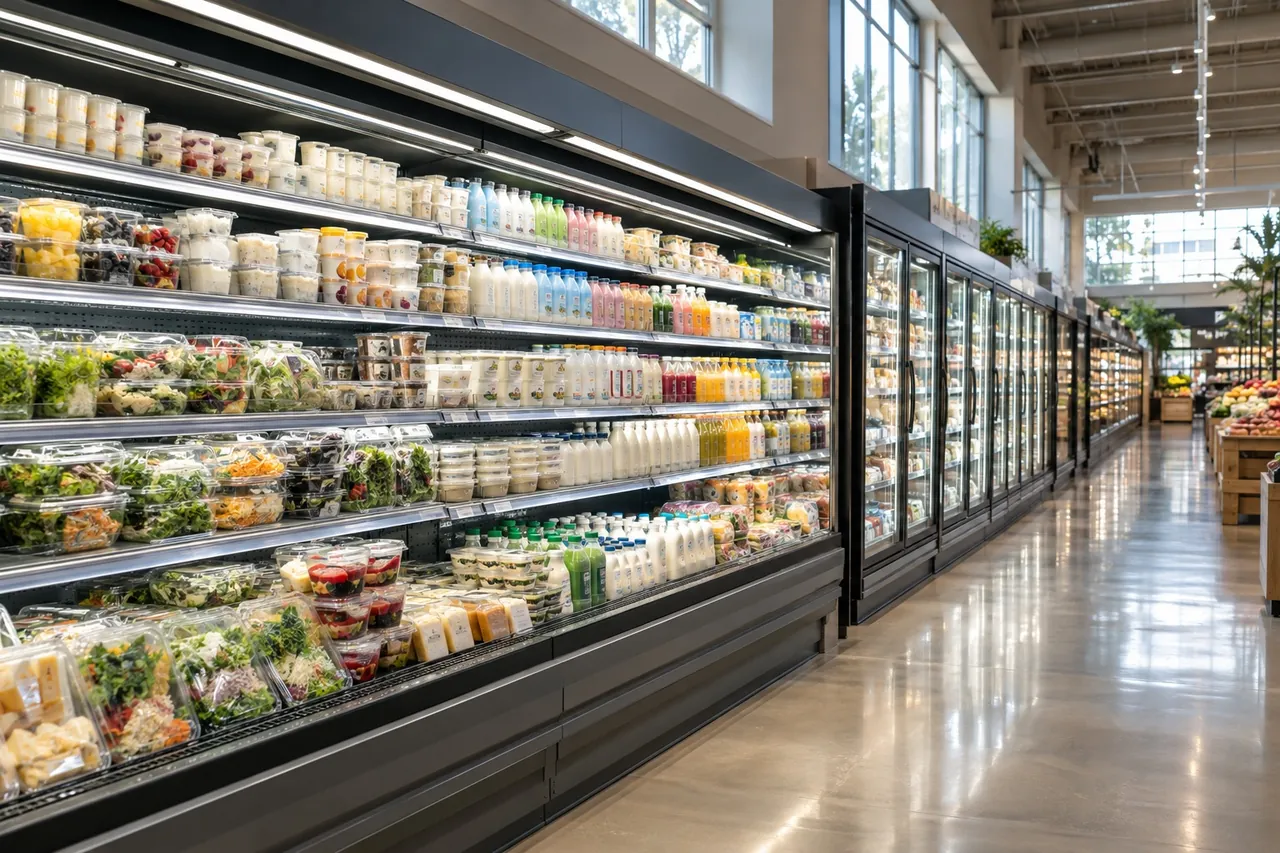
Not every display case is refrigerated. Retail display cases and retail display cabinets for jewellery, collectibles and phones, including table top display cases, acrylic countertop display cases and tower display cases, are dry cabinets without refrigeration. This guide covers food showcases only. For packaged drinks and dairy, an upright glass door display refrigerator is usually more efficient than an open-top case because the closed door keeps cold air in.
Types of refrigerated display cases compared
Each food category has its own case design. The table lists the main commercial display cases with their usual temperature and the feature that matters most.
| Case type | Typical holding temperature | Key feature |
|---|---|---|
| Bakery and pastry display case | +2 °C to +5 °C (36–41 °F) | Curved or straight glass, several glass shelves, LED lighting |
| Cake showcase / dessert fridge | +2 °C to +5 °C (36–41 °F) | Tall glass on all sides, often rotating or tiered shelves |
| Deli case | 0 °C to +4 °C (32–40 °F) | Deep serve-over deck for trays of meats, cheese and salads |
| Meat display case | −1 °C to +2 °C (30–36 °F) | High humidity, gentle airflow, meat-friendly lighting |
| Countertop refrigerated display case | +2 °C to +8 °C (36–46 °F) | Small footprint for cafés and sushi or cake counters |
| Gelato and ice cream display case | About −14 °C to −11 °C (7–12 °F) for scooping | Heated anti-fog glass, pan wells |
| Upright glass door display fridge | +2 °C to +8 °C (36–46 °F) | Self-service; best for packaged food and drinks |
| Open multideck | +1 °C to +7 °C (34–45 °F) | Grab-and-go; air curtain instead of doors |
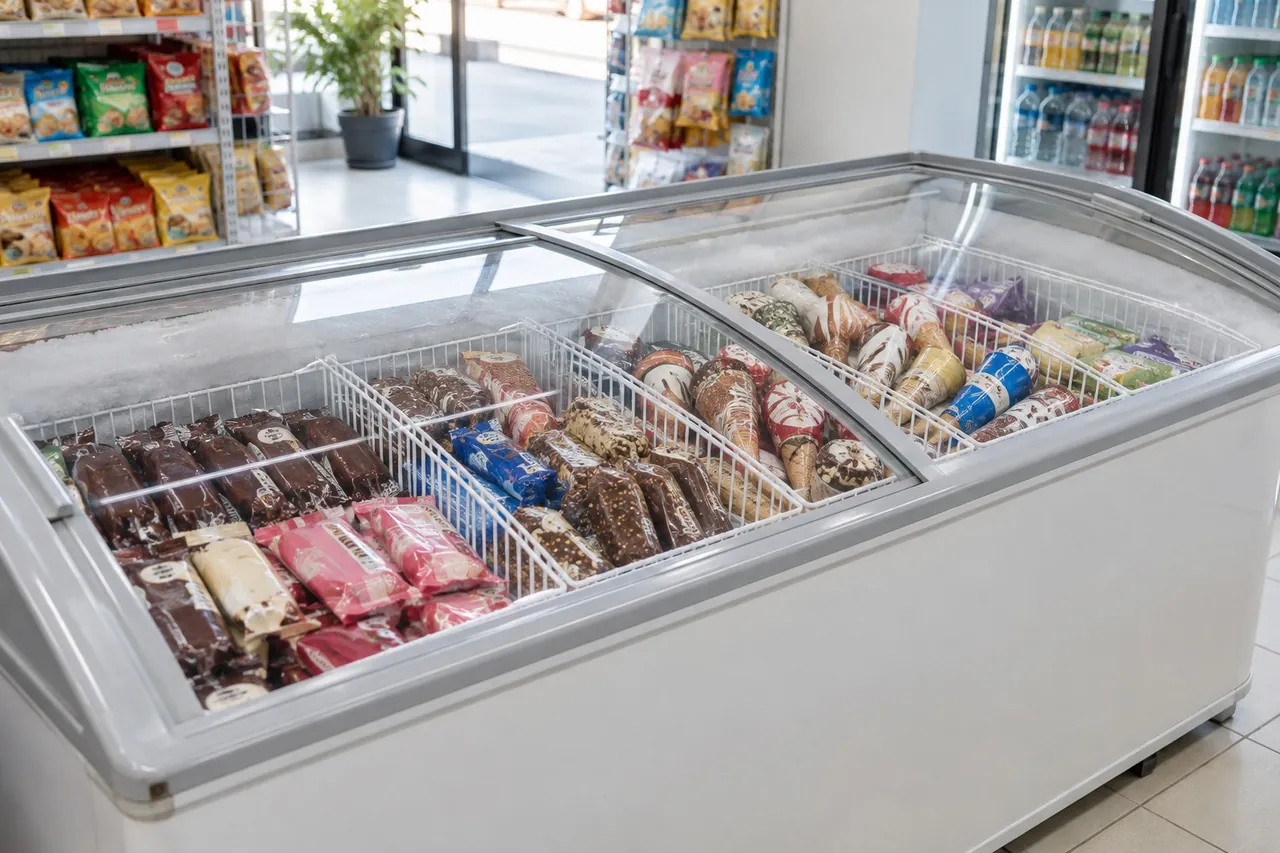
Ice cream and gelato cases are freezers, not fridges; see our ice cream display freezer guide. Open, door-less merchandisers for grab-and-go food are covered in our open-air merchandiser guide.
What temperature should a refrigerated display case be?
Set the case for the most sensitive product in it, then check with a probe thermometer in the product, not just the controller display. Under the FDA Food Code, time/temperature-control for safety (TCS) foods such as cream cakes, cut meats, cheese and prepared salads must be held at 5 °C (41 °F) or below. EU and UK rules set similar limits, typically 8 °C (46 °F) or lower in the UK, with many retailers working to 5 °C.
| Product | Target temperature | Humidity and airflow |
|---|---|---|
| Cream cakes, cheesecakes, mousses | +2 °C to +5 °C (36–41 °F) | Moderate humidity; avoid strong air on decorations |
| Deli meats and cheese | 0 °C to +4 °C (32–40 °F) | Medium to high humidity to stop edges drying |
| Fresh red meat and poultry | −1 °C to +2 °C (30–36 °F) | High humidity, about 85–90% RH; gentle airflow |
| Fresh fish on ice | 0 °C to +2 °C (32–36 °F) | Crushed or flake ice bed with drainage |
| Chocolates and pralines | About 14–18 °C (57–64 °F) | Low humidity, below about 50% RH |
| Bread and dry pastries | Ambient (not refrigerated) | Dry case or open shelving |
Bread is the exception: it goes stale faster in a fridge than at room temperature, so a bread display showcase is normally ambient, while a bakery counter display case with cream products needs refrigeration. If you sell both, use separate dry and chilled sections. Always confirm the target with your local food-safety authority.
Display cooling system: static vs fan-assisted, plug-in vs remote
The display cooling system decides how evenly the case holds temperature and how fast unwrapped food dries out.
Static vs fan-assisted cooling
A static (gravity) case uses a cold coil at the top or back; cold air sinks gently over the product. It dries unwrapped meat and cakes less, but temperature varies more from top to bottom and recovers slowly. A fan-assisted or ventilated case blows air through the evaporator and across the shelves. It holds a tighter, more even temperature and recovers faster after loading, but moving air dries exposed food. Many deli and pastry cases combine a fan coil with baffles that keep air off the product.
Plug-in vs remote
A plug-in case has its own compressor and condenser, so it can be moved and installed in a day, but it releases heat and noise into the shop. A remote case connects to a condensing unit outside or in a plant room, which keeps the shop cooler and quieter and suits long runs of counters in supermarkets. Remote systems need a refrigeration contractor and pipework.
Performance ratings
| ISO 23953 class | Meaning |
|---|---|
| Climate class 3 | Tested in a room at 25 °C (77 °F), 60% RH |
| Climate class 4 | Tested at 30 °C (86 °F), 55% RH |
| M1 / M2 / H1 | Warmest product held at +5 °C / +7 °C / +10 °C (41 / 45 / 50 °F) |
For a hot or humid shop, ask for class 4 or higher and ask whether the stated class was tested.
Bakery display case and pastry case: what to look for
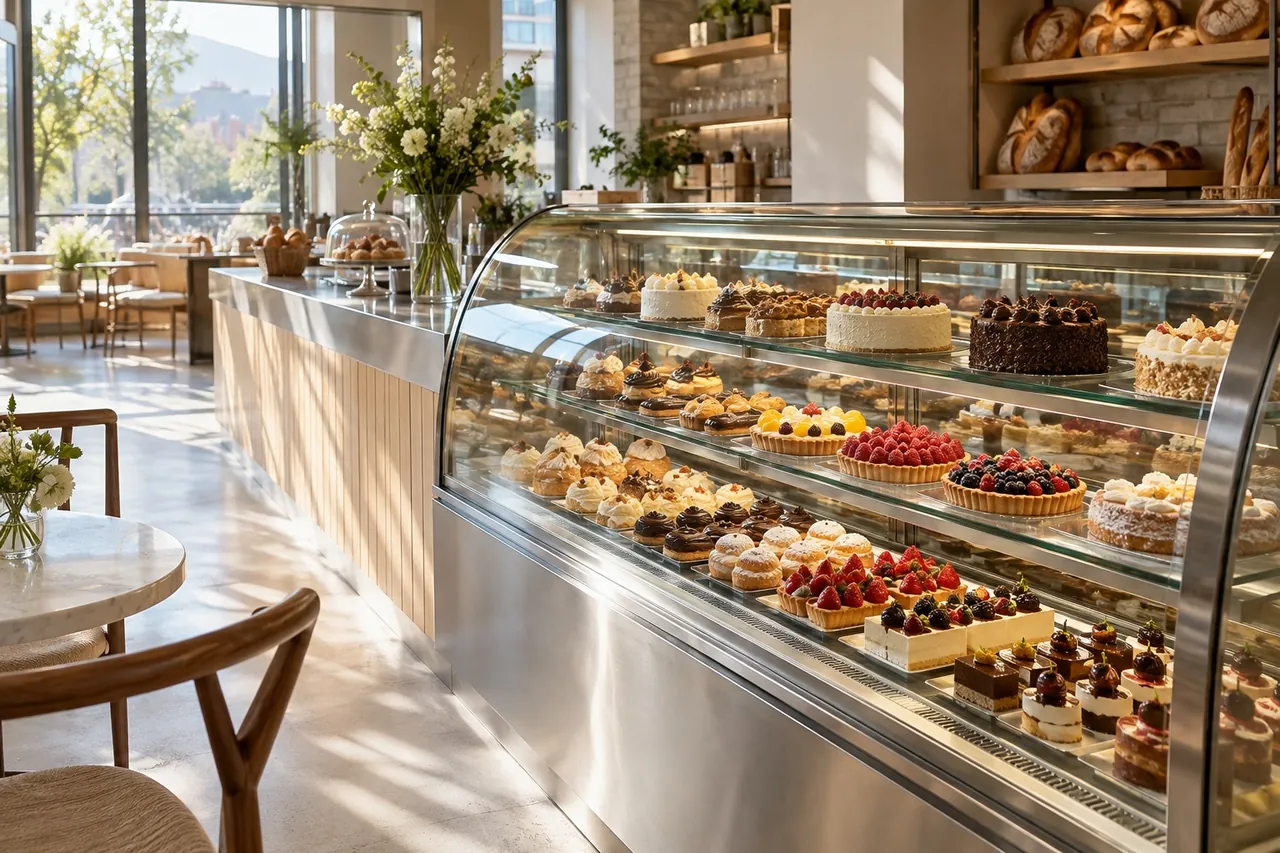
A bakery display case or pastry case sells with its looks, so glass, lighting and shelf layout matter as much as the refrigeration. A refrigerated bakery display case for cream cakes, tarts and desserts should hold +2 °C to +5 °C (36–41 °F) on every shelf, including the top shelf nearest the warm room air.
- Glass: curved front glass gives the classic patisserie look; straight glass gives a modern line and slightly more shelf area. Double glazing, or heated front glass in humid shops, prevents fogging.
- Shelves: two or three glass shelves plus the base deck; check that each shelf has its own LED strip.
- Rear access: sliding rear doors for serve-over use, or front-opening doors for self-service.
- Humidity: cakes in a display case dry out if air blows straight across them; look for baffled or low-velocity airflow.
- Size: refrigerated bakery cases are commonly built in lengths of about 0.9–2.0 m (36–79 in), around 1.2–1.4 m (47–55 in) high, and can be joined into longer runs.
A dessert fridge or cake showcase with glass on four sides suits cafés where the case stands in the middle of the room. A glass bakery display case on a counter suits small coffee shops; for those, see the countertop section below. Whatever the format, load product only after the case has reached temperature, and keep the rear doors closed between customers.
Deli case and meat display case: humidity and lighting
A deli case (deli refrigerator or deli fridge) is a serve-over counter with a deep, flat deck where staff lay out trays of sliced meats, cheese, olives and prepared salads. It should hold 0 °C to +4 °C (32–40 °F). Because the food is unwrapped, humidity is as important as temperature: dry air cracks the edges of cheese and darkens sliced meat within hours.
A meat display case runs colder, at about −1 °C to +2 °C (30–36 °F), with high relative humidity of around 85–90%. Gravity coils or low-velocity fans are preferred because strong airflow causes surface drying and weight loss, which is money lost on every kilogram sold.
What to check on deli and meat cases
- Deck depth of about 0.6–0.8 m (24–31 in), so trays fit with room to reach.
- Lighting that does not add heat to the product. LED strips are standard; meat cases often use a warmer colour that flatters red meat without masking its real condition.
- Night covers or blinds to cut overnight energy use, or move food to a cold room at close.
- Defrost that does not warm the product; ask how many defrosts per day and their duration.
- Drainage for meat and fish cases that are cleaned with water daily.
Grocery stores with long runs of deli and meat counters often move product to a walk-in overnight. Be There supplies walk-in cold rooms for that back-of-house storage.
Countertop refrigerated display case and tabletop showcases
A countertop refrigerated display case, also called a refrigerated countertop or table top refrigerated display case, sits on an existing counter and holds a few trays of cakes, sandwiches, sushi or desserts at the point of sale. Typical units hold about 50–160 L (1.8–5.6 cu ft), run on a standard single-phase socket and are 0.6–1.2 m (24–47 in) long.
| Option | Best for | Watch out for |
|---|---|---|
| Small countertop refrigerated display case (curved or square glass) | Cakes and pastries by the till | Heat from coffee machines; needs side or rear ventilation |
| Countertop glass door cooler | Packaged drinks, yogurt, sandwiches | Self-service only |
| Countertop sushi or deli case | Restaurants, takeaways | Needs tight temperature control and daily cleaning |
| Non-refrigerated glass or acrylic countertop display case | Bread, wrapped bakery items, retail goods | Not for any food that must stay cold |
Countertop units have small compressors, so they recover slowly when doors are left open and they struggle in hot sites. Ask for the climate class and keep at least the clearance the manufacturer specifies around vents. Our countertop display fridges guide compares the small glass door coolers in more detail.
How to choose a refrigerated display case: checklist
Use this checklist to compare display cases for sale and to brief any supplier.
- Product and temperature: list what you will sell and the coldest temperature needed, from +5 °C (41 °F) for cakes to −1 °C (30 °F) for fresh meat.
- Service style: serve-over, self-service or both.
- Size: length, height, depth and the deck area you need; leave access for cleaning behind and around the case.
- Cooling: static or fan-assisted; plug-in or remote; defrost method.
- Climate class: class 3 for air-conditioned shops, class 4 or higher for warm or humid sites.
- Glass and lighting: curved or straight, heated or low-E glass, LED on every shelf.
- Security: a retail display case with lock for high-value stock or unattended sites.
- Refrigerant, power and approvals: R290 where allowed; correct voltage and frequency; NSF and UL/ETL in the US or CE in Europe.
Be There manufactures upright glass door display fridges and display freezers for food retailers and distributors, plus walk-in cold rooms for back-of-house storage. For serve-over bakery, deli or meat cases, send your product list, lengths, voltage and quantity through the inquiry form. We will confirm what we can supply and quote FOB, CIF or DDP, because prices vary with length, glass type and refrigeration.