Short answer
Cold chain equipment is the refrigerated, insulated and monitoring hardware that keeps products in range from origin to use: precoolers and flake ice at harvest, blast freezers at −35 °C to −40 °C air, cold rooms at 0 °C to +5 °C or −18 °C to −25 °C, reefer containers and trucks at −30 °C to +30 °C, retail display fridges and freezers, plus data loggers and alarms.
Key takeaways
- A food cold chain has six equipment stages: precooling, freezing, cold storage, long-haul transport, last-mile delivery and retail display.
- Blast freezers remove heat with air at −35 °C to −40 °C (−31 °F to −40 °F); storage freezers only hold −18 °C to −25 °C and should not be used to freeze warm product.
- Cold rooms use 75–100 mm panels for chillers, 120–150 mm for freezers and 150–200 mm for rooms at −25 °C to −35 °C.
- Truck refrigeration units for vans and trucks cover 4–45 m³ boxes at −20 °C to +15 °C; reefer containers hold −30 °C to +30 °C.
- Chilled food must stay at or below +5 °C (41 °F), frozen food at −18 °C (0 °F) or colder, and most medicines at +2 °C to +8 °C.
- Monitoring must cover every handover, with loggers recording every 5–15 minutes and alarm delays of 15–60 minutes to ignore defrost.
What is cold chain equipment?
Cold chain equipment is every piece of refrigerated, insulated or monitoring hardware that keeps a temperature-sensitive product inside its safe range from the moment it is harvested, slaughtered or manufactured until it is eaten or used. A cold chain is only as good as its weakest link, so the equipment list has to cover precooling, freezing, storage, transport, retail display and monitoring with no gaps between them.
To define cold chain in one sentence: a cold chain is an unbroken series of temperature-controlled storage and distribution steps. The cold chain meaning is the same for frozen fish, fresh lettuce and vaccines; only the temperature band and the equipment change. This guide is the equipment view. For the operating side (routes, lanes, handovers and the role of carriers) read our guide to cold chain logistics.
Most cold chain solutions are built from the same building blocks:
- Active cooling: blast freezers, cold rooms, reefer containers, truck refrigeration units, display fridges and freezers, ice machines.
- Insulation: PU/PIR sandwich panels, XPS floor boards, insulated doors and insulated vehicle bodies.
- Passive protection: insulated shipping boxes, gel packs, phase-change materials and dry ice.
- Monitoring: controllers, sensors, data loggers and alarms that prove the chain was never broken.
The cold chain equipment list, stage by stage
A complete food cold chain has six stages, and each one needs its own equipment because each one does a different job: removing heat, holding temperature, or moving product without gaining heat.
| Stage | Main equipment | Typical temperature | Job |
|---|---|---|---|
| 1. Harvest / catch / slaughter | Forced-air precoolers, hydrocoolers, flake ice machines, chilling rooms | 0 °C to +4 °C (32–39 °F) | Remove field or body heat fast |
| 2. Processing and freezing | Blast chillers, blast freezer rooms, IQF tunnels, spiral freezers | Air −35 °C to −40 °C (−31 °F to −40 °F) | Freeze through the ice-crystal zone quickly |
| 3. Cold storage | Walk-in cold rooms, cold storage warehouses, insulated panels, XPS floors | 0 °C to +5 °C chilled; −18 °C to −25 °C frozen | Hold a stable temperature for days to months |
| 4. Long-haul transport | Reefer containers, reefer trailers | −30 °C to +30 °C (−22 °F to 86 °F) setpoint range | Hold temperature across sea and road |
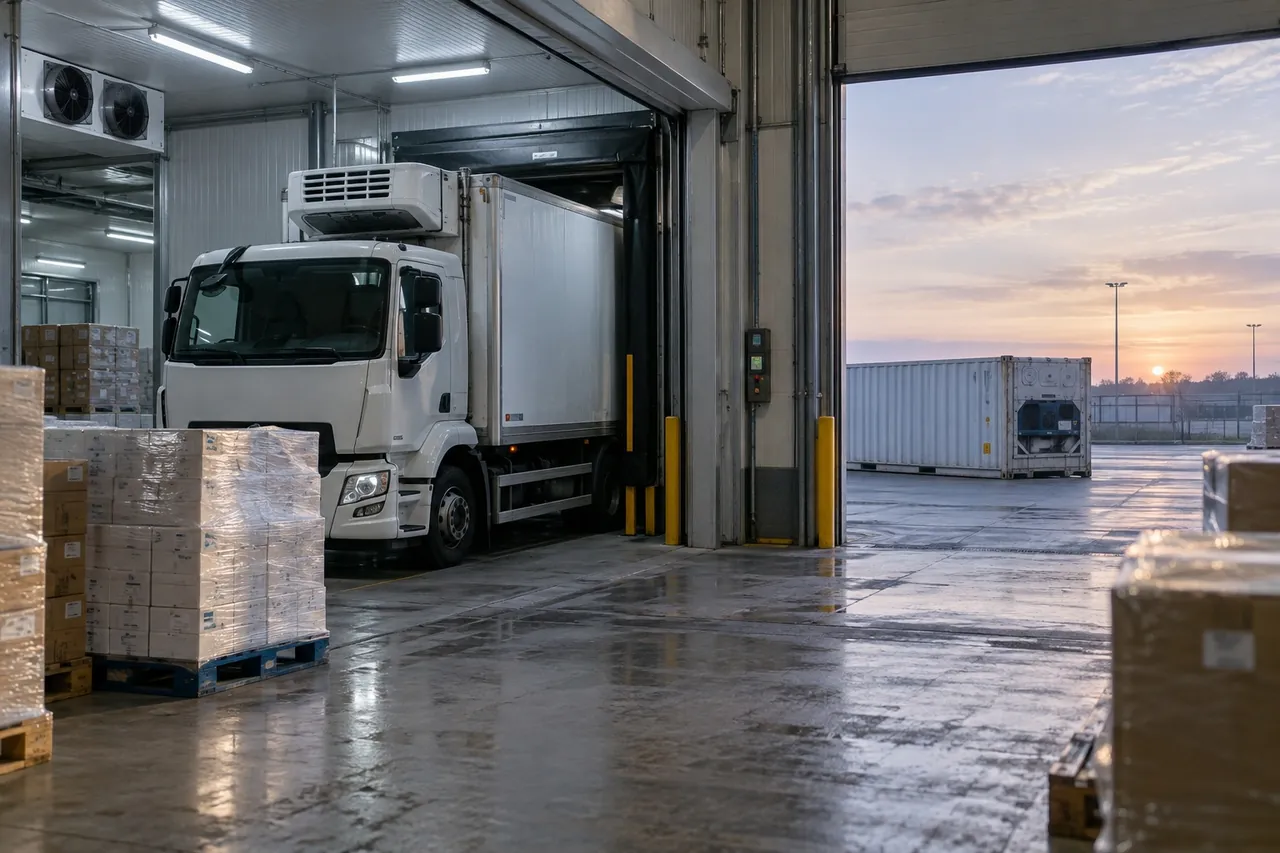
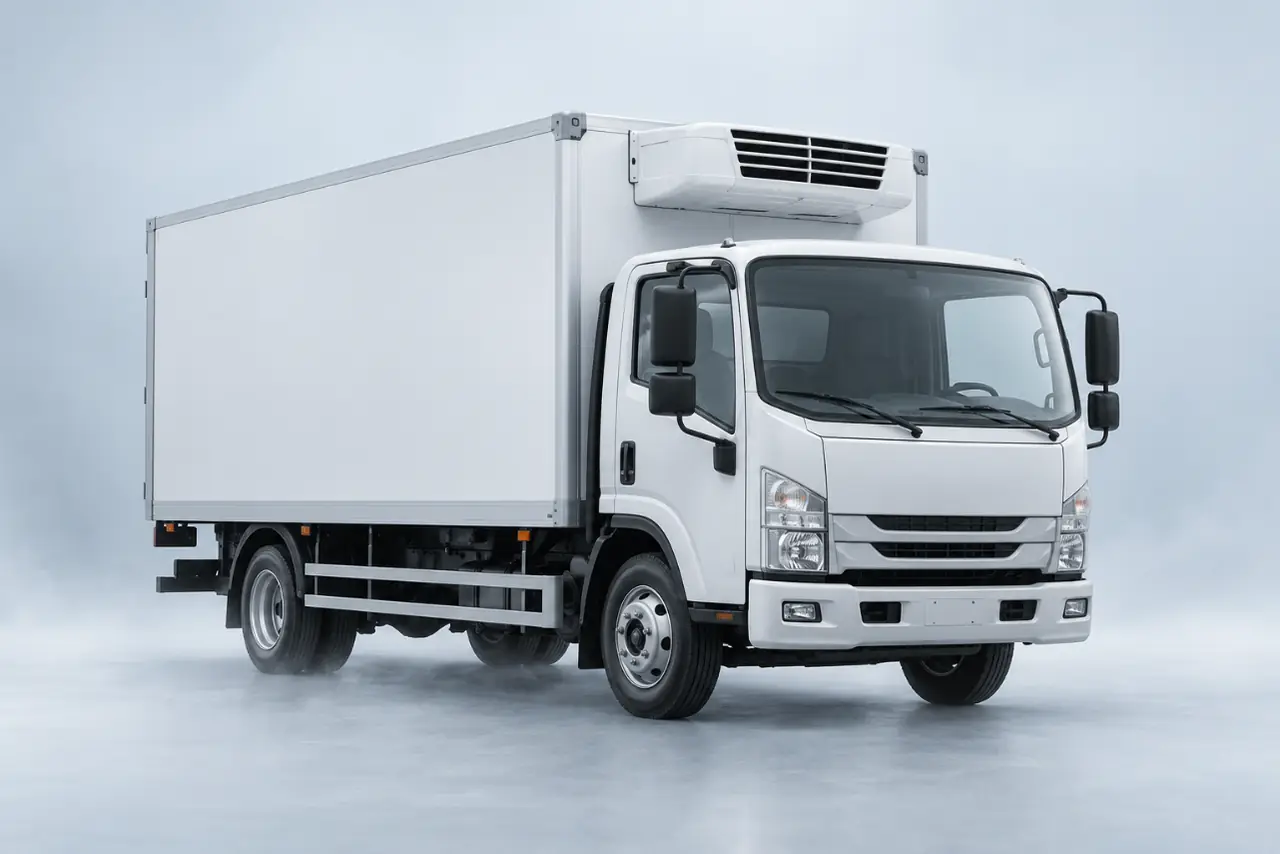
| 5. Distribution and last mile | Refrigerated box trucks and vans with truck refrigeration units, insulated boxes | −20 °C to +15 °C (−4 °F to 59 °F) | Survive many door openings |
| 6. Retail and food service | Display fridges, display freezers, ice merchandisers, reach-ins, walk-ins | +2 °C to +8 °C chilled; −18 °C to −24 °C frozen | Sell or use product while keeping it cold |
Monitoring runs across all six stages. A temperature record that stops at the warehouse door is not a cold chain record.
What equipment is used at harvest, processing and freezing?
The first stage removes heat as fast as possible, because the longer product sits warm the more shelf life it loses. Precooling and freezing equipment is rated by how much heat it can remove per hour, not by how much it can store.
Precooling fresh produce and fish
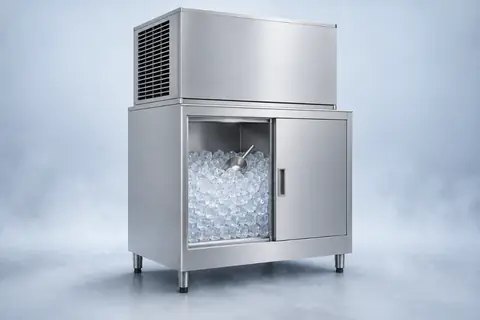
Fruit and vegetables arrive from the field at ambient temperature. Forced-air precoolers pull cold air through stacked, vented cartons; hydrocoolers shower or immerse produce in chilled water; vacuum coolers are used for leafy greens. Fish and seafood are iced on board and at the port. Flake ice machines are the standard here, because dry flakes 1.5–2.2 mm thick pack around the catch without bruising it. Be There supplies flake ice machines from 300 kg to 20 t per day in freshwater or seawater versions, and the flake ice machine guide covers sizing for boats and ports.
Chilling and freezing cooked or processed food
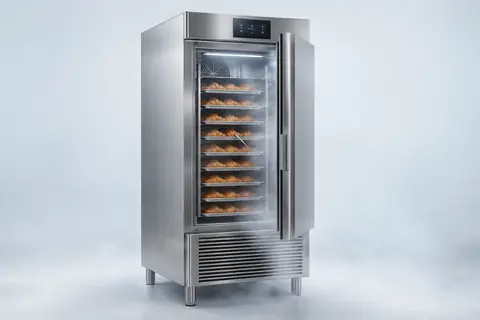
Cooked food must pass through the danger zone quickly, and frozen food must pass through the −1 °C to −5 °C (30–23 °F) ice-crystal zone quickly. Blast chillers and shock freezers do this in batches: +70 °C to +3 °C (158 °F to 37 °F) in about 90 minutes, or on to −18 °C (0 °F) core in about 240 minutes. Larger plants use blast freezer rooms down to −35 °C, or continuous IQF tunnels and spiral freezers, explained in our guide to spiral and IQF freezers.
A common mistake is to load warm product straight into a storage freezer. A storage room is sized to hold temperature, not to freeze tonnes of product, so its temperature climbs, nearby stock partly thaws and the product being frozen forms large ice crystals.
What equipment does a cold chain warehouse need?
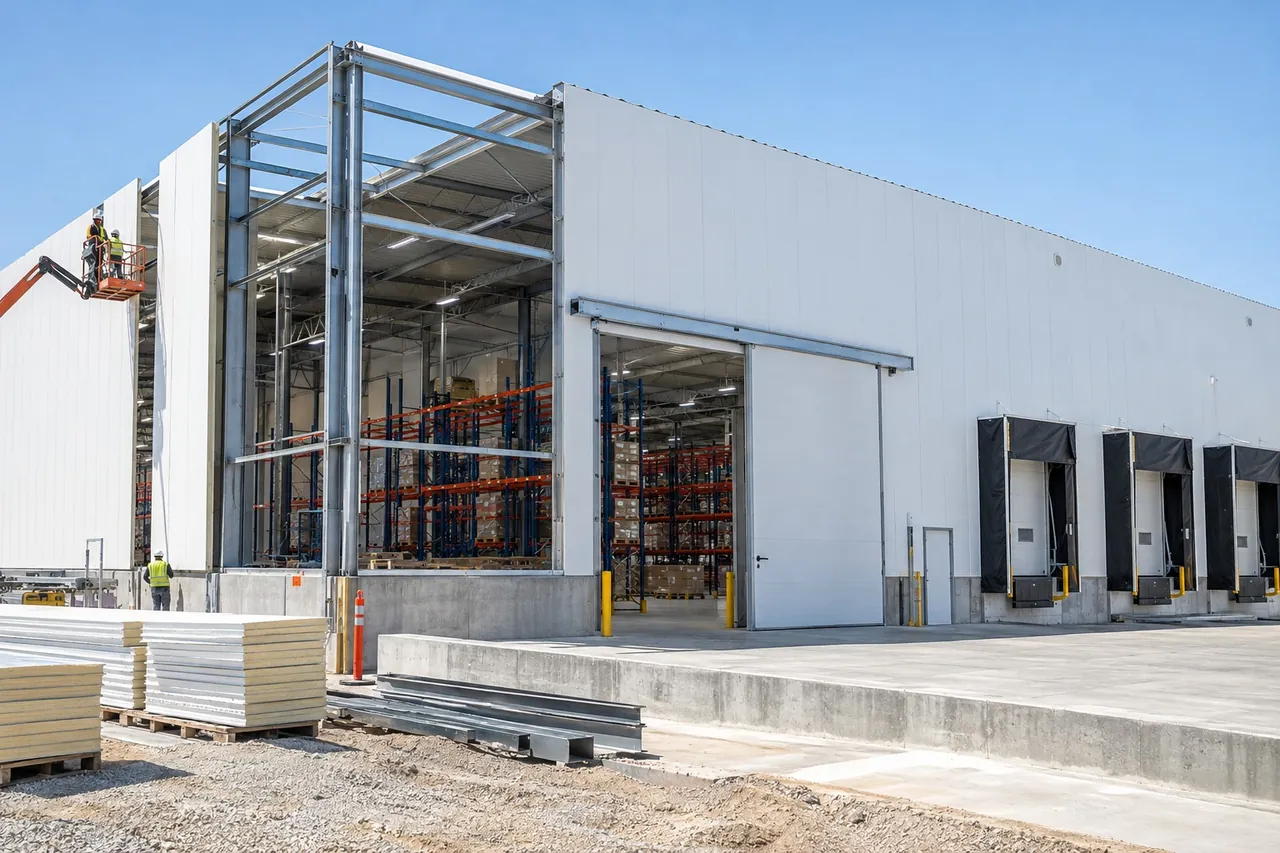
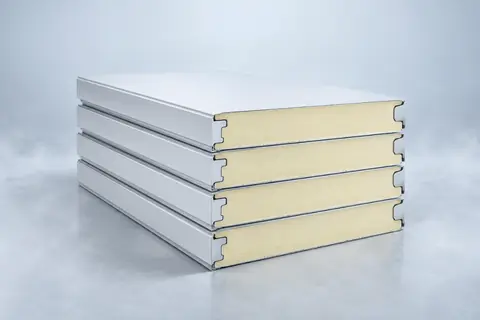
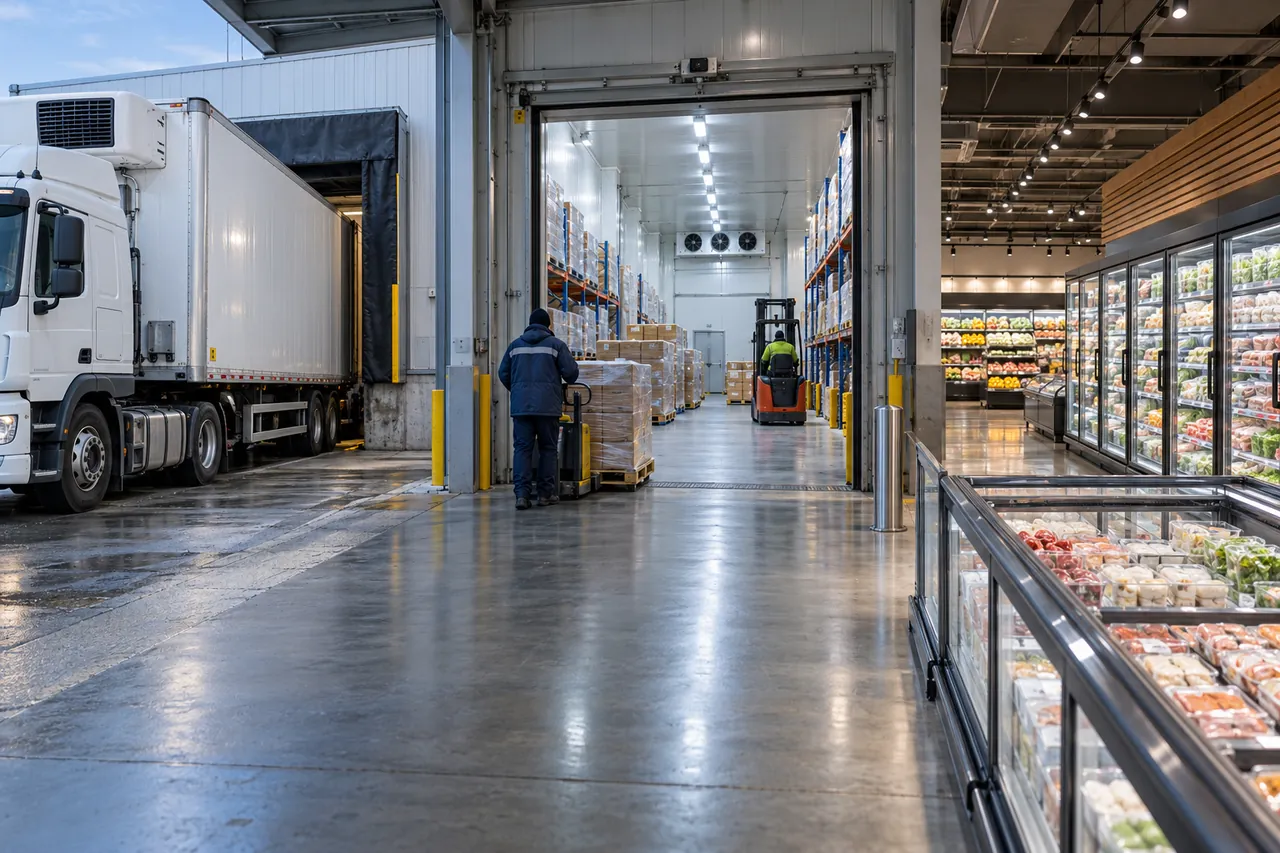
A cold chain warehouse needs an insulated envelope, insulated doors, an insulated (and for freezers, heated) floor, a refrigeration system sized for the room's load, and racking and handling equipment rated for the temperature. The envelope is almost always built from PU or PIR sandwich panels.
| Cold store type | Room temperature | Typical panel thickness | Floor |
|---|---|---|---|
| Chiller / produce cooler | 0 °C to +5 °C (32–41 °F) | 75–100 mm (3–4 in) | Existing slab usually acceptable |
| Frozen storage | −18 °C to −25 °C (0 °F to −13 °F) | 120–150 mm (5–6 in) | 100–150 mm XPS plus underfloor heating on large rooms |
| Ice cream / deep frozen | −25 °C to −30 °C (−13 °F to −22 °F) | 150–200 mm (6–8 in) | XPS plus heating or ventilation |
| Blast freezer room | −35 °C (−31 °F) and below | 150–200 mm (6–8 in) | XPS plus heating or ventilation |
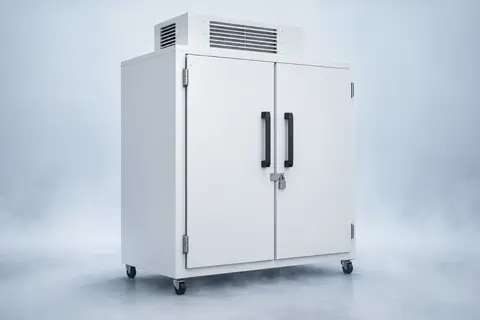
Small and mid-size stores, up to a few hundred cubic metres, are usually built as prefabricated walk-in cold rooms: a kit of panels, door, condensing unit, evaporator and controller. Be There kits use 75–200 mm PU or PIR panels and cover chillers at 0 °C to +10 °C, freezers at −18 °C to −25 °C and blast rooms down to −35 °C. Larger buildings use the same insulated sandwich panels (950 or 1150 mm wide, up to 12 m long) on a steel frame; see cold storage warehouse construction for refrigerated warehouse design, and the panel thickness guide for choosing 75, 100, 150 or 200 mm.
Under freezer floors, XPS foam board is the standard because it takes 150–700 kPa compressive load and absorbs under 1% water by volume. Refrigerated warehouse builders and contractors typically spend as much time on floors, door seals and vapour control as on the walls, because that is where frozen stores fail.
What equipment is used for refrigerated transport?
Refrigerated transport uses an insulated box (container, trailer, truck body or van) plus a refrigeration unit that holds the setpoint against heat leaking through the walls and entering at every door opening. The choice depends on distance, load size and how many stops the vehicle makes.
| Equipment | Typical internal volume | Temperature range | Used for |
|---|---|---|---|
| Refrigerated van with TRU | 4–15 m³ (140–530 ft³) | −20 °C to +15 °C | City deliveries, pharmacy, catering |
| Reefer box truck (10–26 ft) | 10–43 m³ (350–1,500 ft³) | −20 °C to +15 °C | Regional distribution, 2–12 pallets |
| 20 ft reefer container | about 28 m³ (990 ft³) | −30 °C to +30 °C | Export, smaller sea shipments |
| 40 ft high-cube reefer container | about 67 m³ (2,370 ft³) | −30 °C to +30 °C | Export, full-load sea freight |
| 53 ft reefer trailer | 26 standard pallets | about −29 °C to +30 °C | Long-haul road freight |
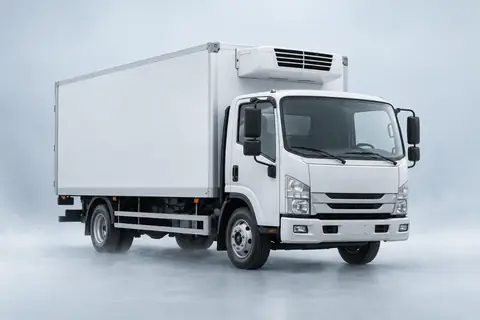
Temperature controlled freight carriers, refrigerated transport companies and temperature controlled freight forwarders sell this capacity as a service. If you are building your own fleet instead, you buy the insulated body and the unit separately. Be There supplies truck refrigeration units for vans and trucks with 4–45 m³ boxes, engine-driven, independent diesel or fully electric, holding −20 °C to +15 °C (−4 °F to 59 °F), with install kits matched to the vehicle. Size the unit with the truck refrigeration calculator; for containers and trailers see reefer container sizes.
So, where can you find refrigerated transport equipment for sale? For vehicles, buy the box body from a local body builder (it must meet your road rules) and the refrigeration unit from a manufacturer that provides an install kit, wiring diagram and spare parts for your chassis. Reefer containers are bought or leased from container dealers. Ask any supplier for the unit's capacity at 0 °C and −20 °C, not just one number.
What are passive temperature controlled containers?
A passive temperature controlled container is an insulated box with no power supply that keeps its contents in range using a stored cold source: gel packs, phase-change material (PCM) bricks or dry ice. They cover the parcel and last-metre parts of the cold chain where a refrigerated vehicle is not practical.
- Temperature controlled storage box or shipper: EPS, PU or vacuum-panel walls; typical hold times run from 24 to 120 hours depending on insulation and coolant.
- Gel packs and PCM conditioned to a set temperature hold +2 °C to +8 °C for medicines or 0 °C to +5 °C for chilled food.
- Dry ice sublimes at −78.5 °C (−109.3 °F) and is used for frozen food and some biological samples; it is a regulated dangerous good in air freight.
Be There does not sell parcel shippers or coolant packs. What we supply is the fixed equipment around them: the cold room where packs are conditioned and the vans that carry the boxes. Our guide on how to ship frozen food covers packing and coolant quantities.
What cold chain equipment is used in retail and food service?
At the end of the chain, equipment has to hold temperature while customers open doors and staff restock it. These units are tested to climate classes (ambient temperature and humidity) rather than to the stable conditions of a warehouse.
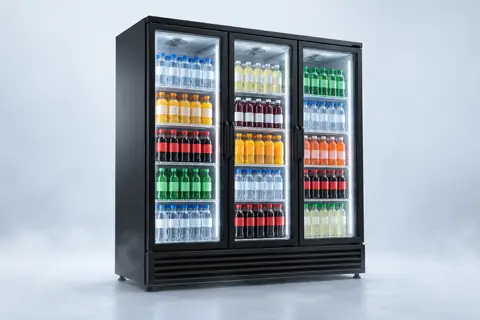
- Glass door display fridges: one to four doors, +2 °C to +8 °C (36–46 °F), LED lighting, low-E glass, R290 option.
- Display freezers: upright 1–4 door models of about 400–1600 L and glass-top chests of about 300–700 L at −18 °C to −24 °C (0 °F to −11 °F).
- Ice merchandisers: lockable freezers holding bagged ice at −12 °C to −6 °C (10–21 °F), 30–100 ten-pound bags.
- Back-of-house walk-in coolers and freezers for stock, sized to the delivery cycle.
For store layouts and case types, see our supermarket refrigeration equipment guide.
How does cold chain monitoring work?
Cold chain monitoring records product or air temperature at fixed intervals at every stage and raises an alarm when a limit is crossed, so a break is caught and documented before the product is sold or used. Cold chain monitoring solutions range from a USB logger in a single shipper to networked sensors across a warehouse and fleet.
- Controllers on each cold room, cabinet and vehicle unit hold the setpoint and display the air temperature.
- Sensors and data loggers record independently of the controller, typically every 5–15 minutes in storage and every 1–15 minutes in transit.
- Alarms notify staff by SMS, app or call, with a 15–60 minute delay so defrost cycles do not trigger false alarms.
- Temperature mapping finds the warmest and coldest spots in a room or vehicle so sensors and stock go in the right places.
- Records are kept for the period your HACCP plan or GDP quality system requires.
Cold chain monitoring tools are covered in more depth in our temperature data logger guide. Be There cold rooms and truck units ship with digital controllers; independent loggers and monitoring platforms come from specialist suppliers.
Cold chain management requirements by product
Cold chain management requirements are set by the product: chilled food at or below +5 °C (41 °F), frozen food at −18 °C (0 °F) or colder, and most medicines at +2 °C to +8 °C (36–46 °F). The governing rules come from food safety law and, for medicines, from good distribution practice.
| Product group | Cold chain management temperature | Key references |
|---|---|---|
| Chilled meat, dairy, ready meals | 0 °C to +5 °C (32–41 °F) | HACCP, FDA Food Code (41 °F cold holding) |
| Fresh produce | 0 °C to +13 °C (32–55 °F) depending on crop | Product-specific storage charts |
| Frozen food | −18 °C (0 °F) or colder | HACCP, national frozen food rules |
| Ice cream | −20 °C to −25 °C (−4 °F to −13 °F) storage | Manufacturer specifications |
| Vaccines and most medicines | +2 °C to +8 °C (36–46 °F) | EU GDP 2013/C 343/01, WHO PQS |
| Some biopharma and cell products | −20 °C, −70 °C to −80 °C, or below −150 °C | Product labelling, GDP |
Food cold chain management in the food industry is built around HACCP: identify the cold chain as a critical control point, set limits, monitor, and record corrective action. The biopharma and medical cold chain adds qualified equipment, temperature mapping and validated shipping lanes; see our pharmaceutical cold chain guide. Ideal storage temperatures for individual foods are in the cold storage temperature chart.
How to plan your cold chain equipment: checklist
Plan cold chain infrastructure from the product backwards: its required temperature, its daily volume and how often it is moved decide every piece of equipment.
- Write down each product's temperature band and maximum allowed excursion.
- Calculate daily intake in kg and how much arrives warm; this sizes blast freezing or precooling.
- Calculate storage volume from stock days × daily volume, then size cold rooms with the cold room load calculator.
- Choose panel thickness and floor build for each room's temperature.
- List every vehicle, its box volume and drops per day; size truck refrigeration units for the worst summer day.
- Decide what is outsourced (temperature controlled shipping companies, refrigerated warehouse space for rent or lease) and what you own.
- Add monitoring at every handover point, not only in storage.
- Confirm voltage, refrigerant and certification for your market before ordering.
Be There supplies the owned hardware in this list: complete walk-in cold room kits, PU/PIR insulation panels and XPS floor boards, blast chillers and shock freezers from 5 to 20 trays, truck refrigeration units for 4–45 m³ boxes, glass door display fridges, display freezers, ice merchandisers and flake ice machines for fish and produce. Send your products, temperatures, daily volumes and site voltage through the inquiry form and our engineers will propose a matched equipment list and quote FOB, CIF or DDP.