
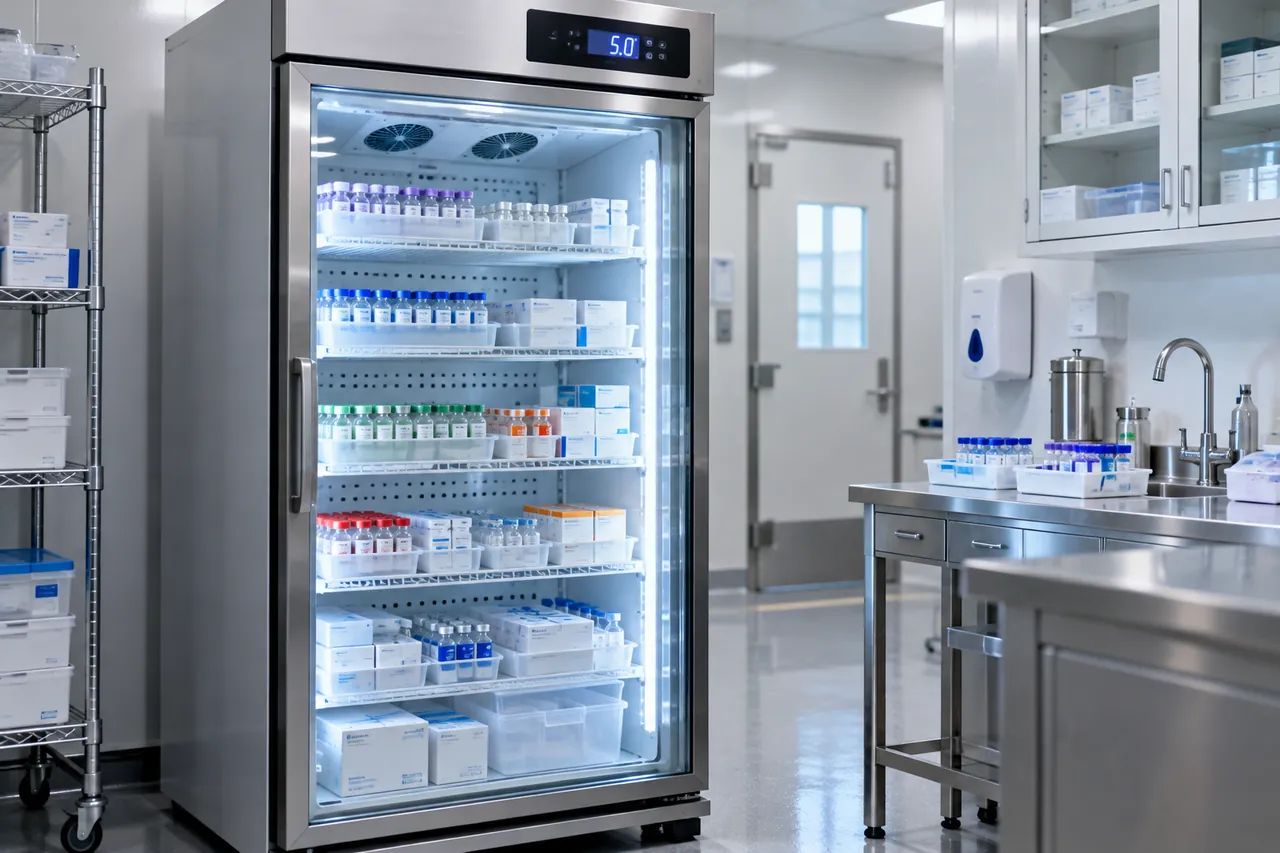
Short answer
The pharmaceutical cold chain keeps medicines within their labelled range from factory to patient. Most vaccines and biologics need +2 °C to +8 °C (36–46 °F); CDC guidance puts frozen vaccines at −50 °C to −15 °C (−58 °F to +5 °F). Storage must be mapped, monitored with calibrated loggers accurate to ±0.5 °C, and every excursion documented under WHO, EU GDP or USP rules.
Key takeaways
- Most vaccines and biologics are stored at +2 °C to +8 °C (36–46 °F); CDC recommends aiming for +5 °C (40 °F).
- CDC frozen vaccine storage is −50 °C to −15 °C (−58 °F to +5 °F); some mRNA products need −90 °C to −60 °C.
- CDC vaccine data loggers need a buffered probe, ±0.5 °C (±1 °F) accuracy, min/max display and a 30-minute or shorter logging interval.
- EU GDP 2013/C 343/01 requires temperature mapping of storage areas before use and calibrated monitoring with alarms.
- Freeze-sensitive vaccines can be ruined at or below 0 °C (32 °F), so tight control matters more than raw cooling capacity.
- A 2–8 °C pharma cold room typically uses 75–100 mm PU/PIR panels, duty and standby refrigeration and heating for cold climates.
What is the pharmaceutical cold chain?
The pharmaceutical cold chain is the controlled sequence of storage, handling and transport that keeps temperature-sensitive medicines and vaccines within their labelled range, usually +2 °C to +8 °C (36–46 °F), from the manufacturer to the patient. Every link, from the factory cold store to the clinic fridge, must be qualified, monitored and documented.
Biologics, insulin, many eye drops, most vaccines, blood products and cell and gene therapies lose potency if they get too warm, and many are destroyed by freezing. The loss is usually invisible: a heat-damaged or frozen vaccine looks the same as a good one. That is why cold chain management in pharmaceuticals relies on equipment that holds a tight range, continuous records that prove it did, and procedures for the moments when it did not.
Compared with the food cold chain described in our cold chain logistics guide, the pharma cold chain has narrower limits, stricter documentation, mandatory temperature mapping and qualification, and regulators who expect you to prove that every excursion was assessed. The same physical building blocks apply, however: insulated rooms, refrigeration, refrigerated vehicles, insulated packaging and monitoring.
What temperature must vaccines and medicines be stored at?
Most refrigerated medicines and vaccines must be stored at +2 °C to +8 °C (36–46 °F), frozen vaccines at −50 °C to −15 °C (−58 °F to +5 °F) under CDC guidance, and ultra-cold products at about −90 °C to −60 °C (−130 °F to −76 °F). Always follow the range on the product label or package insert, which overrides any general rule.
| Storage category | Temperature range | Typical products |
|---|---|---|
| Controlled room temperature | +15 °C to +25 °C (59–77 °F), or +20 °C to +25 °C (68–77 °F) in USP terms | Tablets, capsules, many injectables |
| Cool | +8 °C to +15 °C (46–59 °F) | Some creams, suppositories |
| Refrigerated (cold chain) | +2 °C to +8 °C (36–46 °F); CDC aims for +5 °C (40 °F) | Most vaccines, insulin, biologics, many antibodies |
| Frozen | −25 °C to −10 °C (−13 °F to 14 °F) in USP terms; −50 °C to −15 °C (−58 °F to 5 °F) for CDC frozen vaccines | Varicella and some combination vaccines, frozen plasma, some APIs |
| Ultra-cold | −90 °C to −60 °C (−130 °F to −76 °F) | Some mRNA vaccines, cell therapies, biological samples |
| Cryogenic | Below −150 °C (−238 °F), liquid nitrogen vapour | CAR-T and other cell and gene therapies |
The vaccine temperature range of +2 °C to +8 °C is narrow in refrigeration terms. A standard food fridge cycling between +1 °C and +7 °C at the controller can push its coldest shelf below 0 °C near the evaporator, which is why purpose-built medical refrigerators with forced air circulation and tight control are recommended. Freezing is a real risk: aluminium-adjuvanted vaccines such as hepatitis B, DTP-containing and HPV vaccines can be irreversibly damaged at or below 0 °C (32 °F). For deep-frozen storage, see our guide to ultra-low temperature and lab freezers.
Which regulations and guidelines govern pharmaceutical cold storage?
The main references are WHO PQS for cold chain equipment, the EU Guidelines on Good Distribution Practice (GDP, 2013/C 343/01) for wholesale storage and transport, USP general chapters for storage definitions and distribution risk, and the CDC Vaccine Storage and Handling Toolkit for US vaccine providers. National medicines regulators apply these or their own equivalents.
| Reference | Who it applies to | Key requirements |
|---|---|---|
| WHO PQS (Performance, Quality and Safety) | Immunisation programmes and UN procurement | Prequalifies vaccine refrigerators and freezers, solar direct-drive fridges, cold boxes, vaccine carriers and temperature monitoring devices against published specifications, including ambient ratings and holdover time |
| WHO TRS 961 Annex 9 model guidance | Anyone storing or transporting time- and temperature-sensitive medicines | Storage, mapping, monitoring, transport and qualification guidance, with detailed technical supplements |
| EU GDP 2013/C 343/01 | Wholesale distributors in the EU/EEA | Qualified premises and equipment, temperature mapping before use, calibrated monitoring, alarms, validated transport, documented deviation handling |
| USP <659> | US manufacturers, labels and pharmacies | Defines storage terms: refrigerator +2 °C to +8 °C, freezer −25 °C to −10 °C, controlled room temperature +20 °C to +25 °C |
| USP <1079> | Storage and distribution of finished drug products | Risk-based approach to storage and transport: qualification, monitoring, packaging, excursion management |
| CDC Vaccine Storage and Handling Toolkit | US vaccine providers, including VFC programme sites | Purpose-built or pharmaceutical-grade units recommended; digital data logger with buffered probe; fridge +2 °C to +8 °C, freezer −50 °C to −15 °C; daily min/max checks |
EU GDP Chapter 3 requires an initial temperature mapping exercise for storage areas before use, under representative conditions, and monitoring equipment placed according to the mapping results. Chapter 9 requires that the labelled storage conditions are kept during transport and that any deviation is reported to the distributor and recipient. USP <1079> takes the same risk-based view for the US supply chain. If you are building a facility, the regulator in your market and your quality team decide which document is binding; the equipment you buy must let you meet it.
What equipment is used for pharmaceutical cold storage?
Pharmaceutical cold storage uses purpose-built medical refrigerators and freezers for clinics and pharmacies, walk-in cold rooms for wholesalers and hospital pharmacies, and large temperature-controlled warehouses for distribution centres. The right choice depends on volume, temperature and how much redundancy your quality system demands.
| Equipment | Typical capacity | Range | Where used |
|---|---|---|---|
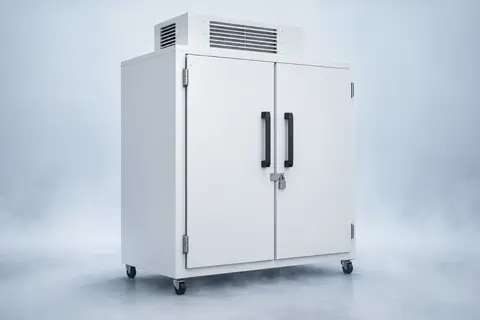
| Purpose-built pharmacy or vaccine refrigerator | 50–1,400 L (2–50 cu ft) | +2 °C to +8 °C, controlled near +5 °C | Clinics, pharmacies, doctors' surgeries |
| Ice-lined or solar direct-drive vaccine fridge (WHO PQS) | Small, for health posts | +2 °C to +8 °C with long holdover | Off-grid or unreliable power |
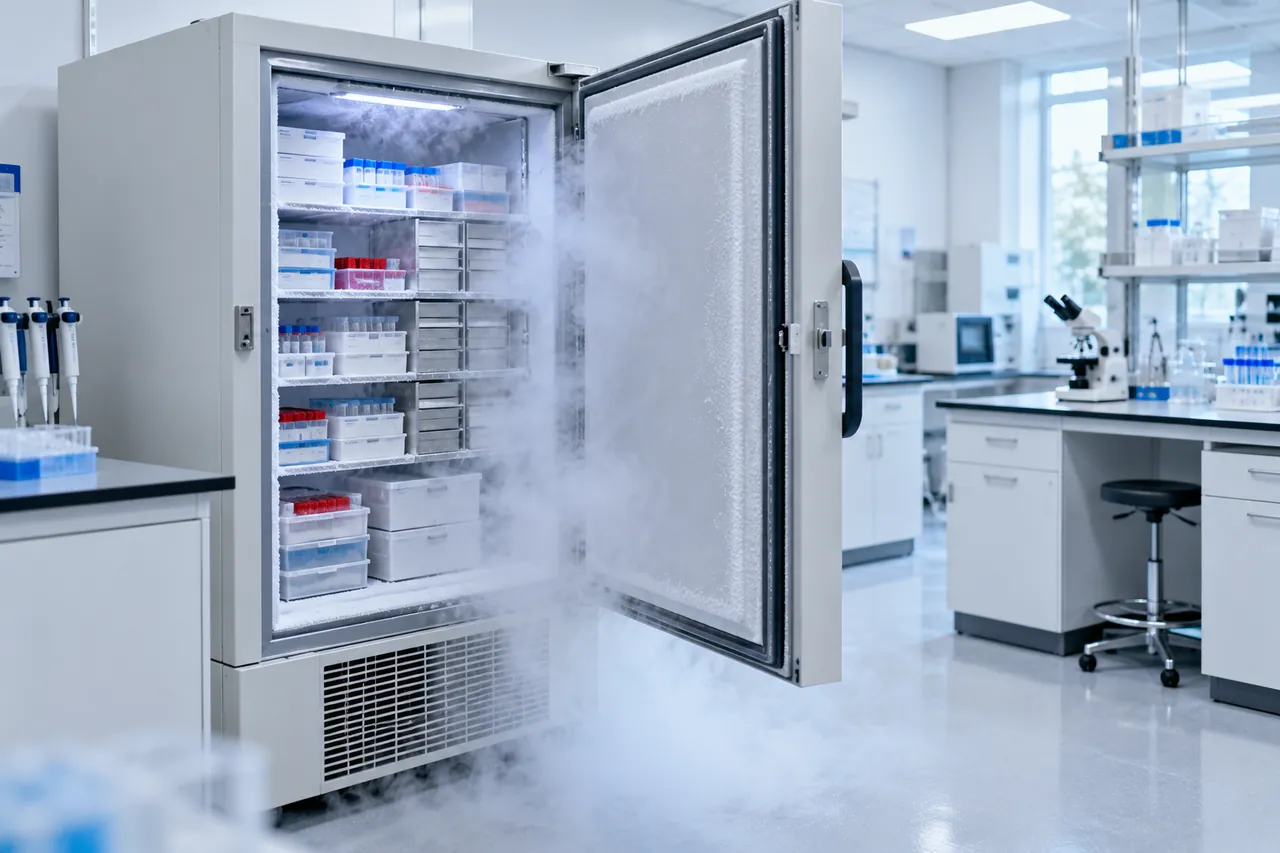
| Medical or laboratory freezer | 100–700 L | −15 °C to −50 °C | Frozen vaccines, plasma, samples |
| Ultra-low temperature (ULT) freezer | 300–800 L | −60 °C to −86 °C | mRNA vaccines, biologics, research |
| Walk-in cold room (2–8 °C) | 5–100 m³ (175–3,500 cu ft) | +2 °C to +8 °C | Wholesalers, hospital pharmacies, depots |
| Walk-in freezer room | 5–100 m³ | −18 °C to −25 °C | Frozen products, bulk APIs |
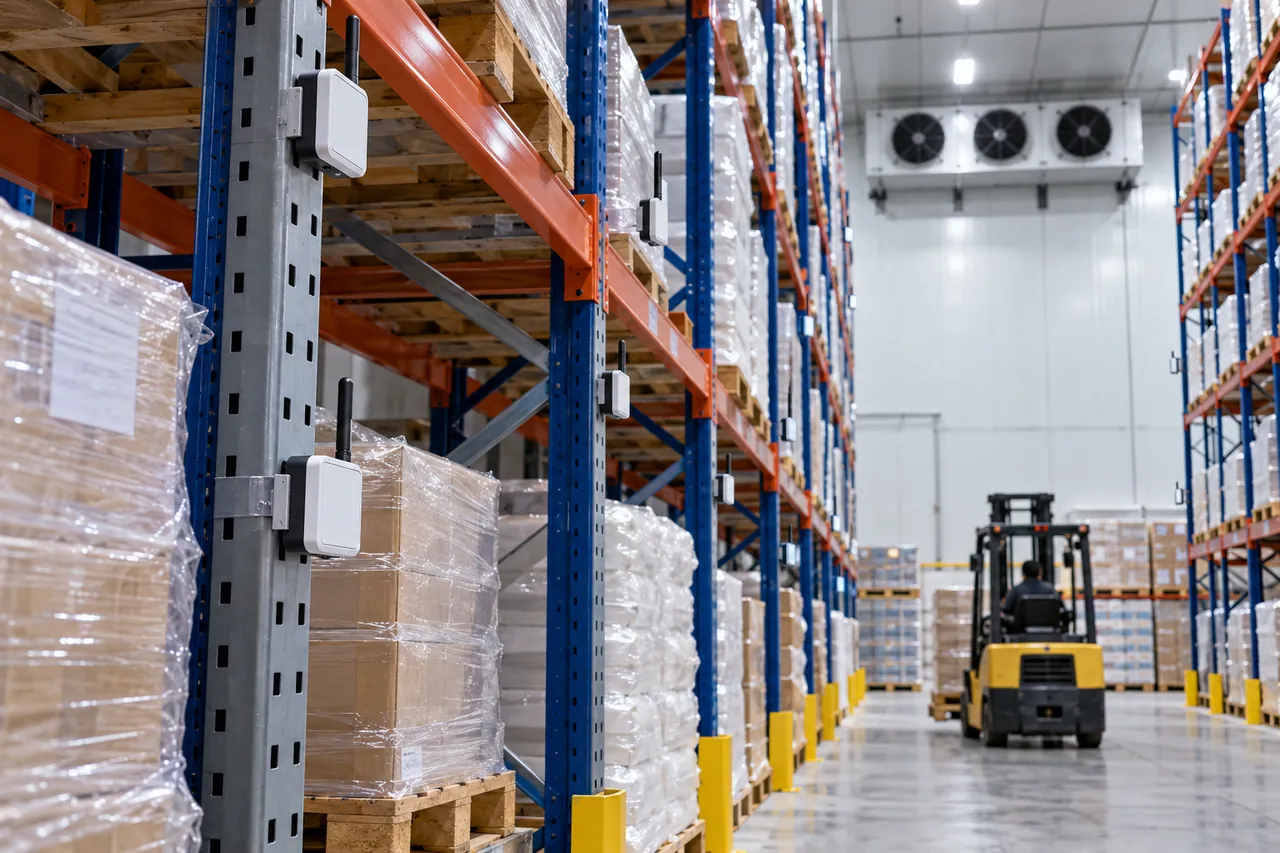
| Pharmaceutical cold storage warehouse | 1,000 m³ and up | +2 °C to +8 °C and +15 °C to +25 °C zones | National distribution centres, 3PLs |
Designing a 2–8 °C pharma cold room
A cold storage pharmacy room or wholesale depot is built like a food chiller but specified more tightly. Typical choices are:
- PU or PIR sandwich panels of 75–100 mm (3–4 in) for +2 °C to +8 °C rooms and 120–150 mm (5–6 in) for −20 °C freezer rooms, with sealed joints and hygienic, easy-clean facings.
- Two independent refrigeration systems (duty and standby, often called N+1), each able to hold the room alone, with automatic changeover on failure.
- Evaporators with low air velocity and air throw that does not blow directly on product, and controller differential tight enough to hold +3 °C to +7 °C at all mapped points.
- Heating as well as cooling where winter ambient can drop below +2 °C, so the room cannot freeze stock in a cold climate.
- Backup power (generator or UPS for controls and monitoring), door alarms and an anteroom or strip curtain for busy doors.
Size the refrigeration with the cold room load calculator, then add redundancy. For GMP areas where cleanliness classes apply, see our cleanroom panels guide.
How should pharma and vaccine temperatures be monitored?
Pharmaceutical storage must be monitored continuously with calibrated electronic data loggers that record at fixed intervals, show minimum and maximum readings, and alarm when limits are crossed. CDC guidance for vaccine units calls for a digital data logger with a buffered, detachable probe, accuracy of ±0.5 °C (±1 °F), and a current calibration certificate.
The key features CDC lists for a vaccine data logger are: a probe in a buffer (glycol, glass beads, sand or similar) so it reflects vaccine temperature rather than air; an alarm for out-of-range temperatures; a display of current, minimum and maximum temperature readable without opening the door; a low-battery indicator; a logging interval that can be set to at least every 30 minutes; and a calibration certificate from a laboratory accredited to ISO/IEC 17025. Read and record the minimum and maximum temperatures at the start of each workday in the vaccine temperature log, and download and review data regularly.
For cold rooms and warehouses, a networked system with multiple probes placed according to the temperature map, SMS or app alarms and an audit-trailed database is normal. Set alarm delays so that a short air spike during a door opening does not trigger an alarm, but a real failure does within 15–30 minutes. Our guides to temperature data loggers and freezer temperature alarm limits explain logger types and alarm settings, and hospital refrigerator monitoring usually follows the same principles across wards and pharmacies.
Simple practices that prevent most vaccine losses
- Store vaccines in the middle of the unit in original packaging, not in door bins, against walls or near the evaporator outlet.
- Leave 50–75 mm (2–3 in) between stock and walls for air flow; do not overfill.
- Keep water bottles in empty refrigerator space to stabilise temperature during door openings and power cuts.
- Do not use dormitory-style or bar fridges, or the freezer section of a household combination unit, for vaccine storage.
- Fit a plug guard and a "Do not unplug" sign on the outlet and circuit breaker.
What is temperature mapping and equipment qualification?
Temperature mapping measures temperature at many points inside a fridge, cold room or warehouse over time to find the warmest and coldest spots, and qualification is the documented proof that the equipment performs to specification. EU GDP requires mapping of storage areas before use and again after significant modifications.
Qualification usually follows four stages: design qualification (DQ, the specification is right), installation qualification (IQ, it was installed as specified), operational qualification (OQ, it works empty, including alarms and power-failure tests) and performance qualification (PQ, it holds range loaded under real use, often in both summer and winter). Mapping data then decides where permanent monitoring probes go and which zones cannot be used for product. Step-by-step methods are in our warehouse temperature mapping guide.
How are vaccines and medicines transported in the cold chain?
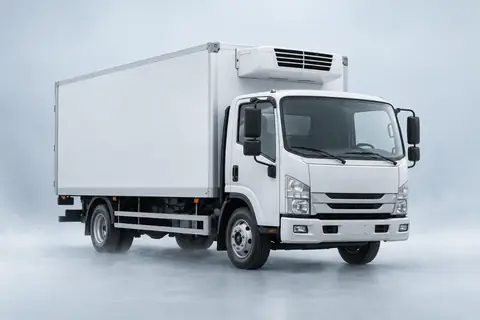
Pharmaceutical temperature controlled transport uses either qualified passive packaging (insulated shippers with conditioned gel or phase-change packs), active containers with their own refrigeration, or refrigerated vehicles whose body, refrigeration unit and monitoring have been qualified for the route. Each shipment should carry a calibrated logger.
| Method | Typical duration | Strengths | Watch-outs |
|---|---|---|---|
| Vaccine carrier or cold box (WHO PQS) | 1–5 days cold life depending on model | Simple, last-mile and outreach | Correctly conditioned ice packs to avoid freezing |
| Passive qualified shipper (EPS, PUR or vacuum insulated panels with PCM) | 24–120 hours | Parcel and air freight, no power | Qualified for a seasonal ambient profile; pack-out must be followed exactly |
| Active air cargo container | Days, with battery | Pallet-scale air freight | Rental cost, battery and handling |
| Refrigerated van or truck at +2 °C to +8 °C | Unlimited while powered | Distribution to pharmacies and hospitals | Mapping of the cargo box, heating in winter, multi-drop door openings |
| Reefer container | Weeks at sea | Bulk international shipments | Set point, pre-trip inspection, continuous power |
For road vehicles, the refrigeration unit must hold +2 °C to +8 °C in summer heat and winter cold, so units with a heating function are preferred in cold climates. Box insulation, air distribution (air chutes, bulkheads) and how quickly the box recovers after a delivery stop matter as much as unit capacity. Our refrigerated van conversion guide covers bodies and insulation, and vaccine transportation plans should define maximum door-open times and what drivers do if an alarm sounds.
What happens if vaccines get too warm or freeze?
A temperature excursion is any period outside the labelled range, and the affected stock must be quarantined, labelled "Do not use" and assessed with the manufacturer's stability data before it is used or discarded. Do not throw it away straight away, and do not use it until it has been cleared.
- Move the product to a working unit at the correct temperature, kept separate from released stock.
- Record the excursion: maximum or minimum temperature reached, total time out of range, logger data and the cause.
- Contact the manufacturer or your quality person and the immunisation programme where applicable; they decide whether the product is still usable.
- Fix the cause: failed thermostat, door left open, power loss, overloading or a frozen evaporator.
- Review whether the alarm worked and was answered in time, and update procedures.
Heat damage is cumulative, and some programmes use vaccine vial monitors (VVMs), heat-sensitive labels on vials that darken with accumulated heat exposure. Freeze damage is immediate for freeze-sensitive vaccines, which is why equipment that cannot overshoot below +2 °C is more important than raw cooling capacity.
How to choose pharma cold chain equipment and logistics partners
Choose equipment and pharma cold chain logistics companies on documented performance: proven temperature uniformity, redundancy, monitoring and the quality paperwork your regulator expects.
- Confirm the exact storage ranges for every product you handle, including frozen and controlled room temperature lines.
- Specify purpose-built units for clinics, and N+1 refrigeration, heating, backup power and multi-point monitoring for cold rooms.
- Ask for mapping and qualification support (IQ/OQ/PQ protocols and reports), calibration certificates and alarm test records.
- For transport providers, ask for vehicle mapping data, GDP compliance, route qualification, how excursions are reported and how fast.
- Check service response times, spare parts and preventive maintenance plans; downtime is the biggest risk to stock.
- Plan records from the start: who reviews data daily, who answers alarms at night, how long records are kept.
Be There supplies the building blocks for 2–8 °C and frozen pharmaceutical storage and distribution: walk-in cold rooms from small pharmacy stores to depot-size rooms, with PU/PIR panels, duty and standby refrigeration options and alarm outputs; insulation panels for larger temperature-controlled warehouses; and truck refrigeration units for vans and trucks holding −20 °C to +15 °C. Medical refrigerators, data loggers and qualification services come from specialist suppliers and your validation team. Send your room size, temperature zones, redundancy and monitoring requirements through the inquiry form and we will quote FOB, CIF or DDP.