
Short answer
To ship frozen food, freeze it to −18 °C (0 °F) or colder, vacuum pack it, and pack it tightly in an insulated foam shipper with 25–50 mm walls and about 2–5 kg (5–10 lb) of dry ice per 24 hours of transit. Send it overnight or 2-day early in the week; for pallet volumes, use a reefer truck at −18 °C or below.
Key takeaways
- Freeze food to −18 °C (0 °F) or colder, ideally −20 °C to −25 °C, before packing; packaging only slows warming.
- Plan roughly 2–5 kg (5–10 lb) of dry ice per 24 hours of transit in a typical 30–40 L foam shipper, then test your pack-out.
- Dry ice is −78.5 °C (−109 °F) and is shipped as UN 1845; packages must vent CO₂ and show the net dry ice weight in kg.
- Frozen gel packs start at about 0 °C, so they suit chilled food at 0–8 °C, not frozen food over multi-day transit.
- USDA advises that mail-order perishables should arrive with ice crystals present or at 4 °C (40 °F) or below.
- Above about one pallet (300–600 kg) per destination, reefer LTL or a refrigerated truck at −18 °C is usually cheaper than parcels.
How do you ship frozen food?
To know how to ship frozen food, think in three parts: freeze the product hard first, pack it in an insulated box with enough coolant for the whole journey plus a margin, and choose a transit time short enough that it arrives still frozen. For parcels that means dry ice in an EPS or PU foam shipper sent overnight or 2-day; for pallets it means a reefer truck or container at −18 °C (0 °F) or colder.
The packaging does not make food colder; it only slows down warming. Food that leaves at −25 °C (−13 °F) has far more margin than food that leaves at −12 °C (10 °F) from an overloaded freezer. For food safety, the USDA advises that mail-order perishables should arrive frozen or partly frozen with ice crystals still present, or at 4 °C (40 °F) or below. Anything warmer should not be eaten or sold. This guide covers parcels first, then pallet freight, then how to decide between them.
Dry ice vs gel packs: which cold packs for shipping frozen food?
Use dry ice to keep food frozen; use gel packs or water-based cold packs for shipping food that only needs to stay chilled at 0–8 °C (32–46 °F). Frozen gel packs start at about 0 °C (32 °F) or a little below, so they cannot hold frozen food at −18 °C for long. Special eutectic packs frozen to about −20 °C (−4 °F) fill the gap for short frozen shipments.
| Coolant | Temperature | Keeps product | Typical hold in a good shipper | Notes |
|---|---|---|---|---|
| Dry ice (solid CO₂) | −78.5 °C (−109 °F) | Frozen | 24–72 h depending on quantity | Dangerous goods (UN 1845) by air; needs venting |
| Eutectic or phase-change packs at about −20 °C | About −18 °C to −25 °C | Frozen | 12–48 h | Must be pre-frozen in a freezer colder than their set point |
| Frozen gel packs | About 0 °C (32 °F) | Chilled, 0–8 °C | 24–48 h | Not dangerous goods; reusable |
| Water ice in sealed bags | 0 °C (32 °F) | Chilled | 12–24 h | Heavy; meltwater can leak |
| Refrigerated gel packs (2–8 °C conditioned) | +2 °C to +8 °C | Pharmaceuticals at 2–8 °C | Depends on qualified pack-out | Prevents freezing of vaccines and medicines |
A common mistake is to ship frozen meat with frozen gel packs and a 3-day service. The gel packs melt at 0 °C, the meat thaws through, and the box arrives "cool" but unsafe. If the food must arrive frozen, use dry ice or −20 °C eutectic packs and a 1–2 day service.
How much dry ice do you need to ship frozen food?
Plan on roughly 2–5 kg (5–10 lb) of dry ice for every 24 hours of transit in a typical 30–40 L (1–1.5 ft³) foam shipper, then add a margin for delays. Dry ice sublimates, turning straight from solid to gas, so the amount lost depends on box size, wall thickness, how full the box is and outside temperature.
| Planned transit | Small shipper, 15–20 L, 25–30 mm walls | Medium shipper, 30–40 L, 40–50 mm walls | Large shipper, 60–80 L, 50 mm walls |
|---|---|---|---|
| Up to 24 h | 2–3 kg (4–7 lb) | 3–5 kg (7–11 lb) | 5–7 kg (11–15 lb) |
| Up to 48 h | 4–5 kg (9–11 lb) | 5–8 kg (11–18 lb) | 8–11 kg (18–24 lb) |
| Up to 72 h | Not recommended | 8–11 kg (18–24 lb) | 11–15 kg (24–33 lb) |
These figures are indicative. The only reliable way to set your pack-out is to test: pack a box exactly as you will ship it, with a probe or data logger inside, leave it at the warmest temperature expected on the route, and see how long the product stays below −15 °C (5 °F). A full box holds temperature far better than a half-empty one, so fill voids with crumpled paper or foam. Place dry ice on top of the food, because cold gas sinks, and never seal it in an airtight container or bag.
Buy dry ice close to shipping time. It is stored in an insulated dry ice chest, not in a standard freezer: at −18 °C a freezer is about 60 K warmer than the ice, and the cold gas can upset the thermostat.
Insulated shipping boxes: which box keeps food frozen longest?
For frozen food, the most common insulated shipping boxes are expanded polystyrene (EPS) foam coolers with 25–50 mm (1–2 in) walls inside a corrugated cardboard outer box. Moulded polyurethane (PU) shippers hold temperature longer for the same wall thickness, and vacuum insulated panels (VIPs) give the longest hold in the smallest box but cost the most.
| Box type | Insulation, approx. λ | Typical wall | Best for | Trade-off |
|---|---|---|---|---|
| EPS foam cooler in carton | 0.033–0.038 W/(m·K) | 25–50 mm (1–2 in) | Frozen food, meat and seafood by parcel | Bulky; recycling limited in some areas |
| Moulded PU shipper | 0.022–0.026 W/(m·K) | 25–50 mm | Longer frozen shipments, reusable systems | Higher cost |
| Vacuum insulated panel (VIP) box | About 0.004–0.008 W/(m·K) | 20–30 mm | Pharmaceutical cold chain packaging, 72–120 h | Expensive; a punctured panel loses most of its value |
| Foil bubble or reflective liner | Low R-value | 5–10 mm | Chilled items, short overnight trips | Not enough for frozen food |
| Paper, wool or plant-fibre liners | 0.035–0.045 W/(m·K) | 20–40 mm | Chilled meal kits, 24–48 h | Recyclable or compostable; less hold time |
Most cold chain packaging solutions combine one of these boxes with a tested coolant pack-out. Pick the smallest box that fits product plus coolant with little empty space, since heat enters through the surface area. For medicines, use qualified pharmaceutical cold chain packaging: shippers tested against defined summer and winter temperature profiles, for example to ISTA 7D or 7E, with a documented pack-out. See our pharmaceutical cold chain guide for 2–8 °C rules. For how EPS compares with other foams, see PIR vs PU vs XPS vs EPS insulation.
How to pack frozen food for shipping, step by step
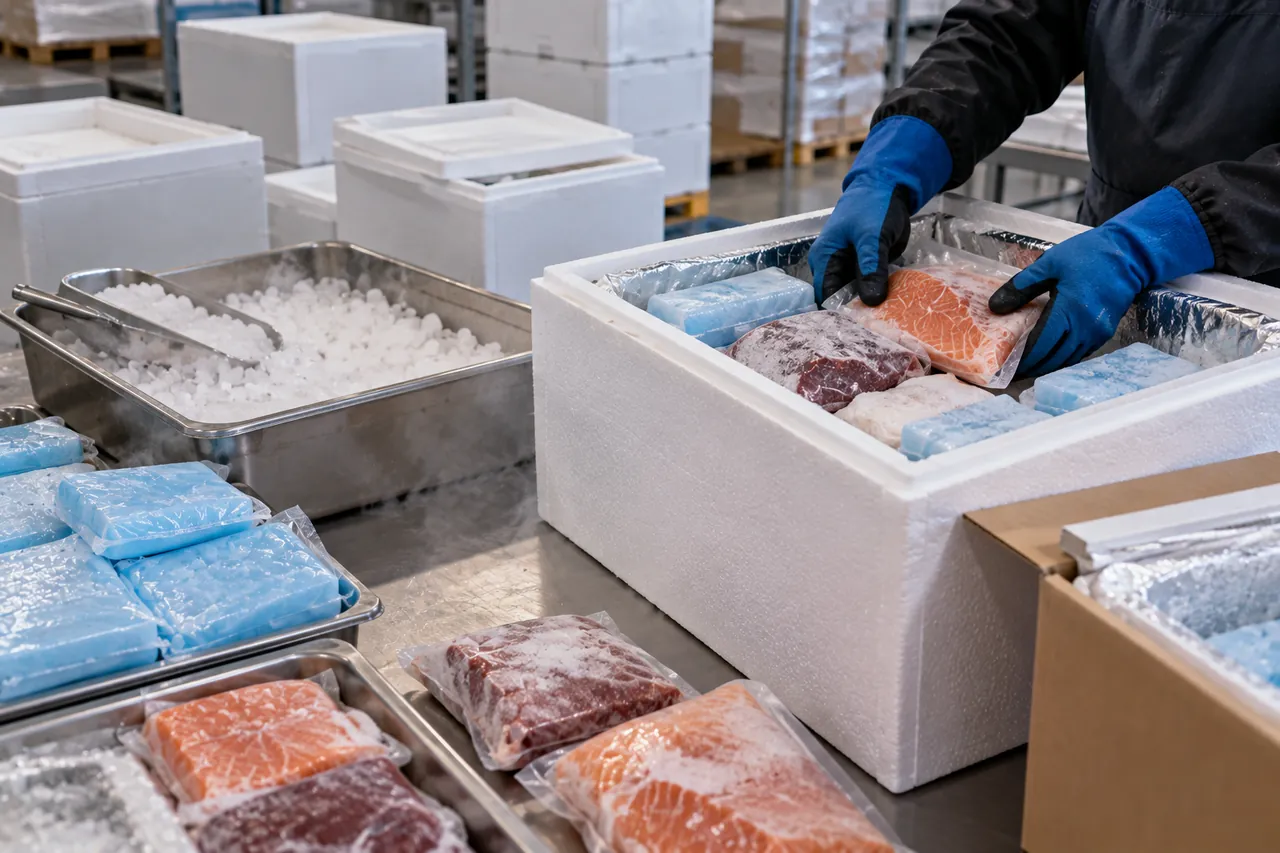
Pack frozen food by pre-freezing it hard, sealing it in leak-proof bags, filling an insulated box tightly with product and dry ice, closing it without making it airtight, and labelling it before sending it on a 1–2 day service early in the week.
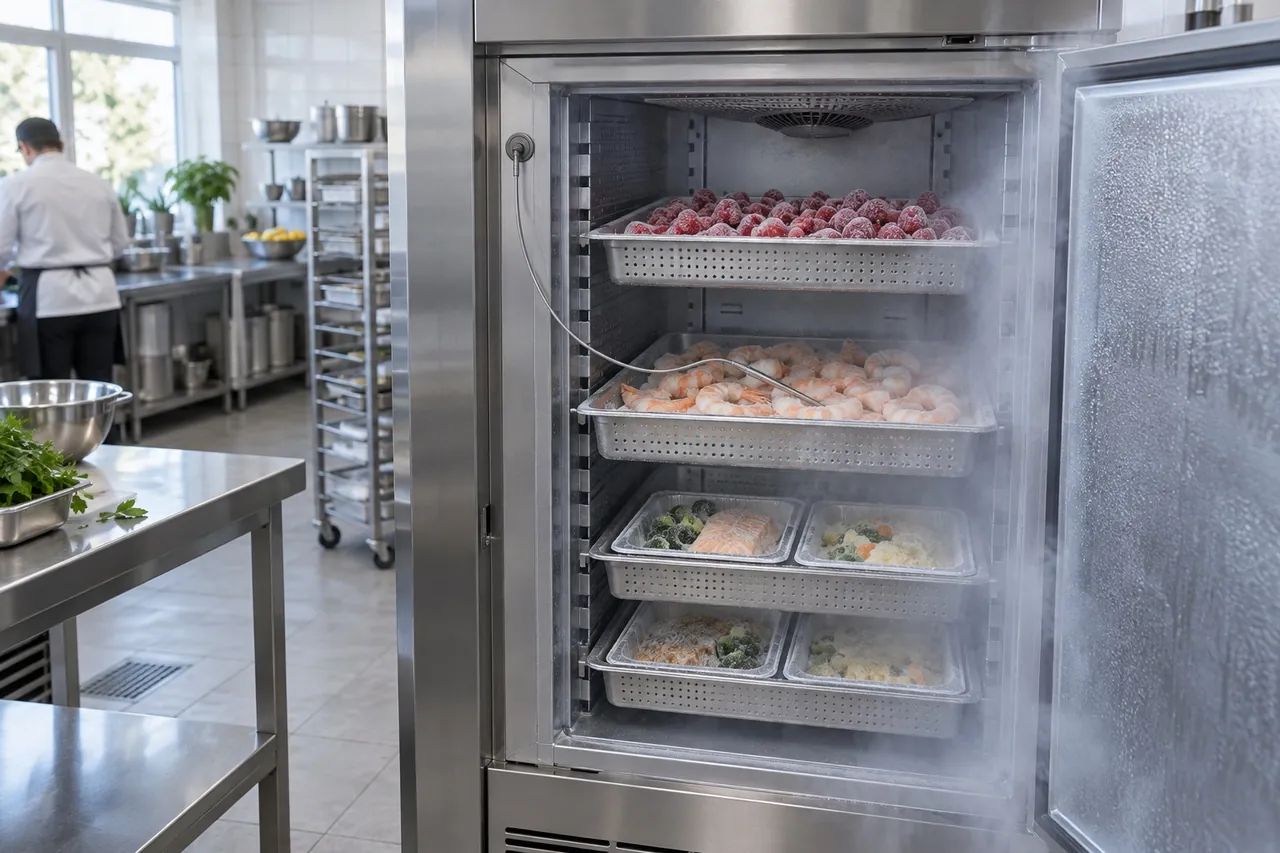
- Freeze hard. Bring the product core to −18 °C (0 °F) or colder, ideally −20 °C to −25 °C, at least 24 hours before packing. Fast freezing in a blast freezer gives better quality; see what is a flash freezer.
- Wrap. Vacuum pack or double-bag each item in leak-proof plastic so meltwater and blood cannot escape.
- Pre-condition the box. Keep the foam shipper at room temperature or cooler; never pack in a hot vehicle or loading area.
- Load the food. Put the heaviest, coldest items at the bottom, packed tightly together.
- Add coolant. Wrap dry ice in paper and lay it on top of and around the food; for chilled items, put gel packs above and beside the product.
- Fill voids. Use crumpled paper, foam or bubble wrap so nothing moves and there is little air.
- Close. Fit the foam lid without taping it airtight, so CO₂ can escape; tape the outer carton.
- Label. Mark the box "Perishable", "Keep frozen", "This side up", and the dry ice markings described below.
- Ship early. Send Monday to Wednesday on an overnight or 2-day service so parcels are not held in a depot over a weekend.
- Track and tell the recipient. Ask them to unpack immediately and check that food still has ice crystals or is at 4 °C (40 °F) or below.
How to ship frozen meat, refrigerated items and fresh produce
To ship frozen meat, vacuum pack it, freeze it to −18 °C or below, and send it in a foam shipper with dry ice on an overnight or 2-day service, exactly as above. Meat needs extra leak protection because thawing releases blood, which carriers treat as damage to other parcels.
How to ship refrigerated items
When shipping cold items that must stay chilled, such as cheese, cooked meats or meal kits, use frozen gel packs rather than dry ice, which would freeze them. Aim to keep the product at 0–5 °C (32–41 °F) and use an overnight service for anything that is a TCS food under the FDA Food Code.
How to ship fresh produce
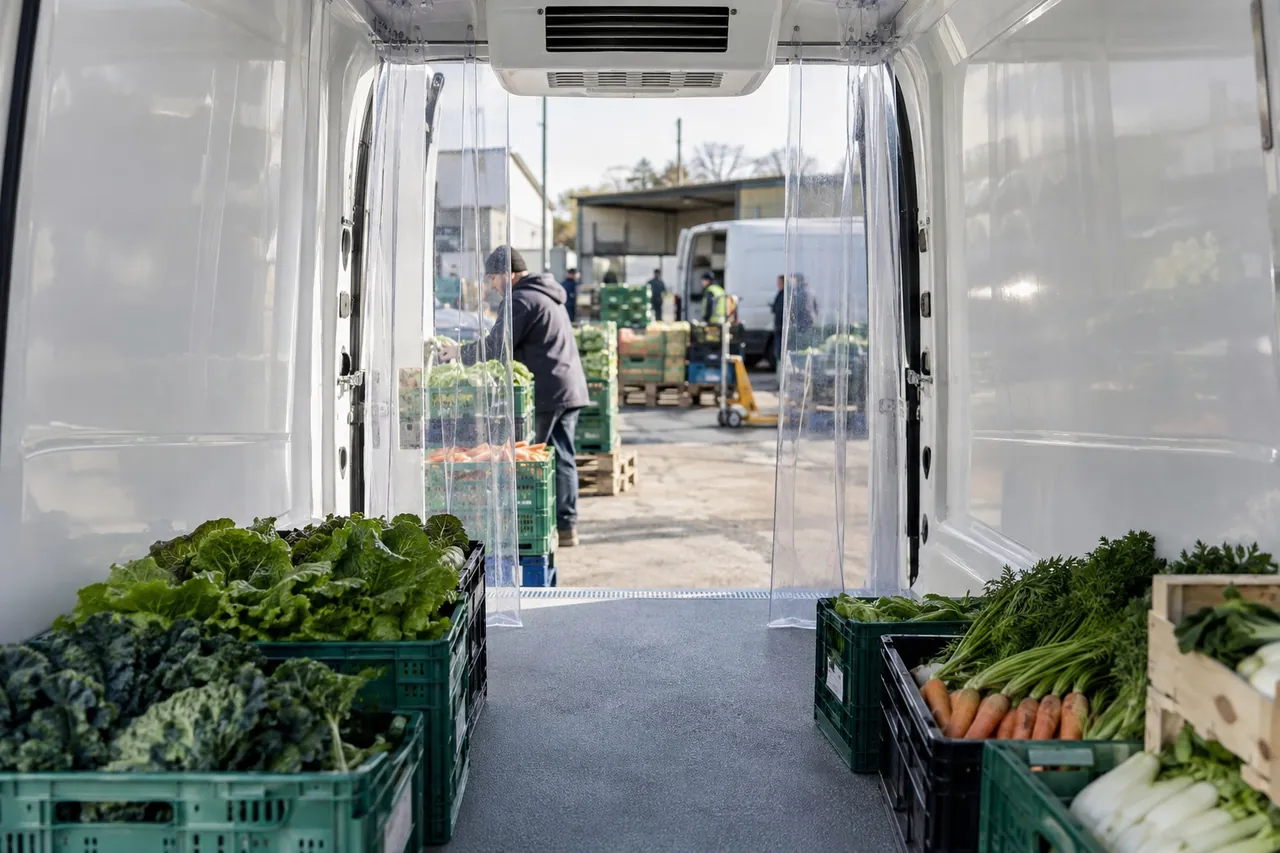
Fresh produce must not freeze. Pre-cool it to its storage temperature, pack it in ventilated liners with gel packs separated by a layer of paper, and ship overnight. Chill-sensitive produce such as tomatoes and bananas should not be shipped with coolant at all. For shelf life after arrival, see how long food lasts in a freezer or fridge.
What are the rules for shipping with dry ice?
In dry ice shipping, the coolant itself is a dangerous good for air transport (UN 1845, Class 9) because it releases carbon dioxide gas, which can displace oxygen in closed spaces and burst sealed containers. Packages must let the gas escape, and they must be marked with "Dry Ice" or "Carbon dioxide, solid", UN 1845 and the net weight of dry ice in kilograms.
- Air: IATA Dangerous Goods Regulations (Packing Instruction 954) apply, with a Class 9 hazard label on larger quantities and limits per package set by each airline and carrier.
- United States: 49 CFR 173.217 covers dry ice. Ground parcel services usually have simpler requirements than air, but carriers still set their own limits.
- Handling: wear insulated gloves, never touch dry ice with bare skin, and store and pack it in a ventilated area.
- Vehicles and rooms: do not carry large amounts of dry ice in a closed van cab or small cold room without ventilation.
Rules differ by country and carrier and are updated regularly, so check your carrier's current dry ice requirements before the first shipment, and train staff who pack it.
When should you ship frozen food by reefer freight instead of parcels?
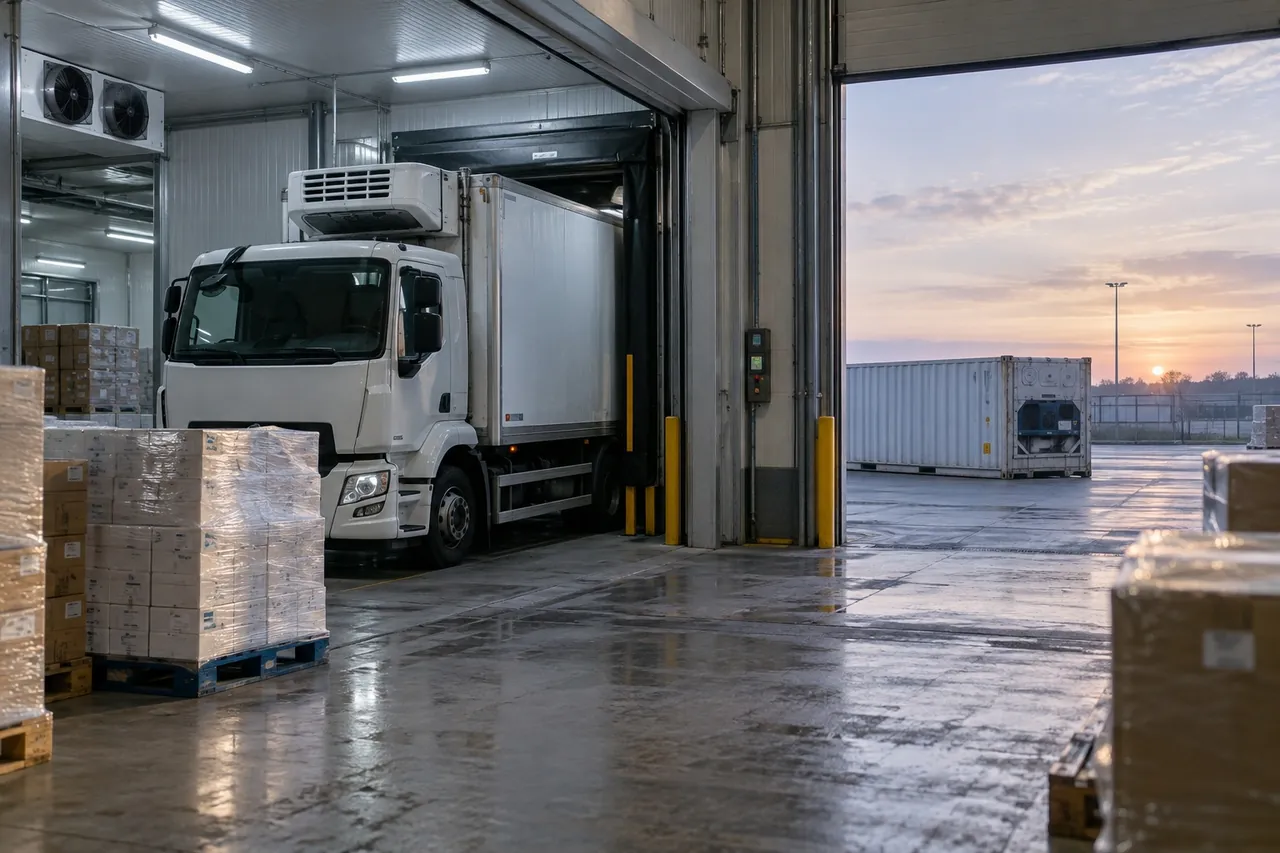
Switch from parcels to reefer freight once you regularly ship more than about one pallet, roughly 300–600 kg (660–1,320 lb), to the same destination, or when packaging and dry ice cost more than the freight itself. Reefer trucks and containers hold −18 °C to −25 °C for days, with no coolant to buy. For small, occasional orders, the cheapest way to ship perishable food is still a 2-day parcel to nearby zones in the smallest box that works.
| Method | Typical quantity | Temperature control | Typical transit | Main cost driver |
|---|---|---|---|---|
| Parcel with dry ice | 1–30 kg per box | Passive, 24–72 h | Overnight to 3 days | Express service, box and dry ice |
| Reefer LTL (part load) | 1–10 pallets | Active, −25 °C to +15 °C | 1–5 days | Pallet spaces, temperature zone |
| Full reefer truckload | Up to 26 US or 33 euro pallets | Active, about −29 °C to +30 °C | Days, any distance by road | Distance, fuel |
| Reefer container (export) | 10–23 pallets | Active, about −30 °C to +30 °C | Weeks by sea | Ocean freight, power at port |
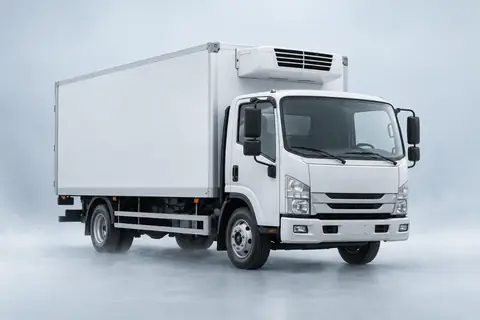
| Own refrigerated van or truck | Daily local deliveries | Active, −20 °C to +15 °C | Same day | Vehicle, unit and driver |
Reefers are built to hold temperature, not to freeze warm product, so load only product that is already at or below −18 °C into a pre-cooled vehicle. Food businesses delivering locally often find that a refrigerated van conversion pays back quickly against courier charges. For the wider chain, see cold chain logistics explained.
Checklist: the best way to ship frozen food
- Product frozen to −18 °C or colder, ideally −20 °C to −25 °C, before packing.
- Dry ice for frozen food, gel packs for chilled food, nothing cold for chill-sensitive produce.
- Foam shipper with 25–50 mm walls, sized so the box is full.
- Coolant sized for the longest likely transit plus 24 hours, confirmed by a pack-out test.
- Overnight or 2-day service, shipped Monday to Wednesday.
- Dry ice markings and carrier rules checked; staff trained.
- Above about one pallet per destination: reefer LTL, a full reefer load or your own refrigerated vehicle.
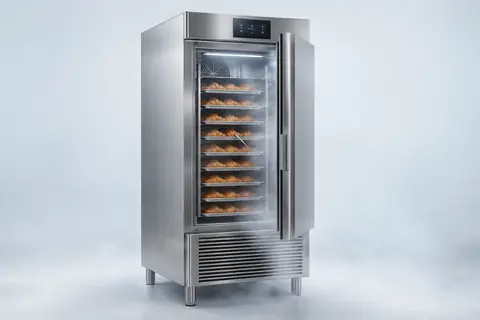
Be There does not supply shipping boxes, gel packs or dry ice. We supply the equipment upstream and on the road: blast chillers and shock freezers that take food to −18 °C core in about 240 minutes so it ships hard-frozen, walk-in freezers for staging stock at −18 °C to −25 °C, and truck refrigeration units for vans and trucks with 4–45 m³ boxes holding down to −20 °C for your own frozen deliveries. Check the unit size with the truck refrigeration calculator, then send your product, daily volume and vehicle through the inquiry form for an FOB, CIF or DDP quote.