Short answer
Cold chain logistics keeps temperature-sensitive goods within a set range from production to use, using cold stores, refrigerated trucks, reefer containers, insulated packaging and continuous monitoring. Common ranges are +2 °C to +8 °C (36–46 °F) for pharmaceuticals, 0 °C to +5 °C (32–41 °F) for chilled food and −18 °C (0 °F) or colder for frozen food.
Key takeaways
- Cold chain logistics links pre-cooling, cold storage, transport refrigeration, fulfillment and last-mile delivery.
- Common ranges are +15 °C to +25 °C, +2 °C to +8 °C, 0 °C to +5 °C, −18 °C and colder, and −60 °C to −80 °C ultra-cold.
- Refrigerated vans carry about 4–15 m³ and rigid trucks 15–45 m³; reefer containers hold 28–67 m³.
- Dry ice sublimates at −78.5 °C (−109 °F) and is dangerous goods for air transport under UN 1845.
- ATP-reinforced insulated bodies must have a K-value of 0.40 W/m²·K or lower.
What is cold chain logistics?
Cold chain logistics is the planning, storage, transport and monitoring that keeps temperature-sensitive goods – food, medicines, vaccines, flowers, chemicals – inside a set temperature range from the moment they are produced until they are used. The cold chain definition is simple: an unbroken series of refrigerated links. If any link fails, the whole chain fails.
How a cold chain works, link by link:
- Pre-cooling and processing – harvested produce is cooled within hours; cooked or slaughtered products go through blast chillers or freezers.
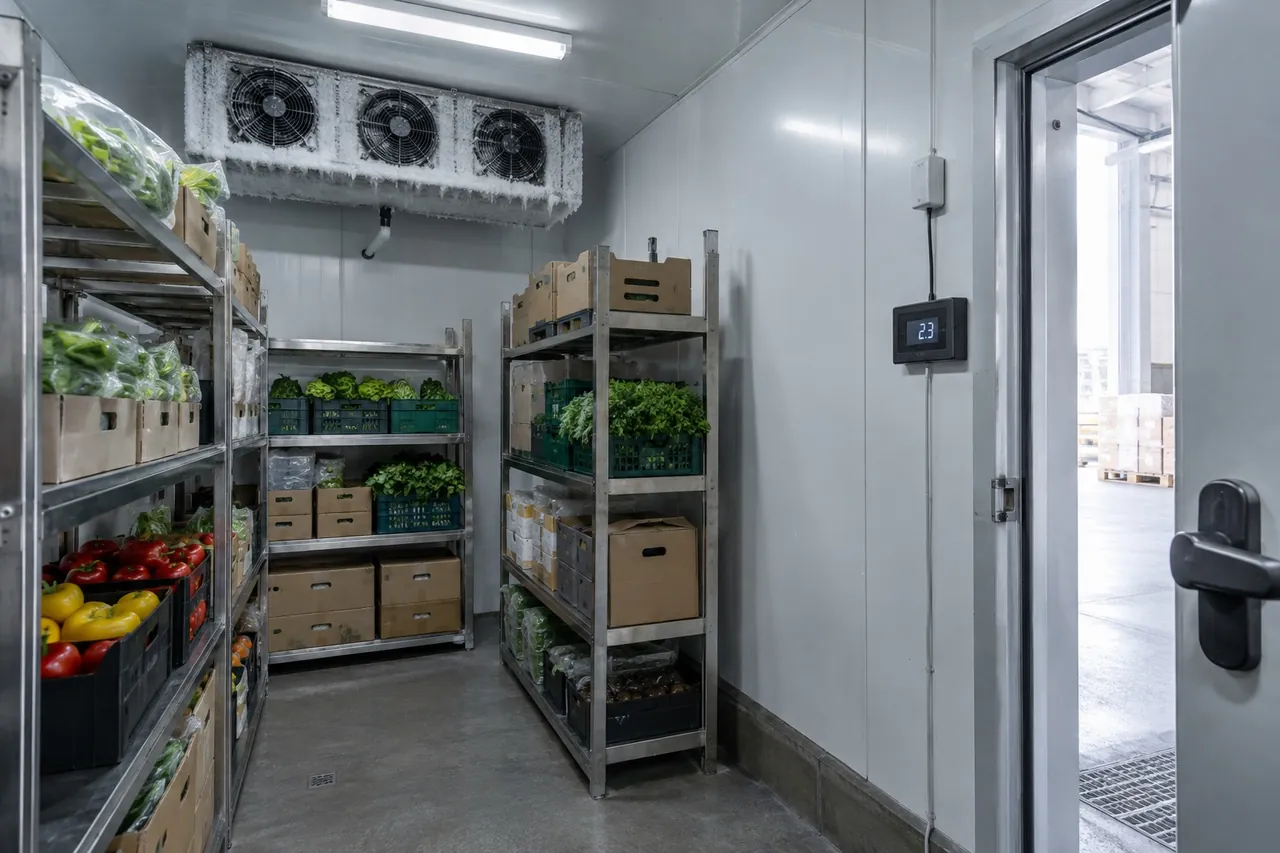
- Cold chain storage – cold rooms and refrigerated warehouses at the producer, the port and the distribution centre.
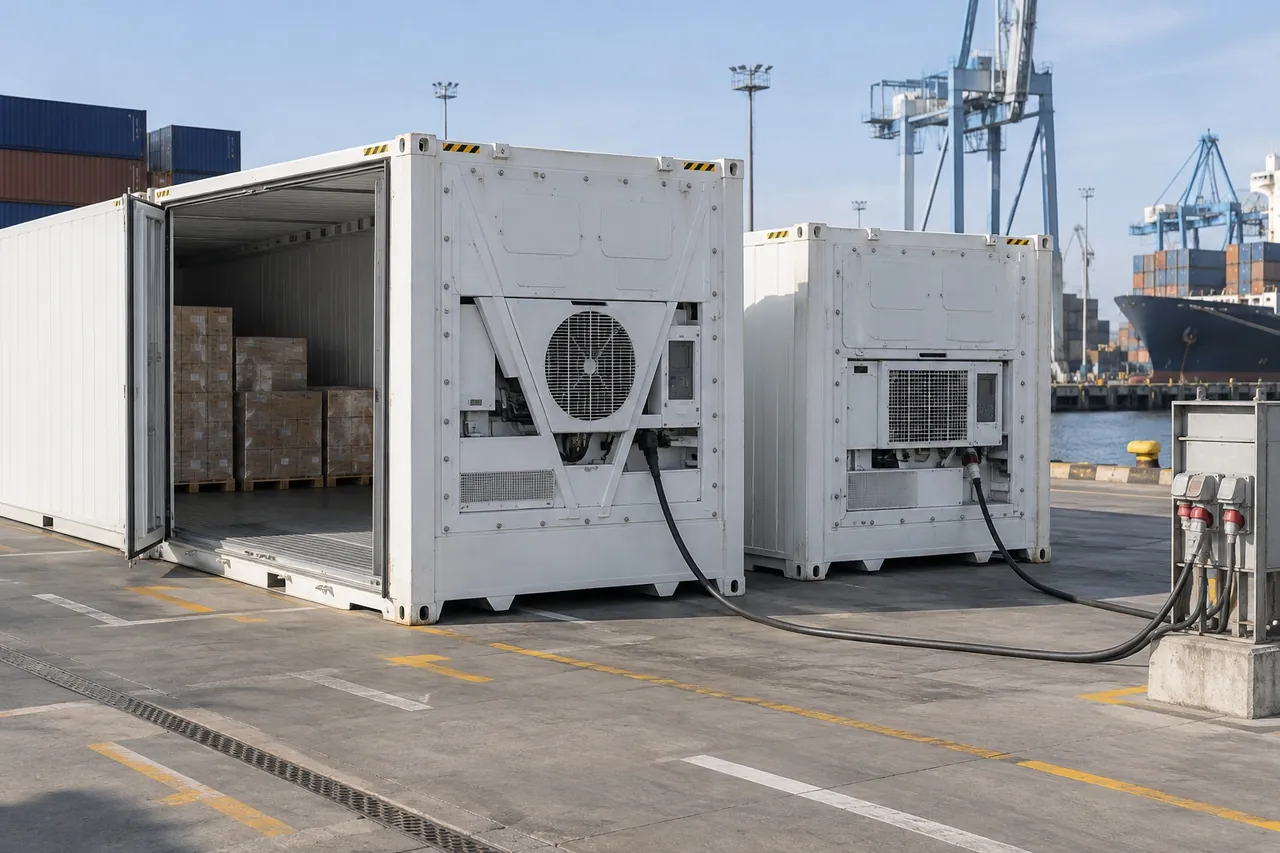
- Cold chain transportation – reefer containers, trailers, trucks and vans with transport refrigeration, plus air freight in insulated packaging.
- Cross-docking and fulfillment – picking and packing at controlled temperature.
- Last-mile delivery – refrigerated delivery vans or insulated boxes to stores, restaurants, pharmacies and homes.
- Retail and end use – display fridges, freezers and pharmacy refrigerators.
Cold chain management ties these links together with procedures, trained people and temperature records. The weakest points are almost always the handovers: open dock doors, pallets waiting in the sun, a delivery van loaded warm. Most of this guide is about closing those gaps.
Cold chain temperature ranges
Every cold chain shipment is booked against a temperature range. These are the common bands in temperature controlled logistics:
| Range | Temperature | Typical products |
|---|---|---|
| Controlled room temperature (CRT) | +15 °C to +25 °C (59–77 °F) | Many tablets, cosmetics, chocolate |
| Cool / fresh produce | +8 °C to +15 °C (46–59 °F) | Bananas, tomatoes, citrus, some flowers |
| Chilled food | 0 °C to +5 °C (32–41 °F) | Meat, fish, dairy, salads, ready meals |
| Pharma refrigerated | +2 °C to +8 °C (36–46 °F) | Vaccines, insulin, biologics |
| Frozen | −18 °C (0 °F) or colder | Frozen food, meat, vegetables |
| Deep frozen | −25 °C to −30 °C (−13 °F to −22 °F) | Ice cream, fish |
| Ultra-cold | −60 °C to −80 °C (−76 °F to −112 °F) | Some mRNA vaccines, cell samples, sashimi tuna |
| Cryogenic | Below −150 °C (−238 °F) | Cell and gene therapies, in liquid nitrogen vapour |
Cold chain temperature control is about staying inside the band, not just ‘cold’. A chilled pharmaceutical shipment that freezes is as damaged as one that warms up, and bananas below +13 °C (55 °F) suffer chilling injury. That is why many shippers specify a set point (for example +5 °C) plus an allowed excursion limit and duration.
Write the range on every booking, label and handover document, so each link in the chain works to the same numbers.
Cold chain transportation: trucks, containers and air freight
Transport refrigeration moves goods between fixed cold stores. Each mode has its own equipment:
| Mode | Equipment | Typical capacity | Best for |
|---|---|---|---|
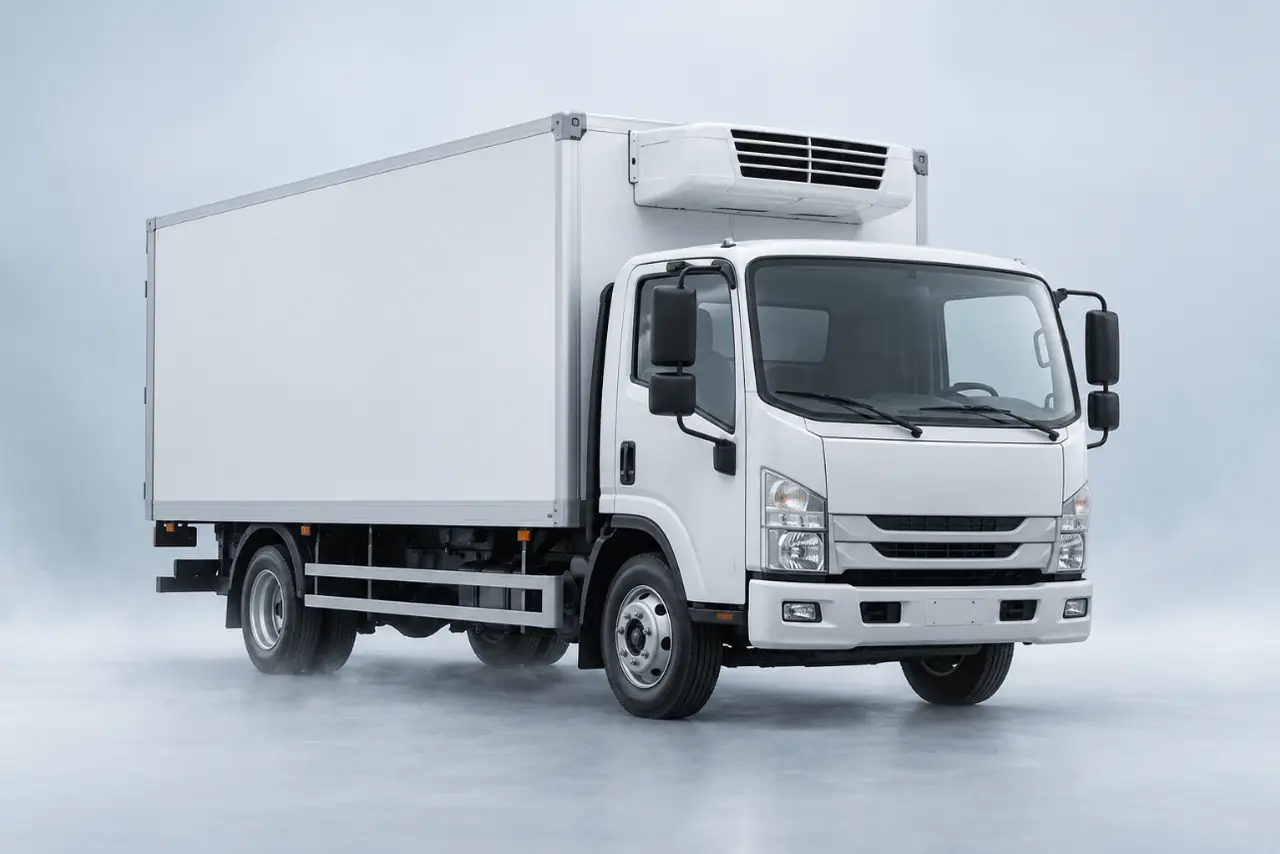
| Last-mile van | Insulated van + engine-driven or electric unit | 4–15 m³ (140–530 ft³) | Refrigerated delivery to shops, restaurants, homes |
| Rigid truck | Insulated box + diesel or engine-driven unit | 15–45 m³ (530–1,590 ft³) | Regional food delivery truck routes, frozen food |
| Trailer | Reefer trailer with self-powered unit | Up to about 33 Euro pallets | Long-haul temperature controlled transportation |
| Reefer container | ISO container with electric unit | 28–67 m³ (990–2,370 ft³) | International sea and rail shipping |
| Air freight | Active containers or passive insulated packaging | Parcels to pallets | High-value pharma, fresh fish, flowers |
Be There supplies truck refrigeration units for vans and trucks with 4–45 m³ boxes, holding −20 °C to +15 °C (−4 °F to 59 °F), in engine-driven, independent diesel or fully electric versions. A frozen food delivery truck making ten or more drops a day needs much more refrigeration capacity than one on a single long run, because each door opening lets warm air in – size it with our truck refrigeration calculator.
For international cold chain logistics, refrigerated shipping containers do the long leg. See our reefer container sizes guide for dimensions and payloads.
Cold chain storage and fulfillment
Cold chain storage covers every fixed refrigerated space in the network: pack-house cold rooms, port cold stores, distribution centres, dark stores for online grocery and pharmacy fridges. The equipment scales from a single walk-in cooler to a multi-temperature warehouse with chilled, frozen and deep-frozen chambers.
Three design points matter most for logistics operators:
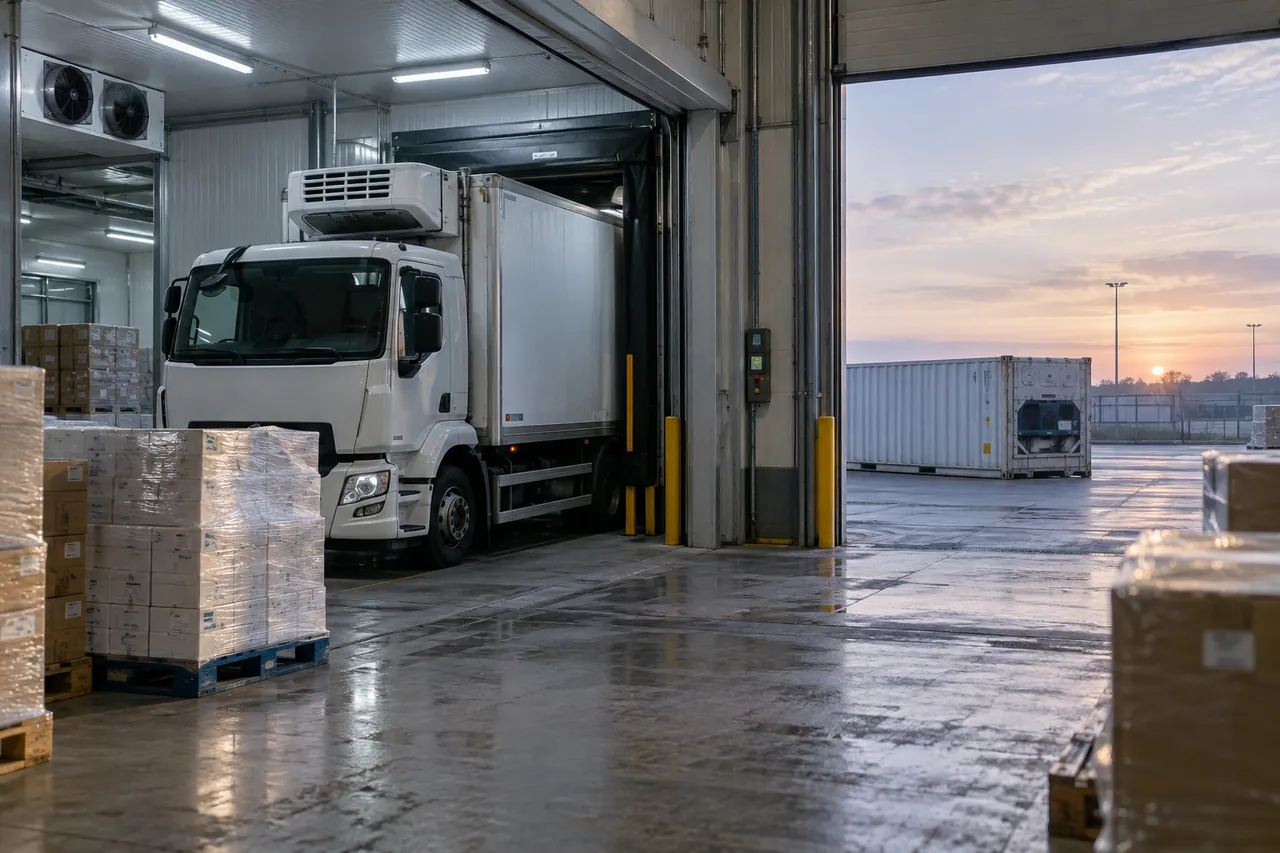
- Temperature-controlled docks. A dock or ante-room held at +2 °C to +10 °C (36–50 °F), with dock seals around the truck, stops cargo warming while it is loaded and reduces frost in freezer rooms.
- Multi-temperature zones. Cold chain fulfillment for grocery or meal kits often needs ambient, chilled and frozen picking under one roof, with fast-acting doors between them.
- Blast capacity. Warm product should be frozen in a blast freezer, not in the storage room, so it does not warm the stock around it.
Be There supplies walk-in cold rooms and insulated panels for chilled, frozen and blast rooms, from small kits to warehouse envelopes. For layout, floors, doors and refrigeration choices for larger sites, read our guide to cold storage warehouse construction.
For small operators, a single cold room with a refrigerated van is a complete, if short, cold chain – and the same rules about pre-cooling and records apply.
Cold chain packaging: passive and active solutions
When goods travel outside refrigerated vehicles – parcels, air freight, the last few metres to a customer – cold chain packaging protects them. There are two families:
| Type | How it works | Typical duration | Uses |
|---|---|---|---|
| EPS box + gel packs | Foam box with frozen or chilled gel packs | About 24–48 h | Meal kits, samples, local parcels |
| PU or vacuum insulated panel (VIP) shipper | High-performance insulation with phase-change material (PCM) | About 72–120 h+ | Pharma 2–8 °C and 15–25 °C shipments |
| Dry ice shipper | Solid CO2 at −78.5 °C (−109 °F) | Depends on dry ice load | Frozen and ultra-cold shipments |
| Liquid nitrogen dry shipper | Absorbed nitrogen vapour below −150 °C | Days to weeks | Cell therapies, biological samples |
| Active container | Battery-powered refrigeration and heating | Several days | High-value pharma by air |
Packaging is qualified for a temperature range and a duration under a defined ambient profile, for example summer or winter. Use it only within those limits, pre-condition gel packs or PCM exactly as the instructions say – frozen packs placed directly against 2–8 °C products can freeze them – and include a data logger.
Dry ice is classed as dangerous goods for air transport (UN 1845) and must be labelled and declared. It also releases CO2 gas, so never seal it airtight or carry it in an unventilated vehicle cab.
Pharma cold chain: storage, transport and GDP
The pharma cold chain has the strictest rules. Most vaccines, insulin and biologics must stay at +2 °C to +8 °C (36–46 °F); some biopharma products need −20 °C, −70 °C or cryogenic storage. Cold chain management of pharmaceutical products follows Good Distribution Practice (GDP) – in the EU the GDP Guidelines, internationally WHO guidance on time- and temperature-sensitive pharmaceutical products, and in the US USP chapters on good storage and distribution practices.
Common requirements in cold chain pharmaceutical transport and storage include:
- Qualified equipment – vehicles, rooms and packaging tested to prove they hold the range.
- Temperature mapping of warehouses and vehicles before use.
- Calibrated, continuous monitoring with alarms and secure electronic records.
- Excursion management – documented investigation and product release decisions.
- Trained staff and written procedures for every handover.
A pharmaceutical refrigerator or pharmaceutical grade freezer differs from a food unit: it has tighter temperature uniformity, fan-forced air, alarms, data logging and usually medical device or laboratory certification. Be There does not make pharmaceutical refrigerators or freezers. We supply food-grade cold rooms, insulated panels and transport units; for regulated medicines, use equipment qualified for that purpose and validated by your quality team.
Cold chain tracking and monitoring
Cold chain tracking and monitoring turns ‘we think it stayed cold’ into proof. Three layers are common:
- Built-in recorders on trucks, trailers and reefer containers log the return air and set point. In the EU, recorders for quick-frozen food must meet EN 12830.
- Independent data loggers travel with the cargo, often one per pallet or shipment, and are read on arrival.
- Real-time trackers with cellular cold chain sensors report temperature, location, door openings and shock, and alert you during the trip rather than after it.
Food regulations also cover the vehicles. In the US, the FDA Sanitary Transportation rule under FSMA requires shippers, loaders, carriers and receivers to agree and control the temperatures for food that needs them. For international road transport of perishable food between signatory countries, the ATP agreement classifies equipment:
| ATP class | Inside temperature held (at +30 °C outside) |
|---|---|
| A | +12 °C to 0 °C |
| C | +12 °C to −20 °C |
| D | +2 °C or below |
| F | −20 °C or below |
ATP also defines insulated bodies as normal (K ≤ 0.70 W/m²·K) or reinforced (K ≤ 0.40 W/m²·K). For stores, see our cold room temperature monitoring guide.
Checklist: building a reliable cold chain
Whether you run cold chain logistics services for clients or move your own goods, the same steps reduce losses:
- Define the range and limits for each product: set point, minimum, maximum and allowed excursions.
- Pre-cool everything – product, packaging and vehicles – before loading. Transport refrigeration is designed to hold temperature, not to pull down warm cargo.
- Size equipment for the real duty, including door openings and hot-climate days.
- Close the handover gaps with chilled docks, dock seals and quick loading.
- Monitor continuously and keep records for audits and claims.
- Maintain the equipment on a schedule – most failures follow skipped servicing.
- Train people at every link, including drivers and receivers.
Be There supplies the hardware for the food cold chain: cold rooms, panels, blast freezers, display units and van and truck refrigeration units with install kits matched to your vehicle. Send us your box size, temperature and route profile and request a quotation – we reply within one working day.