
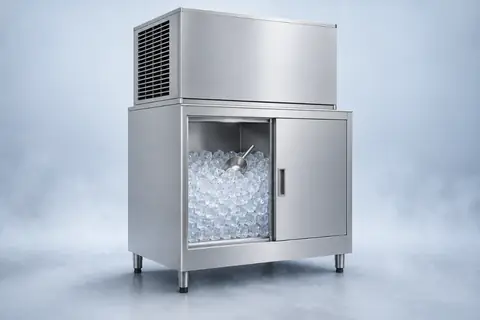
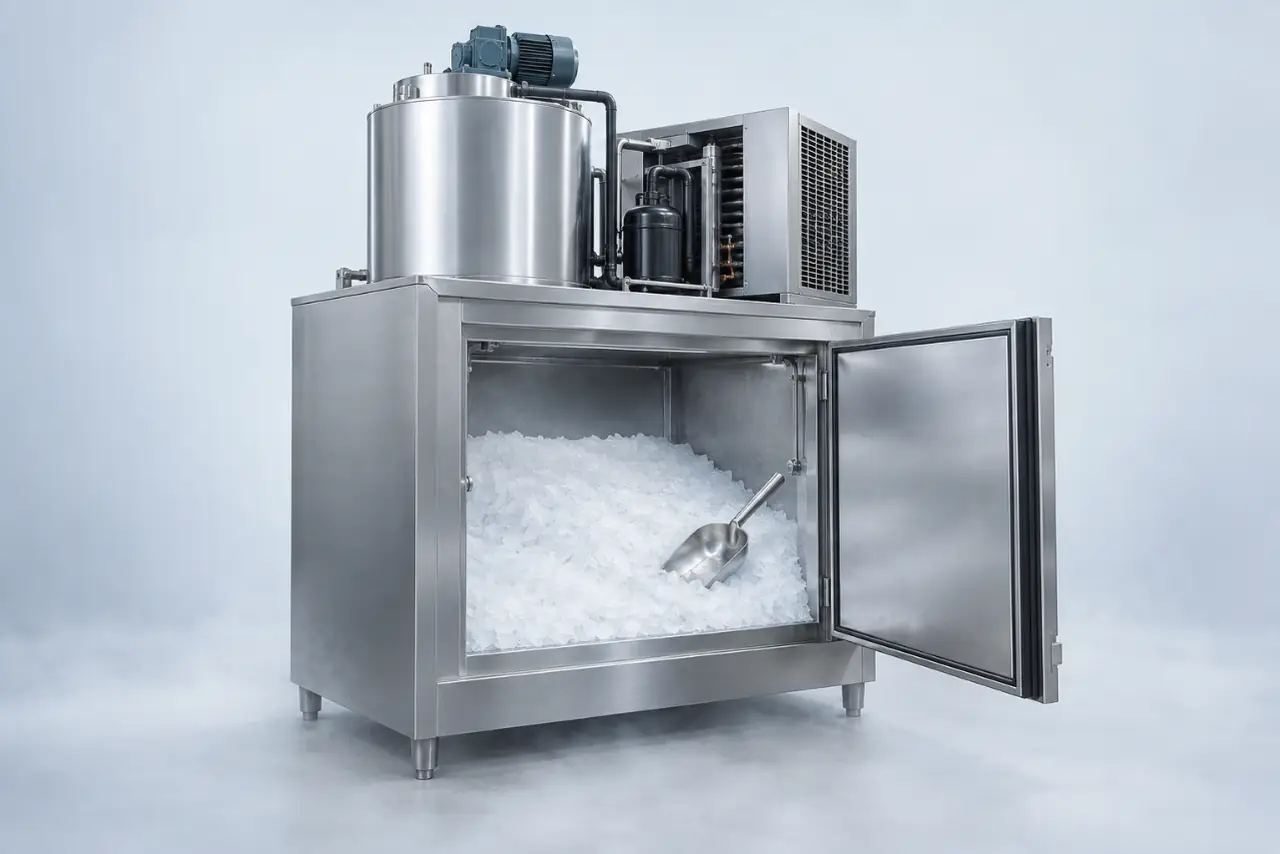
Short answer
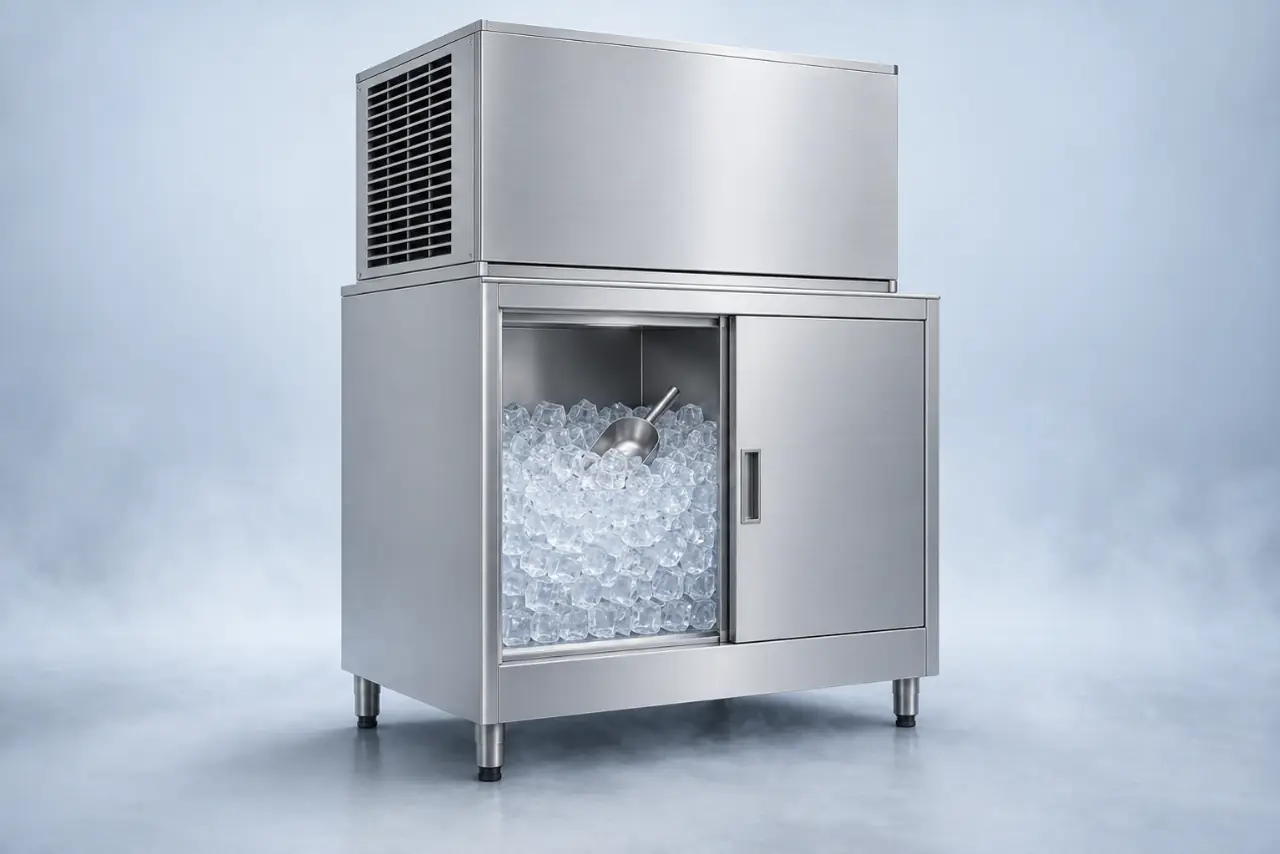
A flake ice machine freezes water on a refrigerated drum and scrapes it into dry flakes 1.5–2.2 mm thick at about −5 °C to −8 °C. Capacities range from about 300 kg to 20 t or more per day. Seawater models with corrosion-resistant evaporators serve boats and ports.
How flake ice is made
Water is sprayed onto a drum cooled by refrigerant. It freezes into a thin sheet within seconds, and a rotating scraper breaks it into flakes that drop into the bin below. Because flakes leave the drum below 0 °C, they stay dry and loose instead of fusing into a block.
How much capacity?
| Application | Rule of thumb | Typical machine |
|---|---|---|
| Supermarket seafood counter | About 10 kg per metre of display per day | 300–500 kg/day |
| Fish market or processing | About 0.5–1 kg ice per kg of fish (more in hot climates) | 1–10 t/day |
| Fishing boat | Depends on catch and trip length | 1–5 t/day, seawater |
| Concrete cooling | Calculated from mix temperature target | 10–30 t/day |
Freshwater or seawater?
Seawater flake ice machines freeze salt water directly, which is convenient at sea and in ports. They need corrosion-resistant evaporators and fittings and usually a slightly lower evaporating temperature. Freshwater machines are standard for supermarkets, processing plants and concrete.
Cooling options
Small machines are air-cooled. Larger machines use water-cooled or evaporative condensers, or can be connected to a central refrigeration system.
Storage and handling
Store flake ice in an insulated bin or ice room held below 0 °C. Large plants add rakes and screw conveyors to move ice automatically to packing or processing lines.
See our flake ice machines from 300 kg to 20 t per day.