Short answer
A food truck refrigerator must hold +5 °C (41 °F) or below and a freezer −18 °C (0 °F) inside a vehicle that often reaches 40 °C (104 °F). Most trucks use a refrigerated prep table or undercounter fridge, a worktop or chest freezer, and bagged ice or an undercounter ice machine. Choose commercial NSF-listed units rated for 38–43 °C ambient and size the generator for start-up surges.
Key takeaways
- Cold-held food in a food truck must stay at +5 °C (41 °F) or below and frozen food at −18 °C (0 °F) or below.
- The air inside a working food truck often reaches 35–45 °C (95–113 °F), so refrigeration should be rated for at least 38 °C (100 °F) ambient.
- Compressors draw roughly 3–7 times their running current for a moment at start-up; size the generator or inverter for the largest surge plus all running loads.
- A tabletop soft serve machine makes about 18–22 L (roughly 200–250 servings) per hour; a floor model 25–36 L per hour.
- Industry sources commonly put a new food truck at about $75,000–$200,000 and a used one at about $30,000–$100,000 in the US.
What refrigeration does a food truck need?
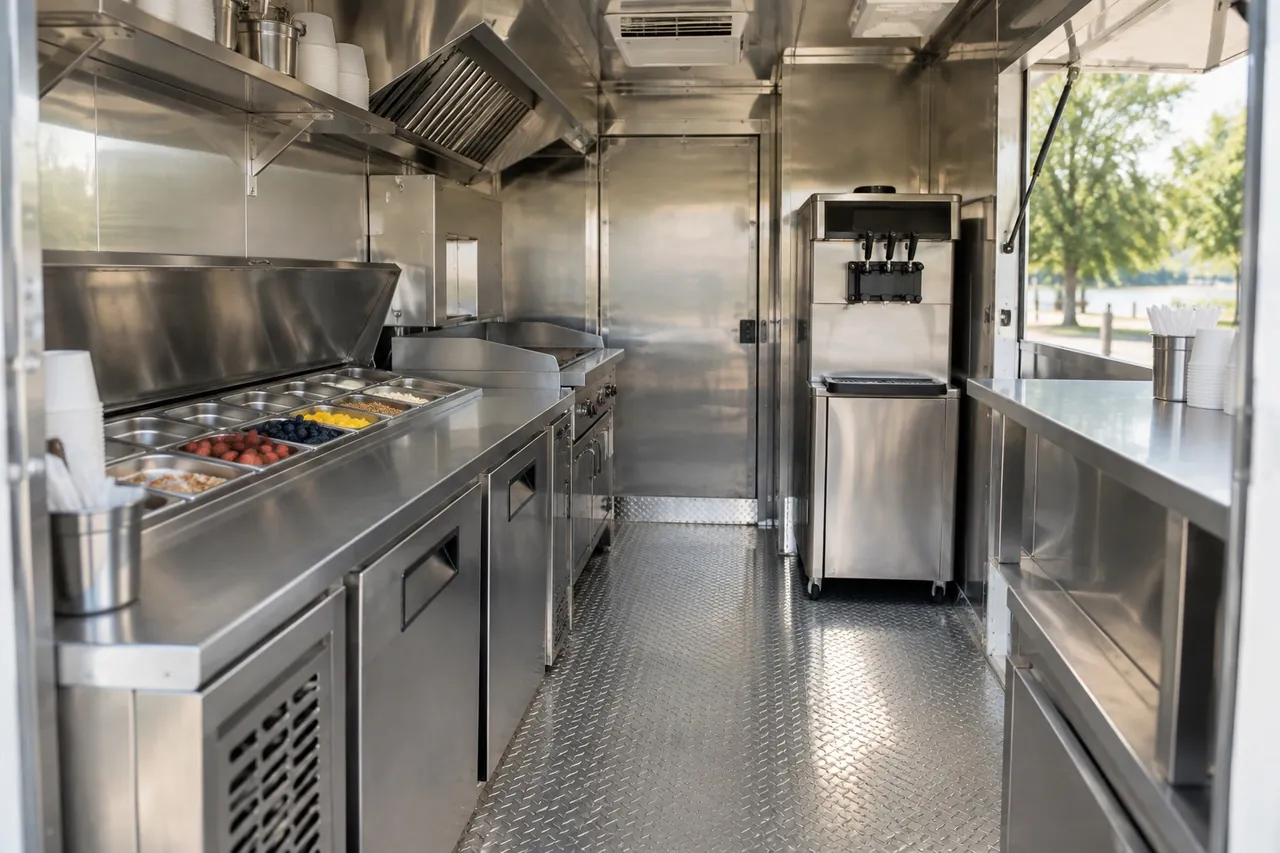
A food truck refrigerator is a commercial fridge built to hold perishable food at +5 °C (41 °F) or below inside a mobile kitchen. Most food trucks and trailers need three pieces of cold equipment: a refrigerated prep table or undercounter fridge on the line, a freezer for frozen stock, and a supply of ice for drinks.
Ice cream, frozen dessert and frozen food vehicles add more: a soft serve machine, a display freezer or a transport refrigeration unit that cools the whole cargo box.
Mobile refrigeration is harder than in a restaurant for three reasons:
- Heat. With a griddle, fryer and the sun on the roof, air inside a truck often hits 35–45 °C (95–113 °F). A unit rated only for 32 °C (90 °F) will not keep up.
- Power. Everything runs from a generator, shore power or batteries, so start-up surges and total load matter.
- Movement. Doors must latch, shelves must be secured and compressors must tolerate vibration and road tilt.
Health departments generally expect commercial food equipment, often NSF/ANSI 7 listed for refrigeration in the US, plus a thermometer in every unit. Check your local plan-review rules before you buy any food truck equipment; many require approval of the layout before the build starts.
Food truck refrigeration equipment list
This is the typical cold equipment needed for a food truck, with planning values. Power figures are typical running loads; check each model's data plate.
| Equipment | Temperature | Typical size | Typical running power | Notes |
|---|---|---|---|---|
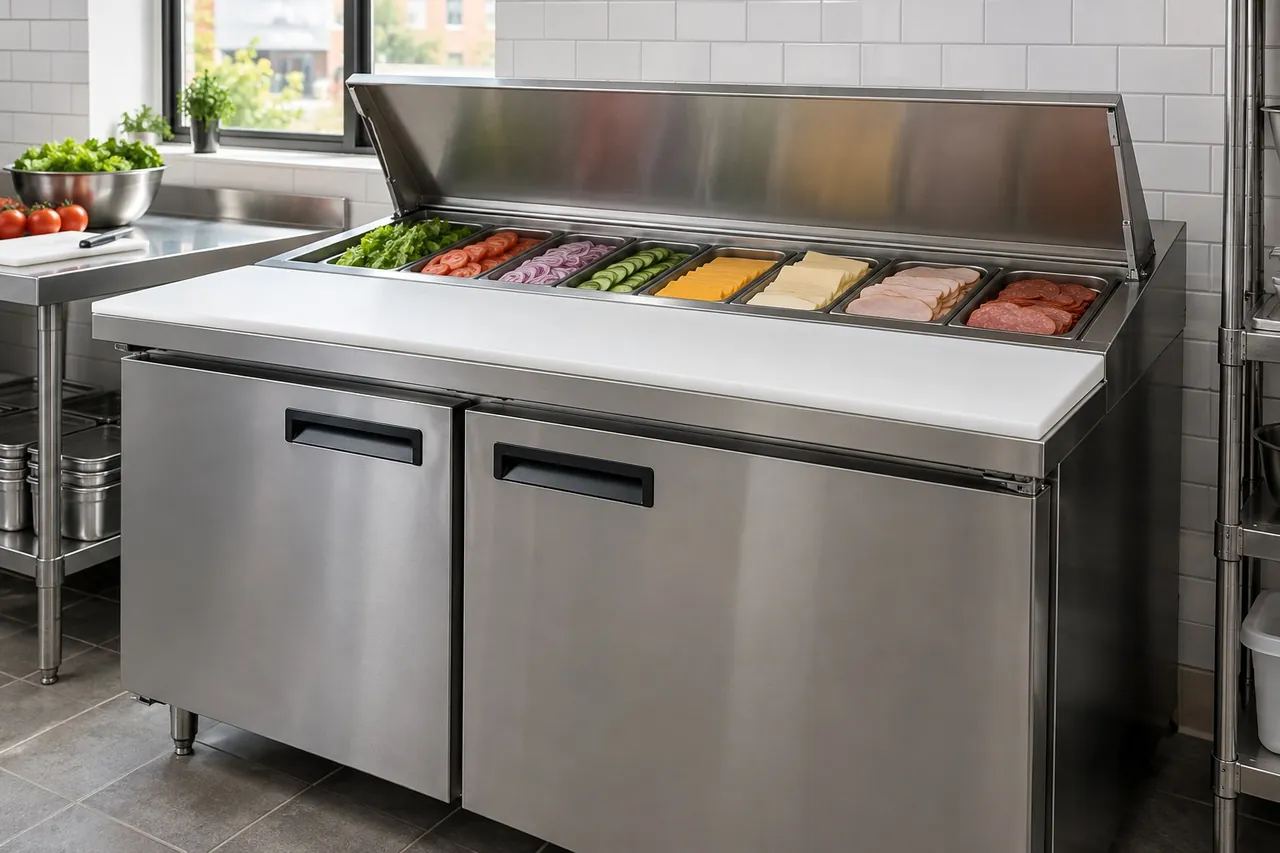
| Refrigerated prep table (sandwich / pizza) | +1 °C to +5 °C (34–41 °F) | 0.9–1.8 m (36–72 in) long | 200–500 W | Pans on top, storage below; the core of most trucks |
| Undercounter refrigerator | +1 °C to +5 °C | 0.6–1.2 m wide, 100–300 L | 150–400 W | Fits under the counter or griddle stand (if rated) |
| Worktop or undercounter freezer | −18 °C (0 °F) or colder | 100–300 L | 200–500 W | For fries, proteins, desserts |
| Chest freezer | −18 °C to −25 °C | 100–300 L | 100–250 W | Efficient; needs lid clearance; secure it |
| Glass door beverage fridge | +2 °C to +8 °C (36–46 °F) | 1 door, 200–400 L | 200–400 W | For self-serve drinks at the hatch |
| Undercounter ice machine | Makes ice | 50–150 kg (110–330 lb) per day | 300–800 W plus water | Needs water tank, drain and level |
| Soft serve machine | Serves at −6 °C to −4 °C | Tabletop or floor | Roughly 1.5–6 kW | Largest electrical load in most ice cream trucks |
| Glass-top display freezer | −18 °C to −24 °C | 300–700 L | 300–700 W | Popsicles and packaged ice cream |
For prep table layouts, pan sizes and lengths, see our refrigerated prep table guide. Keep the cold equipment away from the cooking line where possible, or choose units rated for the radiant heat next to a griddle.
How much power does food truck refrigeration use?
Refrigeration runs all day, so it often sets the size of your generator or battery bank. Plan it in three steps.
- Add the running loads. Example: prep table 400 W + undercounter freezer 400 W + beverage fridge 300 W + ice machine 600 W + lighting and fans 300 W = 2.0 kW.
- Add the biggest start surge. A compressor draws roughly 3–7 times its running current for a second or two. If the ice machine starts at about 3 kW while everything else runs, you need around 4–5 kW of surge capacity.
- Add cooking and a margin. Electric fryers, griddles, coffee machines and soft serve machines can add several kilowatts. Allow 20–25% headroom so the generator does not run at its limit in heat.
Ways to reduce the load:
- Pre-chill all units and stock on shore power at the commissary before driving out.
- Use efficient units with R290 refrigerant and good door seals.
- Stagger compressor starts, or use units with soft-start or inverter compressors.
- Consider 12 V or 24 V DC compressor fridges (the "portable automobile refrigerator" type) for small drink or back-up storage that runs from the vehicle battery while driving.
Confirm the voltage and frequency for your market: 120 V/60 Hz for most US plug-in equipment, 220–240 V/50 Hz in most other countries. Larger soft serve machines may need 208–240 V or three-phase power, which a small inverter generator cannot supply.
Food trucks, trailers and vans: does refrigeration differ?
The cold-equipment list is similar for food trucks and trailers, but space, weight and power differ.
| Vehicle | Typical kitchen length | Refrigeration fit | Watch out for |
|---|---|---|---|
| Van food truck / catering van | 2.5–4 m (8–13 ft) | One prep table or undercounter fridge plus a small freezer | Payload, headroom, very little ventilation |
| Step-van or box food truck | 4–6 m (13–20 ft) | Prep table, undercounter fridge and freezer, ice machine | Heat from the engine bay and roof |
| Food trailer (small to large) | 2.5–7 m (8–24 ft) | Most flexible; room for reach-ins or a soft serve floor model | Tongue weight and axle rating |
| Kiosk or concession stand | Fixed | Mains power, often a reach-in and display units | Local electrical and fire rules |
In every format, the condensers need air. Refrigeration packed into sealed cabinets under a counter will recirculate its own hot air and fail on the first hot day. Leave the clearances the maker specifies, use front-breathing undercounter units where cabinets are closed, and add ventilation openings or a fan to move hot air out of the truck.
Secure every unit to the floor or wall, fit door latches that hold during braking, and check that compressors are designed for mobile use or at least for occasional tilting. After a long drive, let units stand level for the time their manual recommends before restarting.
Equipment for soft serve ice cream trucks and trailers
A soft serve food truck or ice cream concession trailer is built around the machine. Choose it by peak servings per hour, flavours and power.
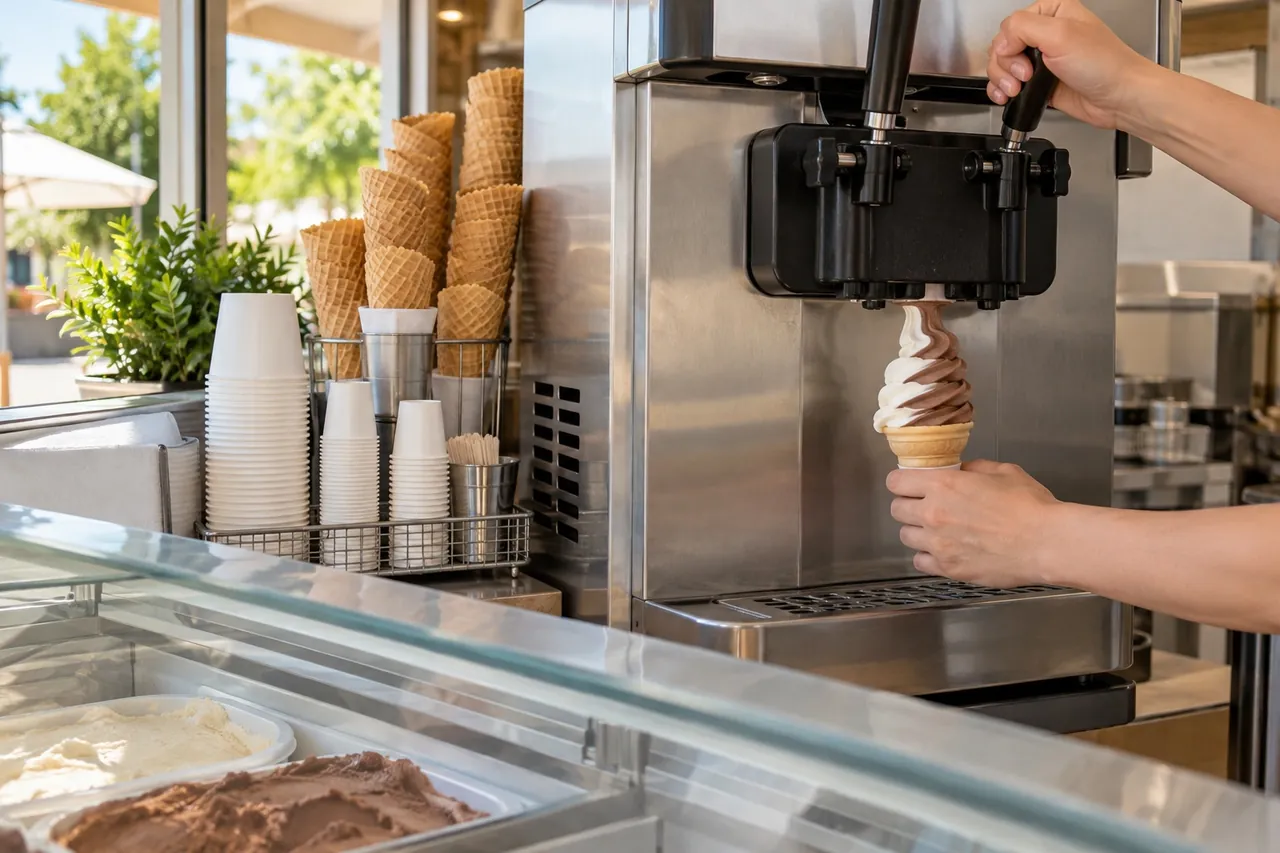
- Tabletop soft serve machine: about 18–22 L per hour, roughly 200–250 servings, usually on 220–240 V single-phase (or 208–240 V in the US). A good fit for a van or small trailer.
- Floor soft serve machine: about 25–36 L per hour for queues at festivals and busy sites, often on higher-current or three-phase supplies.
- Two flavours plus twist is standard; refrigerated hoppers should keep mix below +5 °C (41 °F) between sales.
- Air pump or gravity feed: gravity gives about 30–45% overrun, an air pump about 50–60%, which yields more servings per litre of mix.
Be There supplies tabletop and floor soft serve machines to your voltage. Add a glass-top display freezer for popsicles and packaged ice cream, holding −18 °C to −24 °C (0 °F to −11 °F), and an undercounter freezer for spare mix and toppings that need to stay frozen.
The soft serve machine is the hungriest load on the vehicle and gives off a lot of heat, so plan its power and ventilation first. For hard ice cream, gelato or popsicles made on site, our range of commercial ice cream and popsicle machines includes batch freezers and brine-tank popsicle machines, which usually suit a fixed production kitchen better than the vehicle itself.
Frozen food vans and mobile freezers
Some mobile food businesses do not cook at all: they deliver or sell frozen food, ice cream or meat from a refrigerated box. Here the cold equipment is the vehicle itself.
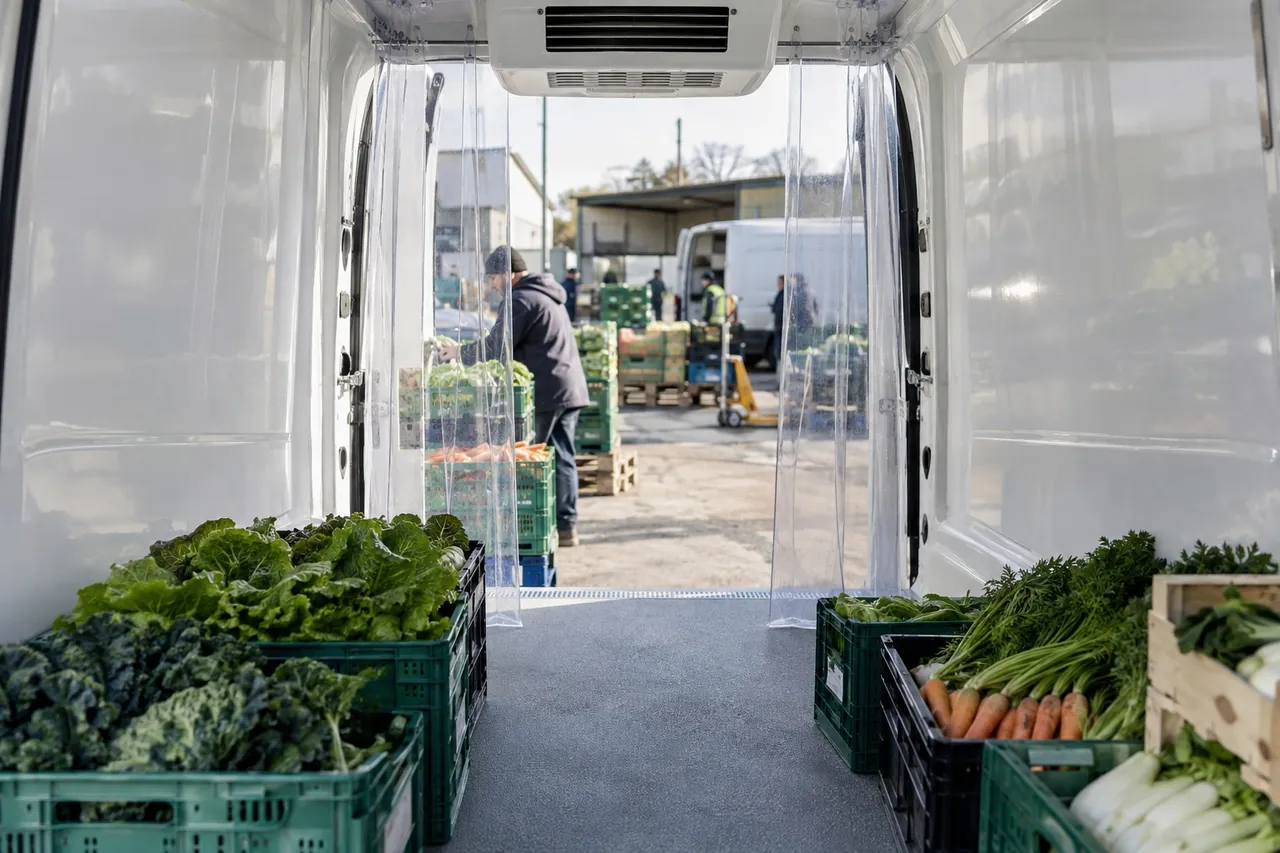
A frozen food van or frozen food truck uses an insulated box with a transport refrigeration unit: a compressor driven by the vehicle engine, its own diesel engine or electricity, a condenser on the front or roof, and an evaporator inside. Be There truck refrigeration units serve boxes of 4–45 m³ and hold −20 °C to +15 °C (−4 °F to 59 °F), with install kits matched to the vehicle.
When you size a mobile freezer box, count the door openings: a van making 30 drops a day loses far more cold air than one making five. Units with electric standby can be plugged in overnight so the box stays cold without the engine running.
Plug-in options also work for small operations:
- A 12 V or 24 V DC compressor freezer of 30–100 L for samples, markets and short routes.
- A chest freezer running from an inverter, pre-frozen on mains power before each trip.
- Eutectic plates or cold packs inside an insulated box for short, predictable runs.
For anything beyond a few drops a day, a proper transport refrigeration unit is the only reliable way to keep −18 °C (0 °F) in summer.
Food truck ice: buy bagged ice or install an ice machine?
Many food trucks start with bagged ice in an insulated bin and add a food truck ice maker only when daily use justifies it. Compare the two:
- Bagged ice: no water tank, drain or power needed; cost per kilogram is higher; supply can run short on hot days.
- Undercounter ice machine: makes about 50–150 kg (110–330 lb) per day with a built-in bin of about 15–60 kg; needs a fresh-water supply, a drain to the grey tank, power and a level surface while running.
Water is often the limit. A machine making 50 kg of ice a day uses at least 50 L of water for the ice alone, plus more for rinsing on some models. On a truck with a 100–150 L fresh-water tank that may not be practical, so many operators make or buy ice at the commissary and carry it in a large insulated bin.
If you do install one, choose an air-cooled model with the condenser vented to the outside of the truck, protect it from road vibration and clean it regularly. Be There supplies cube ice machines from 50 kg per day with built-in bins. A rule of thumb for drinks service is around 0.2–0.3 kg (0.4–0.7 lb) of ice per cold drink; size for your busiest day.
How much do food trucks and their refrigeration cost?
Food truck prices vary enormously by size, age, build quality and region. Industry sources commonly put a new, fully equipped food truck in the US at about $75,000–$200,000 and a used one at about $30,000–$100,000. Food trailers usually cost less than a comparable truck because they have no engine or drivetrain, but you need a tow vehicle.
Listings for food trucks for sale under $10,000 are usually bare vans, small concession trailers or older vehicles that need equipment, inspection and often new refrigeration. Before you buy any used food truck or food trailer with kitchen equipment, check:
- the age, refrigerant and data plate of every fridge and freezer;
- whether each unit pulls down to +5 °C or −18 °C on a hot day with the generator running;
- door gaskets, condenser condition and evidence of oil leaks;
- that equipment is commercial and listed as your health department requires; and
- the generator size against the real load.
Refrigeration is one of the cheaper parts of a build, but one of the most expensive to get wrong: a failed fridge on a hot day means discarded stock and a closed hatch. Buying commercial equipment from a manufacturer can lower cost for builders and fleet owners. Be There quotes every order individually (FOB, CIF or DDP), and confirms voltage, refrigerant and certification on the quotation.
Food truck refrigeration checklist
- Fix the menu first: list what must be chilled, frozen or iced, and the peak volume per service.
- Check local rules: plan review, listed equipment, thermometers, commissary and water-tank requirements.
- Choose the cold line: prep table or undercounter fridge, freezer, beverage fridge, ice supply.
- Specify for heat: units rated for at least 38 °C (100 °F) ambient, front-breathing where enclosed.
- Size the power: running loads plus the largest start surge plus 20–25% margin; check voltage and phase.
- Plan ventilation and mounting: condenser air paths, latches, fixings and vibration.
- Add monitoring: a thermometer in every unit and temperature logs for inspections.
Building an ice cream truck or a fleet of trailers? Be There supplies soft serve and ice cream and popsicle machines, display freezers, cube ice machines and truck refrigeration units for frozen food vans, built to your voltage. Send your vehicle type, menu and power supply through the quotation form and we will reply within one working day.