Short answer
A frozen yogurt machine is a soft serve freezer that whips cultured yogurt mix with air and dispenses it at about −6 °C to −4 °C (21–25 °F). A tabletop model makes about 18–22 L (4.8–5.8 gal) per hour and offers two flavours plus a twist. A self serve froyo shop with 8–12 flavours typically needs 4–6 two-flavour machines.
Key takeaways
- Commercial frozen yogurt machines serve at about −6 °C to −4 °C (21–25 °F) and keep mix below +5 °C (41 °F) in refrigerated hoppers.
- One tabletop machine produces about 18–22 L per hour; a floor model about 25–36 L per hour.
- Each machine gives two flavours plus a twist, so 8–12 flavours on a self serve wall means 4–6 machines.
- Self serve customers take around 230–340 g (8–12 oz) per cup, far more than a cone, so size by weight, not servings.
- Besides machines, a froyo parlour needs mix storage, a refrigerated topping bar, scales, a display freezer and a hand sink.
What is a frozen yogurt machine?
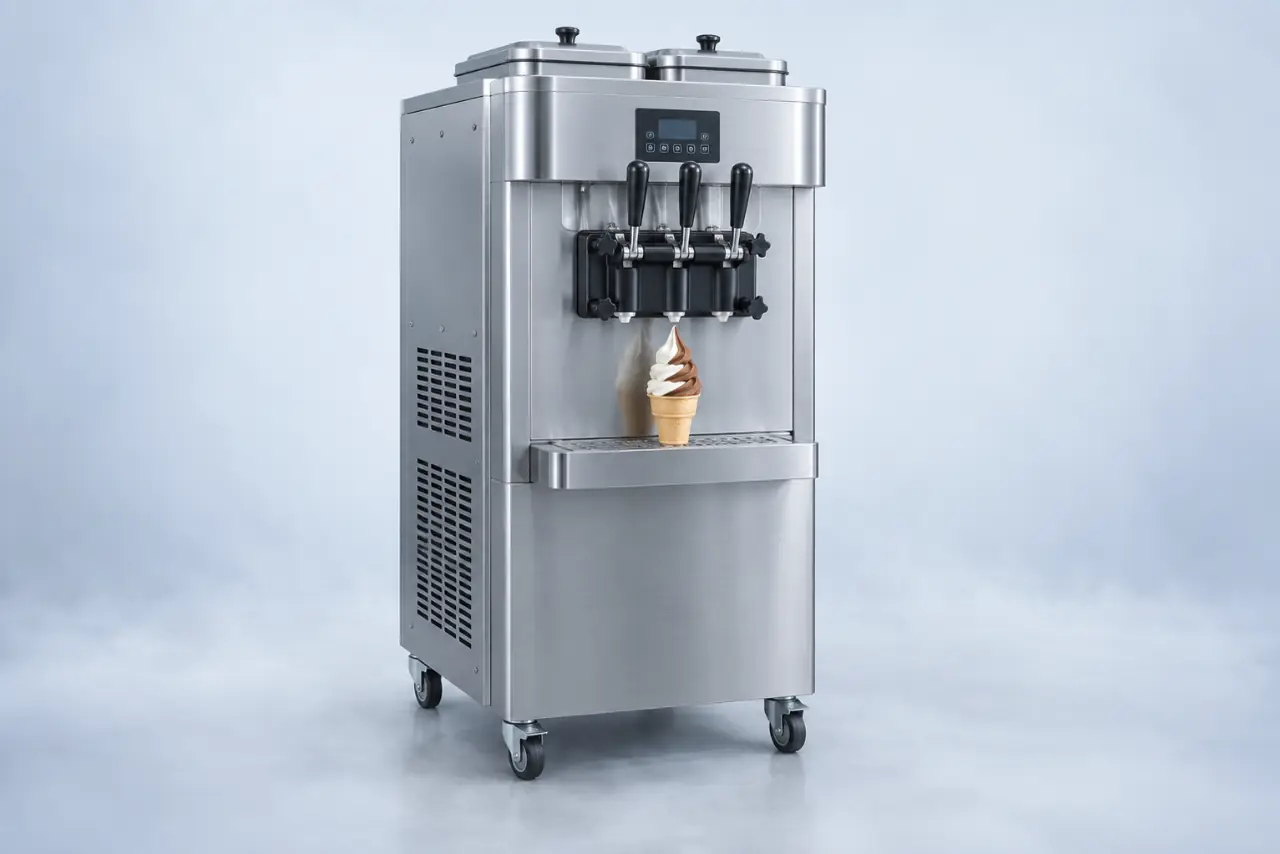
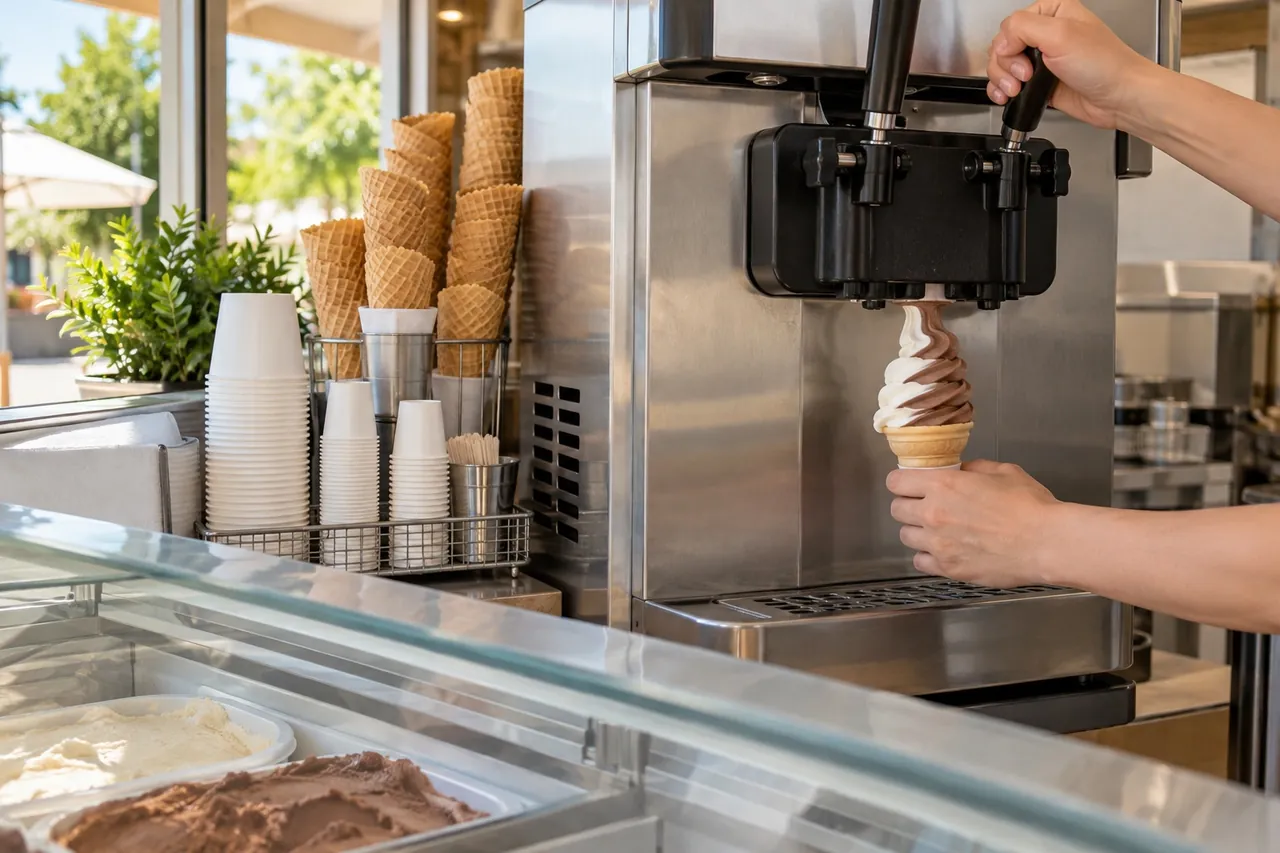
A frozen yogurt machine is a commercial soft serve freezer used with yogurt-based mix. Mix from a refrigerated hopper flows into a freezing cylinder, where a beater scrapes ice crystals off the cold wall and folds in air. When you pull the handle, the frozen product leaves through the door valve at about −6 °C to −4 °C (21–25 °F), soft enough to swirl and firm enough to hold its shape in a cup.
Mechanically, a froyo machine and a soft serve ice cream machine are the same equipment, which is why suppliers also sell them as yogurt ice cream machines. What changes is the mix: frozen yogurt (sometimes sold as yogurt ice cream) has live or added cultures, usually less fat and more acidity, which affects texture and how the machine is set. That is why Be There lists them together as soft serve and frozen yogurt machines.
Commercial units come in two formats. Tabletop machines sit on a counter and produce about 18–22 L (4.8–5.8 gal) per hour. Floor models stand on castors, produce about 25–36 L (6.6–9.5 gal) per hour and are the usual choice for a self serve wall. Both offer two flavours plus a twist, and both need refrigerated hoppers that keep mix below +5 °C (41 °F) for food safety.
An optional air pump raises overrun, the air whipped in, from about 30–45% with gravity feed to 50–60%. More air means more cups per litre of mix but a lighter texture, so many froyo brands stay near 30–50%.
How is frozen yogurt made commercially?
Commercial frozen yogurt starts as a liquid or powder base. Most shops buy a ready frozen yogurt mix for machine use, while larger producers make their own and run it through an industrial frozen yogurt machine or a continuous freezer.
- Blend the base. Milk or skimmed milk, milk solids, sugar, stabilisers and either yogurt or a culture blend. Non-dairy versions use plant milks.
- Pasteurise. The dairy base is heat-treated, then cooled. Cultures are added after heating so they are not killed.
- Age. The mix rests at +2 °C to +5 °C (36–41 °F) for several hours so proteins and stabilisers hydrate.
- Freeze. The mix goes into the machine hopper and is frozen and aerated in the cylinder on demand.
Powder mixes are reconstituted with cold water, rested and then poured into the hopper. They are cheap to ship and store, but staff must mix them consistently. Liquid mixes give more consistent texture but need cold storage and have a shorter shelf life.
Frozen yogurt made with Greek yogurt is denser and tangier because of the higher protein. It can be run in the same machines, though you may need to adjust the consistency setting. Whatever the recipe, the mix must stay at or below +5 °C (41 °F) from delivery to hopper.
How to make frozen yogurt at home vs in a shop
Many people searching how to make frozen yogurt at home want a quick recipe, and the answer is simple: blend about 500 g of yogurt (Greek yogurt works well) with 80–100 g of sugar or honey, chill it, then churn it in a home ice cream maker for 20–30 minutes. If you want to know how to make frozen yogurt without an ice cream machine, freeze it in a shallow tray and stir every 30 minutes for about 2–3 hours.
Can you put yogurt in the freezer? Yes, and almost any yogurt you can freeze will keep for a month or two, but a frozen tub of plain yogurt is not frozen yogurt. Frozen solid, it forms large ice crystals and turns hard and icy. Freezing while stirring, as a machine does, keeps the crystals tiny and adds air, which is what makes it smooth.
| Point | Frozen yogurt at home | Commercial frozen yogurt machine |
|---|---|---|
| Batch or output | About 1–1.5 L per 20–30 min batch | 18–22 L/h tabletop, 25–36 L/h floor |
| Serving | Scooped, often refrozen | Dispensed fresh at −6 °C to −4 °C (21–25 °F) |
| Flavours | One per batch | Two plus twist per machine |
| Mix storage | Household fridge | Refrigerated hopper below +5 °C (41 °F) |
| Air (overrun) | About 20–30% | 30–60%, set by gravity feed or air pump |
For a business, home equipment is only useful for recipe trials. Health inspectors expect commercial equipment that keeps mix cold and can be cleaned to code.
How many froyo machines does a self serve frozen yogurt shop need?
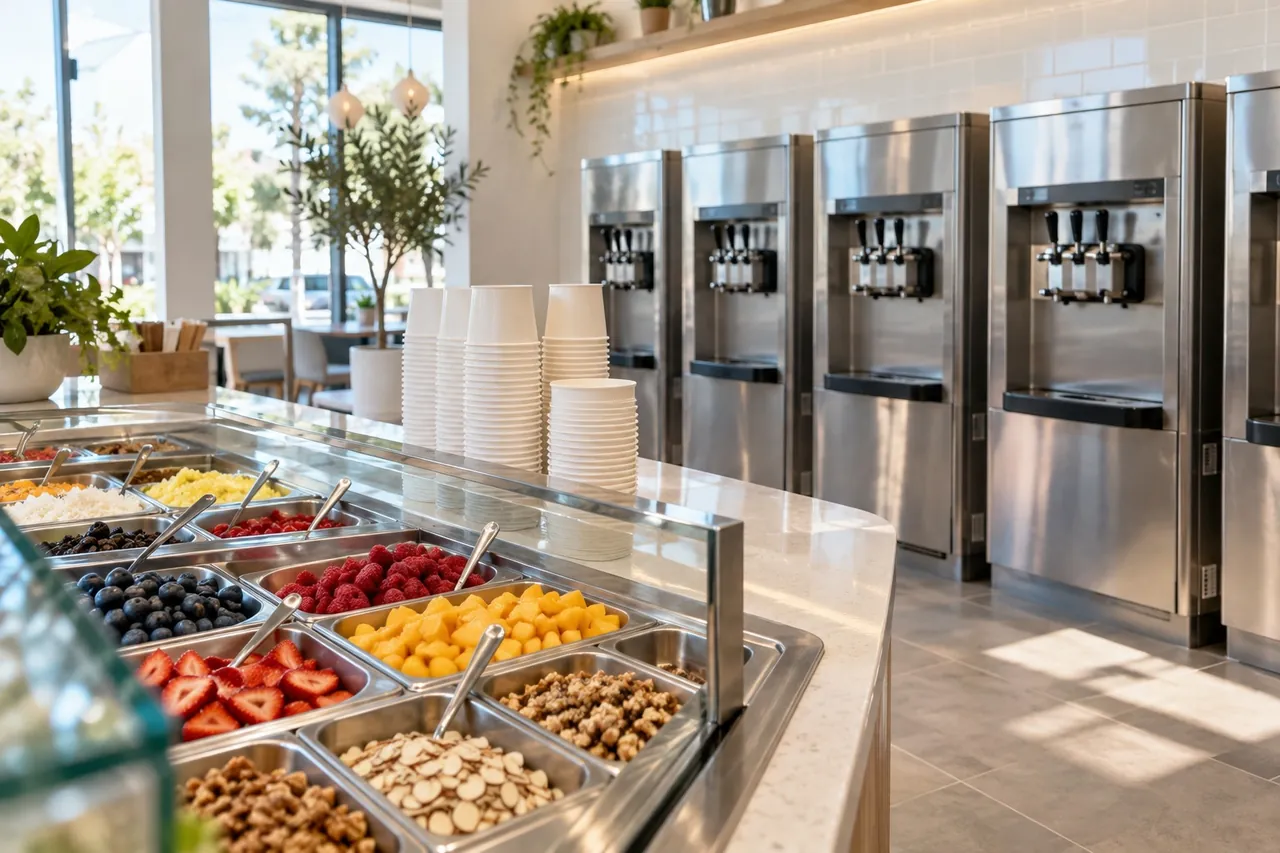
Start with flavours. Each machine gives two flavours plus a twist, so divide your planned flavour count by two. Most self serve frozen yogurt shops show 8–16 flavours, which means 4–8 machines on the wall. A small counter-served froyo bar can work with one or two machines.
Then check volume. Self serve customers fill their own cups, and a typical cup weighs about 230–340 g (8–12 oz), several times a 90–120 g cone. With 40% overrun, a litre of frozen product weighs roughly 0.8 kg, so a tabletop machine's 20 L per hour is roughly 16 kg (35 lb), or 50–70 self serve cups per hour. Peak demand is spread across flavours, so a wall of six machines rarely runs short; a single counter machine can.
| Shop type | Flavours | Machines | Format |
|---|---|---|---|
| Counter-served kiosk | 2–4 | 1–2 | Tabletop, gravity or pump |
| Small self serve shop | 8–10 | 4–5 | Floor or tabletop on a base |
| Large frozen yogurt parlour | 12–16 | 6–8 | Floor, with standby mode |
Allow one spare machine's worth of flavours for slow days, so you can switch a machine off and clean it without leaving gaps on the wall.
Frozen yogurt equipment list for a froyo shop
The machines are the centrepiece, but a working frozen yogurt parlour needs the rest of the cold chain around them.
- Frozen yogurt machines. Two flavours plus twist each, with refrigerated hoppers, standby mode for overnight holding and a low-mix alarm. Our commercial frozen yogurt machines come in tabletop and floor formats.
- Mix storage. A reach-in fridge or a small walk-in at +2 °C to +5 °C (36–41 °F). A busy shop using several boxes of liquid mix a day often justifies a walk-in cooler in the back room.
- Refrigerated topping bar. Cut fruit, sauces and dairy toppings held at or below +5 °C (41 °F); dry toppings such as cereal and sweets in covered ambient bins.
- Scales and point of sale. Self serve is usually sold by weight, so you need a legal-for-trade scale with tare for the cup.
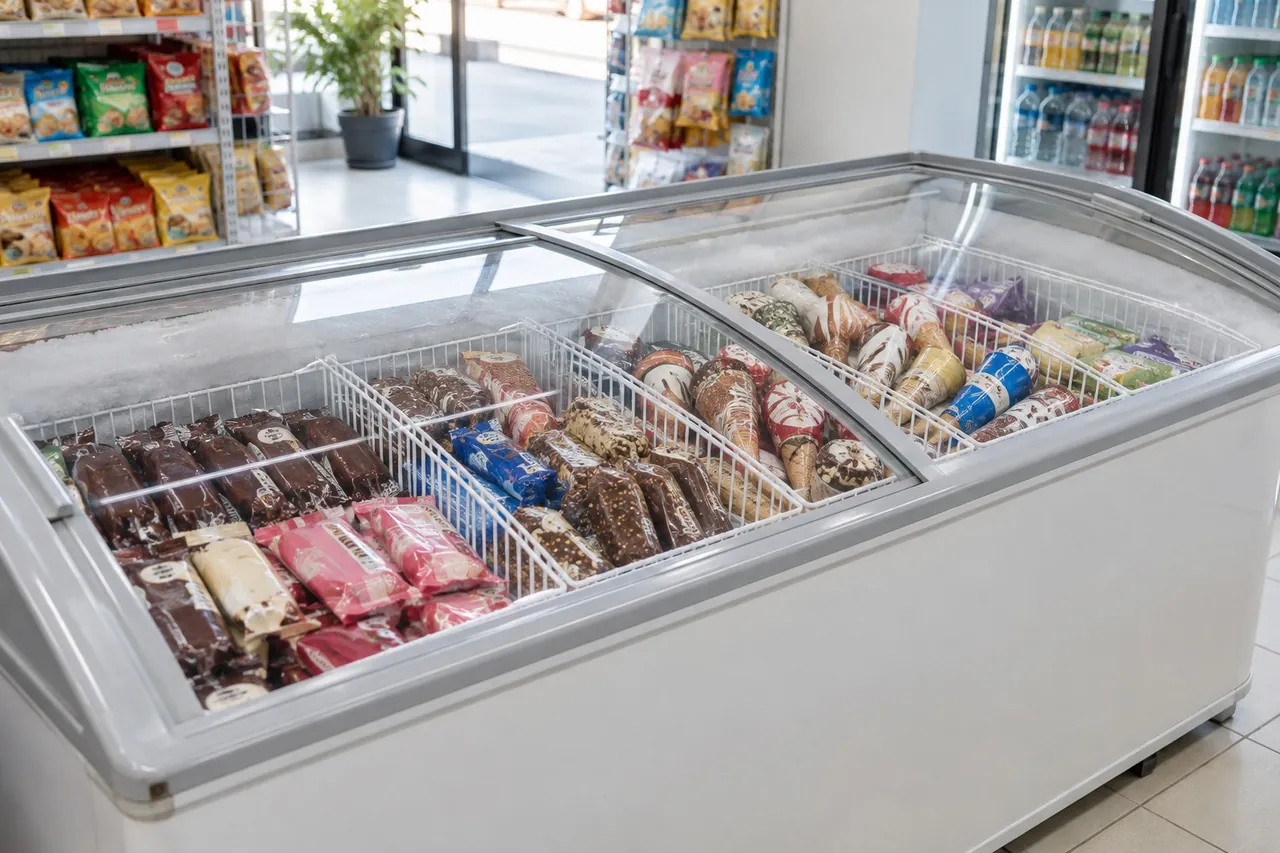
- Display freezer. For take-home pints and pre-made cakes, a glass-top or upright display freezer holding −18 °C (0 °F) or colder.
- Hygiene. Hand sink, three-compartment sink or dishwasher for machine parts, sanitiser and food-safe lubricant.
- Utilities. Dedicated circuits for each machine; floor models may need three-phase power or water cooling in hot rooms.
Cleaning and food safety for soft serve frozen yogurt
Soft serve frozen yogurt is a dairy product held in a machine for hours, so cleaning is the most important daily routine in the shop. Follow the manufacturer's manual and local health code; in most places that means a full breakdown clean at a set interval, often daily.
- Daily: drain the machine, flush with cold water, disassemble the beater, door, valves and seals, wash, rinse and sanitise, then reassemble with food-safe lubricant.
- Overnight: if you keep mix in the machine, use standby mode, which keeps both the hopper and cylinder below +5 °C (41 °F).
- Topping bar: discard cut fruit and wet toppings at the end of each day; change serving spoons regularly.
- Records: log mix temperature, cleaning times and sanitiser strength, as part of your HACCP plan.
Replace seals and O-rings on schedule, usually every 3–6 months depending on use, because worn seals let mix leak and are hard to sanitise. Keep spare parts kits on site; a machine down on a summer Saturday costs more than a box of seals.
Clean the condenser regularly. Machines in a warm shop lose freezing capacity when the condenser grille clogs, and slow recovery shows up first as soft, runny product at peak times.
How much is a frozen yogurt machine, and how much is frozen yogurt?
Frozen yogurt machine cost, or froyo machine cost, depends on format, output, air pump, certification and the market you import to. Basic imported tabletop units start well below the price of premium floor models with pumps, standby modes and heat treatment. Be There quotes per order, FOB, CIF or DDP, so compare landed costs rather than ex-works prices.
On the retail side, self serve shops usually sell by weight. In many US shops prices are typically around US$0.60–0.90 per ounce (about US$21–32 per kg), though they vary by city and brand. At 8–12 oz a cup, that is roughly US$5–10 per customer. Mix, cups and toppings typically take only a modest share of that price, which is why rent, staff and electricity weigh more on profit than ingredients.
When planning, budget for:
- Machines plus spare parts kits.
- Mix storage and a display freezer.
- Topping bar, scales and fit-out.
- Electrical work for dedicated circuits.
- Freight, duty and installation if importing.
For a wider business view, see our guide to starting a soft serve business.
Next steps: choosing your frozen yogurt machines
Before you request quotes, decide:
- Counter-served or self serve, and how many flavours you want on display.
- Tabletop or floor machines, and gravity feed or air pump.
- Your power supply: voltage, frequency and whether three-phase is available.
- Certification for your market, such as CE, UL/ETL or NSF.
- Where mix will be stored and how often it will be delivered.
If you plan to buy frozen yogurt machine units for several sites, standardise on one model so staff training, spare parts and cleaning routines are the same everywhere. A single soft serve yogurt machine is also a good test for an existing café before committing to a full self serve wall: it shows you real demand, mix use and cleaning workload for a few weeks.
Send us your floor plan, flavour count and expected daily customers through the inquiry form. We reply within one working day with matching soft serve and frozen yogurt machines and can add display freezers and cold room kits to the same shipment.