Short answer
A commercial ice cream freezer stores or displays frozen desserts at a controlled temperature. Storage and packaged novelties need −18 °C (0 °F) or colder, ideally −20 °C to −25 °C (−4 °F to −13 °F); dipping cabinets run warmer, about −14 °C to −12 °C (6–10 °F), so hard ice cream scoops. Gelato cases hold roughly −14 °C to −11 °C (7–12 °F).
Key takeaways
- Packaged ice cream and novelties belong in a glass-top chest or glass-door freezer at −18 °C (0 °F) or colder.
- Hard ice cream is scooped at about −14 °C to −12 °C (6–10 °F), so a dipping cabinet runs warmer than a storage freezer.
- Be There glass-top chest ice cream freezers run from about 300 to 700 L (10.6–24.7 cu ft); upright glass-door models from about 400 to 1600 L.
- Cold plate freezers on ice cream trucks are charged overnight and typically hold product frozen for 8–12 hours unplugged.
- Temperature swings, not just warm temperatures, cause icy, grainy ice cream, so match the cabinet's climate class to your shop.
What is a commercial ice cream freezer?
A commercial ice cream freezer is a refrigerated cabinet built to store, display or serve ice cream at a tightly controlled sub-zero temperature. The right type depends on whether customers pick packaged products themselves, staff scoop from tubs, or you are simply holding stock in the back.
Three jobs, three temperature bands:
- Storage – bulk tubs and cartons at −18 °C (0 °F) or colder; −20 °C to −25 °C (−4 °F to −13 °F) is better for weeks of storage.
- Self-service display – packaged cones, bars and pints in a glass-top chest or glass-door freezer at −18 °C to −24 °C (0 °F to −11 °F).
- Serving – a dipping cabinet or gelato case at about −14 °C to −11 °C (6–12 °F) so the product is soft enough to scoop.
Buyers also search for an ice cream cooler or ice cream fridge, but a refrigerator at +2 °C to +8 °C (36–46 °F) will melt ice cream; any cabinet for ice cream must be a freezer.
Ice cream is less forgiving than most frozen food. Each time it warms and refreezes, small ice crystals melt and regrow larger, which makes the texture icy and grainy. That is why a good commercial ice cream freezer is judged as much on stable temperature, fast recovery after door openings and even air flow as on how cold it gets.
Be There supplies glass-top chest and upright glass-door display freezers and ice cream freezers holding −18 °C to −24 °C (0 °F to −11 °F) for shops, supermarkets and distributors.
Which types of ice cream freezers are there?
Most commercial ice cream freezers fall into six types. Pick by what you sell and who handles the product.
| Type | Typical temperature | Best for | Typical size |
|---|---|---|---|
| Glass-top chest (novelty) freezer | −18 °C to −24 °C (0 °F to −11 °F) | Packaged novelties, impulse sales, gas stations | About 100–700 L (3.5–25 cu ft) |
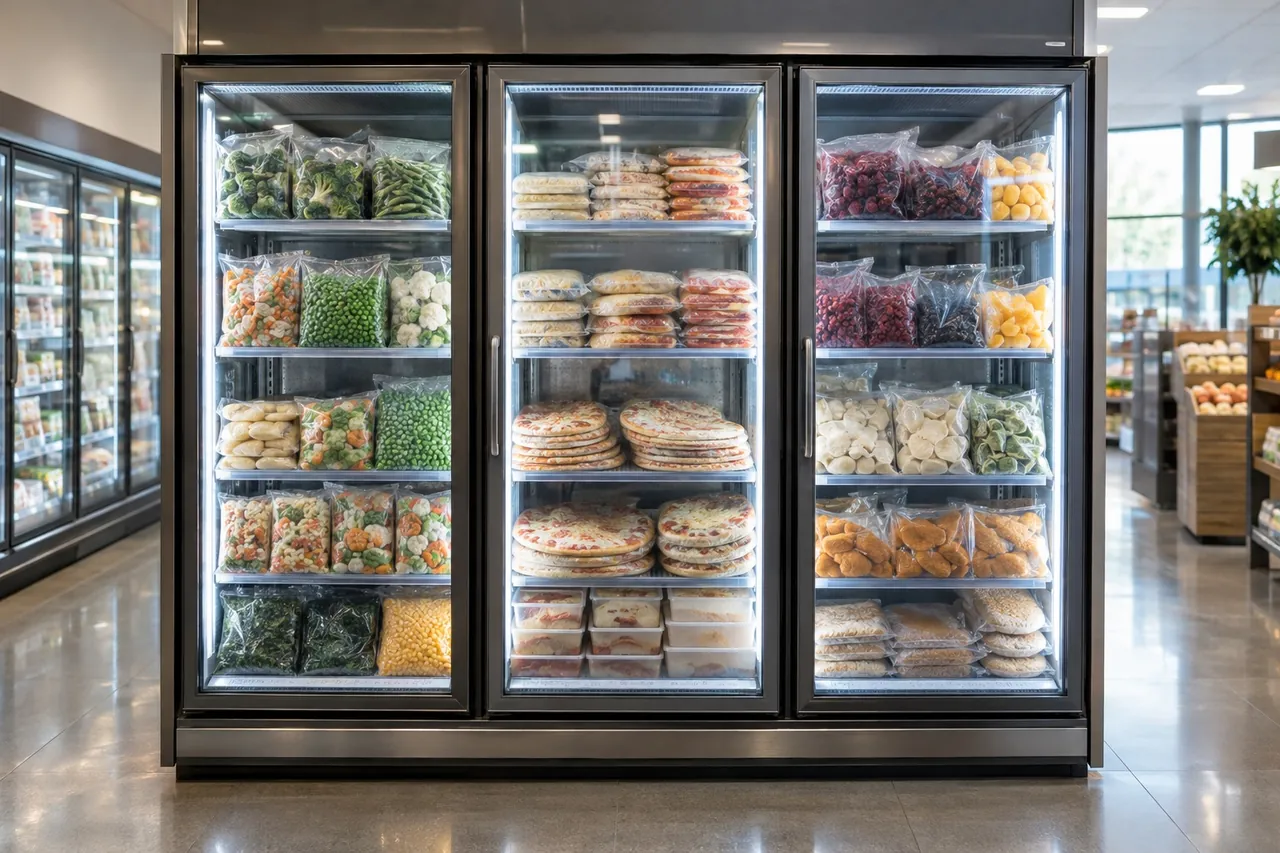
| Upright glass-door display freezer | −18 °C to −24 °C (0 °F to −11 °F) | Pints, tubs, multipacks in supermarkets | 1–4 doors, about 400–1600 L |
| Ice cream dipping cabinet | About −14 °C to −12 °C (6–10 °F) | Scooped hard ice cream in parlors and restaurants | Typically 6–18 display tubs |
| Gelato case (display) | About −14 °C to −11 °C (7–12 °F) | Gelato and sorbet in pans, high visual impact | Typically 12–24 pans |
| Cold plate freezer | Below −18 °C (0 °F), unplugged | Ice cream trucks, carts, kiosks | Small chests, often 100–500 L |
| Storage / hardening freezer | −20 °C to −30 °C (−4 °F to −22 °F) | Back-of-house stock and freshly made product | Chest, upright or walk-in |
Many shops use two or three types together: a storage freezer in the back, a dipping cabinet at the counter and a glass-top chest by the till for take-home packs. If you make your own ice cream, freshly churned product must be hardened quickly in a very cold freezer before it goes on display; see the hardening section below.
What temperature should an ice cream freezer be?
The correct temperature depends on whether the product is being stored or served. Use this table as a starting point and fine-tune for your recipe.
| Use | °C | °F | Why |
|---|---|---|---|
| Hardening freshly made ice cream | −30 to −40 | −22 to −40 | Freezes remaining water fast, keeping crystals small |
| Long-term storage | −20 to −25 | −4 to −13 | Slows crystal growth and texture loss |
| Packaged display (chest or glass door) | −18 to −24 | 0 to −11 | Keeps novelties hard and shaped |
| Dipping cabinet, hard ice cream | −14 to −12 | 6 to 10 | Soft enough to scoop cleanly |
| Gelato case | −14 to −11 | 7 to 12 | Gelato has less air and is served softer |
Two practical rules follow. First, temper tubs before they go into a scoop ice cream freezer: move them from storage to the dipping cabinet several hours (often overnight) ahead, rather than scooping straight from −25 °C. Second, keep the display temperature stable. A cabinet that swings by 3–4 °C every time the lid opens will spoil texture faster than one held steady a degree or two warmer.
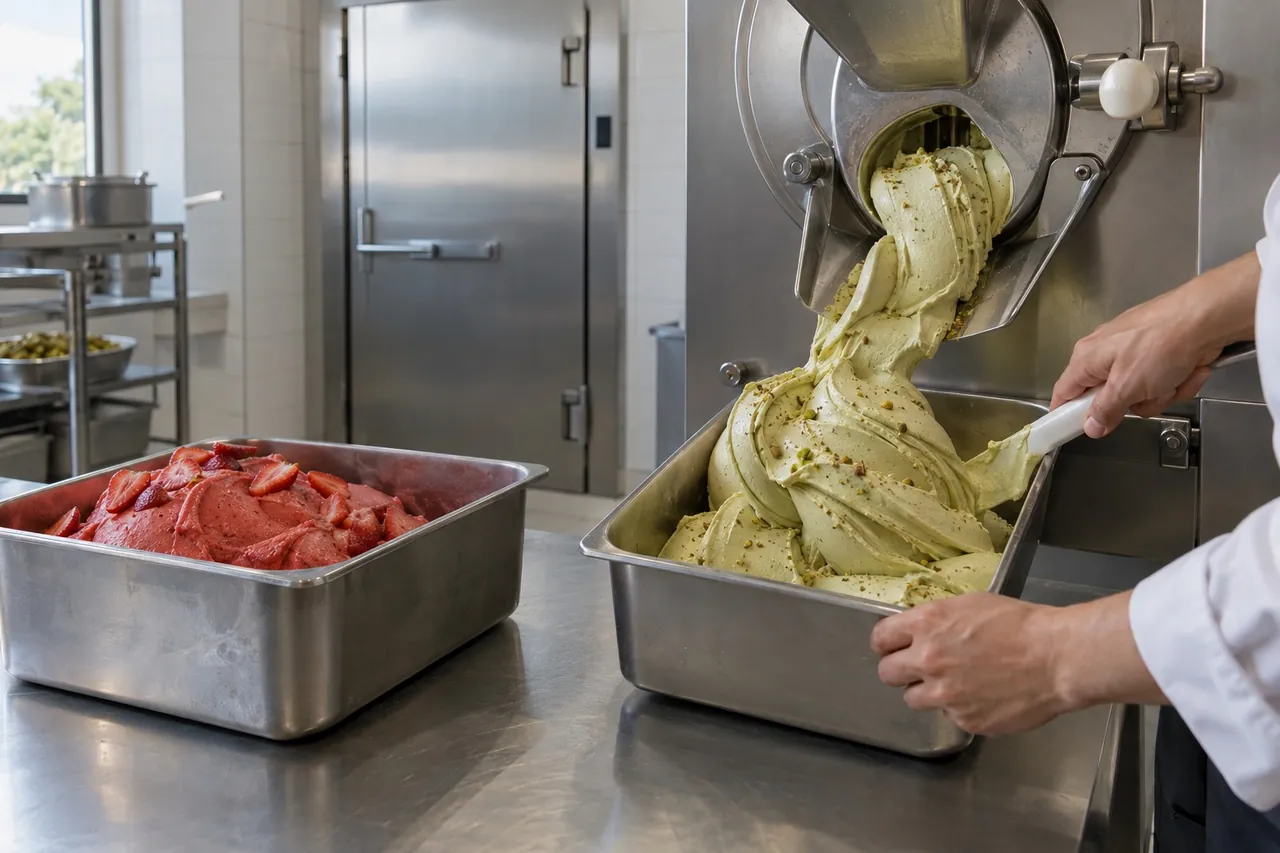
For hardening, a shock freezer works far faster than a standard freezer; our gelato machine guide explains how batch freezing and hardening fit together in a shop.
Glass-top chest freezers for packaged ice cream
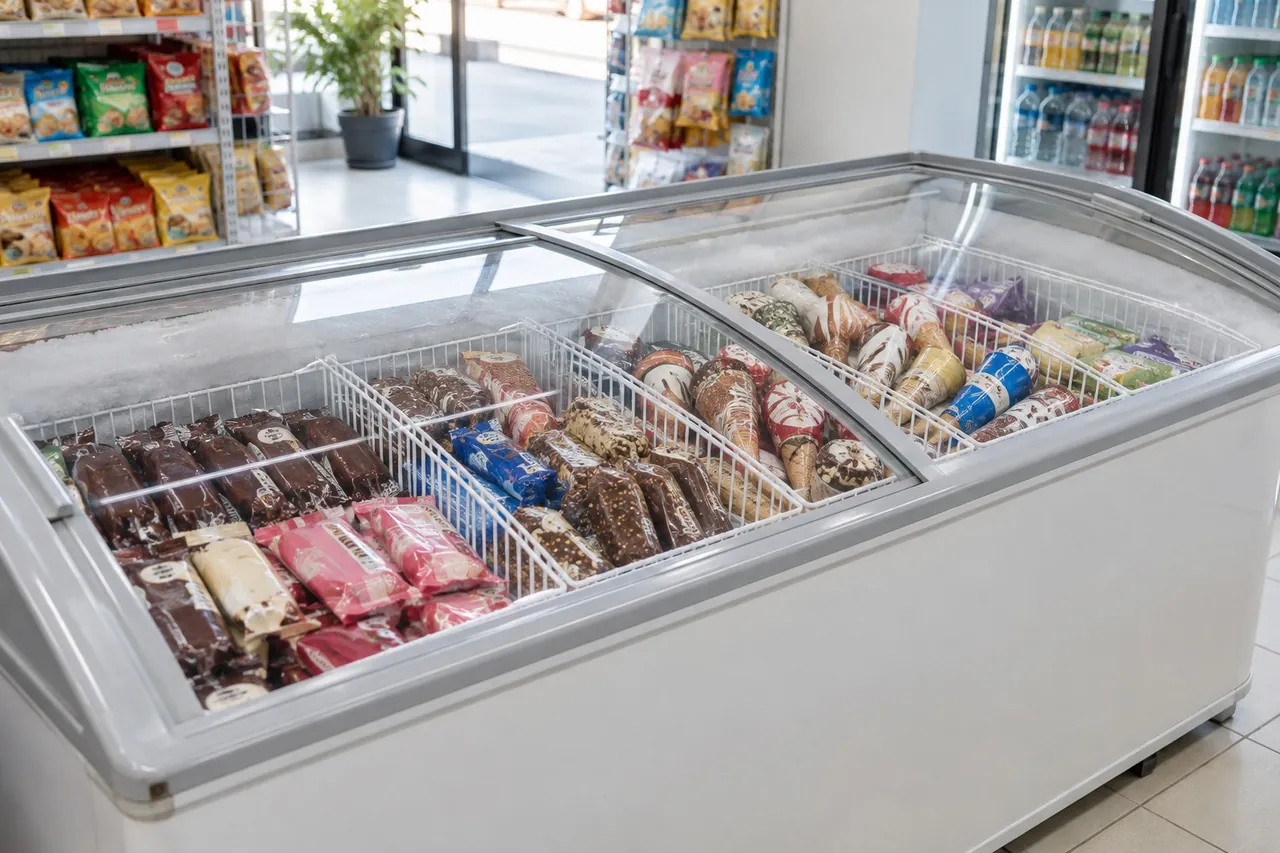
The glass top chest freezer is the workhorse of impulse ice cream sales. Customers look down through sliding or curved glass lids, pick a cone or bar and close the lid. Because cold air sinks, a chest loses little cold when opened, which makes it the most efficient ice cream display freezer for busy stores.
What to look for in an ice cream chest freezer:
- Low-E or heated glass lids that resist fogging in humid shops.
- Wire baskets or dividers to keep flavours separate and stop stock being buried.
- Static or fan cooling – static cooling with cold walls is simple and quiet but needs manual defrost; fan-assisted models give more even temperatures.
- Climate class – under EN/ISO 23953, climate class 3 means 25 °C (77 °F) and 60% humidity, class 4 means 30 °C (86 °F) and 55%. Hot kiosks and gas station ice cream freezers need class 4 or a tropical rating.
- Lock for after-hours security, and castors if you move it seasonally.
Be There glass-top chest ice cream freezers run from about 300 to 700 L (10.6–24.7 cu ft) and hold −18 °C to −24 °C (0 °F to −11 °F). As a rough guide, a 400 L (14 cu ft) chest holds several hundred single novelties, depending on pack size. See the full range on our display freezer page, and compare defrost types in our frost-free vs manual defrost guide.
Ice cream dipping cabinets and gelato display cases
An ice cream dipping cabinet (or ice cream dipping freezer) is a low chest with a glass canopy and openings sized for tubs. Staff scoop from the front tubs while customers see the flavours through the glass. Many models also have a storage compartment below the display row for back-up tubs.
A gelato case is a taller, front-facing display with curved or straight glass, fan cooling and rows of rectangular pans. It is built for visual impact: gelato is often heaped above the pan rim, so the case uses forced air and anti-fog glass to keep the surface frozen.
Ice cream freezer containers
- Round tubs – the North American standard is the 3-gallon (about 11.4 L) tub; size cabinet openings to the tub you buy.
- Gelato pans – the common European pan is about 5 L, 360 × 165 mm (14 × 6.5 in), in stainless steel or food-grade plastic.
- Lids – cover tubs and pans overnight to reduce frost and odour pick-up.
Count flavours first: a small parlor often runs 8–12, a busy shop 16–24. Then add storage for at least one back-up tub per best-selling flavour. A commercial gelato display freezer or commercial ice cream dipping cabinet should also have a clear defrost plan, since frost on scooping surfaces slows service.
Be There's core range is glass-top chest and glass-door display freezers. If you need a dipping cabinet or gelato case, send us your flavour count and tub size through the inquiry form and we will advise what we can supply.
Cold plate freezers for ice cream trucks and carts
A cold plate freezer keeps ice cream frozen without running a compressor while you trade. Its walls contain eutectic plates: sealed tanks of a solution that freezes at a set sub-zero point. You plug the freezer in overnight, the built-in refrigeration freezes the plates, and during the day they absorb heat as they slowly thaw.
- Holdover – typically about 8–12 hours unplugged, depending on ambient temperature, insulation and how often the lid opens.
- Recharge – typically 10–14 hours on mains power.
- Advantages – silent, no generator needed during service, very stable temperature.
- Limits – the plates must be fully recharged every night, and in hot climates holdover falls.
That is why a cold plate freezer for ice cream truck use is still common on vending routes. The main alternatives are a compressor freezer powered by an inverter or generator, or a vehicle refrigeration system for larger boxes. For bigger vans, our truck refrigeration units hold boxes down to −20 °C (−4 °F) and can be specified with standby electric drive.
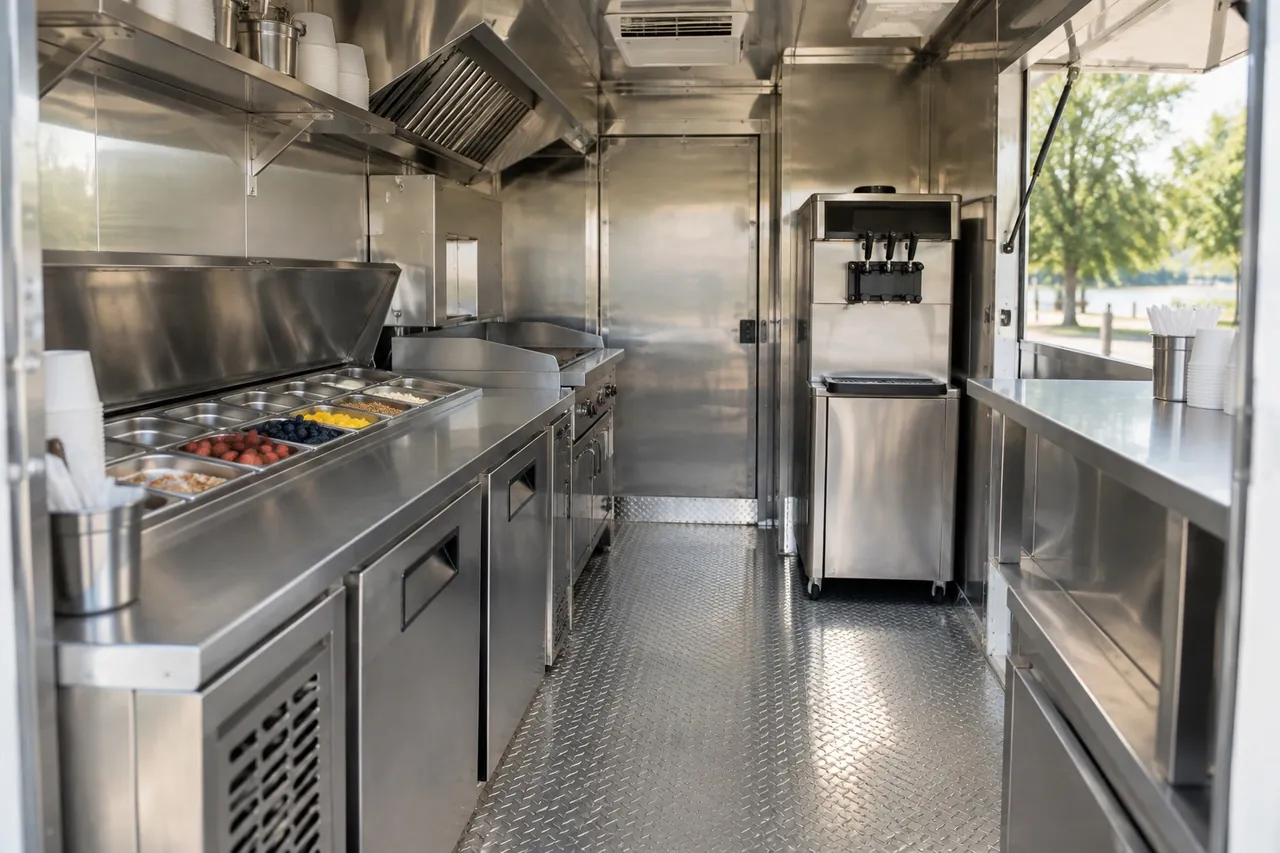
A portable ice cream cooler box with dry ice or ice packs works for a few hours at events, but it cannot hold a set temperature, so use it only for short delivery runs. Any ice cream truck freezer also needs a secure mounting and a plan for overnight power.
Small, mini and electric ice cream freezers: what buyers mean
Searches for an ice cream freezer electric, a 20 quart ice cream freezer or a 5 gallon ice cream freezer are usually about something different: a churn that makes ice cream. The traditional "ice cream freezer" is a bucket with a metal canister and paddle, surrounded by ice and rock salt, turned by hand or an electric motor. A freezer bowl model uses a pre-frozen double-walled bowl instead.
These are fine for home use and small events, but they make only a few quarts per batch, and the texture depends on ice, salt and timing. For a shop or production kitchen, the commercial equivalents are:
- Batch freezers for hard ice cream and gelato, making a batch in about 10–15 minutes.
- Soft serve machines that freeze and dispense on demand.
- Popsicle machines for stick products.
See our commercial ice cream machines for all three.
A small ice cream freezer or mini ice cream freezer of 100–200 L (3.5–7 cu ft) is enough for a café selling a handful of novelties, or as a counter-top display. Once you sell more than a few dozen units a day, step up to a 300–400 L glass-top chest: it holds more stock between deliveries and recovers faster after the lid is opened.
How to choose an ice cream freezer for your shop
Work through these points before you request quotes:
- Product format – packaged novelties (glass-top chest or glass-door upright), scooped hard ice cream (dipping cabinet) or gelato (gelato case).
- Temperature – −18 °C to −24 °C (0 °F to −11 °F) for packaged display; about −14 °C to −12 °C (6–10 °F) for dipping.
- Capacity – units sold between deliveries plus 20–30% headroom, or flavours plus back-up tubs.
- Site conditions – room temperature, humidity and sun. Choose climate class 4 or tropical rating for hot or humid shops.
- Defrost and glass – low-E or heated glass and a defrost system that suits your cleaning routine.
- Power and refrigerant – correct voltage and frequency, and R290 where your market restricts high-GWP refrigerants.
- Certification – UL/ETL and NSF in the US, CE in Europe, or your local mark.
- Mobile use – cold plate or compressor freezer for trucks, with a plan for overnight charging.
Be There exports glass-top chest and upright glass-door ice cream display freezers to distributors, retailers and brands. Send your capacity, temperature, voltage and destination through the inquiry form for an FOB, CIF or DDP quotation.