Short answer
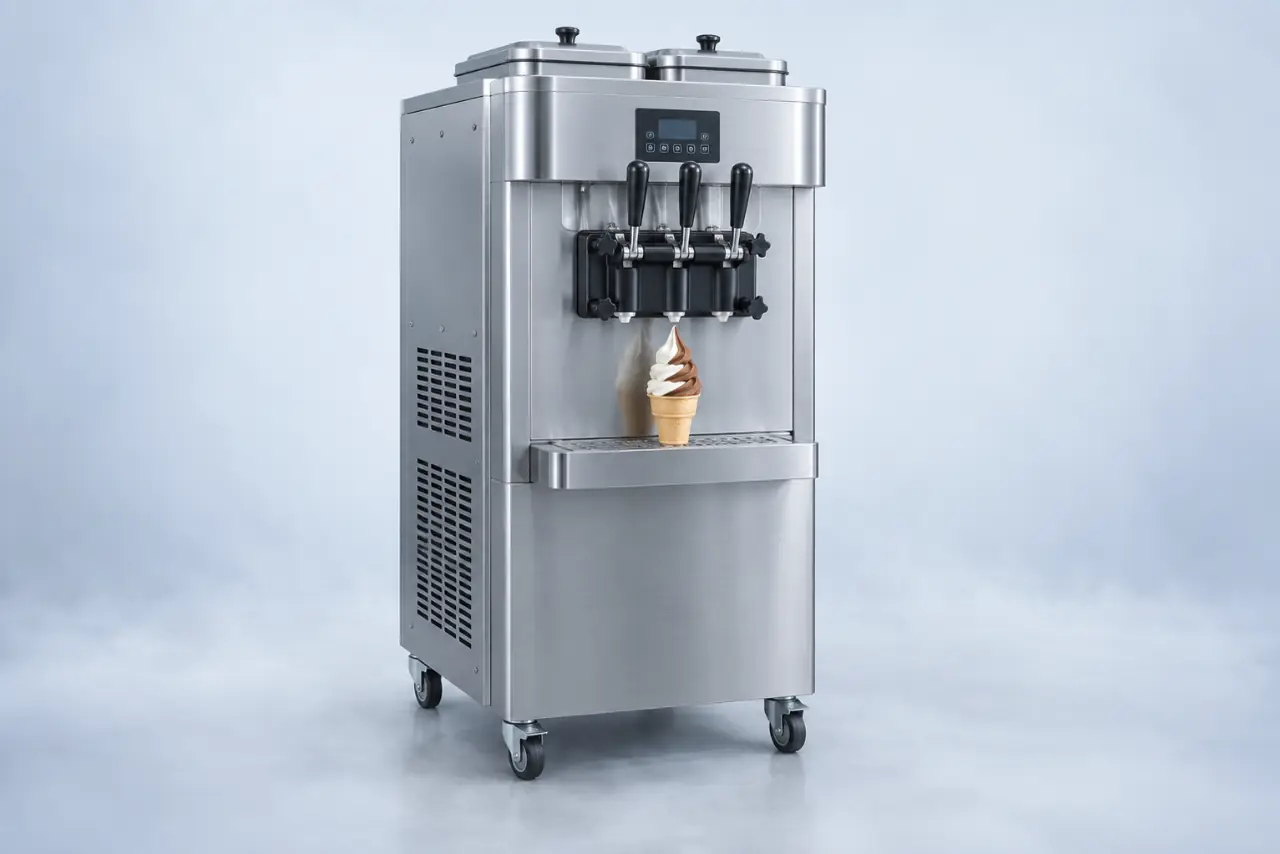
Choose a soft serve machine by peak servings per hour (a tabletop machine makes about 18–22 L/h, roughly 200–250 servings), flavours (two plus twist is standard), hopper refrigeration that holds mix below 5 °C (41 °F), overrun (gravity 30–45%, air pump 50–60%) and your power supply.
Match output to your peak hour
| Machine | Output | Approx. servings per hour | Suits |
|---|---|---|---|
| Tabletop, 1 flavour | 10–15 L/h | 100–150 | Cafés, small kiosks |
| Tabletop, 2 + twist | 18–22 L/h | 200–250 | Cafés, fast food |
| Floor, 2 + twist | 25–36 L/h | 280–400 | Ice cream shops, busy restaurants |
Size for your busiest hour, not the daily average. A machine running flat out recovers slowly and serves soft, warm product.
Overrun explained
Overrun is the volume of air whipped into the mix. 40% overrun means 1 litre of mix becomes 1.4 litres of soft serve. Gravity-fed machines typically reach 30–45%; air-pump machines reach 50–60%, which lowers ingredient cost per serving.
Hygiene features
- Refrigerated hoppers that keep mix at or below 5 °C (41 °F).
- Standby or night mode that holds product without freezing it solid.
- Tool-free disassembly of beaters, valves and seals for daily cleaning.
- Stainless steel food-contact parts.
Power and space
Tabletop units usually run on 220–240 V single phase (or 110–120 V in North America for small models). Floor models often need 380–415 V three phase. Allow space for air circulation around air-cooled condensers, or choose water-cooled for hot kitchens.
Opening checklist
- Pick your menu: soft serve, frozen yogurt, sundaes, shakes.
- Choose machine size for peak hour.
- Plan cold storage for mix and toppings.
- Confirm power supply and drainage.
- Obtain local food business permits.
See our commercial soft serve machines.