Short answer
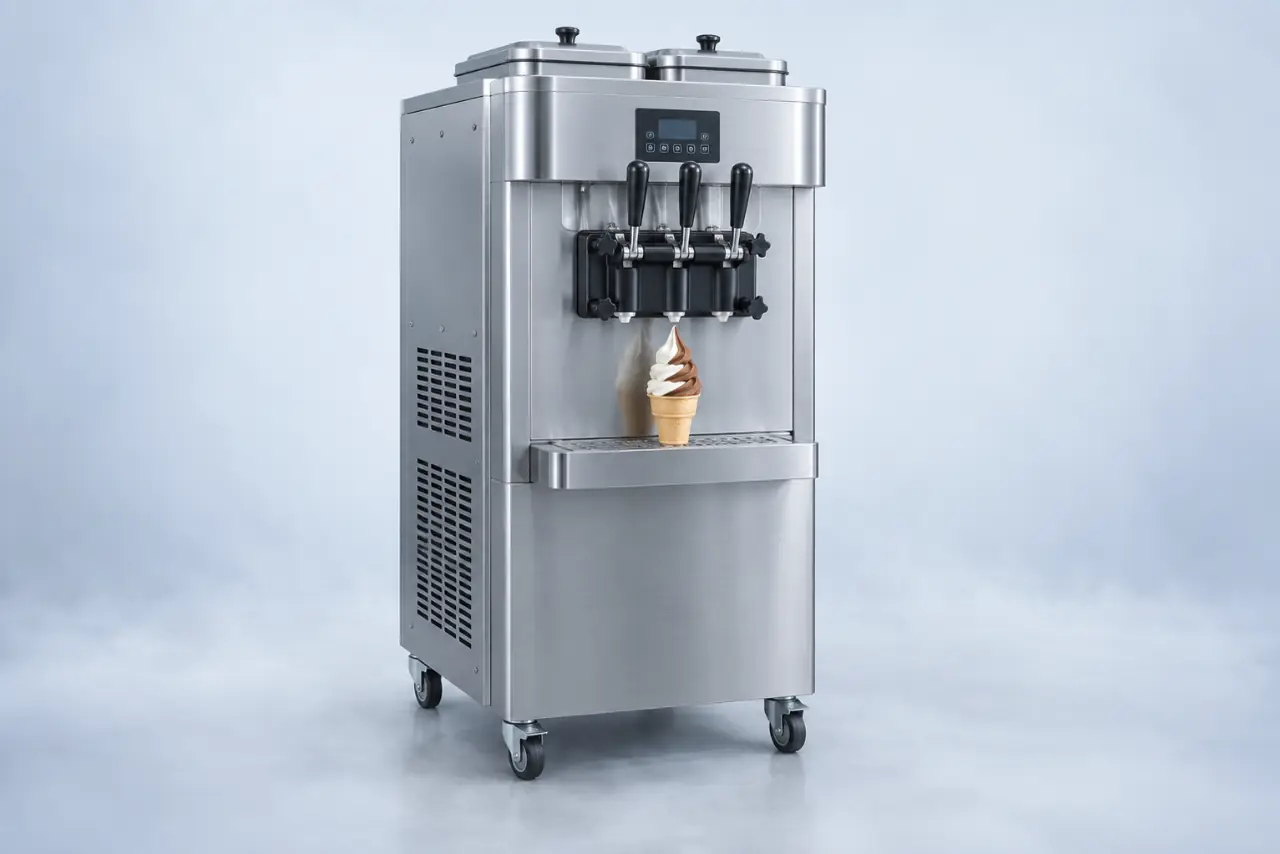
A soft serve business is built around a commercial soft serve ice cream machine that freezes pasteurised mix and dispenses it at −6 °C to −4 °C (21–25 °F). A tabletop machine makes about 18–22 L per hour, roughly 200–250 cones. With 30–60% overrun, mix and cone typically cost a small fraction of the selling price, so margins are high if volume is steady.
Key takeaways
- A tabletop soft serve ice cream machine makes about 18–22 L/h (roughly 200–250 servings); a floor model makes about 25–36 L/h.
- Overrun of 30–45% (gravity) or 50–60% (air pump) means 1 L of liquid mix becomes about 1.3–1.6 L of soft serve.
- In a worked example with mix at US$2.50 per litre, the mix in a 100 g cone costs about US$0.20–0.25.
- Hopper mix must stay below +5 °C (41 °F), and most health codes require a regular full breakdown clean.
- Besides the machine, budget for mix storage, a display freezer, dedicated power, spare parts and a cleaning kit.
What do you need to start a soft serve business?
The core of any soft serve business is a commercial soft serve ice cream machine: a refrigerated freezing cylinder with a beater, fed from a refrigerated hopper, that dispenses soft ice cream at −6 °C to −4 °C (21–25 °F). Around it you need a reliable supply of pasteurised mix, cold storage, cones and cups, a clean water supply and sink, and the licences your local food authority requires.
Most soft serve operations fit one of four formats:
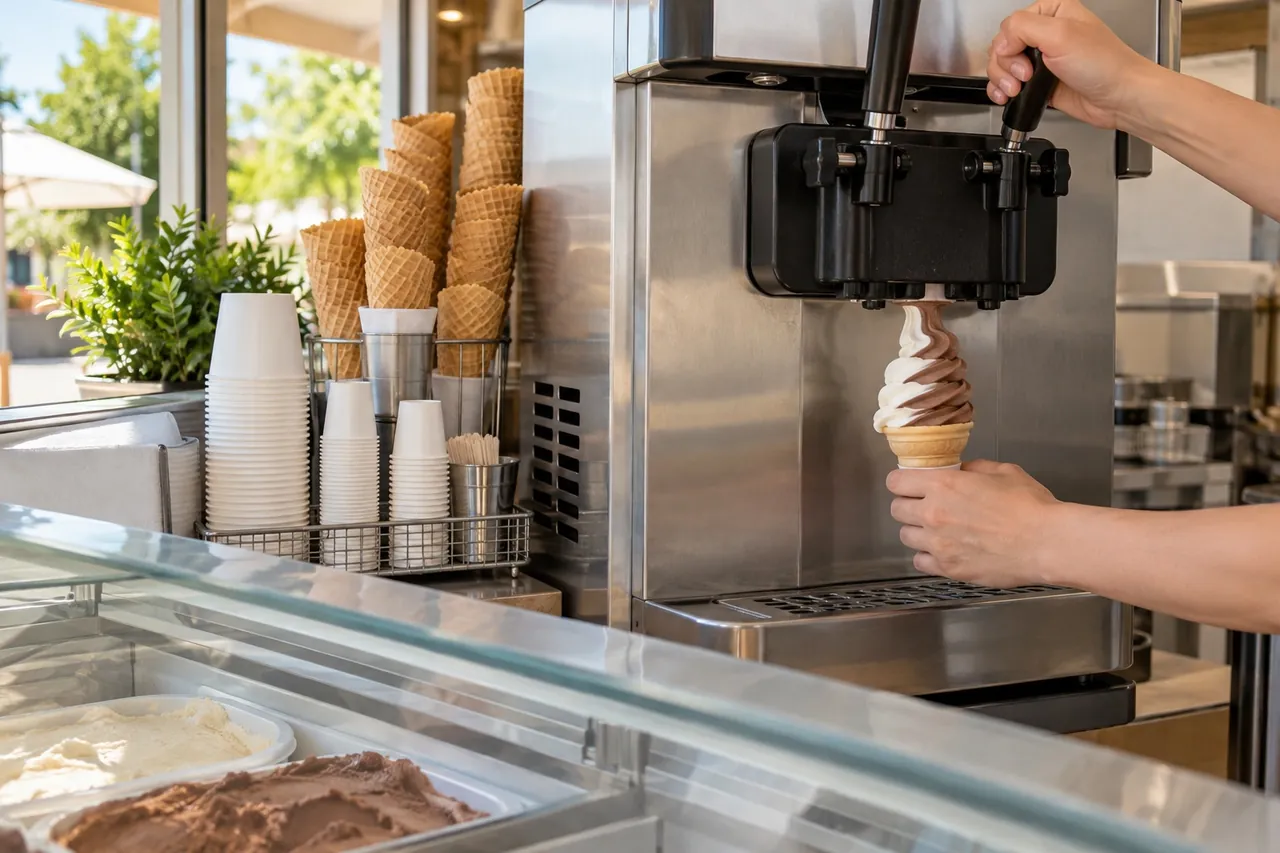
- Café or restaurant add-on. One tabletop machine on the counter, using existing staff and storage.
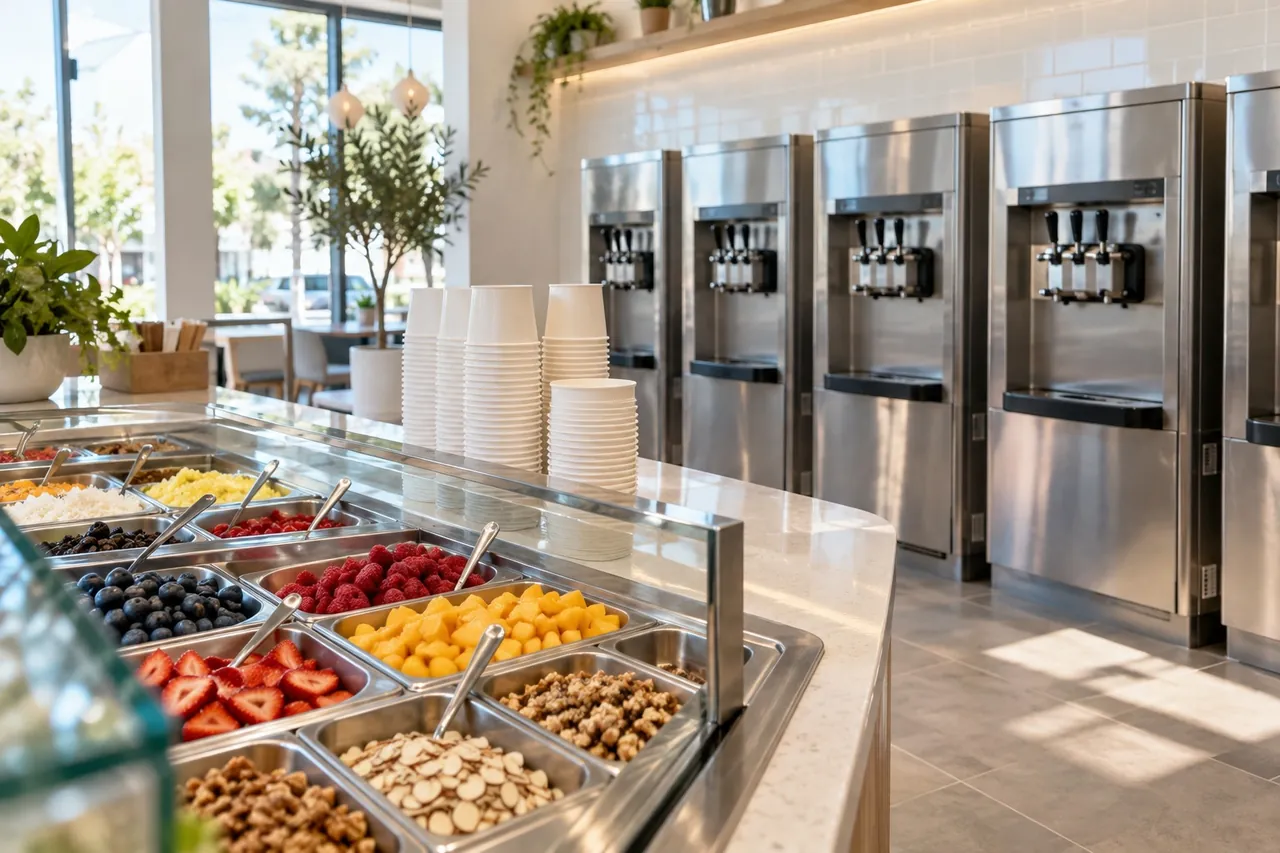
- Dedicated kiosk or shop. One or two floor machines plus a dipping station, sundaes and shakes.
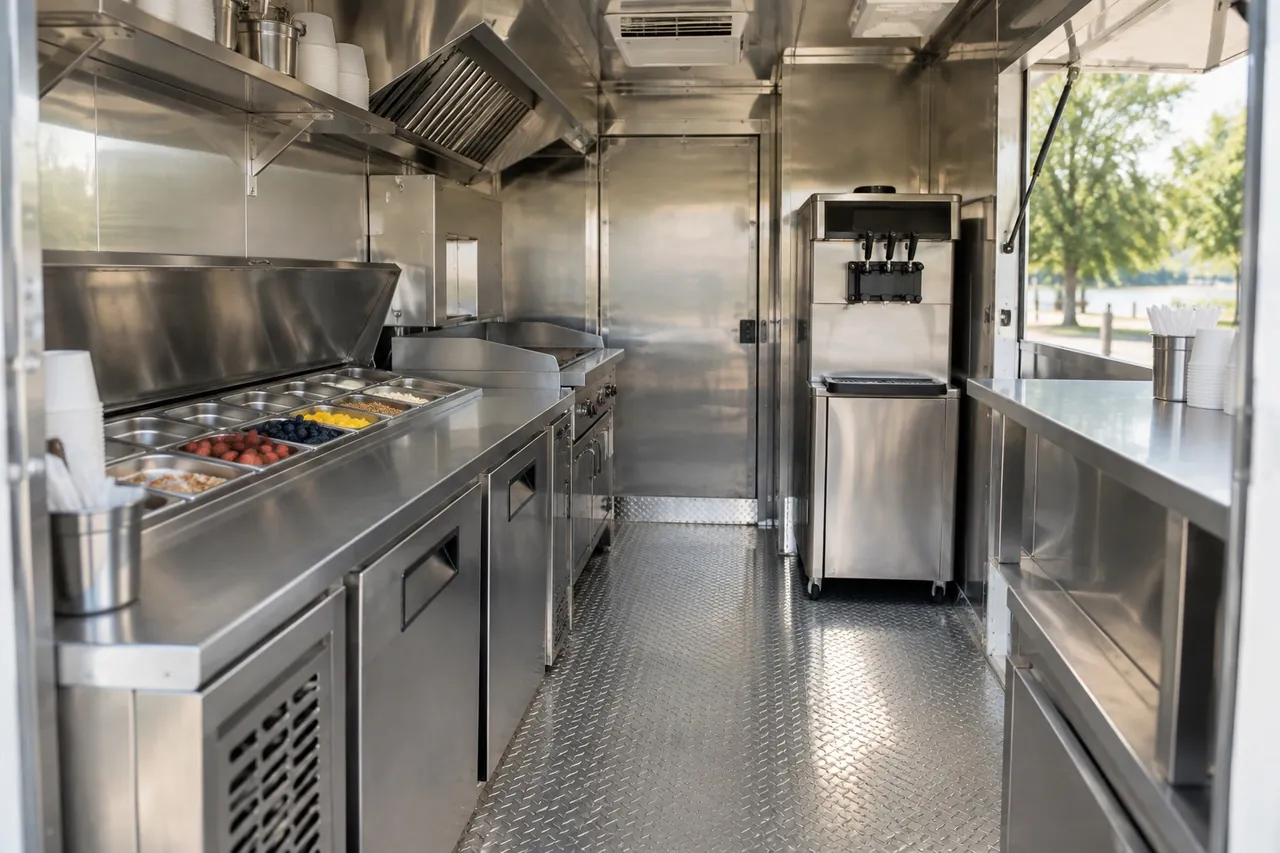
- Soft serve cart or van. A tabletop machine on a mobile unit with a generator or shore power.
- Seasonal or event stand. High peaks for a few months, where output per hour matters most.
Pick the format first, because it decides the machine size, power supply and how much storage you can fit. For machine specs such as output, overrun and power, see our soft serve machine buying guide; this article focuses on running soft serve as a business.
What is soft serve ice cream made of?
Soft serve ice cream is made of milk, cream, milk solids, sugar, stabilisers and emulsifiers, frozen while air is whipped in. In many markets soft serve mixes contain less fat than hard ice cream, often around 3–10% fat, which keeps it smooth at the warmer serving temperature.
You can buy soft ice cream mixes in two forms:
- Liquid mix, pasteurised and packed in cartons or bag-in-box. Pour it straight into the hopper. It is consistent and quick but needs refrigerated storage and has a short shelf life.
- Powder mix, reconstituted with cold water and rested before use. It is cheaper to ship and store, so it is popular for carts and export markets, but staff must mix it accurately.
Custard soft serve, or soft serve frozen custard, adds egg yolk for a richer texture; in the US, frozen custard must contain at least 1.4% egg yolk solids by weight. Frozen yogurt, plant-based and fruit sorbet mixes run in the same machines. Flavour swirl options such as ice cream with flavor swirl syrups are usually added by a topping injector or at the counter rather than in the hopper.
If you are wondering how to make soft serve ice cream from scratch, the process is: blend the mix, pasteurise it, cool it to +4 °C (39 °F), age it for several hours and freeze it in the machine. Most small businesses buy ready mix to avoid running a pasteuriser.
Which commercial soft serve machine should you buy?
Match the machine to your busiest hour, not your average day. A typical cone or cup of 90–130 g (3–4.5 oz) means a tabletop machine serves about 200–250 portions per hour; a floor model serves more and recovers faster in a rush.
| Business | Peak servings/hour | Suggested machine | Power (typical) |
|---|---|---|---|
| Café add-on | Up to about 100 | Countertop soft serve machine, gravity feed | Single-phase |
| Cart or van | 100–200 | Countertop, gravity or air pump | Single-phase or generator |
| Kiosk or shop | 200–350 | Floor model with air pump | Single- or three-phase |
| Busy tourist site | 350+ | Two floor models | Three-phase usually |
The standard layout is two flavours plus a twist. A 3 flavor soft serve machine with three hoppers exists for shops that want more choice from one footprint, but two machines give more output and a backup if one fails. Be There's commercial soft serve machines offer two flavours plus twist, refrigerated hoppers below +5 °C (41 °F) and an optional air pump.
Japanese soft serve, known for dense, milky texture, comes mostly from a rich mix and low overrun, which any gravity-fed machine can deliver. A soft serve vending machine is a separate, fully automated kiosk with its own cleaning system; it is not part of our line.
How much does a soft serve ice cream machine cost, and what are the margins?
Machine price depends on format, output, air pump, heat-treatment features, certification and the import route. Basic imported tabletop units cost a small fraction of premium floor models with heat treatment. Be There quotes each order FOB, CIF or DDP, so compare landed cost rather than list prices.
Margins come from overrun. A worked example, with assumptions stated:
| Item | Assumption | Result |
|---|---|---|
| Liquid mix | US$2.50 per litre | — |
| Overrun | 40% | 1 L mix → 1.4 L soft serve |
| Portion | About 130 ml (100 g) | About 10–11 cones per litre of mix |
| Mix per cone | — | About US$0.23 |
| Cone or cup and napkin | US$0.05–0.12 | Total about US$0.30–0.35 |
| Selling price | US$2.50–4.00 | Ingredient cost about 8–14% of price |
Plug in your own mix price and selling price; the logic is the same. Ingredient margin is high, so the real question is volume: rent, labour, electricity, cleaning time and wastage have to be covered by enough cones each day. An air pump that lifts overrun from 40% to 55% cuts mix cost per cone by roughly 10%, but changes the texture, so test it with customers.
Soft serve equipment and supplies list
Beyond the machine, a soft serve shop or kiosk typically needs:
- Mix storage. A reach-in fridge at +2 °C to +5 °C (36–41 °F) for liquid mix, or dry storage for powder.
- Display freezer. For take-home tubs, ice cream bars and novelties, a glass-top or upright display freezer at −18 °C (0 °F) or colder.
- Dipping and topping station. Warm sauce dispensers, chilled toppings and a dip for coated cones.
- Shake and sundae tools. A spindle mixer, scoops, spoons and portion cups.
- Cones and cups. Buy wafer or waffle cones in bulk. An electric ice cream cone maker (waffle cone iron) lets you bake fresh cones, but it needs space and staff time.
- Hygiene kit. Brushes, sanitiser, food-safe lubricant, spare seals and O-rings.
- Utilities. A dedicated circuit for each machine, a hand sink and somewhere to wash machine parts.
Soft serve ice cream supplies such as mix, cones and cups are recurring costs; set up two suppliers if you can. Keep a soft ice cream spare parts kit on site, because a missing seal can stop trade on a busy day.
Soft serve carts, vans and mobile stands
A soft serve cart or soft serve ice cream cart puts a countertop machine on a mobile base with storage below. It is the cheapest way to test demand at markets and events, but power and hygiene need careful planning.
- Power. A tabletop machine needs a stable single-phase supply. Generators must be sized for the compressor's start-up current, which is several times its running current; ask the supplier for the starting current and add margin.
- Heat. Air-cooled machines need free airflow around the condenser. In a closed van in summer, the machine can lose output fast; leave the clearances in the manual and ventilate.
- Water. You need clean water for hand washing and cleaning, and a waste tank.
- Vibration. Secure the machine and let it rest upright after moving, as the manual specifies, before switching on.
- Licensing. Mobile food units usually need separate approval from fixed premises.
Our guide to food truck refrigeration covers fridges, freezers and power for mobile units. A soft serve machine for home or a frozen fruit soft serve maker that pushes frozen bananas through a grinder is not suitable for selling: it has no refrigerated hopper and cannot hold mix safely.
Daily operations, cleaning and food safety
Good soft serve depends on routine. A simple daily plan:
- Open. Assemble the sanitised machine, lubricate seals, fill the hopper with chilled mix and freeze down, usually about 10–15 minutes.
- Check. Draw a test serving, check texture and log hopper temperature: it must stay at or below +5 °C (41 °F).
- Serve. Top up the hopper before it runs low, never mixing old warm mix with new.
- Close. Drain, rinse, disassemble, wash, sanitise and air-dry parts, or use standby mode overnight where the manual and local code allow.
Most health departments set a maximum interval between full breakdown cleans; check yours and record each clean in your HACCP log. Replace seals and beater blades on schedule.
Clean the condenser grille regularly; a dusty grille is a common reason for soft, runny product. For a wider maintenance plan, see our commercial refrigeration maintenance checklist.
Next steps: planning your soft serve business
Before you order, write down:
- Your format (café, kiosk, cart or event stand) and expected peak servings per hour.
- The number of flavours, and whether you need shakes or frozen yogurt.
- Power available: voltage, frequency, single- or three-phase.
- The certification your inspector expects, such as CE, UL/ETL or NSF.
- Where mix, cones and take-home stock will be stored.
The best commercial soft serve machine for your business is the one that covers your peak hour with some headroom, runs on the power you have and can be serviced locally. Whether you call it a soft serve ice cream maker, a soft ice cream machine or a swirl ice cream machine, compare quotes on output, hopper refrigeration, overrun, power and spare parts rather than on price alone.
Then send us your plan for a quotation. We will suggest matching soft serve ice cream machines and can add display freezers, a popsicle machine for grab-and-go products or cold room kits to the same order. We reply within one working day.