Short answer
A commercial gelato machine is a batch freezer: a refrigerated cylinder with a dasher that freezes pasteurised mix in batches of about 2–15 L in roughly 6–12 minutes. Gelato is made of milk, a little cream, sugar and flavourings, with about 4–9% fat and 20–35% air, and is served at about −12 °C (10 °F), warmer and denser than ice cream.
Key takeaways
- Gelato typically contains about 4–9% fat and 20–35% air; US ice cream must contain at least 10% milkfat and often carries more air.
- Gelato is served at about −11 °C to −14 °C (12–7 °F), several degrees warmer than ice cream, which makes it taste softer and more intense.
- A batch freezer freezes one batch of about 2–15 L in roughly 6–12 minutes, then the product is extracted into pans.
- Commercial gelato production needs a pasteuriser or pasteurised mix, a batch freezer, a blast freezer for hardening and a display case.
- The same batch freezer makes sorbet and Italian ice from water-based mixes with no dairy.
What is a gelato machine?
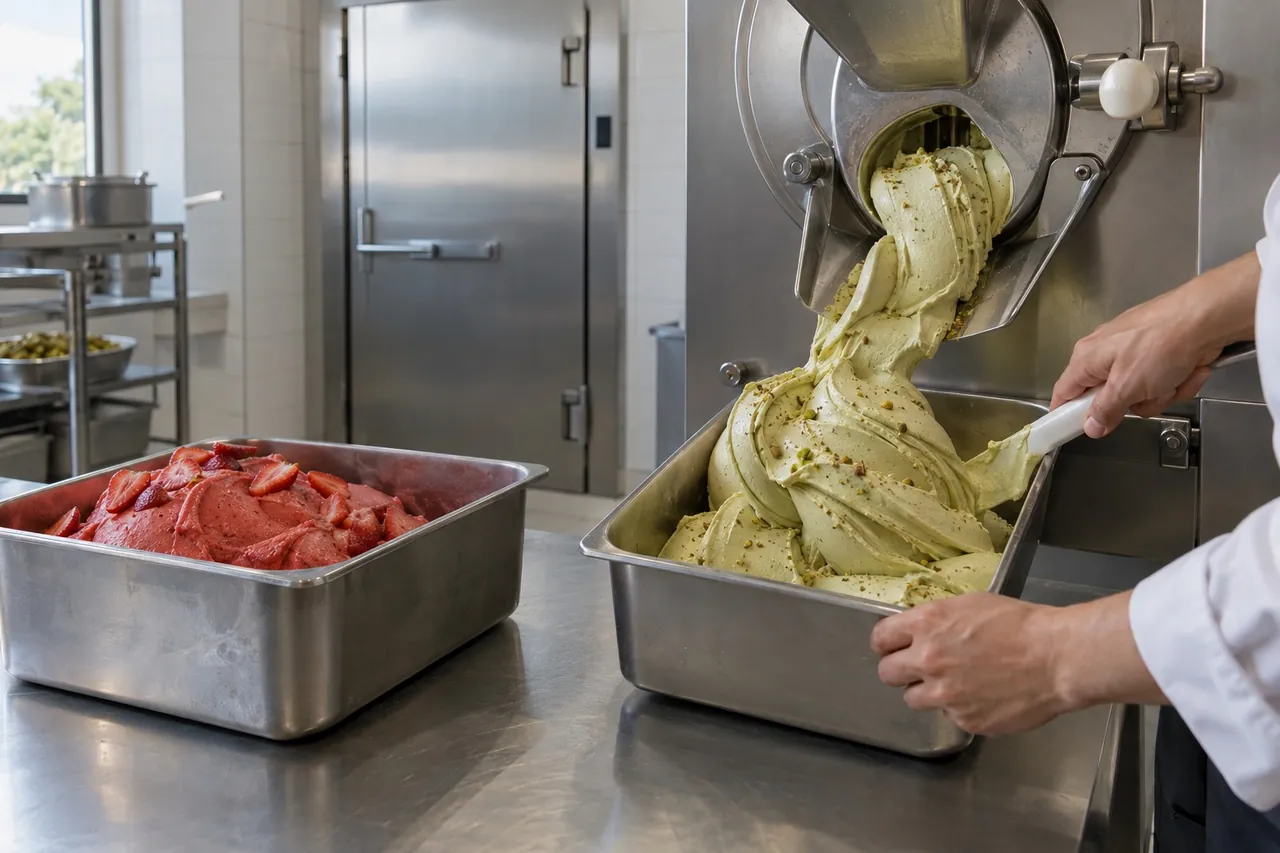
A commercial gelato machine is a batch freezer: a horizontal or vertical stainless steel cylinder cooled by refrigerant, with a motor-driven dasher that scrapes freezing mix off the wall. You pour in a measured batch of liquid base, the machine freezes it for several minutes while incorporating a controlled amount of air, and then you extract the finished gelato through a door into pans.
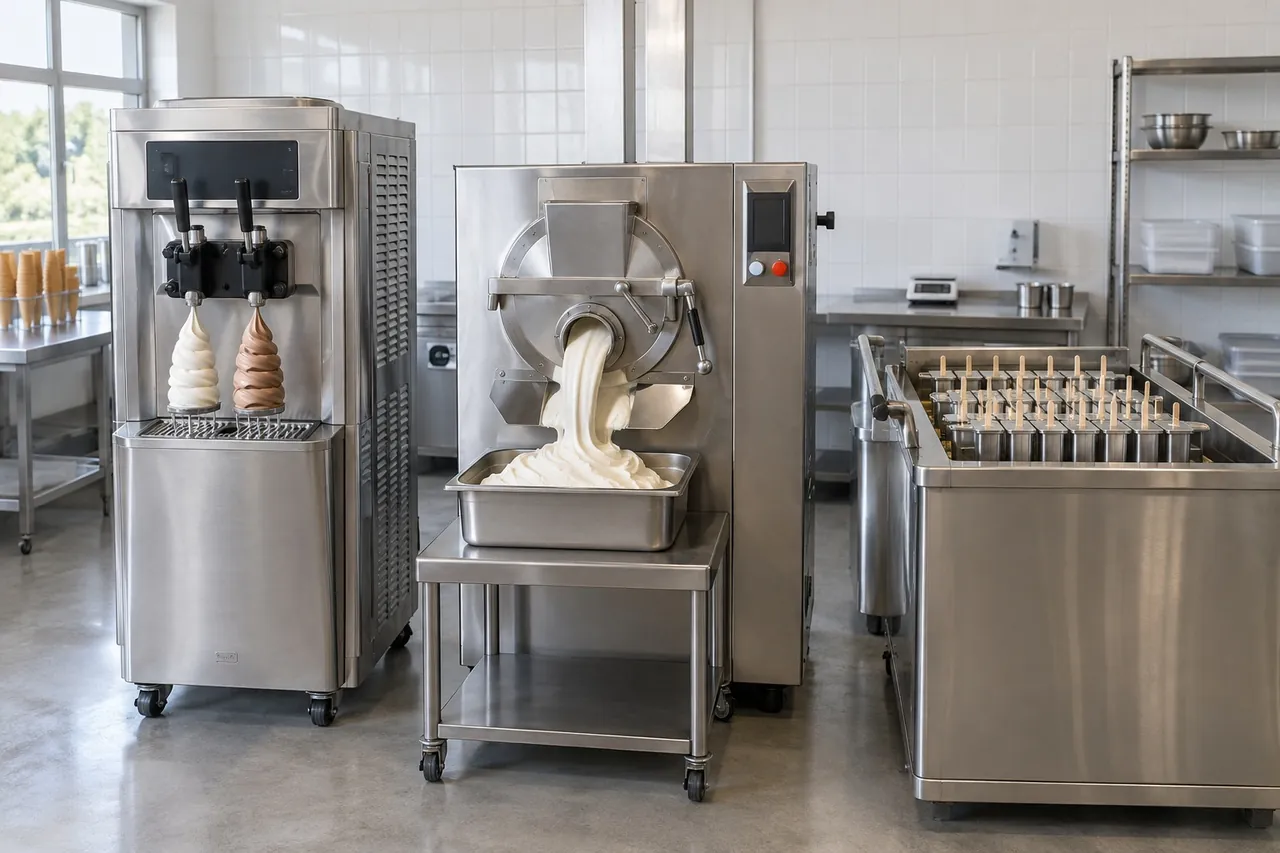
That batch process is the key difference from a soft serve machine. Soft serve freezers hold mix in a hopper and dispense continuously at about −6 °C to −4 °C (21–25 °F). A batch freezer makes a stiffer product that comes out at roughly −7 °C to −10 °C (19–14 °F), is hardened further and is then scooped or spatula-served from a display case.
The same machine is also a commercial hard ice cream machine, a sorbet maker and an Italian ice maker machine. Only the mix and the program change. Be There supplies batch freezers for hard ice cream, gelato and Italian ice alongside soft serve and popsicle machines; see our commercial ice cream machines for the range.
Whether a supplier calls it a gelato maker machine, a gelato making machine or an ice cream batch freezer, the working principle is the same. Larger gelato equipment adds combined machines that heat, pasteurise and then freeze in one cylinder, or vertical machines with an open top so the operator can add inclusions during freezing. Small shops usually start with a single horizontal batch freezer and buy pasteurised base.
What is gelato made of?
Gelato is made of milk, a smaller amount of cream, sugar, and flavourings such as nut pastes, fruit or chocolate, with stabilisers in most commercial recipes. A typical milk-based gelato base contains about 4–9% fat, 16–22% sugars and 8–12% non-fat milk solids, with total solids around 32–40%.
Is there milk in gelato? Yes, in all cream-style flavours; gelato is fundamentally milk based, with more milk and less cream than ice cream. Is gelato made with eggs? Some recipes are: the classic custard base (crema) uses egg yolks, but many fior di latte, nut and chocolate bases contain no eggs. Sorbetto, the fruit range, is made of water, sugar and fruit with no milk at all.
Authentic gelato is about balance rather than a fixed recipe. Gelato makers calculate sugar, fat and solids for each flavour so that every tray scoops cleanly at the same display temperature. A gelato base, either bought in or made in-house, is then flavoured before freezing.
All dairy bases must be pasteurised. For example, the US Pasteurized Milk Ordinance sets 69 °C (155 °F) for 30 minutes in a batch pasteuriser, or 80 °C (175 °F) for 25 seconds in a continuous system, for frozen dessert mixes. After heating, the mix is cooled to about +4 °C (39 °F) and aged for several hours before freezing.
Gelato vs ice cream: fat, air and temperature
Gelato and ice cream use the same ingredients in different proportions and are made and served differently. The numbers below are typical; recipes vary.
| Property | Gelato | Ice cream (US style) | Sorbet / Italian ice |
|---|---|---|---|
| Fat | About 4–9% | At least 10% milkfat by US standard; premium often 14–18% | 0% (no dairy) |
| Air (overrun) | About 20–35% | About 25–100% | About 10–30% |
| Eggs | Some recipes (crema) | Custard styles only | No |
| Serving temperature | About −11 °C to −14 °C (12–7 °F) | About −14 °C to −18 °C (7 °F to 0 °F) | About −10 °C to −14 °C (14–7 °F) |
| Machine | Batch freezer, slow dasher | Batch or continuous freezer | Batch freezer or granita machine |
| Serving tool | Flat spatula | Scoop | Spatula or scoop |
Less fat and less air make gelato denser, and the warmer serving temperature means it is softer and the flavour is released faster. It also means gelato needs a dedicated display case: a standard ice cream freezer at −18 °C (0 °F) leaves gelato too hard to serve.
Can you make gelato in an ice cream maker? You can make a gelato-style product with a lower-fat recipe, but most ice cream makers whip in more air. Commercial gelato machines run the dasher slower to keep overrun low.
How does a batch freezer work?
A batch freezer runs a simple cycle that repeats through the production day.
- Load. Pour a measured batch of aged mix into the cylinder, typically between the machine's minimum and maximum charge.
- Freeze. The compressor runs, refrigerant evaporates in the cylinder jacket and the dasher scrapes ice crystals off the wall. Most machines finish when the motor reaches a set consistency, typically after 6–12 minutes.
- Extract. The door opens and the dasher pushes gelato out into a pan, usually a 5 L tray.
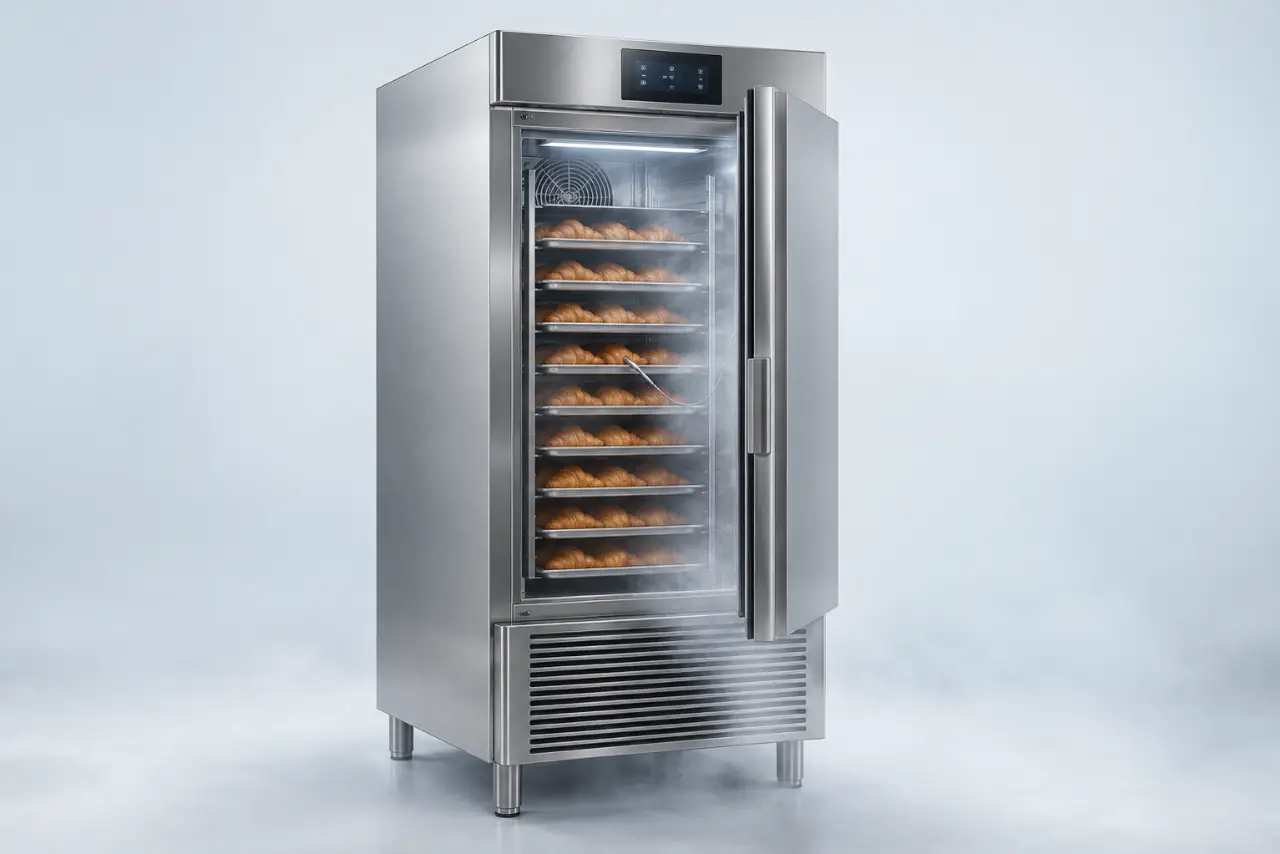
- Harden. Pans go straight into a blast freezer to lock in small ice crystals before display.
| Batch freezer size | Batch per cycle | Typical output | Suits |
|---|---|---|---|
| Countertop gelato machine | About 1.5–4 L | About 10–20 L/h | Restaurants, small cafés |
| Floor, small | About 3–8 L | About 20–40 L/h | Single gelato shop |
| Floor, large | About 6–15 L | About 40–80 L/h | Central lab supplying several shops |
Output in litres per hour refers to finished product and varies with mix and overrun, so confirm it on the quotation. Water-cooled condensers keep output steady in hot labs; air-cooled models need good ventilation. Check whether larger machines need three-phase power.
Commercial gelato equipment for a shop
A batch freezer alone does not make a gelato shop. A typical commercial gelato equipment list for a single shop with its own lab looks like this:
- Pasteuriser, or pasteurised liquid base bought in, plus a fridge for ageing mix at +2 °C to +4 °C (36–39 °F).
- Batch freezer sized for your peak day, ideally with programs for gelato, sorbet and Italian ice.
- Blast freezer to harden fresh pans quickly. Be There's blast and shock freezers run from 5 to 20 trays.
- Storage freezer at −18 °C to −25 °C (0 °F to −13 °F) for backup pans, either upright cabinets or a small walk-in freezer.
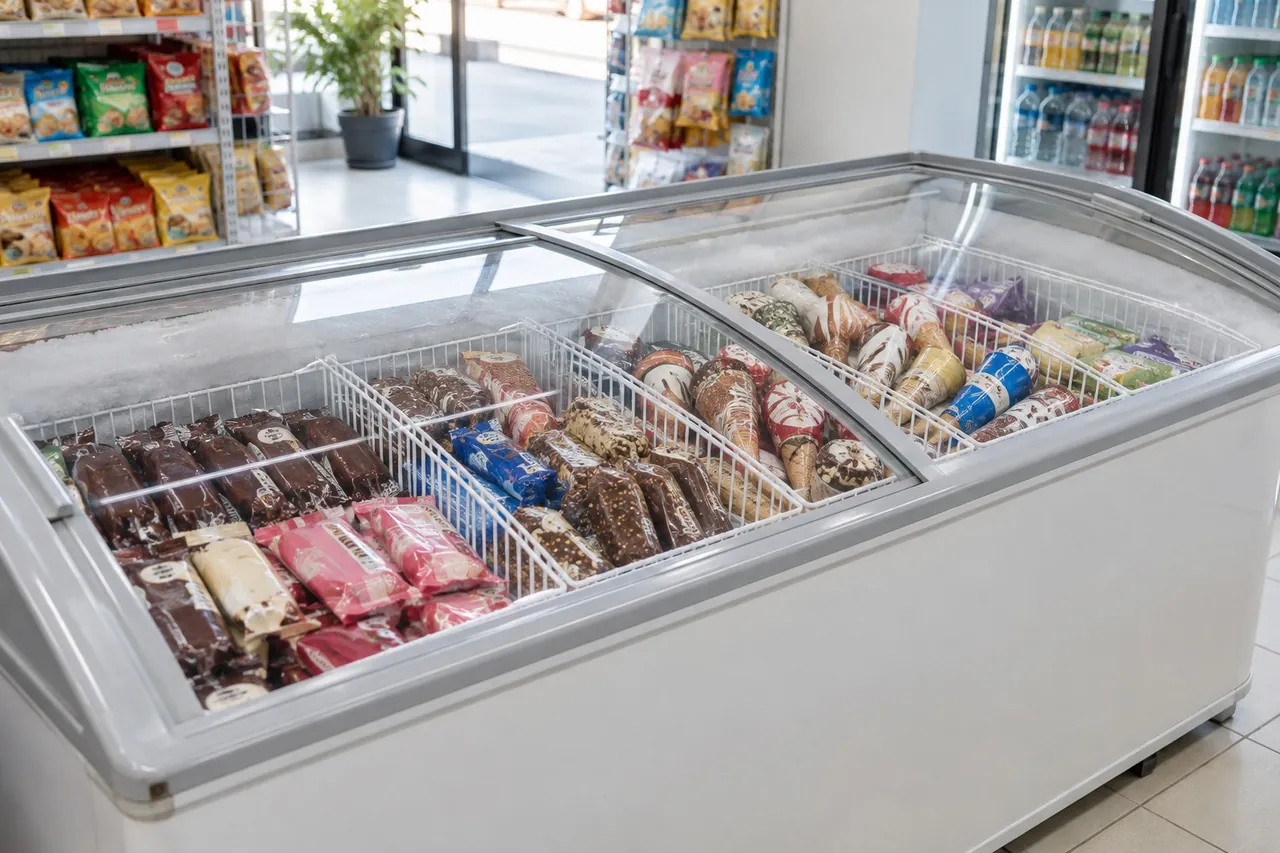
- Gelato display case holding about −12 °C to −16 °C (10–3 °F) with ventilated cooling, often 12–24 pans. Our guide to ice cream display freezers and gelato cases explains the differences.
- Lab furniture: stainless tables, a sink, a mixer or blender, scales and pan storage.
Plan the lab around the flow from pasteuriser to batch freezer to blast freezer, so each extracted pan moves into the cold within a minute or two. Gelato that sits warm on a bench grows large crystals and turns icy in the case.
Gelato machine for home vs commercial gelato maker
Searches for the best gelato maker or a gelato machine for home mostly return small compressor units with a removable 1–1.5 L bowl. They are good for recipe trials and for restaurants making a few portions for a dessert menu, but they cannot supply a counter.
| Point | Home gelato maker | Commercial gelato machine |
|---|---|---|
| Batch | About 0.5–1.5 L | About 1.5–15 L |
| Cycle time | About 30–60 min | About 6–12 min |
| Back-to-back batches | Limited; motor and compressor need rest | Continuous production through the day |
| Extraction | Spoon out of the bowl | Door and dasher push product into pans |
| Build | Plastic housing, small motor | Stainless cylinder and dasher, heavy-duty gearbox |
When you read gelato maker reviews, check the batch size and whether the machine has a built-in compressor or a pre-frozen bowl. A pre-frozen bowl makes one batch and then needs a day in the freezer. For a shop, the deciding figures are litres per hour, cycle time and how easily the cylinder can be cleaned between flavours.
How to choose a commercial gelato machine: checklist
- Daily volume. Count the pans you need on your busiest day, including sorbet and Italian ice. Each 5 L pan holds roughly 3.5–4 kg of gelato.
- Batch size. The minimum charge matters as much as the maximum: a small shop making many flavours needs a machine that freezes small batches well.
- Programs. Separate settings for gelato, sorbet and Italian ice keep texture consistent.
- Condenser. Air-cooled for well-ventilated labs; water-cooled for hot kitchens where room air is above about 32 °C (90 °F).
- Power. Voltage, frequency and whether three-phase is needed.
- Certification required in your market, such as CE, UL/ETL or NSF.
- Spare parts. Dasher blades, scrapers and door seals wear; order a spares kit with the machine.
When you compare a professional gelato machine or any commercial gelato machine for sale, ask for the batch size range, cycle time with your own mix and the finished output per hour in writing. The best gelato machine for a shop is the one sized to its busiest day with a little spare capacity, not the largest one on the list. If Italian ice is a big part of your menu, check that the batch freezer for Italian ice handles low-sugar water ices without freezing solid on the cylinder wall.
Our checklist on importing refrigeration equipment from China covers inspections and run tests. When you are ready, send us your daily volume and power supply and we will quote a matched batch freezer, blast freezer and display freezers from our ice cream machine range.