
Short answer
A freezer temperature alarm should be set to trigger at about −15 °C to −12 °C (5–10 °F) for a freezer held at −18 °C (0 °F) or colder, with a 30–60 minute delay so defrost cycles and door openings do not cause false alarms. Add a low alarm about 10 °C below setpoint, battery backup and SMS or call alerts for unattended sites.
Key takeaways
- Set a −18 °C (0 °F) freezer's high alarm at about −15 °C to −12 °C (5–10 °F) with a 30–60 minute delay.
- Walk-in freezers need longer delays, about 45–90 minutes, to ride through defrost cycles.
- A low alarm about 10 °C below setpoint catches stuck thermostats and contactors.
- Only alarms with their own battery and a cellular or backed-up network warn you of a power failure.
- USDA FSIS says frozen food with ice crystals or at 4 °C (40 °F) or below can be refrozen.
- Test every alarm monthly by warming the probe and checking that each recipient gets the alert.
What is a freezer temperature alarm?
A freezer temperature alarm is a device or controller function that warns you when a freezer's temperature goes outside a set limit, usually by a buzzer and light at the unit and, on connected systems, by SMS, phone call or app notification. Its purpose is simple: to give staff enough warning to save the stock before frozen food starts to thaw.
A commercial freezer full of ice cream, meat or seafood can hold several thousand dollars of product. Compressors trip, doors are left ajar, power fails at night and evaporators ice up. A correctly set freezer high temp alarm turns those events from a total loss into a 20-minute fix. This guide covers alarm limits, delays, types and response plans. For the sensors and radios behind connected alarms, see our guide to wireless temperature sensors.
What temperature should a freezer alarm be set at?
Set a standard −18 °C (0 °F) freezer's high alarm at about −15 °C to −12 °C (5–10 °F) with a 30–60 minute delay, and its low alarm about 10 °C below setpoint, for example −30 °C (−22 °F). That gap avoids nuisance alarms during defrost and door openings but still warns long before food thaws.
| Equipment | Typical setpoint | High alarm | Alarm delay | Low alarm |
|---|---|---|---|---|
| Reach-in or chest storage freezer | −18 °C to −22 °C (0 °F to −8 °F) | −15 °C to −12 °C (5–10 °F) | 30–60 min | −30 °C (−22 °F) |
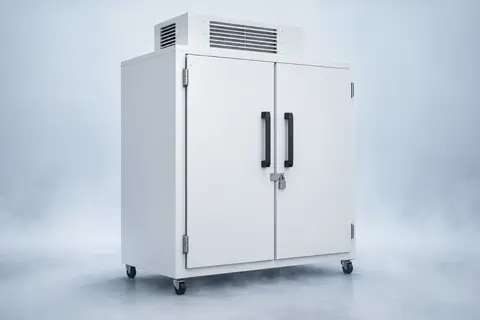
| Walk-in freezer / freezer room | −20 °C to −25 °C (−4 °F to −13 °F) | −15 °C to −12 °C (5–10 °F) | 45–90 min (covers defrost) | −35 °C (−31 °F) |
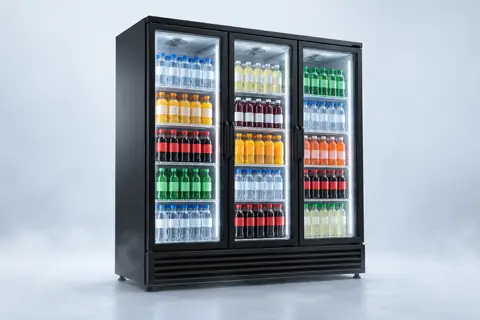
| Glass door display freezer | −18 °C to −22 °C (0 °F to −8 °F) | −14 °C to −12 °C (7–10 °F) | 30–60 min | −30 °C (−22 °F) |
| Ice cream storage freezer | −23 °C to −25 °C (−9 °F to −13 °F) | −18 °C (0 °F) | 30–45 min | −35 °C (−31 °F) |
| Ice cream dipping cabinet | −14 °C to −12 °C (7–10 °F) | −9 °C (16 °F) | 20–30 min | −20 °C (−4 °F) |
| Bagged ice merchandiser | −12 °C to −6 °C (10–21 °F) | −4 °C (25 °F) | 30–60 min | −20 °C (−4 °F) |
| Walk-in cooler / chiller (for comparison) | +2 °C to +4 °C (36–39 °F) | +5 °C to +8 °C (41–46 °F) | 20–45 min | 0 °C to −1 °C (32–30 °F) |
These are typical values; adjust them to your product, your controller and any customer or regulator specification. Frozen food quality guidance generally asks for −18 °C (0 °F) or colder in storage, and EU rules for quick-frozen foods allow only brief upward fluctuations of no more than 3 °C during distribution. Setpoints by appliance are explained in our guide to what temperature a fridge and freezer should be.
Why the alarm delay matters
Air in a freezer rises quickly when the door opens or during a defrost cycle, often by 5–15 °C (9–27 °F) for 10–30 minutes, while the food itself barely changes. Without a delay, the alarm sounds every defrost and staff learn to ignore it. With a delay of 30–60 minutes, and a probe that reads near product temperature, an alarm means something is genuinely wrong. Many controllers also suppress the high alarm for a set time after defrost ends.
Why a low temperature alarm is useful
A low temperature alarm catches a failed-closed thermostat or a stuck contactor that keeps the compressor running. In a freezer that wastes energy and can damage product such as ice cream for dipping; in a chiller it freezes salad, eggs and drinks. A low alarm on a cooler set at 0 °C (32 °F) is as useful as the high alarm.
What types of freezer alarm systems are there?
There are four main types of freezer alarm system: the alarm built into the freezer's own controller, a standalone battery thermometer alarm, a Bluetooth alarm that alerts a nearby phone, and a connected WiFi, LoRaWAN or cellular alarm that reaches people anywhere.
| Alarm type | How it alerts | Works in a power cut? | Best for |
|---|---|---|---|
| Controller built-in alarm | Buzzer, display code; optional relay output | No, unless controller has backup | Every commercial freezer; first line of warning |
| Standalone freezer thermometer alarm | Battery buzzer and display outside the freezer, probe inside | Yes (battery) | Single freezers in staffed sites |
| Bluetooth freezer alarm | Phone app notification within about 10–50 m | Yes (battery), if phone is in range | Small shops, food trucks, homes |
| Connected freezer alarm that connects to phone (WiFi, LoRaWAN, cellular) | SMS, voice call, email, app, escalation | Cellular with battery backup: yes; WiFi: only if router has backup | Commercial kitchens, cold stores, unattended sites |
| Dry contact to building alarm or BMS | Monitoring centre, building management system | Depends on panel backup | Supermarkets, warehouses, hospitals |
The most reliable setups use two layers: the freezer controller's own alarm and an independent battery or cellular freezer monitor alarm with its own sensor. If the controller fails, its alarm may fail with it; an independent alarm still sounds.
Will a freezer alarm warn you of a power failure?
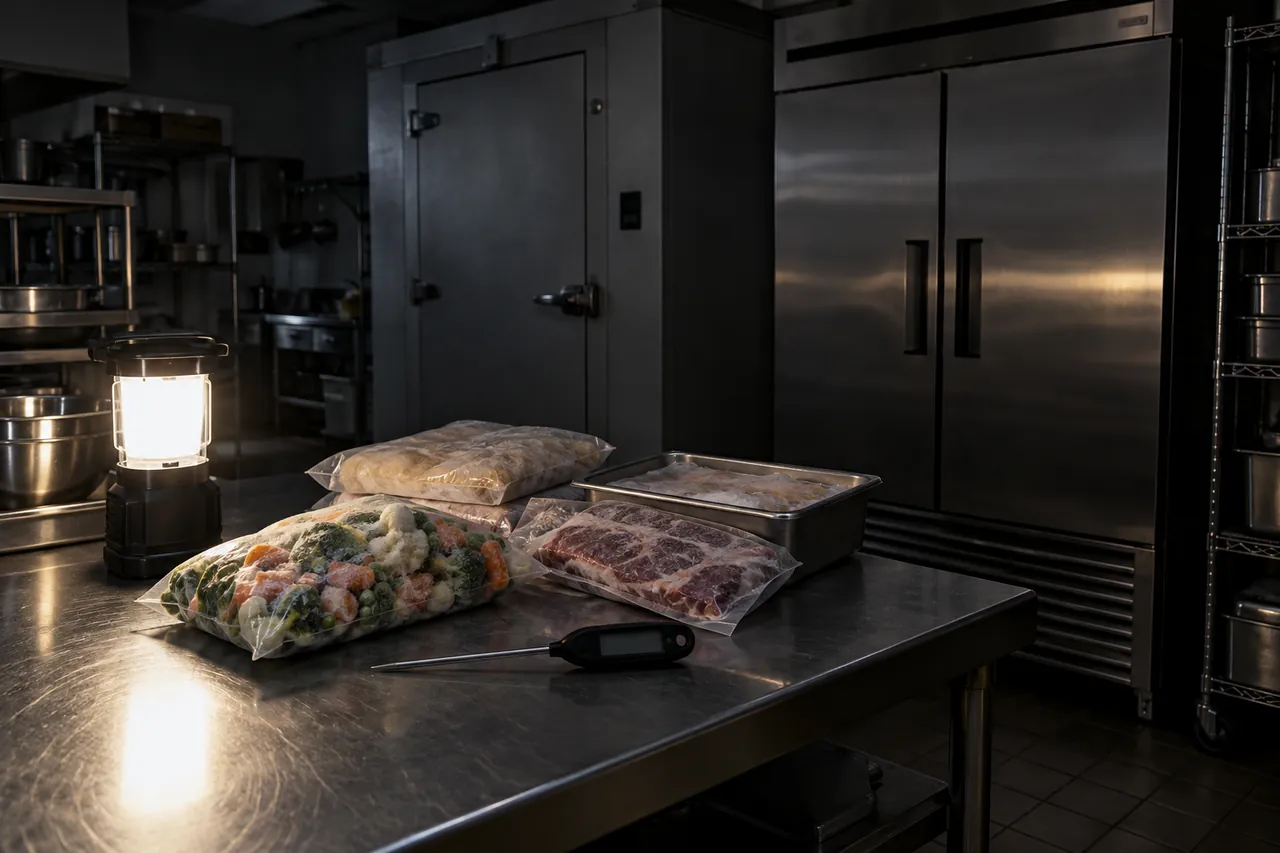
Only if it has its own power source and a way to send the warning. A battery standalone alarm sounds locally, a cellular alarm with battery backup can send an SMS, but a WiFi alarm usually goes silent when the router loses power.
For any site that is unattended at night or at weekends, choose a commercial freezer alarm with a "power lost" alert as well as a temperature alert, and battery backup in both the sensor and the gateway. It is also worth adding a "sensor offline" alert: a sensor that stops reporting is often the first sign of a power or network problem. If an outage does happen, our guide to how long food lasts in a freezer during a power outage explains when frozen food can be kept.
Where should the freezer alarm sensor go?
Put the freezer alarm sensor where the product warms first, usually near the door and in the upper part of the cabinet or room, away from the cold discharge air of the evaporator.
- Reach-in and upright freezers: on a middle or upper shelf toward the front, clipped to the shelf, not touching the back wall.
- Chest freezers: in the upper layer of product, near the lid, not at the bottom where it stays coldest.
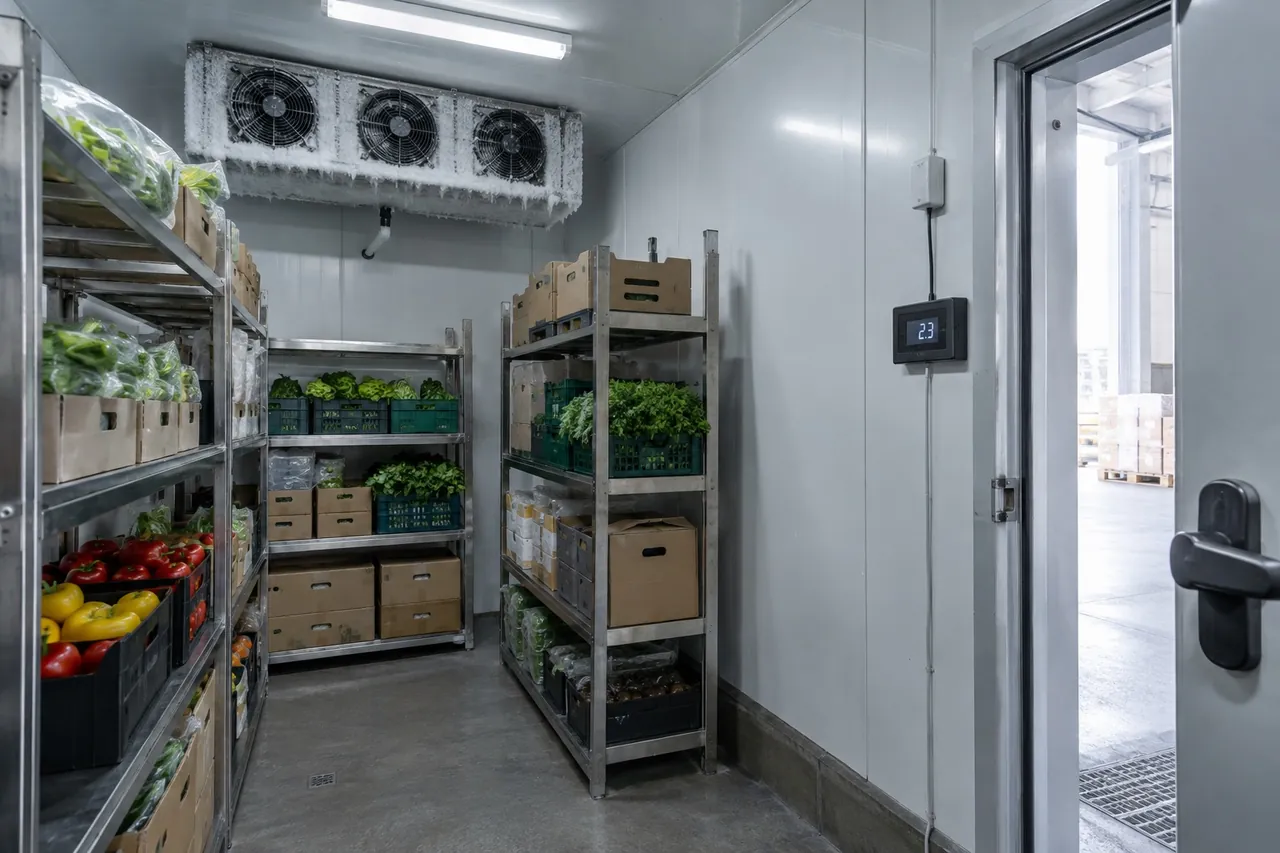
- Walk-in freezers: at product height about 1–1.5 m (3–5 ft) from the floor, a short distance inside the door, away from the evaporator outlet.
- Display freezers: near the load line or the glass door, where customers' door openings warm product most.
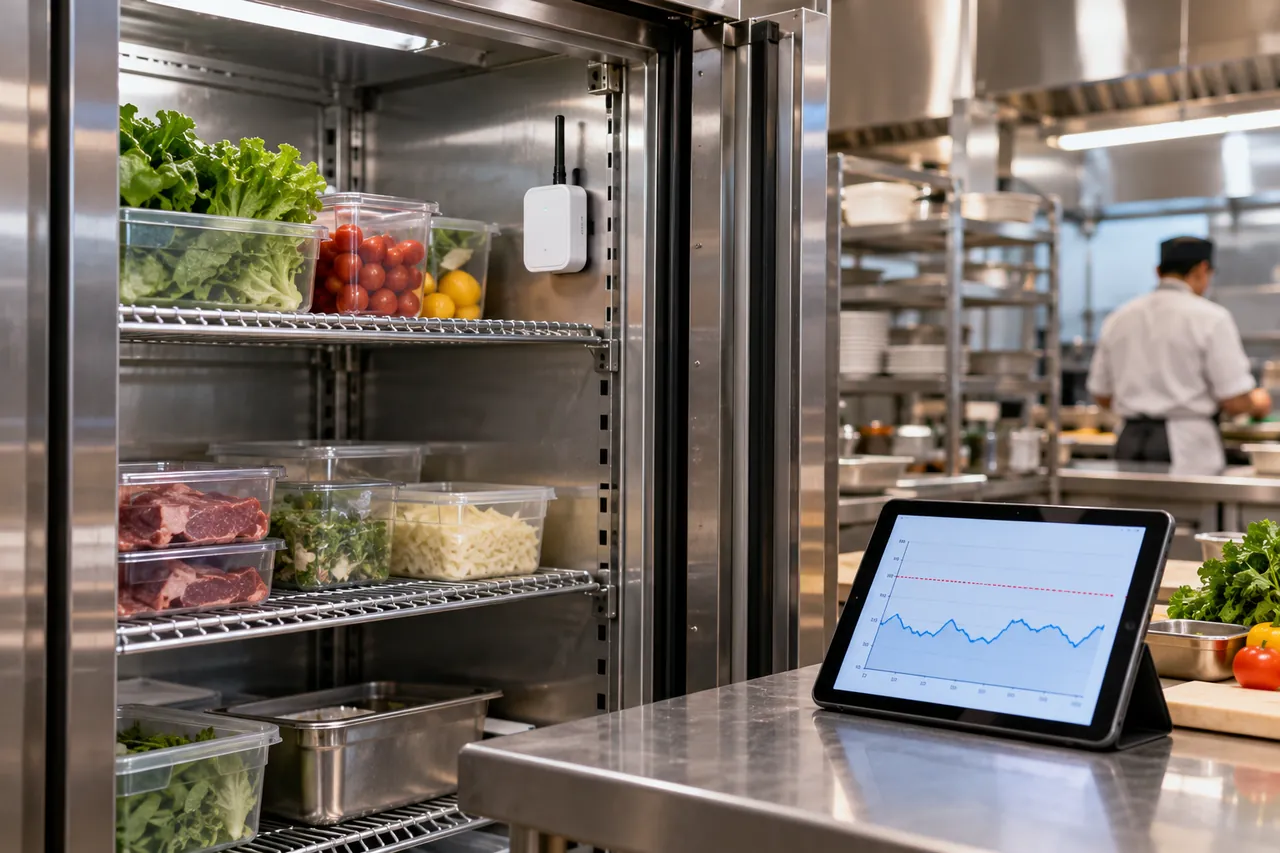
- Buffered probes: put the probe in a small bottle of glycol or a product simulant so it reads close to food temperature rather than air spikes.
Mount the alarm unit and its battery outside the freezer and run the probe in on a flat cable, so that cold does not drain the battery and steel does not block the radio signal.
What should staff do when a freezer alarm goes off?
When a freezer alarm sounds, staff should keep the door shut, check the obvious causes, move stock if the temperature keeps rising and record everything. A written alarm response plan, posted on the freezer, turns panic into a checklist.
- Read the display and the alarm unit; note time and temperature.
- Check the door is fully closed, gaskets are not torn or iced, and nothing is blocking the evaporator fan.
- Check power: plug, breaker, emergency stop and the controller display.
- Check whether the unit is in defrost; if so, wait for it to finish and recover within about 30 minutes.
- If the temperature is still rising, call the refrigeration contractor and prepare to move product to another freezer, a cold room or a temporary unit.
- Check product: frozen food that still contains ice crystals or is at 4 °C (40 °F) or below can be refrozen, according to USDA FSIS, though quality may suffer.
- Record the event, the product temperatures, actions taken and the cause in your HACCP corrective-action log.
A full freezer kept closed holds a safe temperature for about 48 hours and a half-full one for about 24 hours, according to USDA guidance for home freezers; commercial freezers vary with insulation and load, so do not rely on these figures without measuring. Recurring alarms point to a fault. Our walk-in freezer troubleshooting guide lists the usual causes, from iced evaporators and failed defrost heaters to torn gaskets and dirty condensers.
How often should you test a freezer alarm?
Test a freezer alarm at least monthly by warming its probe until the alarm triggers, and confirm that every person on the call list receives the alert. Check it against a calibrated thermometer every 6–12 months.
- Monthly: trigger test (warm the probe in your hand or a cup of cool water), check notifications, review last month's alarm log.
- Every 6–12 months: compare the sensor reading against a reference thermometer, as described in our guide on how to calibrate a thermometer.
- Annually, or when warned: replace batteries in standalone alarms and sensors.
- After any change: update phone numbers after staff changes, and re-pair WiFi sensors after router or password changes.
The alarm is one part of a wider maintenance routine; see our commercial refrigeration maintenance checklist for coil cleaning, gasket checks and service intervals that prevent most alarms in the first place.
How to choose a freezer temperature alarm: checklist
Choose a freezer temperature alarm by asking who will hear it at 3 a.m. on a Sunday; if the answer is nobody on site, you need a connected alarm with battery backup and call escalation.
- Range: probe that reads at least −40 °C to +50 °C (−40 °F to 122 °F); ultra-low freezers need RTD or thermocouple probes.
- Accuracy: ±1 °C (±2 °F) or better, ideally ±0.5 °C.
- Settings: adjustable high and low limits, adjustable delay, alarm memory showing peak temperature.
- Alerts: local buzzer plus SMS or voice call for unattended sites; at least two recipients; escalation.
- Resilience: battery backup, power-loss alert, sensor-offline alert.
- Records: event log or data logging for HACCP; see our temperature data logger guide if you need full records.
Be There supplies walk-in freezers and cold rooms and display freezers with digital controllers; tell us if you need alarm outputs for your own monitoring or building alarm system and we will confirm the options on the quotation. We do not sell standalone alarms or sensors. Send your freezer size, temperature, product and voltage through the inquiry form and we will quote FOB, CIF or DDP.