
Short answer
A fridge should be set at about 3 °C (37 °F), keeping food between 1 °C and 4 °C (34–40 °F) and never above 5 °C (41 °F), the FDA Food Code cold-holding limit. A freezer should be set at −18 °C (0 °F) or colder; commercial and ice cream freezers often run at −20 °C to −25 °C (−4 °F to −13 °F).
Key takeaways
- Set a fridge to about 3 °C (37 °F); food must never exceed 5 °C (41 °F) under the FDA Food Code, and the USDA advises 4 °C (40 °F) at home.
- Set a freezer to −18 °C (0 °F) or colder; freezing stops bacterial growth but does not kill bacteria.
- On most 1–5 fridge dials a higher number means colder; always verify with a thermometer in a glass of water.
- Food thermometers should be accurate to ±1 °C (±2 °F) and checked in iced water at 0 °C (32 °F).
- Set monitoring alarms at about +7 °C to +8 °C (45–46 °F) for fridges and −15 °C to −12 °C (5–10 °F) for freezers, with a 15–60 minute delay.
What temperature should a fridge be?
A fridge should be set so the food inside stays between 1 °C and 4 °C (34–40 °F), and never above 5 °C (41 °F). A setting of about 3 °C (37 °F) is the best everyday target: cold enough to slow bacteria, warm enough not to freeze lettuce or milk.
The refrigerator temperature limits come from food-safety rules. The US FDA Food Code requires businesses to cold-hold time/temperature control for safety (TCS) foods at 5 °C (41 °F) or below, and the USDA advises households to keep fridges at 4 °C (40 °F) or below. In the UK, the Food Standards Agency recommends 5 °C or below for fridges. Bacteria such as Listeria still grow slowly at fridge temperatures, which is why the target is a few degrees below the legal limit rather than at it. Above 5 °C (41 °F), food enters the temperature danger zone, where growth speeds up rapidly.
So the ideal fridge temperature and the safe refrigerator temperature are slightly different numbers: 3 °C (37 °F) is ideal; 5 °C (41 °F) is the maximum you should ever see on a thermometer, except briefly after loading or defrost.
What temperature should a freezer be?
A freezer should be set at −18 °C (0 °F) or colder. That is the standard freezer temperature used by the USDA, the FDA and food agencies worldwide, because microorganisms cannot grow at −18 °C and quality loss is slow.
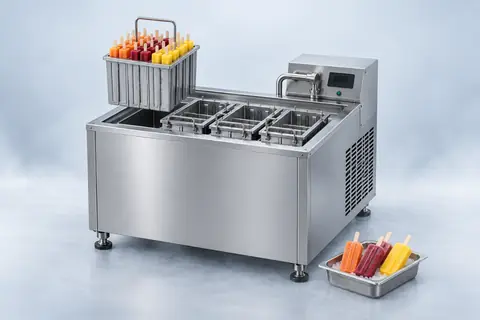
Commercial storage freezers often run at −18 °C to −23 °C (0 °F to −10 °F), and ice cream or fatty fish stores at −23 °C to −25 °C (−10 °F to −13 °F) to limit ice crystal growth and rancidity. Going much colder than about −23 °C (−10 °F) in an ordinary storage freezer adds running cost with little benefit. Freezing does not kill bacteria; it only stops them growing, so food that was contaminated before freezing is still contaminated after thawing. For storage times by product, see how long food lasts in a freezer or fridge.
| Appliance / zone | Target setting | Never above | Reference |
|---|---|---|---|
| Household fridge | 3 °C (37 °F) | 4 °C (40 °F) | USDA guidance |
| Commercial fridge (TCS food) | 1–4 °C (34–40 °F) | 5 °C (41 °F) | FDA Food Code cold holding |
| UK fridge | 1–4 °C (34–40 °F) | 5 °C (41 °F) | Food Standards Agency advice |
| Freezer (home or commercial) | −18 °C (0 °F) or colder | −15 °C (5 °F) briefly, e.g. defrost | USDA / international practice |
| Ice cream storage | −23 °C to −25 °C (−10 °F to −13 °F) | −18 °C (0 °F) | Industry practice |
| Vaccine / medicine fridge | +5 °C (41 °F) | 2–8 °C (36–46 °F) range | CDC, WHO |
Fridge and freezer temperature chart (Celsius and Fahrenheit)
Use this fridge temperature chart to convert a display reading and see whether it is safe. Most commercial controllers can be switched between °C and °F.
| °C | °F | What it means |
|---|---|---|
| 8 °C | 46 °F | Too warm for food; top of the 2–8 °C pharmaceutical range |
| 5 °C | 41 °F | Maximum for refrigerated food (FDA Food Code, FSA advice) |
| 4 °C | 40 °F | USDA household maximum |
| 3 °C | 37 °F | Ideal general fridge setting |
| 1 °C | 34 °F | Cold end; good for meat and fish, risk of freezing delicate produce |
| 0 °C | 32 °F | Water freezes; too cold for most fridges |
| −12 °C | 10 °F | Two-star compartment; bagged ice merchandisers run at −12 °C to −6 °C |
| −18 °C | 0 °F | Standard freezer temperature |
| −23 °C | −10 °F | Commercial freezer and ice cream storage |
To convert, °F = °C × 1.8 + 32, and °C = (°F − 32) ÷ 1.8. For storage temperatures and humidity for specific products such as produce, dairy and seafood, see the cold storage temperature chart.
What number should my fridge be on, 1 to 5?
On most fridges with a 1–5 (or 1–7) dial, the numbers show cooling power, not degrees, so a higher number is colder. A middle setting, often 3 or 4, usually gives about 3–4 °C (37–40 °F), but the only way to know is to measure.
The dial controls how long the compressor runs, so the same setting gives different temperatures in a cool room and a hot one. Some models reverse the logic, and many modern fridges have a digital setpoint in °C or °F instead. Never assume; check the manual, then confirm with a thermometer as described below. Commercial fridges almost always have a digital controller that displays the air temperature, but that sensor is usually near the evaporator and may read 1–2 °C colder than the food on the top shelf or near the door.
How do you check a fridge's temperature accurately?
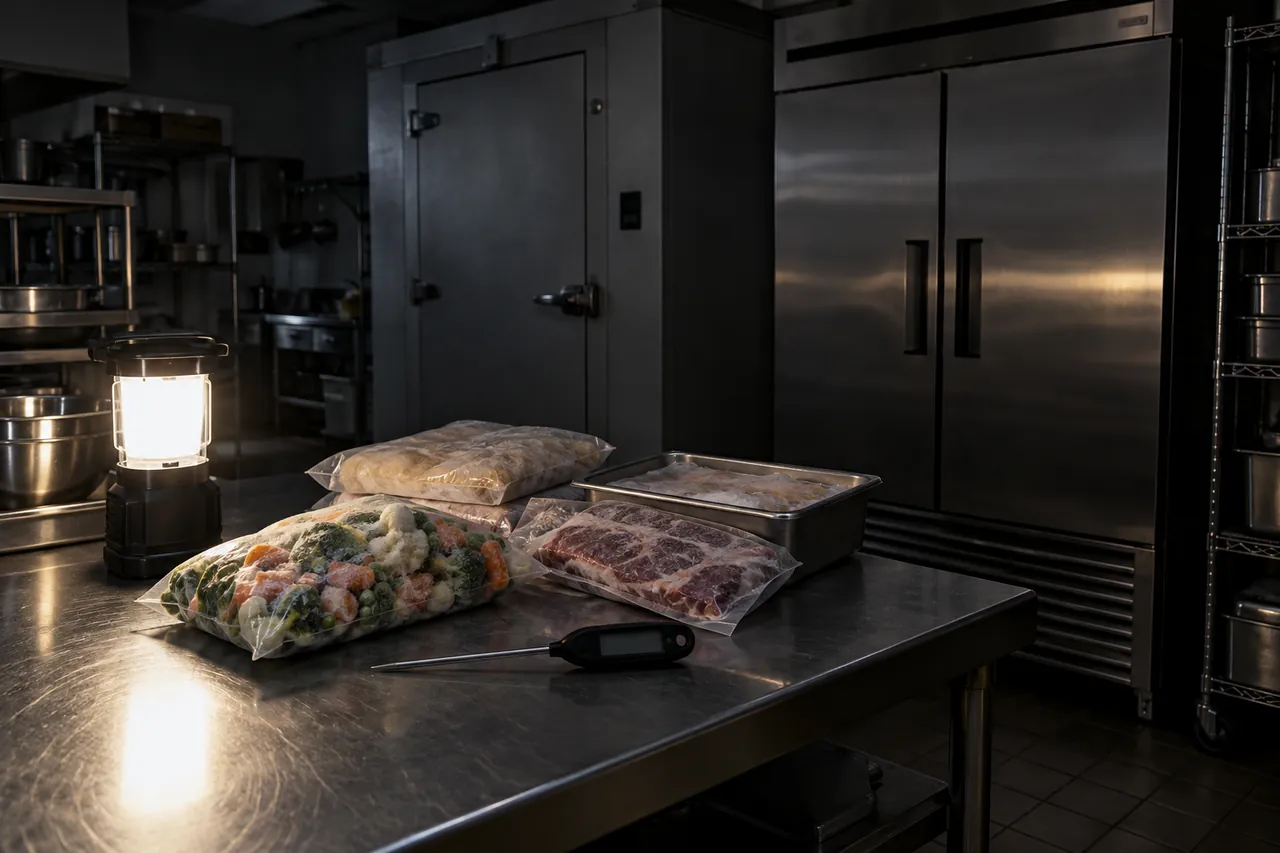
To check a fridge's real temperature, put a calibrated thermometer in a glass of water on the middle shelf, leave it at least 5–8 hours or overnight without opening the door often, then read it. For freezers, place the thermometer between frozen packs.
- Use a thermometer accurate to ±1 °C (±2 °F), as the FDA Food Code requires for food thermometers, and check it in iced water at 0 °C (32 °F).
- Place it in a glass of water (fridge) or between packs (freezer), because air temperature swings every time the door opens while food temperature changes slowly.
- Wait several hours, then read without removing it.
- Adjust the setting by one step, wait 24 hours and check again.
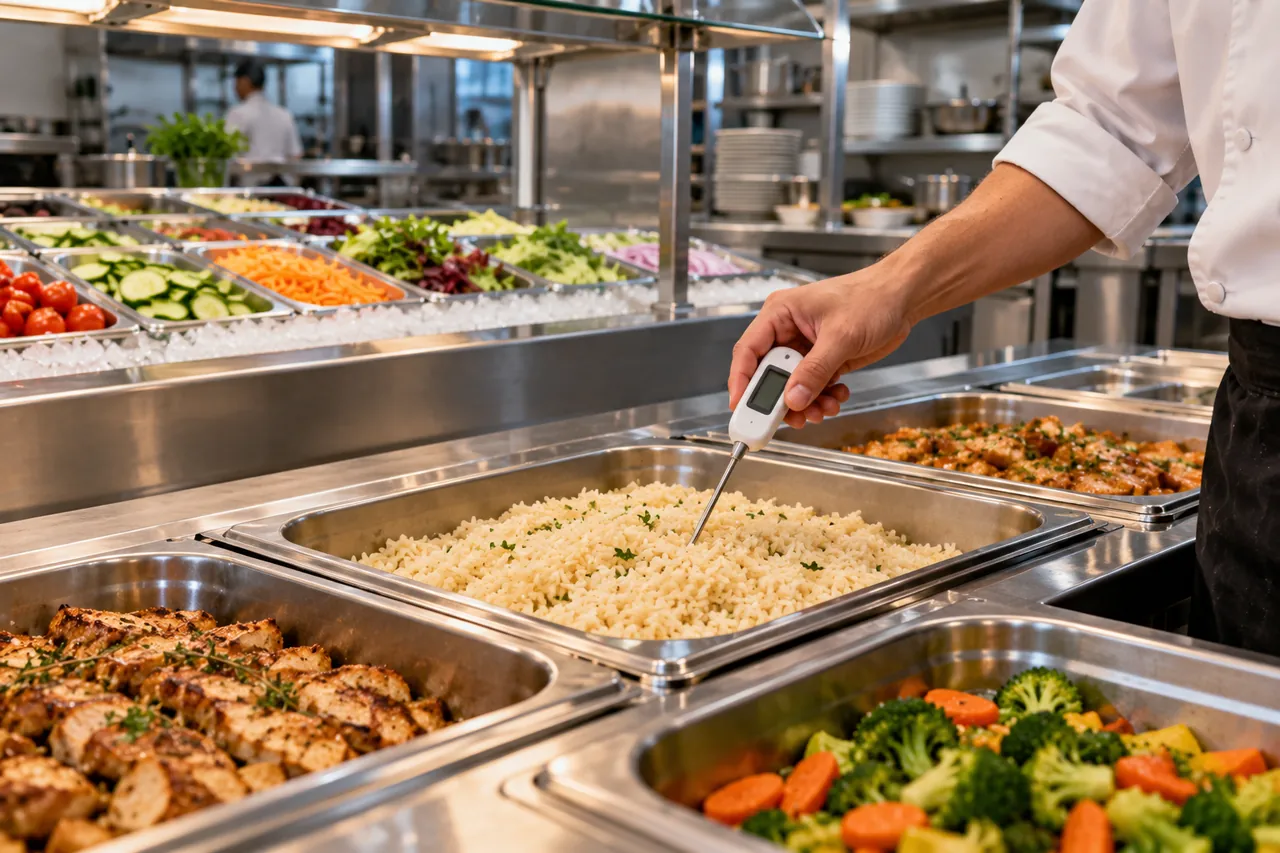
- In a business, log readings at least twice a day as part of your HACCP plan, and probe actual food on delivery and during service.
Fridge temperature sensors, monitors and alarms
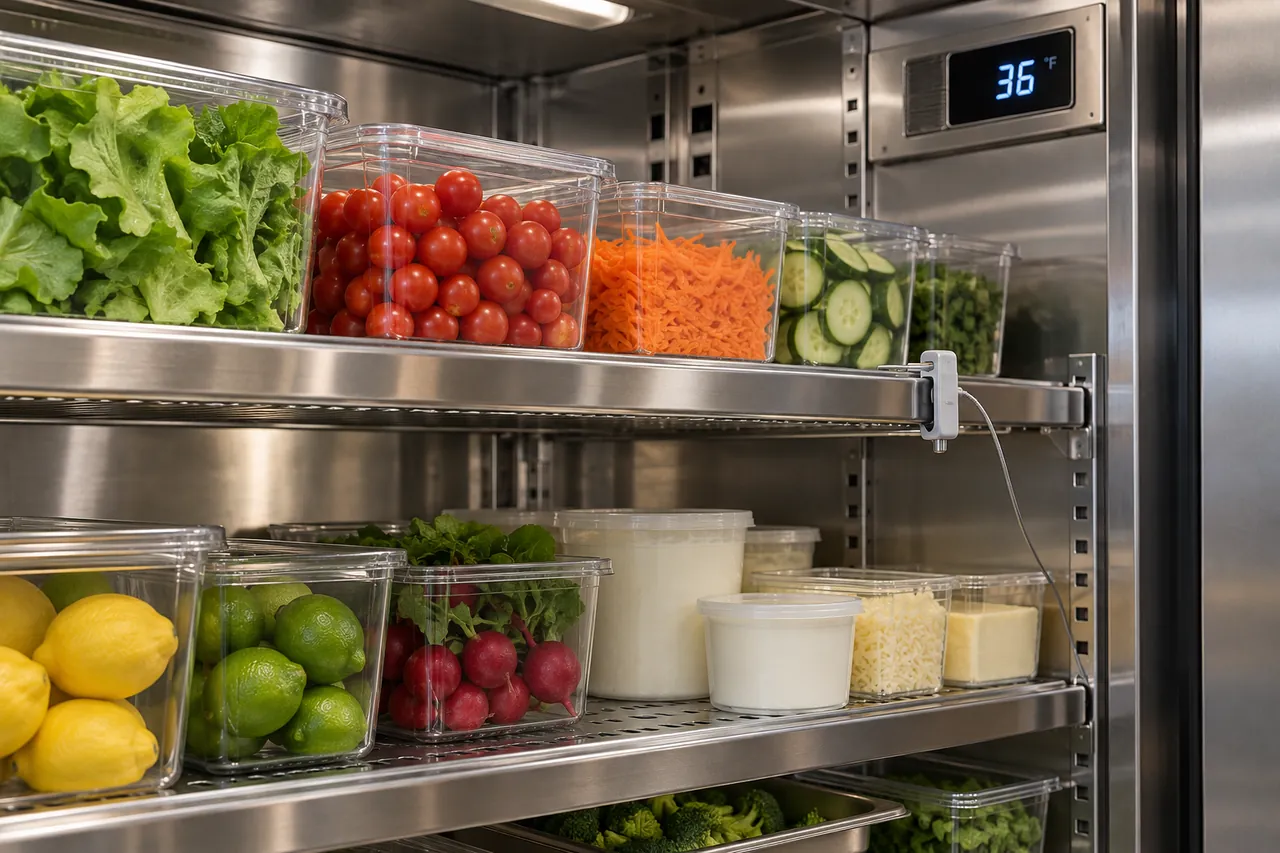
A fridge temperature sensor with a data logger removes the guesswork. Wireless refrigerator temperature monitoring systems record every 5–15 minutes and send an alert by app, SMS or call when a unit drifts. Set alarm limits a little above your target, for example +7 °C to +8 °C (45–46 °F) for fridges and −15 °C to −12 °C (5–10 °F) for freezers, with a delay of 15–60 minutes so normal defrosts and deliveries do not cause false alarms. Our guides to cold room temperature monitoring and freezer temperature alarms cover sensors and alarm settings in detail; hospitals and pharmacies storing medicines need the stricter approach in our vaccine storage guide.
What temperature should commercial fridges, coolers and walk-ins be?
Commercial refrigeration should hold food at 5 °C (41 °F) or below, but each type of equipment has its own working range and best setting.
| Equipment | Typical setpoint | Notes |
|---|---|---|
| Reach-in kitchen refrigerator | 1–4 °C (34–40 °F) | Fast recovery after door openings |
| Prep table / sandwich unit | ≤ 5 °C (41 °F) in the pans | Keep lids closed when not in use |
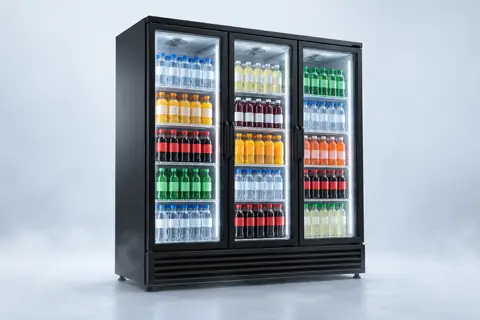
| Beverage / drink fridge | 1–4 °C (34–40 °F) | Drinks only; display units run +2 °C to +8 °C (36–46 °F) |
| Beer cooler | 1–4 °C (34–40 °F) | Draught beer often served at 3–5 °C |
| Wine fridge | 7–18 °C (45–65 °F) | Not for perishable food |
| Walk-in cooler | 1–4 °C (34–40 °F) | Produce and meat rooms may differ |
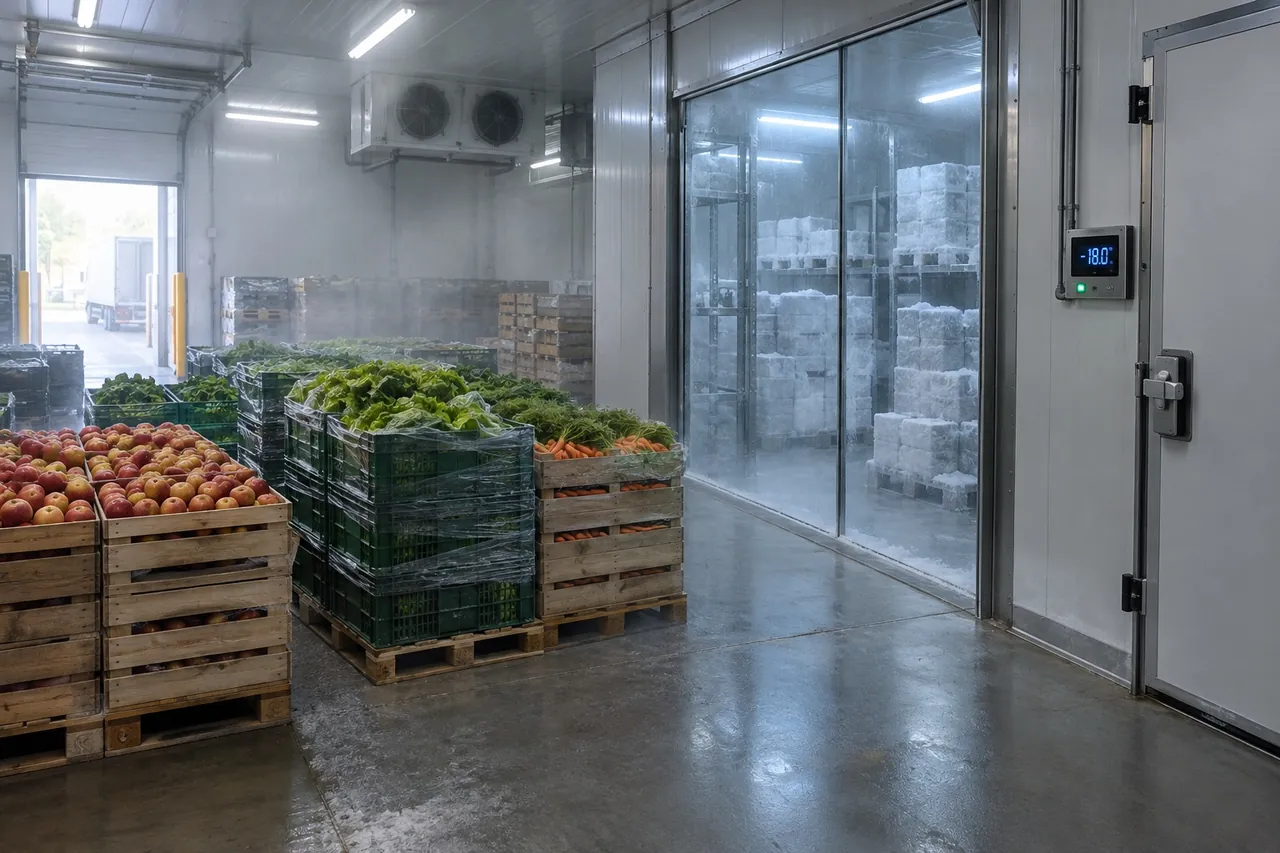
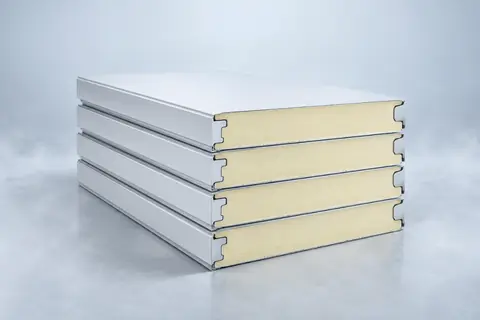
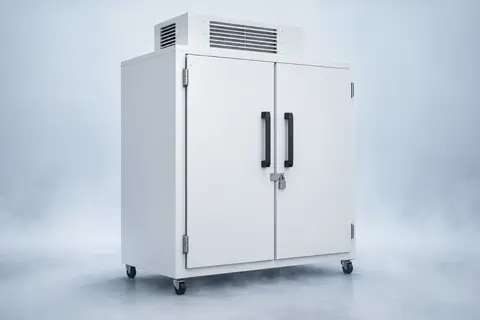
| Walk-in or reach-in freezer | −18 °C to −23 °C (0 °F to −10 °F) | Thicker panels, heated door frame |
The beverage fridge temperature can sit at the warm end of the range because sealed drinks are not TCS foods, but the moment dairy, sandwiches or salads go in, it must hold 5 °C (41 °F) or below. Glass-door merchandisers are covered in our commercial beverage cooler guide.
Where is the coldest part of a fridge, and where should milk go?
The coldest part of most fridges is the back of the lowest shelf (or near the evaporator outlet in fan-cooled units), and the warmest part is the door. Milk should be stored at 1–4 °C (34–40 °F), so keep it on a shelf, not in the door, where it can warm to 6–8 °C (43–46 °F) during use.
- Bottom shelf: raw meat, poultry and fish, sealed, so drips cannot contaminate ready-to-eat food.
- Middle and top shelves: dairy, leftovers, ready-to-eat foods.
- Crisper drawers: fruit and vegetables at higher humidity.
- Door: condiments, juices and drinks that tolerate small swings.
Leave space for air to circulate: a packed fridge with blocked vents can run 3–5 °C warmer at the front than the display shows.
Why is my fridge too warm or too cold?
A fridge that runs warm is usually caused by a dirty condenser, a damaged door gasket, blocked air vents, overloading or a hot room; a fridge that freezes food is usually set too cold, has food against the cold air outlet or has a faulty thermostat or sensor.
Check these in order before calling a technician: clean the condenser coil, test the gasket with a sheet of paper, clear the vents, check the room temperature against the unit's climate class, and confirm the door closes on its own. A high freezer temperature with heavy frost on the back wall often points to a defrost fault. If the compressor runs constantly and the cabinet still will not reach temperature, a refrigerant leak or failing compressor needs a qualified engineer.
Why the display and the thermometer disagree
It is normal for a controller display and a thermometer in the food to differ by 1–3 °C (2–5 °F). The controller sensor usually measures air near the evaporator or return air, which swings quickly with each compressor cycle and door opening, while food and a glass of water respond slowly. What matters for food safety is the product temperature, so base decisions on the probe reading. If the gap is consistently larger than about 3 °C, ask a technician to check the sensor position and the controller offset, then re-check both against a thermometer verified in iced water.
Recovery after loading and deliveries
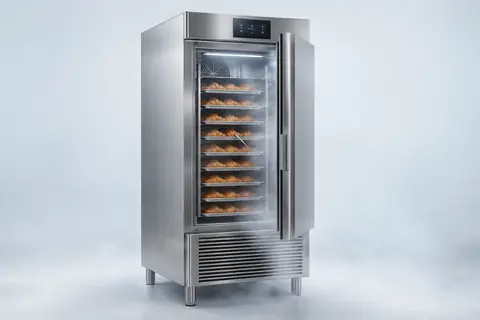
Air temperature in a fridge can briefly climb to 8–10 °C (46–50 °F) after a delivery is loaded or during a busy service; that is not a failure if it returns to setpoint within about 30–60 minutes and the food itself stays at 5 °C (41 °F) or below. Load chilled deliveries straight in, never put hot food into a storage fridge (cool it first, ideally in a blast chiller), and avoid propping doors open during restocking.
Checklist: keeping fridges and freezers at the right temperature
- Set fridges to about 3 °C (37 °F) and never let food exceed 5 °C (41 °F).
- Set freezers to −18 °C (0 °F) or colder; −23 °C (−10 °F) for ice cream stock.
- Verify with a calibrated thermometer, not the dial.
- Log temperatures at least twice daily in a business, or fit a monitoring system with alarms.
- Keep vents clear, doors closed and condensers clean.
- Choose equipment rated for your room temperature: commercial units for 38–43 °C (100–110 °F) kitchens.
Be There supplies glass door display fridges holding +2 °C to +8 °C (36–46 °F) with digital controllers, display freezers holding −18 °C to −24 °C (0 °F to −11 °F), and walk-in cold rooms with matched refrigeration and controllers. Send your temperature range, capacity and voltage through the inquiry form and we will quote FOB, CIF or DDP.