

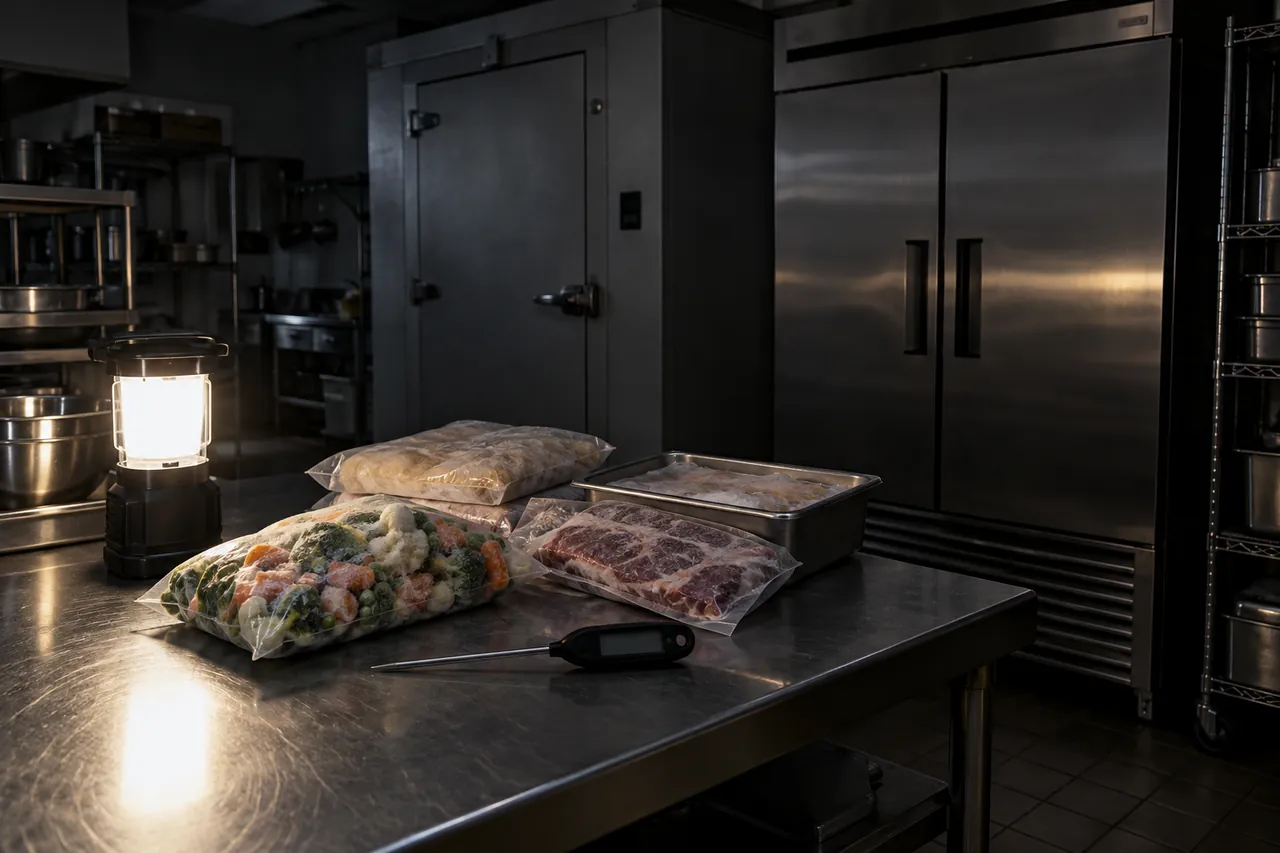
Short answer
Meat kept at −18 °C (0 °F) stays safe indefinitely; for best quality, use raw steaks and roasts within 4–12 months, mince within 3–4 months and chicken pieces within 9 months. Without power, a closed fridge keeps food safe for about 4 hours, a full freezer about 48 hours and a half-full freezer about 24 hours, according to USDA guidance.
Key takeaways
- Food kept constantly at −18 °C (0 °F) stays safe indefinitely; storage times are about quality, such as 3–4 months for mince and 4–12 months for steaks.
- Raw mince, poultry and fish last 1–2 days in a fridge at 4 °C (40 °F); cooked leftovers 3–4 days.
- Meat thawed in the fridge can be refrozen uncooked; meat thawed at room temperature or in a microwave must be cooked first.
- Without power and with the door closed, a fridge stays safe about 4 hours, a half-full freezer about 24 hours and a full one about 48 hours.
- Discard perishable food above 4 °C (40 °F) for 2 hours or more; frozen food with ice crystals can be refrozen.
- The FDA Food Code limits on-site ready-to-eat TCS food to 7 days at 5 °C (41 °F) or below, counting prep day as day 1.
How long does meat last in the freezer?
Meat kept constantly at −18 °C (0 °F) stays safe indefinitely, but for best quality the USDA suggests about 4–12 months for raw steaks, roasts and chops, 3–4 months for raw minced (ground) meat, about 9 months for chicken pieces, 1 year for a whole chicken or turkey and 1–2 months for bacon and sausage.
That distinction matters. At −18 °C (0 °F) bacteria, yeasts and moulds cannot grow, so frozen meat does not "go bad" in the food-safety sense. What does happen is slow quality loss: fat oxidises and turns rancid, moisture sublimes from the surface (freezer burn) and texture toughens. Fatty and processed meats deteriorate fastest. So how long meat lasts in the freezer is really a quality question, and the figures below are the best-quality windows used by the USDA and widely by food businesses for stock rotation.
| Food | Freezer at −18 °C (0 °F), best quality | Fridge at ≤ 4 °C (40 °F) |
|---|---|---|
| Raw steaks, chops, roasts (beef, lamb, pork) | 4–12 months | 3–5 days |
| Raw minced / ground meat, hamburger | 3–4 months | 1–2 days |
| Raw chicken or turkey, whole | 12 months | 1–2 days |
| Raw chicken or turkey, pieces | 9 months | 1–2 days |
| Bacon | 1 month | 7 days |
| Raw sausage | 1–2 months | 1–2 days |
| Cooked meat and poultry, leftovers | 2–6 months | 3–4 days |
| Cooked mince dishes, stews, soups | 2–3 months | 3–4 days |
| Ham, fully cooked | 1–2 months | 3–4 days (sliced), 7 days (whole) |
| Lunch meat / cold cuts | 1–2 months | 3–5 days opened; 2 weeks unopened |
| Hot dogs | 1–2 months | 1 week opened; 2 weeks unopened |
| Lean fish (cod, haddock) | 6–8 months | 1–2 days |
| Fatty fish (salmon, mackerel) | 2–3 months | 1–2 days |
Figures are based on USDA FSIS and FoodKeeper guidance; always follow a manufacturer's use-by date where one is given, and national rules where they are stricter. The UK Food Standards Agency, for example, advises eating cooked leftovers within 2 days.
How long is food good in the fridge?
Most raw meat, poultry and fish is good for 1–5 days in a fridge at 4 °C (40 °F) or below, cooked leftovers for 3–4 days, and opened cold cuts for 3–5 days. These times assume the fridge really is cold; at 7–8 °C (45–46 °F), safe storage time is roughly halved.
Unlike freezing, refrigeration only slows bacteria. Listeria monocytogenes can still multiply at fridge temperatures, which is why ready-to-eat foods such as cold cuts, smoked fish and soft cheese have short open lives. Check the fridge with a thermometer; our guide to what temperature a fridge and freezer should be explains the settings and how to measure them.
Commercial date marking
Food businesses follow stricter, written rules. The US FDA Food Code requires ready-to-eat TCS food prepared on site and held for more than 24 hours to be date-marked and used or discarded within 7 days at 5 °C (41 °F) or below, counting the day of preparation as day 1. Under HACCP, many kitchens set shorter internal limits, label every container with product, date and initials, and rotate first in, first out.
Can you refreeze meat once defrosted?
Yes, you can refreeze meat that was thawed in the fridge at 4 °C (40 °F) or below without cooking it first, although it may lose some moisture and texture. Do not refreeze meat thawed at room temperature, in warm water or in a microwave unless you cook it first.
The rule comes from the USDA: food thawed in the refrigerator never entered the danger zone, so it can safely go back into the freezer. Food thawed in cold water or in a microwave should be cooked before refreezing, and anything left above 4 °C (40 °F) for more than 2 hours should be discarded. Cooked dishes made from previously frozen raw meat can be frozen once more.
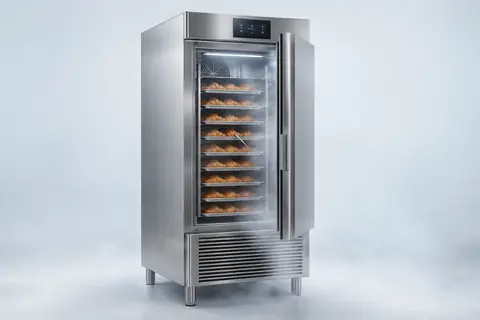
Each freeze–thaw cycle grows ice crystals, ruptures more cells and increases drip loss, so refrozen meat is safe but drier. For businesses, freezing quickly limits this damage; a blast or shock freezer takes product to −18 °C (0 °F) at the core in hours instead of a day, which is why many kitchens flash freeze portioned stock.
How long can frozen food sit out?
Perishable frozen food should not sit out at room temperature for more than 2 hours in total, or 1 hour if the air is above 32 °C (90 °F). Thaw in the fridge (allow about 24 hours per 2–2.5 kg / 4–5 lb), in cold water changed every 30 minutes, or in a microwave if cooking immediately.
How do you make frozen food last longer?
Frozen food lasts longest when it is frozen fast, packed airtight, stored at a steady −18 °C (0 °F) or colder and rotated first in, first out. Temperature swings and air contact cause most quality loss.
- Freeze fast: load warm food in small, shallow portions of 50 mm (2 in) or less, and never add more unfrozen food in a day than the rated freezing capacity on the freezer rating plate, often only about 10–25 kg (22–55 lb) per 24 hours for a household freezer. Slow freezing grows large ice crystals that damage texture.
- Pack airtight: vacuum packing or tightly wrapped freezer film plus a bag keeps moisture in and oxygen out, preventing freezer burn and rancidity.
- Hold steady: a freezer that cycles between −12 °C and −18 °C (10 °F and 0 °F), for example from frequent door openings or an undersized unit, causes ice crystals to grow and packs to frost inside.
- Go colder for sensitive products: ice cream and fatty fish keep better at −23 °C to −25 °C (−10 °F to −13 °F).
- Label everything with product, weight and freezing date, and keep a stock list so nothing is forgotten at the bottom of a chest.
Cooked food for freezing should be cooled quickly first, from 57 °C to 21 °C (135 °F to 70 °F) within 2 hours and to 5 °C (41 °F) within 6 hours under the FDA Food Code.
How long will a refrigerator stay cold without power?
A refrigerator will keep food safely cold for about 4 hours without power if the door stays closed. After 4 hours, perishable food above 4 °C (40 °F) should be discarded once it has been there for 2 hours or more.
That 4-hour figure comes from USDA FSIS and is a conservative guide for household fridges. Real performance depends on how full the fridge is, room temperature, insulation thickness and how often the door is opened. Commercial reach-ins hold slightly longer than household units because of thicker walls; glass-door merchandisers warm faster because glass insulates far less than foam. Walk-in cold rooms with 100 mm (4 in) or thicker PU panels and a full load warm slowly, but they still need a thermometer, not guesswork.
How long can a freezer go without power?
A full freezer will keep food frozen for about 48 hours without power, and a half-full freezer for about 24 hours, if the door stays closed. Chest freezers and thick-walled commercial freezers often do better; glass-door display freezers do worse.
| Appliance (door kept closed) | Typical safe time without power | What helps |
|---|---|---|
| Household fridge | About 4 hours | Full, cold room, no door openings |
| Commercial reach-in fridge | About 4 hours (check with thermometer) | Add ice packs or bagged ice to shelves |
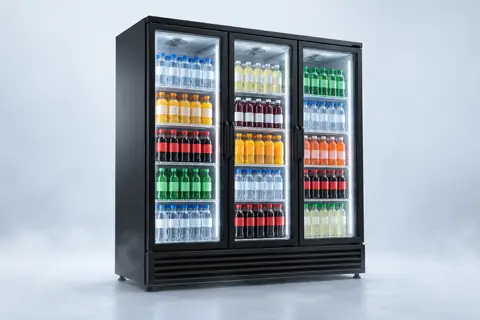
| Glass-door display fridge | Less than a solid-door fridge | Move high-risk stock to solid-door units or a cold room |
| Half-full freezer | About 24 hours | Group packs together, add ice |
| Full freezer | About 48 hours | Chest freezers hold cold best |
| Walk-in cold room, full | Varies with panels and load | Keep doors shut; monitor product temperature |
To stretch these times: do not open the doors; group frozen packs together; add bagged ice or dry ice (about 25 kg / 50 lb of dry ice keeps a full 18 cu ft freezer cold for about 2 days, per USDA guidance; handle it with gloves and ventilate the room); and put a thermometer where you can read it without opening the door. A freezer temperature alarm with remote alerts tells you when a power cut starts and how high the temperature went.
What should you throw out after a power outage?
After a power outage, throw out perishable refrigerated food that has been above 4 °C (40 °F) for 2 hours or more, and any thawed frozen food that has warmed above 4 °C (40 °F). Frozen food that still contains ice crystals, or is at 4 °C (40 °F) or below, can be refrozen or cooked.
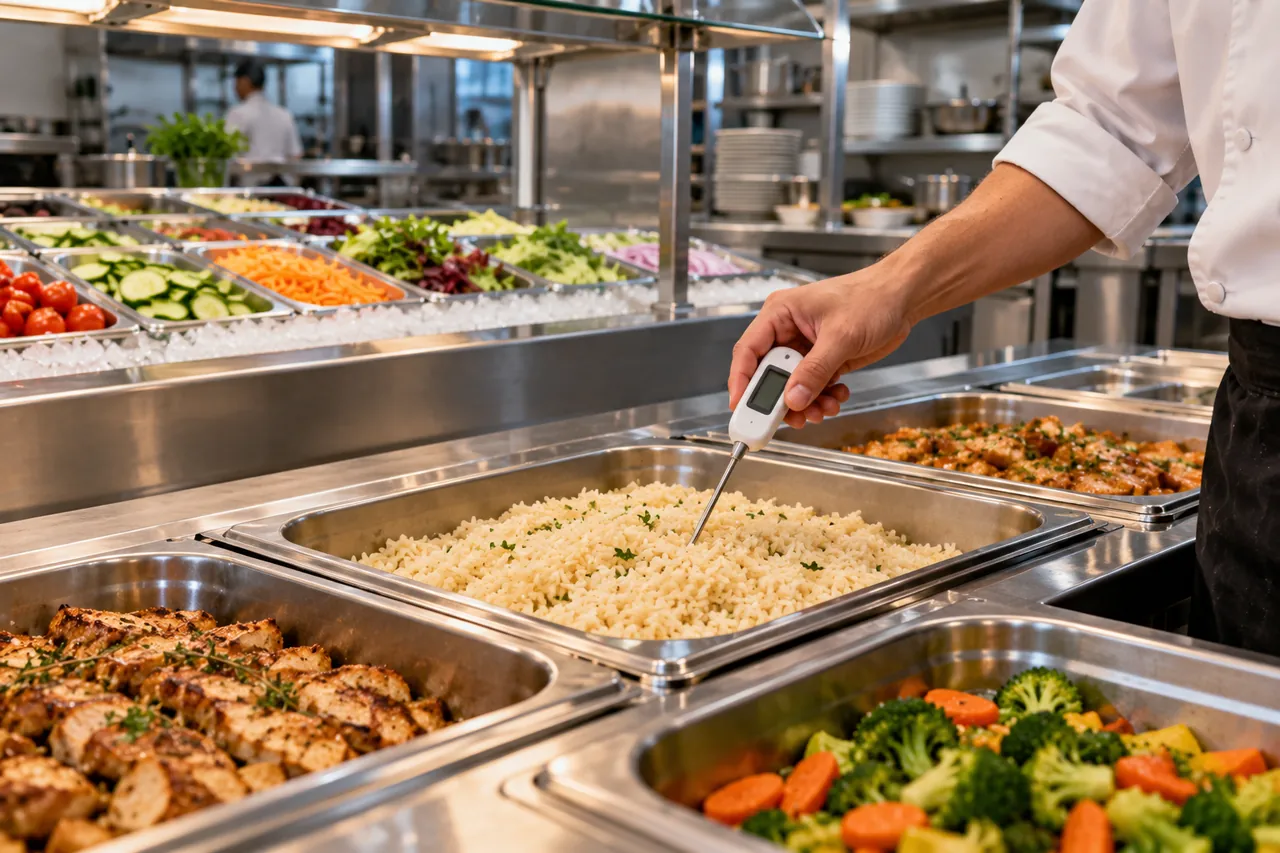
- Check temperatures first: probe the warmest items (near the door, top shelf) and record readings.
- Freezer: refreeze anything still frozen hard or with ice crystals; cook or discard thawed items above 4 °C (40 °F).
- Fridge: discard meat, poultry, seafood, milk, soft cheese, cooked leftovers, cut fruit, deli salads and other TCS foods held above 4 °C (40 °F) for over 2 hours.
- Usually keep: hard cheeses, butter, whole raw fruit and vegetables, condiments, bread and jams, unless mouldy or damaged.
- Never taste to decide. Pathogens do not change smell or appearance. "When in doubt, throw it out."
- Document it: businesses should log times, temperatures and decisions as part of their HACCP records, and keep evidence for insurance claims.
The underlying principle is the temperature danger zone: TCS food between 5 °C and 57 °C (41–135 °F) must be time-limited.
How should a food business plan for power cuts?
A food business should plan for power cuts with continuous temperature monitoring and alarms, a written decision procedure, backup power for critical refrigeration, and an arrangement for emergency cold storage if an outage or breakdown will run past a few hours.
- Monitoring: wireless sensors with a data logger and SMS or app alerts on every fridge, freezer and cold room. See cold room temperature monitoring.
- Backup power: size a generator for the compressor start-up surge, not just running watts, and test it under load.
- Thermal mass: keep freezers full; frozen gel packs or bottles of water fill empty space.
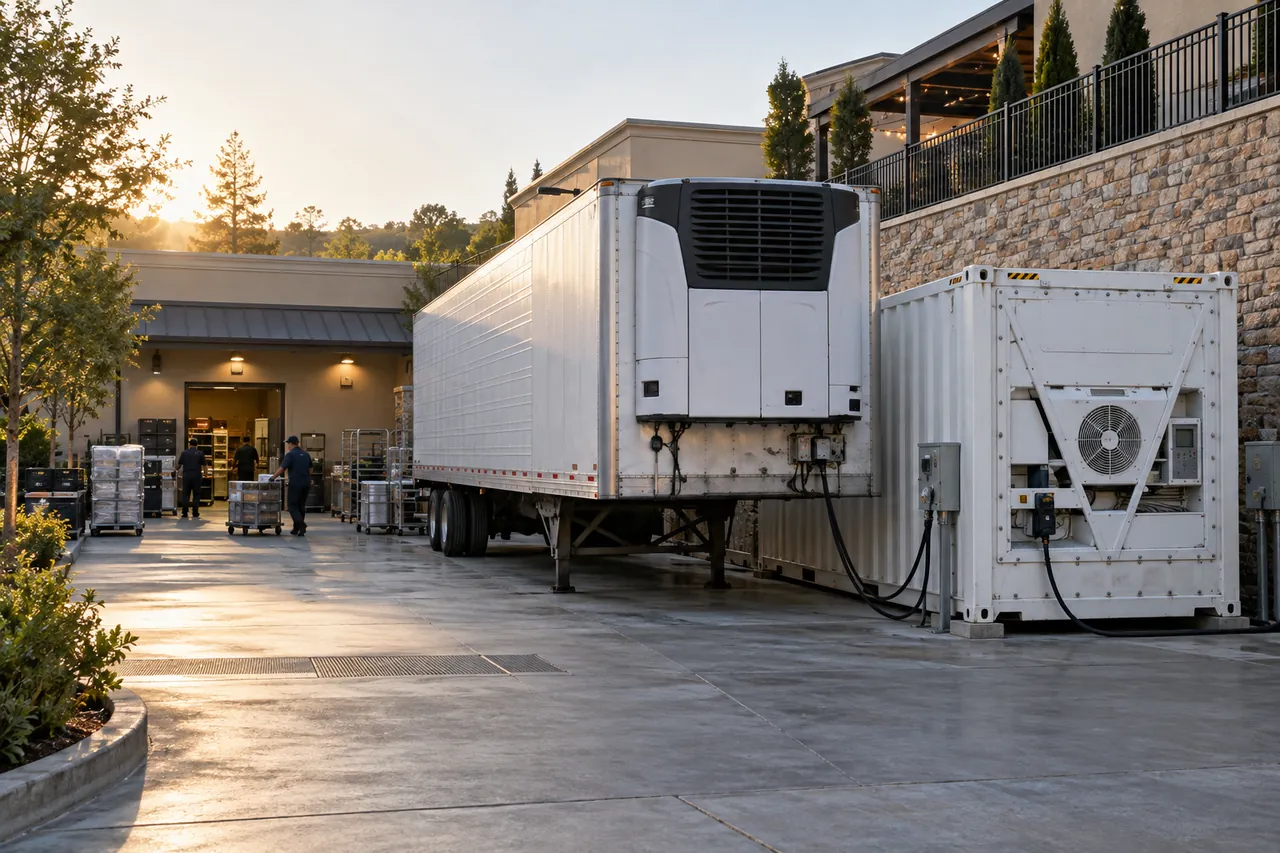
- Contingency storage: know where you can rent a reefer container, freezer trailer or temporary cold room; see emergency and temporary cold storage.
- Training: staff should know not to open doors, who to call and the 4-hour and 2-hour rules.
Checklist: storage times and outage decisions
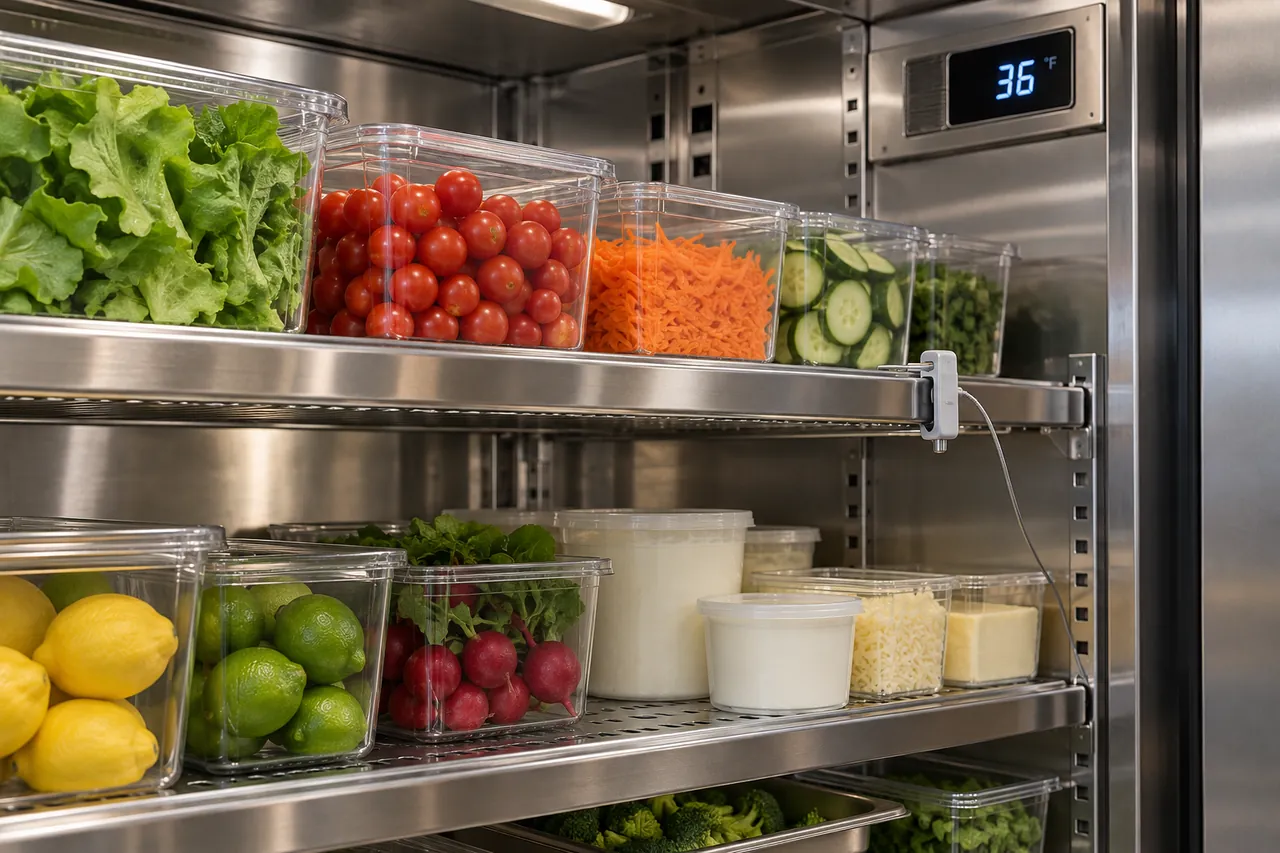
- Keep fridges at 1–4 °C (34–40 °F) and freezers at −18 °C (0 °F) or colder.
- Label and date everything; follow the storage-time table and the 7-day Food Code limit for ready-to-eat TCS food.
- Refreeze only food thawed in the fridge or still containing ice crystals.
- In an outage, keep doors closed: about 4 hours for fridges, 24 hours for half-full and 48 hours for full freezers.
- Discard perishables above 4 °C (40 °F) for 2 hours or more; record your decisions.
Be There supplies display and chest freezers, walk-in cold rooms with 75–200 mm PU or PIR panels that hold temperature longer when the power fails, and blast chillers and shock freezers for freezing stock fast. Send your storage volume, temperatures and site power details through the inquiry form and we will quote FOB, CIF or DDP.