Short answer
Styrofoam is the common name for rigid polystyrene foam, a plastic that is about 95–98% trapped air. It comes as beaded EPS (R-3.6 to R-4.2 per inch, used for packaging and wall insulation) or closed-cell XPS board (about R-5 per inch, under 1% water absorption, used under slabs and freezer floors). The word began as a trademark for blue XPS insulation.
Key takeaways
- Styrofoam is polystyrene plastic foam; the name began as a trademark for blue XPS insulation and is now used for any polystyrene foam.
- EPS is fused steam-expanded beads at 10–35 kg/m³; XPS is extruded closed-cell board at 28–45 kg/m³.
- Insulating value is about R-3.6 to R-4.2 per inch for EPS and about R-5 per inch for XPS, so a 2 inch XPS sheet gives about R-10.
- XPS absorbs under 1% water by volume versus roughly 2–5% for EPS, which is why XPS goes under freezer floors and foundations.
- Polystyrene softens at about 80–100 °C (176–212 °F) and is combustible, so building foam needs a thermal barrier such as 12.7 mm gypsum.
- Standard insulation sheets are 4 × 8 ft (1220 × 2440 mm) or 1200 × 600 mm, 20–200 mm thick.
What is styrofoam?
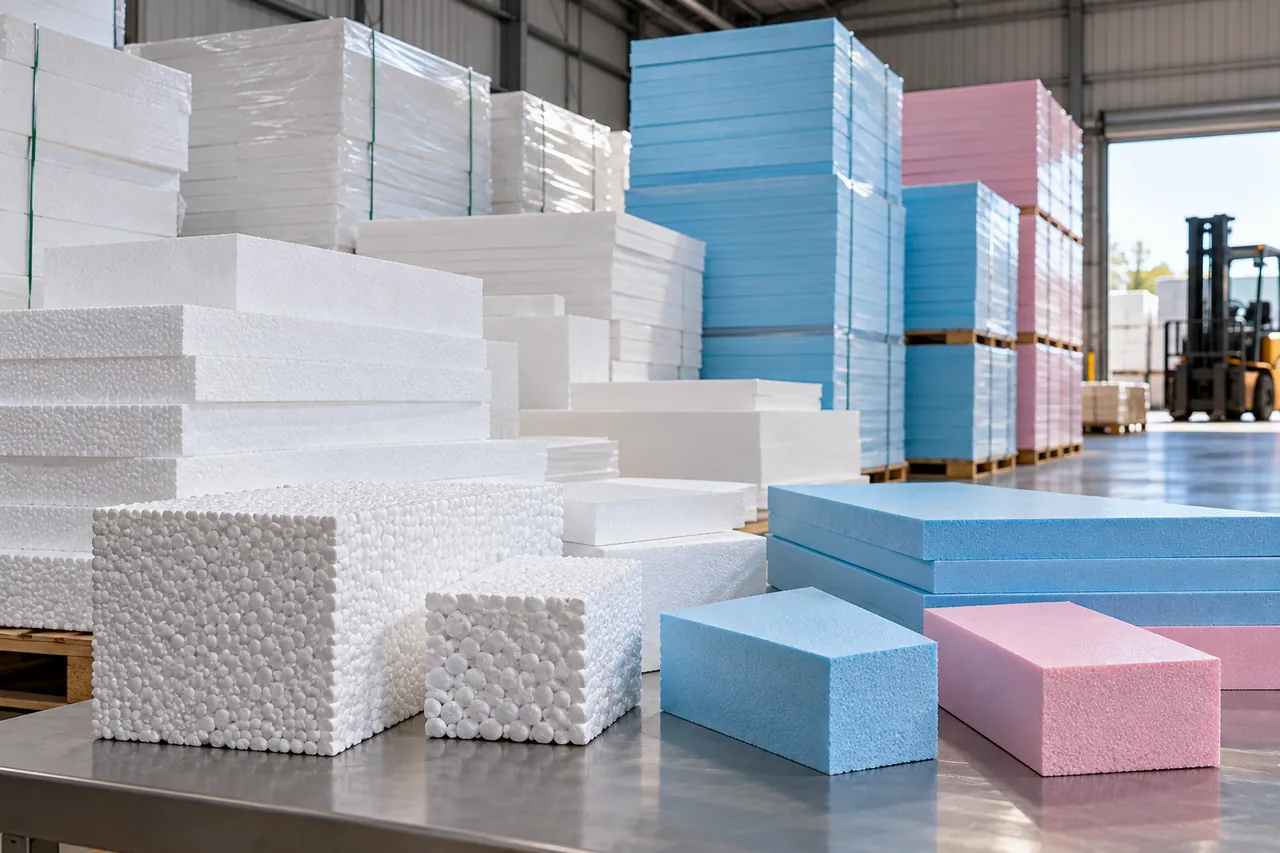
Styrofoam is the everyday name for lightweight, rigid polystyrene foam: the white beaded foam used for cups, coolers and packaging, and the coloured sheets of foam board used as building insulation. Strictly, "Styrofoam" is a registered trademark for one maker's blue extruded polystyrene foam (XPS) insulation, but the word has become genericised, so most people use it for any polystyrene foam.
That double meaning causes real confusion when buying. A contractor who orders "styrofoam" for a freezer floor usually wants dense XPS board; a packaging buyer who orders "styrofoam" wants moulded expanded polystyrene foam (EPS). The two are the same polymer but are made differently and behave differently, so specifications should always name the material (EPS or XPS), the density or compressive strength and, for insulation, the standard it meets, such as ASTM C578 in North America or EN 13163 (EPS) and EN 13164 (XPS) in Europe.
Single-sentence definitions, for clarity:
- Polystyrene is a thermoplastic made by polymerising styrene, a hydrocarbon produced from petroleum and natural gas feedstocks.
- EPS (expanded polystyrene) is polystyrene beads expanded with steam and fused in a mould into blocks or shapes; it is typically 95–98% air.
- XPS (extruded polystyrene) is polystyrene melted, mixed with a blowing agent and pushed through a die into a continuous board with a closed-cell structure and smooth skin.
What is styrofoam made of?
Styrofoam is made of polystyrene plastic and air, plus small amounts of blowing agent and, in building grades, flame retardant. The polystyrene itself starts as styrene monomer, made from benzene and ethylene, which is polymerised into hard, clear plastic pellets or beads.
How EPS is made
- Polystyrene beads about 0.5–1.5 mm across are made containing a few percent pentane as the blowing agent.
- Steam softens the beads and the pentane boils, puffing each bead up to roughly 20–50 times its original volume.
- The pre-expanded beads rest to stabilise, then are steamed again inside a mould, where they swell and fuse together.
- Large moulds make foam blocks up to about 1.2 × 1.2 × 5 m (4 × 4 × 16 ft); these are hot-wire cut into sheets, or shaped moulds make cups, boxes and foam packaging inserts directly.
Because EPS is fused beads, you can see the bead pattern on a cut edge, and tiny gaps between beads let some water in.
How XPS is made
For XPS, polystyrene pellets are melted in an extruder, a blowing agent is injected under pressure, and the mix is forced through a slot die. As it leaves the die the foam expands into a continuous board of fine, closed cells with a dense skin on both faces. The board is cut to length, edges are profiled (square, shiplap or tongue and groove) and a colour is added to identify the product line: pink, blue, green, yellow and grey are all common. Colour says nothing about performance; the datasheet does.
Is styrofoam plastic? Is it polystyrene?
Yes to both. Styrofoam is a foamed plastic, and the plastic is polystyrene (resin identification code 6, "PS"). It contains no fibreglass, no rubber and no paper, unless you are buying foam core board, which adds paper facings.
What are the types of styrofoam and foam sheet?
There are three main types of styrofoam in commerce, EPS, XPS and thin foodservice polystyrene sheet, and several other foam products that people loosely call styrofoam but are a different material. The table separates them.
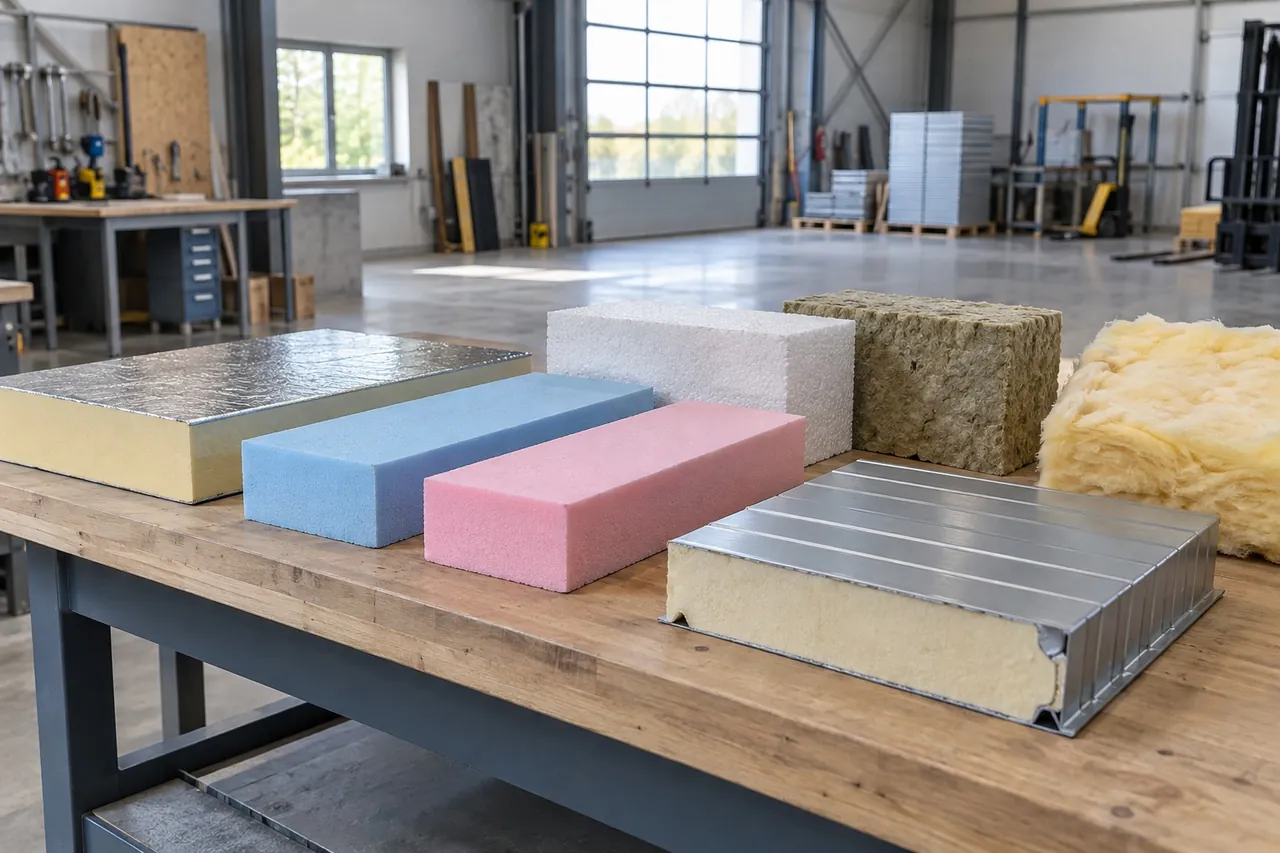
| Product people call "styrofoam" | Actual material | Typical density | Main uses |
|---|---|---|---|
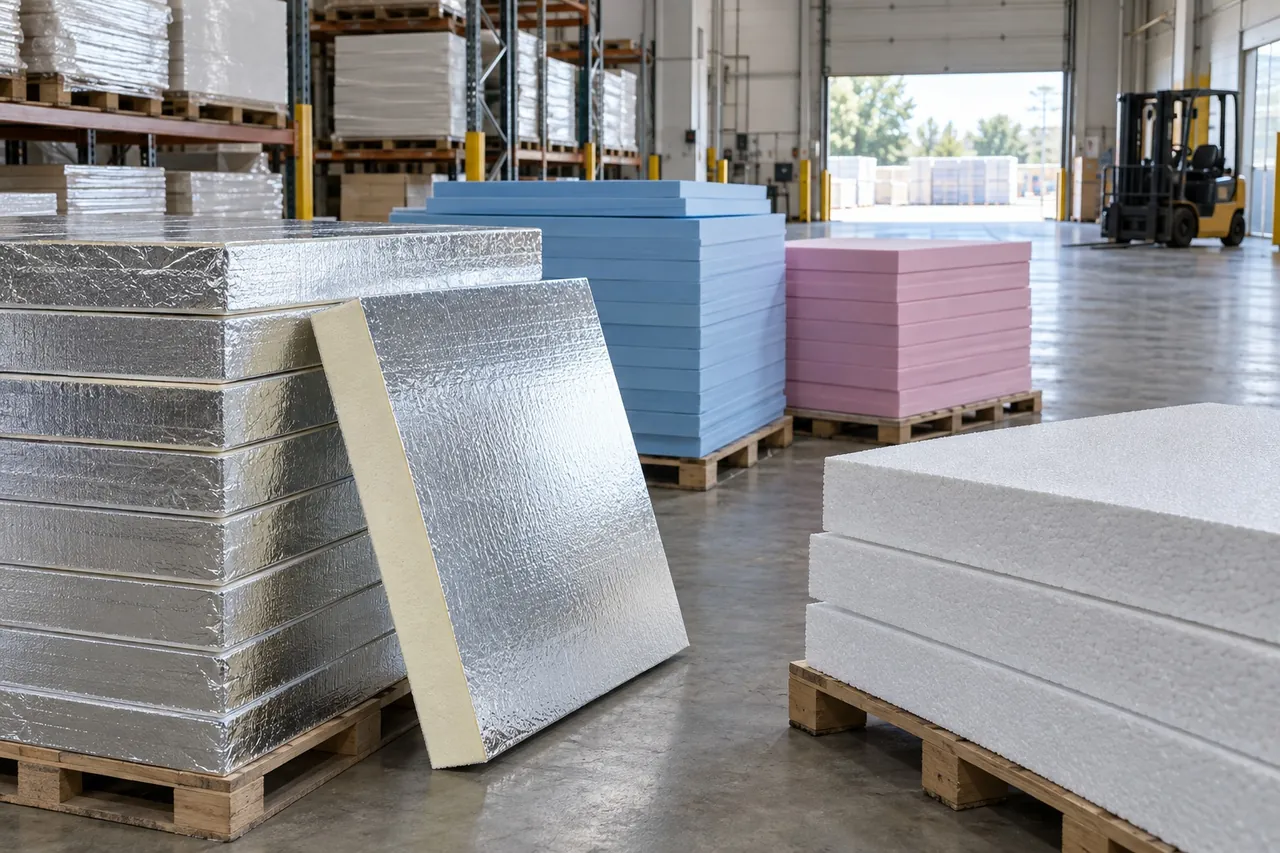
| White beaded boxes, coolers, packaging foam, big foam blocks | EPS (expanded polystyrene) | 10–35 kg/m³ (0.6–2.2 lb/ft³) | Protective packaging, fish and produce boxes, insulation sheets, geofoam fill |
| Grey or silver EPS board | Graphite-enhanced EPS | 15–30 kg/m³ (0.9–1.9 lb/ft³) | Wall insulation and external insulation systems where a thinner board is wanted |
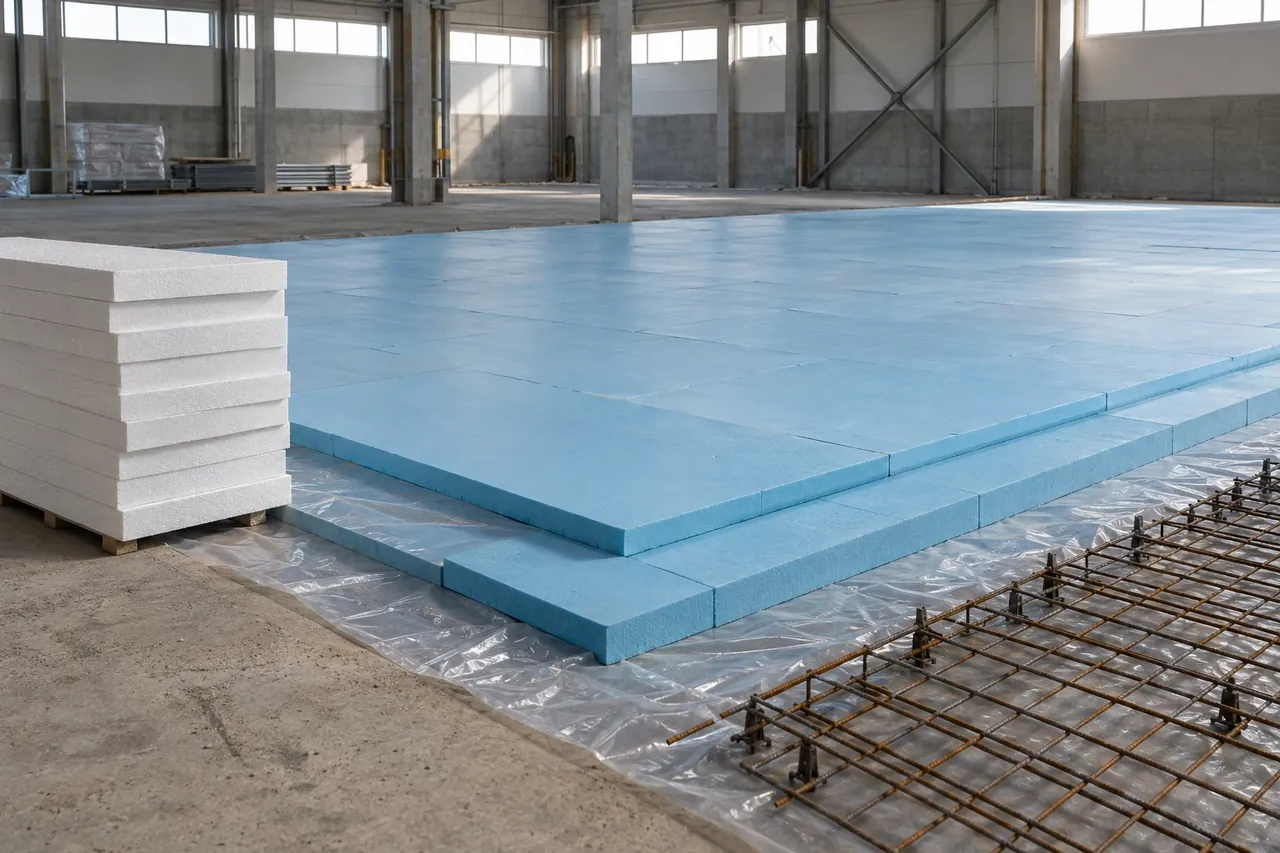
| Pink, blue or green insulation board | XPS (extruded polystyrene) | 28–45 kg/m³ (1.7–2.8 lb/ft³) | Foundations, under-slab, freezer floors, inverted roofs |
| Disposable cups, clamshells, meat trays | Thin extruded or moulded polystyrene foam | Varies | Single-use foodservice packaging |
| Foam core board, foam cardboard, white or black foam board | Thin polystyrene core between paper or plastic facings | 3–10 mm thick sheet | Signs, model making, mounting, display |
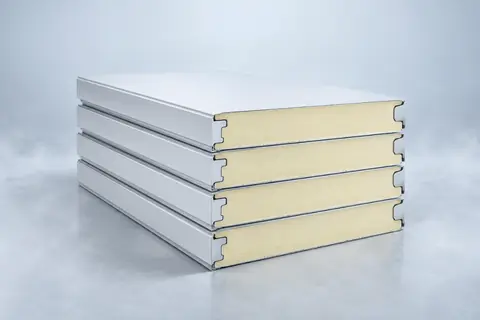
| Yellow or cream rigid foam, polyurethane foam sheets | PU or PIR (polyurethane / polyisocyanurate), not polystyrene | 30–45 kg/m³ (1.9–2.8 lb/ft³) | Cold room panels, insulation boards, pipe and tank insulation |
Note the last row. A pu foam sheet or urethane foam sheet looks like styrofoam but is a thermoset, so it does not melt, and it insulates better per millimetre. Flexible "foam" for seats and mattresses is a different polyurethane again and has nothing to do with styrofoam. For a fuller explanation of the rigid foam family, see our foam board insulation guide.
Is styrofoam a good insulator?
Yes. Polystyrene foam is a good insulator because it traps still air (or blowing gas) in millions of tiny cells, giving a thermal conductivity of about 0.029–0.038 W/(m·K). That is roughly R-3.6 to R-5 per inch, three to five times better than the same thickness of wood and around 20 times better than brick.
The r value of styrofoam depends on which styrofoam you mean:
| Material | Thermal conductivity λ | R per inch (US) | RSI per 25 mm | R-value of 50 mm (2 in) sheet |
|---|---|---|---|---|
| Standard white EPS | 0.035–0.038 W/(m·K) | R-3.6 to R-4.2 | 0.66–0.73 | R-7.2 to R-8.4 |
| Graphite EPS | 0.030–0.032 W/(m·K) | R-4.5 to R-4.8 | 0.78–0.83 | R-9 to R-9.6 |
| XPS foam board | 0.028–0.030 W/(m·K) | about R-5 | about 0.88 | about R-10 |
| PIR / polyiso board (for comparison) | 0.020–0.024 W/(m·K) | R-6 to R-6.5 | 1.05–1.25 | R-12 to R-13 |
So a 2 inch foam sheet of XPS gives about R-10, and the common 1½ inch (38 mm) board gives about R-7.5 in XPS or R-5.4 to R-6.3 in EPS. The thermal conductivity of styrofoam rises a little as it gets warmer and, for EPS, as density drops below about 15 kg/m³, which is why very light packaging foam is a poorer insulator than insulation-grade board. All values above are typical; use the declared value on the product datasheet for calculations.
Is styrofoam a good insulator for heat?
It slows heat flow in both directions, so it keeps cold things cold and hot things hot, but polystyrene softens at around 80–100 °C (176–212 °F) and starts to melt soon after. Do not use it against hot pipes, flues or anything above about 75 °C (167 °F) continuous; use mineral wool there.
Is styrofoam waterproof or water resistant?
Polystyrene does not dissolve or rot in water, so styrofoam is water resistant, but it is not fully waterproof. XPS absorbs well under 1% water by volume in long-term immersion, while EPS can take up roughly 2–5% because water creeps between the fused beads.
That difference matters below ground and in cold stores. Wet insulation loses R-value, and in a freezer floor the water can freeze in the board. This is why XPS is the default under freezer room slabs, below foundations and in inverted roofs, while EPS is used in dry walls and under drained floors. The detailed strength and moisture comparison is in our EPS vs XPS foam board guide. For freezer floors, see under-slab insulation for walk-in cooler and freezer floors.
Two other points on water: polystyrene foam floats (it is used in pontoons and dock floats), and a styrofoam sealer or coating can be brushed onto craft and sign foam to harden and seal the surface. Building insulation does not need a sealer; it needs a correct vapour control layer and drainage.
What is styrofoam used for?
Styrofoam is used for thermal insulation, protective packaging, insulated shipping, foodservice packaging, lightweight fill and craft or display work. Insulation and packaging account for most of the volume.
Building and cold store insulation
Styrofoam insulation is sold as 4x8 foam sheets (1220 × 2440 mm) or metric 1200 × 600 mm and 1250 × 600 mm boards, 20–200 mm (¾–8 in) thick. XPS goes under slabs, on foundation walls and under freezer floors; EPS goes into walls, roofs, external insulation and finish systems, and sandwich panels for houses. Styrofoam wall panels and styrofoam roof panels usually means EPS-core sandwich panels or structural insulated panels; for cold rooms and freezers, PU or PIR panels are the norm because they insulate about 40–60% better per millimetre. See our guide to SIP panels vs insulated sandwich panels.
Packaging and shipping
Packaging foam is moulded EPS made to fit the product (corner blocks, end caps and trays). A styrofoam shipping box or cooler, typically with 25–50 mm (1–2 in) walls, keeps frozen goods frozen for about 24–48 hours with dry ice. These styrofoam shipping containers are standard for seafood, meal kits and pharmaceuticals; our guide on how to ship frozen food covers wall thickness and refrigerant amounts.
Ceilings, crafts and fill
Styrofoam ceiling tiles and styrofoam ceiling panels are decorative pressed polystyrene tiles glued to plaster. They are combustible and drip when burning, so many building codes restrict them in escape routes and commercial premises; check your local rules and use only fire-retardant grades. High density foam blocks and square foam blocks are used for sculpture, theatre sets and model making, and EPS geofoam blocks are used as lightweight fill under roads.
What sizes do foam sheets and foam blocks come in?
Insulation-grade styrofoam sheets come in 4 × 8 ft (1220 × 2440 mm) and 2 × 8 ft panels in North America, and 1200 × 600 mm or 1200 × 2400 mm elsewhere, in thicknesses from about 20 mm to 200 mm. EPS can also be cut to almost any size from moulded blocks.
| Product | Common sizes | Thickness range | Notes |
|---|---|---|---|
| 4x8 foam sheet insulation (XPS or EPS) | 1220 × 2440 mm (4 × 8 ft) | 13–100 mm (½–4 in) | Square edge or shiplap; foil or film facings on some EPS |
| Metric insulation board | 1200 × 600 mm, 1250 × 600 mm, 1200 × 2400 mm | 20–200 mm | Tongue and groove common on XPS for floors |
| EPS foam blocks | Up to about 1200 × 1200 × 5000 mm | Cut to order | Hot-wire cut sheets, shapes, geofoam |
| Foam core board | 500 × 700 mm up to 1220 × 2440 mm | 3–10 mm | White or black paper faces; not insulation |
For high density foam board or dense foam sheets that must carry load, specify compressive strength, not just "high density". XPS is sold in strengths from about 150 kPa (22 psi) for walls to 500–700 kPa (73–100 psi) for heavily loaded freezer floors and car parks; EPS typically ranges from about 70 kPa to 250 kPa (10–36 psi).
Where to get styrofoam in large sheets
Builders' merchants and insulation distributors stock 4 × 8 sheets in common thicknesses. For container loads, special thicknesses, high compressive grades or tongue-and-groove edges, buy direct from a foam board manufacturer, which is also cheaper per cubic metre once you fill a container. Ask for the datasheet, the test standard (ASTM C578, EN 13164 or EN 13163), the fire classification and the declared long-term thermal conductivity.
Why is styrofoam bad for the environment?
Styrofoam is criticised because it is made from fossil feedstocks, is bulky and light so it is costly to collect and is rarely recycled, and breaks into small beads that persist in rivers and the sea. Most of the concern is about single-use cups, food containers and loose packaging, not long-life building insulation.
- Does styrofoam have microplastics? Polystyrene foam is a plastic, so as it weathers and crumbles it breaks into microplastic fragments. Littered EPS is a common item in beach debris.
- Regulation: The EU Single-Use Plastics Directive (EU) 2019/904 bans expanded polystyrene food containers, drink containers and cups, and a number of US states and cities restrict EPS foodservice ware.
- Styrene: The International Agency for Research on Cancer (IARC) classifies styrene, the monomer, as probably carcinogenic to humans (Group 2A). Food-contact polystyrene is regulated for migration; avoid heating food in foam containers.
- Recycling: Clean EPS can be compacted and recycled into new beads or solid polystyrene, and many manufacturers take back offcuts, but kerbside collection is rare.
In buildings and cold stores the picture is different. Insulation board stays in place for 30–50 years, and the energy it saves usually outweighs its production energy many times over. Older XPS used blowing agents with high global warming potential; ask suppliers which blowing agent current boards use, and check that flame retardants comply with your market's chemical rules.
Is styrofoam safe in buildings? Fire and installation
Polystyrene foam is combustible. Building-grade EPS and XPS contain flame retardant so a small flame does not spread easily, but in a real fire the foam melts, drips and burns, so codes require it to be protected.
- In the US, the International Building Code and International Residential Code generally require foam plastic insulation inside occupied spaces to be separated by a thermal barrier such as 12.7 mm (½ in) gypsum board.
- In Europe, EPS and XPS boards typically reach Euroclass E on their own; the finished wall or roof build-up is what gets classified.
- Foam must not be left exposed in cold rooms, warehouses or shops. Use factory-faced sandwich panels with steel skins, or cover boards with a protective lining.
- Solvent-based adhesives, some spray paints and petrol dissolve polystyrene. Use foam-compatible adhesives and water-based paints.
For tables of how polystyrene compares with polyiso, mineral wool and fibreglass, see the insulation R-value chart and our guide to PIR vs PU vs XPS vs EPS insulation.
How to choose the right "styrofoam" for a project
Pick by job, not by the word. Use this checklist before you order:
- Name the material. Write EPS, graphite EPS, XPS, PIR or PU on the order, never just "styrofoam".
- Wet or loaded? Under slabs, freezer floors, foundations and inverted roofs, choose XPS at 250–700 kPa. In dry walls and roofs, EPS or PIR is fine.
- Thin wall, high R? If space is tight, choose PIR (R-6 to R-6.5 per inch) over polystyrene.
- Fire. Confirm flame-retardant grade, the fire classification of the build-up and the thermal barrier your code requires.
- Size and edges. Specify 1200 × 600 mm or 4 × 8 ft, thickness, and square, shiplap or tongue-and-groove edges.
- Paperwork. Ask for the datasheet, test standard (ASTM C578, EN 13163, EN 13164), declared λ and a sample before a container order.
Be There supplies XPS foam board with compressive strengths of 150–700 kPa and water absorption under 1% by volume for freezer floors, foundations and roofs, plus PIR and PU insulation boards from 20 to 200 mm and complete PU/PIR sandwich panels for cold rooms and insulated buildings. Send the application, thickness, quantity and destination port through the inquiry form and we will quote FOB, CIF or DDP.