

Short answer
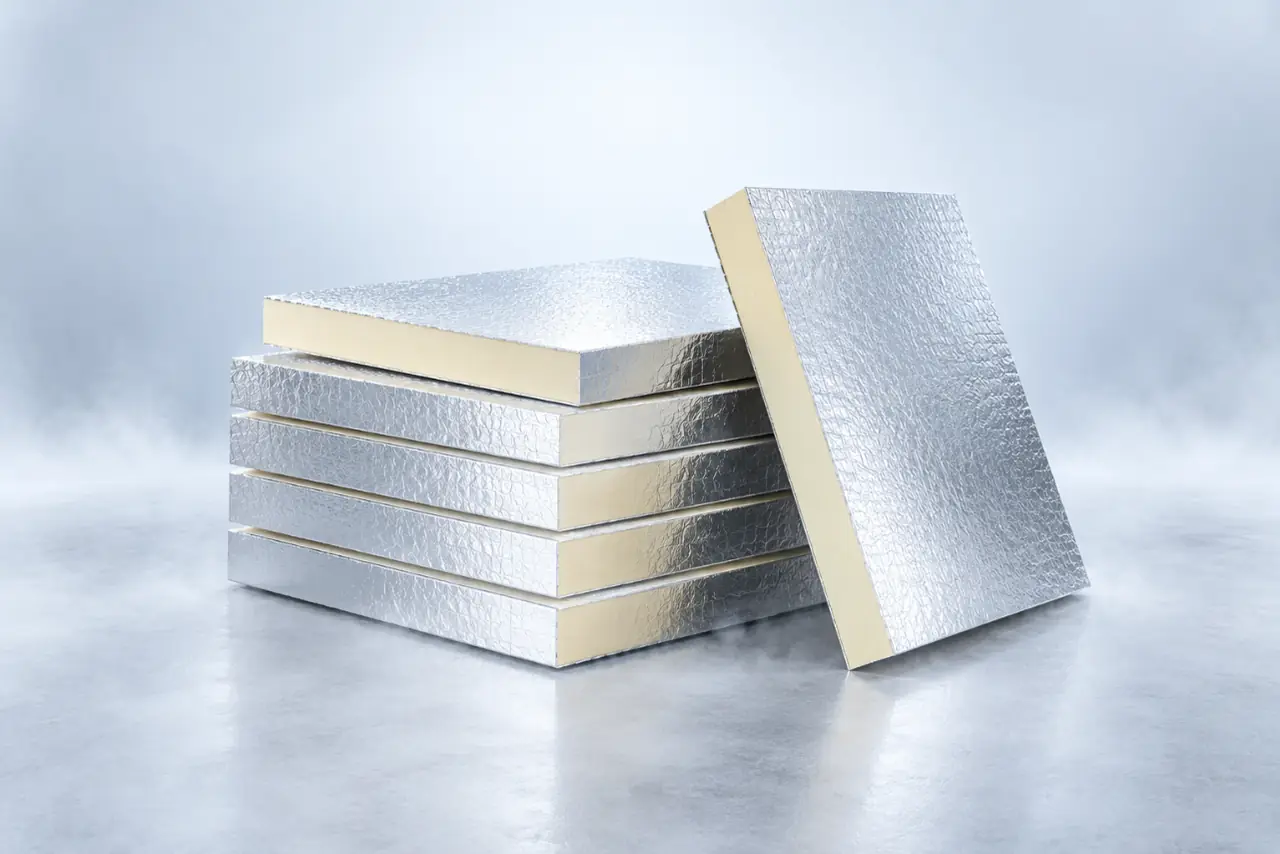
Per inch, PIR/polyiso gives about R-6 to R-6.5, PU about R-6, XPS about R-5 and EPS about R-3.6 to R-4.2. PIR has the best fire behaviour of the foams, XPS the best moisture and load resistance for floors and foundations, and EPS the lowest cost per board.
R-value chart
| Material | λ, W/(m·K) | R per inch (US) | RSI per 25 mm | Water uptake | Compressive strength |
|---|---|---|---|---|---|
| PIR / polyiso | 0.020–0.024 | ≈ 6.0–6.5 | ≈ 1.05–1.25 | Low (faced) | ≈ 120–200 kPa |
| PU (polyurethane) | 0.022–0.024 | ≈ 6.0 | ≈ 1.05–1.15 | Low | ≈ 120–200 kPa |
| XPS | 0.028–0.030 | ≈ 5.0 | ≈ 0.85–0.9 | Very low (≤ 1% vol) | 150–700 kPa |
| EPS | 0.033–0.038 | ≈ 3.6–4.2 | ≈ 0.65–0.75 | Moderate | 70–250 kPa |
| Mineral wool | 0.034–0.040 | ≈ 3.6–4.2 | ≈ 0.65–0.75 | Must stay dry | Low (boards ≈ 40–80 kPa) |
Values are typical for new boards at standard mean temperature. Long-term R-values of gas-blown foams are slightly lower; compare products using their declared long-term values.
PIR and PU
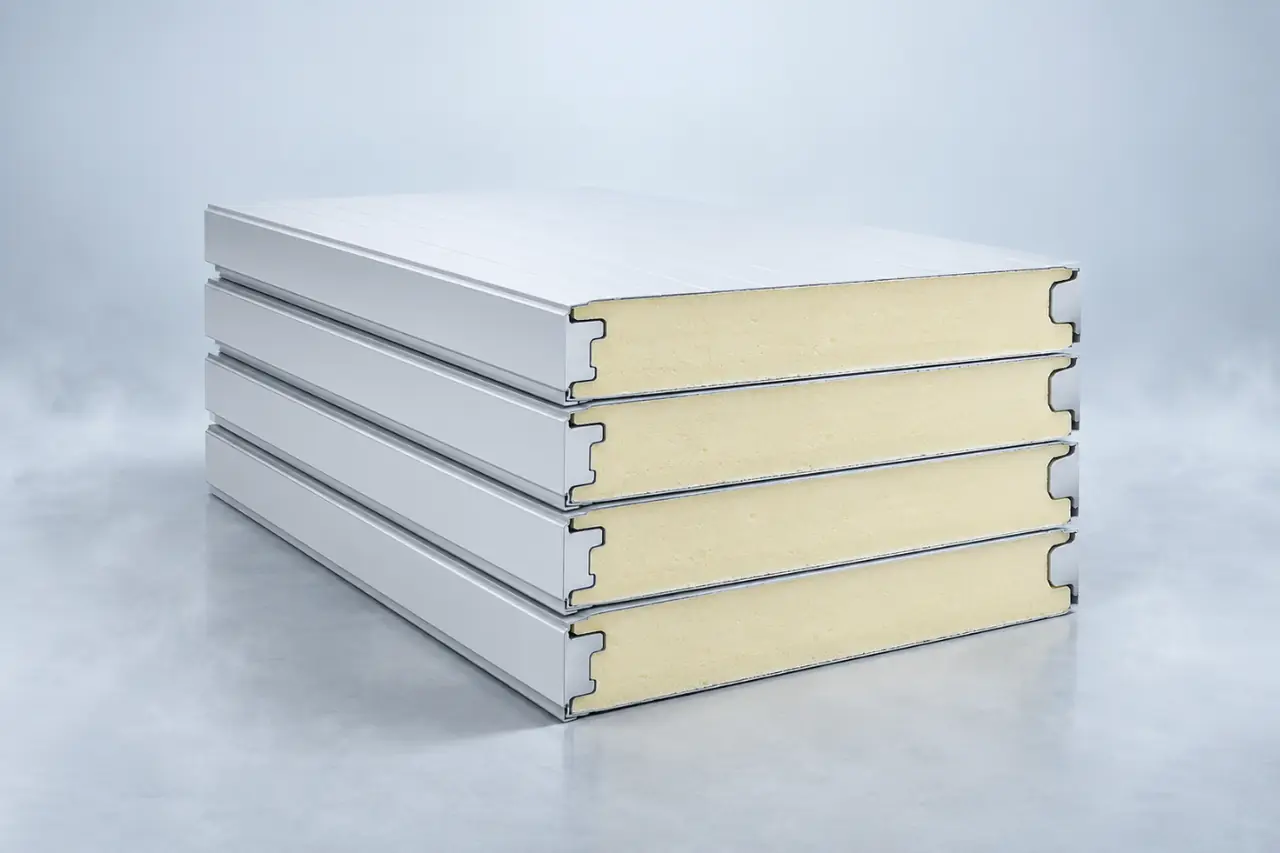
Both are thermoset foams with closed cells and the lowest conductivity of common boards. PIR uses more isocyanate, forming a more fire-resistant structure that chars rather than melts. That is why PIR is preferred for cold room panels, roofs and HVAC duct board where fire rules apply.
XPS
Extruded polystyrene is made as a continuous closed-cell board. It keeps its insulation value in wet conditions and comes in grades from 150 to 700 kPa, so it is used under freezer floors, foundations and inverted roofs.
EPS
Expanded polystyrene is moulded from beads. It is the cheapest per board, light and easy to cut, but needs more thickness for the same R-value and absorbs more moisture than XPS.
Which one where?
- Cold room and freezer walls: PU or PIR sandwich panels.
- Freezer floors and foundations: XPS.
- Roofs and ducts with fire requirements: PIR, foil-faced.
- Low-cost dry walls and packaging: EPS.
Need a thickness for a cold room? Use our cold room calculator.