Short answer
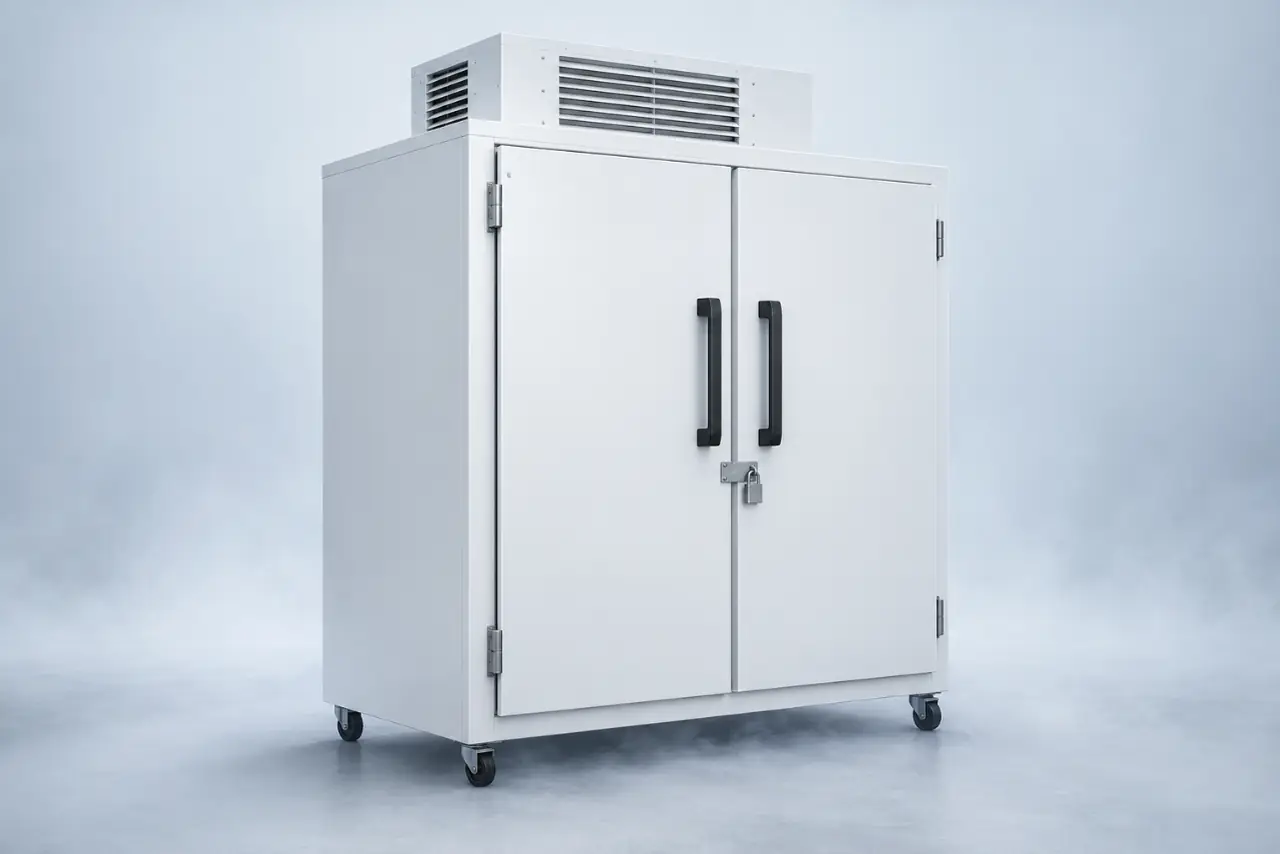
An outdoor refrigerator is a fridge built and listed for outdoor use: it holds +1 °C to +5 °C (34–41 °F) in ambient heat up to about 38–43 °C (100–110 °F), with sealed electrics, corrosion-resistant stainless or coated steel, UV-stable gaskets and a lock. Indoor units placed outside lose capacity, corrode and may be unsafe. Site it in shade with clear air flow.
Key takeaways
- Household appliance climate classes run from SN (10–32 °C) to T (16–43 °C); an outdoor fridge or freezer needs class T or an equivalent outdoor rating.
- Most commercial ice machines are rated for about 10–43 °C (50–110 °F) air and must be protected from freezing in winter.
- Outdoor ice merchandisers keep bagged ice at −12 °C to −6 °C (10–21 °F) and come in weatherproof, lockable versions holding about 30–100 ten-pound bags.
- Shade matters: direct sun on a cabinet and condenser can push the effective ambient well above the air temperature.
- Outdoor outlets should be GFCI- or RCD-protected and the unit plugged into a dedicated circuit.
What is an outdoor refrigerator?
An outdoor refrigerator is a fridge designed, tested and listed for use outside a building: on a patio, in an outdoor kitchen, at a poolside bar or on a petrol station forecourt. It differs from an indoor fridge in four ways: a wider ambient temperature rating, weatherproof electrical parts, a corrosion-resistant cabinet and components that tolerate sun, rain and dust.
The same applies to an outdoor freezer and an outdoor ice maker. Put an indoor unit outside and three things happen. In summer heat the compressor runs non-stop and the cabinet warms. In cold weather the thermostat barely calls for cooling and, in a fridge-freezer, the freezer can partly thaw. And rain, humidity and salt air attack wiring, hinges and the condenser coil.
For North America, look for a unit that is UL or ETL listed for outdoor use; in Europe and other markets, check the manufacturer explicitly permits outdoor installation and states the ingress protection of the electrics. If the label or manual says "indoor use only", the warranty and the safety approval stop at the door.
Commercial outdoor equipment goes further. An outdoor ice merchandiser on a forecourt runs all year, takes direct weather and is opened by the public, so it needs heavier insulation, a lockable door, weather covers on the controls and a condensing unit sized for hot days.
Types of outdoor fridges, freezers and ice makers
| Type | Typical temperature | Typical size | Best for |
|---|---|---|---|
| Outdoor kitchen fridge (undercounter) | +1 °C to +5 °C (34–41 °F) | About 0.6 m (24 in) wide, 0.81–0.86 m (32–34 in) high, 100–150 L | Outdoor kitchens, patios, hotel terraces |
| Outdoor beverage cooler (glass door) | +2 °C to +8 °C (36–46 °F) | Undercounter to 2-door | Poolside bars, beer gardens |
| Full size outdoor refrigerator | +1 °C to +5 °C (34–41 °F) | 500–700 L, about 2 m high | Covered outdoor service areas |
| Outdoor freezer chest | −18 °C (0 °F) or colder | 150–500 L | Frozen stock in yards, garages, sheds |
| Outdoor ice maker | Makes cube ice; bin is not refrigerated | About 10–30 kg (25–65 lb) per day | Outdoor kitchens, small bars |
| Outdoor ice merchandiser | −12 °C to −6 °C (10–21 °F) | 30–100 bags of 10 lb (4.5 kg) | Petrol stations, stores, campsites, marinas |
| Portable outdoor refrigerator / freezer | +5 °C to −18 °C, adjustable | 20–100 L, 12 V DC or mains | Vehicles, events, markets |
| Outdoor cooler / ice chest (no power) | Depends on ice; typically 1–5 days of ice retention | 25–150 L, often on wheels | Events, short-term drinks service |
Two sizing notes. "Outdoor refrigerator 32 high" searches usually mean compact units that fit under a lower outdoor counter; standard undercounter units are about 34 in (0.86 m). And outdoor ice makers built into kitchens are small: if you need hundreds of kilograms a day, a commercial machine indoors feeding an outdoor merchandiser is the usual answer.
What ambient temperature rating does an outdoor fridge need?
The ambient rating is the most important number on an outdoor unit. It tells you the room (or yard) temperature range in which the appliance keeps its setpoint.
| Climate class | Ambient range | Outdoor suitability |
|---|---|---|
| SN (extended temperate) | 10–32 °C (50–90 °F) | Covered, mild climates only |
| N (temperate) | 16–32 °C (61–90 °F) | Not suitable outdoors |
| ST (subtropical) | 16–38 °C (61–100 °F) | Shaded, warm climates with mild winters |
| T (tropical) | 16–43 °C (61–109 °F) | Hot climates; check low-ambient limits |
These household classes come from the IEC/ISO refrigerator test standards. Commercial display cabinets use EN ISO 23953 climate classes instead, and commercial outdoor equipment is often specified directly, for example "holds −18 °C at 43 °C ambient".
Two practical points. First, the air temperature is not the whole story: a dark cabinet in direct sun, or a condenser next to a grill, can see far higher temperatures. Second, cold is also a problem. Below about 10 °C (50 °F) many fridges and ice machines misbehave; a commercial ice machine is typically rated for about 10–43 °C (50–110 °F) air and 5–32 °C (40–90 °F) water. In regions with frost, drain and winterise ice makers and water lines, or move them indoors.
Weatherproofing: what makes an all weather outdoor fridge
"All weather" and "weatherproof" are marketing terms. Check the specific features behind them.
- Cabinet material: 304 stainless steel inside and out for most sites; 316 stainless or powder-coated galvanised steel near the sea or pools, where chlorine and salt corrode cheaper grades. A stainless steel outdoor fridge with a 430-grade body will show rust spots quickly in coastal air.
- Electrics: sealed controllers, covered switches and cable entries, and a stated ingress protection rating (IPX4 means protected against splashing water from any direction). Plug into a GFCI (US) or RCD (UK/EU) protected outlet.
- Condenser coil: coated or corrosion-resistant fins, and a front-breathing design for built-in units so hot air does not recirculate under the counter.
- Insulation and seals: thicker foam than an indoor model, UV-stable gaskets, self-closing doors and a lock.
- Glass: if it has a glass door, double or triple glazed with low-E coating or heaters to stop condensation in humid air.
- Drainage: a defrost drain that will not freeze and does not puddle against the cabinet.
A "waterproof outdoor freezer" in the full sense is rare; most are rain-resistant, not designed to be hosed down or submerged. If the site floods or the unit will be pressure-washed, ask for those conditions in writing.
Where should you put an outdoor refrigerator or freezer?
Good siting can matter as much as the unit itself.
- Shade first. Put the unit under a roof, canopy or on the north side of a building (south side in the southern hemisphere). Sun on the cabinet and condenser adds load all day.
- Keep heat sources away. Do not install an outdoor kitchen fridge right beside a grill, pizza oven or fryer; leave a gap or fit a heat shield as the maker specifies.
- Give it air. Respect the stated clearances, typically 50–100 mm (2–4 in) at sides and back for freestanding units, and keep the front grille clear on built-ins.
- Level and drained. Stand it on a level slab or plinth above standing water, with the defrost drain running away from the cabinet.
- Power and protection. Use a dedicated, weatherproof, GFCI/RCD-protected outlet sized for the start current. Avoid long extension leads.
- Security. For public sites, bolt or chain the unit and use a lockable door.
For commercial forecourt freezers, also think about the customer: the door should open away from traffic, the lock should be easy for staff, and signage or a branding panel should face the approach. Our bagged ice merchandiser guide covers forecourt siting and capacity in detail.
Outdoor ice makers and commercial outdoor ice machines
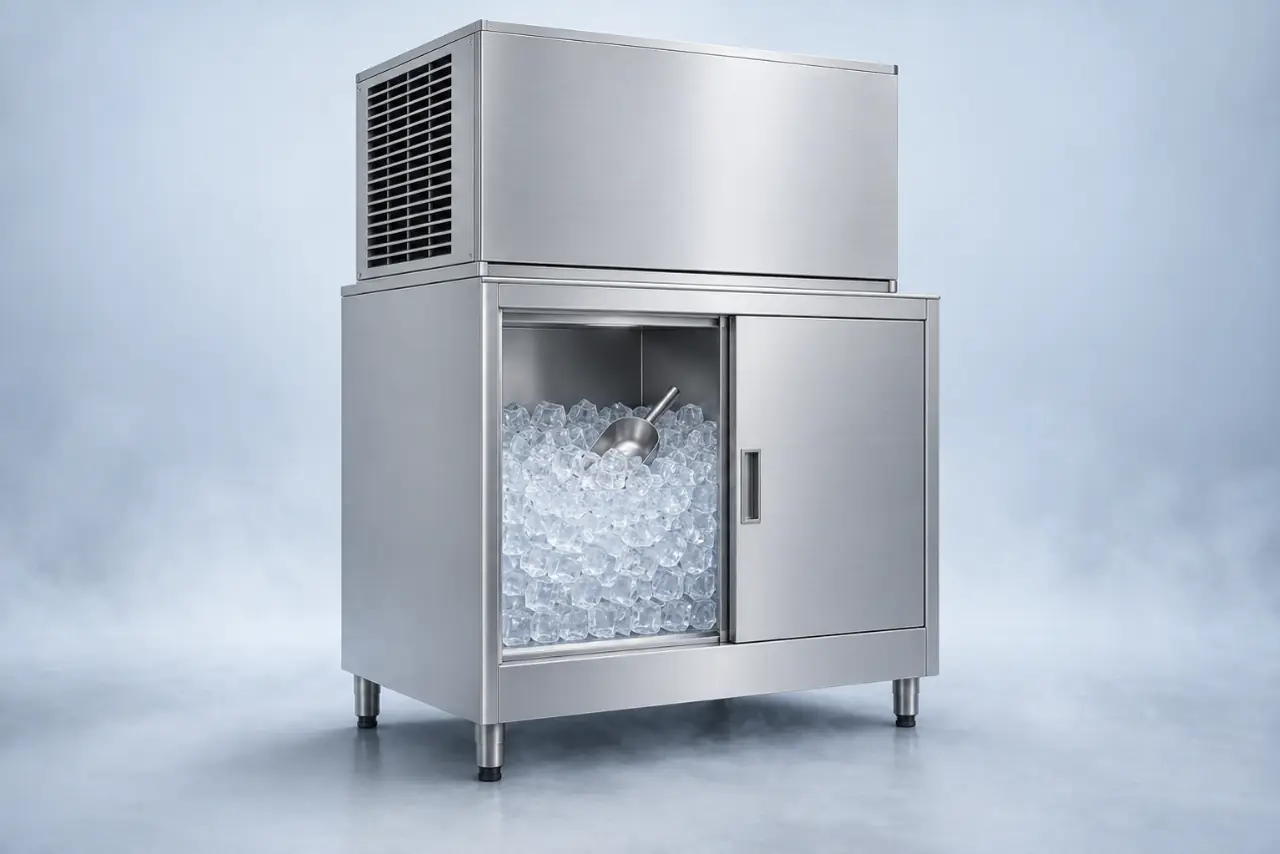
An outdoor ice maker for a patio kitchen is usually an undercounter machine making about 10–30 kg (25–65 lb) of cube ice per day with a small, insulated but unrefrigerated bin. The ice slowly melts and the machine tops it up. That is enough for a household or a small terrace bar.
A commercial outdoor ice machine is a different proposition. Most commercial ice machines are designed for indoor installation, because:
- output drops sharply in hot air; a machine rated at 21 °C (70 °F) may make 20–30% less at 32 °C (90 °F);
- water lines and the water pump freeze in winter;
- dust, pollen and insects foul the condenser and bin; and
- outdoor food-contact surfaces are hard to keep sanitary.
The usual commercial layouts are: a machine indoors with a remote air-cooled condenser outside to reject heat; or a machine indoors bagging ice into an outdoor ice merchandiser for sale. Be There supplies commercial ice machines from 25 kg (55 lb) to 20 t per day in air- and water-cooled versions, plus weatherproof outdoor ice merchandisers for the storage side.
Commercial outdoor freezers and ice merchandisers
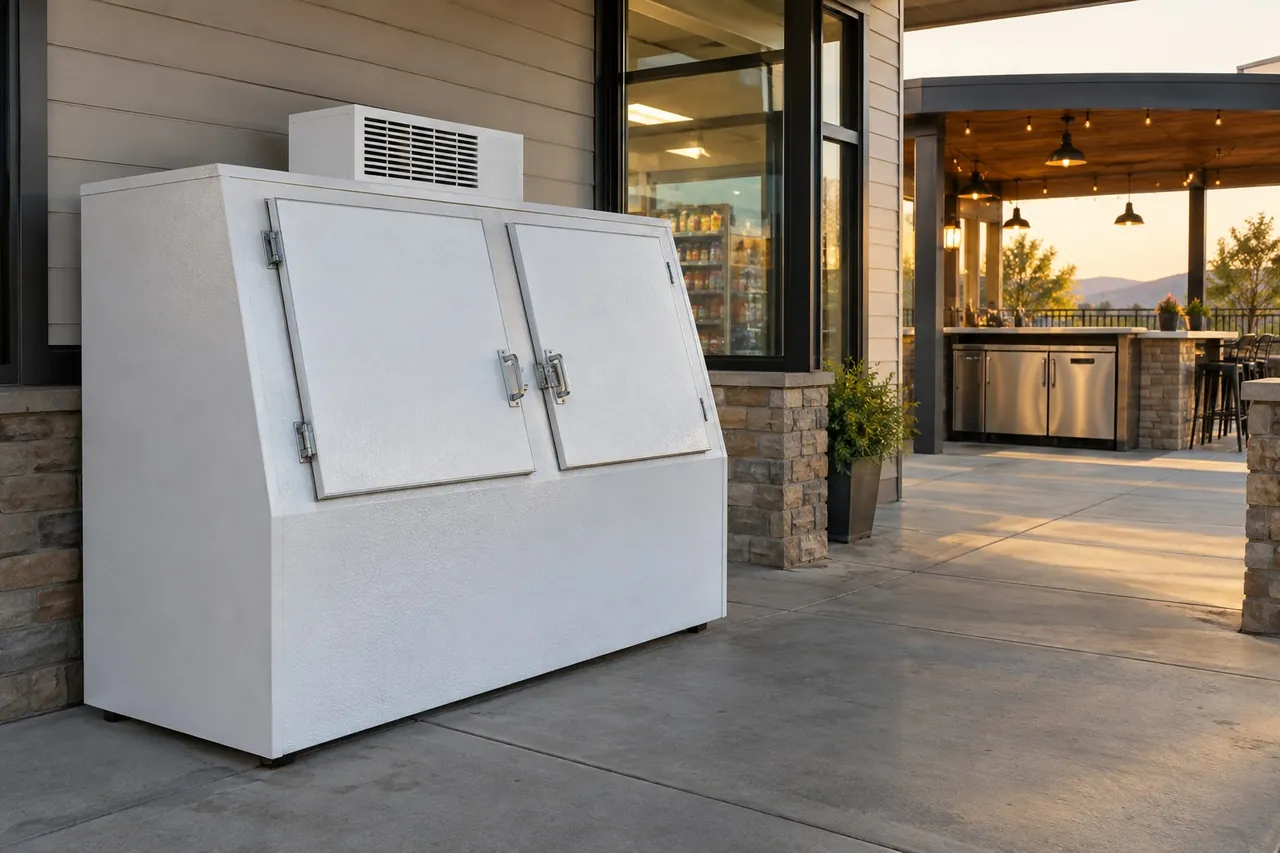
The most common commercial outdoor freezer is the bagged ice merchandiser seen outside petrol stations, convenience stores, campsites and marinas. It is a solid-door, lockable freezer that holds ice at −12 °C to −6 °C (10–21 °F): cold enough to keep ice hard, warm enough that bags do not weld together.
Outdoor versions differ from indoor ones in their weather covers, coated cabinets, sealed electrics, sloped or covered tops and condensing units rated for hot ambient. Auto-defrost is the norm for retail, because frost builds fast when doors open in humid air. Capacities run from about 30 to 100 ten-pound (4.5 kg) bags.
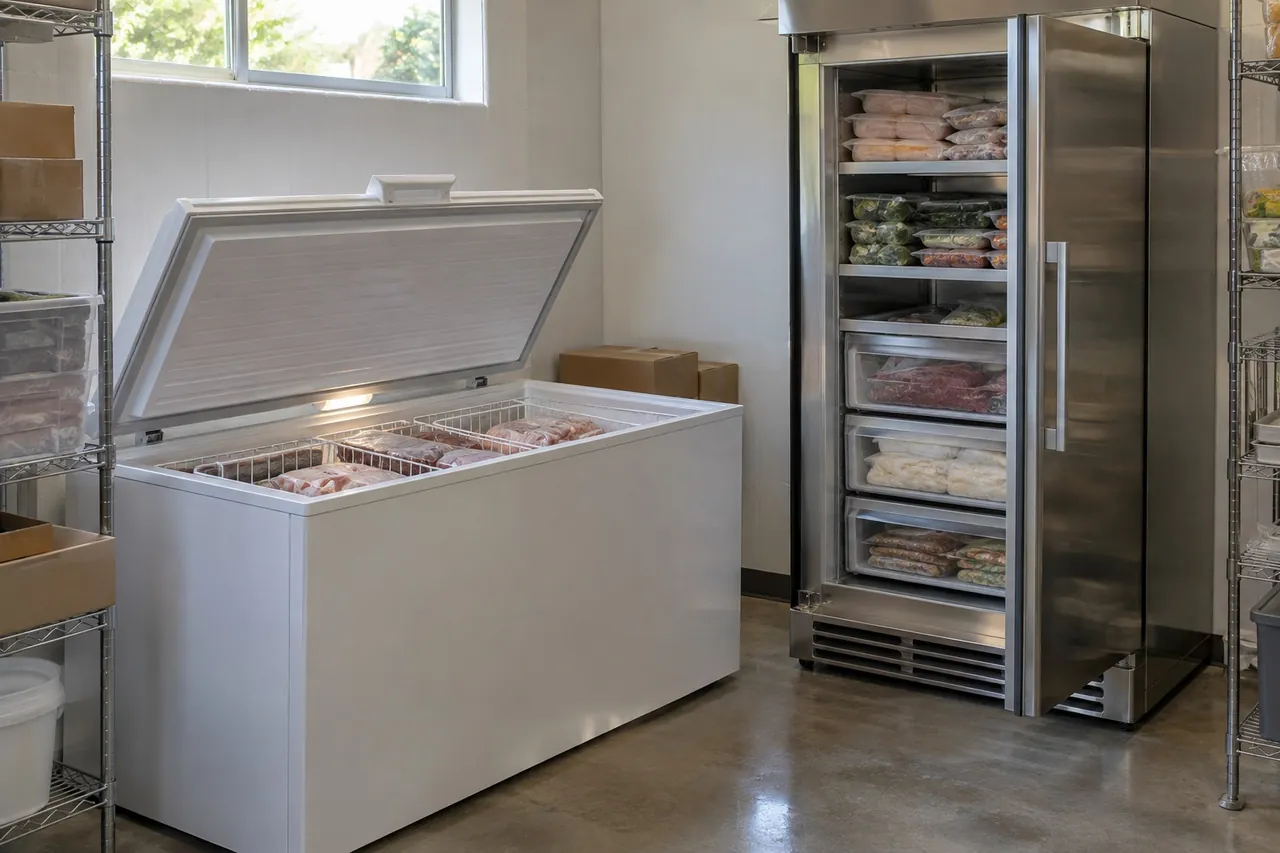
For frozen food outdoors, an outdoor freezer chest is the usual choice: the top lid keeps cold air in and sheds rain better than a front door. Check that it is rated for the full ambient range, has a lock and is shaded. Glass-top chest display freezers are designed for indoor shops, not for open forecourts.
For outdoor refrigeration of drinks, a commercial outdoor fridge must handle the same weather as a freezer. Our glass-door display refrigerators are indoor merchandisers; for covered outdoor bars, place them under a roof and away from direct sun and rain, and tell us the site conditions when you ask for a quote.
Is an outdoor cooler or ice chest enough?
A passive outdoor cooler, poolside cooler or outdoor ice chest cooler has no compressor: it is an insulated box kept cold by ice. An outdoor cooler on wheels or an outdoor ice cooler with stand is cheap, portable and needs no power, which makes it ideal for a one-day event or a pop-up drinks service.
It is not a substitute for refrigeration where perishable food is involved. Perishable, time/temperature-controlled food should be held at +5 °C (41 °F) or below, and a cooler can only do that while there is enough ice and the lid stays mostly closed. Practical limits:
- Use a ratio of roughly 2:1 ice to contents by volume for a hot day, and keep the cooler in shade.
- Drain meltwater regularly unless you are using it to chill cans fast.
- Check food temperature with a probe; do not rely on "it feels cold".
- Expect ice retention of hours to a few days depending on insulation, sun and openings.
For drinks at a regular weekend event, a cooler plus a supply of bagged ice is often the best value. For daily service, food or anything that must stay frozen, choose a powered outdoor refrigerator or freezer.
How to choose an outdoor refrigerator or freezer
- Write down the site conditions: highest and lowest air temperature, sun or shade, rain exposure, salt or chlorine air.
- Pick the job: chilled drinks, food, frozen stock, ice making or bagged ice sales.
- Check the rating: an explicit outdoor listing and an ambient range that covers your site, ideally up to 43 °C (110 °F).
- Check the build: 304 or 316 stainless, sealed electrics with an IP rating, UV-stable gaskets, a lock.
- Plan the siting: shade, clearances, level base, drainage and away from grills.
- Plan the power: dedicated GFCI/RCD-protected outlet and the right voltage and frequency.
- Add monitoring: a temperature alarm for anything that holds food or valuable stock.
For forecourts, stores and campsites, Be There supplies weatherproof outdoor ice merchandisers built to your voltage, plus the ice machines to fill them, quoted per order (FOB, CIF or DDP). Send your site conditions, capacity and destination through our quotation form. If you are comparing freezer formats for indoor stock, see our chest vs upright freezer guide.