Short answer
An under counter ice maker is a self-contained ice machine and insulated bin built to fit below a 34–36 in (865–915 mm) counter. Units come 15–30 in (380–760 mm) wide, make about 25–160 kg (55–350 lb) of ice per 24 hours and store 10–60 kg (22–130 lb). Choose a front-breathing model for built-in use and a drain pump if no floor drain sits below the unit.
Key takeaways
- Commercial undercounter ice machines typically make 25–160 kg (55–350 lb) per day and store 10–60 kg (22–130 lb) in the built-in bin.
- Common widths are 15, 18, 22–24 and 30 inches (about 380, 460, 560–610 and 760 mm); height is normally 33–34.5 in (840–875 mm) to clear a standard counter.
- A gravity drain needs a floor drain or standpipe below the unit's outlet; otherwise specify a drain pump, because cube machines purge water every cycle.
- Built-in installations need a front-breathing condenser; rear-breathing units usually need about 150 mm (6 in) of free space behind and at the sides.
- Rated output assumes 21 °C (70 °F) air and 10 °C (50 °F) water; in a 32 °C (90 °F) bar expect roughly 15–25% less ice.
What is an under counter ice maker?
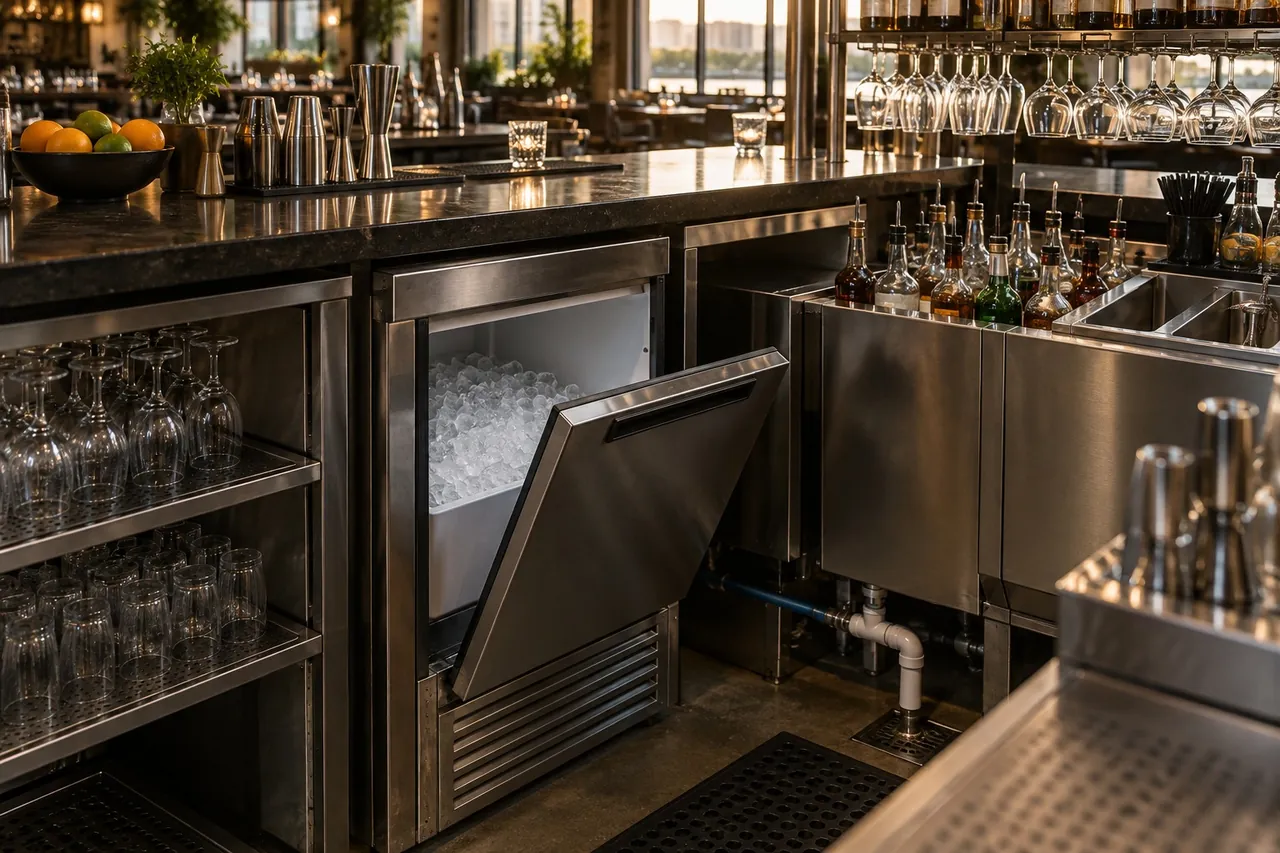
An under counter ice maker is a self-contained ice machine that combines the freezing section, the refrigeration system and an insulated storage bin in one cabinet sized to slide under a bar or kitchen counter. It needs only a water line, a drain and a standard power outlet, so it is the simplest way to put ice exactly where drinks are poured.
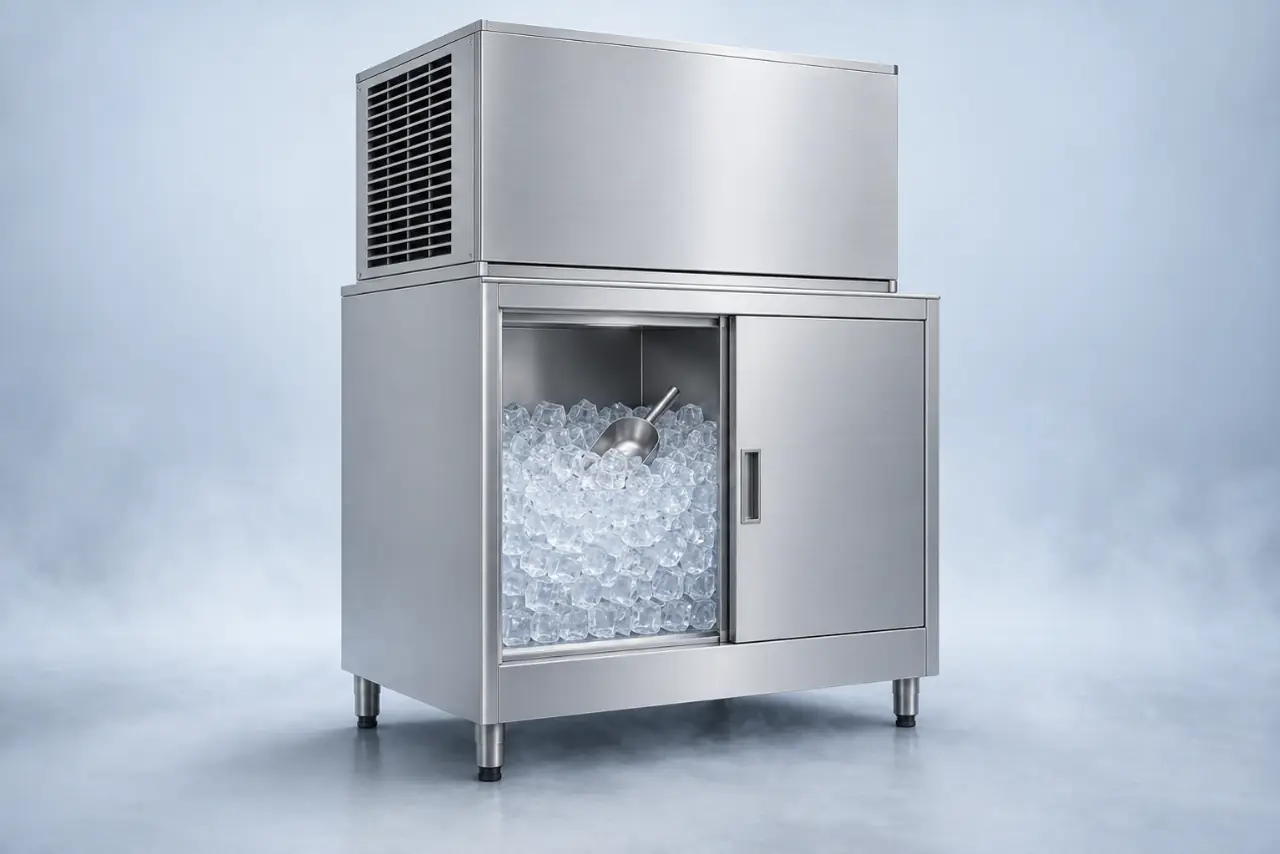
In commercial use, an undercounter ice machine typically produces 25–160 kg (55–350 lb) of ice per 24 hours and holds 10–60 kg (22–130 lb) in its bin. That suits bars, cafés, small restaurants, hotel floor pantries, offices and clinics. When demand grows past roughly 150 kg (330 lb) a day, a modular ice machine head on a separate bin is usually the better buy.
Be There cube ice machines include undercounter models storing 15–60 kg, in full cube, half cube, crescent and bullet shapes, with air- or water-cooled condensers. The same cabinet format is also used for nugget (pellet) and flake ice.
The rest of this guide covers the decisions that cause most installation problems: width, drainage, ventilation and real-world output. For a full demand calculation, use the ice machine size calculator first, then come back to choose the cabinet.
What sizes do undercounter ice makers come in?
Width is the first filter, because the opening under a counter is fixed. The table shows typical ranges; exact figures vary by model and are confirmed on each quotation.
| Width | Typical output per 24 h | Typical bin storage | Typical use |
|---|---|---|---|
| 15 in (380 mm) | 11–27 kg (25–60 lb) | 10–12 kg (22–26 lb) | Home bar, office pantry, small café |
| 18 in (460 mm) | 20–40 kg (45–90 lb) | 11–16 kg (25–35 lb) | Café, boutique bar, meeting rooms |
| 22–24 in (560–610 mm) | 35–80 kg (80–175 lb) | 18–36 kg (40–80 lb) | Restaurant bar station, hotel floor |
| 30 in (760 mm) | 70–160 kg (150–350 lb) | 36–60 kg (80–130 lb) | Busy bar, quick-service restaurant |
A 15 inch ice maker is the classic built-in size because it fills the gap left by a narrow base cabinet. An 18 inch ice maker adds bin capacity without much more width, and a 24 inch ice machine matches the width of a standard dishwasher or undercounter refrigerator, which makes planning a bar line easy.
Height, depth and ADA counters
Most units are 33–34.5 in (840–875 mm) tall on adjustable legs, sized for a 34–36 in (865–915 mm) counter. Commercial cabinets are often 24–27 in (610–690 mm) deep, so check the space behind for the water and drain connections. For an ADA undercounter ice maker, the counter itself is usually limited to 34 in (865 mm), so look for a lower-profile cabinet and confirm that the door and scoop area sit within accessible reach ranges.
Gravity drain, drain pump or no drain?
Every commercial cube machine discharges water: it purges the water trough at the end of each freezing cycle to flush out minerals, and the bin drains meltwater continuously. Getting the drain wrong is the most common reason a new undercounter ice machine floods, smells or scales up quickly.
Gravity drain
Use a gravity drain when a floor drain, floor sink or standpipe sits lower than the machine's drain outlet. Run the line with a continuous fall of at least 2% (1/4 in per foot), keep it short, and terminate it over the drain with an air gap so waste water can never siphon back into the machine. Most plumbing and food codes treat ice machines as indirect waste and require that air gap.
Drain pump
An undercounter ice machine with drain pump collects waste water in a small reservoir and pumps it up and across to a sink drain or wall stub. Choose this where the counter sits on a slab with no floor drain, such as an island bar or a retrofit. Check the pump's rated lift and run length, and add a check valve if the manufacturer recommends one. An ice maker with drain pump adds a part that can fail, so include it in the service plan.
No drain ice makers
A no drain ice maker recycles meltwater into its reservoir or requires you to empty a tray. That works for light home use, but it is not suitable for commercial service, where hygiene and steady output depend on fresh water and continuous drainage.
What clearances does an undercounter ice machine need?
An air-cooled under counter ice machine rejects roughly as much heat into the room as the refrigeration it does, plus the compressor's own energy. If that hot air cannot escape, the condenser pressure rises, output drops and the compressor works harder.
- Front-breathing (built-in) units draw air in and push it out through the front grille. They can be installed with zero side and rear clearance, which is what you need for a genuine built in ice maker or under cabinet ice maker.
- Rear- or side-breathing units typically need about 150 mm (6 in) free at the back and sides. They suit freestanding positions, not tight cabinetry.
- Water-cooled units move heat into the water instead of the room, which helps in hot, enclosed bar wells but uses more water. Compare the options in our guide to air-cooled vs water-cooled ice machines.
Room temperature changes output
Output is normally rated at 21 °C (70 °F) air and 10 °C (50 °F) water. The same machine at 32 °C (90 °F) air and 21 °C (70 °F) water typically makes 15–25% less ice. As a planning rule, divide your daily demand by 0.85 for a warm room and by 0.75 for a hot one. Most units are designed to work in rooms between about 10 °C and 38–43 °C (50–100/110 °F); never install one where it can freeze.
Which ice type: cube, nugget, crushed or clear?
Undercounter cabinets are available for most ice shapes, and the choice should follow the drinks you serve.
| Ice type | Character | Best for |
|---|---|---|
| Full cube | Hard, dense, slow-melting | Spirits, soft drinks, general bar use |
| Half cube | Smaller, packs tightly in a glass | Soft drinks, blending, high-volume service |
| Crescent / bullet | Curved or hollow, fast-cooling | Soft drinks, water, dispensers |
| Nugget / pellet | Soft, chewable, absorbs flavour | Healthcare, cafés, iced coffee, smoothies |
| Flake / crushed | Moist, mouldable | Cocktails, juleps, seafood display |
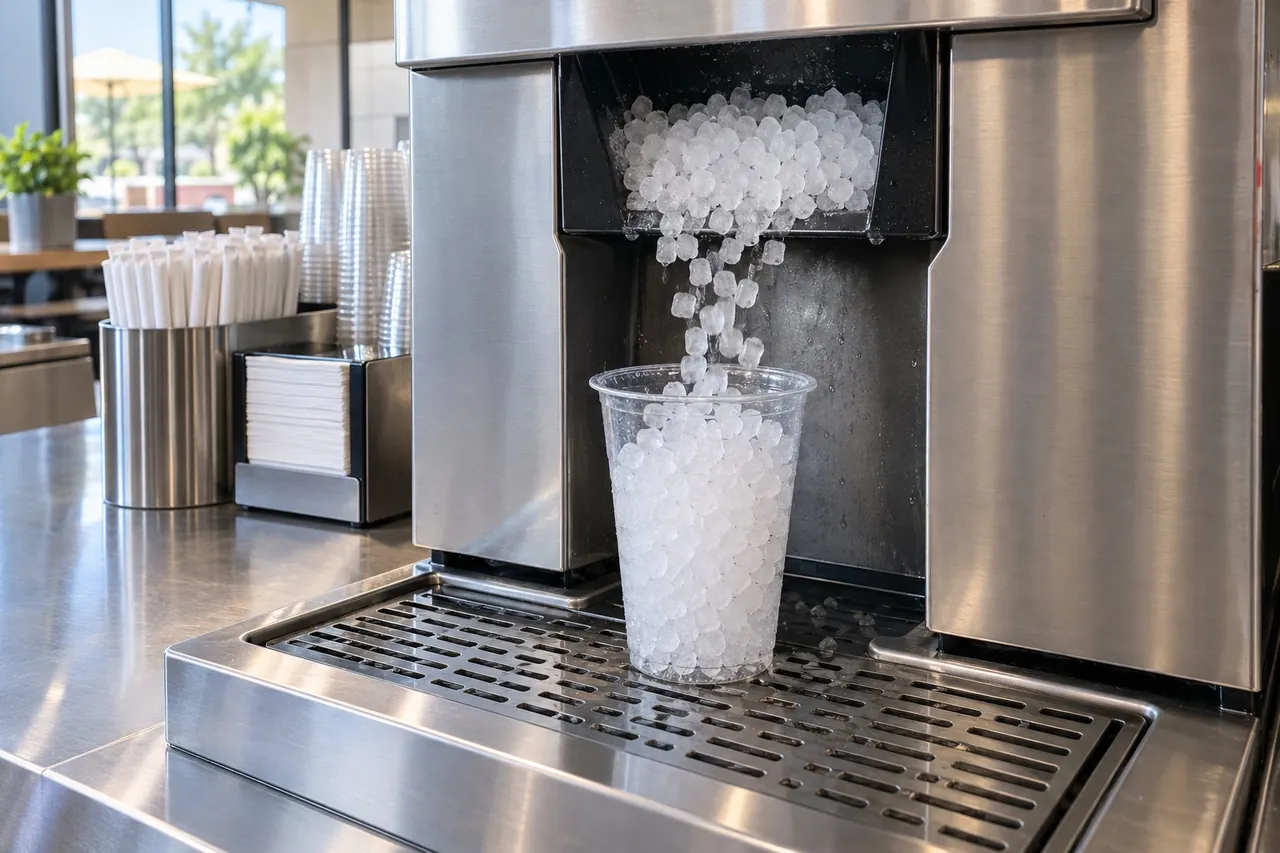
An undercounter nugget ice maker, also called an undercounter pellet ice maker or under counter pebble ice maker, uses an auger instead of a cube evaporator and usually draws less power per kilogram. Larger commercial nugget output, 150–500 kg (330–1,100 lb) per day, comes from Be There commercial nugget ice machines; see the nugget ice machine guide for how pellet ice is made.
An undercounter crushed ice maker is usually a flake or nugget machine, because crushing cubes by hand is slow. If you want crystal-clear cubes or spheres for cocktails, read our guide to clear ice and ice ball machines.
Water, power and certification: what to specify
Write these points on the order so the machine arrives ready to connect in your market.
| Item | Typical specification | Why it matters |
|---|---|---|
| Power | 115 V/60 Hz or 220–240 V/50 Hz, single phase, dedicated circuit | Wrong voltage or frequency damages the compressor |
| Water supply | Potable cold water, about 1.4–5.5 bar (20–80 psi), 3/8 in or 1/4 in connection | Low pressure gives small cubes; high pressure strains valves |
| Water filter | Sediment, taste and scale filter on the ice machine inlet | Cuts scale and cleaning frequency |
| Drain | Gravity line with air gap, or drain pump | Prevents backflow and flooding |
| Food safety | NSF/ANSI 12 (US) or local food-contact approval | Required by many health inspectors |
| Electrical safety | UL/ETL to UL 60335-2-89 (US/Canada) or CE (EU) | Needed for insurance and legal sale |
Hard water is the biggest enemy of small cube machines. Size the inlet filter by flow and capacity to match the machine's daily output, and change the cartridge at least every 6 months.
Finishes are mostly stainless steel ice maker cabinets (304 or 201 stainless on the door and sides), with black or panel ready ice maker doors on premium residential models. A stainless steel ice machine is the practical choice in a commercial bar because it tolerates wet cleaning and knocks.
Commercial undercounter ice maker vs a home built-in model
Search results for the best undercounter ice maker mix residential appliances with commercial equipment. They look similar but are built for different duty.
A commercial undercounter ice maker has a heavier compressor, a bin sized for service peaks, food-contact certification and easy access to the condenser and water system for cleaning. It is designed to run many hours a day for years. A residential built in ice machine, panel ready unit or ice maker drawer is quieter and better looking, but typically makes 11–27 kg (25–60 lb) a day and is meant for a household.
When is a home unit enough? For a private home bar, a small office or a guest lounge using under about 10 kg (22 lb) of ice a day, a good residential model is fine. For anything open to the public, or anywhere a health inspector will look, buy commercial equipment. An ice maker drawer for bar use in a restaurant is rarely a good idea: drawers store only a few kilograms and are hard to sanitise.
A refrigerator with built in ice maker or a combined undercounter refrigerator and ice maker saves space at home but cannot keep up with commercial drink service. In a bar, pair a dedicated ice machine with a separate back bar cooler.
Maintenance, lifespan and undercounter ice machine repair
A well-installed commercial undercounter ice machine typically lasts 7–10 years. Most failures that lead to an undercounter ice machine repair call are preventable.
- Descale and sanitise at least every 6 months, more often with hard water. Follow our step-by-step guide on how to clean a commercial ice machine.
- Clean the condenser every 1–3 months in kitchens and bars with grease, lint or dust.
- Replace the water filter every 6 months or at its rated volume.
- Check the drain: a blocked drain or a failed drain pump causes overflow and slime.
- Watch the cube size: thin or cloudy cubes usually point to low water pressure, scale or a dirty condenser.
For specific symptoms such as slow production, ice sticking together or water leaks, our ice machine troubleshooting guide lists the usual causes and fixes. Order a basic spare parts kit (water valve, pump, float or sensors, drain pump if fitted) with the machine if you are importing.
How to choose an undercounter ice machine: checklist
- Calculate daily demand with the ice machine size calculator, add 20% for peaks and correct for room temperature.
- Measure the opening: width, height under the counter and depth including connections.
- Pick the ice shape for your drinks: cube, half cube, crescent, nugget or flake.
- Confirm drainage: gravity with an air gap, or a drain pump.
- Choose the condenser: front-breathing air-cooled for built-in, water-cooled for very hot enclosed spaces.
- Check the bin: aim to store at least half your peak-period use.
- Specify utilities and certification: voltage, frequency, plug type, NSF/UL/CE as your market requires.
Be There supplies undercounter cube ice machines and larger modular units, quoted FOB, CIF or DDP. Send your daily demand, available width, ice shape and power supply through the quotation form and we will reply within one working day.