Short answer
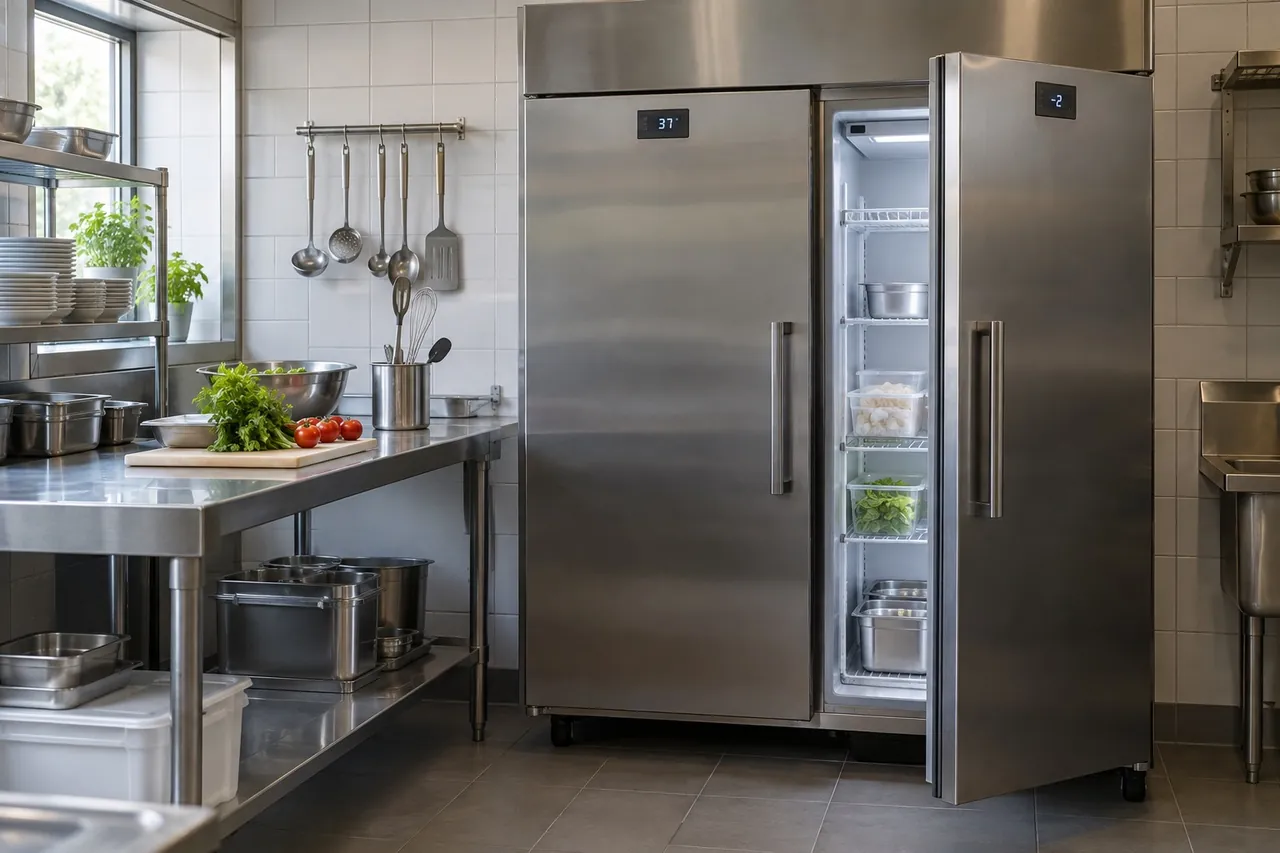
A commercial refrigerator freezer combo is one cabinet with two separately controlled compartments: a fridge at +1 °C to +4 °C (33–40 °F) and a freezer at −18 °C (0 °F) or colder. Two-section reach-in combos are typically 52–55 in (1,321–1,397 mm) wide with 40–49 cu ft in total, usually with a compressor for each side.
Key takeaways
- A refrigerator freezer combo keeps the fridge side at +1 °C to +4 °C (33–40 °F) and the freezer side at −18 °C (0 °F) or colder.
- Commercial two-section combos are usually 52–55 in (1,321–1,397 mm) wide and split total capacity roughly half and half.
- Combos save floor space, but separate units give redundancy: if one fails, the other keeps running.
- Many single-compressor home fridge freezers stop running the freezer properly in garages below about 10 °C (50 °F).
- Climate class SN, N, ST or T tells you the ambient range a fridge freezer is designed for; T covers 16–43 °C (61–109 °F).
What is a commercial refrigerator freezer combo?
A refrigerator freezer combo (also called a combination refrigerator freezer, dual-temperature reach-in or commercial fridge freezer) is a single cabinet split into two insulated compartments with their own doors and temperature control. The fridge side holds +1 °C to +4 °C (33–40 °F) for chilled food; the freezer side holds −18 °C (0 °F) or colder, typically down to about −22 °C (−8 °F) on commercial units.
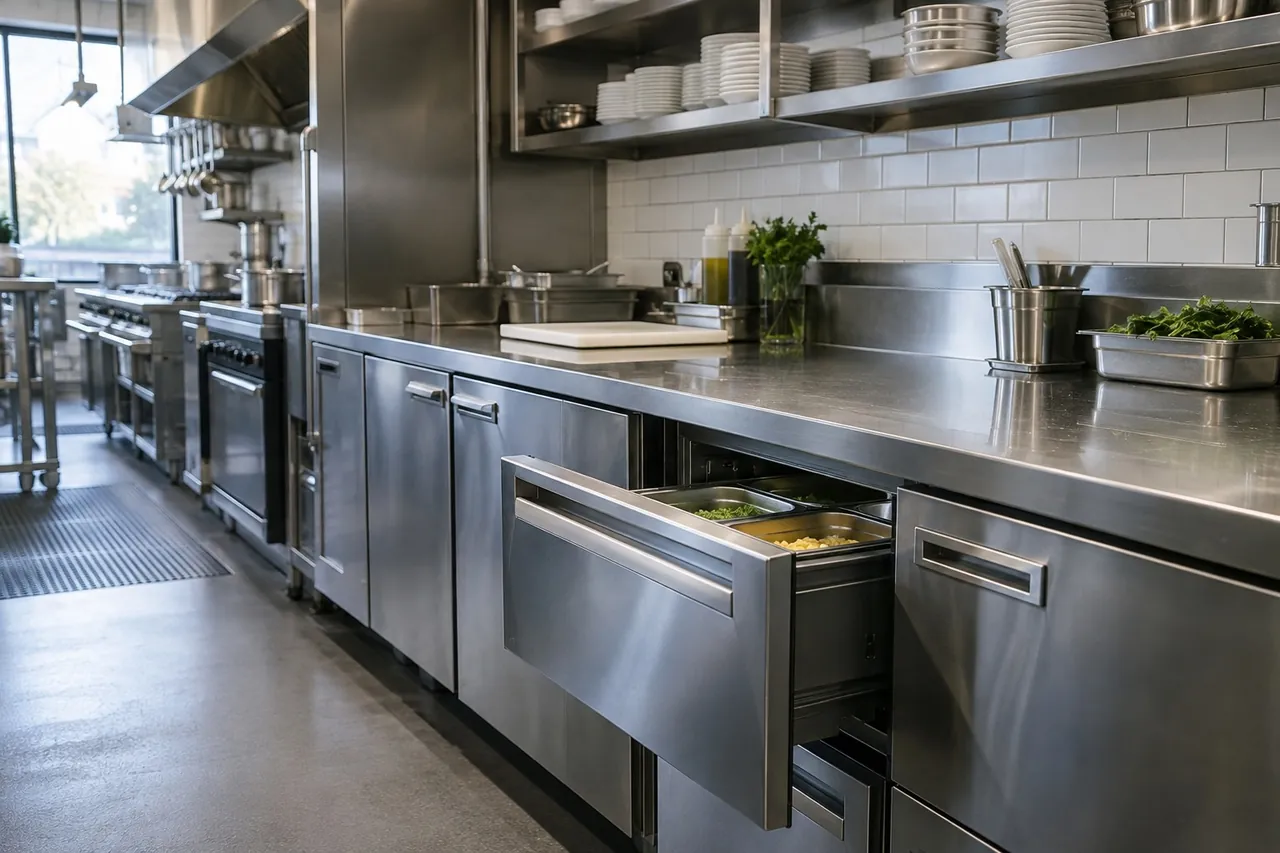
In the home market, refrigerator freezers are the norm: top freezer, bottom freezer, side-by-side or French door. In commercial kitchens they are less common, because most sites have room for a separate reach-in fridge and freezer, or a walk-in. The combo earns its place where floor space is tight: small cafés, kiosks, bars, staff canteens, food trucks, hotel pantries and satellite kitchens.
The best commercial combos use two refrigeration systems, one per compartment. That matters: a freezer and a fridge have very different loads, and with separate compressors a fault on one side does not take the other down. Cheaper and home units often use one compressor with a damper or a second evaporator, which is efficient but less robust under heavy door openings.
This guide covers layouts, combo vs separate units, sizing each side, outdoor and garage use, features and how to choose.
Types of fridge freezers: layouts compared
| Layout | Typical size | Where it fits | Notes |
|---|---|---|---|
| Commercial 2-section reach-in (half freezer half fridge) | 52–55 in (1,321–1,397 mm) wide, 78–84 in tall, 40–49 cu ft | Small kitchens, canteens | Usually one compressor per side |
| Commercial 3-section | 77–83 in (1,956–2,108 mm) wide, about 70 cu ft | Busier kitchens | Often 2 fridge + 1 freezer sections |
| Undercounter combo | 48–72 in wide, 30–34 in tall | Cook lines, bars | Small capacity per side |
| Bottom freezer | 24–33 in wide, 67–70 in tall | Homes, offices, staff rooms | Fridge at eye level |
| Top freezer | 24–33 in wide, 61–68 in tall | Homes, budget offices | Cheapest, efficient |
| Side-by-side (American fridge freezer style) | 33–36 in wide | Large homes | Tall, narrow freezer side |
| Compact 2-door | 18–24 in wide, 3–4.5 cu ft | Offices, dorms, hotel rooms | Separate freezer door |
| Chest freezer fridge (convertible) | Chest format | Garages, boats, off-grid | One temperature at a time, or dual-zone |
A bottom freezer layout puts the fridge, which you open far more often, at eye level; top-freezer models are the simplest and usually cheapest. A side-by-side gives the freezer more height but narrow shelves that struggle with large boxes or trays.
For commercial work, the two-section upright is the practical choice: full-size shelves on both sides, fan-forced cooling and a single footprint of about 1.3–1.4 m (52–55 in).
Fridge freezer combo vs separate refrigerator and freezer
Before you buy a combo, compare it with a matching refrigerator and freezer set standing side by side.
| Factor | Combo (one cabinet) | Separate fridge and freezer |
|---|---|---|
| Floor space | Smallest footprint for both temperatures | Two footprints, more side panels |
| Capacity | Split fixed, e.g. 50/50 | Choose each size independently |
| Redundancy | Shared cabinet, sometimes shared compressor | One failure leaves the other running |
| Purchase cost | Often lower than two units | Higher, but more choice |
| Flexibility | Cannot change the split later | Add, move or replace one unit |
| Delivery | One large item | Two smaller items, easier through doorways |
Choose a combo when floor space is the constraint and your fridge and freezer needs are similar in size. Choose a double fridge and freezer pair when one side is much bigger than the other, when uptime matters (losing a freezer full of stock costs more than the second unit), or when you will expand later.
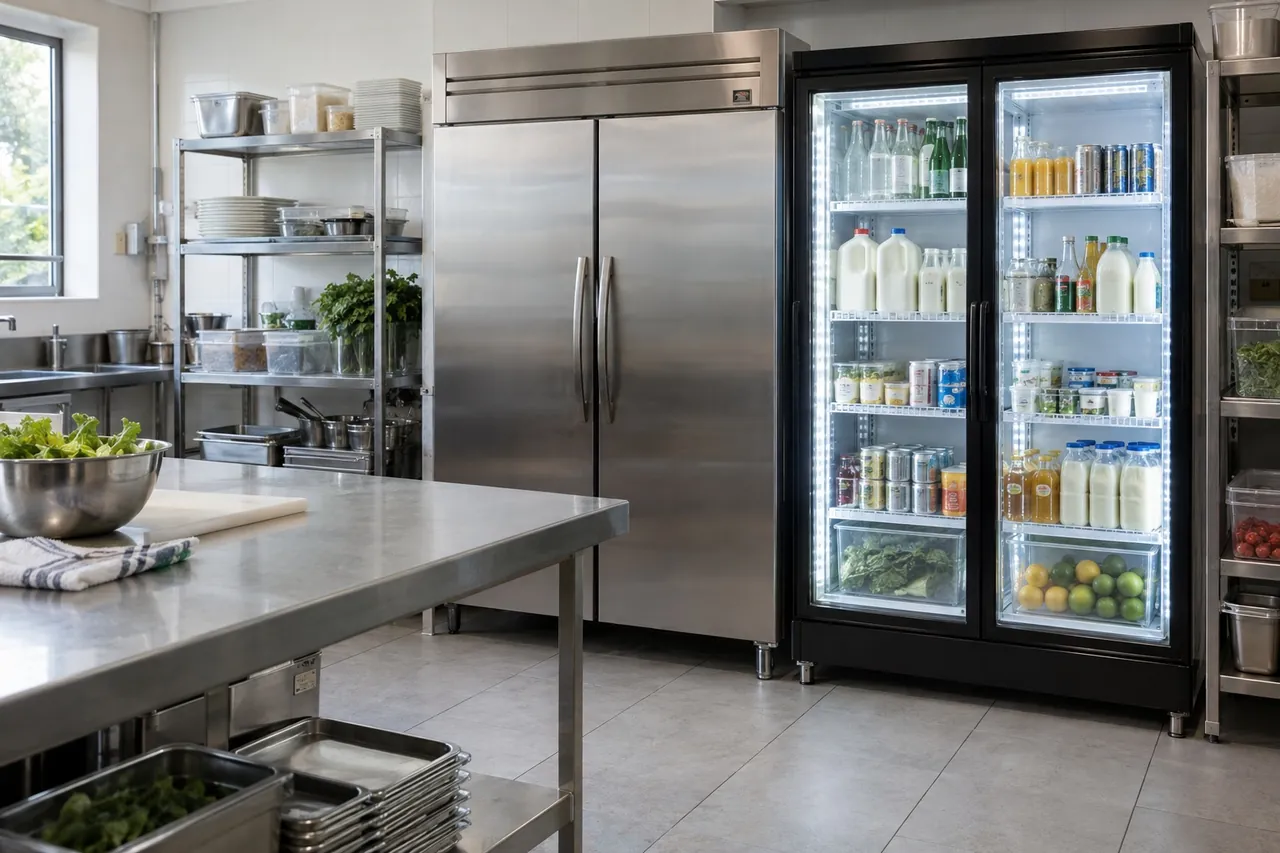
For retail, separate units are almost always better: a glass door display fridge for drinks next to a glass door display freezer for ice cream lets each run at the right temperature and lighting, and you can choose door counts independently.
How big should the freezer be? Sizing each side
Size each compartment from what you store between deliveries, not from the total capacity printed on the label.
- List chilled and frozen stock at peak, in litres or cases.
- Add 20–30% free space for airflow and deliveries.
- Compare the ratio. Most kitchens need two to three times more fridge than freezer space. If your freezer need is close to the fridge need, a half freezer half fridge combo fits. If you need a fridge freezer with large freezer space, consider a 3-section unit with two freezer doors, or separate cabinets.
Typical capacities: a compact 2-door unit holds 3–4.5 cu ft (85–130 L) in total; a home bottom freezer 12–22 cu ft (340–620 L), with the freezer about 30–35% of that; a commercial two-section reach-in 40–49 cu ft (1,130–1,390 L), split about 50/50. An extra large refrigerator freezer for a business is a three-section reach-in or, beyond about 2,000 L, a walk-in.
Mini fridge and freezer combo
Check the freezer’s star rating. Under the common star system, one star means about −6 °C (21 °F), two stars −12 °C (10 °F) and three or four stars −18 °C (0 °F). A single-door mini fridge with an internal ice box is usually one or two stars and is not a real freezer. For frozen food, choose a compact refrigerator with freezer 2 door design so the freezer has its own door and reaches −18 °C.
Outdoor fridge freezer and garage use: climate class matters
An outdoor fridge freezer (or fridge freezer outdoor kitchen unit) and a garage fridge and freezer face two problems: heat in summer and cold in winter.
| Climate class | Ambient range | Suitable for |
|---|---|---|
| SN (subnormal) | 10–32 °C (50–90 °F) | Cool, unheated rooms |
| N (normal) | 16–32 °C (61–90 °F) | Normal indoor rooms |
| ST (subtropical) | 16–38 °C (61–100 °F) | Warm kitchens and climates |
| T (tropical) | 16–43 °C (61–109 °F) | Hot climates, hot kitchens |
These classes come from the household refrigerator test standard (IEC 62552). A fridge freezer used outside its class may run constantly in heat or, in cold, stop running altogether.
The cold problem surprises many buyers. In a single-compressor fridge freezer, the thermostat is often in the fridge compartment. When a garage drops below about 10 °C (50 °F), the fridge is already cold, the compressor rarely runs, and the freezer warms up and thaws. Models marketed for garages add a heater or separate sensors to stop this. Units with one compressor per compartment avoid the issue.
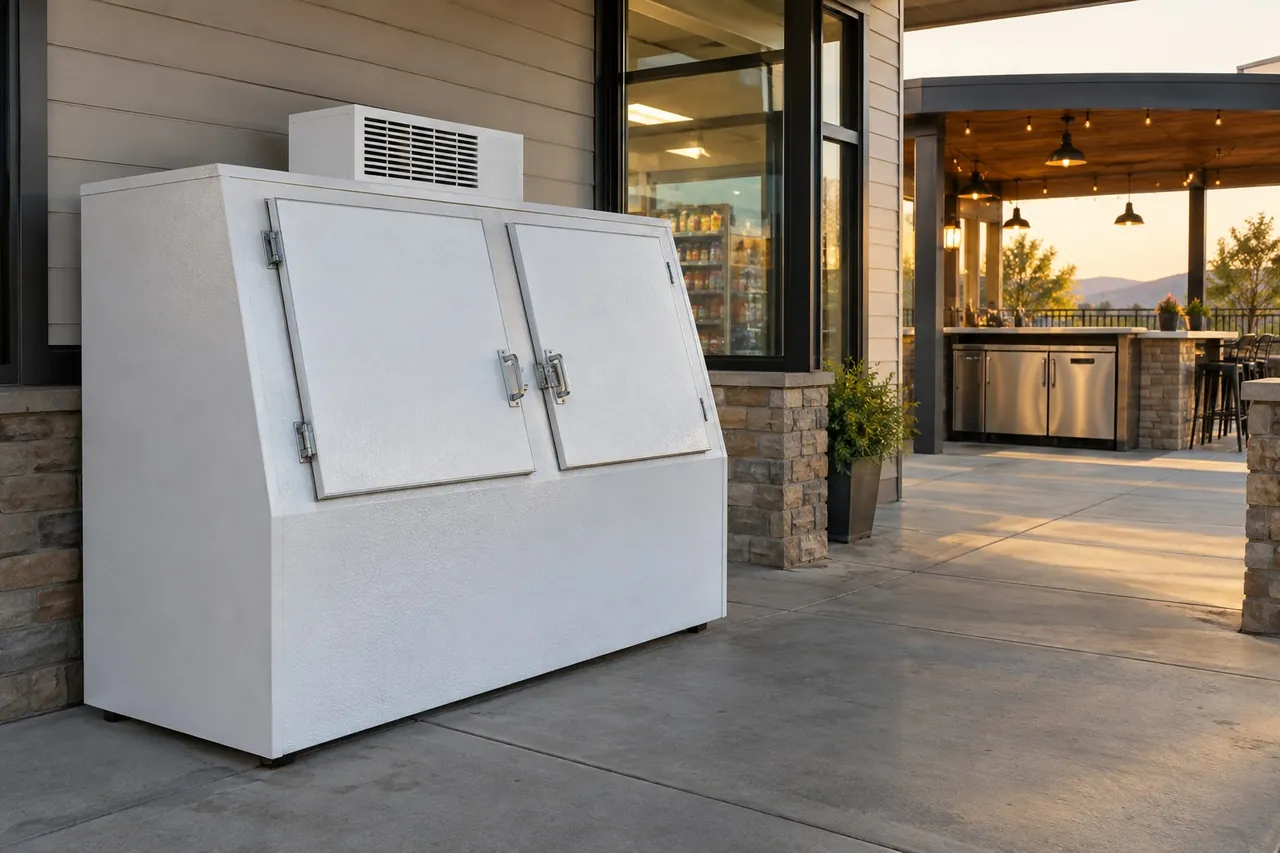
For true outdoor installation (patios, outdoor bars, fuel station forecourts), you also need weather-resistant stainless cabinets, sealed electrics and shade from direct sun. Read our outdoor refrigerators and freezers guide before buying, and check the warranty covers outdoor use.
Frost free fridge freezers, thermometers, locks and ice makers
Frost free vs manual defrost
A frost free fridge freezer uses a fan coil and timed defrost heater, so ice never builds up on shelves and the freezer side keeps its full capacity. Manual-defrost freezers are slightly colder and cheaper to run but need emptying and defrosting regularly. In commercial use, automatic defrost is standard on upright combos. Our frost-free vs manual defrost guide explains how each works.
Fridge freezer thermometer
Do not rely on the dial. Fit a digital freezer fridge thermometer or data logger in each compartment, or choose a controller with separate displays and high/low alarms. HACCP plans usually require temperatures recorded at least once per shift.
Locks
A lockable refrigerator freezer protects stock in shared kitchens, staff rooms and unattended sites. Commercial combos often have a key lock on each door.
Ice makers and water dispensers
A refrigerator with bottom freezer and ice maker, or a refrigerator freezer on bottom with water dispenser, makes a few kilograms of ice a day for a household. A business that needs ice for drinks should use a dedicated commercial ice machine instead; even a small undercounter unit makes tens of kilograms per day.
Glass door fridge freezer and retail display options
Shops, cafés and petrol stations often want a glass door fridge freezer so customers can see both chilled drinks and frozen products. There are three common approaches:
- Dual-temperature glass door cabinet. One cabinet, one fridge door and one freezer door. Compact, but the freezer glass needs heating to stop frosting, and the freezer section is small.
- Side-by-side pair. A glass door display fridge next to a glass door display freezer, matched in height and finish. Each can be one to four doors, so you size chilled and frozen space independently. This is the most flexible retail layout.
- Upright fridge plus glass top freezer. A glass top freezer (chest style with sliding glass lids) or open top freezer for ice cream and frozen novelties, beside an upright drinks fridge. Chest formats hold cold well because cold air stays in the well. A counter top freezer suits impulse ice cream at the till.
Be There supplies the side-by-side approach: upright glass door display refrigerators at +2 °C to +8 °C (36–46 °F) and display freezers at −18 °C to −24 °C (0 °F to −11 °F), with one to four heated glass doors (about 400–1,600 L) or glass-top chest models from about 300 to 700 L. Ordering both together lets us match heights, finishes and lighting.
Walk-in refrigerator and freezer combo, and truck fridge freezers
Once you need more than about 2,000 L at each temperature, cabinets become expensive per litre. Two larger options exist.
Walk-in refrigerator and freezer combo
A combination walk-in is a single insulated box divided by an insulated partition into a cooler room (0 °C to +5 °C, 32–41 °F) and a freezer room (−18 °C to −25 °C, 0 °F to −13 °F), each with its own door, condensing unit and evaporator. A common layout enters the freezer through the cooler, which shields the freezer door from warm kitchen air. The freezer side needs thicker panels (typically 120–150 mm) and an insulated, heave-protected floor. Our walk-in cold room kits are built to your dimensions and temperatures, including divided cooler-freezer rooms.
Truck fridge freezer
For deliveries, a multi-temperature truck body has an insulated bulkhead separating chilled and frozen compartments, with a multi-temperature unit or separate evaporators. Be There's truck refrigeration units hold −20 °C to +15 °C (−4 °F to 59 °F) for boxes of 4–45 m³; tell us your compartment layout and we will confirm which configurations suit it. A small 12/24 V portable refrigerator freezer for a driver's cab is a separate, consumer-type product and is not what we supply.
How to choose a refrigerator freezer combo: checklist
- Combo or separate? Combo if space is tight and both needs are similar; separate if one side is much bigger, uptime matters or you are building a retail display.
- Size each side from peak stock plus 20–30% free space.
- Temperatures: fridge +1 °C to +4 °C (33–40 °F); freezer −18 °C (0 °F) or colder.
- Refrigeration: one compressor per compartment for commercial use.
- Ambient: climate class or ambient rating matched to your hottest and coldest days, especially in garages and outdoors.
- Features: automatic defrost, digital controls with alarms, locks, castors.
- Certification and power: NSF/ANSI 7 and UL/ETL in the US, CE elsewhere; voltage, frequency and refrigerant (R290 where accepted).
If you are after bargain fridge freezers for sale for a home, a mainstream residential model will usually be cheaper and quieter than commercial equipment. For businesses that need display, Be There supplies matched commercial display refrigerators and display freezers, plus walk-in cold rooms and truck units. Send your layout, temperatures, voltage and destination through our inquiry form for a quotation (FOB, CIF or DDP).