
Short answer
The temperature danger zone is 5–57 °C (41–135 °F) under the FDA Food Code (USDA uses 40–140 °F). TCS foods, such as meat, poultry, dairy, eggs, cooked rice and cut melons, must be held cold at 5 °C (41 °F) or below or hot at 57 °C (135 °F) or above, and kept in the danger zone no longer than the code's time limits.
Key takeaways
- The FDA Food Code danger zone is 5–57 °C (41–135 °F); USDA FSIS uses 4–60 °C (40–140 °F).
- Cold holding for TCS food is 5 °C (41 °F) or below; hot holding is 57 °C (135 °F) or above.
- Cold TCS deliveries should arrive at 5 °C (41 °F) or below; hot TCS deliveries at 57 °C (135 °F) or above.
- Ready-to-eat TCS food held cold over 24 hours must be date-marked and used within 7 days.
- USDA advises discarding perishable food left out over 2 hours, or 1 hour above 32 °C (90 °F).
- Freezing at −18 °C (0 °F) stops bacterial growth but does not kill most bacteria.
What is the temperature danger zone?
The food temperature danger zone is the range in which harmful bacteria grow fastest: 5–57 °C (41–135 °F) under the FDA Food Code, which governs restaurants and retail food businesses in the US. USDA FSIS consumer guidance uses a slightly wider, rounded range of 4–60 °C (40–140 °F). In this range some bacteria can double in number in about 20 minutes.
Food safety rules for businesses are built around keeping TCS food out of the danger zone, or limiting the time it spends there. Cold food must be held at 5 °C (41 °F) or below, hot food at 57 °C (135 °F) or above, and food passing through the zone, during cooling, thawing, preparation or display, must do so within set time limits.
| Temperature | What happens | Rule for businesses (FDA Food Code) |
|---|---|---|
| 74 °C (165 °F) and above | Most vegetative bacteria killed quickly | Cook poultry, stuffing; reheat food for hot holding |
| 57 °C (135 °F) and above | Bacteria do not grow | Hot holding |
| 5–57 °C (41–135 °F) | Danger zone: rapid growth, fastest around 21–52 °C (70–125 °F) | Limit time; cool, thaw and prepare quickly |
| 5 °C (41 °F) and below | Growth slowed; some bacteria such as Listeria still grow slowly | Cold holding; date-mark ready-to-eat food (max 7 days) |
| −18 °C (0 °F) and below | Growth stops; most bacteria survive | Frozen storage |
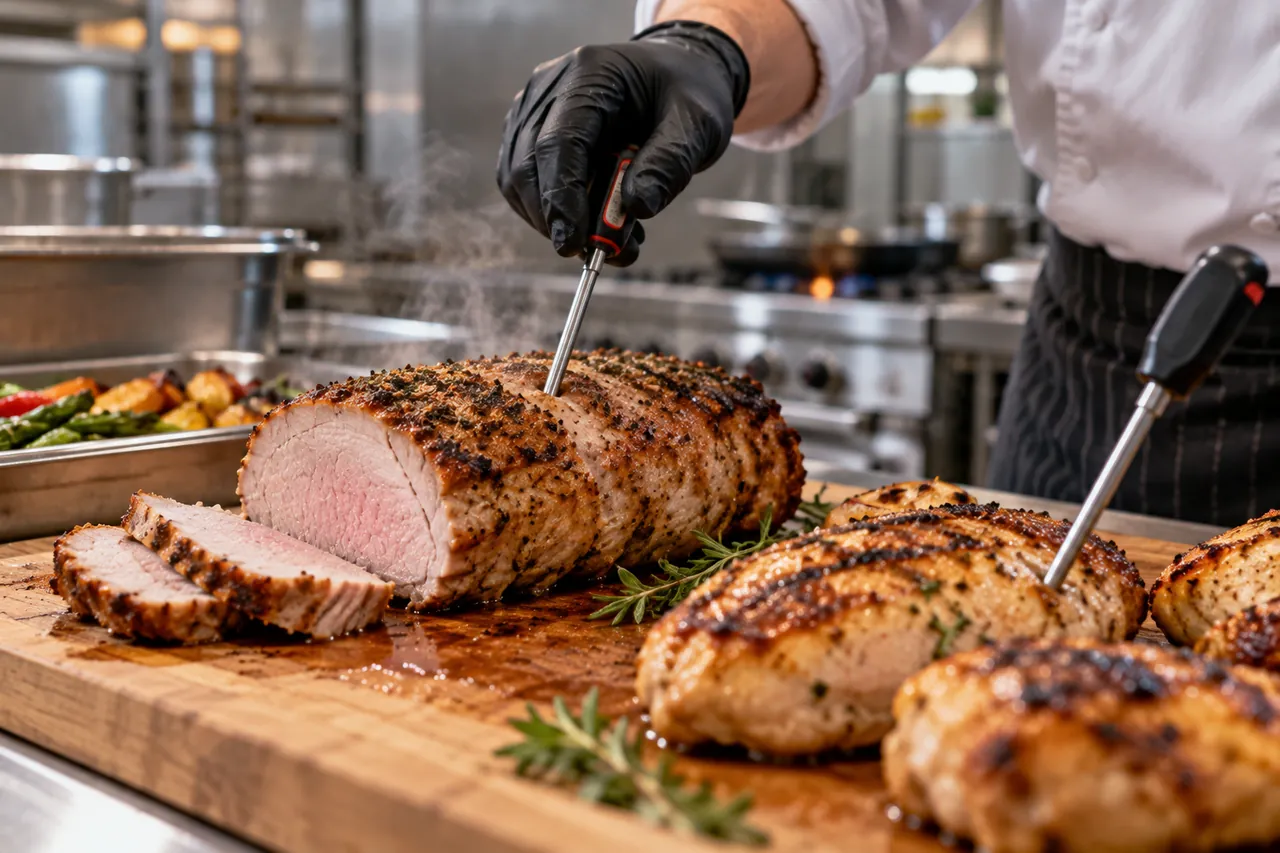
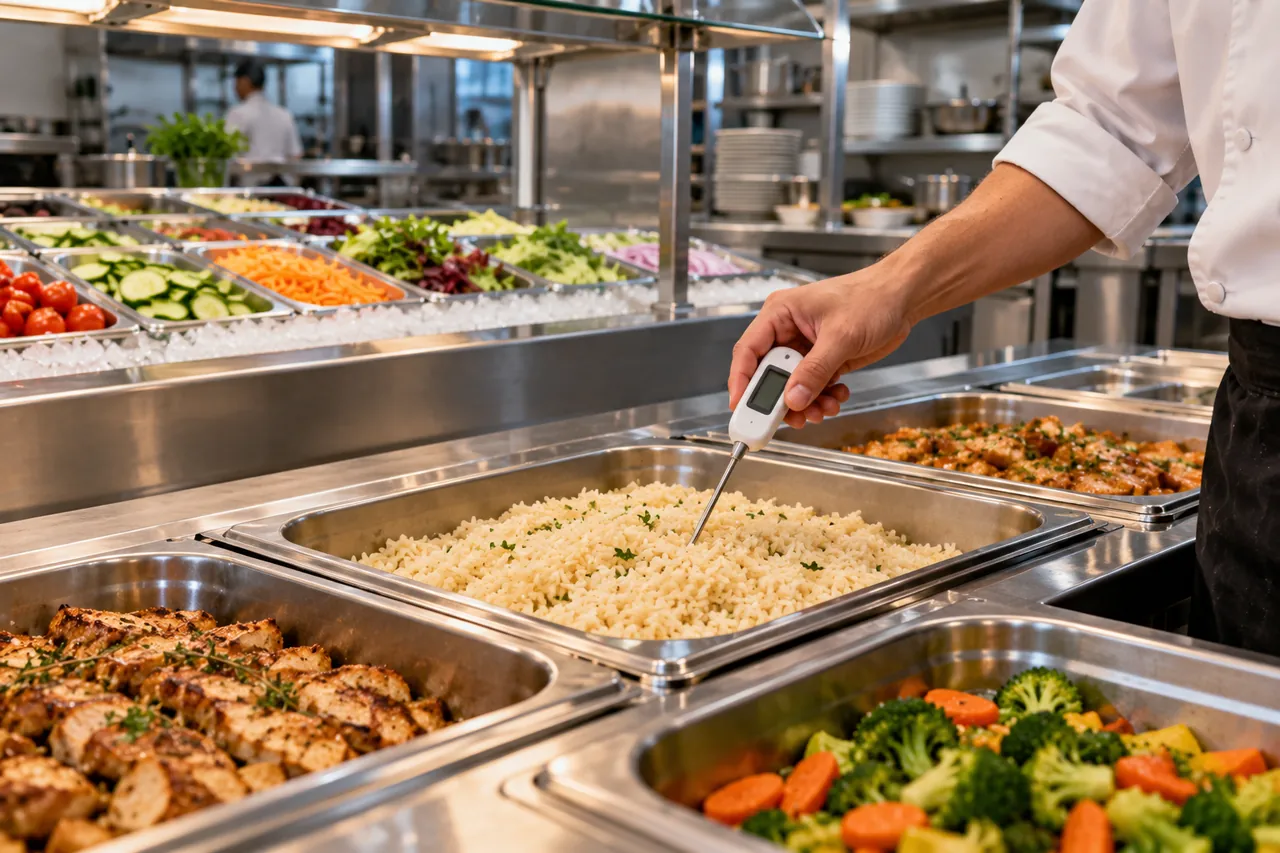
The danger zone is about food temperature, not the air around it. That is why every rule below assumes you measure the food itself with a calibrated probe; see our food temperature probe guide.
What is TCS food?
TCS stands for time/temperature control for safety. A TCS food is one that needs time and temperature control to limit the growth of pathogens or the formation of toxins, usually because it is moist, contains protein or carbohydrate and has a near-neutral pH. The term replaced "potentially hazardous food" (PHF) in the FDA Food Code.
What food items need time and temperature control for safety?
- Milk and dairy products, including soft cheeses and cream-based desserts.
- Shell eggs (except those treated to destroy Salmonella) and egg dishes.
- Meat, poultry, fish, shellfish and crustaceans, raw or cooked.
- Cooked plant foods: rice, pasta, beans, potatoes (including baked potatoes) and vegetables.
- Tofu and other soy protein foods.
- Sprouts and sprout seeds.
- Cut melons, cut tomatoes and cut leafy greens.
- Untreated garlic-in-oil mixtures.
What is the difference between TCS and non-TCS foods?
Non-TCS foods are safe at room temperature because their water activity, acidity or processing stops pathogens growing: bread, dry pasta and rice before cooking, most hard cheeses, jams, unopened canned food, whole uncut fruit and vegetables, and most dry goods. A food can change category: dry rice is non-TCS, cooked rice is TCS; a whole tomato is non-TCS, a sliced tomato is TCS. When in doubt, the FDA Food Code uses pH and water activity (aw) tables to decide, and products with aw of 0.88 or lower, or pH of 4.2 or lower, are generally non-TCS.
What is the cold holding temperature for TCS food?
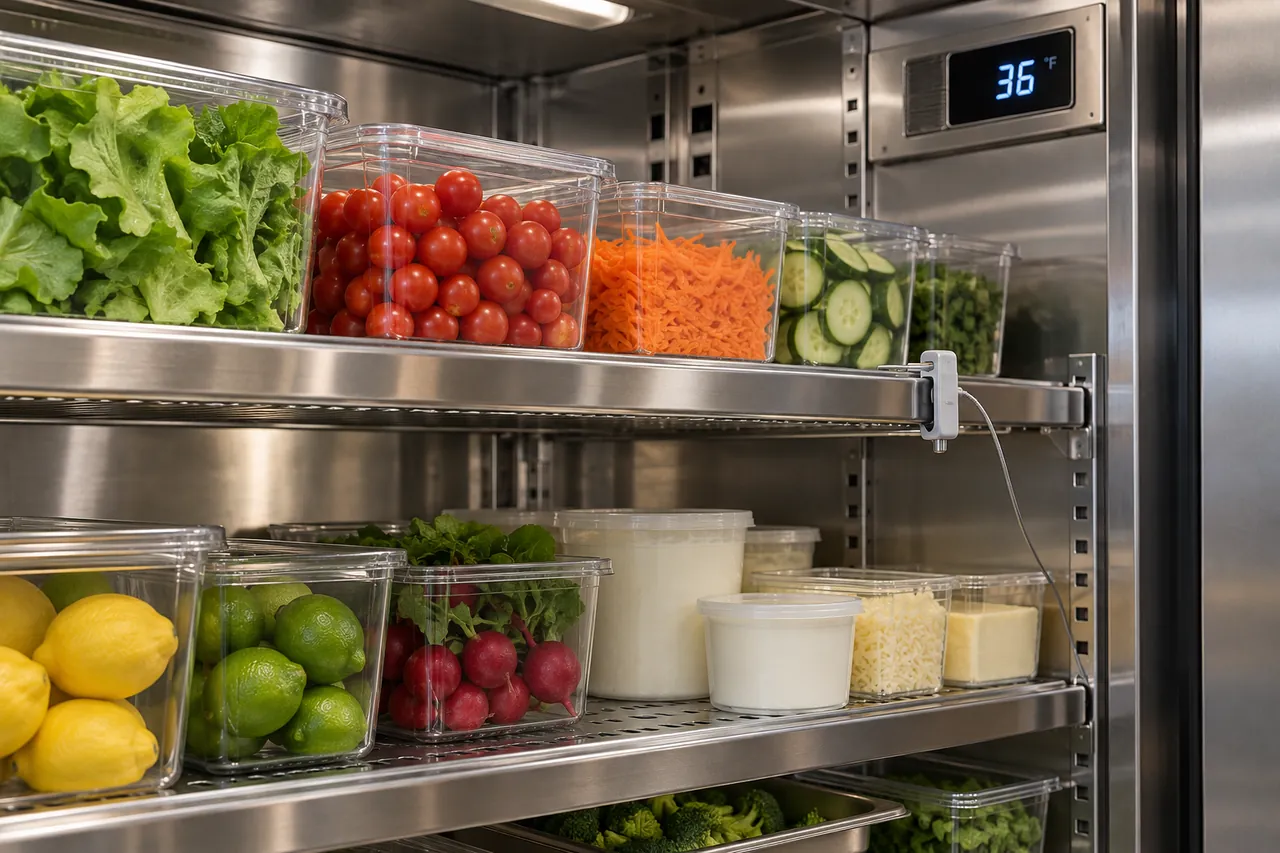
The cold holding temperature for TCS food is 5 °C (41 °F) or below under the FDA Food Code. Fridges, display cases, prep tables and walk-in coolers should be set lower, typically +1 °C to +4 °C (34–39 °F), so the food stays below 5 °C even with door openings and loading.
Ready-to-eat TCS food that is prepared on site and held cold for more than 24 hours must be date-marked and used within 7 days at 5 °C (41 °F) or below, counting the day of preparation as day 1. Cold holding equipment needs a thermometer accurate to ±1.5 °C (±3 °F) placed in the warmest part of the unit.
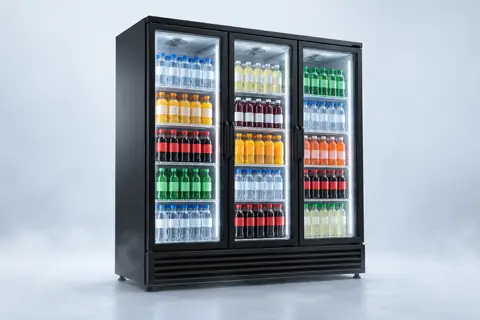
In display, the main risks are overloading past the load line, warm food put in to cool, and glass door or open merchandisers in hot shops. A commercial display refrigerator rated for the shop's climate class and loaded below its line will hold +2 °C to +5 °C (36–41 °F). Settings by equipment are listed in our guide to what temperature a fridge and freezer should be.
At what minimum temperature must hot TCS food be held?
Hot TCS food must be held at 57 °C (135 °F) or above under the FDA Food Code. Some local codes and many operators use 60–63 °C (140–145 °F) as a safety margin.
Hot holding equipment is designed to hold, not to heat. TCS food that was cooked, cooled and is then reheated for hot holding must reach 74 °C (165 °F) for 15 seconds within 2 hours. Commercially processed, ready-to-eat food from an intact package can be reheated to 57 °C (135 °F). Check hot-held food with a probe at least every 2 hours; that gives time to reheat food that has dropped below 57 °C before it has been in the danger zone for long.
What is the correct temperature for receiving cold TCS food?
Cold TCS food should be received at 5 °C (41 °F) or below, hot TCS food at 57 °C (135 °F) or above, and frozen food frozen solid with no signs of thawing. A calibrated probe thermometer is the item that must be available when receiving cold TCS food.
| Delivery | Accept at | Reject if |
|---|---|---|
| Cold TCS food (meat, poultry, dairy, salads) | 5 °C (41 °F) or below | Above 5 °C, unless a code exception applies |
| Milk (FDA Food Code exception) | 7 °C (45 °F) or below, then cooled to 5 °C within 4 hours | Above 7 °C (45 °F) |
| Raw shell eggs | Delivered in refrigerated transport with air at 7 °C (45 °F) or below | Warm truck, cracked or dirty eggs |
| Live shellfish | Per shellfish rules and tags; typically air at 7 °C (45 °F) | Missing tags, open or dead shellfish |
| Hot TCS food | 57 °C (135 °F) or above | Below 57 °C |
| Frozen food | Frozen solid, ideally −18 °C (0 °F) or colder | Fluid or water stains, ice crystals or frozen liquid in the box (signs of thaw and refreeze) |
Probe between two packages for a quick check, or open one package and probe the food itself for a definitive reading. Record receiving temperatures in your log. Where possible, ask the supplier for the vehicle's temperature record; refrigerated trucks hold −20 °C to +15 °C (−4 °F to 59 °F) depending on load, as explained in our guide to reefer trucks.
How long can TCS food stay in the danger zone?
USDA FSIS guidance is that perishable food should not be left in the danger zone for more than 2 hours in total, or 1 hour if the air is above 32 °C (90 °F). For businesses, the FDA Food Code sets specific limits for cooling, and allows "time as a public health control" with written procedures.
- Cooling cooked food: from 57 °C (135 °F) to 21 °C (70 °F) within 2 hours, and to 5 °C (41 °F) or below within 6 hours in total. This is the 2-stage cooling method.
- Cooling food made from room-temperature ingredients, such as canned tuna salad: to 5 °C (41 °F) within 4 hours.
- Time as a public health control, 4-hour option: food taken out of temperature control can be served or sold for up to 4 hours, then must be discarded.
- Time as a public health control, 6-hour option for cold food: food starting at 5 °C (41 °F) or below can be held without refrigeration for up to 6 hours, provided it never exceeds 21 °C (70 °F), then discarded.
- Raw meat at room temperature: do not leave it out to thaw on the bench. Thaw in a fridge at 5 °C or below, under cold running water at 21 °C (70 °F) or below, in a microwave immediately before cooking, or as part of cooking.
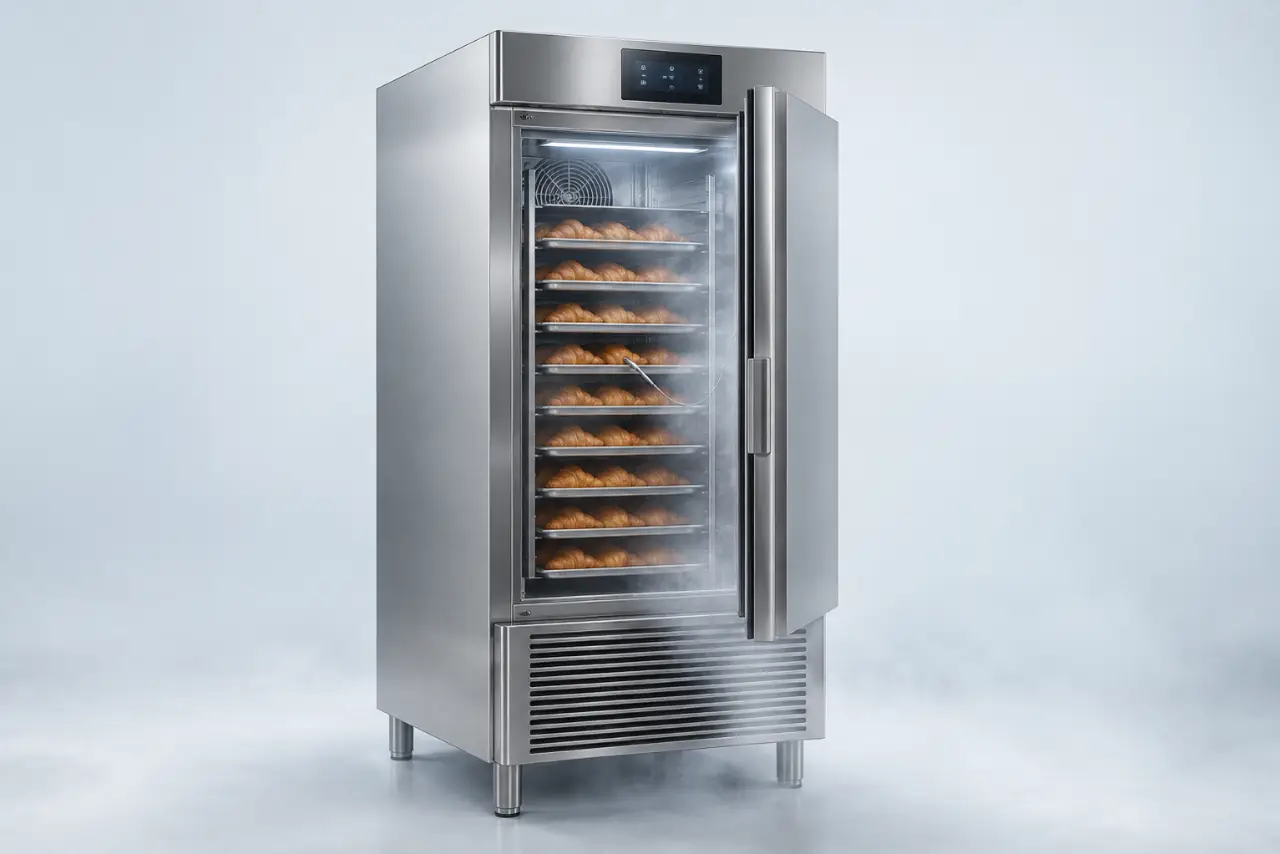
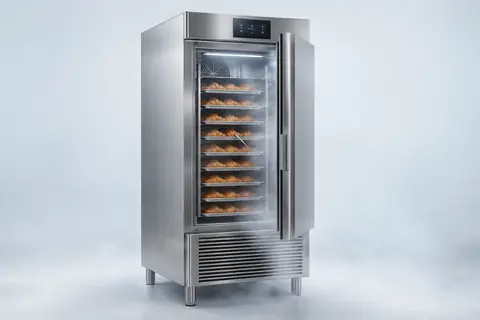
The quickest way to get large batches of cooked food through the danger zone is a blast chiller, which brings food from +70 °C to +3 °C (158 °F to 37 °F) in about 90 minutes, well inside the 2-hour first stage.
Does freezing food kill bacteria?
No. Freezing food to −18 °C (0 °F) stops bacteria from growing but does not kill most of them; when the food thaws, surviving bacteria start to multiply again. Freezing is a way to pause spoilage and pathogen growth, not to make contaminated food safe.
Freezing does kill parasites in fish if done long enough. The FDA Food Code requires fish to be eaten raw or undercooked, such as sushi, to be frozen to −20 °C (−4 °F) or below for 7 days, or to −35 °C (−31 °F) until solid and held at −35 °C for 15 hours, or at −20 °C for 24 hours. Commercial blast freezers are used to meet these schedules. Freezing does not destroy viruses such as norovirus or hepatitis A, nor bacterial toxins already formed in food.
Frozen food should be stored at −18 °C (0 °F) or colder; see our cold storage temperature chart for ideal temperatures by product.
How do you ship or mail perishable TCS food?
To mail perishable food, pack it cold or frozen in an insulated box with enough gel packs or dry ice to keep it at 5 °C (41 °F) or below, or frozen, for the whole journey, and use overnight or next-day delivery. Label the parcel "Perishable" and tell the recipient when it will arrive.
- Pre-chill or freeze the food to its target temperature before packing.
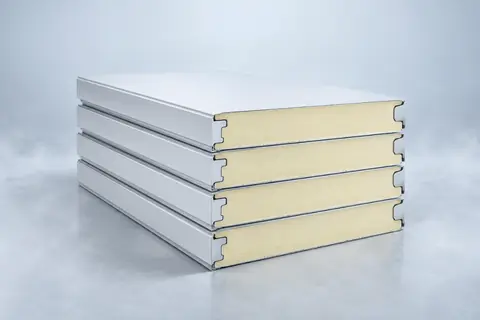
- Use an insulated shipper with a wall thickness of about 25–50 mm (1–2 in) inside a strong outer carton.
- Add gel packs for chilled food, or dry ice for frozen food, and fill air gaps.
- Follow carrier and air transport rules for dry ice, including labelling and venting.
- Ship early in the week so parcels do not sit in a depot over a weekend.
Full methods are in our guide to how to ship frozen food.
TCS food safety checklist for cold and hot holding
Keeping TCS food safe comes down to equipment that holds temperature, thermometers that read correctly and records that show it.
- Set fridges, prep tables and display cases to +1 °C to +4 °C (34–39 °F) so food stays at or below 5 °C (41 °F).
- Hold hot food at 57 °C (135 °F) or above; reheat to 74 °C (165 °F) within 2 hours before hot holding.
- Check and record food temperatures at receiving and at least every 2–4 hours during holding.
- Cool cooked food through the danger zone using the 2-stage method, shallow pans or a blast chiller.
- Date-mark ready-to-eat TCS food held over 24 hours and use within 7 days.
- Calibrate probe thermometers weekly and keep equipment thermometers accurate to ±1.5 °C (±3 °F).
- Store frozen food at −18 °C (0 °F) or colder; remember freezing does not kill bacteria.
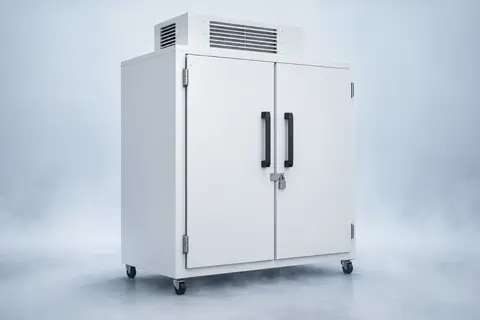
Be There supplies the cold side of this checklist: glass door display refrigerators holding +2 °C to +8 °C, blast chillers and shock freezers from 5 to 20 trays, and walk-in cold rooms with digital controllers. Send your products, daily volumes and voltage through the inquiry form and we will quote FOB, CIF or DDP.