

Short answer
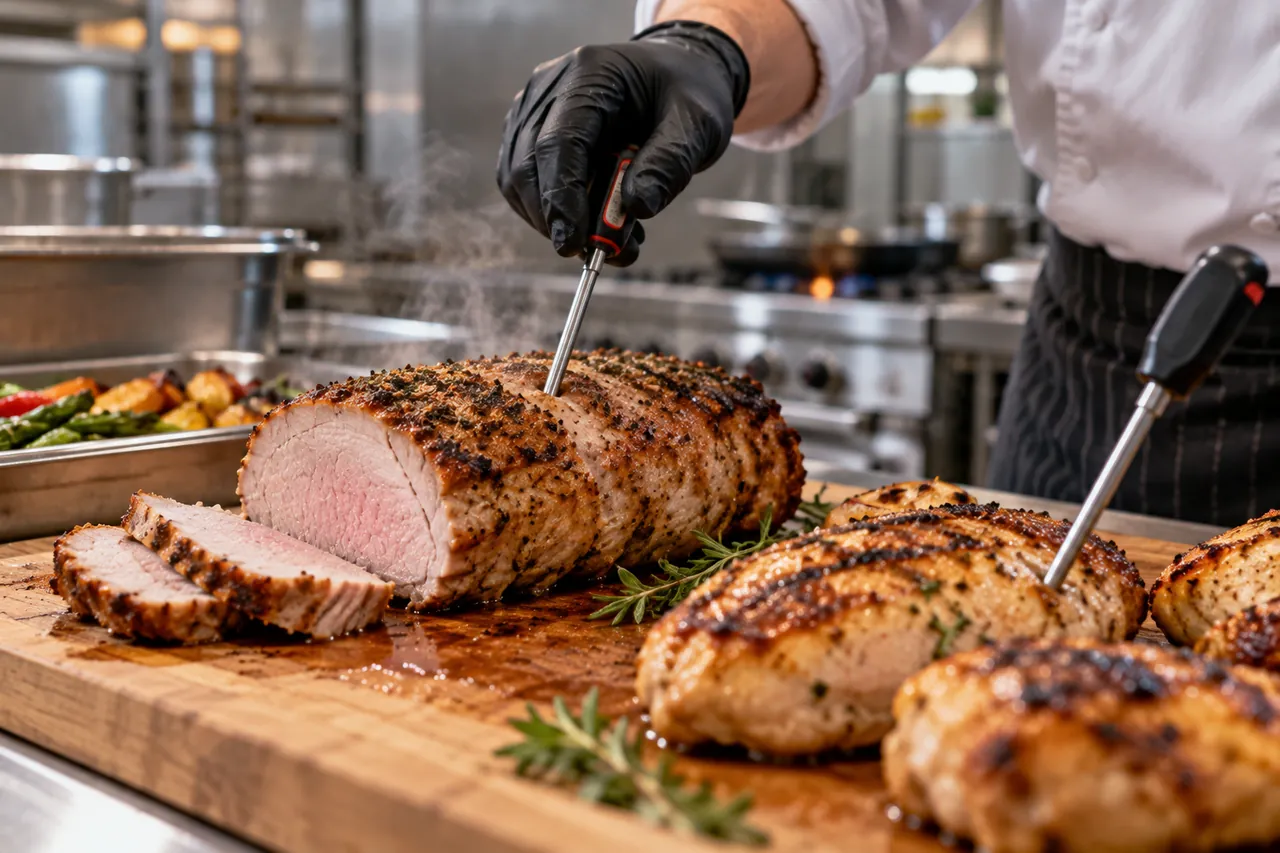
Safe internal cooking temperatures, per USDA FSIS, are 74 °C (165 °F) for all poultry and stuffing, 71 °C (160 °F) for ground beef, pork, veal and lamb, 63 °C (145 °F) with a 3-minute rest for whole cuts of beef, pork, veal and lamb, and 63 °C (145 °F) for fish. Measure in the thickest part, away from bone.
Key takeaways
- Cook all poultry, ground poultry and stuffing to 74 °C (165 °F).
- Cook ground beef, pork, veal and lamb to 71 °C (160 °F); the FDA Food Code allows 68 °C (155 °F) for 17 seconds.
- Whole cuts of beef, pork, veal and lamb are safe at 63 °C (145 °F) with a 3-minute rest.
- Fish is safe at 63 °C (145 °F) or when the flesh is opaque and flakes easily.
- Probe a turkey in the thickest part of the thigh, the breast and the wing joint, avoiding bone.
- Cool cooked food from 57 °C to 21 °C (135 °F to 70 °F) within 2 hours and to 5 °C (41 °F) within 6 hours.
What are the safe internal cooking temperatures?
Safe internal cooking temperatures are the minimum temperatures, measured with a food thermometer in the thickest part of the food, that destroy harmful bacteria. USDA FSIS sets 74 °C (165 °F) for all poultry, 71 °C (160 °F) for ground meat, 63 °C (145 °F) with a 3-minute rest for whole cuts of beef, pork, veal and lamb, and 63 °C (145 °F) for fish.
| Food | Minimum internal temperature (USDA FSIS) | Rest time |
|---|---|---|
| Beef, veal, lamb: steaks, chops, roasts | 63 °C (145 °F) | 3 minutes |
| Pork: chops, tenderloin, roasts | 63 °C (145 °F) | 3 minutes |
| Fresh or smoked raw ham | 63 °C (145 °F) | 3 minutes |
| Fully cooked ham, reheated (from USDA-inspected plant) | 60 °C (140 °F) | None |
| Ground beef, pork, veal, lamb (burgers, sausages, meatballs) | 71 °C (160 °F) | None |
| Ground poultry (turkey and chicken burgers) | 74 °C (165 °F) | None |
| Poultry: whole, breasts, legs, thighs, wings, giblets | 74 °C (165 °F) | None |
| Stuffing (cooked alone or in a bird) | 74 °C (165 °F) | None |
| Fish with fins | 63 °C (145 °F), or flesh opaque and separates easily | None |
| Shrimp, lobster, crab, scallops; clams, oysters, mussels | Flesh pearly and opaque; shells open | None |
| Egg dishes, casseroles with egg | 71 °C (160 °F) | None |
| Leftovers and casseroles | 74 °C (165 °F) | None |
The rest time matters. During a 3-minute rest, the temperature stays constant or keeps rising and continues to kill pathogens, which is why a whole pork loin or beef steak is safe at 63 °C (145 °F) while ground meat, where surface bacteria are mixed right through, needs 71 °C (160 °F).
What cooking temperatures does the FDA Food Code require for restaurants?
Restaurants and retail food businesses in the US follow the FDA Food Code, which uses temperature-and-time combinations rather than the single consumer figures. The results are equivalent in safety, but inspectors check against these values.
| Food (FDA Food Code) | Minimum internal temperature and time |
|---|---|
| Poultry; stuffed meat, fish, pasta or poultry; stuffing containing meat; wild game | 74 °C (165 °F) for less than 1 second (instantaneous) |
| Ground or comminuted meat and fish; injected or mechanically tenderised meat; eggs for hot holding | 68 °C (155 °F) for 17 seconds (or 66 °C / 150 °F for 1 minute, or 70 °C / 158 °F for less than 1 second) |
| Fish, meat steaks and chops, commercially raised game; shell eggs cooked for immediate service | 63 °C (145 °F) for 15 seconds |
| Whole roasts of beef, pork, lamb, corned beef and ham | 63 °C (145 °F) for 4 minutes, or lower temperatures held longer per the Food Code roast table |
| Fruits and vegetables cooked for hot holding | 57 °C (135 °F) |
| Raw animal foods cooked in a microwave | 74 °C (165 °F), then covered and left to stand 2 minutes |
| Reheating cooked and cooled food for hot holding | 74 °C (165 °F) for 15 seconds within 2 hours |
158 vs 165 degrees for a burger patty?
For a beef or pork burger patty, 158 °F (70 °C) is enough under the FDA Food Code (instantaneous) and 160 °F (71 °C) is the USDA consumer figure. 165 °F (74 °C) is the temperature for poultry, including turkey and chicken burgers. Cooking a beef burger to 165 °F is safe but drier. Many local codes allow restaurants to serve undercooked burgers or steaks on request with a written consumer advisory, but not to highly susceptible groups such as children in care or hospital patients.
What is the safe internal temperature for pork?
The safe pork internal temp for whole cuts, including chops, tenderloin and roasts, is 63 °C (145 °F) followed by a 3-minute rest. Ground pork and pork sausage must reach 71 °C (160 °F).
At 63 °C (145 °F) pork is still slightly pink in the centre and juicy; the old advice of 71 °C or higher for all pork came from a time when Trichinella was common in pigs. For a pork roast temperature check, probe the centre of the thickest part, away from bone and fat; for a pork chop temperature reading, insert the probe from the side into the centre. A large roast will rise another 3–5 °C (5–10 °F) during resting as heat moves inward, so many kitchens remove it from the oven at about 60 °C (140 °F) and let carryover cooking finish the job. Always confirm the final temperature.
What is the safe internal temperature for burgers and ground beef?
The safe burger internal temperature for beef, pork, veal or lamb is 71 °C (160 °F) under USDA guidance, or 70 °C (158 °F) instantaneous for food businesses under the FDA Food Code. Turkey and chicken burgers need 74 °C (165 °F). The safe ground beef temperature is the same whether the meat is a patty, meatball or meatloaf.
| Burger doneness | Internal temperature | Meets USDA safe temperature for ground beef? |
|---|---|---|
| Rare | 49–52 °C (120–125 °F) | No |
| Medium-rare | 54–57 °C (130–135 °F) | No |
| Medium | 60–63 °C (140–145 °F) | No |
| Medium-well | 65–68 °C (150–155 °F) | No (68 °C for 17 s meets the Food Code) |
| Well done | 71 °C (160 °F) and above | Yes |
Colour is not a reliable guide: USDA research has shown that ground beef can turn brown before reaching a safe temperature, and can stay pink after it. Check every batch with a thin-tip thermometer pushed in from the side of the patty to the centre. Grill burgers over medium-high heat, roughly 200–230 °C (400–450 °F) at the grate, so the centre reaches temperature before the outside burns.
Where do you put a thermometer in a turkey or chicken?
Put the thermometer in the thickest part of the thigh, close to but not touching the bone, and also check the thickest part of the breast and the innermost part of the wing. Every location must reach 74 °C (165 °F); the internal turkey temperature in the breast often rises faster than in the thigh.
- Whole turkey or chicken: insert the probe into the inner thigh near the body, angled toward the hip joint, avoiding bone. Then check the thickest part of the breast from the neck end, horizontally, and the wing joint.
- Stuffing: probe the centre of the stuffing; it must also reach 74 °C (165 °F). USDA advises cooking stuffing separately for even, faster heating.
- Chicken breast: insert the probe horizontally from the side into the thickest part, so the tip sits in the centre and not through to the pan.
- Thighs and drumsticks: insert into the thickest meat beside the bone.
- Pop-up timers: still check with a thermometer; a pop-up only reports one spot and can be wrong.
Bone conducts heat differently and a probe touching it will read high or low. Fat and gristle also give false readings. For large birds, a leave-in probe thermometer that stays in the thigh during roasting shows when it is time to check other spots.
What is the minimum internal cooking temperature for seafood?
The minimum internal cooking temperature for fish, the safe fish temperature, is 63 °C (145 °F), or until the flesh is opaque and separates easily with a fork. Shrimp, lobster and crab are done when the flesh is pearly and opaque; clams, mussels and oysters when the shells open.
Thin fillets are hard to probe; insert the thermometer horizontally from the side into the thickest part. For salmon, many chefs prefer 50–55 °C (122–131 °F) for texture, but that is below the safe minimum and is only acceptable with fish frozen for parasite destruction (for example −20 °C / −4 °F for 7 days) and served with a consumer advisory where the local code allows. Ground or minced fish, such as fish cakes, must reach 68 °C (155 °F) for 17 seconds under the FDA Food Code.
How do you use a meat temperature probe correctly?
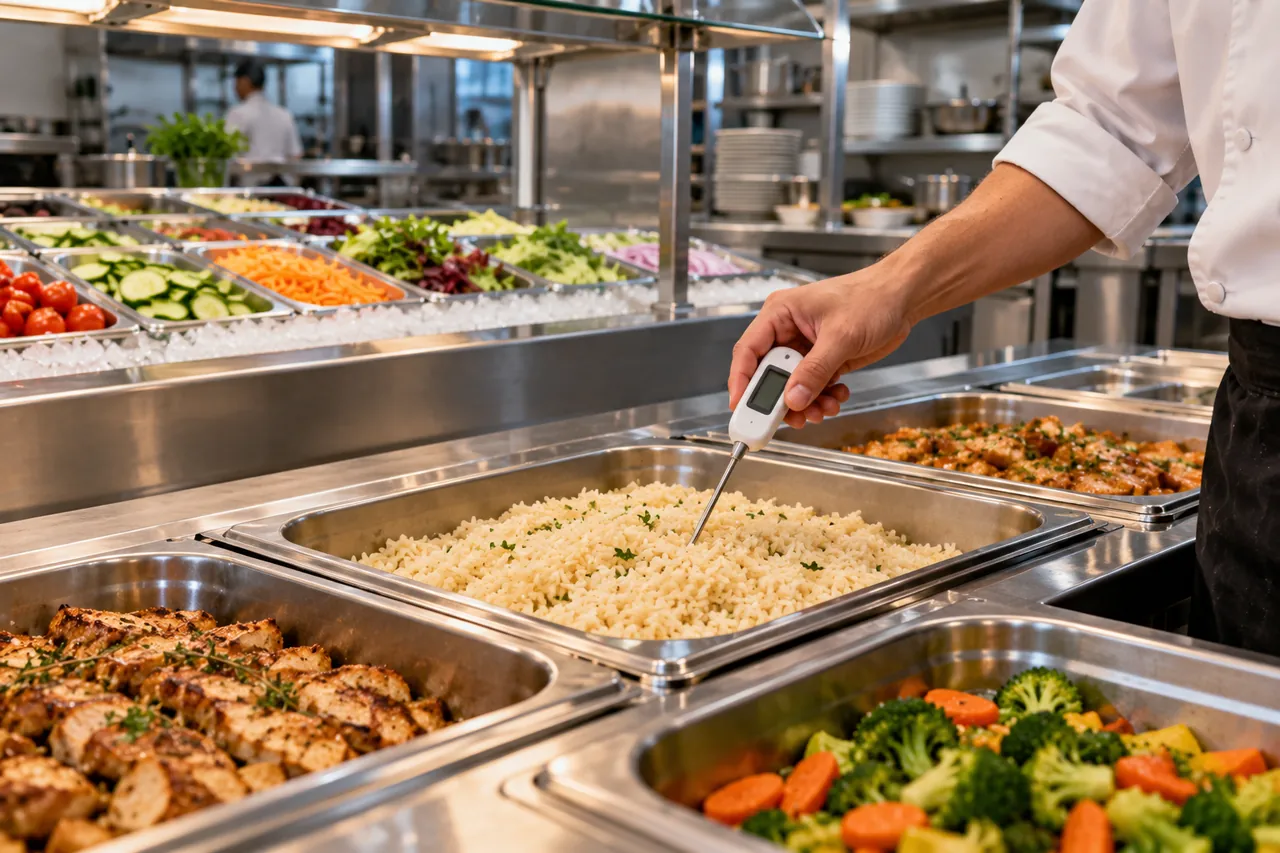
Use a meat temperature probe by inserting the tip into the centre of the thickest part, away from bone, fat and gristle, waiting for the reading to stop moving, and checking more than one spot on large or uneven pieces.
- Insert to the right depth: thermistor tips sense in the last 3–5 mm, while dial thermometers need 50–65 mm (2–2.5 in) immersion, so they are unsuitable for thin burgers.
- Thin items: probe from the side so the tip sits in the centre.
- Wait: instant-read digital probes settle in 2–5 seconds; dial types can take 15–20 seconds.
- Check several pieces from a batch, especially the largest and those from the coolest part of the grill or oven.
- Clean and sanitise the probe between foods, especially between raw and cooked.
- Calibrate weekly in ice water; see how to calibrate a thermometer.
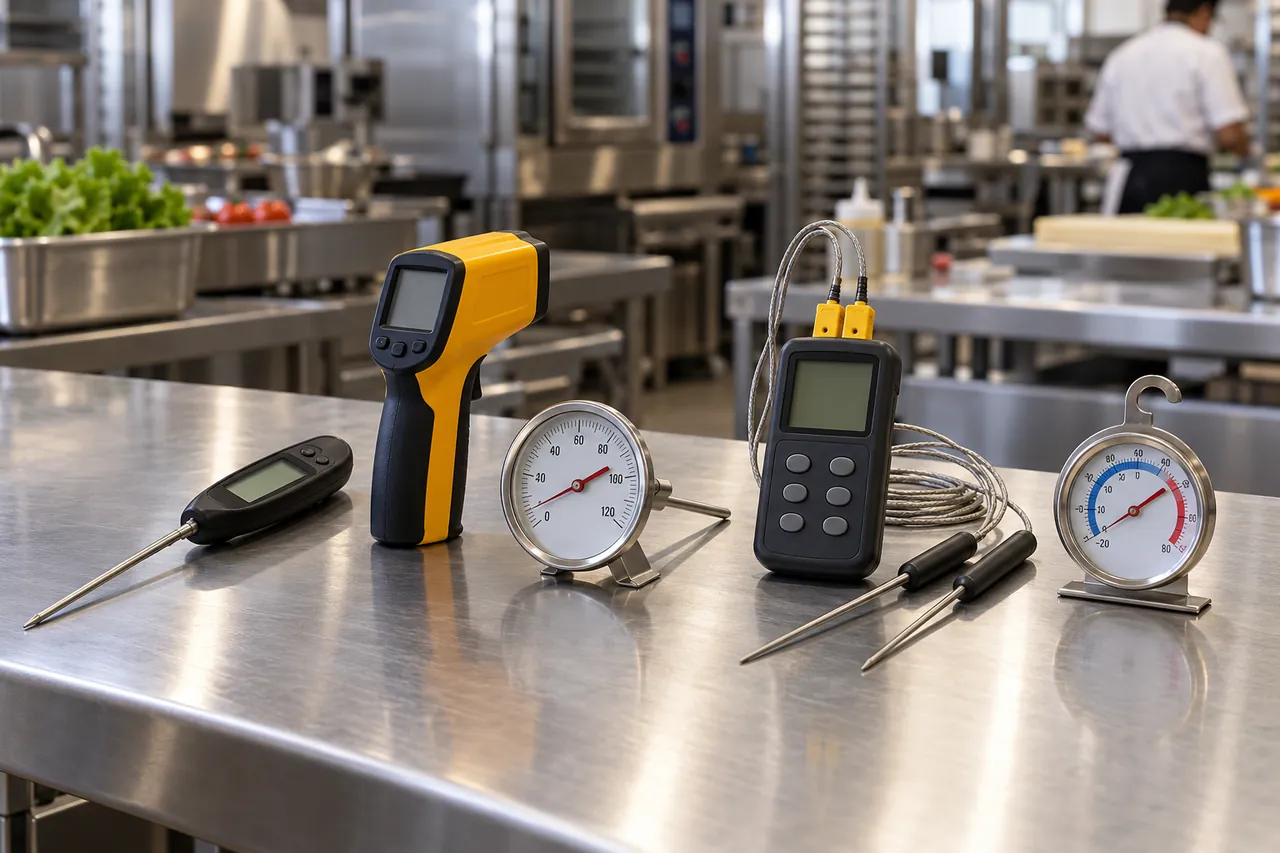
Which thermometer to use, from instant-read probes to leave-in and wireless meat thermometers, is covered in our guide to types of thermometers for food service and our food temperature probe guide.
What happens after cooking: hot holding, cooling and storage
After cooking, food must either be served, held hot at 57 °C (135 °F) or above, or cooled quickly to 5 °C (41 °F) or below. Slow cooling is a major cause of foodborne illness in commercial kitchens because spore-forming bacteria that survive cooking can multiply as food passes back through the temperature danger zone.
The FDA Food Code requires cooked food to cool from 57 °C (135 °F) to 21 °C (70 °F) within 2 hours and to 5 °C (41 °F) within 6 hours in total, as explained in our guide to the 2-stage cooling method. Cooked beef, pork and poultry then keep about 3–4 days in a refrigerator at 4 °C (40 °F) or below, according to USDA FSIS, or indefinitely for safety in a freezer at −18 °C (0 °F), though quality declines after a few months.
Cooking temperature checklist for commercial kitchens
Safe cooking in a commercial kitchen depends on the right target, the right probe position and a record of every critical check.
- Post the cooking temperatures above at each cooking station in °C and °F.
- Poultry and stuffing: 74 °C (165 °F). Ground meat: 71 °C (160 °F) or 68 °C (155 °F) for 17 seconds. Whole cuts and fish: 63 °C (145 °F), with a 3-minute rest for whole meat cuts.
- Probe the thickest part, away from bone, and check several pieces per batch.
- Record temperatures for critical control points in your HACCP log.
- Reheat for hot holding to 74 °C (165 °F) within 2 hours, then hold at 57 °C (135 °F) or above.
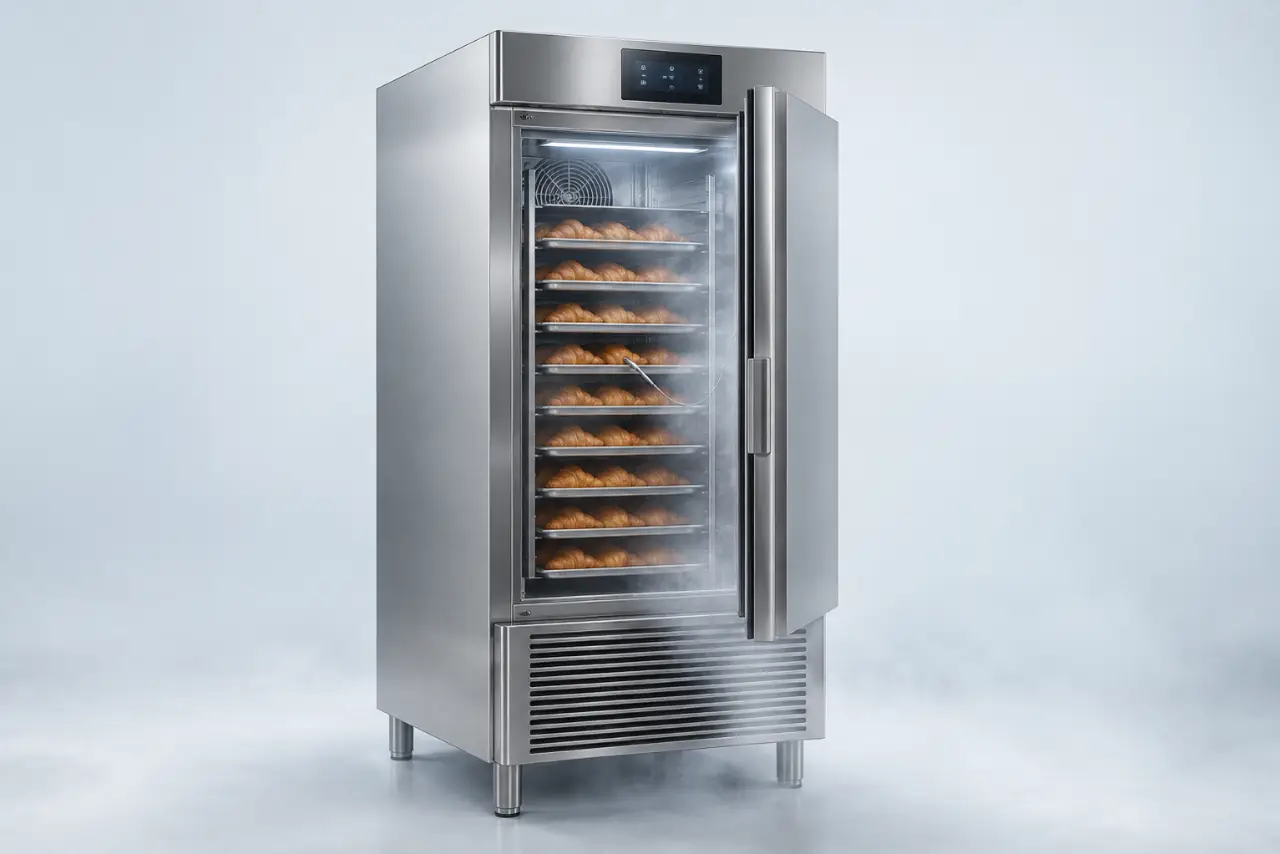
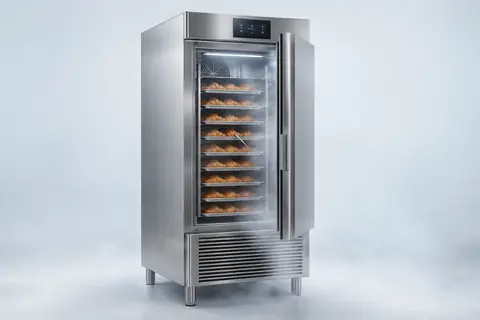
- Cool cooked food fast in shallow pans or a blast chiller, and store chilled at 5 °C (41 °F) or below.
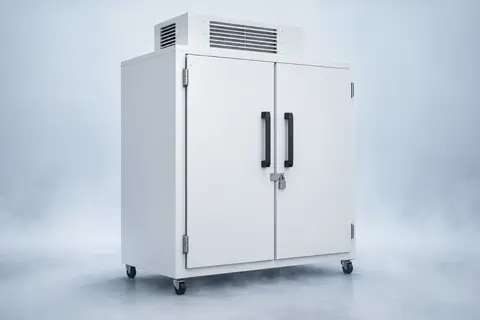
Be There supplies blast chillers and shock freezers from 5 to 20 trays with core temperature probes that bring cooked food from +70 °C to +3 °C (158 °F to 37 °F) in about 90 minutes, plus walk-in cold rooms for chilled storage. Send your menu, batch sizes and voltage through the inquiry form and we will quote FOB, CIF or DDP.