Short answer
A commercial beverage cooler is a fan-cooled, usually glass-door refrigerator that holds canned and bottled drinks at about +1 °C to +4 °C (34–40 °F), within a +2 °C to +8 °C (36–46 °F) operating range. Shops use upright 1–4 door merchandisers about 2 m (79 in) tall; bars use 15–24 inch (380–610 mm) undercounter units. Wine needs 7–18 °C (45–65 °F).
Key takeaways
- Soft drinks and beer are best kept at +1 °C to +4 °C (34–40 °F); white wine at about 7–10 °C (45–50 °F) and red wine at 13–18 °C (55–65 °F).
- Undercounter beverage fridges come in standard widths of 15, 18, 24 and 30 in (380, 457, 610 and 760 mm) and fit a 34–34.5 in (864–876 mm) high opening.
- Only front-vented coolers can be built in or installed under a cabinet; freestanding units need open space at the back and sides.
- Thermoelectric wine coolers typically cool only about 11–14 °C (20–25 °F) below room temperature, so they are not suited to warm shops or busy service.
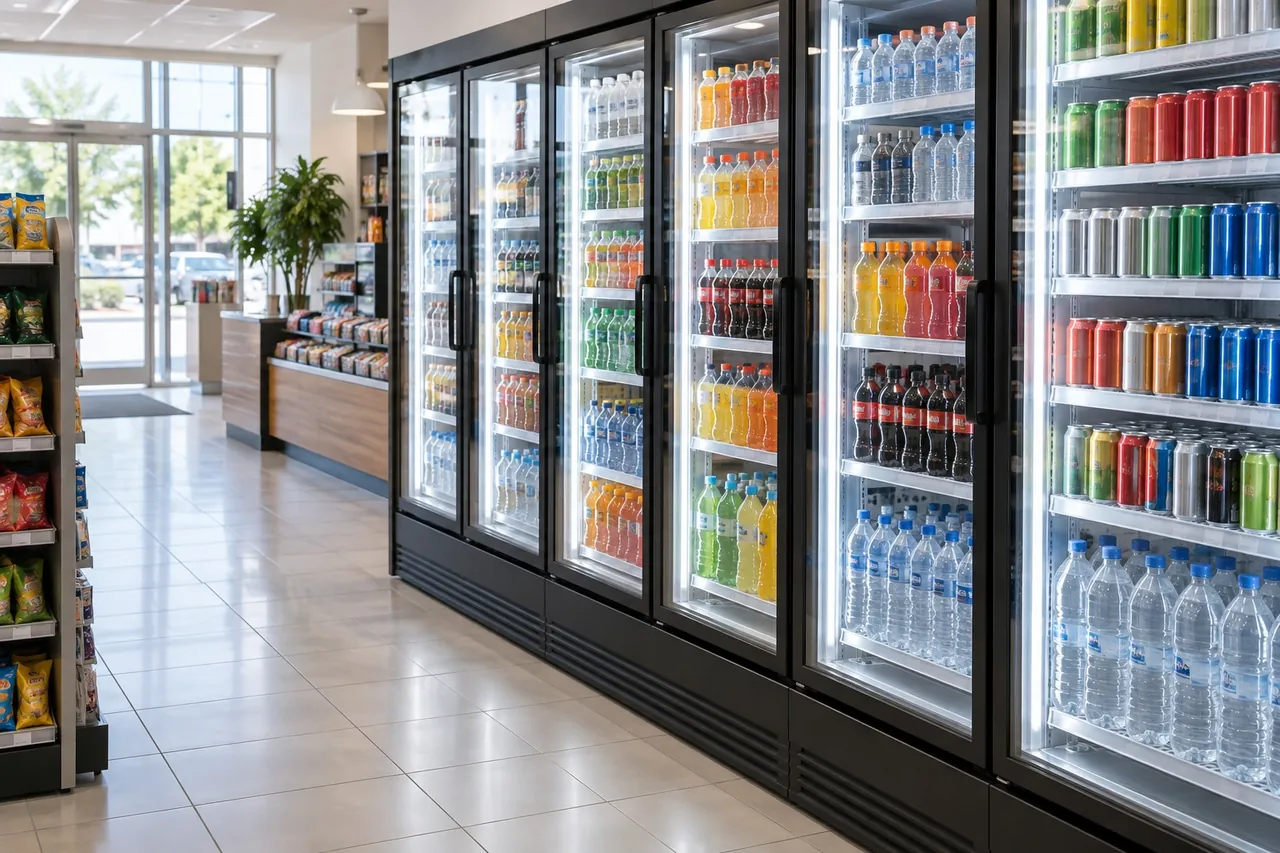
- Retail beverage coolers for shops are upright glass door merchandisers with one to four doors, LED lighting, self-closing doors and, increasingly, R290 refrigerant.
What is a commercial beverage cooler?
A commercial beverage cooler is a refrigerator designed to chill and display drinks in a business: cans, bottles, juices, water, beer and wine. Compared with a household fridge it uses fan-forced air to recover quickly after frequent door openings, runs in warmer rooms and is built for daily cleaning and heavy shelves loaded with full bottles.
In practice the term covers three families of equipment:
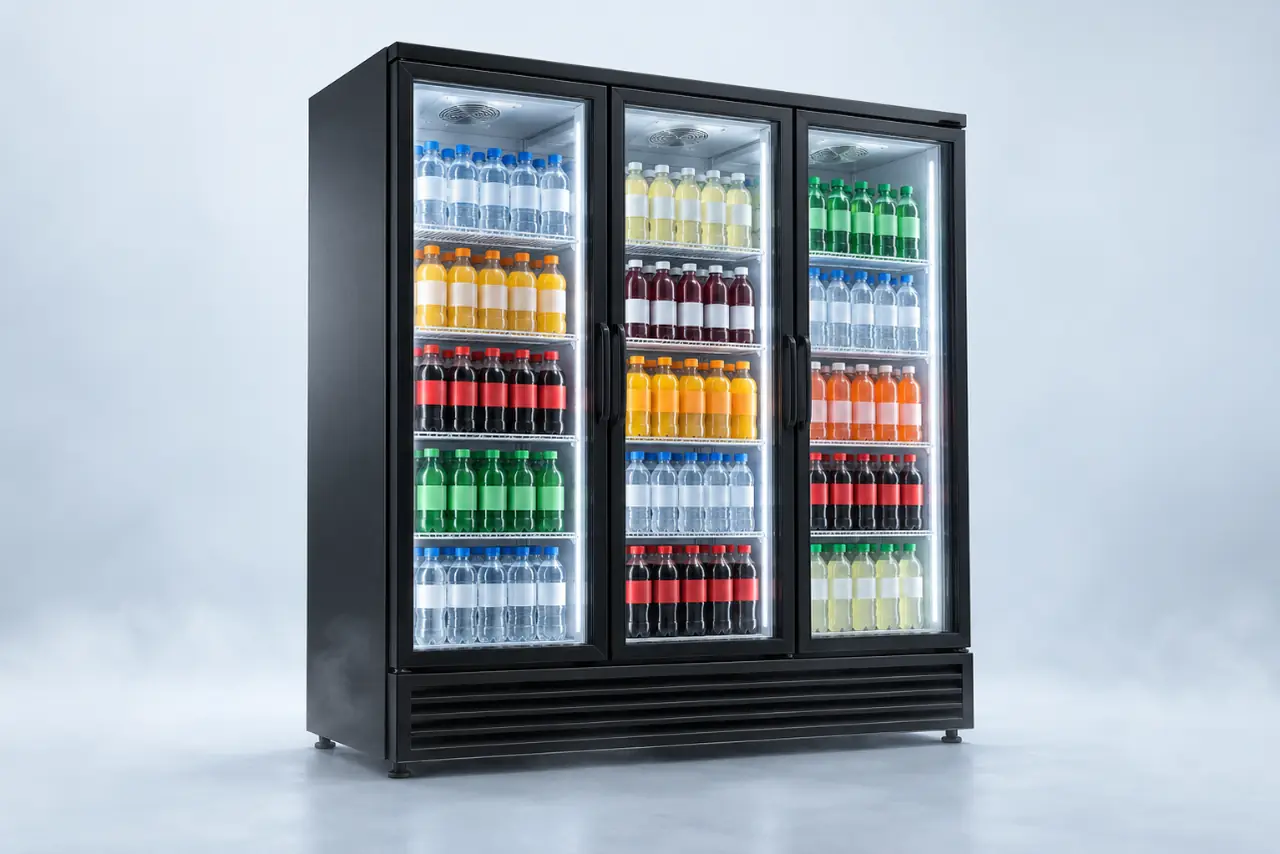
- Upright glass door merchandisers: the tall drink fridges seen in convenience stores, supermarkets and petrol station shops, with one to four doors. These are the core commercial display refrigerators Be There manufactures, holding +2 °C to +8 °C (36–46 °F).
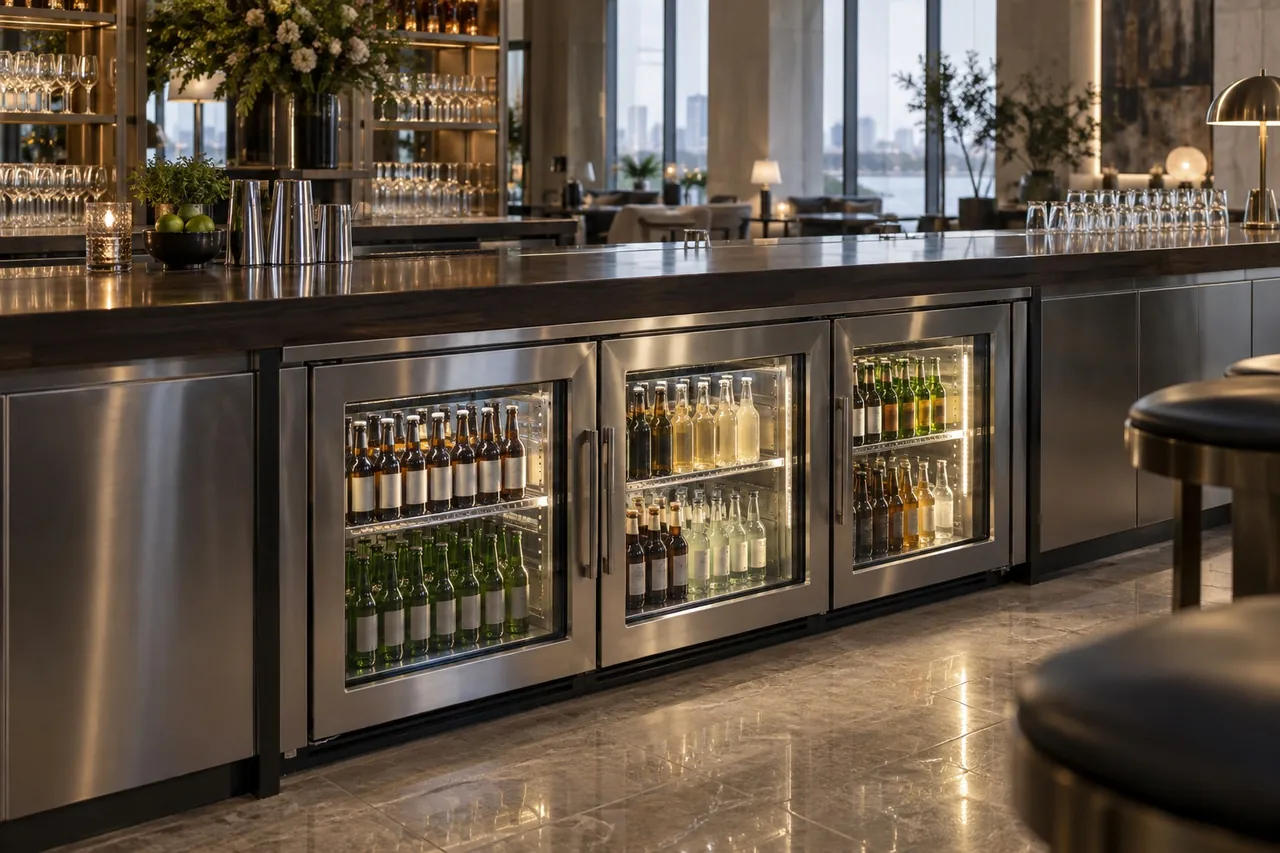
- Undercounter beverage fridges: 15–30 in (380–760 mm) wide units for bars, cafés, offices and hotel rooms.
- Wine coolers: cabinets that run warmer, at 5–18 °C (41–64 °F), often with two zones.
Commercial beverage refrigerators are usually rated for room temperatures of 32 °C (90 °F) or more and carry commercial approvals such as UL/ETL and NSF in the US or CE in Europe. Residential beverage centers, small wine refrigerators and mini wine fridges are typically rated for lower room temperatures and lighter use. Both have their place; the sections below show which one fits your site.
Types of beverage coolers compared
Start with where the cooler will stand and who will open it. The table compares the main types of beverage coolers by use and typical capacity.
| Type | Typical size | Holding temperature | Best for |
|---|---|---|---|
| Upright glass door drink cooler or soda cooler (1–4 doors) | 0.6–2.5 m (24–98 in) wide, about 2 m (79 in) high; roughly 300–1,500 L (10–53 cu ft) | +2 °C to +8 °C (36–46 °F) | Shops, supermarkets, drinks brands, distributors |
| Undercounter beverage fridge | 15–30 in (380–760 mm) wide, about 34 in (864 mm) high | +1 °C to +10 °C (34–50 °F) | Bars, cafés, offices, hotel lounges |
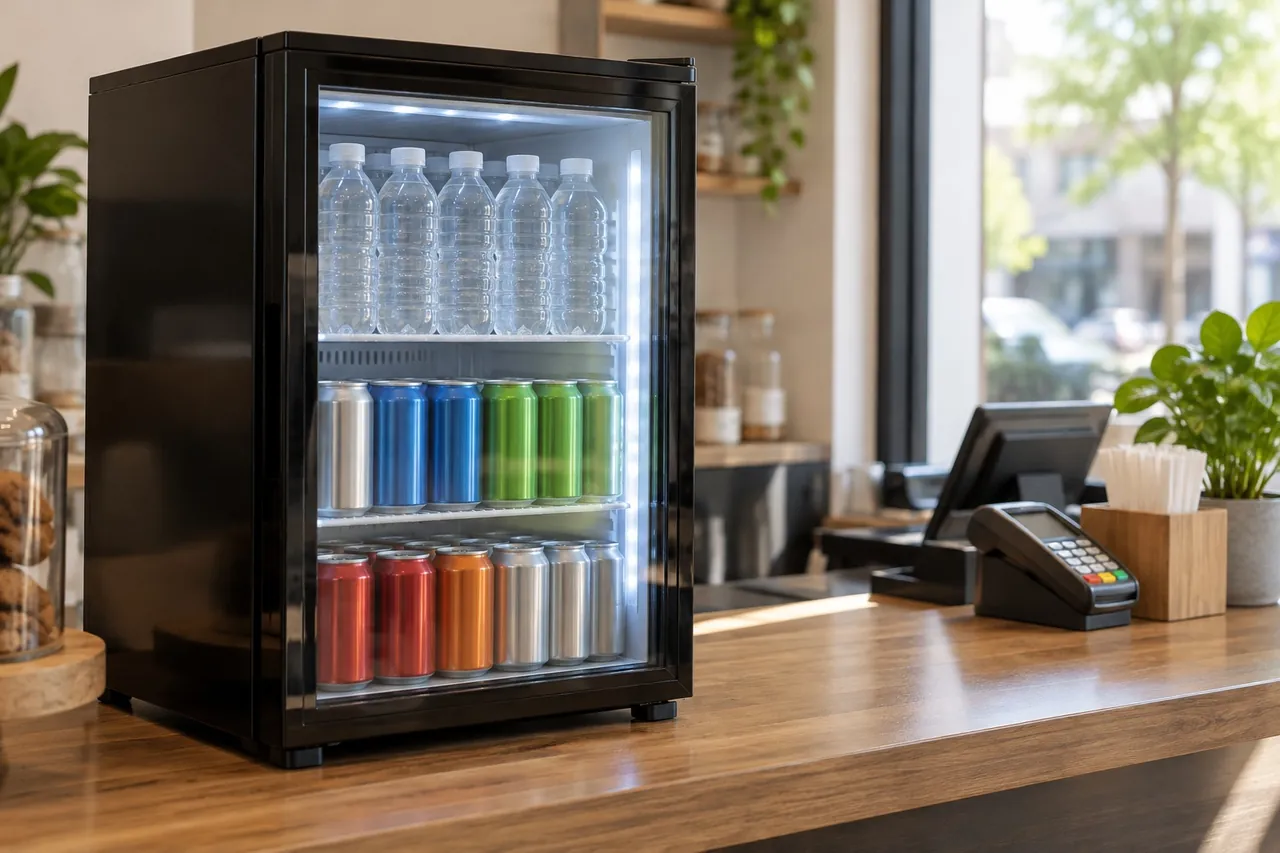
| Countertop glass door cooler | About 40–110 L (1.5–4 cu ft) | +2 °C to +8 °C (36–46 °F) | Impulse sales beside the till |
| Wine cooler (single or dual zone) | 15–30 in wide; 6 to 150+ bottles | 5–18 °C (41–64 °F) | Restaurants, wine bars, hotel rooms |
| Insulated or portable drink cooler | Box or jug, no compressor | Depends on ice | Events, catering, outdoor service |
Upright merchandisers give by far the most drinks per square metre of floor and the best visibility, which is why retail beverage coolers are almost always tall glass door units. Our glass door display fridge buying guide lists their dimensions door by door. For the small units that sit by the till, see our guide to countertop display fridges.
Beverage fridge sizes: 15, 18, 24 inch and tall models
Undercounter and built-in beverage fridges follow standard cabinet widths, so you can replace one without rebuilding the counter. A 24 inch beverage fridge is the most common size because it matches a standard base cabinet.
| Width | Typical volume | Approx. capacity | Typical use |
|---|---|---|---|
| 15 in (380 mm) | 2.5–3.5 cu ft (70–100 L) | 20–30 wine bottles or 60–90 cans | Narrow gaps, small bars, hotel suites |
| 18 in (457 mm) | 3–4 cu ft (85–115 L) | 25–40 bottles or 80–110 cans | Slim wine fridge for coffee bars and offices |
| 24 in (610 mm) | 4.5–5.5 cu ft (125–155 L) | 40–55 bottles or 120–180 cans | Standard bar or kitchen undercounter |
| 30 in (760 mm) | 6–7 cu ft (170–200 L) | 55–70 bottles or 180–220 cans | Larger service bars |
| Tall 24 in (full height) | About 10–13 cu ft (280–370 L) | 100–150 bottles | Wine walls, restaurants |
Capacities are approximate because bottle shapes and shelf layouts differ; ask for the rated bottle or can count of the exact model. Built-in models are usually adjustable between about 33¾ and 34½ in (857–876 mm) high to fit under a 36 in (914 mm) counter. A shallow depth beverage fridge of about 18–20 in (457–508 mm) suits narrow bar backs but holds less. Check wine fridge depth with the door open as well: allow at least the door width in front, plus room for pull-out shelves.
What temperature should a beverage fridge or wine cooler be?
Beverage fridge temperature depends on what you store. Drinks for immediate sale should be cold enough to taste refreshing straight from the shelf; wine should be stored and served warmer.
| Product | Recommended setting |
|---|---|
| Soft drinks, water, energy drinks, beer | +1 °C to +4 °C (34–40 °F) |
| Milk-based drinks and fresh juice | +5 °C (41 °F) or below (food-safety limit) |
| Sparkling wine | 6–8 °C (43–46 °F) |
| White and rosé wine | 7–10 °C (45–50 °F) |
| Light red wine | 12–14 °C (54–57 °F) |
| Full-bodied red wine | 15–18 °C (59–65 °F) |
| Long-term wine storage (all wines) | 12–14 °C (54–57 °F), 50–70% relative humidity |
A single zone wine cooler holds one temperature, ideal if you store wine long term or sell mostly one style. Dual zone wine coolers keep whites and reds at different serving temperatures in one cabinet. A beverage and wine cooler dual zone combines a cold drinks zone with a warmer wine zone.
How cold does a wine cooler get? Most compressor wine coolers bottom out at about 4–5 °C (39–41 °F), which is not cold enough for beer or soft drinks. If you sell both, use a beverage fridge for drinks and a wine cooler for wine, or a genuine dual-zone unit. Wine fridges with humidity control or a water tray help keep corks from drying during long storage.
Thermoelectric wine cooler vs compressor beverage cooler
A thermoelectric wine cooler uses a solid-state Peltier module instead of a compressor. It is quiet, almost vibration-free and light, which is why it is popular in small mini wine fridges for homes and hotel rooms. Its limitation is capacity: a thermoelectric unit typically cools only about 11–14 °C (20–25 °F) below the surrounding air, so in a 30 °C (86 °F) shop it may not get below 16–19 °C (61–66 °F).
| Feature | Thermoelectric | Compressor |
|---|---|---|
| Lowest practical temperature | About 11–14 °C (20–25 °F) below room | +1 °C to +5 °C (34–41 °F) regardless of room, within its rating |
| Noise and vibration | Very low | Low to moderate |
| Typical size | 6–30 bottles | Any size up to multi-door merchandisers |
| Recovery after opening | Slow | Fast with fan cooling |
| Commercial suitability | Hotel rooms, quiet display of a few bottles | Shops, bars, restaurants |
For any commercial drink refrigerator or commercial beverage fridge that is opened often or stands in a warm room, choose a compressor model. Modern compressor cabinets increasingly use R290 (propane) refrigerant, which has a global warming potential of about 3 and usually lowers energy use; our R290 vs R404A guide explains the rules and charge limits.
Built-in, undercounter and integrated beverage coolers
"Built in", "undercounter", "under cabinet" and "integrated" sound similar but mean different installation requirements, and choosing the wrong one is the most common cause of early failure.
- Built-in or undercounter beverage cooler: vents through a grille at the bottom front, so it can sit flush between cabinets with little or no side and rear clearance. This is what you need for a built in wine fridge, built in wine cooler, wine fridge undercounter or undercounter beverage center in a bar or kitchen. An under cabinet wine refrigerator or beverage fridge cabinet in a hotel room follows the same rule.
- Freestanding: vents at the back or sides. It needs typically 50–100 mm (2–4 in) of open space and must not be boxed in.
- Integrated wine coolers and panel ready wine refrigerator models: accepts a cabinet door panel so it disappears into joinery. Check the panel weight limit and hinge type.
For an undercounter beverage fridge in a commercial bar, also check the ambient rating, a lock, self-closing doors and stainless steel or black cabinets that survive cleaning. Our back bar cooler guide covers wider 2- and 3-door bar units and placement next to ice machines and glass washers.
Give the cooler its own grounded socket at the correct voltage and frequency, keep the front grille clear, and clean the condenser every one to three months in dusty or greasy sites. Blocked condensers are the main reason undercounter units run warm.
Outdoor beverage refrigerators and portable drink coolers
An outdoor beverage refrigerator or outdoor beverage fridge is built for patios, pool bars, rooftop terraces and outdoor kitchens. Compared with an indoor unit it needs a higher ambient rating, typically 38–43 °C (100–110 °F), a weather-resistant stainless steel cabinet, sealed electrics, a lock and a door seal that copes with dust and rain. Even outdoor-rated units should stand in shade with free airflow; direct sun on the glass adds a large heat load. Ask for the ambient rating in writing before you order.
Portable and insulated drink coolers are a different category. An insulated drink cooler, a beverage cooler with a spigot or a drink cooler with a spout is a passive container: it keeps drinks or water cold with ice and has no refrigeration system. A portable beverage cooler of this kind is ideal for catering, sports events and outdoor service where there is no power, but they cannot hold a set temperature for days.
For events with power, a plug-in glass door cooler on castors or a rapid beverage cooler that spins cans in iced water are options. For permanent outdoor sales such as fuel station forecourts, an outdoor-rated merchandiser or an outdoor ice merchandiser for bagged ice is the better long-term investment.
How to choose a commercial beverage cooler for a shop or brand
Rather than chasing the best beverage refrigerator, the best drink fridge or the best wine fridge brands, compare models on the specs that decide sales and running costs. Use this checklist whether you are fitting out one shop or ordering coolers for a drinks brand's retail programme.
- Daily sales volume: size the cooler to hold at least one day's sales plus a buffer, so drinks reach temperature before they are sold.
- Doors and footprint: one to four doors for upright merchandisers, or 15–30 in widths for undercounter units.
- Temperature range: +1 °C to +4 °C (34–40 °F) for soft drinks and beer; a separate wine zone if needed.
- Ambient rating: at least 32 °C (90 °F) for most shops; higher for hot climates and outdoor sites.
- Display features: LED lighting, low-E or heated glass against condensation, self-closing doors, adjustable shelves and price-tag strips.
- Refrigerant and energy: R290 where your market allows it.
- Approvals: UL/ETL and NSF for the US, CE for Europe, or your local scheme.
- Branding: if you need branded canopies, colours or door decals, state the artwork, order quantity and placement in your inquiry.
Be There manufactures upright glass door beverage merchandisers with one to four doors for shops, distributors and drinks brands. Send your door count, voltage, certification and quantity through the inquiry form and we will reply within one working day with specifications and an FOB, CIF or DDP quote.