Short answer
A refrigerated van conversion insulates a cargo van with 50–100 mm (2–4 in) of PU foam, lines it with a hygienic GRP surface and fits a fridge unit, usually engine-driven with optional electric standby. Chiller vans hold 0 °C to +8 °C (32–46 °F); freezer vans hold −18 °C to −20 °C (0 °F to −4 °F). Insulation typically costs 10–15% of cargo volume.
Key takeaways
- Chiller vans typically use 50–75 mm (2–3 in) of insulation; freezer vans need 75–100 mm (3–4 in) to meet heavily insulated K ≤ 0.40 W/(m²·K).
- Engine-driven (direct-drive) fridge units suit most vans; add electric standby for overnight cooling, or a fully electric unit on electric vans.
- A conversion typically uses 150–300 kg (330–660 lb) of payload and 10–15% of the cargo volume.
- UK conversion prices typically run about £10,000–£14,000 for a chiller van and £14,000–£17,000 for a freezer van, excluding the base vehicle.
- Size the fridge unit for wall heat, door openings and pull-down, not just box volume.
What is a refrigerated van conversion?
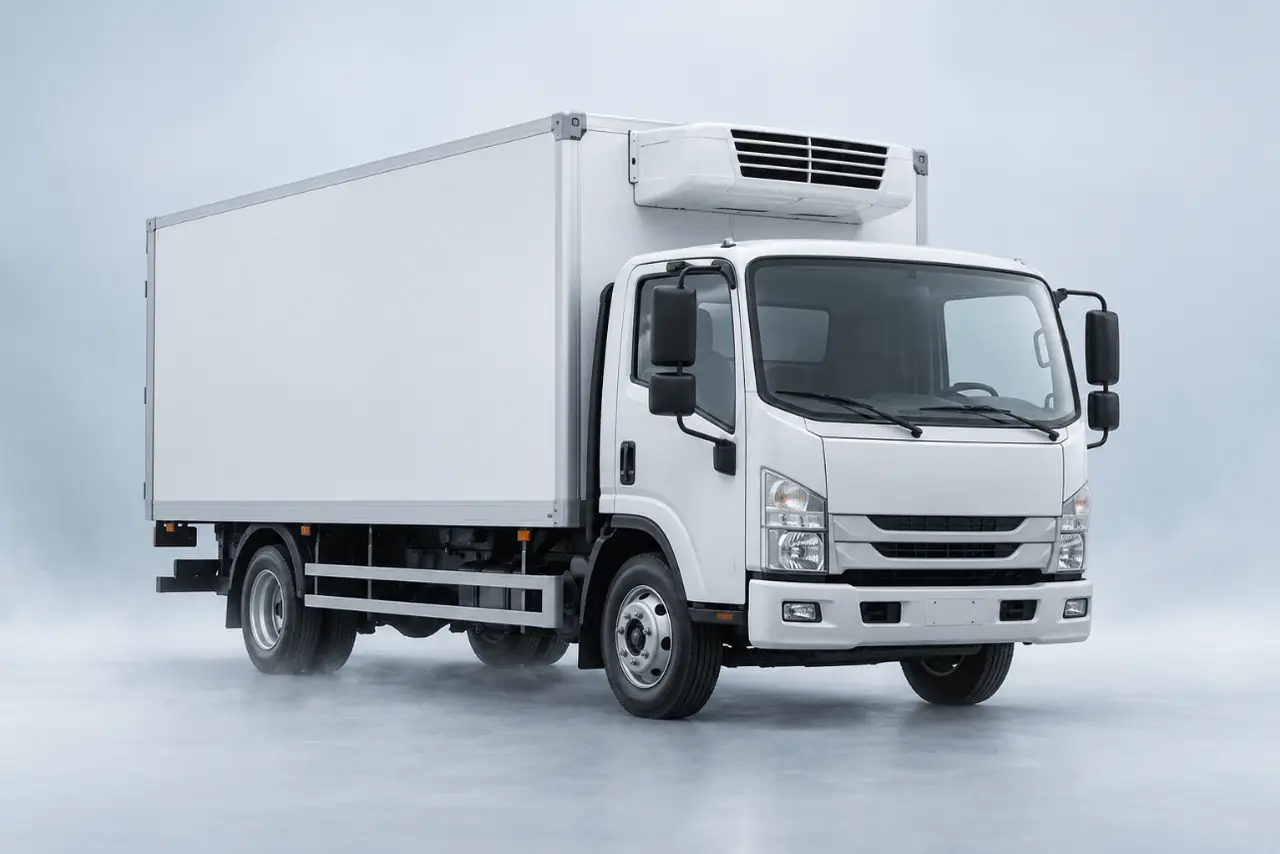
A refrigerated van conversion turns a standard panel or cargo van into a temperature-controlled vehicle. The converter strips the load area, insulates the walls, roof, floor and doors, lines the inside with a washable food-grade surface, and fits a fridge unit with an evaporator inside the cargo space and a condenser on the roof. The finished vehicle is called a refrigerated van, reefer van, fridge van or refrigerator van.
Converted vans are the workhorses of last-mile cold chain: florists, butchers, bakeries, caterers, pharmacies, meal-kit and grocery services, seafood traders and ice cream distributors. A van for food delivery needs to hold product at its storage temperature for a full shift of door openings, which is a harder job than it sounds.
There are three common grades:
- Insulated only – lined van with no unit, for short trips with pre-chilled goods or ice packs.
- Chiller van – holds 0 °C to +8 °C (32–46 °F) for fresh food, dairy, flowers and medicines.
- Freezer van – holds −18 °C to −20 °C (0 °F to −4 °F) for frozen food and ice cream; also called a freezer van or dual-temperature van if it can switch.
Dual-compartment vans add a movable insulated bulkhead and a second evaporator so one vehicle can carry chilled and frozen product together.
Small refrigerated van, cargo van or box van: which base vehicle?
The right base vehicle depends on daily load, number of drops and access. Insulation takes up space, so plan around usable volume after conversion. Typical values:
| Vehicle | Cargo volume before conversion | Typical usable volume after | Typical use |
|---|---|---|---|
| Small refrigerated van (car-derived or compact) | 3–4 m³ (105–140 cu ft) | 2.5–3.5 m³ | Florists, pharmacy, bakery rounds |
| Medium refrigerated cargo van | 6–9 m³ (210–320 cu ft) | 5–8 m³ | Catering, butchers, grocery delivery |
| Large high-roof van | 10–15 m³ (350–530 cu ft) | 9–13 m³ | Wholesale food, multi-drop routes |
| Box van / cargo box van (chassis cab with insulated body) | 15–25 m³ (530–880 cu ft) | Body built insulated | Pallet loads, heavier routes |
| Refrigerated pickup (insulated canopy or body) | 2–6 m³ (70–210 cu ft) | Body built insulated | Farms, hunters, rural delivery |
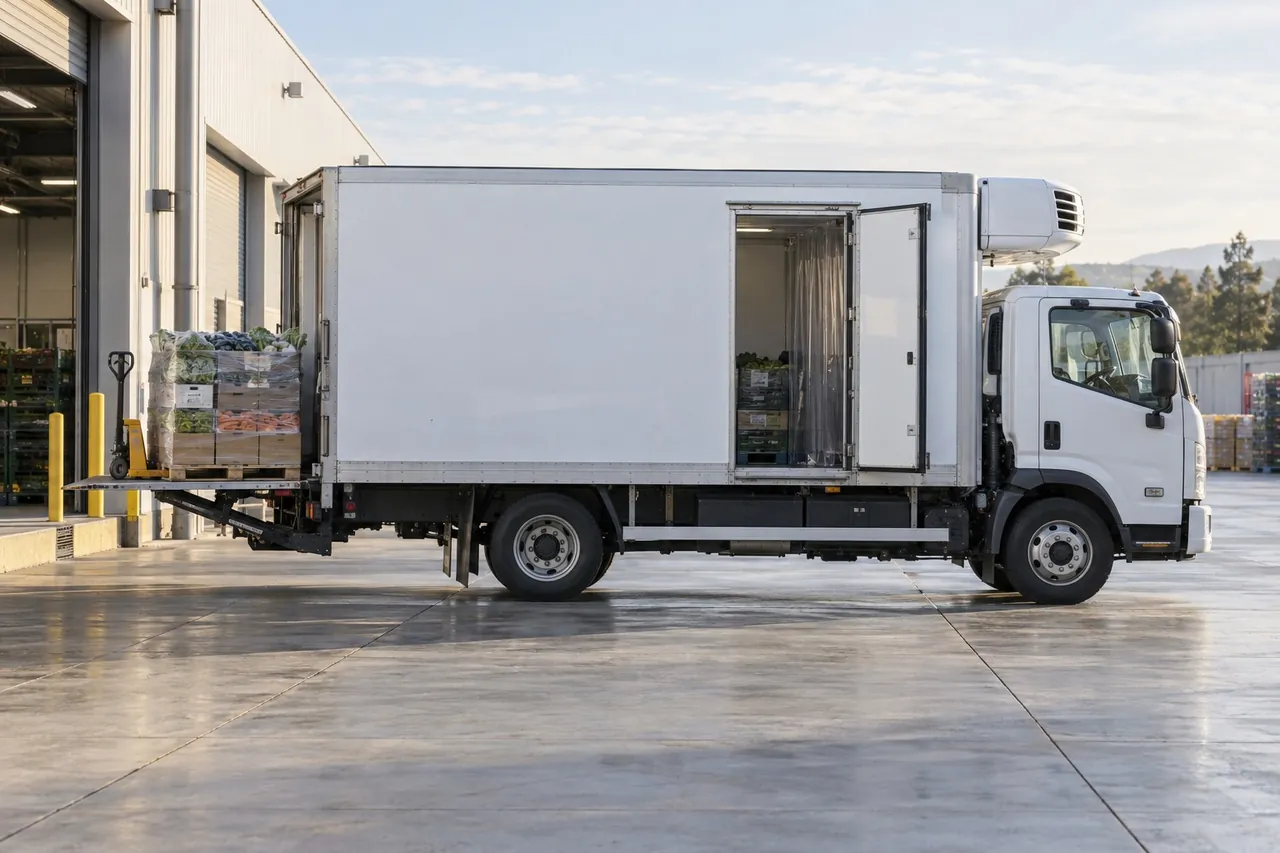
A box van, also called a straight van or straight truck van, is a chassis cab with a separate box body. With a factory-built insulated body it often beats a converted panel van once you need pallets, a tail lift or more than about 12 m³. Our refrigerated box truck guide covers 10 ft to 26 ft bodies. A refrigerated box for pickup truck beds suits small rural loads but has limited volume and payload.
Insulation: how thick for a chiller or freezer van?
Insulation decides how hard the fridge unit has to work. Converters use either sprayed or bonded polyurethane (PU) or PIR foam boards behind a glass-reinforced plastic (GRP) lining, or a moulded one-piece insulated kit made for the van model. Typical thicknesses:
- Chiller van – 50–75 mm (2–3 in) walls and roof, 50 mm floor.
- Freezer van – 75–100 mm (3–4 in) walls and roof, thicker at the bulkhead and doors.
In countries that apply the ATP agreement, insulation is graded by its K-value, the overall heat transfer coefficient of the body:
| ATP class | Inside temperature (at +30 °C outside) | Insulation required |
|---|---|---|
| A | Adjustable from +12 °C down to 0 °C | Normal, IN (K ≤ 0.70 W/m²·K) |
| B | Adjustable from +12 °C down to −10 °C | Heavy, IR (K ≤ 0.40 W/m²·K) |
| C | Adjustable from +12 °C down to −20 °C | Heavy, IR (K ≤ 0.40 W/m²·K) |
Pay attention to thermal bridges: steel ribs, door frames, wheel arches and fixing points. Every gap in the foam is a hot spot that forms condensation and frost. Closed-cell PIR and PU insulation board is light, rigid and has a thermal conductivity of about 0.020–0.024 W/(m·K). The floor needs a hard-wearing, non-slip, coved finish that can be washed down, and a drain if you carry wet products. Some converters add acoustic panels in the cab bulkhead; they reduce noise but are no substitute for proper thermal insulation.
Cargo van refrigeration units: engine-driven, standby or electric?
Cargo van refrigeration uses three main unit types:
| Unit type | How it works | Best for | Limits |
|---|---|---|---|
| Engine-driven (direct drive) | Compressor belt-driven from the van engine | Most diesel or petrol vans, multi-drop routes | Cools only while the engine runs |
| Engine-driven with electric standby | Second electric compressor plugged into mains when parked | Overnight pre-cooling, loading at depot | Needs shore power at base |
| Fully electric (DC or battery) | Electric compressor powered by vehicle battery or separate pack | Electric vans, low-emission zones, quiet night delivery | Battery capacity, higher price |
Be There van and truck refrigeration units cover boxes of 4–45 m³ in engine-driven, independent diesel and fully electric versions, holding −20 °C to +15 °C (−4 °F to 59 °F), with install kits matched to the vehicle.
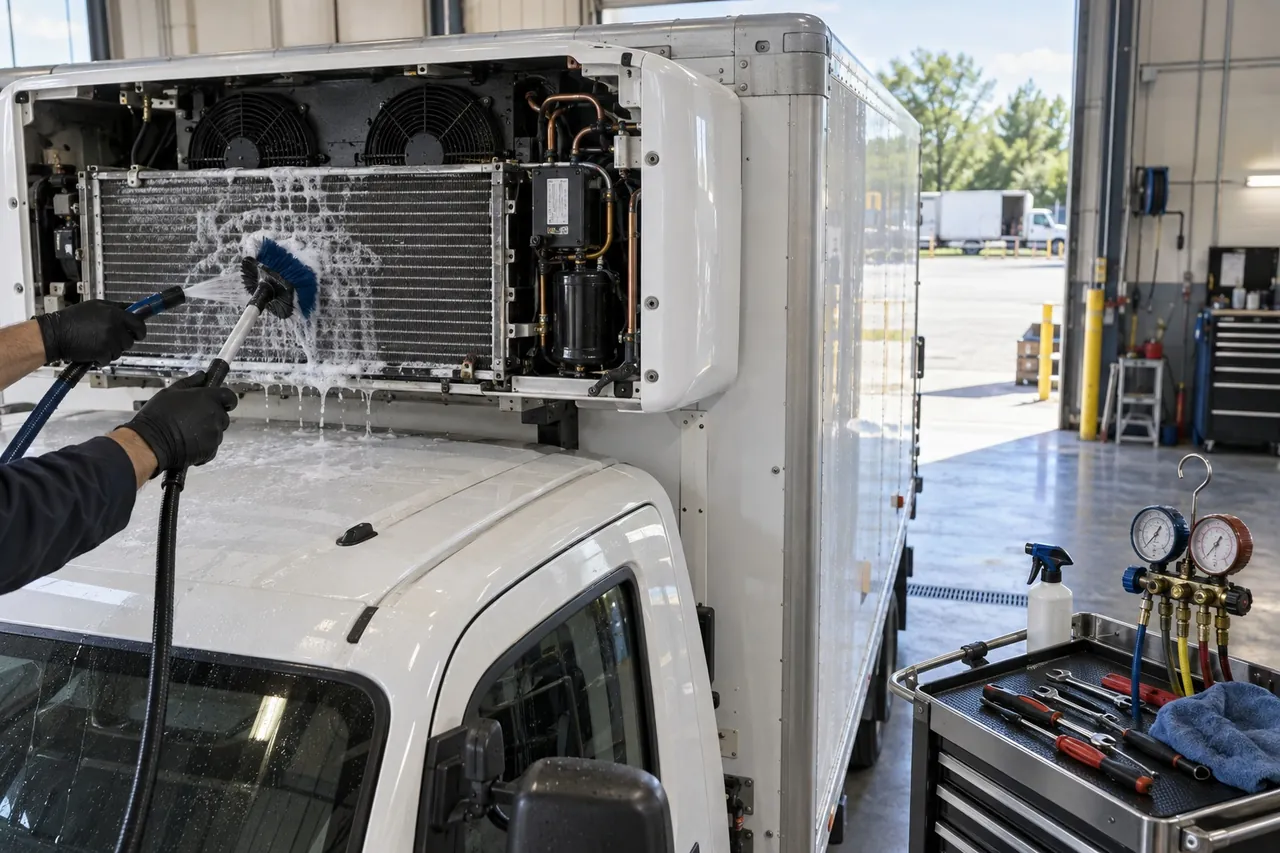
Size the unit for the hardest day, not the average one. Cooling load is wall heat (K-value × surface area × temperature difference) plus air that rushes in at each door opening, plus any warm product. A multi-drop van opening its doors 30 times a day needs much more capacity than a van doing two long drops. Use the truck refrigeration calculator and read our unit sizing guide. Fit strip curtains on the rear and side doors; on long box vans, an air chute (reefer chute) along the ceiling spreads air to the rear.
How a fridge van conversion is done, step by step
Fridge van conversions follow the same sequence whether you use a specialist converter or a body shop with refrigeration support:
- Survey the van – Measure the cargo area, confirm payload, roof height, engine size and electrical system, and agree the target temperature and ATP class.
- Strip and prepare – Remove ply lining and racking, treat bare metal, and plan positions for the evaporator, condenser, wiring and drain.
- Insulate walls, roof and floor – Fit PU or PIR foam or a moulded insulated kit, typically 50–100 mm thick, filling ribs and voids to limit thermal bridges.
- Fit the hygienic lining – Bond GRP or food-grade plastic panels over the insulation, form a non-slip, coved floor and seal every joint with food-safe sealant.
- Install the refrigeration unit – Mount the condenser on the roof, the evaporator inside, the compressor on the engine or in the unit, then run hoses, wiring and the controller.
- Charge, test and certify – Pressure-test, evacuate and charge the system, run a pull-down test to set point, check door seals, and obtain ATP or local certification.
A typical professional conversion takes about 3–10 working days, depending on the kit and unit. Ask the converter for the K-value or ATP test report of the insulation system, the unit's rated capacity at your set point, the added weight, and warranty terms for both body and unit. Keep the documents with the vehicle; buyers of a used fridge van will ask for them.
How much does a refrigerated van conversion cost?
Costs depend on van size, insulation system, unit type, compartments and certification. Indicative ranges from UK market data in 2026, excluding the base vehicle:
| Item | Typical cost (UK) |
|---|---|
| Chiller van conversion, complete | About £10,000–£14,000 |
| Freezer van conversion, complete | About £14,000–£17,000 |
| Dual-compartment conversion | About £15,500–£20,000 |
| Refrigeration unit alone, fitted | About £7,800–£11,600 |
| 75 mm GRP insulated lining | About £3,000–£4,500 |
| Shelving, partitions, branding, documents | Several hundred to a few thousand pounds |
In the US, a new factory-finished refrigerated cargo van for sale commonly lists around $60,000–$95,000, and used ones about $30,000–$60,000, depending on the base van and unit. Converting a van you already own is usually cheaper than buying new, provided the van has enough payload and life left. Importing the fridge unit direct and having it fitted locally can reduce cost further; Be There quotes units FOB, CIF or DDP with installation kits for your vehicle model.
Refrigerated van for sale or convert your own?
Browsing listings for a refrigerated van for sale, freezer vans for sale, reefer vans for sale or new refrigerated vans for sale is the fastest route, but a used converted van needs careful checks:
- Pull-down test – start warm, set the target and time how long it takes; a healthy chiller van should reach +3 °C (37 °F) in well under an hour.
- Insulation condition – look for cracked GRP, soft or wet foam, damaged door seals and frost marks around ribs.
- Unit records – service history, refrigerant type and leak checks, hours on electric standby.
- Certification – ATP certificate and expiry date where required.
- Payload – the conversion may leave less than you think.
Convert your own when you already own a suitable van, need a specific layout, or want a unit sized for your actual route. Buy a ready fridge van for sale when you need the vehicle this week and can verify its history. Either way, the unit and insulation must match your products: a van built as a chiller rarely makes a good freezer van.
Checklist and next steps
- Decide the products and set point: chilled 0 °C to +8 °C, frozen −18 °C to −20 °C, or both.
- Estimate daily volume and drops, then choose small, medium or large van, or a box van.
- Choose insulation thickness for the class you need: 50–75 mm chiller, 75–100 mm freezer.
- Choose engine-driven, standby or fully electric refrigeration.
- Calculate the cooling load with door openings and choose a unit with margin.
- Agree certification, warranty and service support before work starts.
Keep a copy of the unit's rated capacity at your set point and the insulation test report; you will need both for certification and when you sell the vehicle.
Be There supplies refrigeration units for vans and trucks with matched install kits. Send the van model, internal dimensions, target temperature and number of drops per day through our quotation form and we will recommend and quote a unit.