Short answer
A mini freezer is a compact stand-alone freezer of about 30–150 L (1–5 cu ft) that holds −18 °C (0 °F) or colder. Main types are compact upright, mini chest, countertop, countertop display, commercial undercounter and 12 V portable. A 3 cu ft (85 L) unit is about 50 × 55 × 85 cm and fits under a worktop; frost-free models suit frequent door openings.
Key takeaways
- Mini freezers hold about 30–150 L (1–5 cu ft) and should reach −18 °C (0 °F); 1 cu ft holds roughly 16 kg (35 lb) of packed food.
- The ice-box in a typical mini fridge runs at only −6 °C to −12 °C (21–10 °F) and is not a true freezer.
- A four-star rating means −18 °C (0 °F) or colder and the ability to freeze fresh food.
- Compact freezers are usually climate class N or SN (16–32 °C or 10–32 °C), so garages need checking.
- Thermoelectric cool boxes typically cool only 15–20 °C below ambient; a 12 V compressor freezer is needed to hold −18 °C in a vehicle.
What is a mini freezer?
A mini freezer is a compact, stand-alone freezer of roughly 30–150 L (1–5 cu ft) that holds food at −18 °C (0 °F) or colder in a space too small for a full-size upright or chest. It is a true freezer, with its own cabinet and compressor, rather than the ice-box compartment inside a small fridge.
Small freezers are bought for very different jobs: an extra cabinet in a flat or office, ice cream by a café till, frozen stock under a bar counter, or a portable box in a delivery van. The right choice depends less on capacity than on where it stands, how often it is opened and whether the public will see it. This guide covers the main small freezers on the market, their dimensions, defrost options, running costs and what to look for if you are buying for a business. For larger formats, see our upright freezer guide and deep freezer guide.
What types of small freezers are there?
There are six common types of small freezer: compact upright, mini chest, countertop freezer, countertop display freezer, commercial undercounter freezer and portable 12 V freezer. Each suits a different location and duty.
| Type | Typical capacity | Typical size (W × D × H) | Best for |
|---|---|---|---|
| Compact upright | 30–85 L (1.1–3 cu ft) | 47–55 × 45–58 × 50–85 cm (19–22 × 18–23 × 20–33 in) | Flats, offices, dorms, staff rooms |
| Mini chest | 60–140 L (2–5 cu ft) | 55–73 × 50–56 × 83–85 cm (22–29 × 20–22 × 33 in) | Extra household or café storage |
| Countertop freezer (solid door) | 30–60 L (1–2 cu ft) | 45–50 × 45–50 × 50–60 cm (18–20 × 18–20 × 20–24 in) | Back-bar, kiosk, small kitchen |
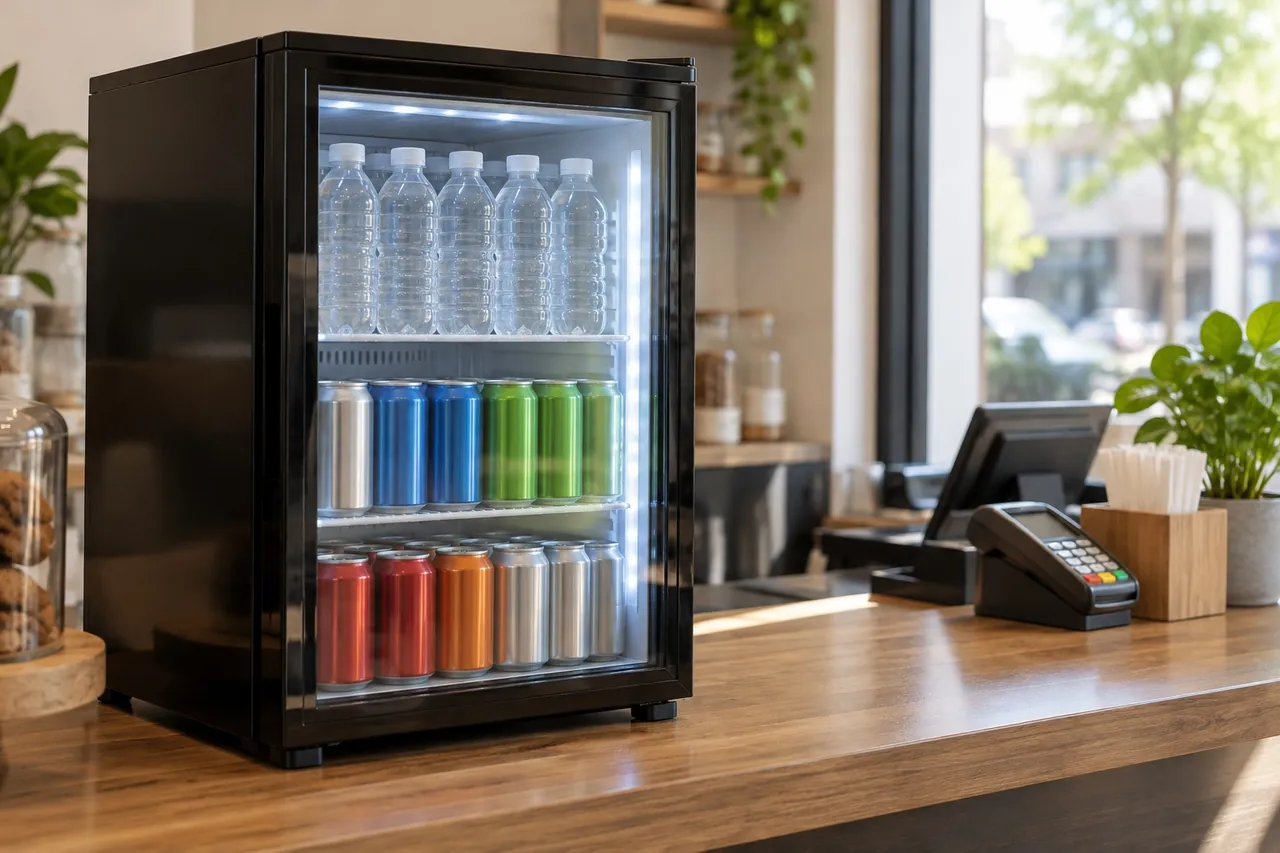
| Countertop display freezer (glass door) | 40–120 L (1.4–4.2 cu ft) | 43–60 × 40–55 × 60–90 cm (17–24 × 16–22 × 24–35 in) | Ice cream and frozen snacks at the till |
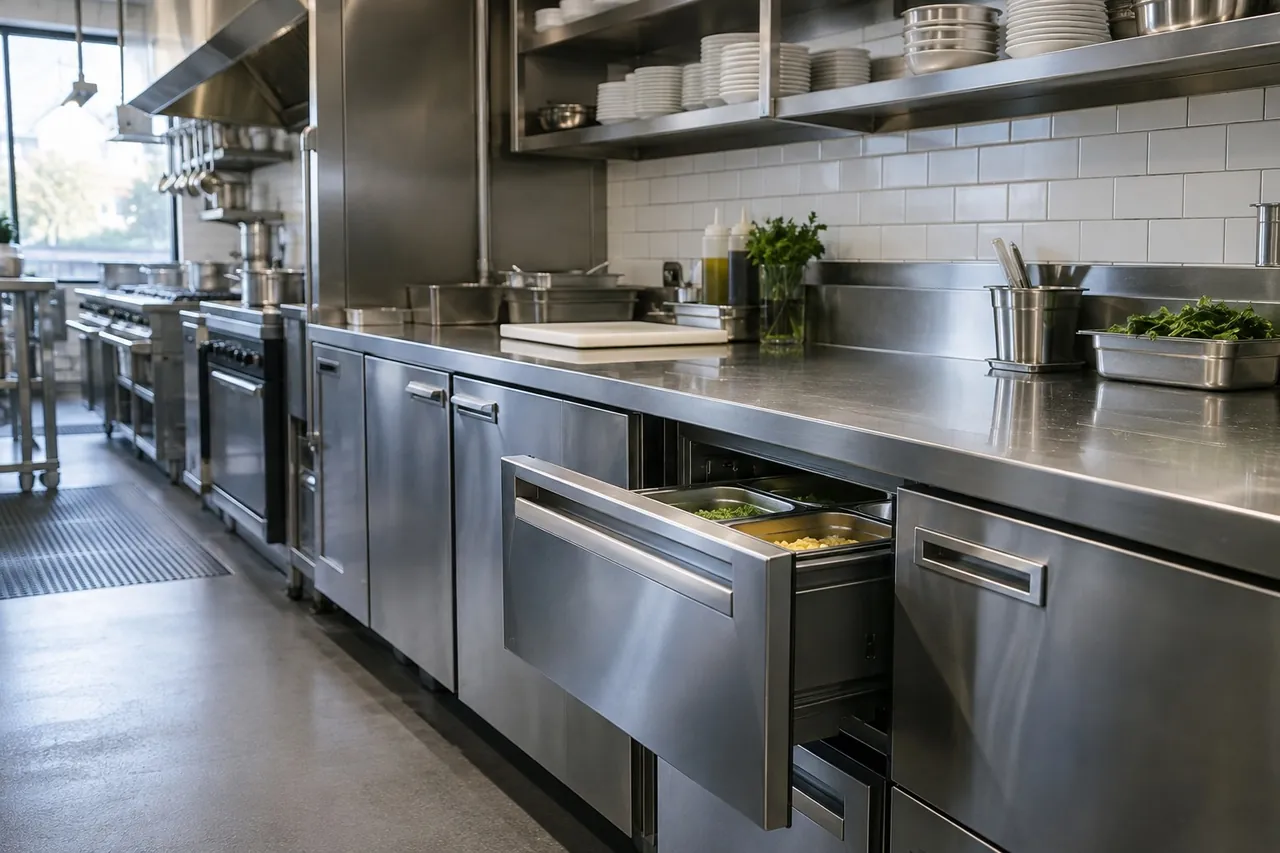
| Commercial undercounter freezer | 130–350 L (4.5–12 cu ft) | 69–122 × 76 × 76–86 cm (27–48 × 30 × 30–34 in) | Restaurant line, bar, prep station |
| Portable 12 V compressor freezer | 20–60 L (0.7–2 cu ft) | 55–80 × 35–45 × 40–50 cm (22–31 × 14–18 × 16–20 in) | Vans, food trucks, market stalls |
Compact upright and mini chest freezers
A compact upright, sometimes sold as a mini freezer only unit to distinguish it from a fridge with a freezer box, opens from the front and usually has two or three wire shelves or drawers. A mini freezer chest opens from the top, keeps cold better when opened and gives more usable space per litre, but takes more floor area and is harder to organise.
Countertop freezers
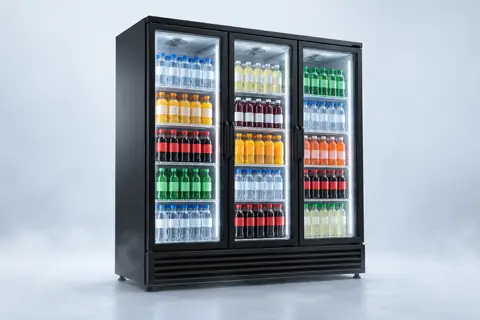
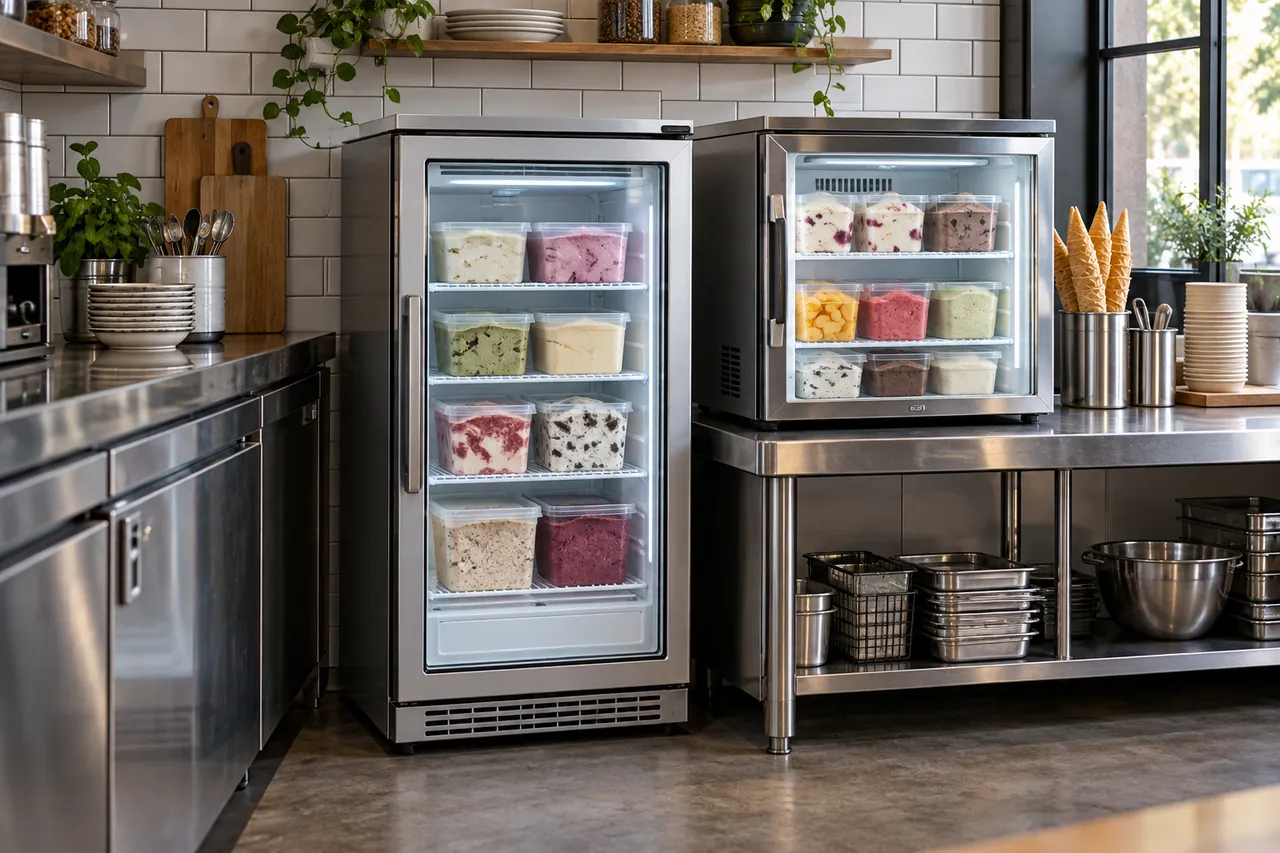
A small countertop freezer sits on a counter or shelf. Solid-door models are for storage; glass-door countertop display freezers sell ice cream and frozen novelties at the point of sale. A countertop freezer for ice cream should hold −18 °C to −22 °C (0 °F to −8 °F) with a heated, multi-pane door so it does not mist up. Our countertop display fridge guide covers both chilled and frozen countertop merchandisers.
Undercounter freezers
Commercial undercounter freezers are built to fit beneath a 860–915 mm (34–36 in) counter on a restaurant line or behind a bar. They are front-breathing, stainless and rated for hot kitchens. See the undercounter refrigerator guide for sizes, drawers and clearances.
Portable and 12 V mini freezers
A portable mini freezer is a compressor cool box running on 12/24 V DC and often 100–240 V AC. Good ones hold −18 °C (0 °F) even in a hot vehicle. Thermoelectric (Peltier) cool boxes cannot freeze reliably; they typically cool only to about 15–20 °C (27–36 °F) below ambient. Read more in our 12 V fridge freezer guide.
Is a mini fridge's freezer compartment a real freezer?
Usually not. The small ice-box inside a typical mini fridge runs at about −6 °C to −12 °C (21–10 °F) and is designed to make ice and hold already-frozen food for days or weeks, not to freeze fresh food or store it for months.
In Europe and the UK, freezer compartments are marked with a star rating that tells you what they can do:
| Star rating | Temperature | Typical storage of bought frozen food | Can freeze fresh food? |
|---|---|---|---|
| * (one star) | −6 °C (21 °F) | About 1 week | No |
| ** (two star) | −12 °C (10 °F) | About 1 month | No |
| *** (three star) | −18 °C (0 °F) | About 3 months or more | Not recommended in quantity |
| **** (four star) | −18 °C (0 °F) or colder | Long-term, per pack guidance | Yes, rated freezing capacity |
If you need to freeze fresh food, store meat for months or keep ice cream hard, buy a dedicated small freezer with a four-star rating or a stated −18 °C (0 °F) capability. A fridge with a small freezer at the bottom, or a small freezer refrigerator combo, is fine for a household, but a food business should keep frozen and chilled stock in properly rated cabinets.
Should a mini freezer be frost free?
A frost free mini freezer is worth paying for if the door is opened many times a day; a manual defrost compact freezer is cheaper, quieter and uses less energy, but needs defrosting once frost reaches about 6 mm (¼ in).
Most budget compact freezers are manual defrost with refrigerated shelves or wall plates. Every opening lets in humid air, which freezes onto those surfaces. In an office or flat that is opened a few times a day, defrosting two or three times a year is a small chore. On a bar or in a café, where the door opens 30–50 times a shift, frost builds quickly and an auto defrost compact freezer or self defrosting mini freezer with a fan and defrost heater keeps capacity and temperature steady. Commercial undercounter and countertop display freezers are normally automatic. The trade-offs are explained in frost free vs manual defrost.
What are typical small freezer dimensions and capacities?
Typical small freezer dimensions are about 47–55 cm (19–22 in) wide, 45–58 cm (18–23 in) deep and 50–85 cm (20–33 in) high for 30–85 L compact uprights; a 3.0 cu ft (85 L) unit usually fits under a standard worktop.
When comparing models, look at three figures, not just the headline litres:
- Gross vs net (storage) volume: the storage volume after shelves, evaporator plates and insulation is often 10–20% lower than the gross figure.
- Freezing capacity: stated in kg per 24 hours for four-star freezers; small units often freeze only 2–5 kg (4–11 lb) of fresh food per day.
- Clearances: allow 50–100 mm (2–4 in) at the back and sides of a rear-venting compact freezer. Building one into a cupboard without ventilation is a common cause of early failure; only front-breathing units can be fully built in.
As a rule of thumb, 1 cu ft (28.3 L) holds about 16 kg (35 lb) of tightly packed frozen food, so a 2 cu ft (57 L) mini freezer holds roughly 25–30 kg (55–65 lb) in practice.
Can a mini freezer go in a garage or outdoors?
A garage mini freezer works only if its climate class or ambient rating covers the garage's coldest and hottest days. Most compact freezers are class N or SN, designed for about 16–32 °C or 10–32 °C (61–90 °F or 50–90 °F) rooms.
Below that range, the thermostat may rarely call for cooling and food can soften; above it, the compressor runs continuously. Chest-type mini freezers tolerate cold garages better than uprights. Outdoors, use only units specifically rated and sealed for outdoor use, in shade with free airflow.
How much does a mini freezer cost to buy and run?
As an indicative guide, household mini freezers typically retail for about US$120–400, commercial countertop display freezers for roughly US$300–900, and commercial undercounter freezers for roughly US$1,000–3,000, depending on market, size and certification.
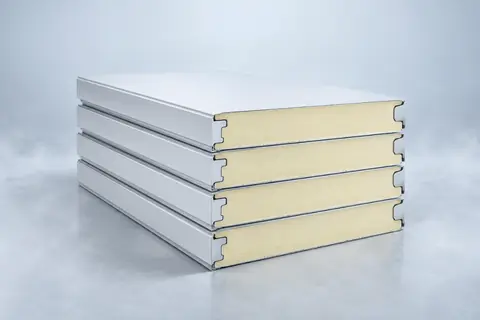
Running costs are modest: a well-insulated 60–90 L compact freezer often uses about 150–250 kWh a year, though small units are less efficient per litre than large ones because they have more wall area per litre of storage. Glass-door countertop display freezers use more because of lighting, door heaters and heat gain through the glass. An energy efficient mini freezer has thick walls (at least 50–60 mm or 2–2.4 in of foam), a natural refrigerant such as R600a or R290, and a good energy label in your market. See refrigerator and freezer power consumption for calculating cost per year from the rating plate.
What is different about a commercial mini freezer?
A commercial mini freezer is built to recover temperature quickly after frequent openings in a warm shop or kitchen, while a household compact freezer is built for a few openings a day in a 16–32 °C (61–90 °F) room. From the outside they can look almost identical.
The differences that matter in a business are:
- Ambient rating: commercial units are commonly rated for shop or kitchen conditions of about 30–43 °C (86–110 °F); household units usually stop at 32 °C (90 °F).
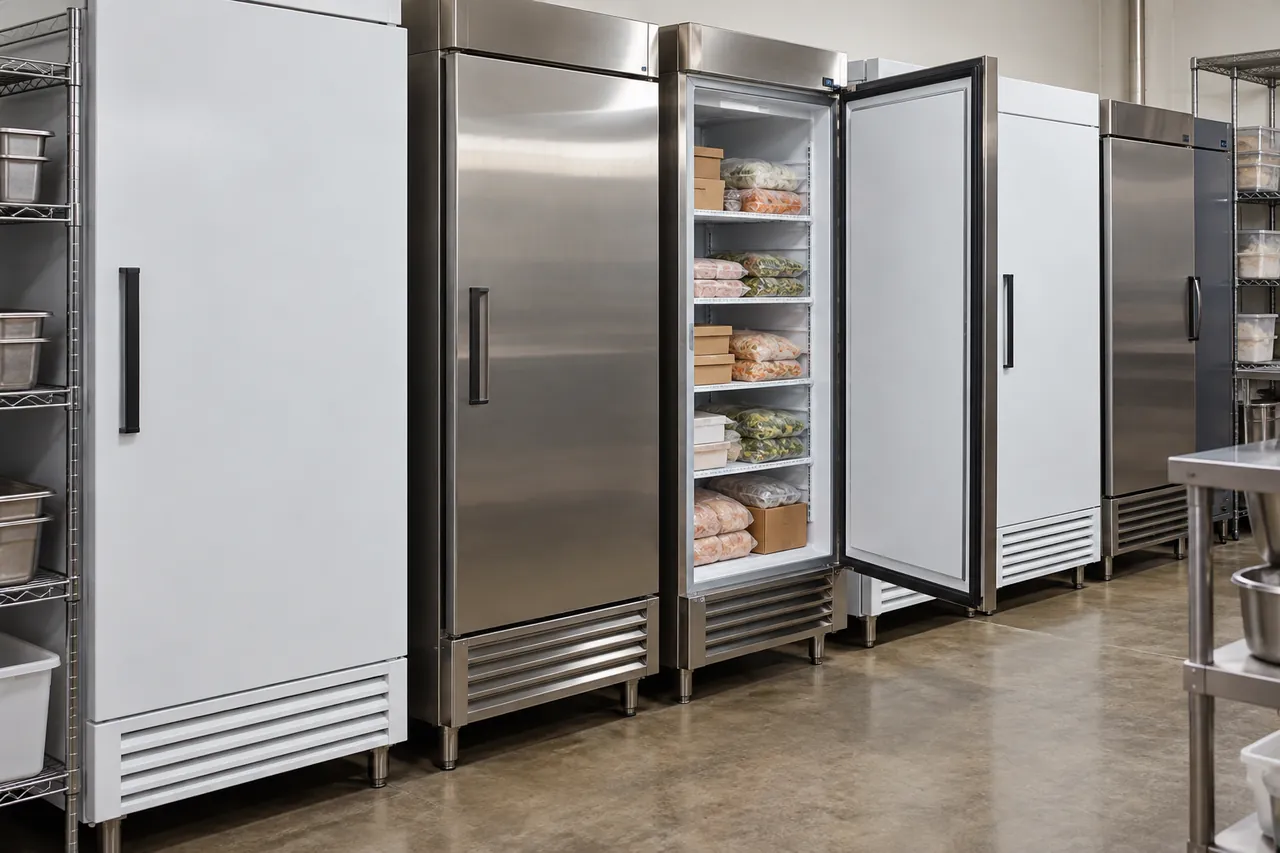
- Refrigeration: a larger compressor and often a fan-assisted evaporator, so a cabinet opened 50 times an hour stays at −18 °C (0 °F).
- Materials: stainless or coated steel, food-safe liners and heavy-duty hinges and gaskets that survive constant use.
- Controls: a digital controller with temperature display and alarms, which makes daily temperature logging under a HACCP plan straightforward.
- Certification: food-equipment listings such as NSF/ANSI 7 in the US are often required by inspectors for equipment holding food for sale.
The price gap is real, but a household unit used in a café typically fails sooner and risks stock losses. For the wider picture, see the frozen storage options in our upright and deep freezer guides.
How to choose a small freezer: checklist
Use this list when comparing any small freezer for sale or asking a supplier to quote:
- Job: storage only, selling to customers (glass door), under-counter on a kitchen line, or mobile?
- Temperature: a true −18 °C (0 °F) freezer, four-star where that rating applies; −20 °C to −22 °C (−4 °F to −8 °F) for ice cream display.
- Net capacity: stock in kg ÷ about 13 kg per cu ft (0.45 kg per litre), then round up.
- Footprint and venting: measure the space and check front-breathing vs rear-venting.
- Defrost: frost-free for frequent openings, manual for occasional use.
- Power: 220–240 V 50 Hz, 110–120 V 60 Hz or 12/24 V DC for vehicles.
- Commercial compliance: food-equipment and electrical certification (for example NSF, UL/ETL, CE) for public-facing use.
Be There supplies commercial display freezers, including compact glass-door and glass-top models for ice cream and frozen snacks, alongside upright and chest display freezers up to about 1,600 L. If you are buying for a chain of shops, kiosks or cafés, send the models, quantities, voltage and destination through the inquiry form and we will quote FOB, CIF or DDP.