
Short answer
A refrigerator uses about 100–250 W while running if it is a modern home fridge, and about 250–450 W for a commercial one-door glass door fridge. Because the compressor cycles, that works out to about 1–2 kWh per day for a home fridge and 3–6 kWh per day for a commercial display fridge, with a start-up surge of 3–5 times running watts.
Key takeaways
- Modern home fridges run at about 100–250 W and use 1–2 kWh per day (350–700 kWh per year).
- A commercial 1-door glass door fridge typically runs at 250–450 W and uses 3–6 kWh per day; a 1-door glass door freezer 7–14 kWh.
- Daily kWh = running watts × compressor run hours ÷ 1,000, plus heaters, fans and lights; duty cycle is usually 30–70%.
- Size generators and inverters for a start-up surge of about 3–5 times running watts, and use pure sine wave inverters.
- A dirty condenser can add roughly 10–30% to energy use, and each 1 °C colder set point roughly 2–4%.
- Compare models by rated kWh per 24 h under the same test, such as ENERGY STAR or an EU energy label at the same ISO 23953 climate class.
How many watts does a refrigerator use?
A modern full-size home refrigerator uses about 100–250 W while its compressor runs, and a commercial one-door glass door fridge about 250–450 W. Because the compressor cycles on and off, a home fridge typically uses 1–2 kWh per day and a commercial display fridge 3–6 kWh per day. At start-up the compressor briefly draws 3–5 times its running power.
Three numbers describe refrigerator power consumption, and people mix them up:
- Running watts: the power drawn while the compressor and fans are on. This is what a plug-in meter shows during a cycle.
- Starting (surge) watts: the short spike, lasting well under a second, when the compressor motor starts. It matters for generators, inverters and backup power, not for your bill.
- Energy per day or year (kWh): running watts × hours actually running. This is what you pay for, and what energy labels state.
The nameplate on the back of a fridge usually shows maximum current in amps, including defrost heaters. Multiplying nameplate amps by voltage gives a worst-case figure, often two to three times the real running watts, so use it for circuit sizing but not to estimate cost.
Refrigerator and freezer wattage chart
The table gives typical figures for modern equipment in a room at about 20–25 °C (68–77 °F). Older units, hot rooms, dirty condensers and heavy door use can double the daily energy.
| Appliance | Running watts | Start-up surge | Typical energy per day | Per year |
|---|---|---|---|---|
| Mini fridge, 40–120 L (1.4–4.2 cu ft) | 50–100 W | 200–400 W | 0.5–1 kWh | 180–365 kWh |
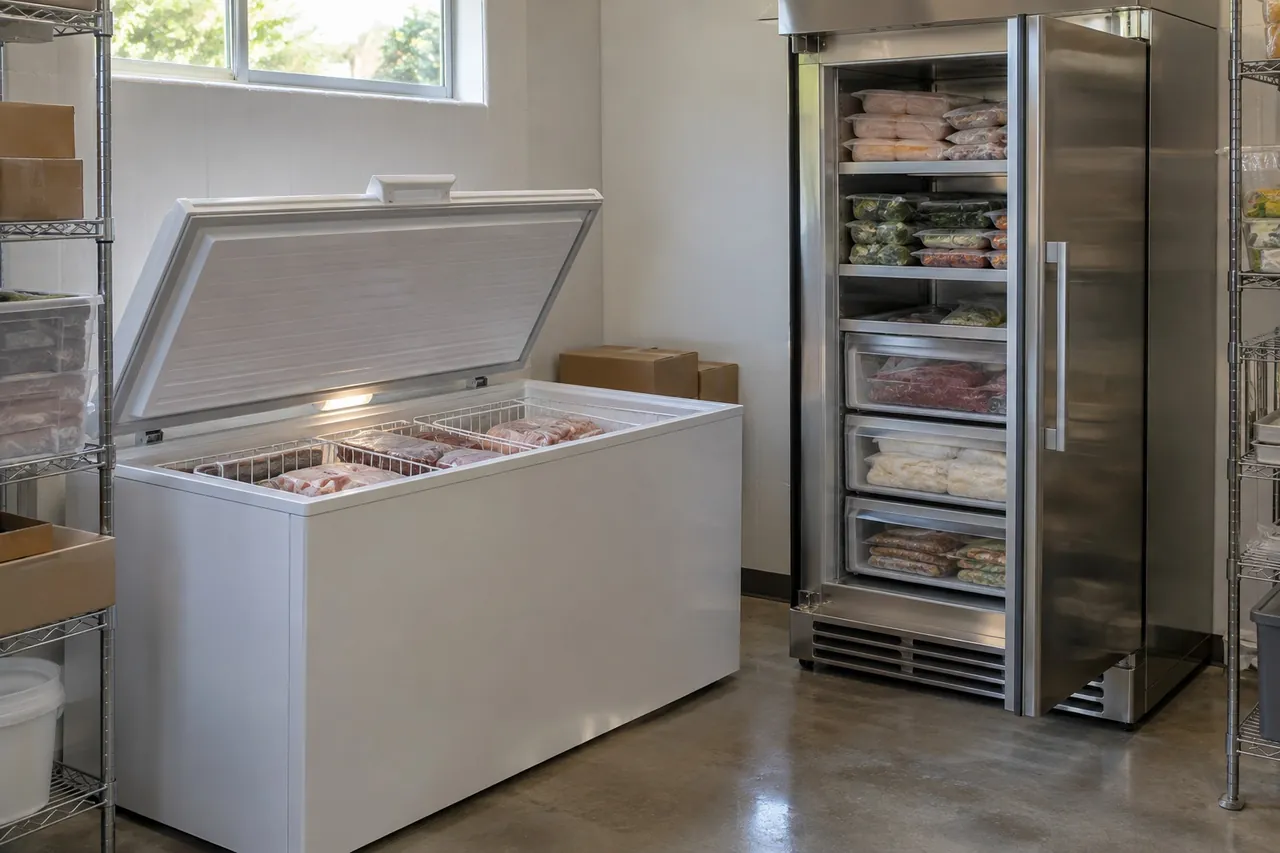
| Full-size home fridge-freezer, 500–700 L (18–25 cu ft) | 100–250 W | 600–1,200 W | 1–2 kWh | 350–700 kWh |
| Chest freezer, 200 L (7 cu ft) | 60–100 W | 300–500 W | About 0.6 kWh | About 215 kWh (ENERGY STAR estimate) |
| Upright freezer, 450–570 L (16–20 cu ft) | 100–200 W | 500–1,000 W | About 1.1 kWh | About 395 kWh (ENERGY STAR estimate) |
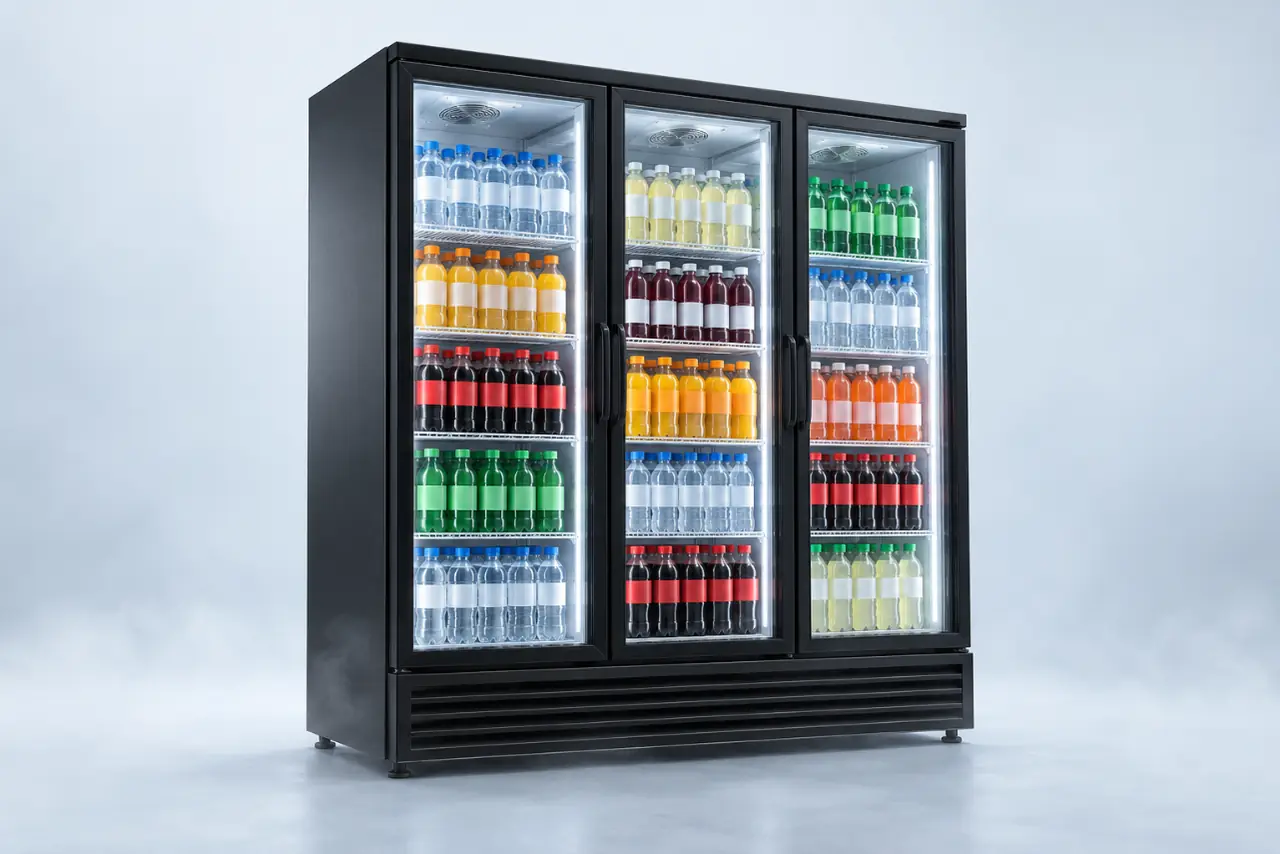
| Commercial 1-door glass door fridge, 400–600 L | 250–450 W | 1,000–1,800 W | 3–6 kWh | 1,100–2,200 kWh |
| Commercial 2-door reach-in fridge, 1,200–1,400 L (40–49 cu ft) | 350–600 W | 1,400–2,400 W | 3–7 kWh | 1,100–2,500 kWh |
| Commercial 1-door glass door freezer | 500–900 W | 2,000–3,500 W | 7–14 kWh | 2,500–5,000 kWh |
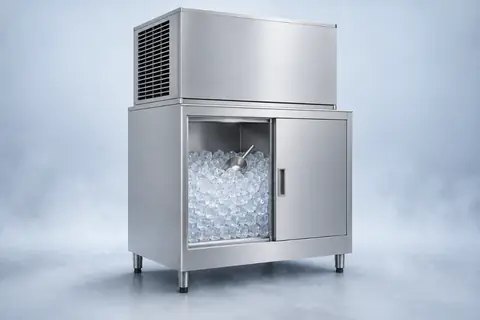
| Undercounter ice machine, 25–60 kg (55–130 lb) per day | 300–600 W | 1,200–2,400 W | 3–7 kWh | 1,100–2,500 kWh |
All figures are indicative; the rated daily consumption on the data sheet or energy label of the model you are buying is the number to compare. For freezers, defrost type also makes a large difference: manual defrost models typically use noticeably less energy than frost free ones because they have no defrost heater or evaporator fan. For the chest-versus-upright energy gap see chest freezer vs upright freezer.
How do you calculate how much electricity a refrigerator uses?
Daily energy in kWh = running watts × hours the compressor runs per day ÷ 1,000, plus the energy of any defrost heaters, door heaters, fans and lights that run on their own. The compressor run time, or duty cycle, is usually 30–50% for a home fridge and 50–70% for a busy commercial fridge in a warm room.
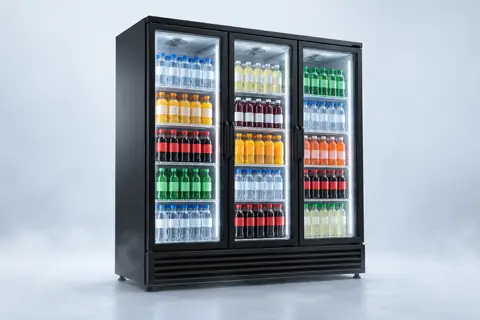
Worked example: a 2-door glass door beverage fridge
- Compressor and fans draw 450 W when running (measured with a plug-in meter).
- In a 28 °C (82 °F) shop with frequent door openings, the compressor runs about 60% of the time: 0.6 × 24 h = 14.4 h.
- Compressor energy: 450 W × 14.4 h ÷ 1,000 = 6.5 kWh.
- LED lighting at 30 W for 24 h adds 0.7 kWh; door frame heaters at 40 W add about 1 kWh.
- Total ≈ 8.2 kWh per day, or about 3,000 kWh per year.
- At an electricity price of 0.15 per kWh (in your currency), that is about 1.23 per day or 450 per year.
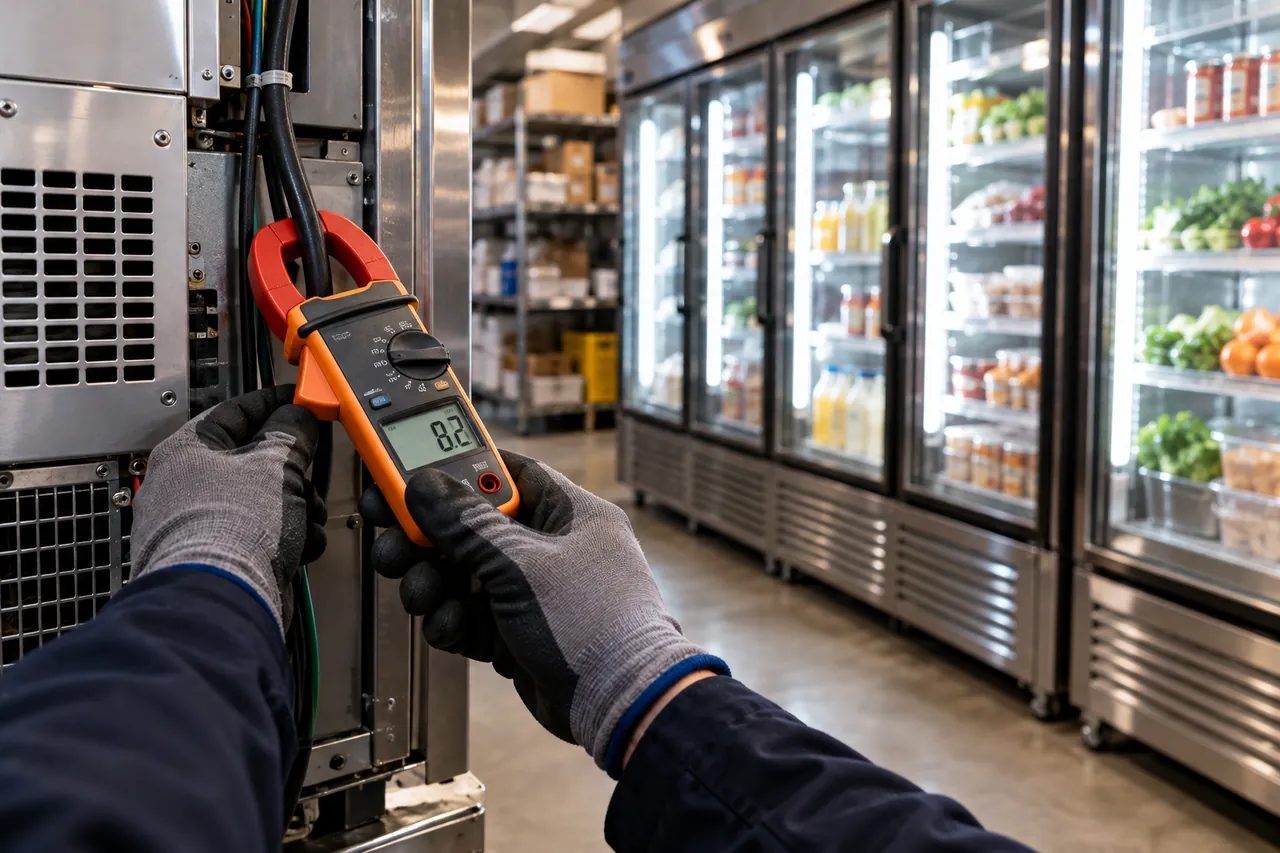
The most reliable way to find real consumption is to measure it: plug the unit into an energy meter for at least 24–48 hours of normal trading. For hard-wired walk-ins, a clamp meter on the condensing unit's supply and a count of run hours from the controller gives a good estimate.
What makes a fridge or freezer use more electricity?
The biggest drivers of fridge power consumption are the temperature difference between inside and outside, how much warm air and warm product enter, and how well the condenser can reject heat. Cabinet design (insulation, glass, fans, refrigerant) sets the baseline; use and maintenance decide where on the range you end up.
| Factor | Typical effect on energy | What to do |
|---|---|---|
| Room temperature 32 °C (90 °F) instead of 25 °C (77 °F) | Roughly +20–40% | Ventilate the room; keep units away from ovens and sun |
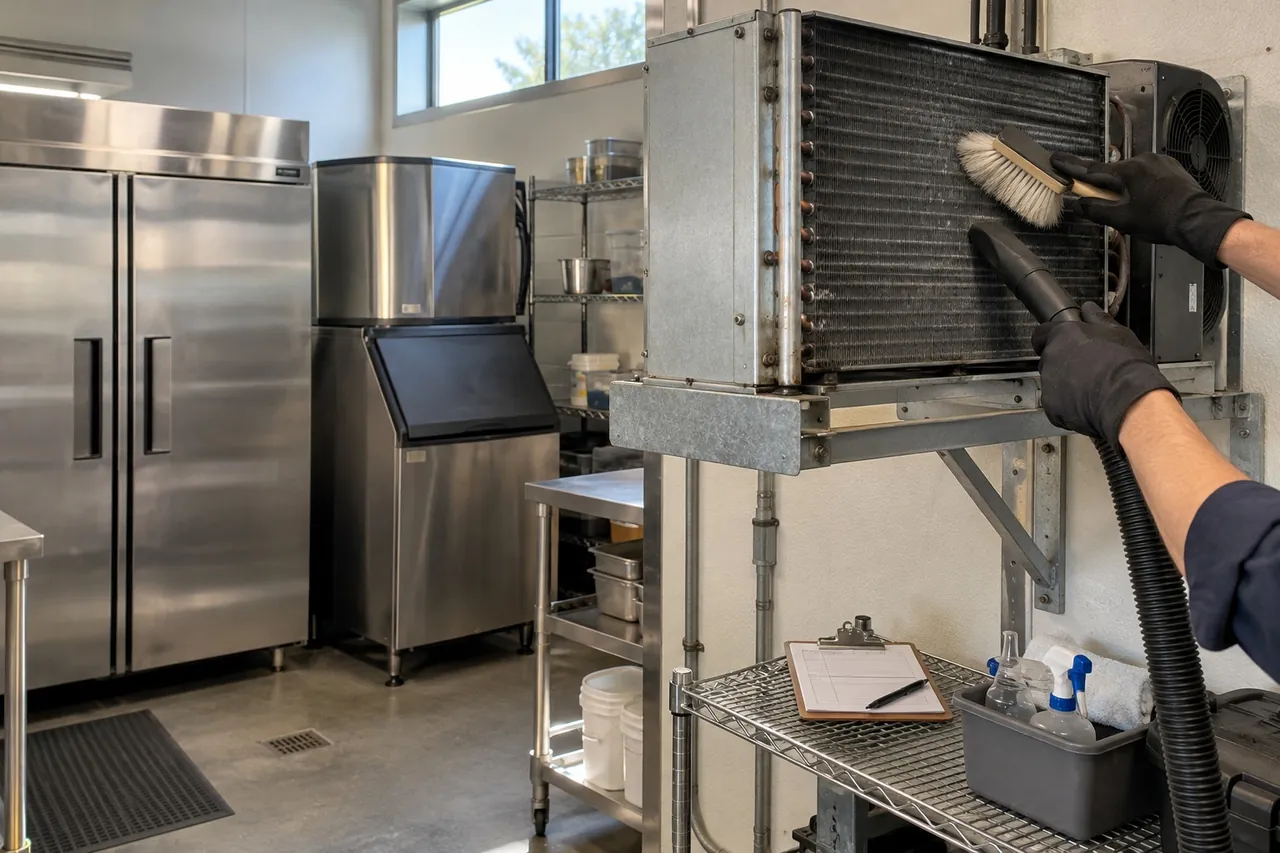
| Dirty condenser coil | Commonly +10–30%, and higher compressor wear | Clean coils monthly in kitchens, quarterly elsewhere |
| Set point 1 °C (1.8 °F) colder than needed | Roughly +2–4% per degree | Set fridges at +3 °C to +4 °C (37–39 °F), freezers at −18 °C (0 °F) |
| Torn or flattened door gasket | Can add 10% or more, plus icing | Do the paper test; replace gaskets |
| Open-front display instead of glass doors | Often 2–3 times the energy for the same shelf length | Use doors or night blinds where possible |
| Frequent loading of warm product | Large, variable | Pre-chill stock in a back-of-house cooler |
Percentages are typical ranges reported in practice and vary by unit. The point is that a well-maintained cabinet in a cool, ventilated spot can use far less than the same model jammed against a wall next to a fryer. Our commercial refrigeration maintenance checklist covers the routine that keeps consumption down.
How many watts do you need to run a fridge on a generator or inverter?
To run a fridge on a generator or inverter, size it for the start-up surge, not the running watts: allow about 3–5 times the running watts for the compressor to start, plus everything else on the same supply. A home fridge drawing 150 W running typically needs a generator or inverter able to deliver at least 600–1,000 W of surge.
- Inverters: choose a pure sine wave inverter. Compressor motors and electronic controllers can run hot, noisy or fail on modified sine wave output.
- Generators: stagger start-ups. Two freezers and a fridge starting at the same moment can trip a small generator even though their combined running load is modest.
- Batteries: daily kWh from the table above, divided by battery voltage, gives the amp-hours you need; see our 12V fridge freezer guide for a worked battery example.
- Outages: a closed, full freezer usually keeps food frozen for many hours without power, so a generator does not need to run continuously; see food storage times and power outages.
Commercial units with larger compressors, especially freezers and walk-ins on three-phase supply, should have backup power sized by an electrician using the locked-rotor current on the compressor's data plate.
How much electricity does a walk-in cooler or an ice machine use?
A small walk-in cooler of about 2.4 × 3.0 m (8 × 10 ft) with a 1–1.5 HP condensing unit typically uses about 15–35 kWh per day; a walk-in freezer of the same size uses roughly 30–55 kWh per day. A commercial cube ice machine uses about 4–7 kWh per 45 kg (100 lb) of ice when air-cooled, with small undercounter models at the less efficient end.
For walk-ins, energy depends heavily on panel thickness, door traffic and how many hours the compressor must run. Designers size the refrigeration so it meets the daily load in about 16 hours for coolers and 18 hours for freezers, leaving time for defrost and a margin for hot days. You can estimate the load with our cold room refrigeration load calculator. An energy efficient walk-in cooler combines:
- PU or PIR panels of 100 mm (4 in) for coolers and 120–150 mm (5–6 in) for freezers.
- Strip curtains or fast-closing doors, and door alarms.
- EC (electronically commutated) evaporator and condenser fan motors.
- Floating head pressure control and a condensing unit sited in shade with good air flow.
- LED lighting and controllers that end defrost on temperature, not just time.
Ice machines are covered in more detail in our guide to air-cooled vs water-cooled ice machines; water-cooled units use less electricity but much more water.
What makes a commercial refrigerator energy efficient?
An energy efficient refrigerator for business combines good insulation, efficient glass, a well-matched compressor on a low-GWP refrigerant such as R290, EC fan motors and LED lighting, and is certified to a recognised test such as ENERGY STAR in the US or an EU energy label. Look at rated kWh per day at a stated test condition, not marketing claims.
Features to look for
- R290 (propane) refrigerant: in plug-in display cabinets it typically uses less energy than R404A; see R290 vs R404A display refrigerators.
- Low-E double or triple glazed doors, with door heaters controlled by humidity rather than on all the time.
- Variable-speed or inverter compressors, which avoid repeated starts and hold temperature more steadily.
- Thick PU insulation (typically 50–80 mm in cabinets) with no gaps at corners.
- Adaptive defrost and an eco or night mode that dims lights when the shop is closed.
Labels and tests
ENERGY STAR covers commercial solid and glass door refrigerators and freezers, ice machines and residential appliances in the US. In the EU, Regulation (EU) 2015/1094 sets the energy label for professional refrigerated storage cabinets and Regulation (EU) 2019/2018 the label for refrigerating appliances with a direct sales function, such as glass door merchandisers. Display cabinets are tested under ISO 23953 climate classes, so compare models tested at the same class. When importing, ask for the test report and the stated kWh per 24 h; our glass door display fridge buying guide lists other specs to compare.
How to cut refrigeration energy costs: checklist
- Measure: log 24–48 hours of real kWh for each major unit with a plug-in or clamp meter.
- Compare against the rated daily consumption; a unit using far more than its rating usually has a maintenance problem.
- Clean condenser coils and check door gaskets first; these are the cheapest fixes.
- Set temperatures no colder than needed: +3 °C to +4 °C (37–39 °F) for fridges, −18 °C (0 °F) for freezers.
- Move units away from heat sources and give them the clearances in the manual.
- Pre-chill stock before it goes into display cabinets.
- When replacing, choose glass doors over open fronts, R290 refrigerant, EC fans, LED lighting and a certified energy rating.
- Above about 2–3 m³ of storage, compare one well-insulated walk-in against several reach-ins.
Be There supplies glass door display refrigerators with LED lighting, low-E glass and an R290 option, upright and chest display freezers, and complete walk-in cold room kits with PU or PIR panels and matched condensing units. Each quotation states rated power and refrigerant for your voltage. Send your requirements through the inquiry form and we will quote FOB, CIF or DDP.