Short answer
A countertop display fridge is a small glass door refrigerator of about 40–120 L (1.4–4.2 cu ft) that sits on a counter and holds drinks or packaged food at +2 °C to +8 °C (36–46 °F). Countertop display freezers hold −18 °C to −22 °C (0 °F to −8 °F) for ice cream. For a shop, choose a fan-cooled commercial unit with LED lighting and a self-closing door.
Key takeaways
- Countertop display fridges typically hold 40–120 L (1.4–4.2 cu ft), about 25–100 standard 330 mL (12 oz) cans depending on the model.
- Commercial units hold +2 °C to +8 °C (36–46 °F); food that must stay cold needs +5 °C (41 °F) or below.
- Countertop freezers for ice cream hold −18 °C to −22 °C (0 °F to −8 °F) and need heated or multi-pane glass to stop fogging.
- Household mini fridges are rated by climate class, for example N (16–32 °C) or T (16–43 °C); a shop counter in a hot climate needs at least an ST or T rating or a commercial unit.
- Leave the vent clearance specified by the manufacturer, typically 50–100 mm (2–4 in), and keep the unit away from coffee machines and direct sun.
What is a countertop display fridge?
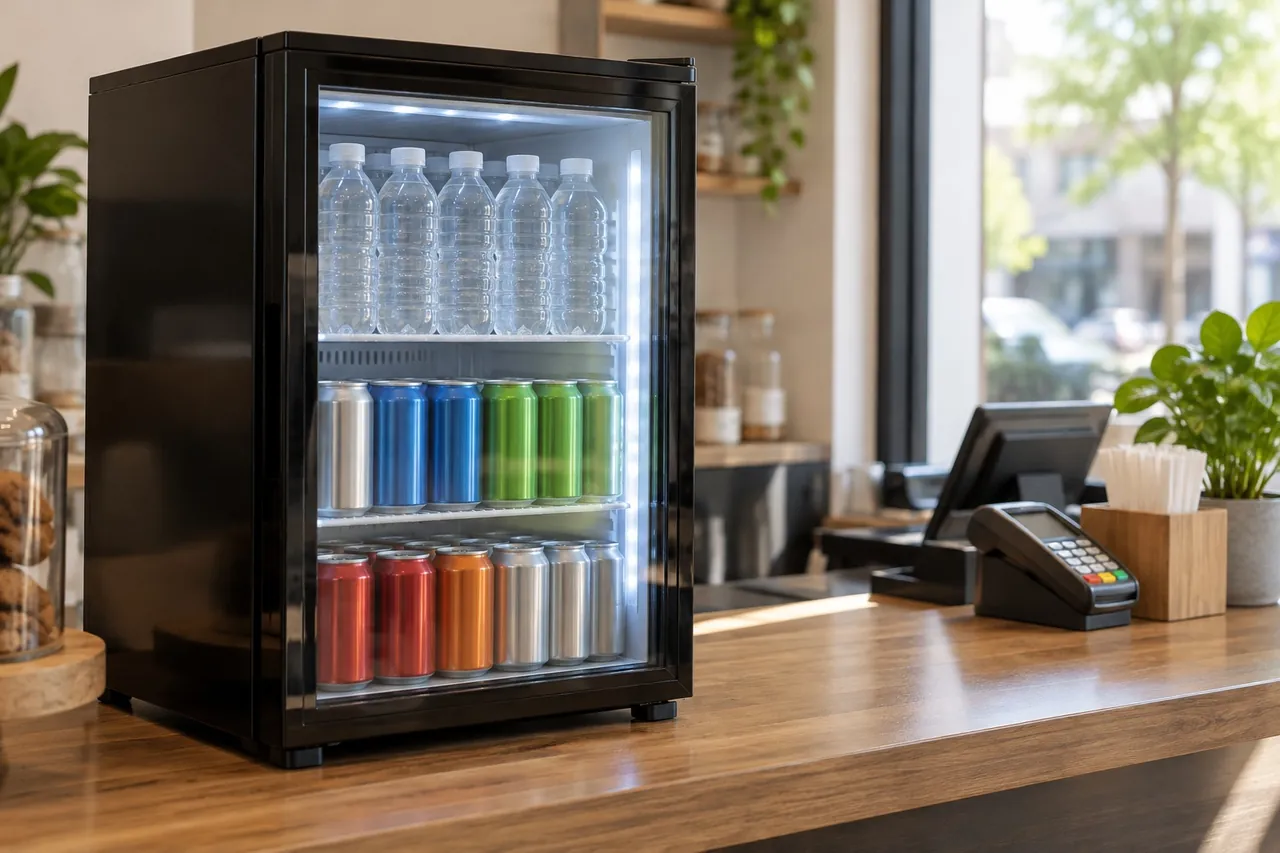
A countertop display fridge is a compact refrigerator with a glass door that stands on a counter, shelf or table and shows chilled drinks or packaged snacks at eye level next to the till. Most hold about 40–120 L (1.4–4.2 cu ft) and run at +2 °C to +8 °C (36–46 °F) on a standard single-phase socket.
Shops, cafés, pharmacies, hotel receptions, salons and kiosks use them for impulse sales: energy drinks, water, yogurt, desserts and grab-and-go snacks. Drinks brands also place branded countertop coolers in stores that have no room for a full-size merchandiser.
The term overlaps with a mini fridge with glass door, a countertop mini fridge or a counter top fridge, which is the same shape but usually a household or office product. The difference matters in a shop. A commercial countertop display refrigerator uses fan-forced air, recovers quickly after the door is opened, often has a lock and a lit canopy, and is rated for warmer rooms. A home glass door mini refrigerator is designed for a few openings a day in a cool room. Both are covered below, with honest advice on when a home unit is enough.
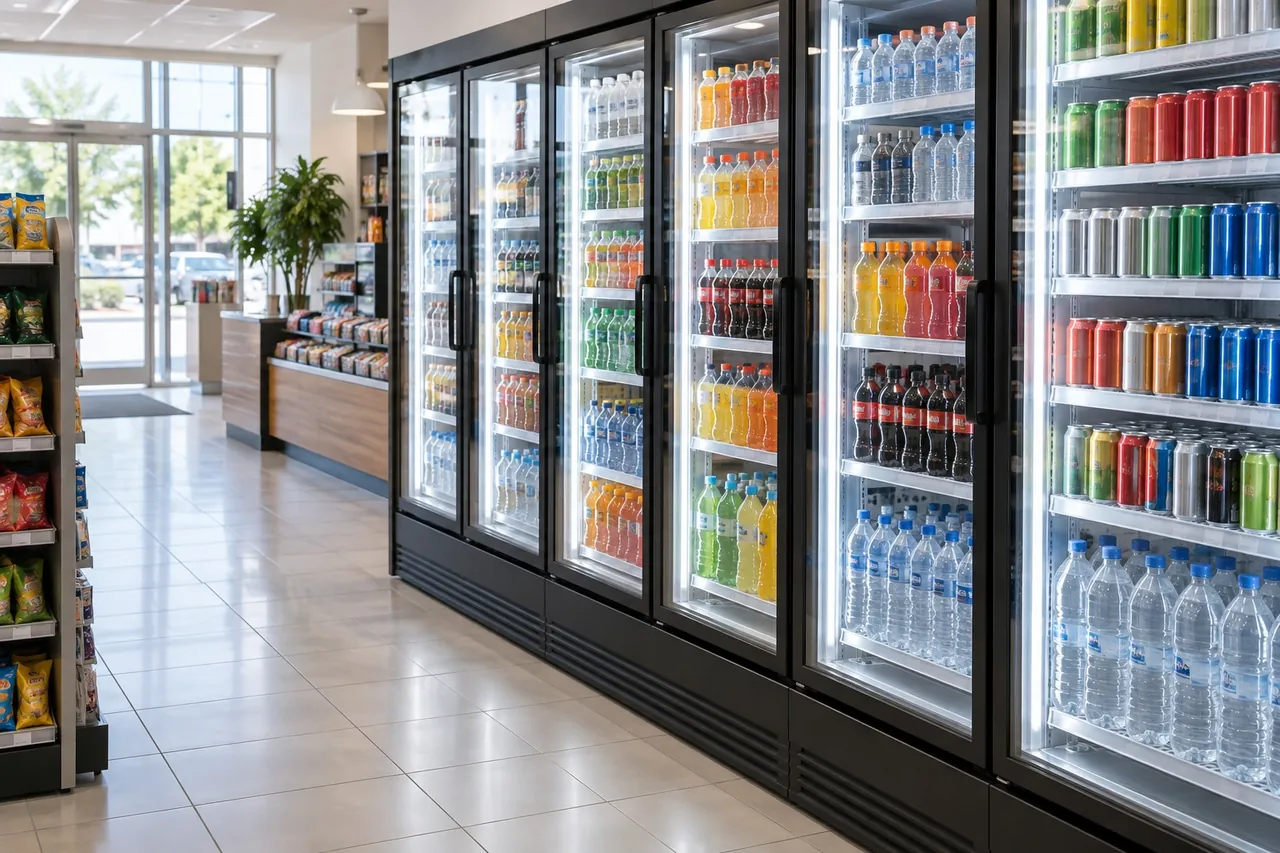
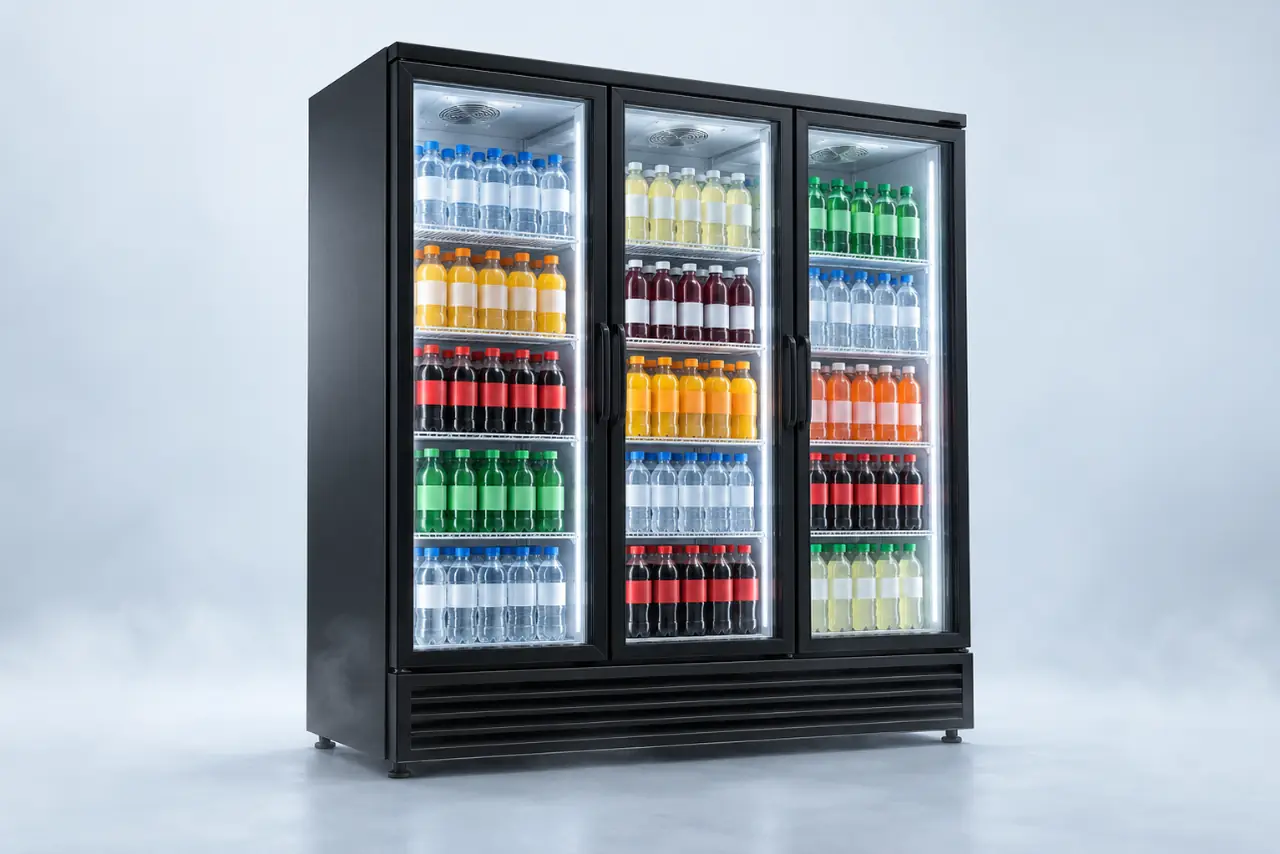
When countertop space runs out, the next step is an upright glass door display refrigerator, which holds several times more on the same floor area as a table plus a countertop unit.
Countertop fridge sizes and types
Countertop fridges and coolers come in a few standard formats. Dimensions vary by model, so treat the figures as typical ranges and confirm the external size and door swing before ordering.
| Type | Typical volume | Approx. external size (W × D × H) | Temperature | Typical use |
|---|---|---|---|---|
| Small countertop glass door cooler | 40–60 L (1.4–2.1 cu ft) | 420–450 × 400–480 × 500–650 mm | +2 °C to +8 °C (36–46 °F) | Cans and small bottles by the till |
| Large countertop display refrigerator | 70–120 L (2.5–4.2 cu ft) | 450–520 × 450–550 × 750–900 mm | +2 °C to +8 °C (36–46 °F) | Drinks, yogurt, sandwiches |
| Countertop display freezer | 40–100 L (1.4–3.5 cu ft) | Similar to coolers | −18 °C to −22 °C (0 °F to −8 °F) | Ice cream cups, frozen novelties |
| Refrigerated countertop case (curved or square glass) | 50–160 L (1.8–5.6 cu ft) | 600–1,200 mm long | +2 °C to +8 °C (36–46 °F) | Cakes, pastries, sushi |
| 2 door mini fridge (fridge + freezer) | 85–130 L (3–4.5 cu ft) | 480–520 mm wide, 800–860 mm high | Fridge about +3 °C to +5 °C; freezer about −15 °C to −18 °C | Offices, staff rooms, hotel rooms |
A 2 door mini fridge with freezer, sometimes listed as a two door mini fridge or 2 door mini refrigerator, normally stands under a counter rather than on it and is rarely built for display. If you sell cakes or deli items rather than packaged goods, see our refrigerated display case guide. A glass front mini fridge 24 inch (610 mm) wide is usually an undercounter beverage fridge, covered in our commercial beverage cooler guide.
Commercial mini fridge vs home glass door mini refrigerator
A glass mini fridge from a home or office range costs less and can be fine for low-use spots. A commercial mini fridge earns its price where the door opens all day or the room is warm.
| Feature | Commercial countertop refrigerator | Home or desk mini fridge |
|---|---|---|
| Cooling | Fan-forced, fast recovery | Usually static; some are thermoelectric |
| Room rating | Commonly up to 32 °C (90 °F) or higher | Climate class SN, N, ST or T |
| Door | Double-glazed or low-E, self-closing, often lockable | Single or double glazing; no auto-close |
| Lighting | LED interior and often a lit header | Basic or no LED |
| Approvals | Commercial listings such as UL/ETL, NSF or CE | Household appliance marks |
Household climate classes describe the room temperatures a fridge is designed for: SN 10–32 °C (50–90 °F), N 16–32 °C (61–90 °F), ST 16–38 °C (61–100 °F) and T 16–43 °C (61–109 °F). A clear mini fridge or see through mini fridge on a desk in an air-conditioned office will cope. The same unit on a shop counter in a hot climate, opened 100 times a day, will not hold temperature.
Avoid thermoelectric desk mini fridges for any sales use: they typically cool only about 11–14 °C (20–25 °F) below room temperature. For food that must stay at +5 °C (41 °F) or below, use a compressor-cooled commercial countertop fridge and check it with a thermometer.
Countertop freezer for ice cream and frozen snacks
A countertop freezer with a glass door lets shops sell ice cream cups, frozen novelties and frozen snacks without giving up floor space. It must hold −18 °C (0 °F) or colder; ice cream for retail sale is commonly kept at −18 °C to −22 °C (0 °F to −8 °F) so it stays hard and keeps its texture.
What separates a good countertop display freezer from a poor one:
- Heated or triple-pane glass. At −20 °C (−4 °F) inside and a humid shop outside, plain glass fogs over and hides the product. Heated door frames stop the door freezing shut.
- Defrost. Small freezers often use manual defrost, which means emptying the unit every few weeks. Automatic defrost costs more but saves labour and keeps the display clear. Our guide to frost-free vs manual defrost freezers explains the trade-off.
- Recovery. Each door opening lets in warm, moist air. Look for a fan-assisted evaporator and a self-closing door.
- Real capacity. A mini countertop freezer of 40–60 L (1.4–2.1 cu ft) holds roughly 30–60 ice cream cups, depending on size.
A small glass door freezer suits impulse sales. For a full ice cream range, a glass-top chest freezer gives far more capacity per euro or dollar. Be There's display freezers include upright models of about 400–1,600 L and glass-top chest models of about 300–700 L, both holding −18 °C to −24 °C (0 °F to −11 °F).
Mini fridge with glass door and LED lights: display features that sell
The point of a glass front mini refrigerator on a counter is visibility. These features decide whether customers notice it and whether the product looks good once they do:
- LED lighting. A mini fridge with glass door and LED lights shows product clearly and adds almost no heat compared with older fluorescent tubes. Vertical LED strips at the door frame light every shelf evenly.
- Glass. Double glazing is the minimum for a cooler; low-E coated glass reduces heat gain and condensation in humid shops.
- Self-closing door. A door that swings shut by itself keeps cold air in when staff or customers forget.
- Lock. Useful for alcohol, high-value drinks or unattended counters.
- Header or lightbox. A retail countertop display for a drinks brand often carries an illuminated header panel for branding.
- Adjustable shelves sized for the tallest product you sell, usually 500 mL (17 oz) bottles.
Colour matters too. Black cabinets and black interiors make lit products stand out; white interiors reflect more light. For brand programmes ordering many units, the cabinet colour, header artwork and door decals are usually specified together with the order quantity. The same LED, glass and certification choices apply to full-size merchandisers; our glass door display fridge buying guide covers them in more detail.
Where to place a countertop cooler, and table top coolers for food
Most countertop coolers fail early for the same reason: they cannot get rid of heat. The compressor releases heat through grilles at the back, sides or base, and a unit squeezed between a coffee machine and a wall runs hot and constantly.
- Keep the clearance stated in the manual, typically 50–100 mm (2–4 in) at the vents.
- Keep it out of direct sunlight, away from ovens, grills, coffee machines and heaters.
- Stand it on a level, solid surface that can take its loaded weight; a 100 L unit full of drinks can weigh well over 60 kg (130 lb).
- Plug it into its own socket at the right voltage and frequency, not a shared extension lead.
- Clean the condenser grille monthly in dusty or greasy sites.
Table top cooler for drinks vs table top cooler for food
A table top cooler for drinks only needs to make drinks pleasantly cold, so +2 °C to +8 °C (36–46 °F) is fine. A table top cooler for food is a food-safety control: sandwiches, salads, dairy desserts and cut fruit must stay at +5 °C (41 °F) or below under the FDA Food Code and similar rules. Choose a fan-cooled unit, do not overfill it, load only pre-chilled product and log temperatures daily with a probe thermometer.
How to choose a countertop display fridge: checklist
Use this list to compare models or to brief a supplier for countertop refrigerator commercial orders.
- Space: counter width, depth and height clearance, including vent clearance and door swing.
- Product: drinks only, chilled food, or frozen; this sets the temperature range.
- Capacity: how many cans, bottles or cups you sell per day. Size for at least one day's sales so new stock has time to chill.
- Cooling: compressor and fan-forced for any sales use; avoid thermoelectric units.
- Room rating: a commercial rating or at least climate class ST or T for warm rooms.
- Display: LED lighting, double-glazed or low-E glass, self-closing door, lock, header panel.
- Refrigerant and power: R290 where allowed; matching voltage, frequency and plug.
- Approvals: UL/ETL and NSF for the US, CE for Europe, or your local scheme.
When one countertop unit is not enough, an upright single-door merchandiser of about 0.6–0.7 m (24–28 in) wide usually sells far more. Be There manufactures upright commercial display refrigerators with one to four doors and display freezers for retail. For countertop models, send your size, temperature, voltage, certification and quantity through the inquiry form; we will confirm what we can supply and quote FOB, CIF or DDP.