
Short answer
A 12V fridge freezer is a portable refrigerator that runs on a vehicle's 12 V or 24 V supply. Compressor models hold +10 °C to −22 °C (50 °F to −8 °F) and average about 0.7–2 A, or 15–45 Ah a day; thermoelectric coolers only cool about 15–20 °C below ambient and draw 4–5 A continuously, so they cannot keep food safe in a hot vehicle.
Key takeaways
- Only compressor 12V fridges can freeze: they reach −18 °C to −22 °C (0 °F to −8 °F) regardless of ambient within their rating.
- Thermoelectric electric coolers cool only about 15–20 °C (27–36 °F) below ambient and draw 4–5 A (50–60 W) continuously.
- A 50 L compressor fridge at +4 °C typically uses 20–55 Ah per 24 h at 12 V; freezer mode in a hot van can reach 60–85 Ah.
- Battery size = engine-off amp-hours ÷ usable depth of discharge (about 50% for AGM, 80–90% for LiFePO4).
- Wire 12V fridges directly to the battery with at least 4 mm² (12 AWG) cable and a 10–20 A fuse, not through a lighter socket.
- Above about 150–200 L of cold space or many daily drops, an insulated van with a transport refrigeration unit is cheaper per litre.
What is a 12V fridge freezer?
A 12V fridge freezer is a portable, insulated cabinet with its own small refrigeration system that runs directly from a vehicle's 12 V or 24 V DC supply, and usually also from 100–240 V mains through an adapter. Good compressor models hold anything from +10 °C (50 °F) down to about −18 °C to −22 °C (0 °F to −8 °F) in a 20–100 L (0.7–3.5 cu ft) box.
The name covers three very different technologies. A 12V compressor fridge is a true miniature refrigerator with a DC compressor and can freeze. A thermoelectric "electric cooler" only cools a set amount below the outside air. An absorption fridge uses heat from a 12 V element, mains or gas. Choosing the wrong one is the most common reason a portable fridge fails a driver, a caterer or a mobile vendor on a hot day.
This guide is for businesses and drivers who carry food, drinks, samples or medicines in cars, vans and truck cabs. If you need to move more than a few hundred litres, the answer is an insulated van body with a proper transport refrigeration unit, covered at the end.
Compressor vs thermoelectric vs absorption: which 12V cooler is best?
A compressor fridge is the best 12V cooler for anything that must stay food-safe or frozen, because it holds a set temperature regardless of outside heat and uses the least battery power per day. Thermoelectric coolers are cheap and silent but cannot freeze or keep food below +5 °C (41 °F) on a hot day; absorption fridges suit parked campers with gas, not moving vehicles.
| Technology | How it cools | Lowest temperature | Typical 12 V draw | Best for |
|---|---|---|---|---|
| Compressor (DC) | Vapour-compression cycle with a small DC compressor | −18 °C to −22 °C (0 °F to −8 °F), regardless of ambient within rating | 3–5 A (35–60 W) while running, cycling on and off | Food, frozen goods, medicines, long trips |
| Thermoelectric (Peltier) | Electric current through a semiconductor plate moves heat | About 15–20 °C (27–36 °F) below ambient | 4–5 A (50–60 W), usually continuous | Drinks and lunch on short drives |
| Absorption (3-way) | Heat drives an ammonia–water–hydrogen cycle | About 20–30 °C (36–54 °F) below ambient | 8–13 A (100–150 W) on 12 V | Caravans parked on gas or mains |
The key line is the third column. A thermoelectric cooler in a van at 35 °C (95 °F) will sit at roughly +15 °C to +20 °C (59–68 °F), which is inside the food temperature danger zone. A compressor fridge in the same van holds +3 °C (37 °F) or −18 °C (0 °F) as set. For how the vapour-compression cycle works, see how refrigeration works.
How many amps does a 12V fridge use?
A typical 40–60 L 12 volt fridge with a compressor draws about 3–5 A (35–60 W) while the compressor runs, but it only runs part of the time, so the average is usually 0.7–2 A, or roughly 15–45 Ah per day. Freezer mode, hot weather and frequent lid openings push it to the top of that range or beyond.
Daily consumption depends on three things: the temperature difference between the box and the air around it, the insulation thickness (usually 30–60 mm of PU foam), and how often the lid is opened and warm product loaded. Pre-chilling food and drinks before loading is the single most effective way to save battery.
| Setup (50 L compressor box) | Approx. compressor run time | Average draw at 12 V | Energy per 24 h |
|---|---|---|---|
| Fridge at +4 °C (39 °F), cab at 25 °C (77 °F) | 25–35% | About 0.8–1.3 A | About 20–30 Ah (250–380 Wh) |
| Fridge at +4 °C (39 °F), van at 35 °C (95 °F) | 40–55% | About 1.5–2.2 A | About 35–55 Ah (430–650 Wh) |
| Freezer at −18 °C (0 °F), van at 32 °C (90 °F) | 60–80% | About 2.5–3.5 A | About 60–85 Ah (720–1,000 Wh) |
| Thermoelectric cooler, any setting | Near 100% | About 4–5 A | About 100–120 Ah (1,200–1,450 Wh) |
Figures are indicative for good-quality units; check the rated consumption at a stated ambient on the data sheet. Our guide to refrigerator and freezer power consumption explains the same duty-cycle maths for mains fridges.
What battery and wiring does a 12V fridge need?
Size the battery so it covers the fridge's daily amp-hours times the days you need without charging, divided by the usable depth of discharge: about 50% for lead-acid or AGM and 80–90% for lithium iron phosphate (LiFePO4). Wire the fridge directly to the battery with thick cable and a fuse, not through a cigarette-lighter socket.
Worked example: delivery van running a 50 L fridge overnight
- Fridge at +4 °C in a hot van uses about 45 Ah per 24 h.
- The van is parked 14 hours a night with the engine off: 45 × 14 ÷ 24 ≈ 26 Ah.
- Add a margin for hot nights: 26 × 1.3 ≈ 34 Ah.
- With an AGM battery at 50% usable: 34 ÷ 0.5 ≈ 68 Ah, so fit an 80–100 Ah auxiliary battery.
- With LiFePO4 at 80% usable: 34 ÷ 0.8 ≈ 43 Ah, so a 50–60 Ah lithium battery is enough.
- Recharge while driving with a DC-DC charger, or add 100–200 W of solar on the roof.
Wiring rules that prevent most faults
- Use cable of at least 4 mm² (12 AWG) for runs up to about 3 m (10 ft), and 6 mm² (10 AWG) beyond that; voltage drop makes the compressor's controller cut out early.
- Fit a fuse near the battery sized to the fridge maker's instructions, usually 10–20 A.
- Set the fridge's battery protection (low, medium or high cut-out) to protect a starter battery; with a separate auxiliary battery, use the low setting.
- Most compressor fridges accept 12 V and 24 V DC automatically, so the same unit works in a car and in a 24 V truck.
What size portable fridge freezer do you need?
Choose a portable fridge freezer by the volume you actually load in a day, plus about 20% for air circulation: 15–25 L for a driver's lunch and drinks, 35–50 L for a sales rep or a day's sandwiches, and 60–100 L dual-zone for catering, markets and long-haul cabs. Bigger boxes run less efficiently when half empty.
| Size | Holds roughly | Typical external size | Common use |
|---|---|---|---|
| 15–25 L (0.5–0.9 cu ft) | 20–30 cans (355 ml / 12 oz) | About 550 × 350 × 400 mm | Car or cab, single driver |
| 35–50 L (1.2–1.8 cu ft) | 50–70 cans, or 2 days' food | About 700 × 400 × 450 mm | Vans, sales reps, sample transport |
| 60–80 L (2.1–2.8 cu ft), single or dual zone | 80–110 cans, or separate fridge and freezer | About 800–900 × 450 × 500 mm | Mobile vendors, events, long-haul trucks |
| 90–100+ L (3.2–3.5+ cu ft) dual zone | Mixed chilled and frozen stock | About 950–1,000 × 500 × 500 mm | Small catering runs, remote sites |
A dual-zone 12v refrigerator freezer has two compartments with separate set points, for example +3 °C and −18 °C, cooled by one compressor. It is useful when you carry both, but each zone is small. For a fixed small freezer in a shop or kitchen, see our mini freezer guide.
What is the best fridge for a semi truck or tractor trailer cab?
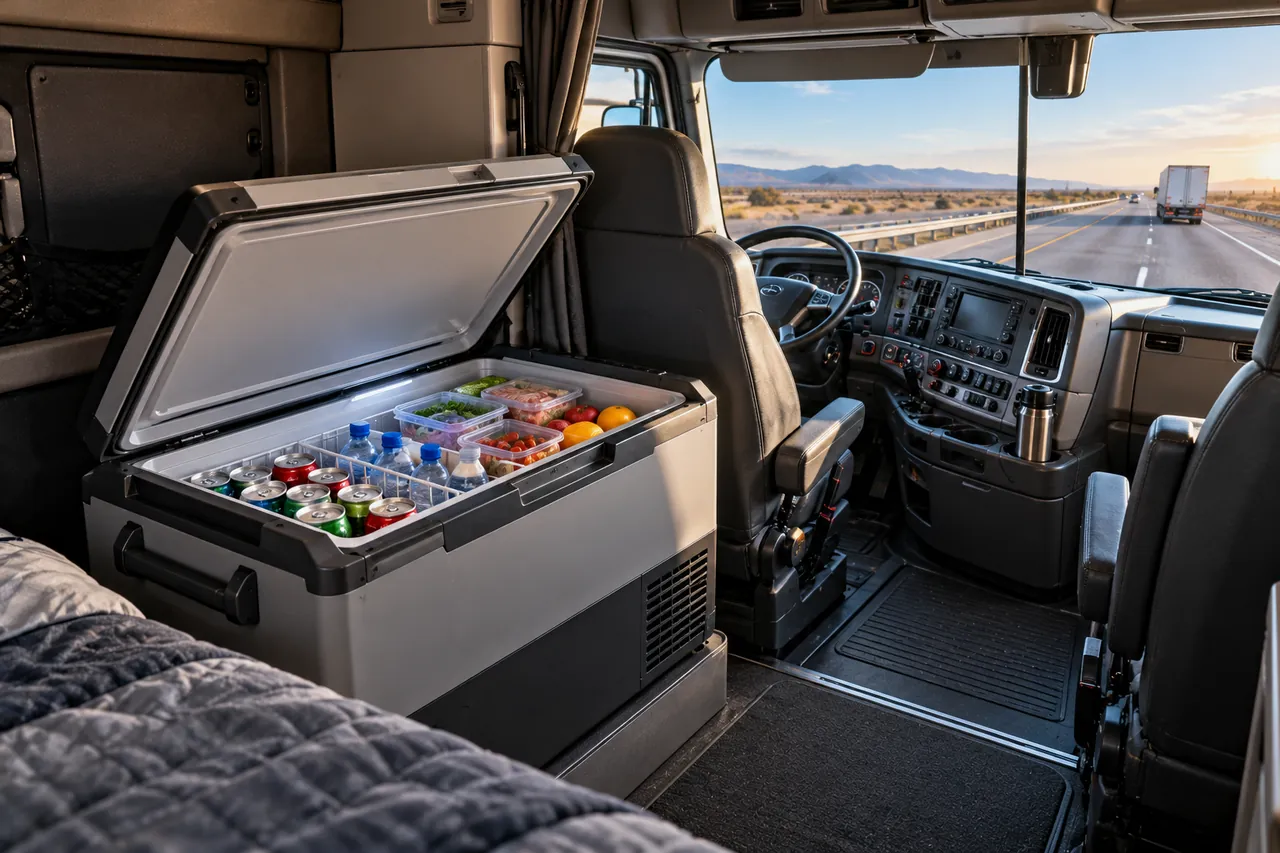
The best semi truck refrigerator is a 12/24 V compressor fridge of about 30–50 L, mounted securely in the sleeper cab and wired directly to the house or starter batteries with low-voltage protection. Long-haul drivers who need frozen food add a dual-zone unit or a small separate 12 volt freezer.
Points specific to trucks:
- Vibration: choose a unit designed for vehicles, with a mounting kit or tie-down points; domestic mini fridges are not built for it.
- No-idle rules: if the engine is off for 10 hours, budget the battery as in the worked example, or fit an auxiliary battery system.
- Slide-out drawers under the bunk: front-opening drawer fridges need ventilation to the cab; never block the compressor grille.
- Heat: cabs in direct sun exceed 40 °C (104 °F); pick a model rated for the tropical climate class (often listed as "T" or up to 43 °C).
A cab fridge keeps the driver's food cold; it is not a substitute for refrigeration of cargo. Reefer trailers and refrigerated box trucks use dedicated units, explained in how truck refrigeration units work.
Can you use a 12V fridge for deliveries or a mobile food business?
Yes, for small volumes and short routes, provided the fridge holds chilled food at +5 °C (41 °F) or below and frozen food at −18 °C (0 °F) or below, and you can prove it with a thermometer or logger. Thermoelectric coolers cannot do this reliably in summer and should not be used for high-risk food.
Typical business uses include caterers moving desserts, florists and sample couriers, pharmacy and veterinary visits, ice cream and cake deliveries, and market traders. Practical rules:
- Pre-chill the fridge on mains before loading, and load food already at its target temperature.
- Keep a probe thermometer or data logger inside and record temperatures at loading and delivery; see our temperature data logger guide.
- Do not overfill; leave space round the evaporator wall so air can move.
- Strap the unit down and keep it out of direct sun.
- Check local rules: food hygiene authorities and, for international road transport of perishables, the ATP agreement, set requirements for vehicles and equipment.
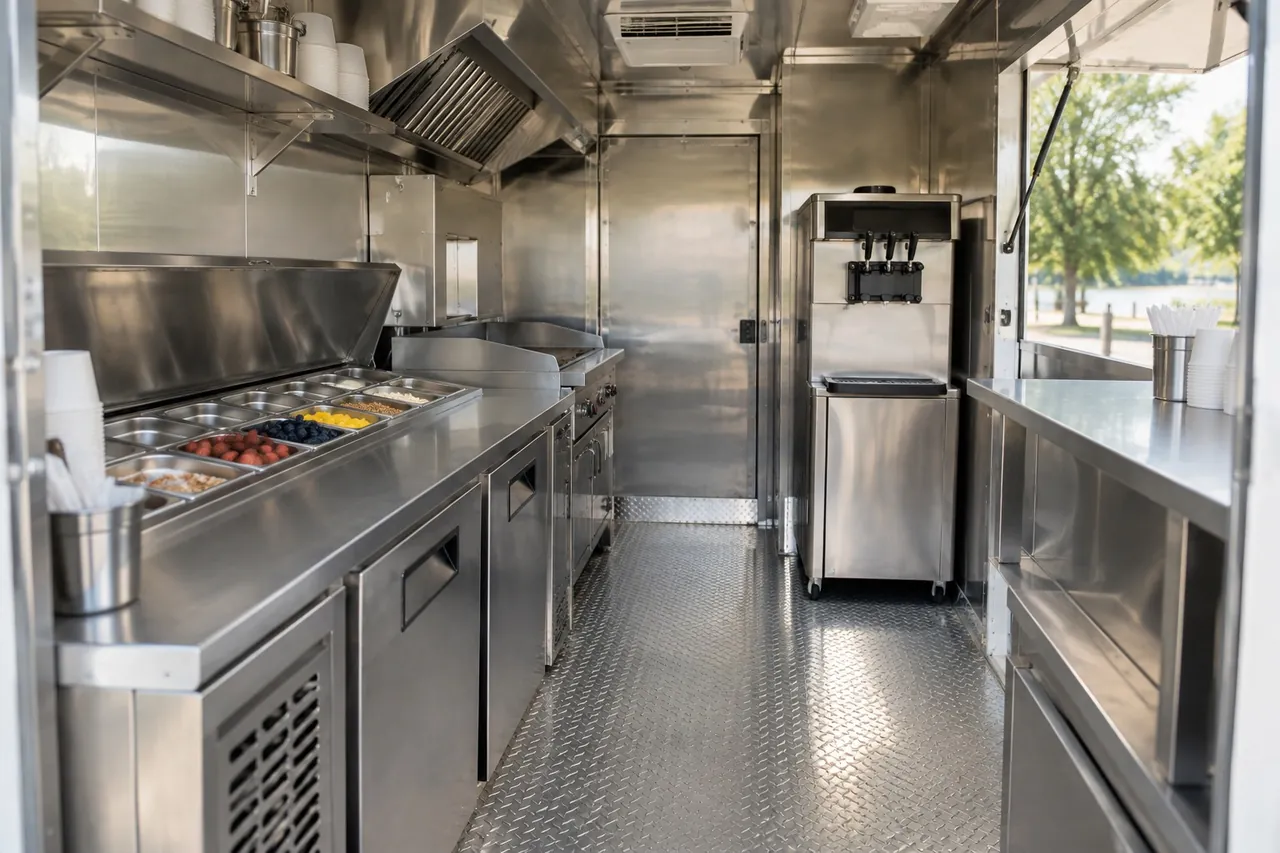
A food trailer or truck that cooks and serves needs NSF-listed or equivalent commercial units on mains or a generator, covered in our food truck refrigeration guide.
When should you move from a 12V fridge to a refrigerated van?
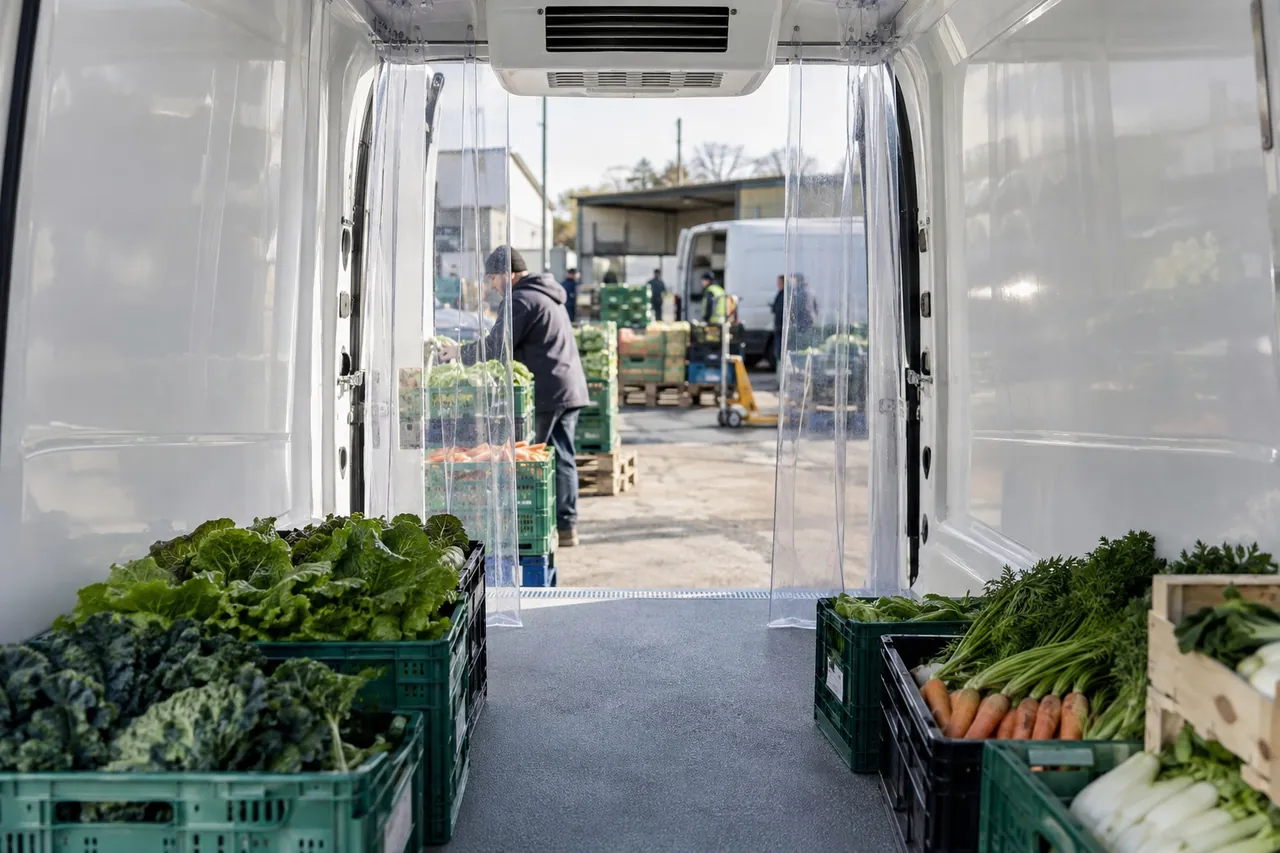
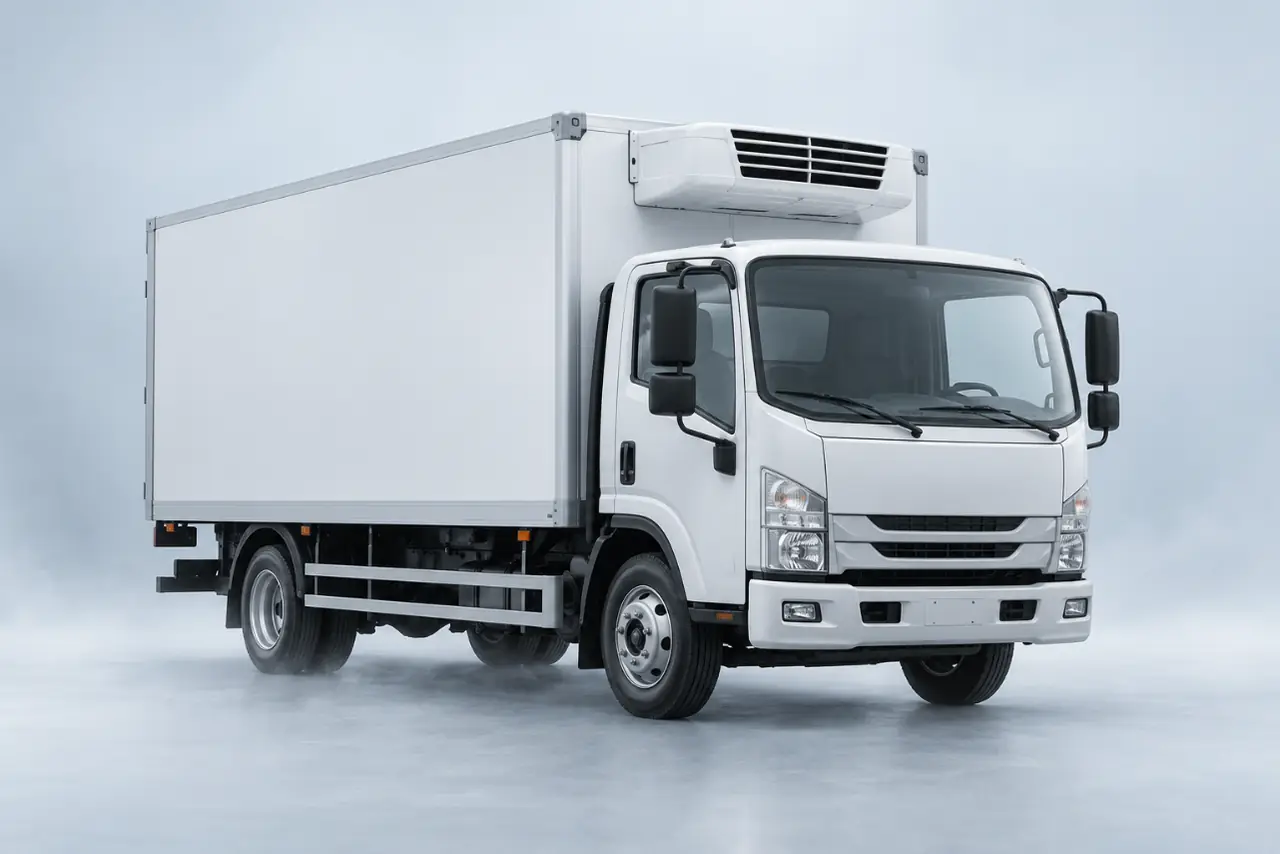
Move to a refrigerated van once you need more than about 150–200 L of chilled or frozen space, make several drops a day, or must meet transport temperature rules for a customer. Several portable fridges at that point draw more battery, take more floor space and cost more than an insulated body with a proper reefer unit.
A van conversion insulates the cargo area with 50–100 mm (2–4 in) of PU foam and fits a transport refrigeration unit, usually driven from the engine with optional electric standby, so it can hold a whole 4–15 m³ (140–530 cu ft) box at chilled or frozen temperature through door openings. Our guides on refrigerated van conversions and the truck refrigeration unit calculator show how to size it.
| Need | 12V portable fridge | Refrigerated van with reefer unit |
|---|---|---|
| Cold volume | 15–100 L per box | 4–45 m³ box |
| Door openings | A few per day | Dozens of drops per day |
| Temperature range | +10 °C to −22 °C | +15 °C to −20 °C (59 °F to −4 °F) |
| Power | Vehicle or auxiliary battery | Engine-driven, independent diesel or electric |
| Indicative cost | Low per unit | Higher up front, far lower per litre of cold space |
How to choose a 12V fridge freezer: checklist
- Decide the job: drinks only (thermoelectric is acceptable), food or frozen goods (compressor only).
- Pick the volume you load per day plus 20%; choose dual-zone only if you carry chilled and frozen together.
- Check the rated temperature range and the maximum ambient (look for 43 °C tropical rating for hot climates).
- Read the rated daily consumption at a stated ambient, then size the battery for your engine-off hours.
- Confirm 12/24 V DC and 100–240 V AC inputs, three-level battery protection and a direct-wiring kit.
- Look for 40–60 mm insulation, a lid seal you can replace, tie-down points and a basket or divider.
- For deliveries, add a thermometer or logger and keep records.
- If you need more than about 150–200 L or many drops a day, price a refrigerated van instead.
Be There does not sell portable 12V fridges, but it does supply what businesses move up to: truck and van refrigeration units for 4–45 m³ boxes holding −20 °C to +15 °C (−4 °F to 59 °F), engine-driven, independent diesel or fully electric, with install kits matched to your vehicle. Send your vehicle model, box size, target temperature and number of daily drops through the inquiry form and we will quote FOB, CIF or DDP.