
Short answer
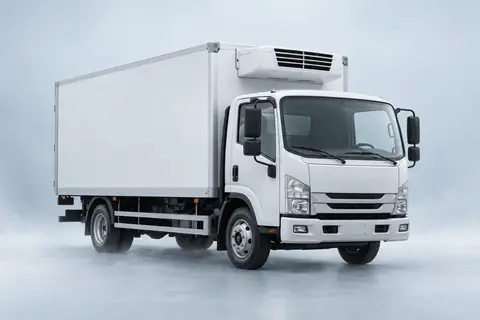
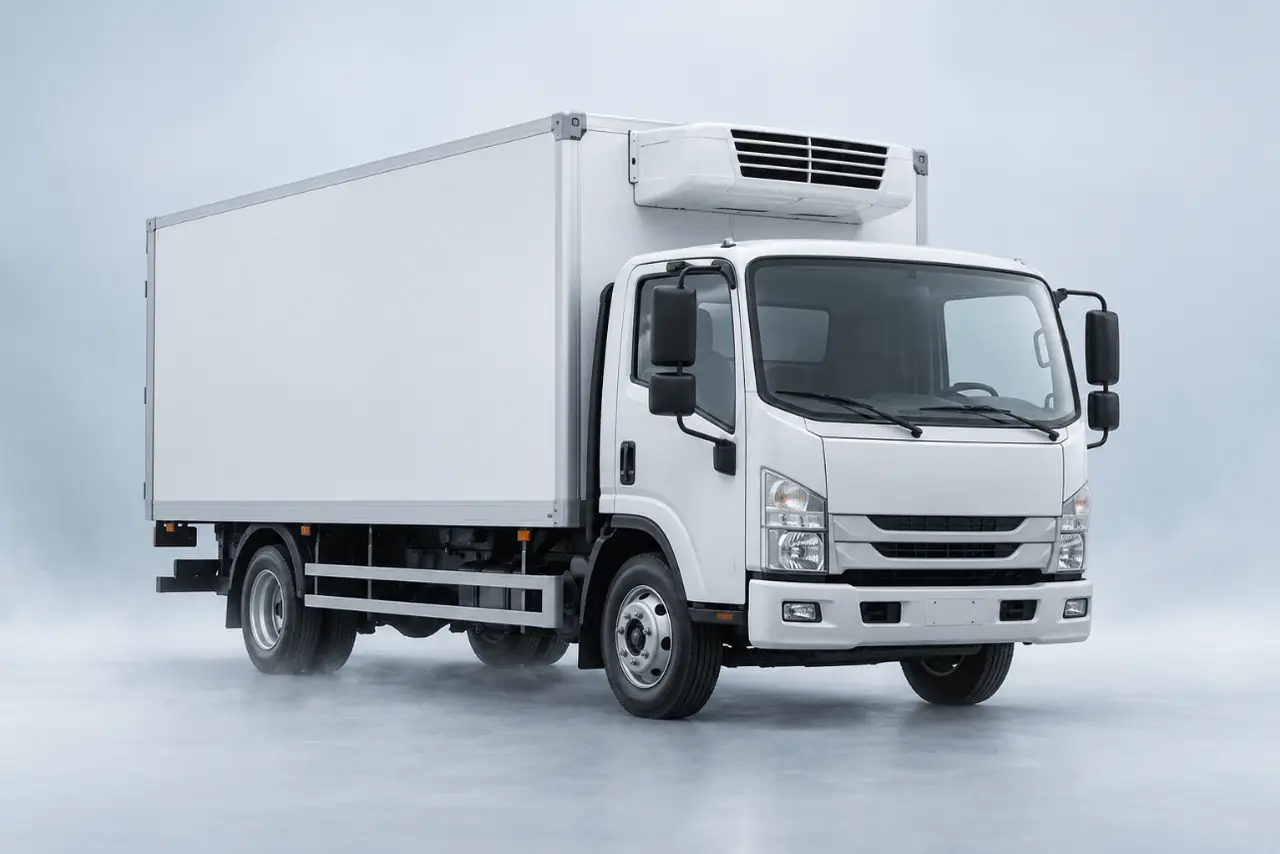
A truck refrigeration unit runs a vapour-compression cycle: the compressor (driven by the engine, its own diesel engine or electricity) pumps refrigerant to a condenser on the front of the box and an evaporator inside it. 'Reefer fuel' is diesel used to run a trailer's own refrigeration engine, which in the US can be dyed, off-road diesel.
The refrigeration cycle on wheels
- Compressor raises the pressure and temperature of refrigerant gas.
- Condenser, on the front of the box or roof, releases that heat to the outside air.
- Expansion valve drops the pressure so the refrigerant becomes very cold.
- Evaporator inside the box absorbs heat from the air, which a fan circulates around the load.
A controller keeps the set point by cycling the compressor or modulating capacity, and runs defrost by reversing hot gas or using electric heaters.
Three ways to drive the compressor
| Drive | Power source | Typical vehicles | Strengths |
|---|---|---|---|
| Direct drive | Belt from the vehicle engine | Vans, light trucks | Light, simple, low cost |
| Independent diesel | Reefer's own engine and fuel tank | Medium trucks, trailers | Cooling continues with truck engine off |
| Electric | Vehicle battery, alternator or high-voltage pack | Electric vans, urban delivery | Quiet, zero local emissions |
Many direct-drive and diesel units add electric standby: plug into mains at the depot and keep the box cold overnight without running an engine.
What is reefer fuel?
On a trailer with an independent diesel reefer, the refrigeration engine has its own tank. In the United States, diesel burned in that separate tank is not used to drive the vehicle on the highway, so operators can use dyed off-road diesel and avoid highway fuel tax. Dyed fuel found in the truck's propulsion tank is a violation. Rules differ in other countries.
Temperature monitoring
Food and pharmaceutical customers increasingly ask for proof that the box stayed in range. Options include a data logger with printout, telematics that send temperatures and door events to the cloud, and separate probes for return air and product. Pharmaceutical transport often needs calibrated, validated logging.
Choosing a unit
Size the unit from box surface, insulation and target temperature, then add door openings. Our truck refrigeration calculator does the arithmetic, and the sizing guide explains it.