Short answer
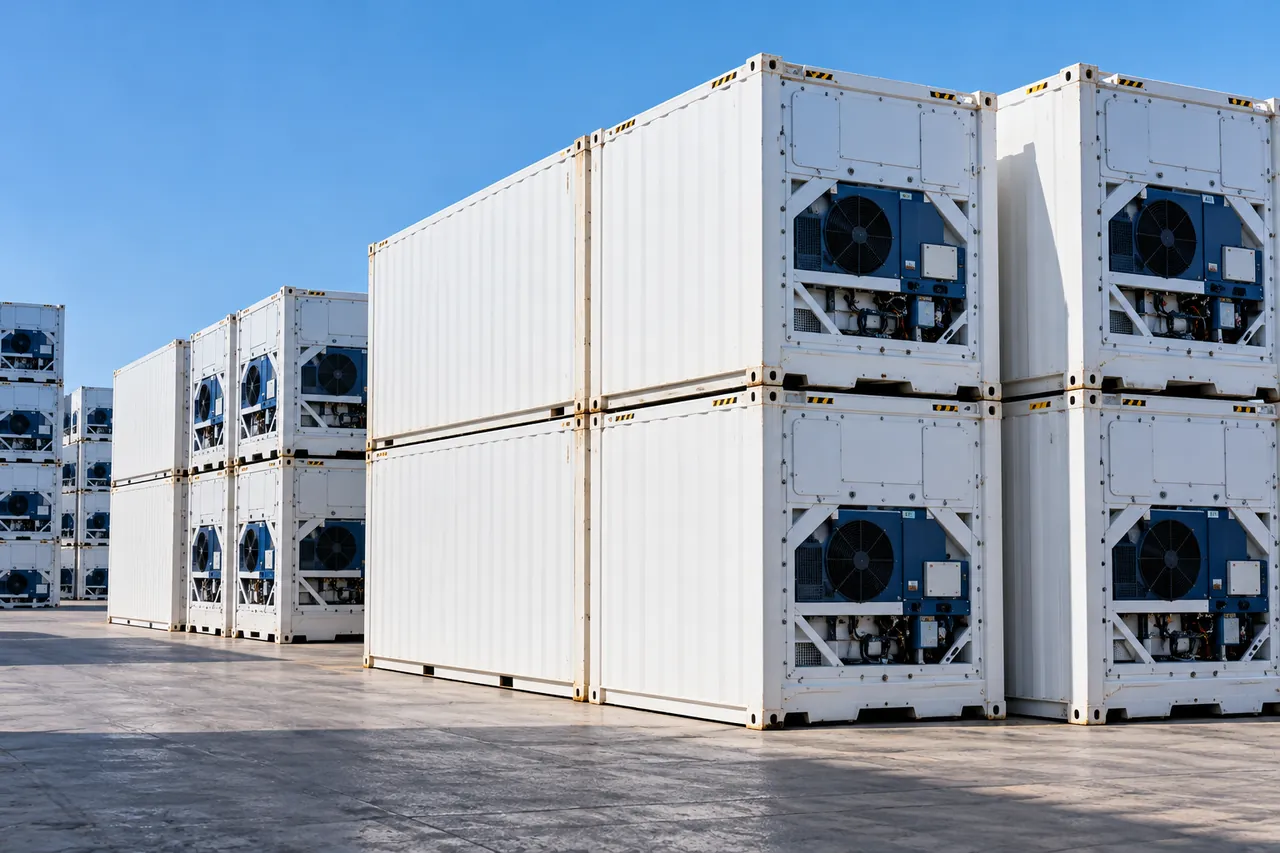
A reefer container price in 2026 is indicatively about US$20,000–30,000 for a new 40 ft high cube and US$15,000–22,000 for a new 20 ft. Used working 40 ft reefers typically sell for US$5,000–12,000, non-working reefer boxes for US$2,000–5,000, and rental runs about US$500–1,200 per month plus delivery, depending on market.
Key takeaways
- Indicatively, a new 40 ft high cube reefer costs about US$20,000–30,000 and a used working one US$5,000–12,000, depending on age and market.
- Reefer container rental typically costs US$400–900 per month for a 20 ft and US$500–1,200 for a 40 ft, plus US$300–1,500 delivery and collection.
- Buying a used reefer typically breaks even against renting after about 12–14 months of use.
- At 80 kWh a day and US$0.15 per kWh, running a reefer costs about US$360 a month, often more than the box over five years.
- Older reefer units use R404A or R134a; newer ones use lower-GWP refrigerants such as R513A, R452A or CO2 (R744).
- A non-working reefer box can become a cold room by fitting a new refrigeration unit, which can run on single-phase power.
How much does a reefer container cost?
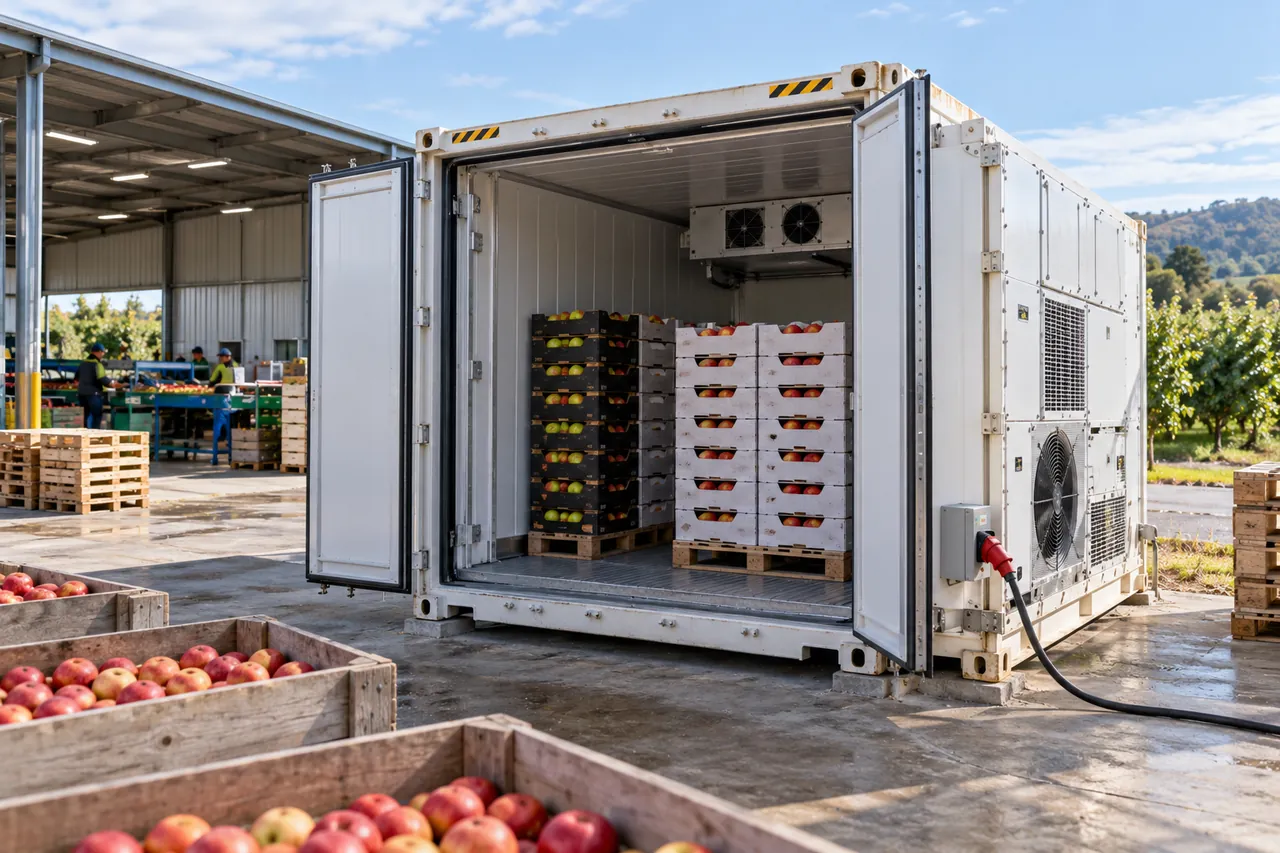
As an indicative guide in 2026, the reefer container price for a new 40 ft high cube is typically about US$20,000–30,000 and a new 20 ft about US$15,000–22,000. A used, working 40 ft reefer of 8–14 years old usually sells for about US$5,000–12,000, a non-working insulated reefer box for about US$2,000–5,000, and renting costs roughly US$500–1,200 per month plus delivery.
| Option (indicative, market-dependent) | 20 ft reefer | 40 ft high cube reefer | What you get |
|---|---|---|---|
| New or one-trip | US$15,000–22,000 | US$20,000–30,000 | Current refrigerant, full machinery life, warranty |
| Used, working, recent (5–8 years) | US$7,000–12,000 | US$9,000–16,000 | Good insulation, modern controller, serviceable refrigerant |
| Used, working, older (9–15 years) | US$4,000–9,000 | US$5,000–12,000 | Ex-shipping-line box, higher energy use, more repairs |
| Non-working "reefer box" | US$2,000–4,000 | US$2,500–5,000 | Insulated shell only; machinery dead or removed |
| Rental | US$400–900 per month | US$500–1,200 per month | Maintenance often included; delivery extra |
These are broad ranges. Prices move with freight markets, depot stock, location and season: a reefer bought at a port depot in a region with a surplus of returning empties can cost much less than the same box delivered inland in harvest season. Get at least two or three quotes that state the year of manufacture, the refrigeration unit model year, the refrigerant and the condition grade. For internal sizes and pallet counts, see reefer container sizes.
What affects the price of a used reefer container?
The price of a used reefer container is set mainly by the age and condition of the refrigeration machinery, then by the box itself. A 10-year-old box with a recently overhauled unit on a current refrigerant can be worth more than a 7-year-old box whose compressor is failing.
- Machinery age and hours. Shipping lines typically retire reefers after about 10–15 years at sea. Ask for the unit's manufacture date and running history.
- Refrigerant. Older units use R404A or R134a; newer ones use lower-GWP options such as R513A or R452A, and some use CO2 (R744). R404A is being phased down under the EU F-gas rules and the US AIM Act, so service gas costs more over time.
- Pre-trip inspection (PTI). A passed PTI with a printout shows the unit reached and held set points; a box sold without one is a gamble.
- Controller and data logging. Modern controllers log temperatures and alarms, which helps food safety audits.
- Insulation condition. Old foam absorbs moisture and loses insulating value; dents, delamination and wet floors increase running cost.
- Doors, gaskets and floor. Damaged door seals and corroded aluminium T-floors are expensive to fix.
- Location and delivery. Trucking a 40 ft inland can add several hundred to over a thousand dollars.
For general advice on buying second-hand refrigeration, see used vs new commercial refrigeration.
Reefer box for sale: is a non-working reefer worth buying?
A reefer box for sale is a refrigerated container sold without working machinery: the insulated shell is sound but the refrigeration unit is dead, removed or uneconomic to repair. It is worth buying when you want insulated, lockable storage or plan to fit a new refrigeration unit, and not worth buying as a cheap reefer you expect to "just repair".
Uses that work well:
- Insulated dry storage for goods that must avoid heat or condensation, such as seed, paper or electronics.
- A cold room shell: remove the dead unit, close the opening with an insulated panel and fit a wall-mounted monoblock or split condensing unit and evaporator. This can run on single-phase power, which an original reefer cannot.
- A short-hold buffer for pre-chilled produce with ice or a portable chiller.
Before buying, check the foam is dry (soft spots, rust staining or heavy weight point to water-logged foam), the doors close and seal, and the floor drains are clear. A new refrigeration unit for a 40 ft box typically costs several thousand dollars, so the shell plus a new unit plus installation can approach the price of a working used reefer. The advantage is a known, new refrigeration system with local service support.
How much does it cost to rent a reefer container?
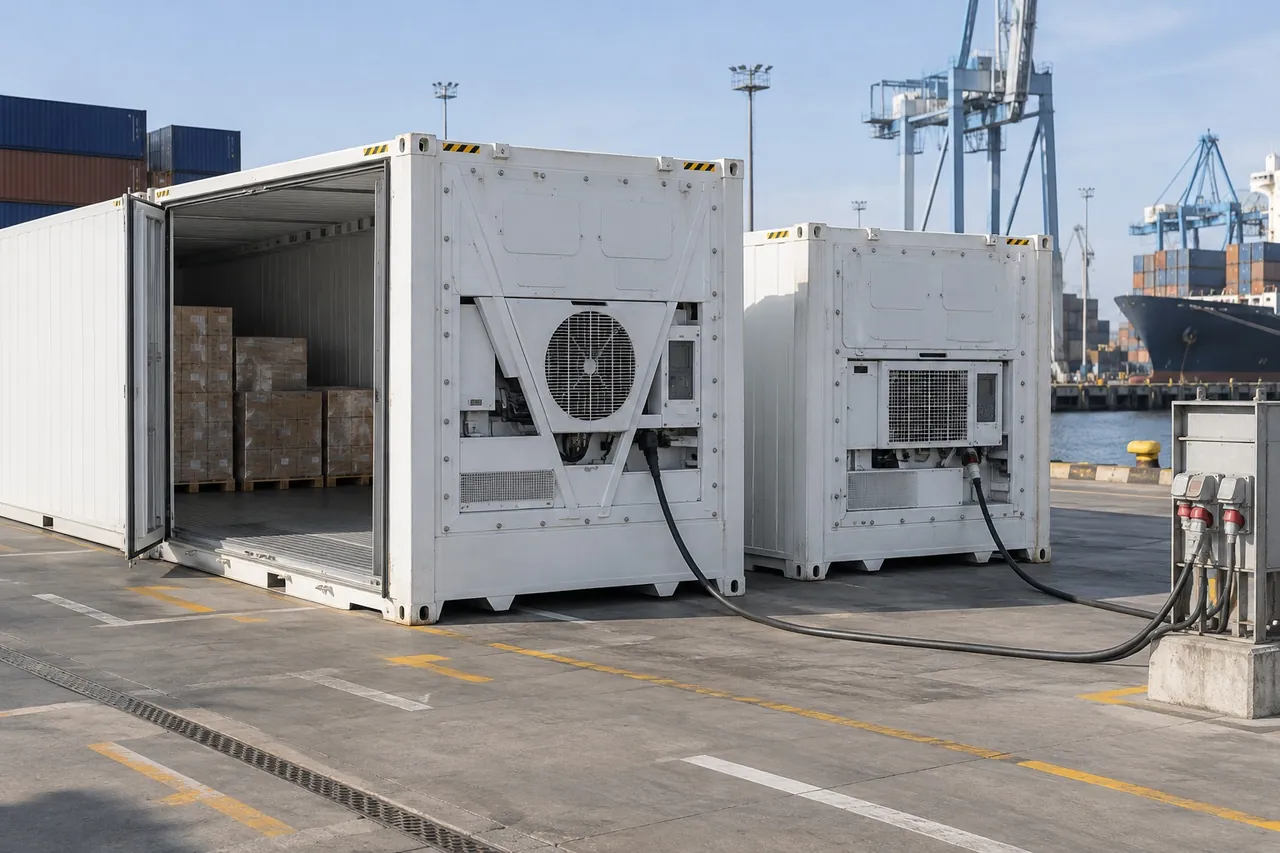
Reefer container rental typically costs about US$400–900 per month for a 20 ft and US$500–1,200 for a 40 ft high cube, with delivery and collection charged separately and often a minimum hire of 1–3 months. Short hires of days or weeks cost more per day, and peak seasons push rates up.
| Cost item (indicative) | Typical range | Notes |
|---|---|---|
| Monthly rental, 20 ft | US$400–900 | Lower rates for long contracts |
| Monthly rental, 40 ft high cube | US$500–1,200 | Frozen-capable units at the top of the range |
| Delivery and collection | US$300–1,500 round trip | Depends on distance and truck type |
| Generator set rental (if no grid power) | Extra monthly charge plus fuel | Diesel use runs day and night |
| Electricity (your cost) | About 50–120 kWh per day | Chilled at the low end, frozen in hot climates at the high end |
| Damage waiver or insurance | Optional or required | Check what breakdown response is included |
Ask the rental company how fast they respond to a breakdown, whether a replacement unit is guaranteed, and who pays for spoiled stock. For emergencies and very short hires, freezer trailers and mobile cold rooms are alternatives; see emergency and temporary cold storage.
Should you buy or rent a reefer container?
Rent if you need a refrigerated container for less than about 12 months in total or only for one season a year; buy if you will use it for more than about 12–18 months or every season for several years. The break-even depends on local rental rates, delivery charges and how much maintenance you can do yourself.
Worked example: 40 ft high cube for chilled storage
- Buy used: US$8,000 box + US$800 delivery + US$1,000 electrical connection = US$9,800 upfront, plus about US$500–1,500 per year for service and repairs.
- Rent: US$800 per month + US$1,000 delivery and collection.
- Break-even: (9,800 − 1,000) ÷ 800 ≈ 11 months, or about 12–14 months once owner maintenance is included.
Electricity is the same in both cases and is often bigger than people expect. At 80 kWh a day and US$0.15 per kWh, a reefer costs about US$12 a day, or US$360 a month, to run, which over a year can match the purchase price of an older used box. That is why an energy-efficient unit, good door seals, shade and disciplined door opening matter as much as the price you pay.
What does a reefer container cost to own over 5 years?
Over five years, the purchase price of a used reefer is often smaller than its reefer container running cost: electricity, maintenance and refrigerant typically add up to more than the box itself. The table below compares indicative five-year costs for a 40 ft high cube used as chilled storage.
| Five-year cost item (indicative) | Used reefer, 10 years old | New reefer | Renting throughout |
|---|---|---|---|
| Purchase or rent | US$6,000–10,000 | US$20,000–30,000 | US$30,000–72,000 |
| Delivery and hook-up | US$1,500–2,500 | US$1,500–2,500 | US$1,500–3,000 |
| Electricity (60–90 kWh/day at US$0.15) | US$16,000–25,000 (older units at the high end) | US$14,000–20,000 | US$15,000–25,000 |
| Maintenance and repairs | US$3,000–8,000 | US$1,500–3,000 | Usually included |
| Residual value after 5 years | Low | Moderate | None |
Over long periods, a used reefer is usually the cheapest to own, a new reefer the most reliable, and renting the most expensive but least risky. If the box will stay in one place for years, compare these numbers with a fixed cold room.
Reefer container vs panel cold room: which costs less?
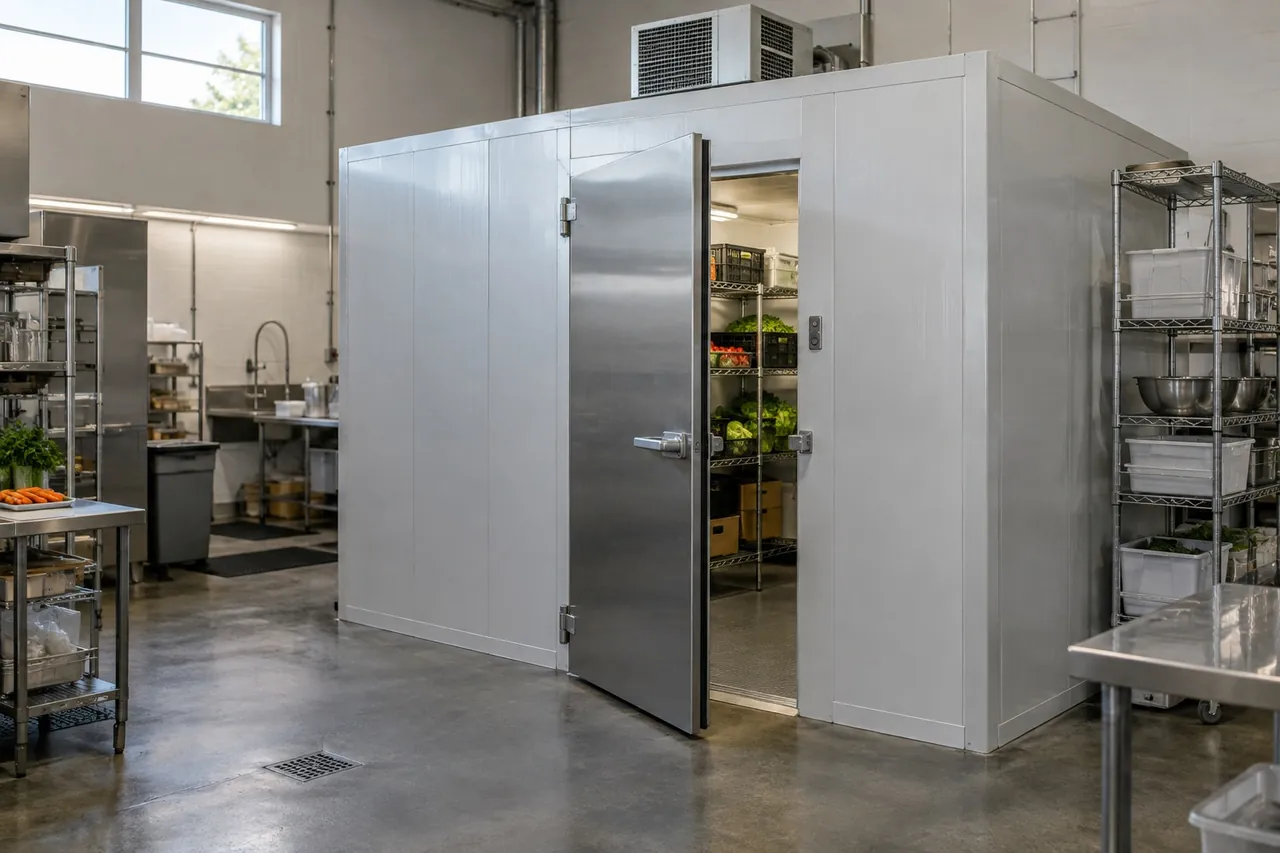
For one or two containers' worth of storage that may need to move, a used reefer is usually cheaper to start with. For a permanent store above about 60–70 m³ (2,100–2,500 ft³), with frequent access or warm product, a panel cold room typically costs less per usable cubic metre over its life and is easier to work in.
- Usable space: a 40 ft high cube reefer gives about 67 m³ at only 2.29 m (7.5 ft) wide, with one end door. A panel room of the same volume can be 6 × 4 × 2.8 m with a side door and pallet-truck access at floor level.
- Energy: a correctly sized condensing unit with new 100 mm PU panels often uses less energy than a 10-year-old reefer unit and box, especially with frequent door opening.
- Power supply: panel rooms can be designed for single-phase power; reefers need 380–460 V three-phase.
- Expansion: a panel room can be extended with more panels; containers multiply running units and doors.
- Mobility: a reefer moves in hours; a panel room has to be dismantled and rebuilt.
Compare real numbers using our walk-in cooler cost guide and size the refrigeration with the cold room load calculator. For how to set up and power a reefer on site, see reefer container cold storage.
What to check before buying a used reefer container
Check a used reefer container for sale by running it, not by looking at it: insist on a pull-down test to set point with a printed PTI or temperature log, then inspect the box. The steps below take about half a day at the depot.
- Ask for the CSC plate data, the box manufacture date and the refrigeration unit model, year and refrigerant.
- Run a PTI or pull-down test to your planned set point, for example −18 °C for frozen or +2 °C for chilled, and keep the printout or download.
- Listen to the compressor and fans; check for oil stains that suggest refrigerant leaks.
- Check door gaskets, hinges, locking bars and the door seal with a light test from inside.
- Walk the floor for soft spots, corrosion and blocked drains.
- Look for delamination, dents and rust staining on the inner liner, which point to wet insulation.
- Confirm the plug and cable suit your supply: typically 380–460 V three-phase, 50/60 Hz, 32 A.
- Get the agreed condition, test results and delivery terms written on the invoice.
For the external and internal sizes of the box you are buying, see shipping container sizes and dimensions.
Checklist: buy, rent or build?
- Under 12 months of need, or one season a year: rent.
- More than 12–18 months in one place, pre-cooled product, limited access: buy a used working reefer with a passed PTI.
- High reliability required, or a refrigerant that must meet new regulations: buy new.
- Single-phase power, shelving, side door or a permanent site: build a cold room, or fit a new refrigeration unit to a sound reefer box.
- More than about 60–70 m³ of storage, daily picking or warm product: build a panel cold room.
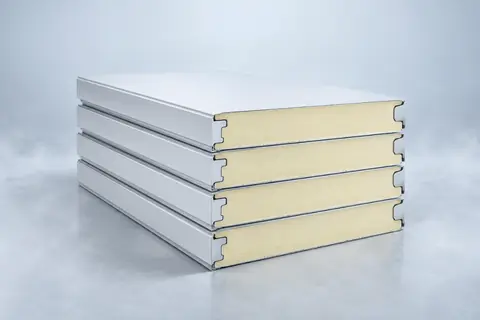
Be There does not sell or rent reefer containers. We supply the alternative and the upgrade: complete walk-in cold room kits for chilled and frozen storage, PU and PIR insulation panels 50–200 mm thick that can line a dry container or close up a reefer box, and condensing units and evaporators for single- or three-phase power. Send your storage volume, temperature, product and power supply through the inquiry form and we will quote a cold room or container fit-out FOB, CIF or DDP, so you can compare it directly with a reefer purchase or rental.