Short answer
Standard shipping container sizes are 20 ft and 40 ft long, 2,438 mm (8 ft) wide and 2,591 mm (8 ft 6 in) high, or 2,896 mm (9 ft 6 in) for high cube. Inside, a 20 ft measures about 5.90 × 2.35 × 2.39 m (33 m³), a 40 ft about 12.03 × 2.35 × 2.39 m (67.7 m³) and a 40 ft high cube 76 m³.
Key takeaways
- A 20 ft container is 6,058 × 2,438 × 2,591 mm outside and about 5,898 × 2,352 × 2,393 mm inside (33.2 m³, 1,172 ft³).
- A 40 ft high cube is 2,896 mm (9 ft 6 in) high outside and about 2,698 mm inside, giving 76.3 m³ (2,694 ft³), about 65–70 m³ usable.
- Empty weights are about 2,200–2,300 kg for a 20 ft and 3,700–4,100 kg for a 40 ft; most are rated to 30,480 kg (67,200 lb) gross.
- Reefer containers are smaller inside: about 28 m³ for a 20 ft and 67 m³ for a 40 ft high cube, because of insulation and machinery.
- A 40 ft high cube carries roughly 450–550 m² of 100 mm cold room panel, only about 5–7 t, so panel shipments fill by volume, not weight.
- Indicatively, used 20 ft containers cost about US$1,200–3,000 and new 40 ft high cubes about US$3,500–6,500, depending on market.
What are the standard shipping container sizes?
The standard shipping container sizes are 20 ft and 40 ft long, both 8 ft (2,438 mm) wide, in standard height of 8 ft 6 in (2,591 mm) or high cube height of 9 ft 6 in (2,896 mm). External dimensions and ratings are set by ISO 668, and construction and testing of general cargo containers by ISO 1496-1, so a container from any manufacturer fits the same ships, cranes, trucks and rail wagons.
10 ft and 45 ft boxes also exist. The 10 ft is popular for site storage but rare in ocean trade; the 45 ft high cube is used on some trade lanes and for European pallet-wide service. Everything below uses typical values for steel dry containers. Actual internal sizes and tare weights vary slightly between builders, so always check the data plate (CSC safety approval plate) on the door for the exact figures of the box in front of you.
| ISO 668 size | External length | External width | External height | Common code |
|---|---|---|---|---|
| 10 ft | 2,991 mm (9 ft 9¾ in) | 2,438 mm (8 ft) | 2,591 mm (8 ft 6 in) | 10' DV |
| 20 ft standard | 6,058 mm (19 ft 10½ in) | 2,438 mm (8 ft) | 2,591 mm (8 ft 6 in) | 20' GP / 22G1 |
| 40 ft standard | 12,192 mm (40 ft) | 2,438 mm (8 ft) | 2,591 mm (8 ft 6 in) | 40' GP / 42G1 |
| 40 ft high cube | 12,192 mm (40 ft) | 2,438 mm (8 ft) | 2,896 mm (9 ft 6 in) | 40' HC / 45G1 |
| 45 ft high cube | 13,716 mm (45 ft) | 2,438 mm (8 ft) | 2,896 mm (9 ft 6 in) | 45' HC / L5G1 |
Note that a "20 ft" box is actually 38 mm (1½ in) short of 20 ft. Two of them end to end leave a 76 mm (3 in) gap, which lets two 20 ft containers sit in the same slot as one 40 ft container.
Shipping container dimensions inside: 20 ft, 40 ft and 40 ft high cube
Inside, a standard 20 ft shipping container is about 5.90 m long, 2.35 m wide and 2.39 m high (33 m³, 1,170 ft³); a 40 ft shipping container is about 12.03 × 2.35 × 2.39 m (67.7 m³, 2,390 ft³); and a 40 ft high cube is about 12.03 × 2.35 × 2.70 m (76 m³, 2,690 ft³). The door opening is smaller than the inside, which limits what you can load.
| Typical internal dimensions | 20 ft standard | 40 ft standard | 40 ft high cube |
|---|---|---|---|
| Internal length | 5,898 mm (19 ft 4 in) | 12,032 mm (39 ft 6 in) | 12,032 mm (39 ft 6 in) |
| Internal width | 2,352 mm (7 ft 8½ in) | 2,352 mm (7 ft 8½ in) | 2,352 mm (7 ft 8½ in) |
| Internal height | 2,393 mm (7 ft 10 in) | 2,393 mm (7 ft 10 in) | 2,698 mm (8 ft 10 in) |
| Door opening (W × H) | 2,340 × 2,280 mm (7 ft 8 in × 7 ft 6 in) | 2,340 × 2,280 mm | 2,340 × 2,585 mm (7 ft 8 in × 8 ft 5 in) |
| Nominal capacity | 33.2 m³ (1,172 ft³) | 67.7 m³ (2,390 ft³) | 76.3 m³ (2,694 ft³) |
| Practical loaded volume | 25–28 m³ | 55–60 m³ | 65–70 m³ |
| Standard pallets 1200 × 1000 mm (48 × 40 in), single layer | 10 | 20–21 | 20–21 (taller stacks) |
| Euro pallets 1200 × 800 mm | 11 | 23–24 | 23–24 |
So how wide is a shipping container? 2,438 mm (8 ft) outside and about 2,352 mm (7 ft 8½ in) inside, for every standard length. How tall is a high cube container? 2,896 mm (9 ft 6 in) outside and about 2,698 mm (8 ft 10 in) inside, 305 mm (1 ft) more than a standard box. How many CBM in a 40 ft container? 67.7 m³ nominal, but 55–60 m³ is a realistic packed figure once you allow for carton sizes, pallets and the door opening. For converting between cubic metres and cubic feet, see how to calculate cubic feet and cubic metres.
How much does a shipping container weigh?
An empty 20 ft steel container weighs about 2,200–2,300 kg (4,850–5,070 lb) and an empty 40 ft about 3,700–3,800 kg (8,150–8,380 lb); a 40 ft high cube about 3,900–4,100 kg (8,600–9,040 lb). Most standard boxes are rated for a maximum gross weight of 30,480 kg (67,200 lb), and many newer boxes are plated higher, so the payload of a 20 ft is around 28 t.
| Weight (typical) | 20 ft standard | 40 ft standard | 40 ft high cube |
|---|---|---|---|
| Tare (empty) | 2,200–2,300 kg (4,850–5,070 lb) | 3,700–3,800 kg (8,150–8,380 lb) | 3,900–4,100 kg (8,600–9,040 lb) |
| Max gross (common rating) | 30,480 kg (67,200 lb); some 32,500 kg+ | 30,480 kg (67,200 lb); some 32,500 kg | 30,480 kg; some 32,500 kg |
| Max payload | about 28,000 kg (61,700 lb) | about 26,700 kg (58,900 lb) | about 26,500 kg (58,400 lb) |
In practice, road weight limits often cap the payload well before the container rating. Many countries limit the total weight of truck, chassis and container, so a fully loaded 20 ft may need a special permit or a lighter load. Since July 2016, SOLAS requires the shipper to declare a verified gross mass (VGM) for every packed export container before it is loaded on a ship. Cold room panels and refrigeration equipment almost never reach the weight limit; they fill the volume first.
How do reefer container dimensions differ?
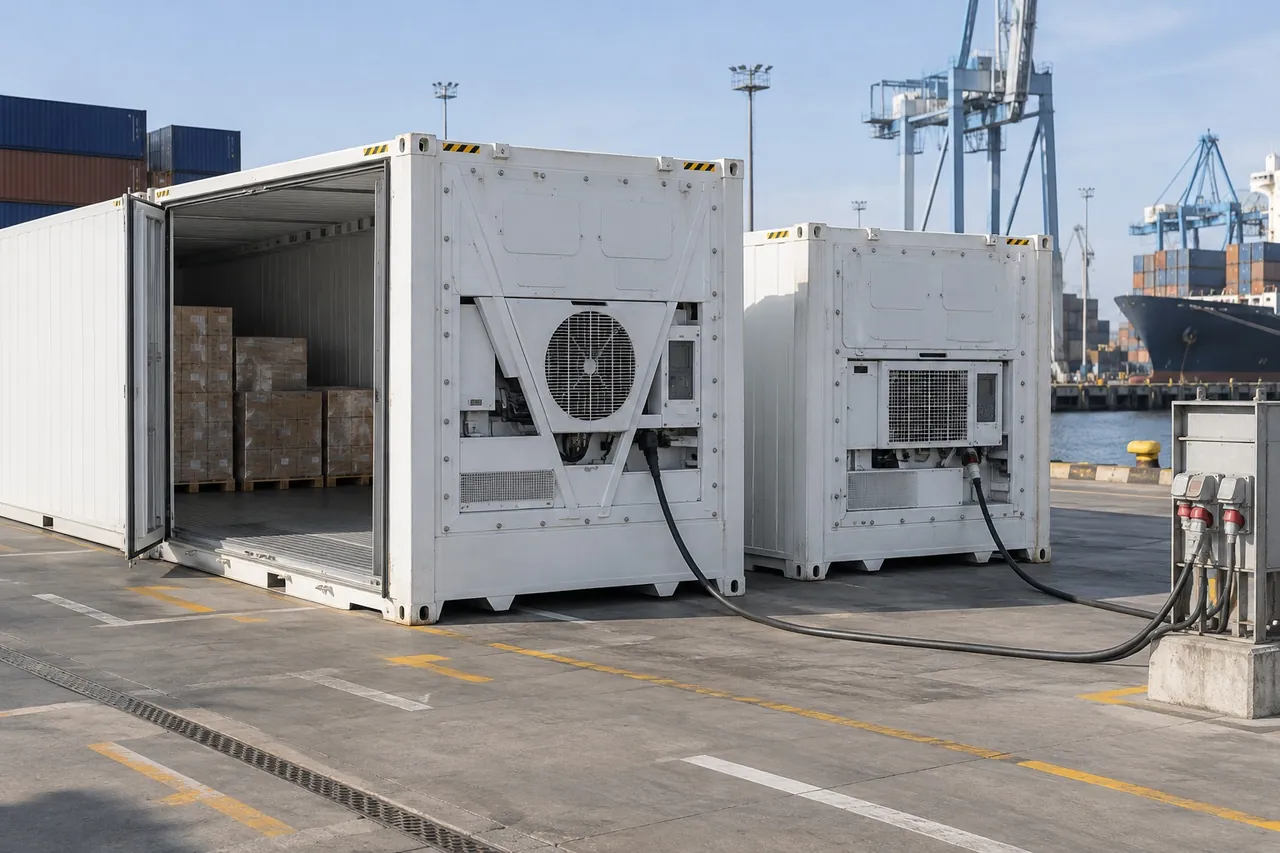
A refrigerated (reefer) container has the same external size as a dry box but is narrower, lower and shorter inside because of its insulated walls, the machinery at the front end and its T-bar air floor. A 20 ft reefer is about 5.44 × 2.29 × 2.26 m inside (about 28 m³) and a 40 ft high cube reefer about 11.58 × 2.29 × 2.55 m (about 67 m³).
| Internal (typical) | 20 ft dry | 20 ft reefer | 40 ft HC dry | 40 ft HC reefer |
|---|---|---|---|---|
| Length | 5,898 mm | about 5,440 mm | 12,032 mm | about 11,580 mm |
| Width | 2,352 mm | about 2,290 mm | 2,352 mm | about 2,290 mm |
| Height | 2,393 mm | about 2,260 mm | 2,698 mm | about 2,550 mm (load to red line, lower) |
| Capacity | 33.2 m³ | about 28 m³ | 76.3 m³ | about 67 m³ |
| Tare | about 2,250 kg | about 3,000 kg | about 4,000 kg | about 4,500–4,800 kg |
Reefers are built and tested to ISO 1496-2 (thermal containers) rather than ISO 1496-1. Cargo must stay below the red load line and must not block the floor channels, so the usable volume of a reefer is smaller again. For reefer capacities, temperature ranges and pallet counts in detail, see our reefer container sizes guide; for using one as on-site storage, see reefer container cold storage.
Types of containers and what conex means
The main types of containers are dry (general purpose), high cube, refrigerated, insulated, open top, flat rack and tank containers. Each shares ISO corner castings and external sizes, so handling equipment and ships treat them alike.
- Dry or general purpose (GP, DV): the standard steel box for cartons, pallets and machinery.
- High cube (HC, HQ): 305 mm (1 ft) taller; the most common choice for light, bulky cargo such as insulation panels.
- Reefer (RF, RH): insulated with an integral refrigeration unit, typically −30 °C to +30 °C.
- Insulated or thermal: insulated walls with no machinery, or with air ports for an external cooling supply.
- Open top: removable roof for tall loads lifted in by crane.
- Flat rack: end walls only, for oversize machinery, steel and long items.
- Tank: a pressure vessel in an ISO frame for liquids.
A conex container is simply a shipping container. "Conex" comes from the US military's Container Express boxes of the 1950s and is now a genericised name for any steel cargo container, especially one used for site storage. An insulated shipping container for storage is usually either a reefer whose machinery no longer works or a dry box lined with insulation panels.
How much does a shipping container cost?
As an indicative guide in 2026, a used 20 ft container in cargo-worthy or wind-and-water-tight condition typically costs about US$1,200–3,000 and a used 40 ft about US$1,800–4,000, while new (one-trip) boxes cost roughly US$2,500–4,500 for a 20 ft and US$3,500–6,500 for a 40 ft high cube. Prices vary widely by country, depot, season and delivery distance.
| Option (indicative) | 20 ft | 40 ft / 40 ft HC | What you get |
|---|---|---|---|
| Used, "as is" | Lowest; often under US$1,500 | Often under US$2,000 | May leak or have damaged doors; fine for some storage |
| Used, wind and water tight (WWT) | US$1,200–2,500 | US$1,800–3,500 | Weather-tight but not certified for shipping |
| Used, cargo-worthy (CW) | US$1,800–3,000 | US$2,500–4,000 | Fit to ship with a valid CSC plate |
| New / one-trip | US$2,500–4,500 | US$3,500–6,500 | Clean, full life, used for one voyage only |
| Container rental for storage | roughly US$80–200 per month | roughly US$120–250 per month | Plus delivery and collection |
Delivery can add several hundred dollars or more, depending on distance and whether a tilt-bed or side-lifter truck is needed. Used reefer and insulated containers cost several times more than dry boxes; we compare them in reefer container price: new, used and rental. Be There does not sell shipping containers. We do ship equipment in them every week, so the rest of this guide covers how that works.
How are cold room panels and equipment loaded for export?
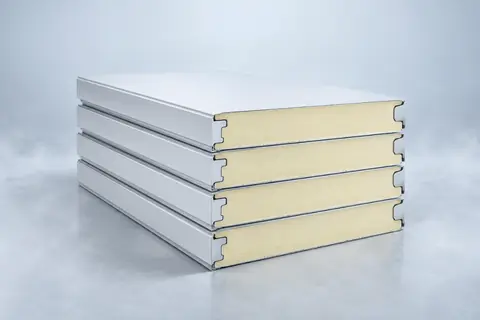
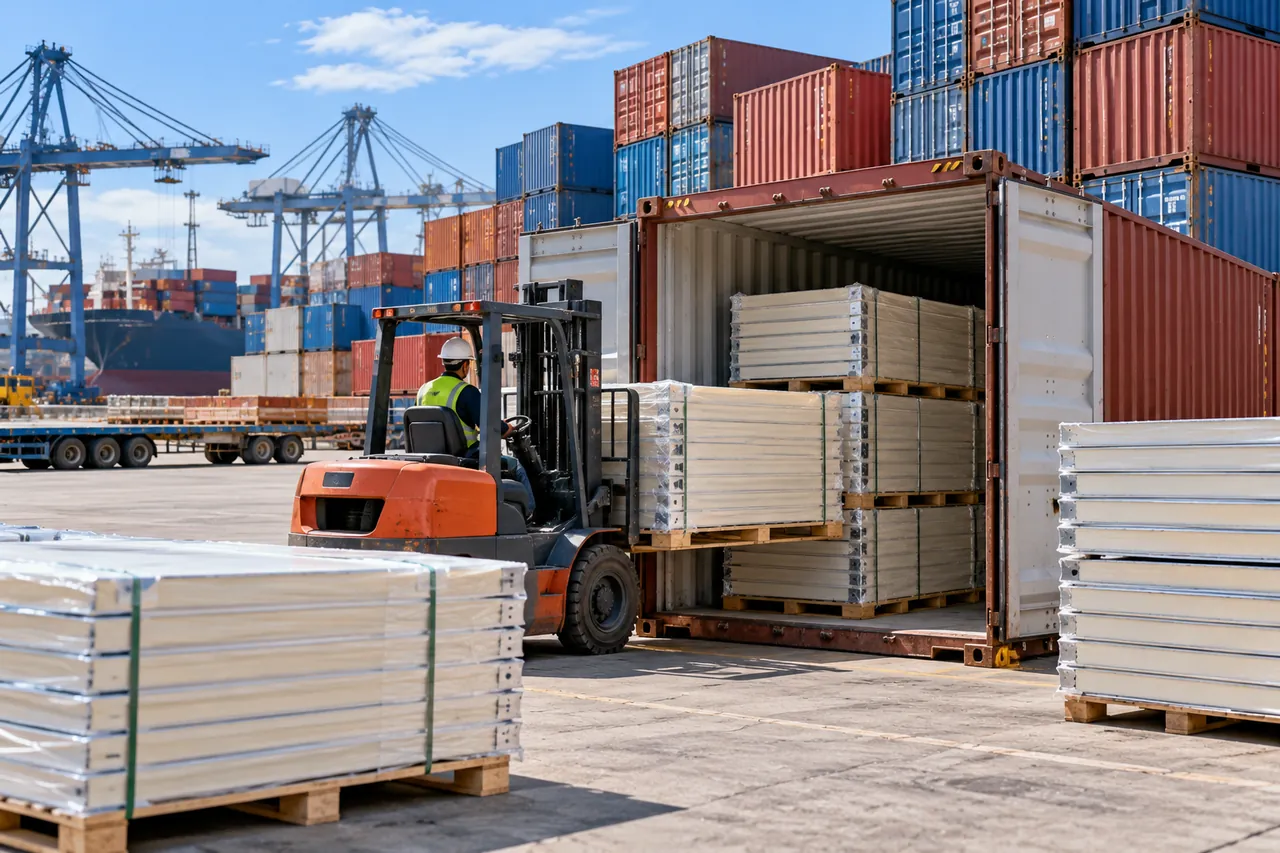
Cold room panels are stacked flat on skids in bundles about 950 or 1150 mm wide, film-wrapped with edge protection, and loaded lengthways through the container doors; the refrigeration units, doors and fittings go in crates around them. Because panels are light and bulky, the container fills by volume long before weight, which is why a 40 ft high cube is the usual choice.
Panel length sets the container
- A 20 ft container takes panels up to about 5.8 m (19 ft) long.
- A 40 ft or 40 ft high cube takes panels up to about 11.9 m (39 ft); panels longer than this need an open top or flat rack.
- Two 950 mm bundles sit side by side across the 2,352 mm width with room for corner guards; two 1150 mm bundles (2,300 mm) fit only with slim edge protection.
- Bundles must pass the 2,280 mm (standard) or 2,585 mm (high cube) door height on their skids.
Volume and weight rule of thumb
A 100 mm (4 in) PU sandwich panel with 0.5 mm steel skins weighs roughly 11–13 kg/m² (2.3–2.7 lb/ft²). A 40 ft high cube typically carries about 450–550 m² of 100 mm panel with packaging, only 5–7 t, far below its payload. Thicker panels reduce the area per container in proportion: around 300–370 m² of 150 mm panel. These are planning figures; your supplier's packing list gives the real number.
Worked example: one freezer room in a 20 ft container
A 6 × 4 × 3 m (20 × 13 × 10 ft) freezer room needs about 60 m² of walls, 24 m² of ceiling and 24 m² of floor panel, roughly 108 m². In 120 mm panel that is about 13 m³ of panel, or 18–20 m³ packed. The 6 m walls are too long for a 20 ft box, so the supplier splits long walls into two lengths with a vertical joint, or the room ships in a 40 ft. The ceiling panels span the 4 m width, so they fit. Add the crated condensing unit, evaporator, door and accessories (3–5 m³) and the whole room fits in one 20 ft container.
Securing the load
- Load heavy crates, such as condensing units, at floor level and spread along the length so weight is balanced over the container's centre.
- Keep condensing units and compressors upright; mark crates "this way up".
- Use export wood that is heat-treated and stamped to ISPM 15 for every crate and skid.
- Fill voids with airbags or timber dunnage and lash bundles to the container's lashing rings so nothing can slide during sea transport.
- Number bundles by room and wall on the packing list so installers can unload in assembly order.
- Photograph each stage of loading and the sealed doors for the insurer and buyer.
Good practice for packing is set out in the IMO/ILO/UNECE Code of Practice for Packing of Cargo Transport Units (CTU Code). For other export checks such as Incoterms, voltage and certification, see importing refrigeration equipment from China.
Using a container for storage or as a cold room shell
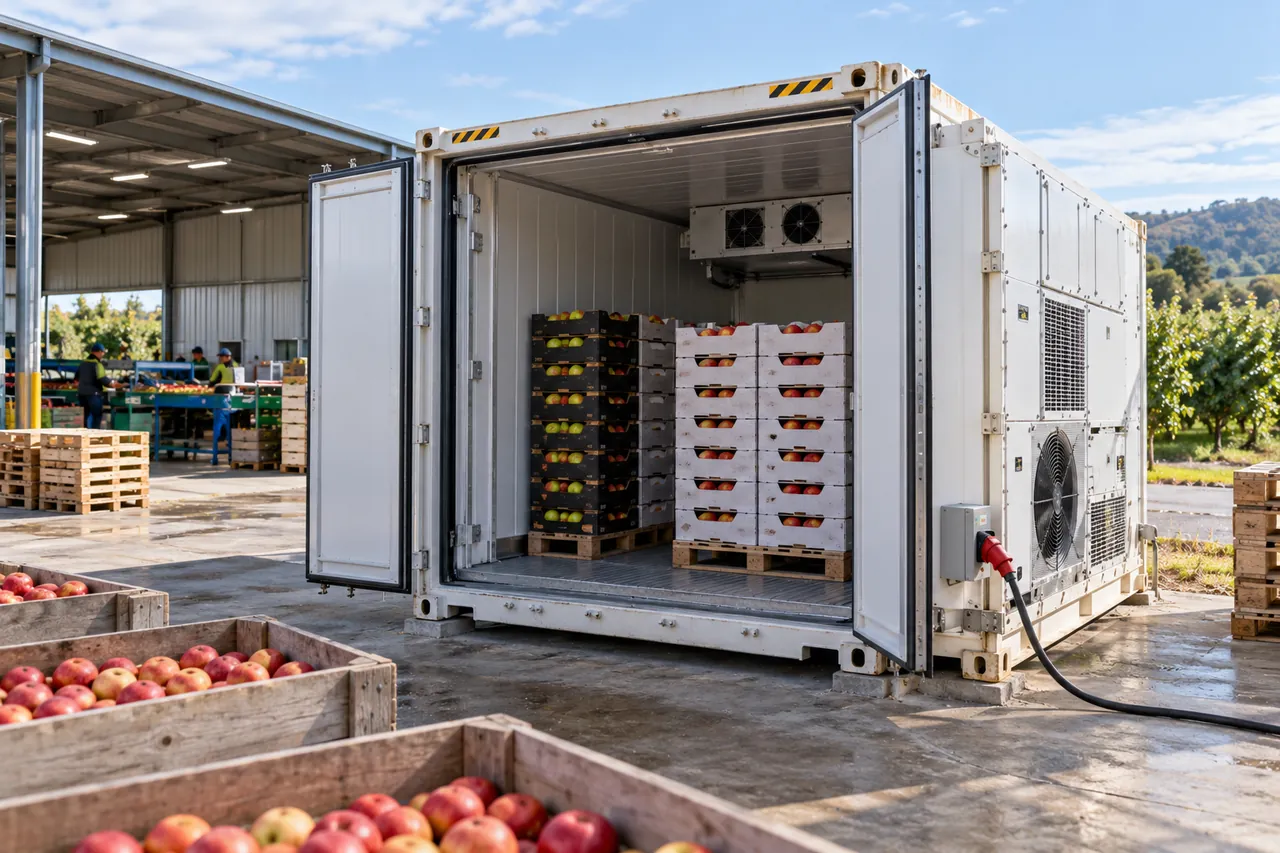
For storage in container form, a 20 ft box gives about 14 m² (150 ft²) of floor and a 40 ft about 28 m² (300 ft²). Placed on level supports under the four corner castings, with vents and a lock, a dry box makes a secure dry store. It does not make a cold store on its own: bare steel heats up in the sun and sweats inside when the weather changes.
To turn a container into a cooler or freezer, line all six faces with insulated panels and add a refrigeration unit. A 20 ft box lined with 100 mm panels leaves an internal room of about 5.7 × 2.15 × 2.2 m (roughly 27 m³). Choose the panel thickness by temperature using our cold room panel thickness guide, then size the refrigeration with the cold room load calculator.
Checklist: choosing the right container size
- Longest item: up to 5.8 m fits a 20 ft; up to 11.9 m fits a 40 ft; longer needs an open top or flat rack.
- Tallest item on its pallet or skid: under 2,280 mm for a standard door, under 2,585 mm for a high cube door.
- Volume: plan on 25–28 m³ usable in a 20 ft, 55–60 m³ in a 40 ft and 65–70 m³ in a 40 ft high cube.
- Weight: check against the payload and your road weight limits; declare VGM before shipment.
- Cargo temperature: dry box for panels and equipment; reefer only for temperature-sensitive goods.
- Condition for storage use: cargo-worthy or WWT, with working doors and seals.
Be There does not sell containers, but every order we ship is planned around them. Our PU and PIR insulation panels come 50–200 mm thick, 950 or 1150 mm wide and up to 12 m long, cut to lengths that fit the container you choose, and our walk-in cold room kits are packed with numbered bundles, ISPM 15 crates and a container loading plan. We also supply panel kits to line dry containers as cold rooms. Send your room sizes or panel quantities through the inquiry form and we will tell you how many containers you need and quote FOB, CIF or DDP.