Short answer
A meat cooler is a refrigerated room or cabinet that holds fresh meat at −1 °C to +2 °C (30–36 °F) and 85–90% humidity, or game and deer at 0–4 °C (32–40 °F). A produce cooler runs at 0–2 °C (32–36 °F) and 90–98% humidity for most vegetables, with a separate 7–13 °C (45–55 °F) room for chill-sensitive produce.
Key takeaways
- Fresh meat coolers run at −1 °C to +2 °C (30–36 °F) and 85–90% RH; deer and game coolers at 0–4 °C (32–40 °F).
- Leafy greens and most vegetables keep best at 0–2 °C (32–36 °F) with 90–98% RH, which needs a large evaporator running a 3–5 K temperature difference.
- Tomatoes, peppers, cucumbers, bananas and citrus need a separate room at 7–13 °C (45–55 °F) to avoid chilling injury.
- Allow about 0.3–0.4 m (12–16 in) of rail per hanging deer, with the rail at 2.2–2.4 m (7–8 ft); beef sides need a rail at 3.0–3.4 m.
- Five 50 kg deer carcasses cooled by 35 K add about 7.8 kWh of heat, or roughly 0.65 kW over 12 hours, on top of the room load.
- Walk-in meat freezers need 120–150 mm (5–6 in) panels and should hold −18 °C (0 °F) or colder, ideally −20 °C to −25 °C.
What is a meat cooler?
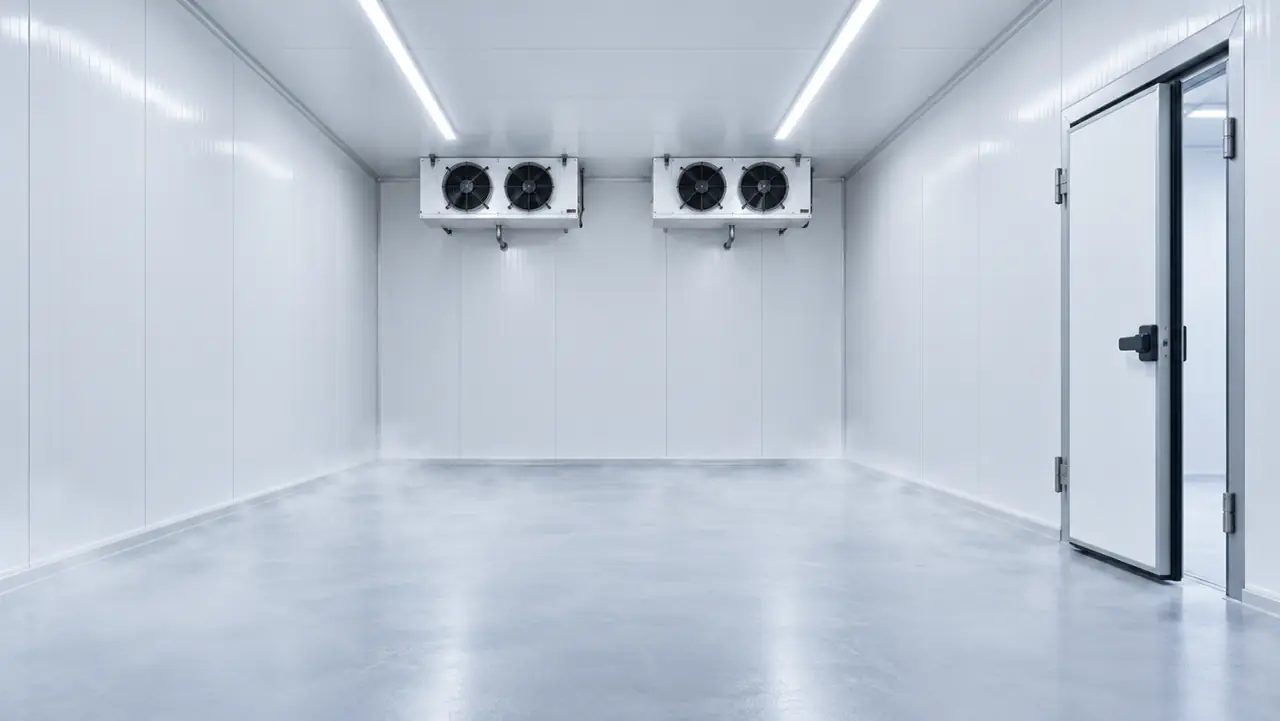
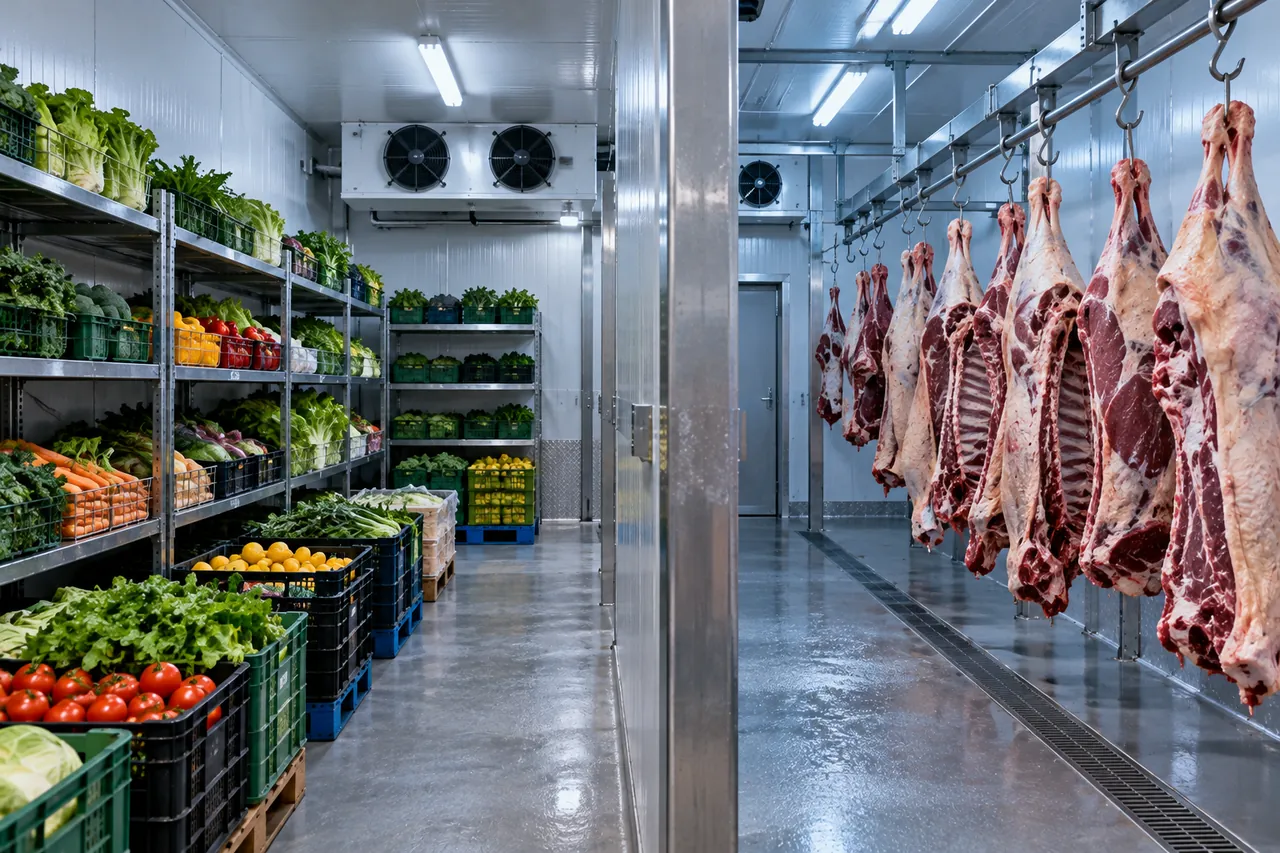
A meat cooler is a refrigerated room or cabinet that holds fresh meat, carcasses or game at about −1 °C to +4 °C (30–40 °F) with controlled humidity and airflow, so the surface dries slightly, bacteria grow slowly and the meat does not freeze. Butchers, processors, farms and hunters use a walk in meat cooler with an overhead rail to hang carcasses, and shelving or racks for boxed cuts.
A produce cooler, or vegetable cooler, is built from the same panels and refrigeration, but it is run differently: very high humidity, gentle airflow, and in many cases two or more rooms at different temperatures because fruit and vegetables do not all like the same conditions. Getting temperature, humidity and layout right for the product is what separates a cooler that keeps stock for weeks from one that dries, slimes or chill-damages it in days.
What temperature and humidity should a meat or produce cooler run at?
Run a fresh meat cooler at −1 °C to +2 °C (30–36 °F) with 85–90% relative humidity, a game or deer cooler at 0–4 °C (32–40 °F), and a mixed vegetable cooler at 0–2 °C (32–36 °F) with 90–98% humidity. Chill-sensitive produce such as tomatoes, cucumbers, peppers and bananas needs a separate room at 7–13 °C (45–55 °F).
| Room type | Temperature | Relative humidity | Air speed over product | Typical evaporator TD |
|---|---|---|---|---|
| Fresh meat, boxed cuts | −1 °C to +2 °C (30–36 °F) | 85–90% | Low to moderate | 5–7 K (9–13 °F) |
| Carcass hanging and dry ageing | +1 °C to +3 °C (34–38 °F) | 75–85% | Moderate, even | 6–8 K (11–14 °F) |
| Deer and wild game cooler | 0 °C to +4 °C (32–40 °F) | 80–90% | Moderate | 6–8 K |
| Leafy greens, broccoli, carrots, apples | 0 °C to +2 °C (32–36 °F) | 90–98% | Low | 3–5 K (5–9 °F) |
| Chill-sensitive produce (tomatoes, peppers, cucumbers, citrus) | +7 °C to +13 °C (45–55 °F) | 85–95% | Low | 4–6 K |
| Walk in meat freezer | −18 °C to −25 °C (0 °F to −13 °F) | Not controlled | Moderate | 6–8 K |
The evaporator temperature difference (TD), the gap between room air and coil temperature, is what sets humidity. A large TD of 10 K or more pulls moisture out of the air as frost, which then comes off your meat and vegetables as weight loss. Produce rooms therefore need oversized, low-velocity evaporators running a small TD; meat rooms need a moderate TD so carcass surfaces form a dry skin without excessive shrinkage. Our cold storage temperature chart lists ideal settings product by product, and humidity in cold storage explains how to measure and correct RH.
How do you size a walk in deer cooler or game cooler?
Size a walk in deer cooler by rail length and ceiling height: allow about 0.3–0.4 m (12–16 in) of rail per hanging deer, a rail at about 2.2–2.4 m (7.2–7.9 ft) so the carcass hangs clear of the floor, and refrigeration that can pull warm carcasses down overnight, not just hold an already-cold room.
| Internal size (L × W × H) | Rail length (one or two runs) | Approx. deer hung at once | Typical use |
|---|---|---|---|
| 1.8 × 1.8 × 2.4 m (6 × 6 × 8 ft) | 1.6 m, one run | 4–5 | Hunting camp, small farm |
| 2.4 × 2.4 × 2.4 m (8 × 8 × 8 ft) | 4.4 m, two runs | 11–14 | Outfitter, hunting club |
| 3.0 × 2.4 × 2.7 m (10 × 8 × 9 ft) | 5.6 m, two runs | 14–18 | Small processor, game dealer |
| 3.6 × 3.0 × 3.0 m (12 × 10 × 10 ft) | 9–10 m, three runs | 25–30 | Seasonal deer processor |
| 6.0 × 3.6 × 3.4 m (20 × 12 × 11 ft) | 15–17 m, three runs | 40–45 deer, or about 25–30 beef sides | Butcher shop, abattoir |
The warm product load is what most small game coolers miss. A field-dressed deer of about 50 kg (110 lb) arrives at around 30–38 °C (86–100 °F) in the core. Cooling five such carcasses by 35 K needs roughly 5 × 50 kg × 3.2 kJ/kg·K × 35 K ≈ 28,000 kJ, or about 7.8 kWh, which over 12 hours adds about 0.65 kW of cooling on top of the wall and door load. A walk in game cooler sized only for holding temperature will run for days before the hindquarters are truly cold. Run the numbers in our cold room load calculator with the expected daily intake, not the total stored.
Portable game coolers and trailer coolers
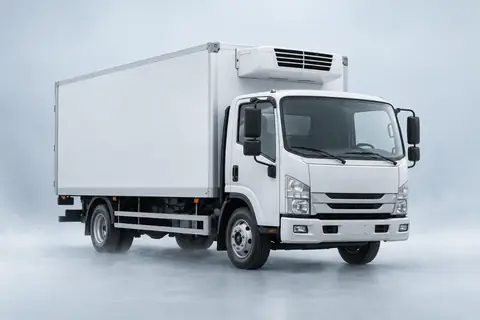
A portable game cooler is usually an insulated box of about 4–12 m³ built on a utility trailer, with a rail inside and a transport refrigeration unit on the front wall, so it can be towed to a hunting camp and plugged in or run from its own engine. It follows the same rules as a fixed walk-in: 75–100 mm (3–4 in) of insulation, a rail rated for the hanging load and a refrigeration unit sized for warm carcasses. Our truck refrigeration unit sizing guide covers how to size the unit for a mobile insulated box.
Walk in meat cooler with rail system: what to specify
A walk in meat cooler with rail system needs a rail supported independently of the wall panels or hung from a reinforced ceiling designed for the load, a rail height that suits the longest carcass, and enough spacing that carcasses do not touch each other or the walls. Carcass contact traps warm, moist air and is the most common cause of spoilage spots.
- Rail load: beef sides weigh about 130–180 kg (290–400 lb) each; a pig carcass 80–110 kg; a deer 35–70 kg. Specify the rail and hangers for the full load plus hooks and trolleys, with a safety factor.
- Support: in small rooms, a rail on its own steel posts is the safest approach. Hanging rails from a sandwich panel ceiling is only acceptable with suspension rods to a structure above or ceiling panels and fixings rated for point loads.
- Height: about 2.2–2.4 m (7–8 ft) for deer, sheep and pigs; about 3.0–3.4 m (10–11 ft) for full beef sides, so the room height becomes 3.2–3.6 m.
- Spacing: keep 0.3 m (12 in) from walls and between rail runs at least 0.6–0.9 m (2–3 ft) so staff can move carcasses.
- Door: a 1.0–1.2 m (40–48 in) wide door, with a rail opening through the door header if carcasses are rolled in on trolleys from the processing room.
- Floor: hygienic, sloped to a drain, with a non-slip finish; panels sealed to the floor with a hygienic cove.
A meat hanging refrigerator in cabinet form (a dry-ageing cabinet) works on the same principles at small scale: +1 °C to +3 °C, 75–85% RH, fan circulation and a UV or filtered airflow, but it holds only a few primal cuts rather than whole carcasses.
How should a produce cooler be laid out?
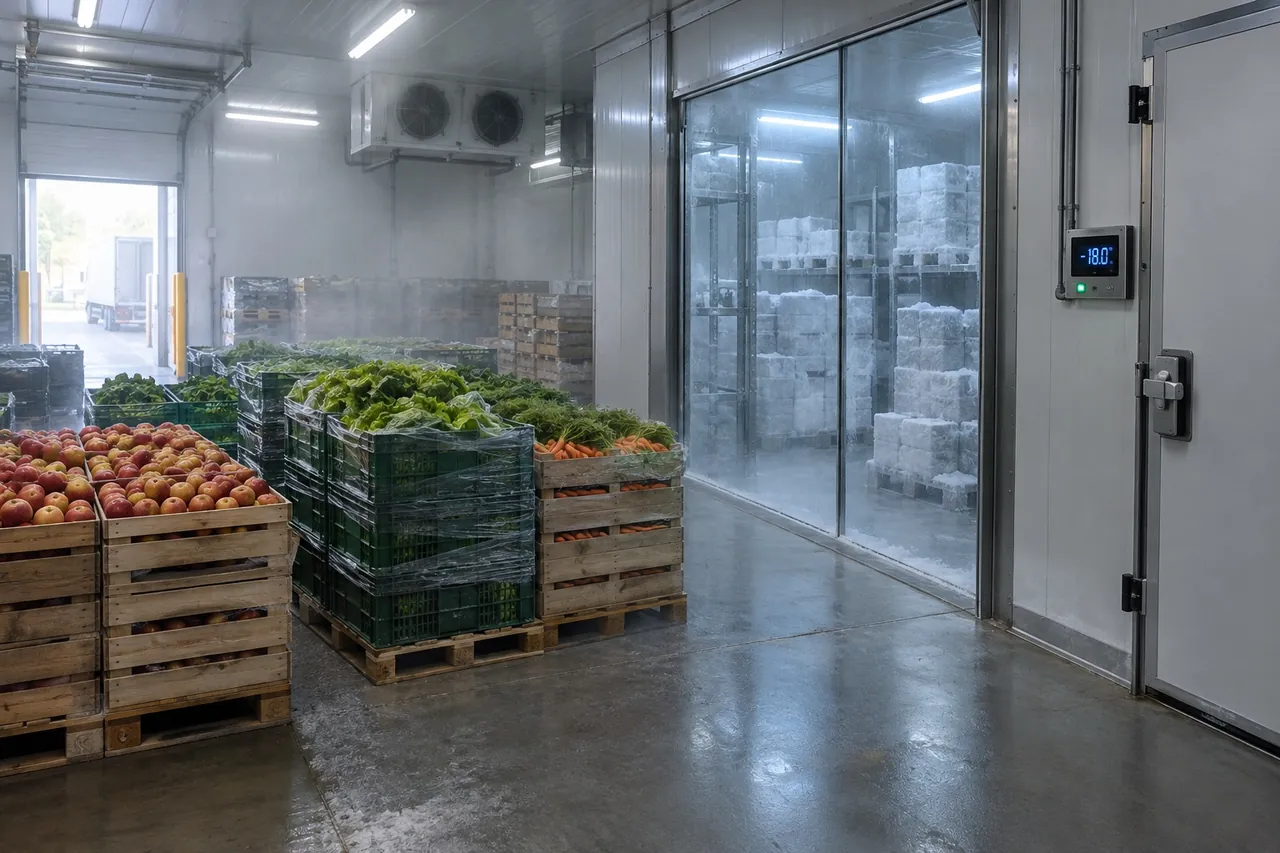
A produce cooler should be laid out for gentle, even airflow over every crate, high humidity, first-in first-out rotation, and separation of ethylene-producing fruit from ethylene-sensitive vegetables. Most farms and greengrocers end up with two rooms: a cold room at 0–2 °C and a cool room at 10–13 °C.
- Separate by temperature. Store leafy greens, brassicas, root crops and most temperate fruit near 0 °C; store tomatoes, peppers, cucumbers, aubergine, bananas, citrus and potatoes for the table at 7–13 °C, because colder temperatures cause chilling injury.
- Separate by ethylene. Apples, pears, ripe bananas, melons and stone fruit give off ethylene, which yellows broccoli and cucumbers, makes carrots bitter and sprouts potatoes. Keep them in a separate room or at least downstream of the evaporator airflow.
- Keep air moving through the stack. Leave 100–150 mm (4–6 in) between pallets and walls and use vented crates, so air passes through the product rather than over the top.
- Protect from direct coil air. Keep produce at least 0.5 m clear of the evaporator discharge to avoid freezing and drying.
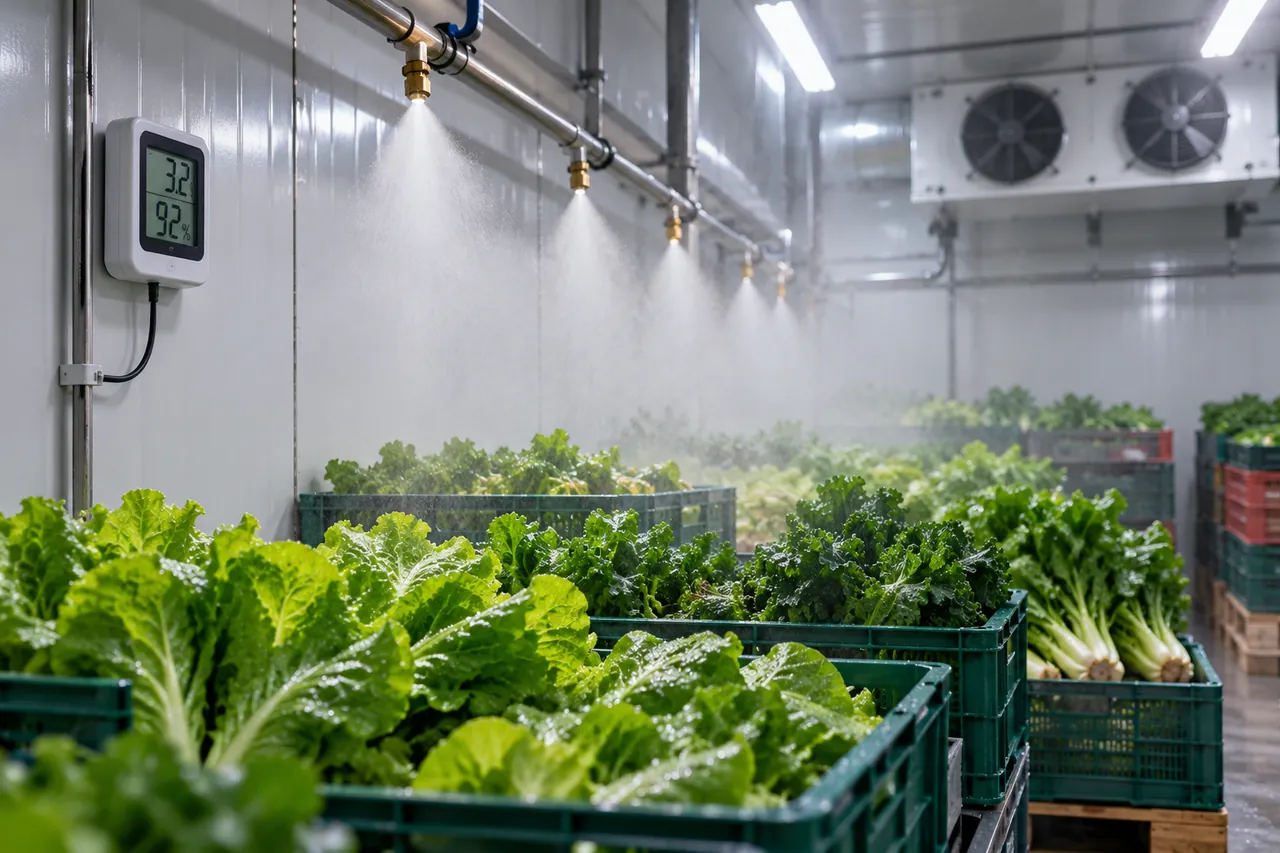
- Control humidity. Choose a large-surface evaporator running a 3–5 K TD; add humidification only if the room still drops below about 85% RH.
- Pre-cool fast. Field heat removal (forced-air cooling, hydro-cooling or vacuum cooling) within hours of harvest does more for shelf life than any storage setting.
A commercial vegetable cooler for a farm shop or wholesaler is often built with 100 mm (4 in) panels, a floor slab without floor panels for pallet trucks, and a sliding door. If you are buying a produce cooler for sale, ask the supplier which evaporator TD and air speed the selection is based on; a standard meat or beverage selection will dry produce out.
Freezer for meat storage: walk-in or cabinet?
A freezer for meat storage should hold −18 °C (0 °F) or colder, ideally −20 °C to −25 °C (−4 °F to −13 °F) for long storage, and meat should be frozen fast before it goes in. Below about 1.5–3 m³ (50–100 cu ft) of stock, chest or upright freezers work; above that, a walk in meat freezer is cheaper per cubic metre and easier to rotate.
- Chest freezers hold the most per square metre and use the least energy, but are slow to pick from. See chest freezer vs upright freezer.
- Walk-in freezers need 120–150 mm (5–6 in) panels, an insulated floor, a heated door frame and a low-temperature condensing unit with electric defrost.
- A storage freezer is not a fast freezer. Loading 200 kg of warm meat into a −20 °C room can take more than 24 hours to freeze through and warms the stock already stored. Processors use a blast freezer at −35 °C or so first, then move product to storage.
Vacuum packing or tight wrapping prevents freezer burn; meat stored at a steady −18 °C or colder stays safe indefinitely, and quality is best when used within a few months to a year depending on cut and fat content.
How to build a walk in meat cooler
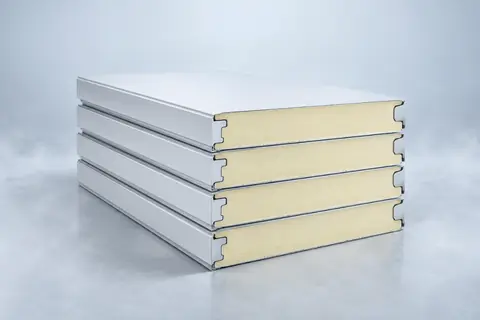
To build a walk in meat cooler, choose the internal size from rail length and daily intake, use 75–100 mm (3–4 in) PU or PIR panels for a cooler or 120–150 mm (5–6 in) for a freezer, set the panels on a level, drained hygienic floor, fit an independently supported rail, then install a refrigeration system sized for warm product.
- Define the duty: species, maximum carcasses per day, entry temperature, hold time and target temperature.
- Choose the size and rail layout from the tables above, then add 0.6–0.9 m aisles.
- Prepare the floor: a level concrete slab sloped to a trapped drain, with a hygienic cove. A cooler can sit on an existing slab; a freezer needs floor insulation, see under-slab insulation for walk-in floors.
- Assemble the wall and ceiling panels with cam-lock joints, sealing every joint with food-safe sealant.
- Install the rail on its own supports or on rated ceiling suspension, before refrigeration and lights.
- Fit the door, strip curtain and inside safety release.
- Install the condensing unit outside in shade, the evaporator at the end wall blowing along the rail, and a controller with defrost and a high-temperature alarm.
- Commission: pull down slowly, check the room holds temperature empty, then load in stages while logging carcass core temperatures.
For the general panel assembly steps, see how to build a walk-in cold room.
New, used or rented: meat coolers for sale and meat locker rental
Meat coolers for sale used can be good value if the panels are dry and the refrigeration still uses a serviceable refrigerant, but water-logged foam, rusted rails and an undersized unit make many second-hand rooms a false economy. Meat locker rental, renting hanging or freezer space at a processor or locker plant, suits hunters and small producers who need space only a few weeks a year.
| Option | Best for | Check before you commit |
|---|---|---|
| New panel walk-in kit | Butchers, processors, farms with year-round use | Panel thickness, rail support, refrigeration selection for warm load, hygiene finish |
| Used walk in deer cooler for sale | Seasonal hunting camps on a budget | Soft or stained panels (wet foam), refrigerant type, compressor hours, rail condition |
| Trailer or portable game cooler | Outfitters moving between camps | Insulation thickness, unit power supply, road legality of the trailer |
| Meat locker rental | Occasional hunters, small farms | Temperature records, separation of customers' meat, labelling |
Before buying any used refrigeration, see our used vs new commercial refrigeration checklist.
Checklist: choosing a meat or produce cooler
- Product and temperature: meat at −1 °C to +2 °C, game at 0–4 °C, greens at 0–2 °C, chill-sensitive produce at 7–13 °C.
- Humidity: 85–90% for meat, 90–98% for vegetables; evaporator TD chosen to match.
- Daily intake and entry temperature, used to size refrigeration for pull-down, not just holding.
- Rail length, height and load rating, supported independently of the wall panels.
- Panels: 75–100 mm for coolers, 120–150 mm for freezers; stainless or food-grade coated facings for wash-down.
- Separate rooms where temperatures or ethylene sensitivity conflict.
- Floor drain, hygienic coving, strip curtain and a high-temperature alarm.
Be There supplies complete walk-in cooler and freezer kits for meat, game and produce: PU or PIR cold room panels from 75 to 200 mm with food-grade steel or stainless facings, insulated doors, condensing units and evaporators selected for the humidity and pull-down your product needs, and, for mobile game coolers, transport refrigeration units for insulated boxes of 4–45 m³. Send the room size, product, daily intake and power supply through the inquiry form and we will propose a layout and quote FOB, CIF or DDP.