
Short answer
An Italian ice and shaved ice business needs a block ice shaver for shaved ice, a batch freezer for Italian ice (a 5 L model makes about 20–30 L an hour), a storage freezer at −18 °C (0 °F) or colder, a display freezer at about −14 °C to −11 °C for scooping, a fridge for toppings, a handwash sink and 1–5 kW of power.
Key takeaways
- Shaved ice is plain frozen water shaved and flavoured afterwards; Italian ice is a 20–30% sugar fruit mix frozen in a batch freezer while stirring.
- A batch freezer runs about 4–6 batches an hour, so a 5 L machine makes roughly 20–30 L (160–240 cups of 120 ml) of Italian ice per hour.
- Italian ice is hardened at −18 °C to −25 °C (0 °F to −13 °F) and served at about −14 °C to −11 °C (7–12 °F).
- A slush machine holds drinks at about −2 °C to −4 °C (24–28 °F) and cannot make Italian ice or soft serve.
- A shaved ice cart runs on about 0.5–1 kW; an Italian ice and snow ice truck needs 3–5 kW running load plus surge headroom.
- Ice served as food must be made from drinking water under the FDA Food Code (3-202.16) and similar rules.
What equipment does a shaved ice or Italian ice business need?
A shaved ice or Italian ice business needs one production machine per product (a block ice shaver for shaved ice, a batch freezer for Italian ice, a slush machine for frozen drinks), a freezer to store ice blocks or finished product, a refrigerator for syrups and toppings, a handwash sink and a reliable power supply. Which machines you buy depends on which of these frozen treats you want on the menu.
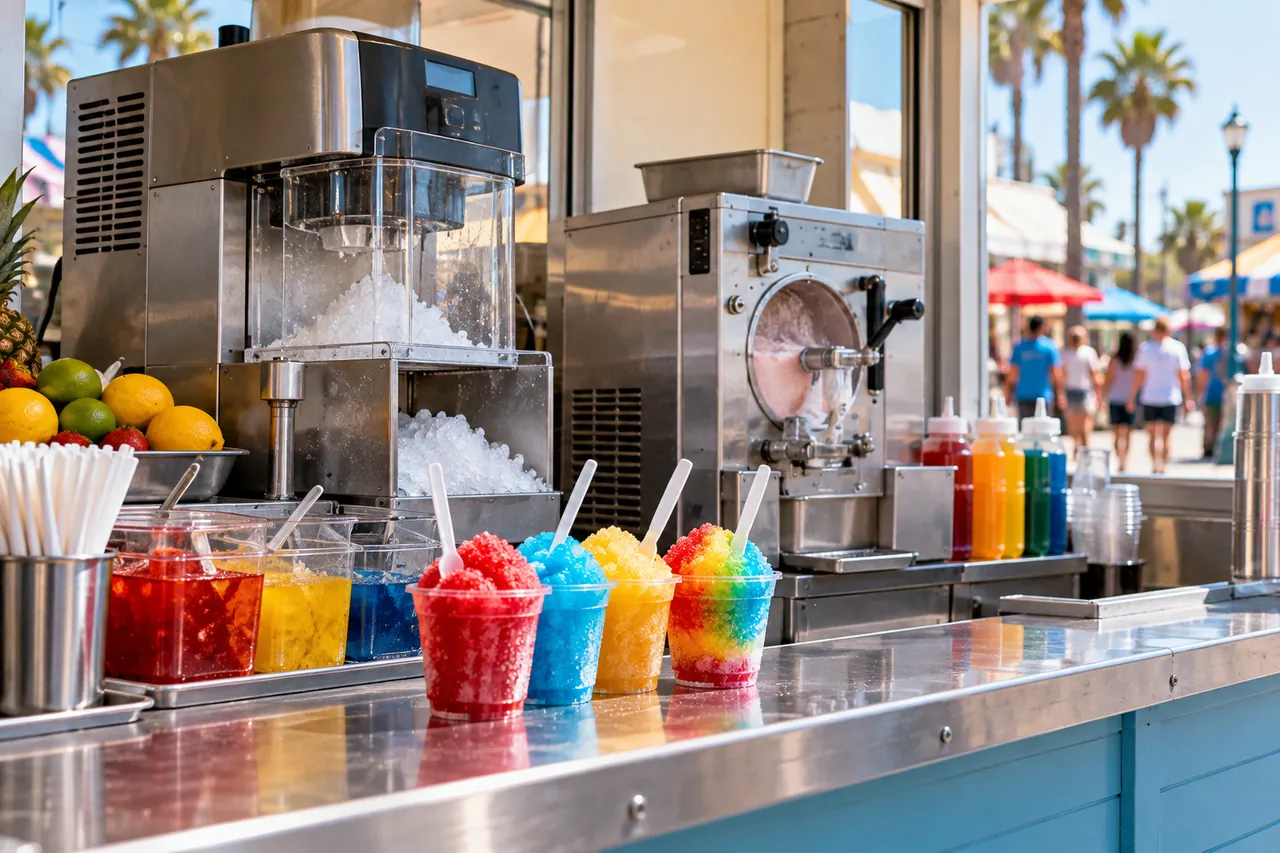
The three products look similar on a menu board but are made in completely different ways. Shaved ice is plain frozen water shaved and flavoured afterwards; Italian ice is a sweetened fruit mix frozen while stirring; slush is a sugary drink kept semi-frozen in a stirred bowl. Mixing them up is the most common equipment mistake new operators make.
| Product | Main machine | Support equipment | Served at | Typical power |
|---|---|---|---|---|
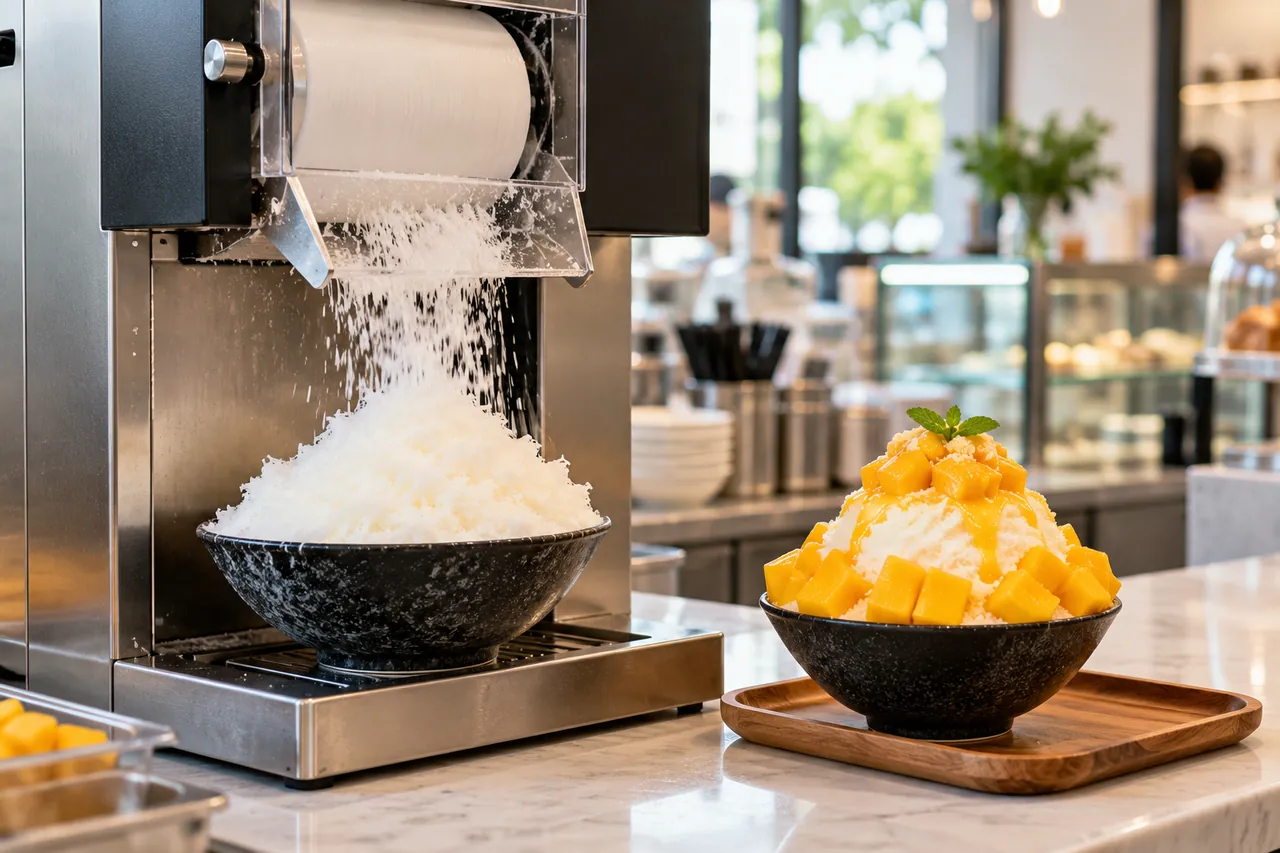
| Hawaiian-style shaved ice | Electric block ice shaver | Chest freezer for ice blocks, syrup rack, block molds | Ice at about −5 °C to 0 °C (23–32 °F) when shaved | 0.2–0.5 kW shaver plus freezer |
| Snow cones | Cube ice crusher | Ice machine or bagged ice, insulated bin | Crushed ice, syrup on top | 0.2–0.4 kW |
| Italian ice (water ice) | Batch freezer | Hardening or storage freezer at −18 °C to −25 °C, dipping or display freezer | About −14 °C to −11 °C (7–12 °F) for scooping | 2–6 kW batch freezer, often 3-phase on larger sizes |
| Snow ice / bingsu | Snow flake ice machine | Mix fridge, toppings rail | Shaved to order from chilled mix | 1–2.5 kW |
| Slush / frozen drinks | Commercial slush machine, 1–3 bowls | Syrup storage, cup dispenser | About −2 °C to −4 °C (24–28 °F), pourable | 0.5–1.5 kW |
Most successful stands start with one hero product and add a second once the first is running smoothly. Shaved ice has the lowest equipment cost; Italian ice has the strongest repeat-purchase appeal in markets that know it; snow ice gives a premium, café-style product. For the snow ice option, see our snow flake ice machine and bingsu guide.
What is Italian ice, and how is it different from gelato?
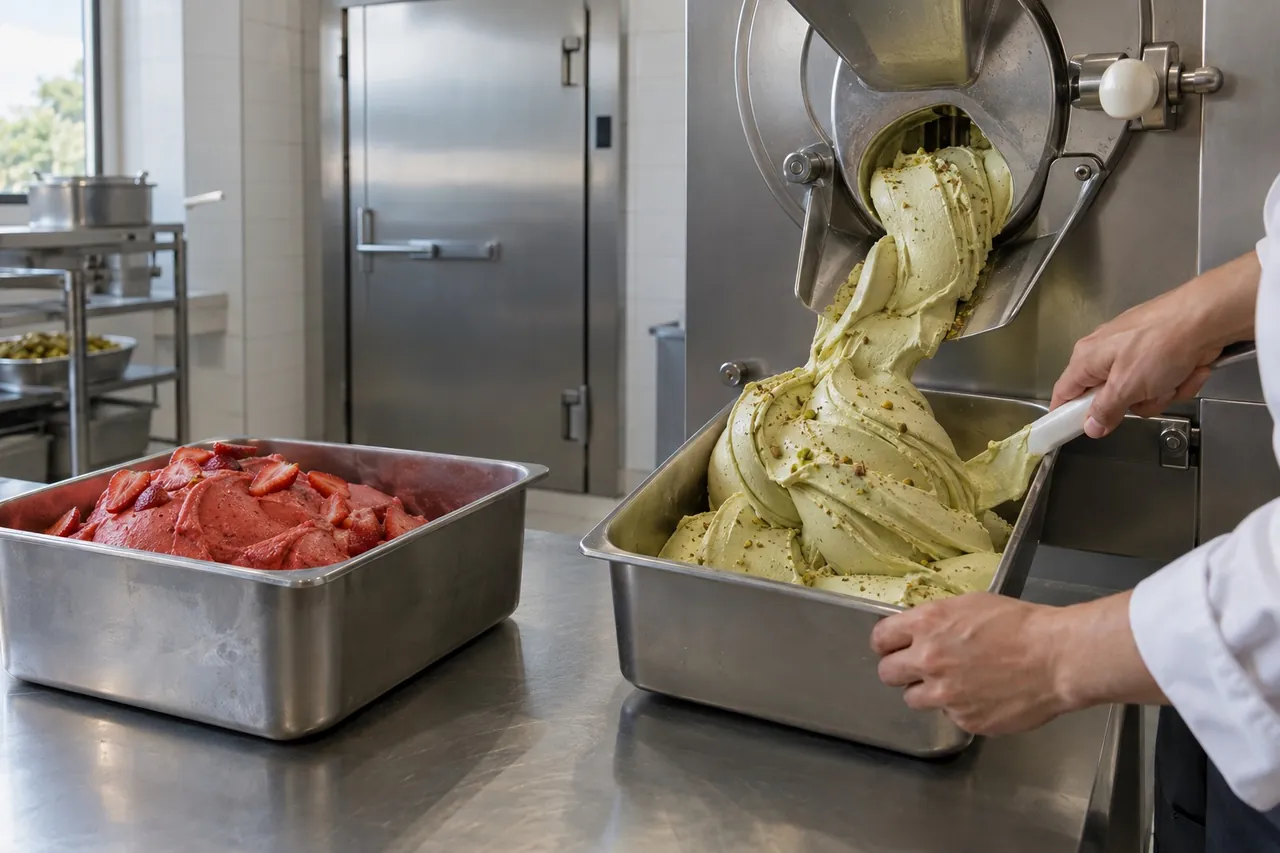
Italian ice is a dairy-free frozen dessert made from water, sugar and fruit (or flavourings), frozen in a batch freezer while being stirred so it sets into small, smooth ice crystals that can be scooped. Gelato contains milk and a little cream, so it is richer and creamier; Italian ice is lighter, more refreshing and sharper in flavour.
The terms are confused in search: people looking for an Italian ice cream machine or gelato Italian ice cream may want either product. The good news is that the same batch freezer makes both, so a shop can sell gelato, sorbet and Italian ice from one machine with separate recipes. Our gelato machine guide covers the dairy side.
| Property | Italian ice (water ice) | Sorbet | Gelato | American ice cream |
|---|---|---|---|---|
| Dairy | None | None (sometimes a little) | Milk, some cream | Cream and milk |
| Typical fat | 0% | 0–1% | 4–9% | 10–16% |
| Typical sugar | 20–30% | 25–32% | 16–22% | 14–18% |
| Air (overrun) | Low, about 10–25% | Low, about 15–30% | 20–35% | 50–100% |
| Serving temperature | About −14 °C to −11 °C (7–12 °F) | About −14 °C to −11 °C | About −12 °C (10 °F) | About −14 °C to −12 °C (7–10 °F) |
How to make Italian ice in a batch freezer
- Make a simple syrup by dissolving sugar in hot water, then cool it to 4 °C (39 °F) or below.
- Blend in fruit purée, juice or flavour; lemon is the classic base, with cherry, mango and blue raspberry common favourites.
- Check sweetness with a refractometer: most operators aim for about 25–30 °Brix. Too low and the ice sets rock hard; too high and it stays slushy.
- Pour the chilled mix into the batch freezer to the marked fill level and run the cycle, typically 8–15 minutes.
- Extract into pans, then harden in a freezer at −18 °C to −25 °C (0 °F to −13 °F) and temper to about −12 °C (10 °F) for serving.
The answer to "how to make Italian ice cream gelato" is the same process with a dairy base: pasteurised milk, cream, sugar and stabiliser instead of fruit syrup.
How much Italian ice does a batch freezer make per hour?
A batch freezer makes roughly 4–6 batches of Italian ice per hour, so hourly output is about five times the batch size: a 5 L (1.3 gal) batch freezer produces around 20–30 L (5–8 gal) an hour, and a 12–15 L machine around 50–75 L an hour.
A standard 120 ml (4 fl oz) cup of Italian ice weighs roughly 100–130 g, so each litre fills about 8 cups. Because Italian ice can be made in the morning and held in a freezer, you size the batch freezer by daily sales, not by your busiest minute.
| Batch freezer size | Approx. output per hour | 120 ml cups per hour | Typical business |
|---|---|---|---|
| 2–4 L (0.5–1 gal) | 10–20 L | 80–160 | Café adding a few flavours, test kitchen |
| 5–8 L (1.3–2 gal) | 20–40 L | 160–320 | Single shop or market stand making 6–12 flavours |
| 10–15 L (2.6–4 gal) | 40–75 L | 320–600 | Multi-site supply, wholesale to restaurants |
Worked example: a stand selling 300 cups on a summer Saturday needs about 38 L of Italian ice. A 5 L batch freezer makes that in under two hours of production, ideally the day before, leaving the freezer in front of customers to do the selling. Plan freezer storage for at least two days of sales so a hot weekend does not empty the pans.
Which shaved ice cream machine should you buy?
For true shaved ice, buy an electric block ice shaver that spins a block of frozen water against an adjustable blade; for snow cones, a cube crusher is enough; for a creamy, flavoured base, choose a refrigerated snow ice machine. A "shaved ice cream machine" in search results can mean any of the three, so check what goes in and what comes out.
Block ice shavers
Block shavers turn a cylindrical or square block of clear ice into fine, fluffy shavings that soak up syrup. Commercial units shave a serving in a few seconds and run on ordinary single-phase power. Blocks are usually frozen in reusable molds in a chest freezer, then tempered for a few minutes before shaving so they cut cleanly rather than shattering. A Japanese shaved ice maker (kakigori machine), hand-crank or electric, works the same way and is valued for very fine, airy shavings.
Ice supply for shaved ice
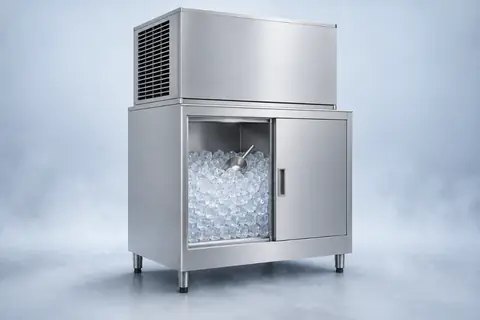
Under the FDA Food Code (section 3-202.16) and equivalent rules elsewhere, ice used as food must be made from drinking water, and ice used to cool cans or bottles must not then be served. Freeze blocks from filtered potable water in clean, covered molds, or buy food-grade block ice. Cube and flake ice machines, covered in our crushed ice and shaved ice machines guide, supply snow-cone style stands.
Where does a commercial slush machine fit in?
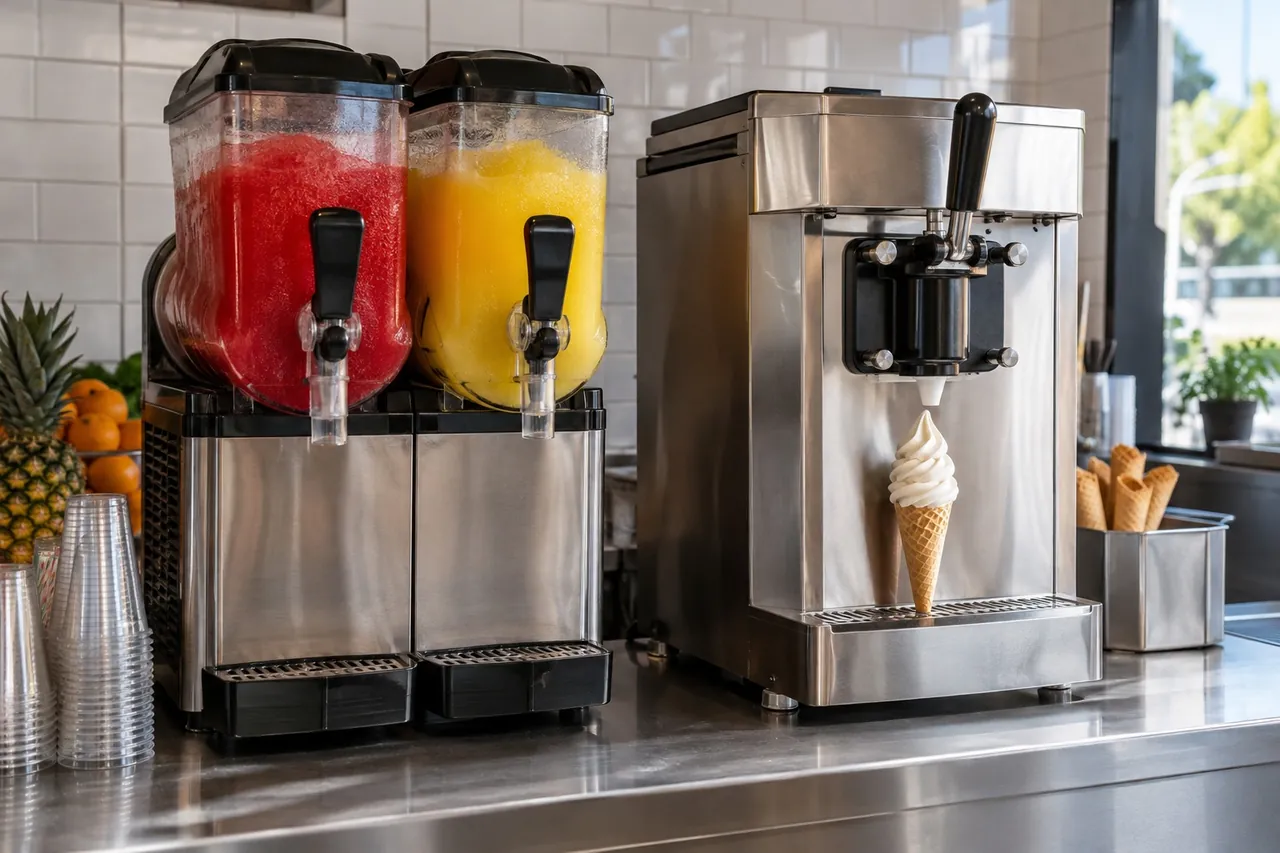
A commercial slush machine adds a high-margin frozen drink to a shaved ice or Italian ice stand: it stirs a sugary liquid in a clear 10–15 L bowl and keeps it at about −2 °C to −4 °C (24–28 °F) so it pours from a tap. It does not make Italian ice or ice cream.
Searches for an ice cream and slush maker or slushie ice cream machine usually lead to combination units. These exist, but a machine optimised for pourable slush cannot whip and freeze dairy mix to soft serve texture, and vice versa; most commercial operators buy separate machines. An industrial slushy machine with two or three bowls suits a busy stand, while a mini slushy maker is a domestic appliance that will not keep up with queues. See our slush machine vs soft serve comparison for the details.
Mobile shaved ice trailer, truck or fixed shop?
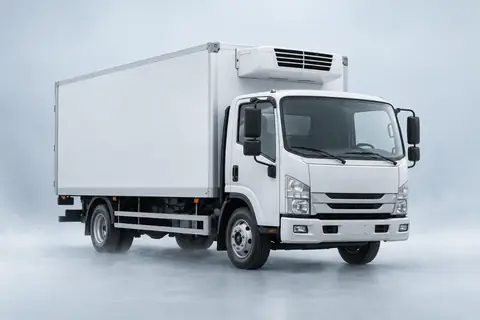
Most shaved ice businesses start mobile, in a trailer, kiosk or truck, because rent is low and the product sells best at events, beaches and sports fields; fixed shops make sense once you have proven demand in a location with steady foot traffic. Italian ice works in both, but needs freezer capacity on board.
Franchise or independent?
A mobile shaved ice franchise or shaved ice truck franchise sells you a branded trailer, syrups, training and a territory in return for an upfront fee and ongoing royalties or supply margins. An independent operator buys equipment directly and develops their own recipes and brand. The franchise route trades margin for a proven playbook; the independent route needs more learning but keeps every cent of the cup price. Whichever you choose, the equipment underneath is the same, so compare specifications, not logos.
Powering a mobile stand
| Mobile set-up | Main loads | Typical running load | Generator or hook-up to plan |
|---|---|---|---|
| Shaved ice cart | Block shaver, small chest freezer, lights | 0.5–1 kW | 2 kW inverter generator or 16 A socket |
| Shaved ice and slush trailer | Shaver, 2-bowl slush machine, freezer, fridge | 1.5–3 kW | 3.5–5 kW generator |
| Italian ice and snow ice truck | Display freezer, storage freezer, snow ice machine, fridge | 3–5 kW | 6–8 kW generator; avoid producing Italian ice on board |
Compressor start-up surges can briefly reach 3–5 times running current, so size generators with headroom. Our food truck refrigeration guide explains how to choose fridges and freezers rated for 38–43 °C (100–110 °F) ambient, which matters on a summer trailer.
What does it cost to start a shaved ice or Italian ice business?
A small shaved ice cart can start with a few thousand US dollars of equipment, while a trailer or shop with Italian ice production, display freezers and slush machines typically needs tens of thousands, before vehicle, permits and branding. Ingredient cost per serving is low, which is why these products are popular with first-time food businesses.
| Cost item | Shaved ice cart (indicative) | Italian ice and shaved ice trailer or shop (indicative) |
|---|---|---|
| Production machines | Block shaver; molds | Batch freezer, shaver, 2-bowl slush machine |
| Refrigeration | One chest freezer | Storage freezer, glass-top or dipping display freezer, undercounter fridge |
| Structure | Cart or gazebo | Trailer, kiosk fit-out or shop lease |
| Ingredients per serving | Ice plus 30–60 ml (1–2 fl oz) syrup | Fruit, sugar and flavour; cup and spoon often cost as much as the ice |
| Main running costs | Syrup, cups, event fees, fuel | Rent or pitch fees, electricity, staff, ingredients |
Prices vary widely by market, so treat any figure as a starting point and get written quotes. The biggest variable is not equipment but location: event fees and rent decide profitability far more than the cost of a cup of ice.
What food safety rules apply to shaved ice and Italian ice?
Shaved ice and Italian ice stands normally need a food business licence or mobile vendor permit, an approved handwash sink with warm water, potable water for ice and cleaning, and cold holding of any dairy or cut-fruit toppings at 5 °C (41 °F) or below. Rules come from the local health authority, usually based on the FDA Food Code in the US or Regulation (EC) 852/2004 in the EU.
- Make or buy ice only from drinking water and keep it covered; never serve ice used to chill bottles.
- Store scoops in a dipper well with running water or clean them at set intervals.
- Keep syrups capped and labelled with opening dates; condensed milk and cream toppings go in the fridge.
- On mobile units, many authorities require a waste-water tank about 15% larger than the fresh-water tank; confirm locally.
- Clean and sanitise the shaver blade, batch freezer and slush bowls at the end of each trading day.
How to choose equipment for an Italian ice or shaved ice business
Choose your hero product first, then size each machine by the busiest trading day and the power you will really have on site. A short checklist:
- Product: shaved ice (block shaver), Italian ice (batch freezer), snow ice (refrigerated snow machine) or slush (bowl machine).
- Volume: cups per peak hour for made-to-order products; litres per day for Italian ice made ahead.
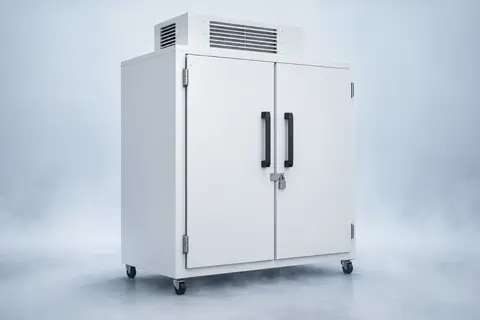
- Storage: freezer space for two days of Italian ice or ice blocks at −18 °C (0 °F) or colder.
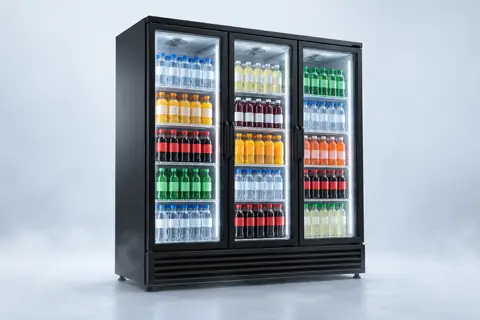
- Display: a glass-top display freezer or scooping cabinet holding about −14 °C to −11 °C (7–12 °F) for Italian ice.
- Power: total running kW plus start-up surge, and the generator or hook-up available.
- Ambient: equipment rated for hot trailers and outdoor events.
- Hygiene and permits: handwash sink, potable water and local permit requirements before you buy the vehicle.
Be There supplies batch freezers for Italian ice, gelato and hard ice cream, soft serve and popsicle machines, snow ice machines for bingsu, glass-top and upright display freezers, and cube and flake ice machines for ice supply. We do not make block shavers or slush machines, but we can help you match freezers and power to them. For display options, see our ice cream freezer guide. Send your menu, daily volume and power supply through the inquiry form and we will quote FOB, CIF or DDP.