Short answer
A commercial frozen drink maker (slush or granita machine) stirs a sugary liquid in a clear 10–15 L bowl and holds it at about −2 °C to −4 °C (24–28 °F) as a pourable drink. A soft serve machine whips dairy mix with air and dispenses it at −6 °C to −4 °C (21–25 °F) as a stiff dessert. Choose by product, not by name.
Key takeaways
- Slush machines serve a drink at about −2 °C to −4 °C (24–28 °F); soft serve machines serve a stiff dessert at about −6 °C to −4 °C (21–25 °F).
- A typical commercial slushy machine has one to three 10–15 L bowls and draws about 0.4–1.2 kW on single-phase power.
- Slush mixes need roughly 13–18 °Brix of sugar to freeze into soft crystals rather than a solid block.
- Soft serve machines add 30–60% air (overrun) and produce about 18–22 L/h on a tabletop or 25–36 L/h on a floor model.
- Frozen carbonated (FCB) machines are pressurised, need CO₂ and water connections, and cost far more than open-bowl slush machines.
What is the difference between a frozen drink maker and a soft serve machine?
A frozen drink maker turns a sweet liquid into a slushy, drinkable mix of fine ice crystals and syrup, served at about −2 °C to −4 °C (24–28 °F). A soft serve machine freezes a dairy or non-dairy mix harder, at about −6 °C to −4 °C (21–25 °F), while whipping air into it, so it comes out stiff enough to stand on a cone.
Both are commercial frozen beverage or dessert machines with a compressor, a refrigerated cylinder and a motor-driven auger or beater. The differences are in the details: how cold the product gets, whether air is added, how the mix is stored and how the product leaves the machine.
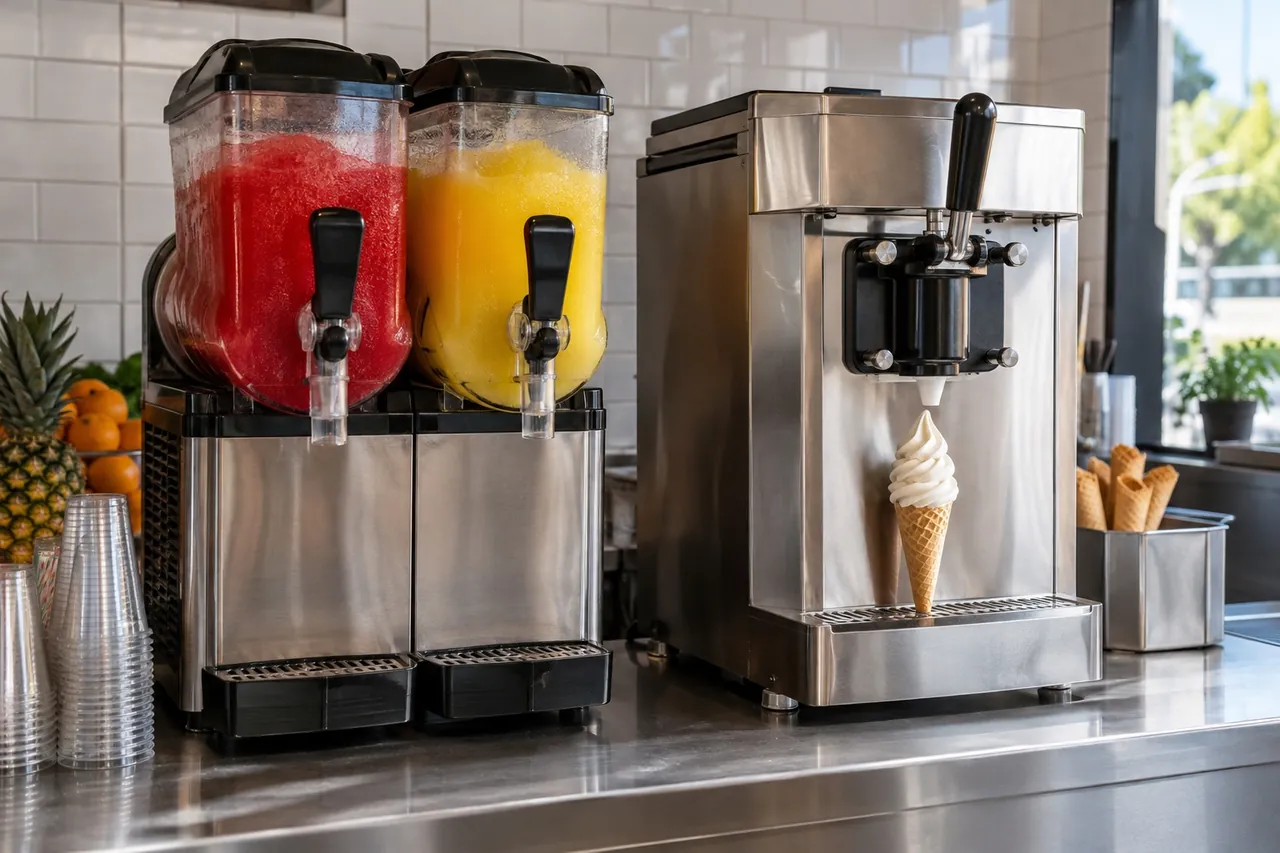
- Slush or granita machines stir the product in a transparent bowl and dispense through a tap by gravity. They suit slushies, frozen lemonade, frozen coffee and frozen cocktails.
- Frozen carbonated beverage machines freeze a carbonated syrup in sealed, pressurised barrels. A carbonated slush machine is what cinemas and fuel stations use for fizzy frozen drinks.
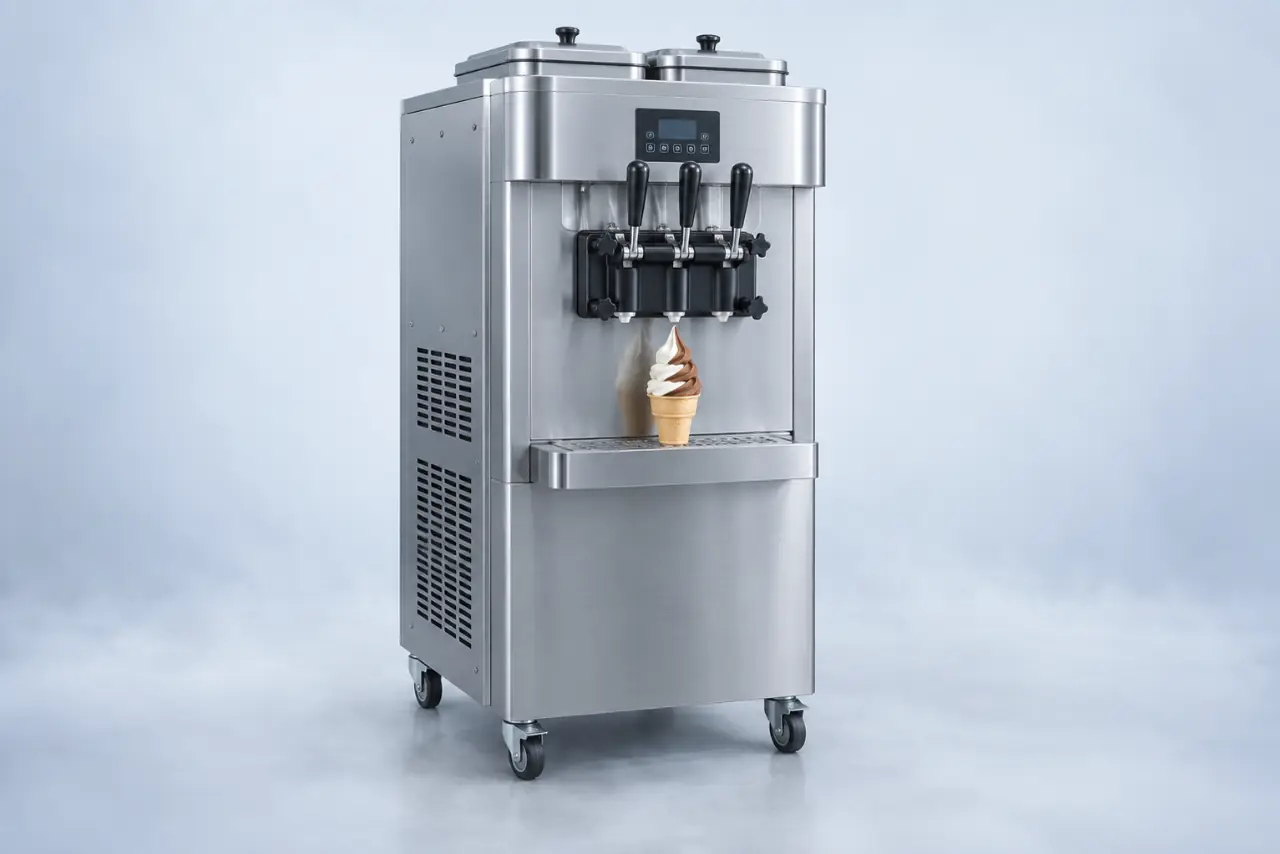
- Soft serve machines feed mix from a refrigerated hopper into a freezing cylinder and push it out through a door valve. See our soft serve and frozen yogurt machines for typical specs.
Some menus need two machines; few can be served well by one.
Slush machines vs soft serve: side-by-side specs
The table compares typical commercial frozen drink machines with soft serve equipment. Exact figures vary by model, so confirm them on the quotation.
| Feature | Slush / granita machine | Frozen carbonated (FCB) machine | Soft serve machine |
|---|---|---|---|
| Product | Slushie, frozen lemonade, frozen coffee, daiquiri | Carbonated slush | Soft ice cream, frozen yogurt, shakes base |
| Serving temperature | About −2 °C to −4 °C (24–28 °F) | About −2 °C to −4 °C (24–28 °F) | −6 °C to −4 °C (21–25 °F) |
| Air added (overrun) | Little or none | Gas expansion from CO₂ | 30–60% |
| Capacity | 1–3 bowls of 10–15 L (2.6–4 gal) | 2–4 sealed barrels | 18–22 L/h tabletop, 25–36 L/h floor |
| First freeze-down | Roughly 60–120 min for a full bowl | Roughly 60–90 min | About 10–15 min |
| Typical power | About 0.4–1.2 kW, single-phase | Several kW; needs CO₂ and water lines | About 1.5–2.5 kW tabletop; floor models may need three-phase |
| Mix | Syrup or juice at 13–18 °Brix | Carbonated syrup | Dairy or plant-based soft serve mix |
Two practical points follow. A slush machine can be filled in the morning and left to freeze while you set up, but it cannot catch up quickly once emptied. A soft serve machine recovers in minutes but is more demanding to clean.
How does a commercial slushy machine work?
A commercial slushy machine, also sold as slush equipment or a professional slush machine, has a horizontal stainless steel evaporator cylinder inside each clear bowl. Refrigerant chills the cylinder while a spiral auger turns around it, scraping off ice crystals and keeping the whole bowl moving. A thermostat or a torque sensor on the auger motor decides when the product is thick enough and cycles the compressor to hold that consistency.
Sugar is what keeps a slush soft. With roughly 13–18 °Brix of dissolved sugar, part of the water freezes into fine crystals and the rest stays as syrup. Below about 12 °Brix the bowl can freeze solid and stall the auger; above about 20 °Brix the drink stays runny. Sugar-free slush needs a dedicated mix with substitutes that lower the freezing point in the same way.
A typical slushie machine for commercial use has one, two or three bowls of 10–15 L each, so a two-bowl unit holds about 24 L (6.3 gal), enough for roughly 70–100 cups of 250–350 ml. Bowls are easy to see, which helps impulse sales, and the lid often carries a light box for the flavour.
The same unit works as a frozen lemonade machine, a juice or iced tea slush dispenser, or a frozen coffee machine for café menus. If you need a slushie and ice cream maker under one roof, the usual answer is a slush machine next to a soft serve machine, not one combined unit.
Daiquiri machines and frozen cocktail equipment
A commercial daiquiri machine, frozen daiquiri machine or frozen cocktail machine is mechanically the same as a slush machine. The difference is the mix. Alcohol lowers the freezing point, so a mix with too much spirit will not thicken. Most bars keep the finished mix at a modest strength, typically below about 10% alcohol by volume, and add a float of spirit to each glass if guests want a stronger drink. Test your recipe in the actual machine before printing a menu.
For a restaurant margarita machine or an industrial margarita machine in a high-volume bar, look for:
- Bowls of at least 12 L (3.2 gal) and a second or third bowl for a second flavour.
- Lockable taps or lids where local licensing rules require alcohol to be secured.
- Stainless steel augers and food-safe seals that tolerate acidic citrus mixes.
- An ambient rating for hot back bars, often 32 °C (90 °F) or higher.
Licensing for a liquor slush machine differs widely between states and countries, and some places restrict pre-batched alcoholic drinks. Check with your local licensing authority before you buy frozen cocktail equipment. A frozen margarita machine for home is simply a smaller version with one 3–6 L bowl and much slower freeze-down.
When a soft serve machine is the better frozen beverage machine
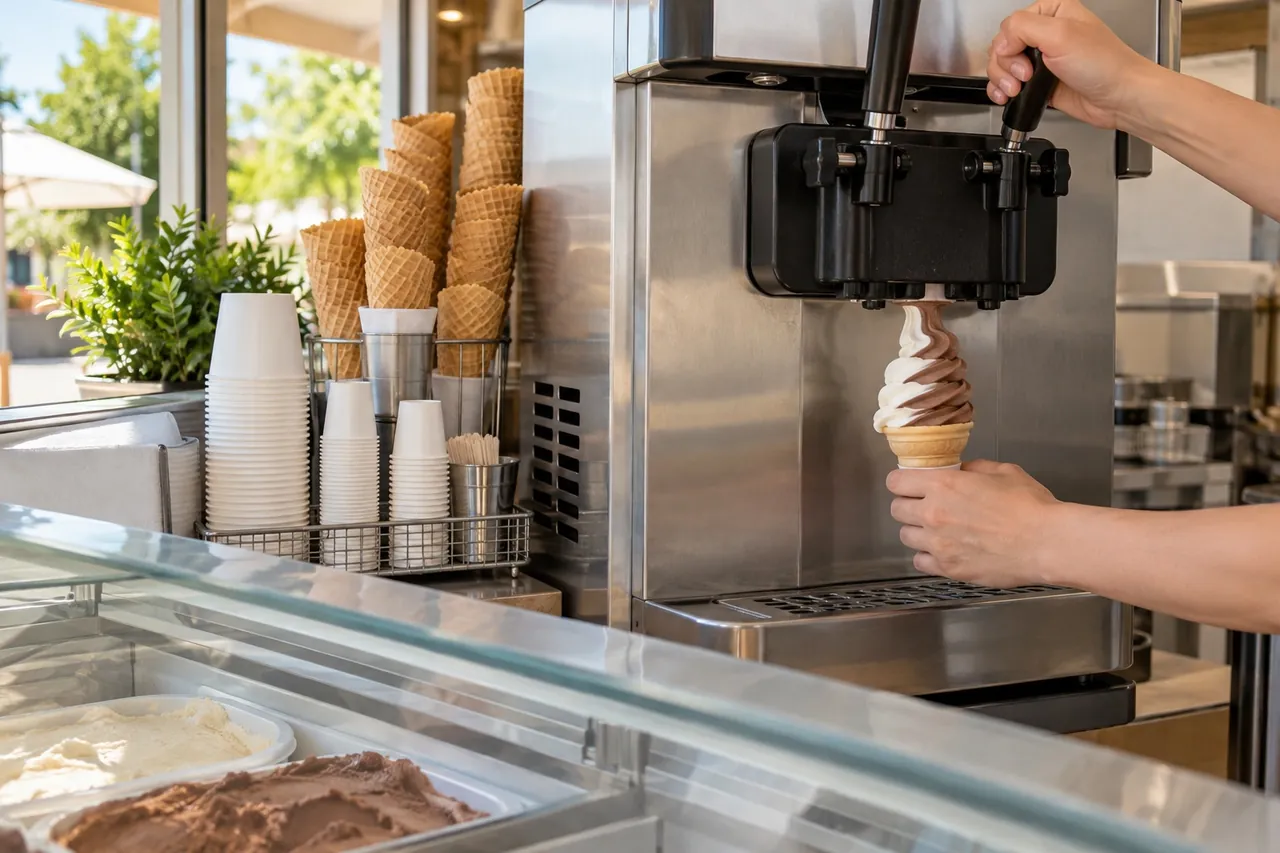
If your menu is built on dairy, a soft serve machine usually does more work than a slush machine. It produces cones, cups and sundaes, and in practice it is also your ice cream and milkshake machine: its output is the base for most milkshakes: soft serve blended with milk and syrup in a spindle mixer. An ice cream shake machine with a dedicated shake barrel exists for very high volume, but most shops serve shakes from a standard two-flavour soft serve machine.
Be There's commercial soft serve machines produce about 18–22 L/h on tabletop models and 25–36 L/h on floor models, serve at −6 °C to −4 °C (21–25 °F), offer two flavours plus a twist, and keep mix below +5 °C (41 °F) in refrigerated hoppers. An optional air pump raises overrun from about 30–45% to 50–60%, which lowers ingredient cost per serving.
Slush machines hold mix in an open bowl, so dairy in a slush bowl needs strict daily cleaning and temperature control. Soft serve machines are designed for dairy from the start. For a menu that needs both an ice cream and slush machine, plan for two units and a counter that can take both. Our soft serve machine buying guide covers output, overrun and power in detail.
Home slushie machine vs commercial frozen drink machine
A home slushie machine, portable slushie maker or mini slushy maker is built for a few cups at a time. Some freeze a small bowl with a compressor; others use a pre-frozen cup that you squeeze. They are fine for a family, but not for a counter.
| Point | Frozen drink machine for home | Commercial frozen drink machine |
|---|---|---|
| Capacity | About 0.5–3 L (0.1–0.8 gal) | 10–15 L (2.6–4 gal) per bowl, 1–3 bowls |
| Duty | Occasional, short sessions | All-day service |
| Recovery | Slow; refreeze between batches | Continuous top-up while serving |
| Build | Plastic, small motor | Stainless cylinders, larger compressor, tap dispensing |
| Certification | Household | Commercial food equipment marks (e.g. CE, UL/ETL, NSF where required) |
Use a home unit to develop recipes if you like, but buy a commercial machine for any service with a queue. An inspector will normally expect commercial-rated food equipment in a licensed business.
Cleaning, food safety and running costs
All frozen beverage machines need regular breakdown cleaning: drain, disassemble the bowl or cylinder, wash seals, augers and taps, sanitise and reassemble with food-safe lubricant. Dairy products are the strictest; most health codes and manufacturers call for daily cleaning, or a validated heat-treatment cycle, for any machine holding milk-based mix. Non-dairy slush can often run longer between cleans if the machine holds the product cold overnight, but follow the manufacturer's instructions and your local code.
Running costs for commercial frozen beverage machines are mainly mix and electricity. A two-bowl slush machine drawing around 0.8 kW and cycling through a 12-hour day uses well under 10 kWh. Slush mix costs little per cup, which is why frozen lemonade and slush have high margins. Soft serve uses more power but sells at a higher price per portion.
Keep condenser grilles clear and leave the clearance shown in the manual: blocked airflow is the most common reason a machine struggles to freeze in summer. See our commercial refrigeration maintenance checklist for routine tasks.
How to choose: checklist and next steps
- Product first. Drinkable and sweet (slush, frozen lemonade, frozen coffee, daiquiri) points to a slush machine; stiff and creamy (cones, froyo, shakes) points to soft serve.
- Peak hour. Count cups at your busiest hour. Slush bowls deliver stored volume; soft serve delivers continuous output of about 200–250 servings per hour per tabletop machine.
- Flavours. One bowl per slush flavour; two flavours plus twist per soft serve machine.
- Power and space. Check voltage, frequency and whether a floor model needs three-phase.
- Licensing. Alcohol and dairy rules vary by location.
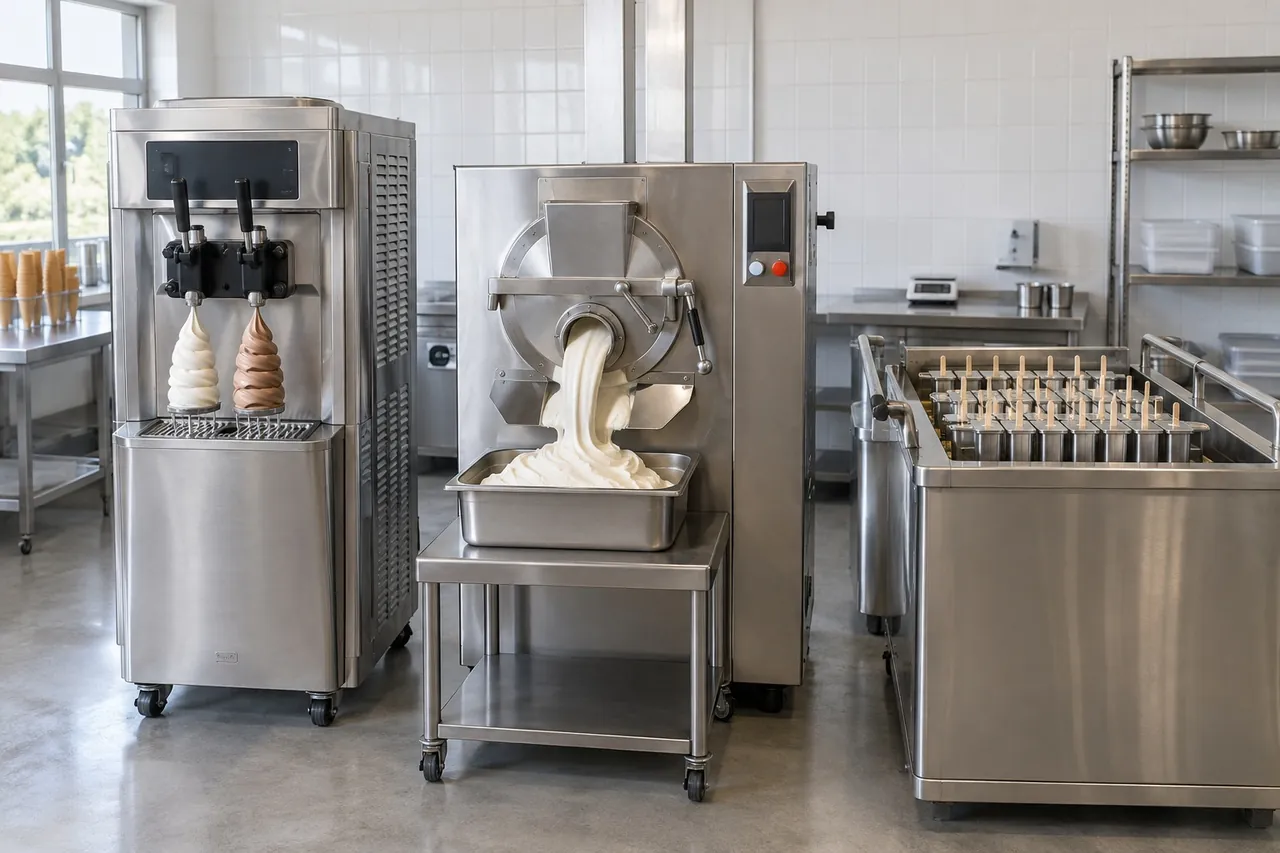
Be There supplies soft serve and frozen yogurt machines, batch freezers, popsicle machines and display freezers; slush and carbonated slush machines are not part of our standard catalogue. If your menu combines frozen drinks with ice cream, send us your menu and expected volumes and we will quote the ice cream side and tell you what we can supply against your spec.