Short answer
A commercial crushed ice maker is usually one of three setups: a cube ice machine feeding an electric ice crusher, a flake ice machine that makes dry 1.5–2.2 mm flakes directly, or a nugget ice machine that makes soft, chewable pellets at 150–500 kg (330–1,100 lb) a day. Shaved ice and snow ice come from separate shaving machines, and Italian ice from a batch freezer.
Key takeaways
- Crushed ice is cube ice broken mechanically; flake ice is frozen as thin flakes 1.5–2.2 mm thick at about −5 °C to −8 °C.
- For cocktails and juleps, a cube ice machine plus a crusher, or a nugget machine, gives the best texture.
- For fish counters, produce and food processing, a flake ice machine is the commercial crushed ice option, from 300 kg to 20 t a day.
- Snow ice (bingsu) machines freeze flavoured milk and shave it on demand, making about 120–240 kg a day on 220 V power.
- Countertop crushed ice makers typically make 10–20 kg (22–44 lb) a day, enough for home use but not for a busy bar.
What is a crushed ice maker?
A crushed ice maker is any machine that delivers small, irregular pieces of ice instead of whole cubes. In commercial use the term covers several different technologies: a cube ice machine paired with an ice crusher, a flake ice machine, or a nugget ice machine. Consumers also use it for countertop units and refrigerators with a crushed ice setting.
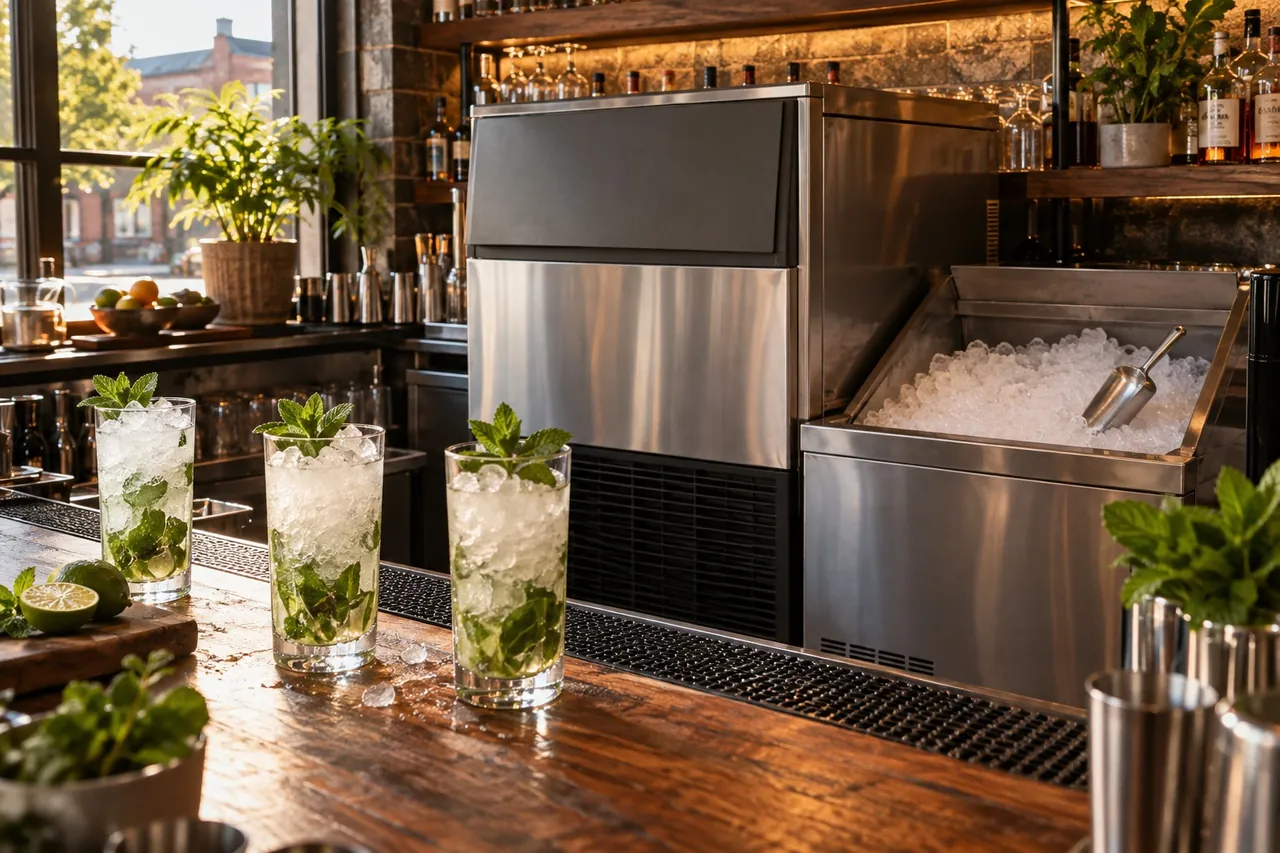
True crushed ice is made by breaking hard cubes with blades or rollers. The result has sharp edges and a mix of sizes, from fine chips to pea-sized lumps. It cools drinks very fast because of its large surface area, which is why bars use it for juleps, swizzles, tiki drinks and frozen cocktails.
Many buyers searching for a crushed ice machine actually need something else. A fish counter needs flake ice, a soft-drink outlet or hospital often wants chewable nugget ice, and a dessert shop wants shaved or snow ice. Each comes from a different machine with different running costs.
Be There supplies commercial ice machines in cube, flake, nugget, snow, bullet and crescent ice from 25 kg (55 lb) to 20 t (44,000 lb) per day. We do not sell standalone ice crushers, but we can advise on which ice type replaces crushed ice in your application.
What is the difference between crushed ice, flake ice, nugget ice and shaved ice?
The short answer: crushed ice is broken from cubes; flake ice is frozen as thin flakes; nugget ice is flake ice compressed into pellets; shaved ice is cut from a block. The table compares them.
| Ice type | How it is made | Texture | Typical uses |
|---|---|---|---|
| Crushed ice | Hard cubes broken by an electric or manual crusher | Hard, sharp, mixed sizes | Cocktails, juleps, raw bars |
| Flake ice | Water frozen on a refrigerated drum and scraped off, 1.5–2.2 mm thick | Dry, soft, mouldable, about −5 °C to −8 °C | Fish and meat display, produce, food processing |
| Nugget (pebble) ice | Flakes scraped by an auger and compressed into pellets | Soft, chewable, absorbs drink flavour | Soft drinks, healthcare, smoothies |
| Shaved ice | Thin shavings cut from a solid ice block or large cubes | Fine, fluffy, holds syrup | Shave ice and snow cone desserts |
| Snow ice (bingsu) | Frozen milk, juice or tea shaved into ribbons on a cold drum | Creamy, flavoured, melts in the mouth | Korean and Taiwanese desserts |
Flake ice and crushed ice look similar in a display but behave differently. Flake ice is sub-cooled and dry, so it packs tightly around fish without bruising and does not fuse into a block quickly. Crushed ice is harder and wetter, with sharper edges, and is better suited to drinks. Making flake ice directly also avoids the extra step and labour of crushing cubes.
Commercial crushed ice machine options for bars and restaurants
For drinks service, there are three practical ways to get a commercial crushed ice maker setup:
1. Cube ice machine plus an ice crusher
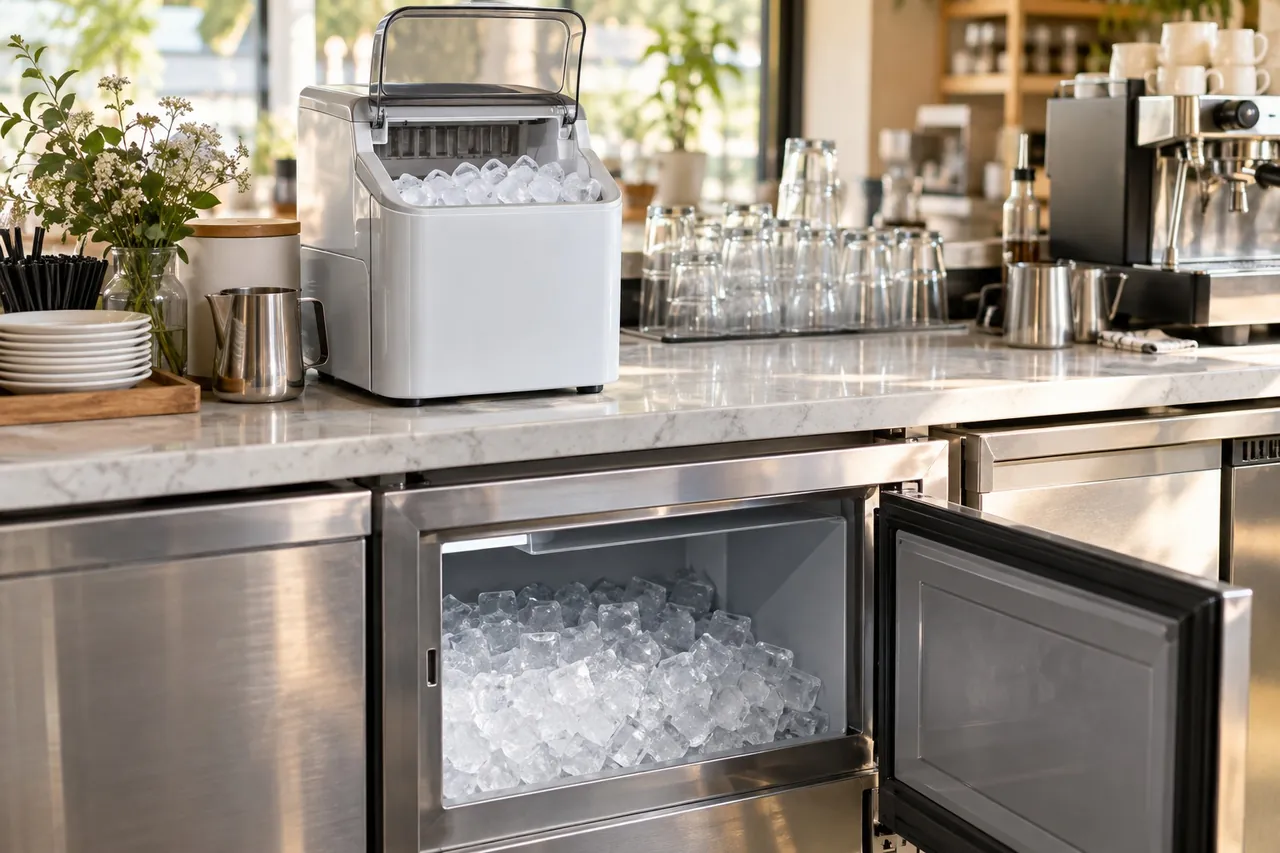
This is the classic bar setup. A cube machine makes hard full or half cubes, and an electric ice crusher on the back bar breaks them on demand. You keep cubes for normal drinks and crush only what you need. Choose a crusher with food-contact stainless steel blades, a safety interlock on the hopper and parts that come apart for cleaning. Be There cube ice machines make 50–1,000 kg (about 100–2,200 lb) a day.
2. Nugget ice machine
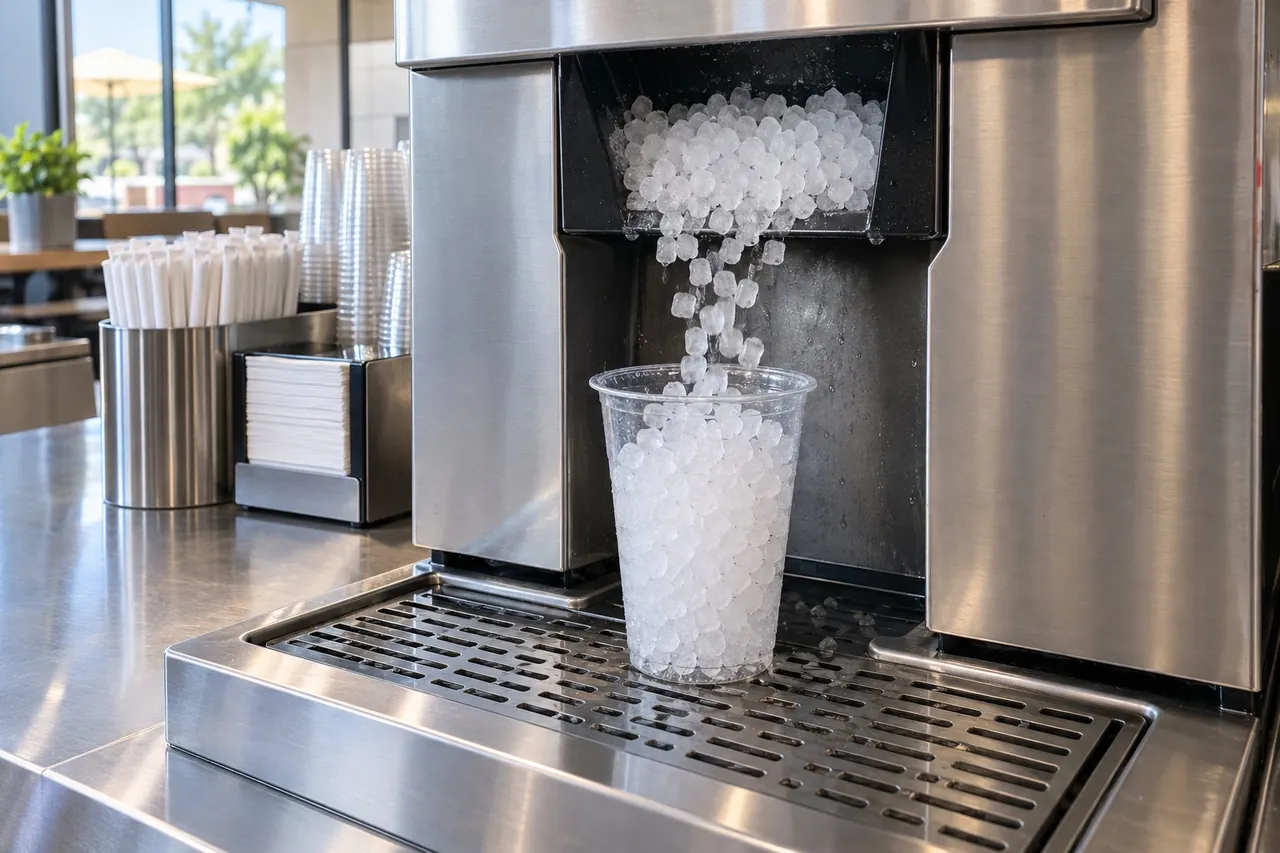
A nugget machine is the nearest thing to an ice machine that makes crushed ice directly. Its soft pellets suit soft drinks, iced coffee, smoothies and many cocktails, and customers like chewing them. Be There nugget ice machines make 150–500 kg (330–1,100 lb) a day.
3. Ice dispenser with a crush option
Some commercial ice and water dispensers include a built-in crusher. They suit self-service drink stations but have limited crush output.
For cocktail bars that also want large clear cubes or ice balls, keep the crushed ice line separate from your premium ice so neither compromises the other.
Industrial crushed ice machines for fish, produce and processing
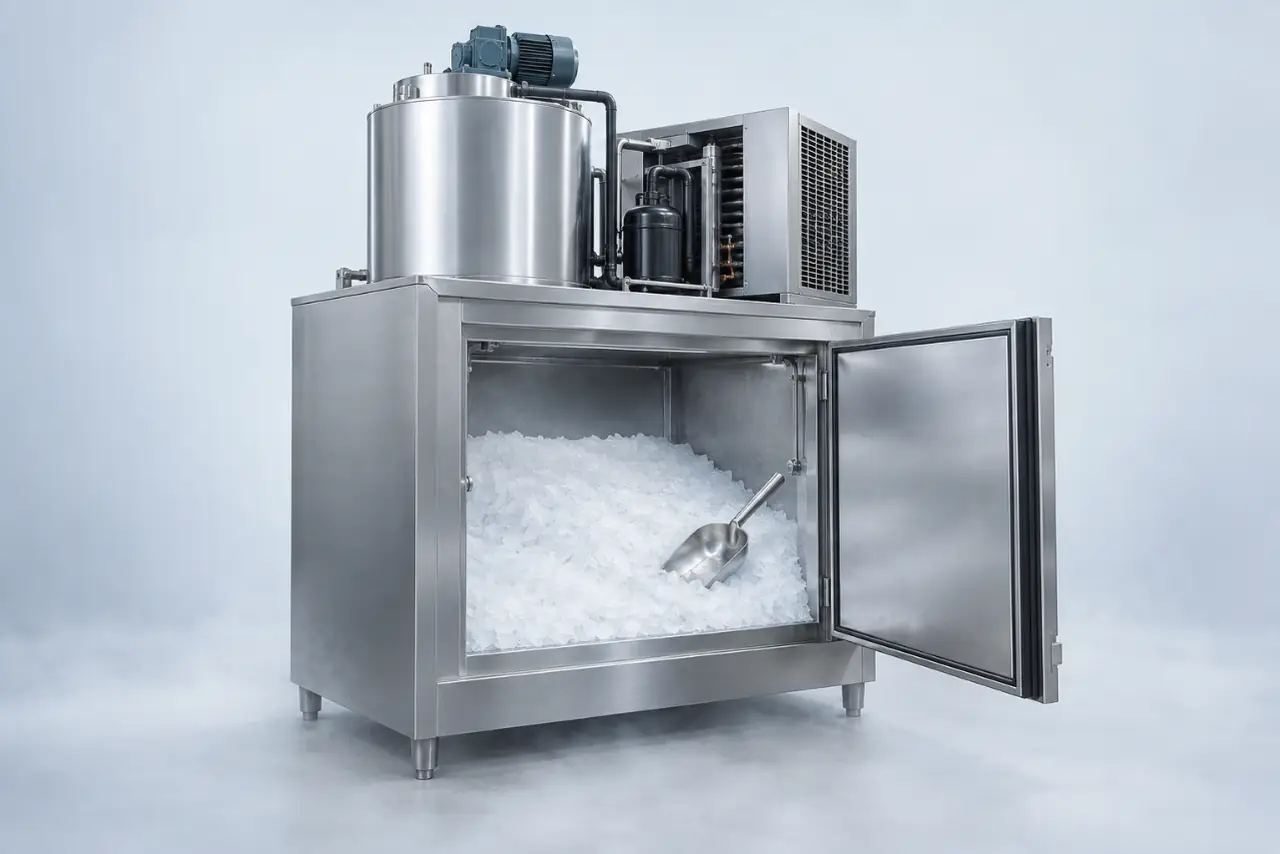
In industry, an industrial crushed ice machine is almost always a flake ice machine. Fisheries, seafood markets, supermarkets, poultry and meat plants, bakeries and concrete batching plants all need large volumes of small ice that can be shovelled, blown or packed around product. Making cubes and crushing them at tonne scale wastes energy and adds a maintenance-heavy crusher to the line.
A flake ice machine freezes a thin film of water on a refrigerated drum and scrapes it off as flakes 1.5–2.2 mm thick at about −5 °C to −8 °C. The flakes fall into an insulated bin or ice room below. Be There flake ice machines run from 300 kg to 20 t per day, with seawater models for boats and ports.
| Application | Recommended ice | Why |
|---|---|---|
| Fish counter or market display | Flake | Packs around fish, will not bruise, drains well |
| Fishing boats and ports | Seawater flake | Uses seawater; chills catch quickly |
| Produce and salad bars | Flake or nugget | Gentle contact, attractive display |
| Meat and sausage production | Flake | Mixes into product to control temperature |
| Cocktail bar | Cube plus crusher, or nugget | Hard texture or chewable texture for drinks |
A big ice crusher machine is still used where block ice is made centrally and crushed at the point of use, for example on some fishing docks. For new installations, flake ice is usually cheaper to run per kilogram. Seawater flake machines use corrosion-resistant evaporators.
Shaved ice and snow ice machines for dessert shops
Dessert shops need a different machine again. Shaved ice machines cut thin layers from a block of ice or large cubes with a rotating blade, producing a fine, fluffy texture that holds syrup. Snow cone machines grind cubes more coarsely and give a crunchier result. Both are usually batch-fed and run on demand.
Snow ice, often called bingsu or snowflake ice, goes further. The machine freezes a liquid base such as milk, juice, tea or flavoured syrup on a cold drum and shaves it into thin ribbons as you serve. Because the flavour is frozen into the ice itself, the result is creamy rather than watery, and each portion is made to order.
Be There snow ice (bingsu) machines make about 120–240 kg of snow ice per day on 220 V single-phase power. That suits dessert cafés, food courts and tea shops. Plan around:
- Base mix: keep refrigerated below +5 °C (41 °F) before freezing.
- Peak output: estimate portions per hour at your busiest time, not average daily sales.
- Cleaning: milk-based mixes need daily cleaning of food-contact parts.
- Space and power: confirm voltage and frequency for your country.
A countertop shaved ice maker is fine for a home or an occasional event stall, but its small hopper and motor will struggle with continuous service.
What is an Italian ice machine?
An Italian ice machine is not an ice maker at all. Italian ice, also called water ice, is a frozen dessert of fruit juice or purée, sugar and water, churned while it freezes so it has a smooth, fine-grained texture. A commercial Italian ice machine is a batch freezer: a refrigerated cylinder with a dasher that scrapes and mixes the base as it freezes, then extrudes it into pans.
After freezing, Italian ice is held in a dipping cabinet or display freezer, typically a little warmer than hard ice cream so it stays scoopable. The same batch freezer can usually make sorbet, gelato and hard ice cream by changing the recipe and settings.
Be There supplies batch freezers for hard ice cream, gelato and Italian ice as part of our commercial ice cream machine range. When comparing machines, check:
- Batch size and batches per hour, which set your daily output.
- Cylinder material and dasher design for fruit-based mixes with high sugar.
- Air-cooled or water-cooled condenser, and your power supply.
- Cleaning access to the cylinder and door.
An Italian ice machine for home is a small countertop sorbet maker with a frozen bowl or compressor. It is fine for a family, but a shop needs a batch freezer with continuous refrigeration. If you are looking at a used Italian ice machine for sale, inspect the dasher blades, cylinder surface and compressor carefully.
Countertop crushed ice makers and fridges: when are they enough?
A countertop crushed ice maker is a portable plug-in machine for home, office or small events. Most "crushed ice" countertop units actually make small nugget-style pellets, typically about 10–20 kg (22–44 lb) per day, and store only 1–3 kg. They need no plumbing because you fill the reservoir by hand.
A refrigerator with crushed ice uses a crusher in the door dispenser that breaks cubes from the freezer's ice maker. Output is a few pounds a day.
| Option | Typical daily output | Plumbing and drain | Suitable for |
|---|---|---|---|
| Fridge with crushed ice dispenser | About 1–2 kg (2–5 lb) | Water line only | Homes |
| Countertop or portable crushed ice machine | 10–20 kg (22–44 lb) | None, manual fill | Homes, small offices, occasional events |
| Commercial nugget ice machine | 150–500 kg (330–1,100 lb) | Water line and drain | Bars, cafés, healthcare |
| Commercial flake ice machine | 300 kg–20 t | Water line and drain | Fish, food processing, supermarkets |
A small crushed ice maker or inexpensive crushed ice maker is fine for a home bar. For a business, the problems are low output, small storage, no drain and, typically, no food-equipment certification such as NSF/ANSI 12. If you serve more than a few dozen drinks with crushed or nugget ice a day, a commercial machine pays for itself in staff time.
How to choose a crushed ice machine: checklist
- Define the use: drinks, food display, processing or desserts. This decides the ice type more than anything else.
- Choose the ice type: cube plus crusher for hard crushed ice, nugget for chewable ice, flake for food, snow or shaved ice for desserts, batch freezer for Italian ice.
- Estimate daily and peak demand in kg or lb, and add 20% for busy days.
- Correct for heat: divide by 0.85 in a warm room or 0.75 in a hot one.
- Check utilities: voltage, frequency, water supply, drain and ventilation.
- Plan storage: a bin holding at least half of daily demand.
- Confirm certification for your market, such as UL/ETL and NSF in the US or CE in Europe.
Tell us what you serve, your daily volume, power supply and room temperature, and we will recommend a cube, nugget, flake or snow ice machine from our ice machine range. Request a quote on FOB, CIF or DDP terms; we reply within one working day.