Short answer
A flash freezer is a freezer that blows air at about −35 °C to −40 °C (−31 °F to −40 °F) across food at high speed, taking it to −18 °C (0 °F) at the core in roughly 1–4 hours instead of 12–24 hours in a storage freezer. Fast freezing forms small ice crystals, so food keeps its texture, color and moisture after thawing.
Key takeaways
- Flash freezing pushes food through the ice-crystal zone of about −1 °C to −5 °C (30 °F to 23 °F) quickly, which keeps ice crystals small and limits drip loss.
- A commercial flash freezer takes cooked food from +70 °C (158 °F) to −18 °C (0 °F) at the core in about 240 minutes; a storage freezer can take a day.
- A deep freeze freezer is built to hold frozen food at −18 °C to −25 °C (0 °F to −13 °F), not to freeze warm food fast.
- Liquid nitrogen at −196 °C (−321 °F) is the fastest flash freezing method, used in industrial lines and specialist kitchens.
- Food depth matters as much as air temperature: keep trays to 50 mm (2 in) or less.
What is flash freezing?
Flash freezing is freezing food as fast as possible at very low temperature, so it passes from fresh or cooked to solidly frozen in minutes or a few hours. A flash freezer does this by blowing air at about −35 °C to −40 °C (−31 °F to −40 °F) across the product at high velocity, or in industrial plants by spraying liquid nitrogen at −196 °C (−321 °F).
In the food trade the terms overlap. "Flash freezer", "blast freezer", "shock freezer" and "flash freeze freezer" all describe a freezer designed to remove heat quickly rather than simply to store frozen goods. The European term "shock freezing" usually means the same cycle defined in catering guidance: from +70 °C (158 °F) to −18 °C (0 °F) at the core within about 240 minutes.
The reason speed matters is ice crystal size. Water in food starts to freeze at about −1 °C (30 °F), and most of it turns to ice between −1 °C and −5 °C (30 °F and 23 °F). Spend a long time in that zone and ice crystals grow large and sharp, rupturing cell walls. When the food thaws, the damaged cells leak water, flavour and nutrients, which you see as drip in the tray, mushy berries or dry fish. Flash freezing food crosses that zone quickly, forms many small crystals instead, and keeps the texture close to fresh.
How does a flash freezer work?
A commercial flash freezer uses the same vapour-compression cycle as any freezer, but every part is oversized for heat removal:
- Larger compressor – rated for low evaporating temperatures around −40 °C (−40 °F) with enough capacity to absorb heat from warm food.
- Large evaporator and powerful fans – air moves across the trays at several metres per second, stripping away the layer of warm, still air around the food that slows heat transfer.
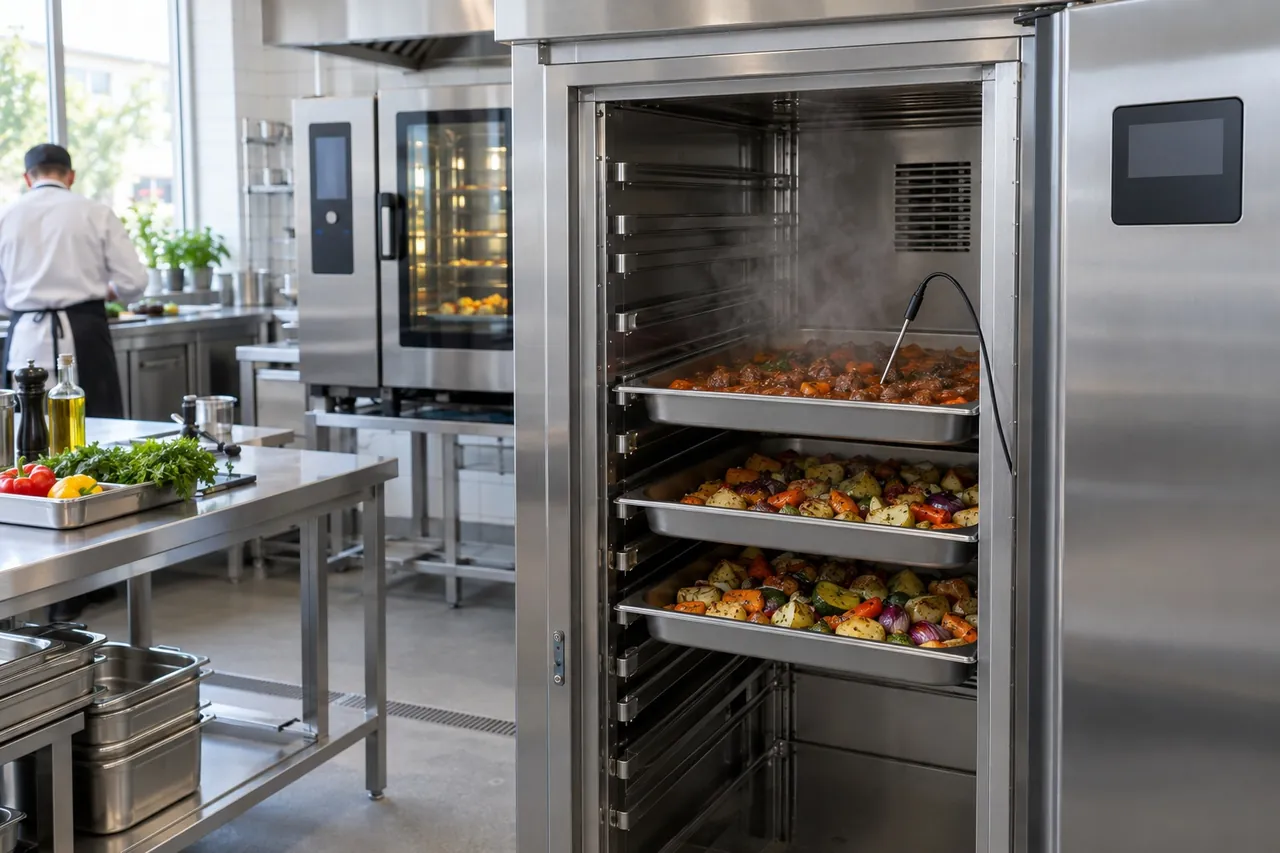
- Core probe – a needle probe in the thickest piece tells the controller when the core has reached −18 °C (0 °F), so the cycle ends on food temperature, not on a timer.
- Freeze then hold – after the cycle, the cabinet switches to storage mode at about −18 °C to −22 °C (0 °F to −8 °F) until you unload.
| Freezing method | Medium temperature | Typical time to −18 °C core (50 mm tray) |
|---|---|---|
| Domestic or storage chest freezer | −18 °C to −24 °C (0 °F to −11 °F), still air | 8–24 hours |
| Walk-in freezer room (storage) | −18 °C to −25 °C, low air speed | 8–24 hours |
| Commercial flash / blast freezer | −35 °C to −40 °C, high-velocity air | About 1–4 hours from +70 °C |
| IQF tunnel (small pieces) | −35 °C to −40 °C, fluidised air | 3–15 minutes |
| Liquid nitrogen | −196 °C (−321 °F) | Seconds to a few minutes for small pieces |
Times are indicative and depend on product, load and starting temperature. For how a cabinet handles chilling as well as freezing, see blast chiller vs shock freezer.
Flash freezer vs deep freeze freezer: what is the difference?
A deep freeze freezer is a storage appliance. Chest freezers, upright freezers, display freezers and walk-in freezer rooms are designed to keep food that is already frozen at −18 °C to −25 °C (0 °F to −13 °F). They have small compressors sized for door openings and wall heat, not for pulling 20 kg (44 lb) of hot stew down to −18 °C.
Load warm food into a storage freezer and three things happen: the food freezes slowly with large ice crystals, everything already in the freezer warms up, and the compressor runs flat out for hours. Domestic freezers in Europe state a "freezing capacity" in kg per 24 hours on the rating plate, often only 10–25 kg (22–55 lb), which shows how limited they are.
| Feature | Flash / blast freezer | Deep freeze (storage) freezer |
|---|---|---|
| Purpose | Freeze warm or fresh food fast | Hold frozen food |
| Air temperature | −35 °C to −40 °C | −18 °C to −25 °C |
| Air speed | High, directed across trays | Low |
| Control | Core probe or timed cycle, then hold | Thermostat |
| Typical load | GN trays, 5–20 per cycle | Boxes and bags |
Most kitchens need both: a commercial flash freezer to freeze, then a reach-in or walk-in freezer to store.
Types of commercial and industrial flash freezers
A flash freeze machine comes in four broad sizes:
Reach-in flash freezers
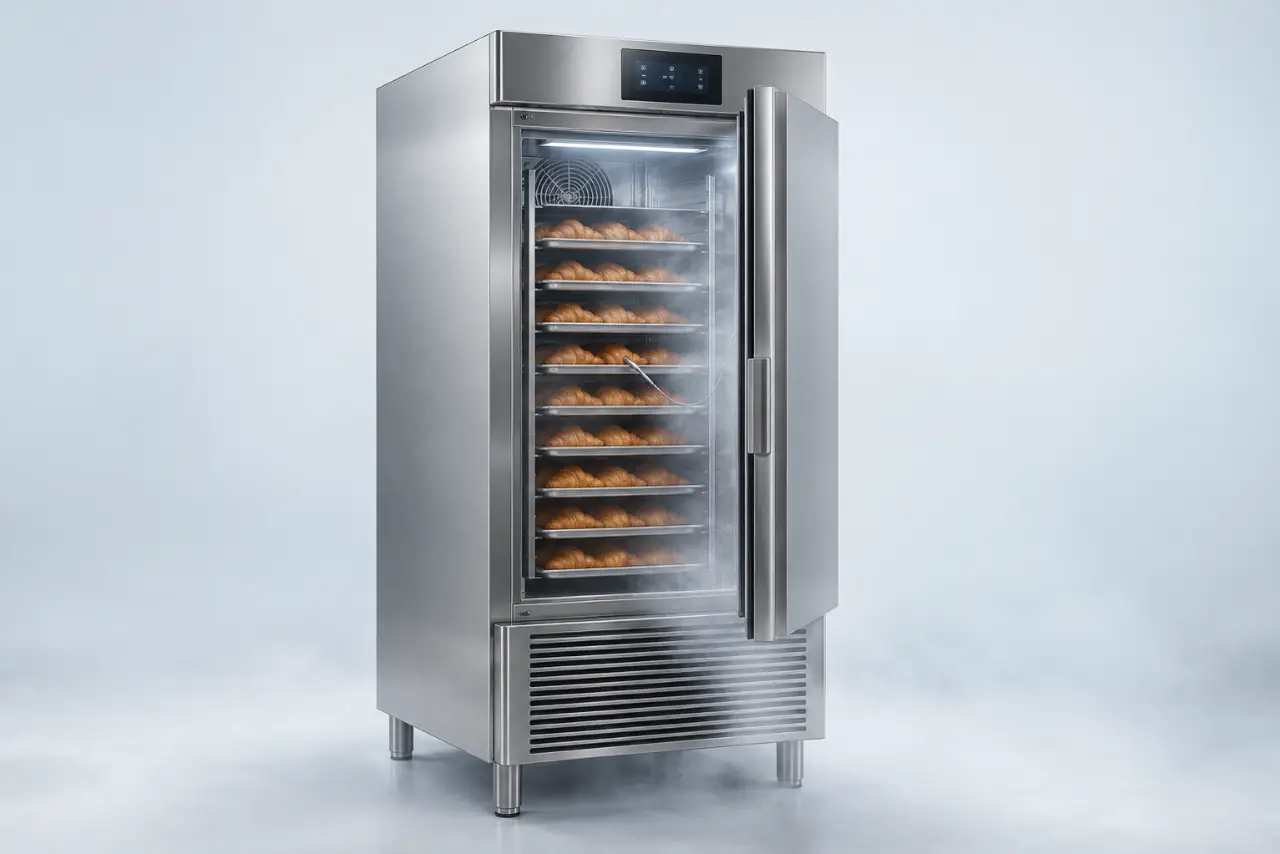
Cabinets holding about 5–10 GN 1/1 or 600 × 400 mm trays, for restaurants, bakeries, pastry shops and ice cream parlours. Most double as blast chillers. Countertop 3-tray units exist for very small kitchens.
Roll-in flash freezers
Larger cabinets that take a loaded trolley of 15–20 trays straight from the oven rack, for central kitchens, hotels and caterers.
Blast freezer rooms
Walk-in rooms built from 150–200 mm insulated panels with high-capacity evaporators, running at down to −35 °C (−31 °F) for pallets, cartons and carcasses.
Industrial flash freezers
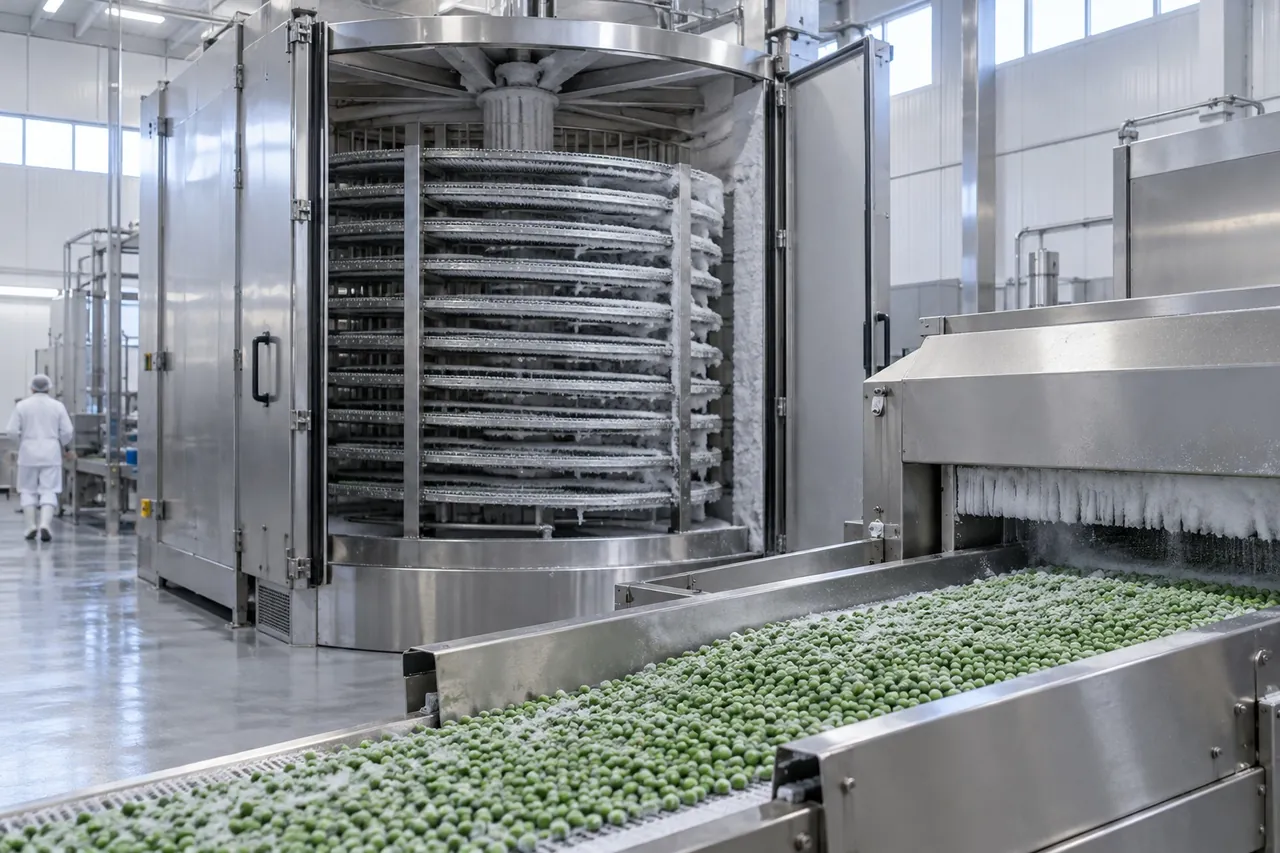
An industrial flash freezer is usually continuous: a tunnel, fluidised-bed or spiral freezer that freezes product on a moving belt at hundreds or thousands of kilograms per hour, or a cryogenic tunnel using liquid nitrogen. These lines are covered in our guide to IQF, tunnel and spiral freezers.
An "instant freeze machine" in a bar or dessert shop is usually a different thing again: a cold plate at around −30 °C (−22 °F) for rolled ice cream, or a liquid nitrogen station. These freeze a thin layer in seconds but are not designed to freeze batches of food for storage.
Flash freezing food: examples and what it is used for
Some practical examples of freezing fast in food businesses:
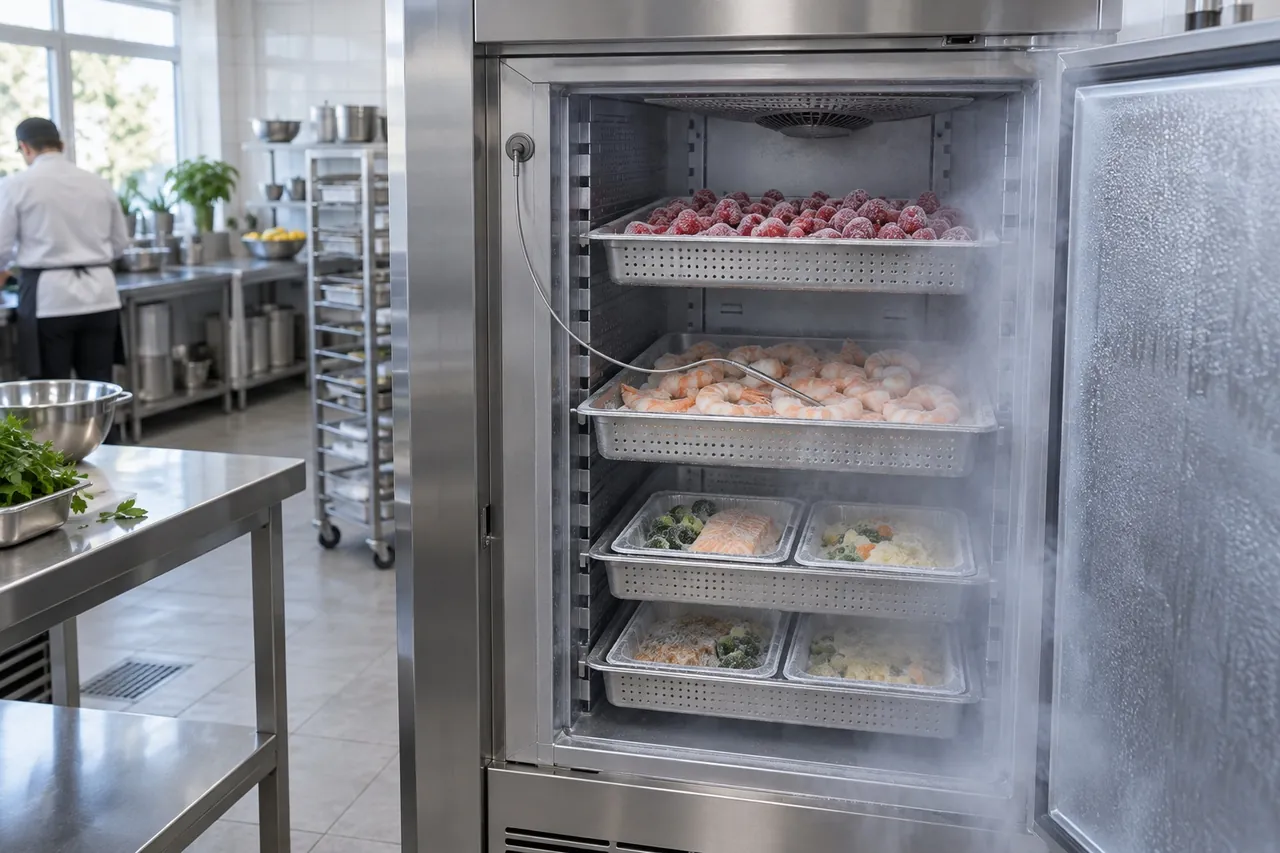
- Berries and fruit – frozen in a single layer so pieces stay separate and do not collapse when thawed, for smoothies, bakery and desserts.
- Seafood – shrimp, scallops and fish portions keep a firmer texture. Fish served raw or undercooked must also be frozen for parasite destruction: the FDA Food Code accepts −20 °C (−4 °F) or below for 7 days, or −35 °C (−31 °F) until solid and then held at −35 °C for 15 hours. A flash freezer reaches the second option.
- Bakery – croissants, unbaked dough and cakes frozen fast keep their structure for bake-off later.
- Cooked meals – sauces, braises, rice and portioned meals for cook-freeze production, delivery kitchens and catering.
- Ice cream and pastry – hardening gelato, setting mousses and semifreddo, freezing decorations.
- Meat – portioned steaks, burgers and poultry for retail or export.
Flash freezing does not improve poor food. Quality at thawing depends on quality at freezing, so freeze products at their best, wrap or bag them once frozen to prevent freezer burn, and label with date and contents. Cooked food should be cooled quickly in the first place; the 2-stage cooling method sets the food-safety limits.
How to freeze things quickly (and whether a home flash freezer is worth it)
Whatever freezer you have, the same physics decides how to freeze something fast:
- Go thin – freezing time rises roughly with the square of thickness. A 25 mm (1 in) layer freezes in about a quarter of the time of a 50 mm (2 in) layer.
- Spread it out – single layers on a tray, pieces not touching.
- Use metal – aluminium or stainless trays conduct heat far better than plastic or glass.
- Pre-chill – cool cooked food to fridge temperature first, ideally in a blast chiller, so the freezer only removes the last heat.
- Keep air moving – do not pack the freezer solid; leave gaps so cold air reaches every tray.
- Freeze, then bag – once solid, move pieces into bags or containers and back to storage.
A home flash freezer as such is rare. Some domestic freezers have a "fast freeze" or "super freeze" button that runs the compressor continuously for a day; it helps, but the air is still around −24 °C to −30 °C (−11 °F to −22 °F) with little air movement. Small 3-tray blast freezers are sold to serious home cooks, but for most households the tray method above is enough. A business that freezes food daily, sells frozen products or must meet HACCP cooling records needs a commercial flash freezer with a core probe and printed or logged cycles.
What about a freeze machine for plumbing?
The phrase "freeze machine for plumbing" refers to a completely different tool. Plumbers use pipe-freezing kits to freeze a plug of ice inside a water-filled pipe, so they can cut in a valve or replace a fitting without draining the whole system. Electric pipe freezers clamp refrigerated heads around the pipe; other kits use carbon dioxide or a refrigerant spray in a jacket.
These are not food freezers and are not used to flash freeze food. They are mentioned here only because the same search terms overlap. If you need to freeze food, the relevant equipment is a blast or flash freezer; if you need to isolate a pipe, speak to a plumbing tool supplier.
Similarly, a "flash freeze" setting on a drinks cooler or a rapid beverage chiller is designed to bring cans and bottles down to serving temperature quickly, not to freeze them. Chilling drinks is a refrigeration job; freezing food for storage is a freezing job, and the equipment is sized very differently.
When in doubt, ask yourself one question: does the product need to end up solidly frozen at −18 °C (0 °F) at the core, recorded and ready for storage? If yes, you need a freezer designed and rated for freezing, with a stated capacity in kilograms per cycle. If no, a chiller, a cold plate or a specialist tool may be the right answer.
How to choose a commercial flash freezer
Use this checklist when you compare flash freezers:
- Kilograms per cycle – check the rated freezing capacity (from +70 °C to −18 °C) rather than tray count alone. Tray count tells you space; capacity tells you how much heat the machine can remove.
- Cycles per day – a 240-minute freezing cycle means about 3–4 cycles in a working day. Multiply to get daily output.
- Tray size – GN 1/1 for kitchens, 600 × 400 mm for bakery and pastry; check rack spacing for your products.
- Combined chilling – most units also blast chill to +3 °C (37 °F), which most kitchens use daily.
- Core probe and records – single or multi-point probe, HACCP data download or printer.
- Installation – plug-in or remote condensing unit, power supply (220–240 V single-phase or 380–415 V three-phase), ventilation and ambient rating.
- Storage downstream – where frozen product goes after the cycle.
Be There supplies reach-in and roll-in blast chillers and shock freezers from 5 to 20 trays, and walk-in blast rooms down to −35 °C (−31 °F). Prices vary by size, specification and destination market; send your product, daily volume and voltage through the inquiry form and we will quote FOB, CIF or DDP.