Short answer
To calculate cubic feet, multiply length × width × height in feet. If you measured in inches, multiply and divide by 1,728; if in metres, multiply and then multiply by 35.31. For example, a freezer 24 × 22 × 58 in inside holds 30,624 ÷ 1,728 = 17.7 cu ft, and a cold room 3.0 × 2.4 × 2.2 m holds 15.84 m³, or 559 cu ft.
Key takeaways
- Cubic feet = length × width × height, all in feet; 1 cu ft = 1,728 cubic inches = 28.32 litres.
- 1 cubic metre = 35.31 cubic feet; multiply m³ by 35.31 to get cu ft.
- Square feet convert to cubic feet only with a height: 1,200 sq ft × 8 ft ceiling = 9,600 cu ft (272 m³).
- Measure freezers and cold rooms inside; usable volume is typically 10–15% below gross in cabinets and 40–60% of internal volume in shelved walk-ins.
- A 7 cu ft freezer is 198 L and holds up to about 110 kg (245 lb) of frozen food at roughly 16 kg (35 lb) per cu ft.
- A 20 ft reefer holds about 28 m³ (990 cu ft) and a 40 ft high-cube reefer about 67 m³ (2,370–2,390 cu ft).
How do you calculate cubic feet?
To calculate cubic feet, measure the length, width and height of a space in feet and multiply them: cubic feet = length (ft) × width (ft) × height (ft). A box 4 ft long, 3 ft wide and 2 ft high holds 4 × 3 × 2 = 24 cubic feet (24 cu ft or ft³).
If you measure in inches, multiply the three dimensions in inches and divide by 1,728. If you measure in metres, multiply to get cubic metres and multiply by 35.31 to get cubic feet. The method is the same for a freezer cabinet, a walk-in cold room, a truck box or a shipping container; what changes is whether you measure inside or outside and how much of the space is usable.
- Decide what you need: internal (storage) volume or external (footprint) volume.
- Measure length, width and height in one unit. For internal volume, measure wall to wall inside.
- Convert all three to feet (inches ÷ 12, centimetres ÷ 30.48, metres × 3.281), or keep them in inches or metres and convert at the end.
- Multiply length × width × height.
- Subtract obstructions (evaporator, shelving, wheel arches) if you need usable volume.
This guide is about the calculation. If you want typical freezer sizes and what fits in them, see freezer cubic feet explained.
How many cubic inches are in a cubic foot?
There are 1,728 cubic inches in one cubic foot, because a cubic foot is 12 in × 12 in × 12 in. In metric terms, one cubic foot is 28.32 litres, and one cubic metre is 35.31 cubic feet.
| From | To | Multiply by |
|---|---|---|
| Cubic inches (in³) | Cubic feet | ÷ 1,728 |
| Cubic feet (ft³) | Cubic inches | × 1,728 |
| Cubic feet | Litres | × 28.32 |
| Litres | Cubic feet | ÷ 28.32 (or × 0.0353) |
| Cubic metres (m³) | Cubic feet | × 35.31 |
| Cubic feet | Cubic metres | × 0.02832 (or ÷ 35.31) |
| Cubic yards (yd³) | Cubic feet | × 27 |
| US gallons | Cubic feet | ÷ 7.48 |
So how many inches is a cubic foot? It is not a length at all: a cubic foot is a volume equal to 1,728 cubic inches, or a cube 12 inches (305 mm) on each side. Likewise, "10 cu ft to feet" has no single answer, but a 10 cu ft space could be a cube about 2.15 ft (26 in, 66 cm) on each side, or any box whose sides multiply to 10.
How many cubic feet are in a square foot?
A square foot cannot be converted to cubic feet on its own, because square feet measure area and cubic feet measure volume. You need a height: cubic feet = square feet × height in feet, and going the other way, square feet = cubic feet ÷ height.
One square foot of floor with a 1 ft height is 1 cu ft; with an 8 ft ceiling it is 8 cu ft. This is also how to calculate "cubic square footage", the volume of a room from its floor area.
- 1,200 square feet is how many cubic feet? With an 8 ft ceiling, 1,200 × 8 = 9,600 cu ft (272 m³). With a 9 ft ceiling, 10,800 cu ft (306 m³). With a 10 ft cold store ceiling, 12,000 cu ft (340 m³).
- Cu ft to sq ft: a 600 cu ft walk-in with a 7.5 ft internal height has 600 ÷ 7.5 = 80 sq ft (7.4 m²) of floor.
Refrigeration engineers care about both numbers: floor area decides how many pallets or shelves fit, while volume (and especially wall area) decides the refrigeration load.
Worked examples: common dimension questions
These are the dimension sums people search for most, worked out in both imperial and metric.
| Dimensions | Calculation | Cubic feet | Metric |
|---|---|---|---|
| 8 × 2 × 1 ft | 8 × 2 × 1 | 16 cu ft | 0.45 m³ (453 L) |
| 8 × 8 × 8 ft | 8 × 8 × 8 | 512 cu ft | 14.5 m³ |
| 9 × 42 × 17 in | 6,426 in³ ÷ 1,728 | 3.72 cu ft | 105 L |
| 24 × 18 × 12 in | 5,184 in³ ÷ 1,728 | 3.0 cu ft | 85 L |
| 2.0 × 1.5 × 1.0 m | 3.0 m³ × 35.31 | 105.9 cu ft | 3.0 m³ |
| 7 × 5 × 4 ft | 7 × 5 × 4 | 140 cu ft | 3.96 m³ |
What does 140 cubic feet look like?
140 cubic feet visualized is a space 7 ft long, 5 ft wide and 4 ft high (2.1 × 1.5 × 1.2 m), or a cube about 5.2 ft (1.58 m) on each side. That is roughly the cargo space of a small panel van, the inside of about seven 20 cu ft chest freezers, or a very small walk-in cooler. Its 2.1 × 1.5 m floor takes two standard 1.2 × 1.0 m pallets side by side.
How do you find the cubic feet of a freezer or refrigerator?
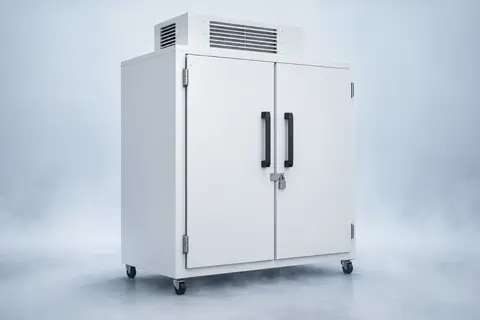
To find the cubic feet of a freezer or refrigerator, open it, measure the inside width, depth and height in inches, multiply them and divide by 1,728. Measure the storage space only, from inner wall to inner wall, not the outside cabinet.
Worked example: upright freezer
- Inside width 24 in, depth 22 in, height 58 in.
- 24 × 22 × 58 = 30,624 cubic inches.
- 30,624 ÷ 1,728 = 17.7 cu ft gross (about 502 L).
- Subtract the evaporator cover, fan box and door bins, often 10–15% of the gross figure, giving about 15–16 cu ft of usable space.
Worked example: chest freezer in metric
Inside 90 cm × 45 cm × 60 cm = 0.90 × 0.45 × 0.60 = 0.243 m³ = 243 L. Multiply 0.243 by 35.31 and you get 8.6 cu ft. Subtract the compressor step at one end, typically 10–20 cm, and the true volume is closer to 7–7.5 cu ft.
That gap explains why measured figures differ from the rating plate. Manufacturers usually quote gross volume, and some markets also quote net or storage volume; for commercial cabinets compare like with like. A full upright cabinet that has a refrigerator compartment too (a fridge-freezer) must be measured compartment by compartment.
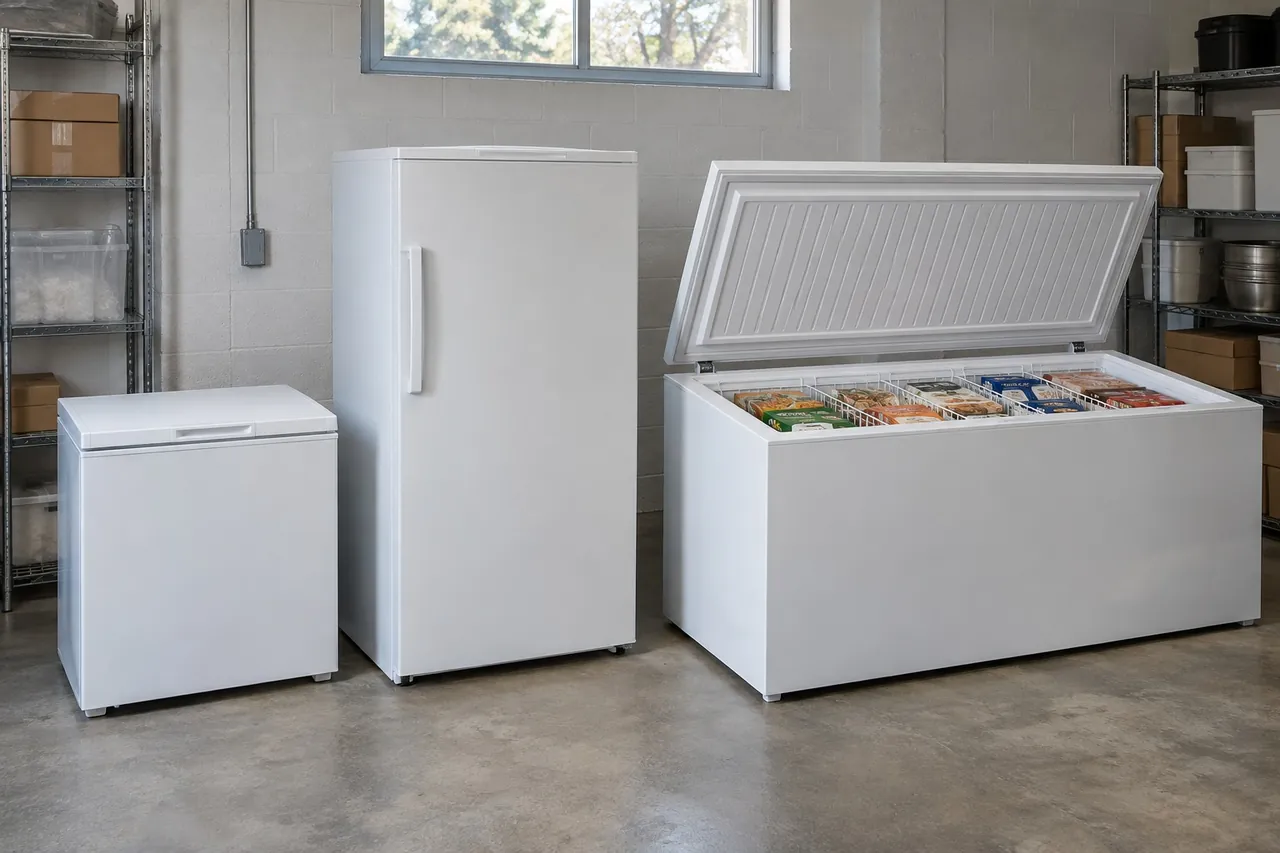
How big is 7 cubic feet (and other freezer sizes)?
7 cubic feet is 198 litres (0.198 m³), the size of a typical small chest freezer about 94 cm (37 in) wide, 56 cm (22 in) deep and 86 cm (34 in) high outside. As a rule, one cubic foot of freezer holds about 16 kg (35 lb) of frozen food, so 7 cu ft holds up to about 110 kg (245 lb).
| Rated size | Litres | Typical unit | Frozen food, up to about |
|---|---|---|---|
| 3 cu ft | 85 L | Mini fridge or small chest freezer, about 48 cm (19 in) wide | 48 kg (105 lb) |
| 5 cu ft | 142 L | Small chest freezer, about 70–80 cm (28–31 in) wide | 80 kg (175 lb) |
| 7 cu ft | 198 L | Chest freezer, about 94 cm (37 in) wide | 110 kg (245 lb) |
| 8 cu ft | 227 L | Apartment-size refrigerator or chest freezer | 130 kg (280 lb) |
| 10 cu ft | 283 L | Compact top-freezer refrigerator, about 60 cm (24 in) wide | 160 kg (350 lb) |
| 13 cu ft | 368 L | Upright freezer or large chest | 205 kg (455 lb) |
| 20 cu ft | 566 L | Large upright freezer, about 81 cm (32 in) wide | 320 kg (700 lb) |
| 30 cu ft | 850 L | Two-door commercial reach-in or large home refrigerator | n/a (mixed storage) |
How big is a 10 cubic foot refrigerator in practice? About 283 L: enough for a small household or a staff room, but small for a commercial kitchen, where a two-door reach-in holds about 40–50 cu ft. A counter depth refrigerator rated 30 cubic feet is usually a wide French-door unit of about 90 cm (36 in). For commercial footprints see refrigerator sizes and dimensions, and for small units the mini freezer guide.
The same density rule sizes ice storage: cube ice weighs about 0.5–0.55 kg per litre (30–35 lb per cu ft), and a bagged ice merchandiser holds about 1.4 ten-pound bags per cu ft. See the ice merchandiser buying guide.
How to calculate the volume of a walk-in cold room
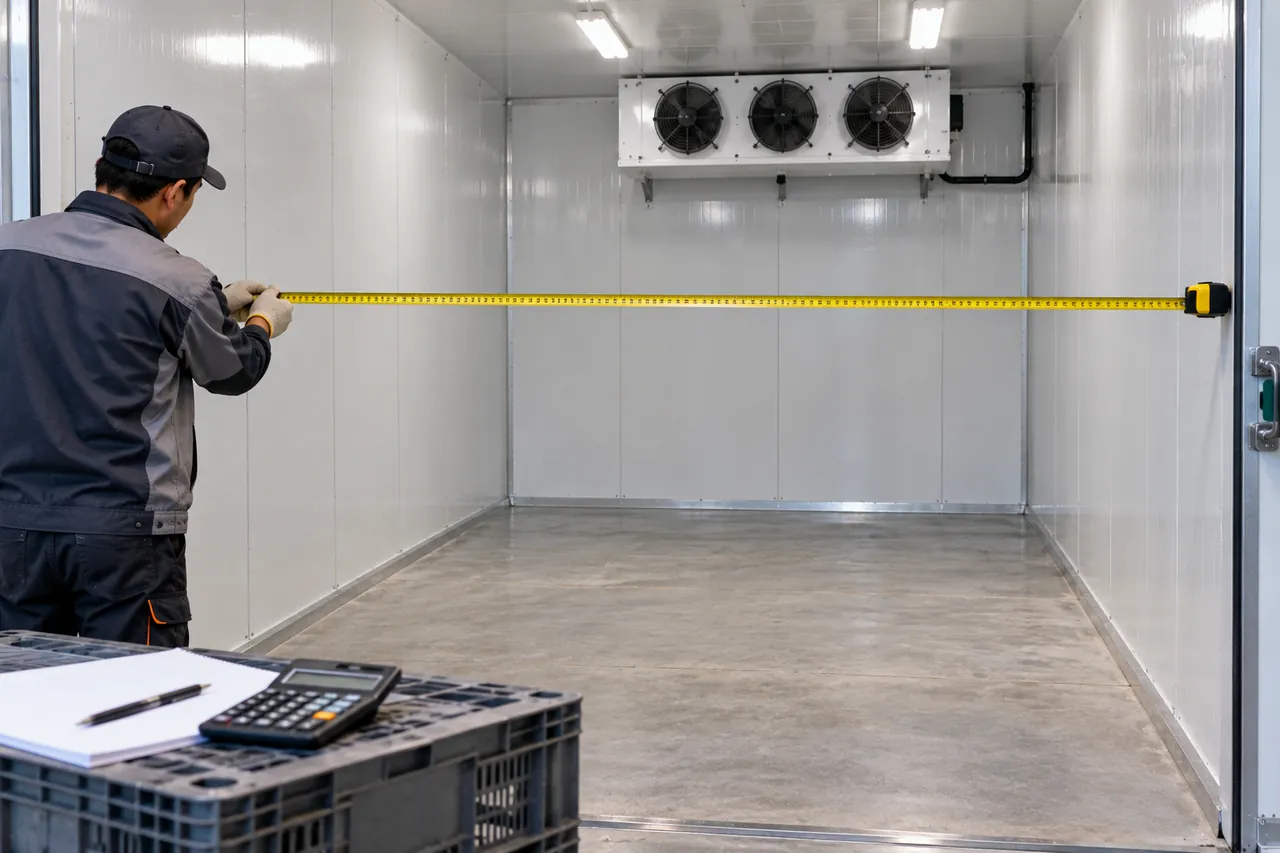
Calculate a cold room's volume from its internal dimensions (inside the panels), because that is the air the refrigeration has to cool and the space you can fill. External dimensions are needed separately to check the room fits the building.
Worked example: 3.0 × 2.4 m walk-in freezer
- Internal size: 3.0 m long × 2.4 m wide × 2.2 m high.
- Volume: 3.0 × 2.4 × 2.2 = 15.84 m³.
- In cubic feet: 15.84 × 35.31 = 559 cu ft. In imperial dimensions that is about 9.8 × 7.9 × 7.2 ft.
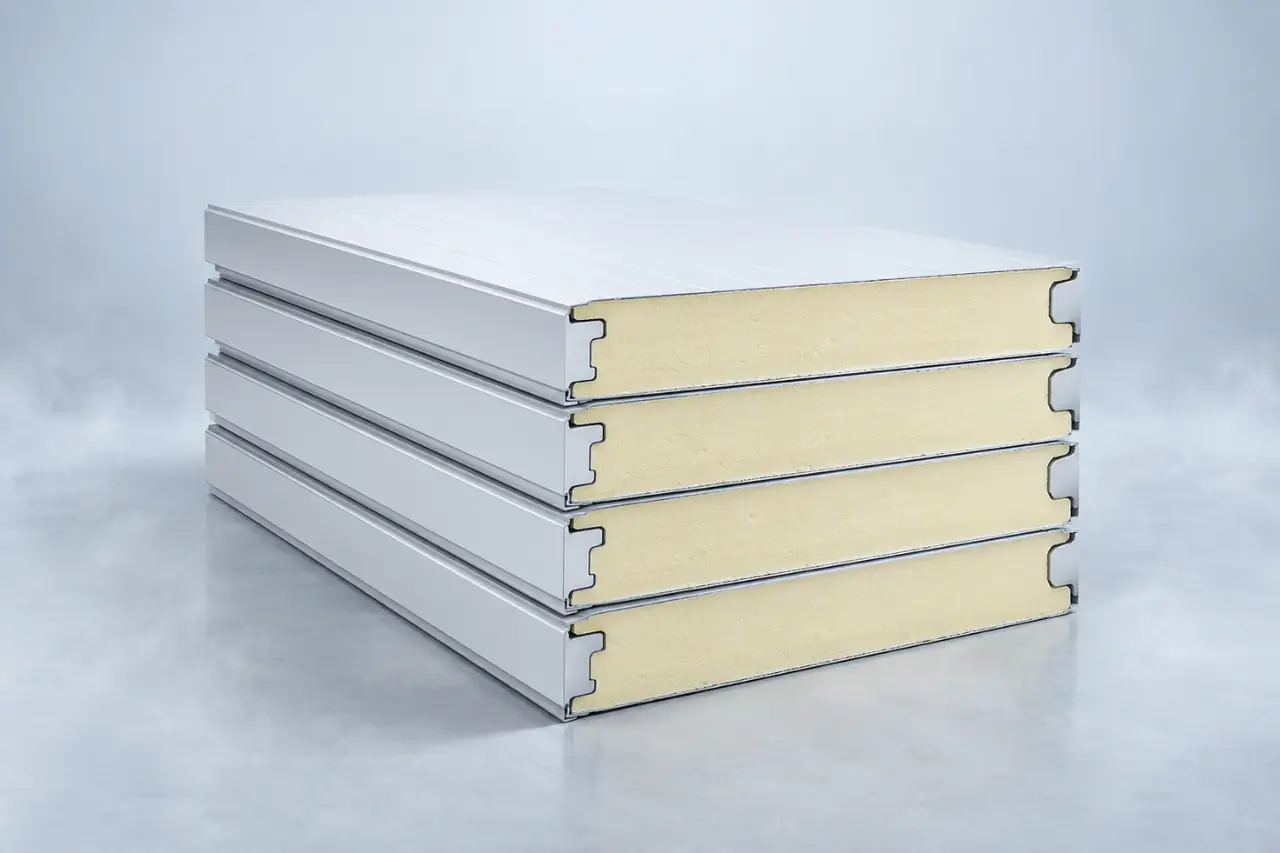
- External size with 100 mm (4 in) panels on walls, ceiling and floor: 3.2 × 2.6 × 2.4 m = 19.97 m³ (705 cu ft). With 150 mm freezer panels, add 300 mm to each dimension instead of 200 mm.
- Usable storage: with shelving on three walls and a central aisle, typically 40–60% of the internal volume, here about 6–9 m³ (225–335 cu ft).
Volume alone does not size the refrigeration. The load depends mostly on wall, ceiling and floor area, the temperature difference, door openings and how much warm product comes in each day. Enter your dimensions in the cold room refrigeration load calculator, and choose panels with the cold room panel thickness guide. Be There walk-in cold room kits are built to your internal size with 75–200 mm PU or PIR panels.
How to calculate the cubic feet of a container or truck box
For a container or truck body, multiply the internal length, width and height and convert to cubic feet; then deduct the space you cannot load, such as the refrigeration unit's air return, the floor T-bars' loading line and wheel arches.
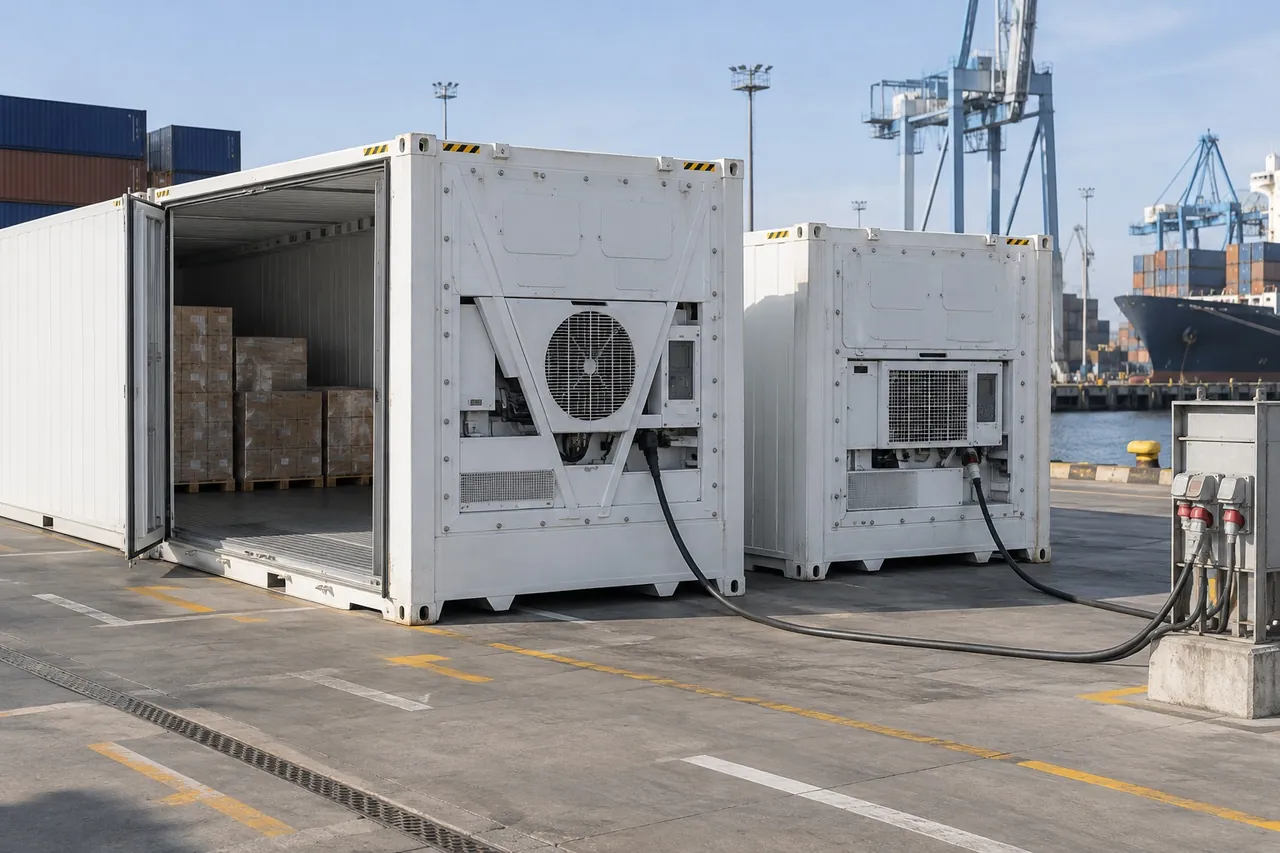
Worked example: reefer containers
- 20 ft reefer: inside about 5.44 × 2.29 × 2.26 m = 28.2 m³ × 35.31 = about 994 cu ft.
- 40 ft high-cube reefer: inside about 11.58 × 2.29 × 2.55 m = 67.6 m³ × 35.31 = about 2,390 cu ft.
Reefer cargo must stay below the red load line, typically about 10–25 cm below the ceiling, so air can return to the unit; the loadable volume is therefore 5–10% less than the box volume. Exact internal sizes vary by builder, see reefer container sizes.
Worked example: refrigerated truck box
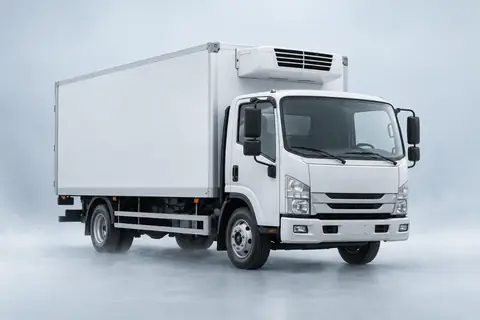
A box 6.0 m long, 2.3 m wide and 2.2 m high inside holds 6.0 × 2.3 × 2.2 = 30.4 m³ (1,073 cu ft). That volume, together with the insulation K-value and door openings, sizes the refrigeration unit. Be There truck refrigeration units cover boxes of 4–45 m³ (140–1,590 cu ft); check yours with the truck refrigeration calculator and the reefer truck guide.
How to calculate cubic feet for other shapes
For shapes that are not simple boxes, split them into boxes or use the shape's own formula, then add the parts.
- L-shaped room: split into two rectangles, calculate each (length × width × height) and add them.
- Cylinder (tank, drum, ice storage silo): π × radius² × height. A drum 0.6 m across and 0.9 m high: 3.1416 × 0.3² × 0.9 = 0.254 m³ = 9.0 cu ft.
- Sloped ceiling: use the average height, (lowest + highest) ÷ 2, times length and width.
- Chest freezer with a compressor step: calculate the full box, then subtract the step as a smaller box.
An online cubic foot calculator does the same multiplication; the errors come from measuring outside instead of inside, or mixing inches and feet. Always write the unit next to each number before you multiply.
Checklist: measuring volume for cold storage equipment
Use this checklist before you buy a freezer, cold room or truck unit by volume.
- Measure internal dimensions for storage, external dimensions for fit, door width for access.
- Use one unit, write it down, and convert once: in³ ÷ 1,728 = ft³; m³ × 35.31 = ft³; ft³ × 28.32 = L.
- Deduct obstructions to get usable volume, and plan 16 kg per cu ft (35 lb) of frozen food as a ceiling, not a target.
- For cold rooms and vehicles, size refrigeration from surface area, temperature and door openings, not volume alone.
- Compare suppliers on the same basis (gross or net volume, internal or external size).
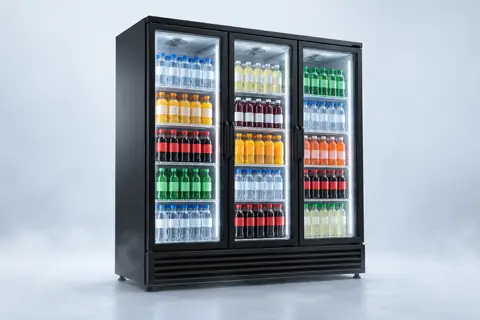
Be There supplies cold storage in every size this guide covers: glass-top and upright display freezers from about 300 to 1600 L (10.6–56.5 cu ft), lockable ice merchandisers for 30–100 bags, walk-in cold room kits built to your internal dimensions, and truck refrigeration units for 4–45 m³ boxes. Send your dimensions, target temperature and what you store through the inquiry form, and our engineers will confirm the volume, size the refrigeration and quote FOB, CIF or DDP.