Short answer
A cryogenic freezer uses a liquefied gas instead of a compressor: liquid nitrogen at −196 °C (−321 °F) or CO2 snow at −78.5 °C (−109 °F) is sprayed onto food and freezes it in minutes, using about 1–1.5 kg of LN2 per kg. Cryogenic storage freezers and dewars keep cells and samples below −150 °C. Mechanical blast freezers use air at −35 °C to −40 °C.
Key takeaways
- Liquid nitrogen boils at −196 °C (−321 °F); CO2 snow sublimes at −78.5 °C (−109 °F); mechanical blast freezers use air at −35 °C to −40 °C.
- Cryogenic food freezers freeze thin products in minutes, versus 20–60 minutes in a mechanical IQF tunnel and hours in a blast room.
- LN2 food freezing typically consumes about 1–1.5 kg of liquid nitrogen per kg of product, so running cost depends on the gas contract.
- Cryogenic storage keeps cells and tissue below about −150 °C in LN2 vapour or at −196 °C in liquid; ULT mechanical freezers reach −80 °C to −86 °C.
- One litre of liquid nitrogen expands to about 700 litres of gas; LN2 areas need ventilation and oxygen alarms set at 19.5%.
- Cryogenic freezing suits low, seasonal or premium volumes; mechanical blast freezing is usually cheaper at steady high volumes.
What is a cryogenic freezer?
A cryogenic freezer is a freezer that uses a liquefied gas, usually liquid nitrogen at −196 °C (−321 °F) or carbon dioxide snow at −78.5 °C (−109 °F), as the refrigerant instead of a compressor-driven refrigeration system. The cryogen is sprayed onto or around the product, absorbs heat as it boils or sublimes, and is vented as gas.
The term covers two very different machines:
- Cryogenic food freezers: tunnels, cabinets and immersion baths that freeze food in minutes, used by meat, seafood, bakery and ready-meal processors.
- Cryogenic storage freezers: vacuum-insulated dewars and liquid nitrogen freezers that store cells, tissue, embryos, semen and biological samples below −150 °C (−238 °F) for years.
This guide explains both and compares cryogenic freezing with mechanical blast freezing, which is what most food businesses use. For an overview of continuous belt freezers, see our guide to spiral, IQF tunnel and nitrogen freezers.
How does cryogenic freezing work?
Cryogenic freezing works by putting product in direct contact with a gas that is already far colder than any mechanical system can reach. The huge temperature difference, together with the heat absorbed as the liquid boils, freezes the surface almost instantly and the core within minutes.
Liquid nitrogen (LN2) is stored in a vacuum-insulated tank outside the plant and piped to the freezer. Sprayed as a liquid at −196 °C, it boils on contact, absorbing its latent heat of about 199 kJ per kg; fans then circulate the cold gas over incoming product so its remaining cooling capacity is used before it is exhausted. Carbon dioxide is stored as a pressurised liquid; when released through a nozzle it forms CO2 snow at −78.5 °C, which sublimes directly to gas as it absorbs heat.
| Property | Liquid nitrogen (LN2) | Carbon dioxide (CO2) | Mechanical air blast |
|---|---|---|---|
| Cooling medium temperature | −196 °C (−321 °F) | −78.5 °C (−109 °F) as snow | Air at −35 °C to −40 °C (−31 °F to −40 °F) |
| How cold is produced | Liquid boils to gas | Snow sublimes to gas | Compressor and evaporator coil |
| Typical freezing time, thin product | A few minutes | A few minutes to about 15 minutes | 20–60 minutes (IQF tunnel), hours (blast room) |
| Consumable | LN2, about 1–1.5 kg per kg of food frozen | CO2, usually somewhat more per kg | Electricity only |
| Exhaust | Nitrogen gas (asphyxiant) | CO2 gas (asphyxiant, toxic at high levels) | None |
LN2 consumption depends on product temperature in, target core temperature, freezer design and how well the cold exhaust gas is reused, so treat the figure above as a planning range and ask the gas supplier for a trial on your product.
What types of cryogenic food freezer are there?
There are four main types of cryogenic food freezer: straight tunnels, spiral freezers, batch cabinets and immersion freezers. They differ in throughput and in how directly the cryogen touches the product.
Cryogenic tunnel freezer
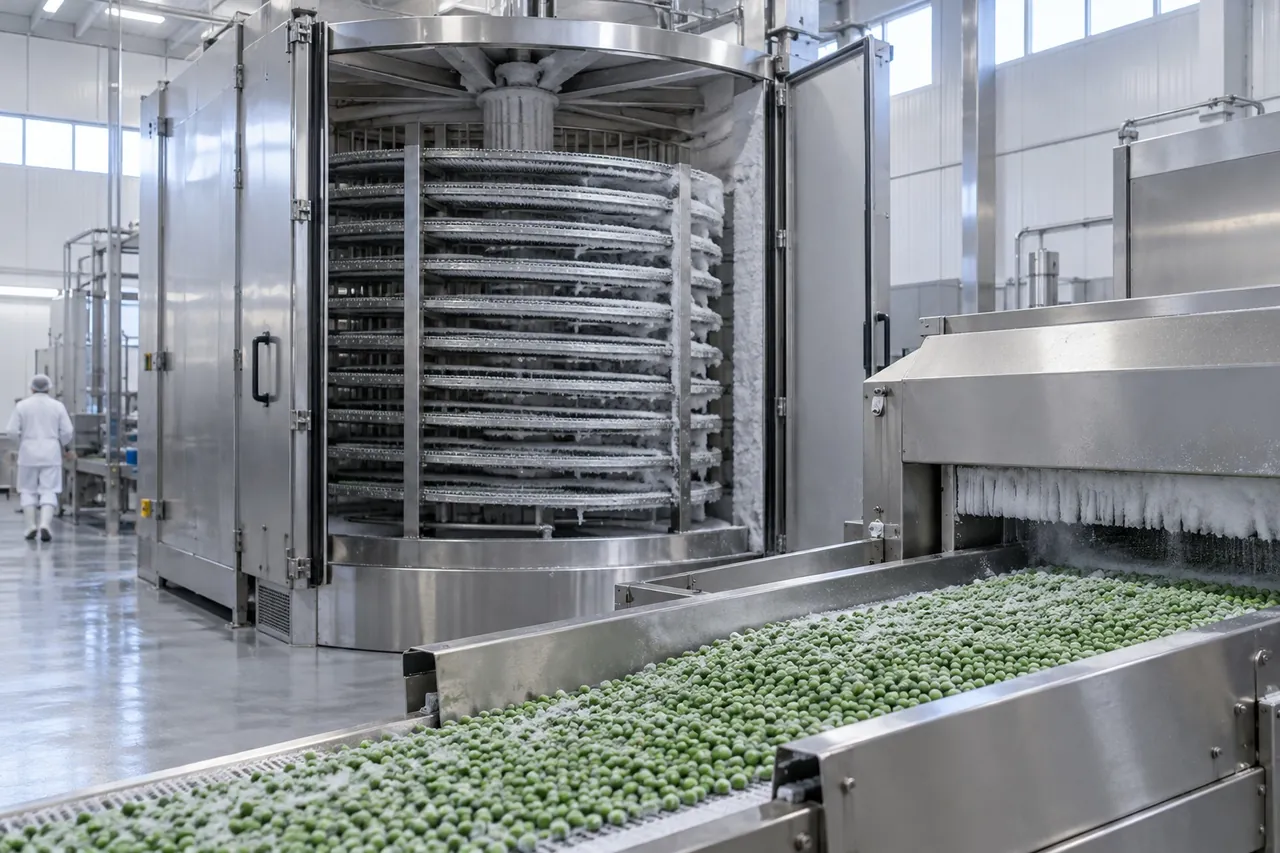
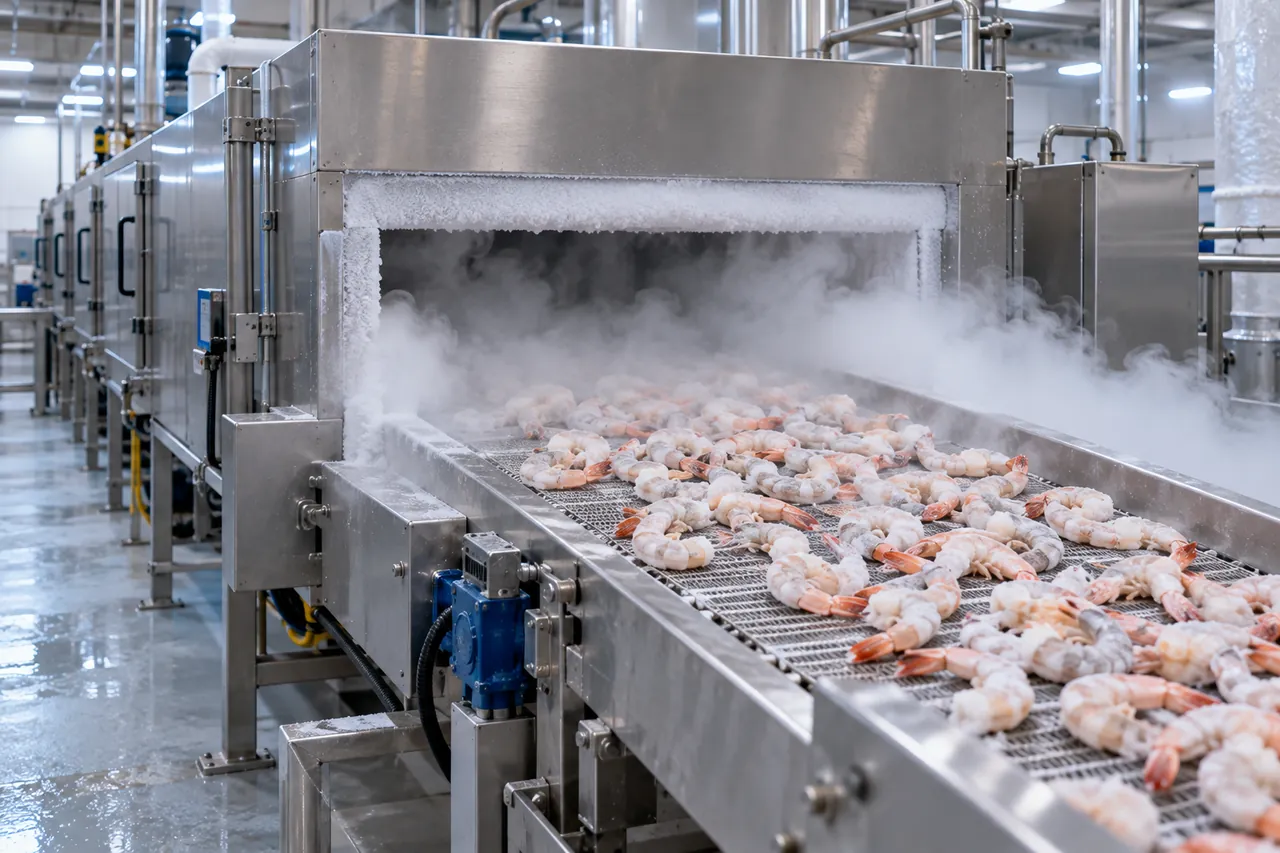
A cryogenic tunnel freezer is a stainless steel tunnel, typically 4–20 m long, with a mesh belt carrying product under LN2 or CO2 spray bars. Cold gas flows against the direction of the belt to pre-cool incoming product. Throughput ranges from about 100 kg to over 1,000 kg per hour for burgers, shrimp, fillets, berries and diced fruit.
Cryogenic spiral freezer
The same principle on a spiral belt for larger outputs in a small footprint, often used where a mechanical spiral would need too large a refrigeration plant.
Batch cabinet (liquid nitrogen blast freezer)
A liquid nitrogen blast freezer in batch form is an insulated cabinet with trolleys or racks, an LN2 injection nozzle and powerful fans. It suits bakeries, caterers and small processors freezing 50–300 kg per batch, and product development kitchens trying recipes.
Immersion freezer
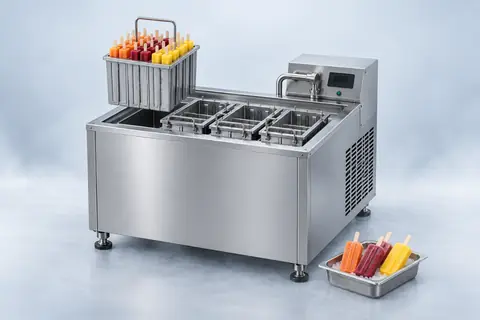
Product drops briefly into a bath of liquid nitrogen to crust-freeze its surface, then finishes in a tunnel or mechanical freezer. It is used for sticky or delicate items such as marinated pieces, berries and IQF shrimp, so they stay separate.
What does flash frozen in liquid nitrogen do to food?
Food flash frozen in liquid nitrogen passes through the −1 °C to −5 °C (30–23 °F) ice-crystal zone in seconds at the surface and minutes at the core, forming very small ice crystals. Small crystals damage fewer cell walls, so the product loses less drip on thawing and keeps its texture and colour.
Cryogenic freezing also typically gives lower dehydration (weight) loss than air blast freezing, because the surface freezes before moisture can evaporate. For high-value products such as scallops, prawns, berries and premium ready meals, the saved weight and quality can pay for the gas.
There are limits. Thick or large items, such as whole poultry or large roasts, can crack if the surface is frozen too hard while the core is still warm, so processors control spray rate and finish in a cooler zone. And to flash freeze in liquid nitrogen does not make storage colder: once frozen, product goes to a normal frozen store at −18 °C to −25 °C. The background on ice crystal size is in what is a flash freezer.
Cryogenic vs mechanical blast freezing: which costs less?
Cryogenic freezers cost less to buy and install but more to run, because you pay for every kilogram of liquid nitrogen or CO2; mechanical blast freezers cost more up front but run on electricity only. As a rule, cryogenic freezing wins at low, seasonal or trial volumes and for premium products; mechanical blast freezing wins at steady high volumes.
| Factor | Cryogenic (LN2 / CO2) | Mechanical blast freezer |
|---|---|---|
| Capital cost | Lower; no compressor plant (tank is often leased from the gas supplier) | Higher; refrigeration plant, insulated room or cabinet |
| Running cost | High; gas bought per kg, delivered by tanker | Lower; electricity |
| Freezing speed | Minutes | About 1–4 hours to −18 °C core in a blast cabinet or room |
| Footprint | Compact | Larger, plus outdoor condensing units |
| Product quality | Very small ice crystals, low weight loss | Good when air speed and loading are right |
| Flexibility | Start and stop instantly | Needs pull-down time |
| Supply risk | Depends on gas deliveries | Depends on power and maintenance |
Worked example: 500 kg per day
A processor freezing 500 kg (1,100 lb) of shrimp a day in an LN2 tunnel at about 1.2 kg of LN2 per kg uses about 600 kg of LN2 a day, or roughly 180 t over a 300-day year, plus tank rental. A mechanical shock freezer or small blast room doing the same job uses electricity instead, with a typical coefficient of performance at −35 °C evaporating of roughly 1–1.5. Get a local gas price and electricity tariff and compare annual cost; many businesses start cryogenic and switch to mechanical once volume is proven.
For a mechanical alternative, see blast freezer room design and blast chiller vs shock freezer.
What is cryogenic storage?
Cryogenic storage is keeping biological material, such as cells, tissue, embryos, semen, blood products and some cell and gene therapies, below about −150 °C (−238 °F), where biological activity effectively stops. It uses liquid nitrogen in vacuum-insulated vessels rather than electric freezers.
| Storage system | Temperature | Typical use |
|---|---|---|
| Ultra-low temperature (ULT) mechanical freezer | −80 °C to −86 °C (−112 °F to −123 °F) | Proteins, DNA, many vaccines and samples |
| LN2 freezer, vapour phase | About −150 °C to −190 °C (−238 °F to −310 °F) | Cell banks, cord blood, stem cells |
| LN2 freezer or dewar, liquid phase | −196 °C (−321 °F) | Long-term cryopreservation, semen, embryos |
| Dry shipper (absorbed LN2) | Below −150 °C for days to weeks | Transporting cryopreserved samples |
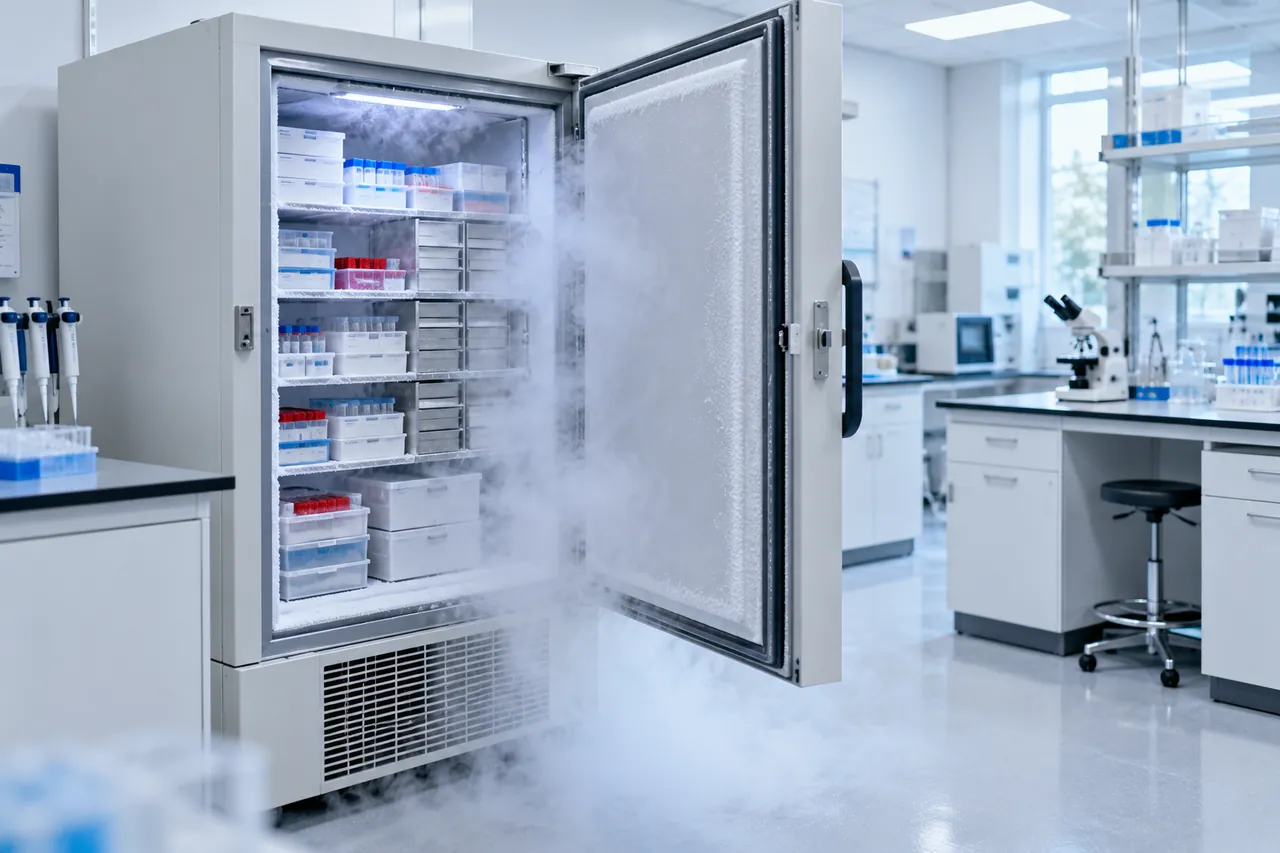
A cryogenic dewar is a double-walled, vacuum-insulated vessel that holds liquid nitrogen with very low boil-off. Small dewars of a few litres to about 50 L store and carry LN2; dewar cryogenic storage tanks with racks and canisters hold hundreds to tens of thousands of vials. Large LN2 freezers are cryogenic storage systems with automatic filling from a bulk tank, level and temperature monitoring and alarms.
Cryopreservation in liquid nitrogen usually starts with controlled-rate freezing at about −1 °C per minute with a cryoprotectant, so cells are not damaged by ice, before transfer to the storage vessel. Vapour-phase storage is common for cryogenic cell storage because it reduces the risk of cross-contamination through the liquid. For −80 °C and vaccine freezers, see ultra-low temperature and lab freezers and the pharmaceutical cold chain guide.
Is liquid nitrogen freezing safe?
Liquid nitrogen freezing is safe with proper ventilation, oxygen monitoring and protective equipment, but it carries three serious hazards: oxygen depletion, cold burns and pressure build-up.
- Asphyxiation: one litre of liquid nitrogen expands to roughly 700 litres of gas, which displaces oxygen without any smell or warning. Fit fixed oxygen monitors with alarms (OSHA treats air below 19.5% oxygen as oxygen-deficient), duct freezer exhaust outdoors and never store dewars in small unventilated rooms or vehicle cabins.
- Cold burns: contact with the liquid or uninsulated pipes causes frostbite in seconds. Wear a face shield, cryogenic gloves and long sleeves when handling it.
- Pressure: liquid trapped in a closed pipe or container will burst it as it warms. Use only vented vessels and pipework with relief valves.
CO2 adds toxicity at high concentration, so CO2 freezers need CO2 detectors as well. Dry ice for shipping is covered in how to ship frozen food.
How much does a cryogenic freezer cost?
Cryogenic freezer prices vary more with type than with size. As a broad, indicative guide only, small LN2 dewars cost from a few hundred to a few thousand US dollars, laboratory liquid nitrogen freezers and storage systems from several thousand to tens of thousands, and food cryogenic tunnels from tens of thousands upwards, depending on length, materials and market.
For food plants, the liquid nitrogen freezer price is usually the smaller part of the cost. The gas supply contract, which sets the price per kilogram, tank rental, minimum volumes and delivery frequency, decides the cost per kilogram frozen. Ask for a product trial, a written consumption estimate in kg of LN2 per kg of product, and the full annual cost before comparing a cryogenic freezer for sale with a mechanical blast freezer.
How to choose between cryogenic and mechanical freezing: checklist
Choose cryogenic or mechanical freezing by daily volume, product value, site services and gas supply.
- Calculate daily and peak throughput in kg per hour.
- Get a local price for LN2 or CO2 delivered, and your electricity tariff.
- Estimate annual cost for both: gas × consumption × kg, versus electricity and maintenance.
- Weigh product value: low weight loss and premium texture can justify gas costs.
- Check space, ventilation, gas tank access for tankers, and oxygen-monitoring requirements.
- Plan frozen storage after freezing at −18 °C to −25 °C in either case.
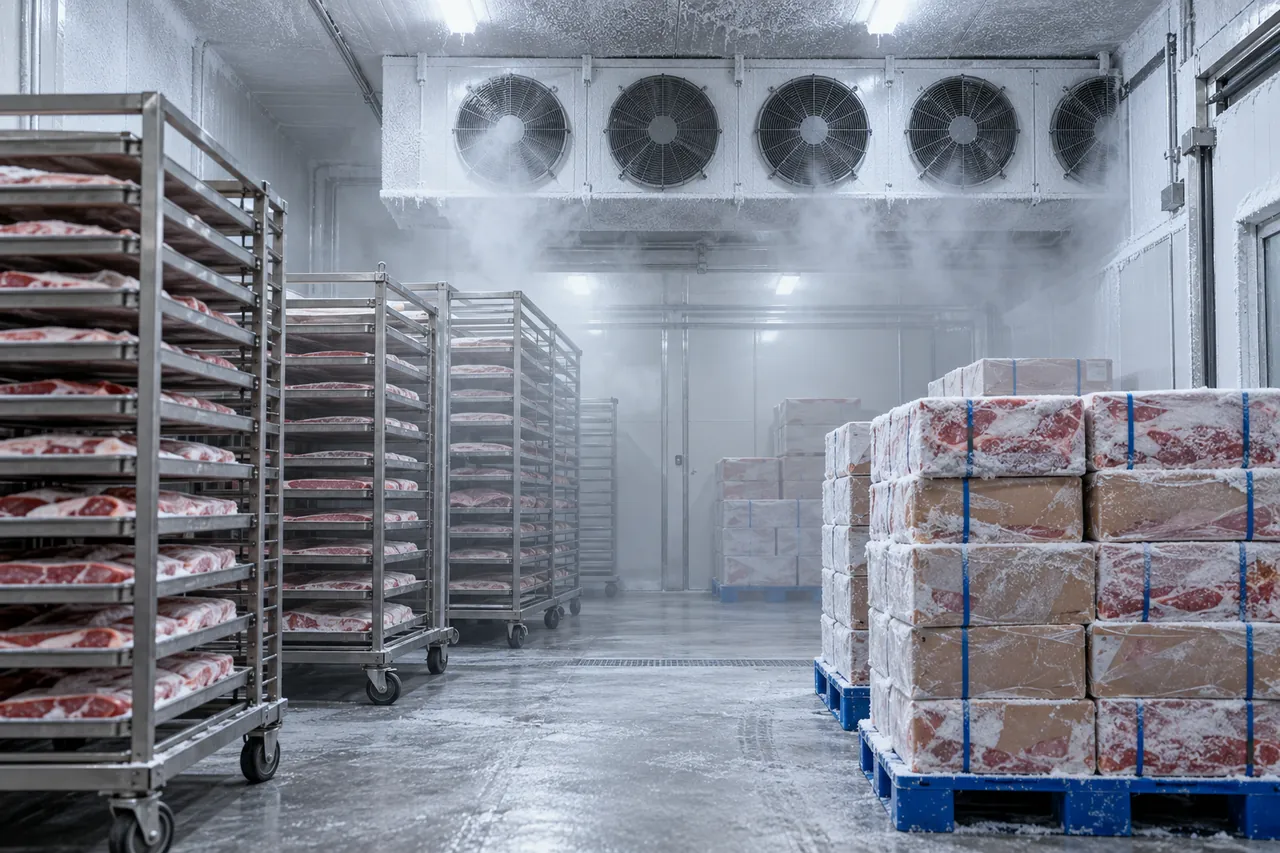
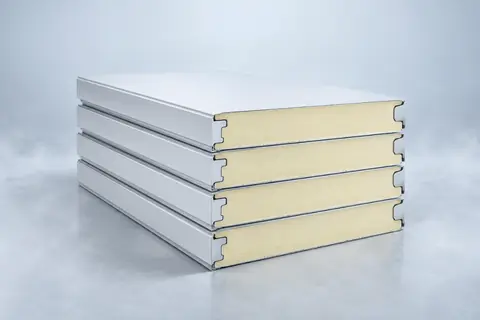
Be There does not manufacture cryogenic freezers or dewars. We supply the mechanical side of the frozen chain: reach-in and roll-in blast chillers and shock freezers from 5 to 20 trays that take food to −18 °C core in about 240 minutes, blast freezer rooms down to −35 °C built from 150–200 mm PU/PIR insulation panels, and walk-in freezer rooms at −18 °C to −25 °C for storage after any freezing method. Send your product, daily volume and voltage through the inquiry form and we will propose a mechanical blast freezing option and quote FOB, CIF or DDP.