Short answer
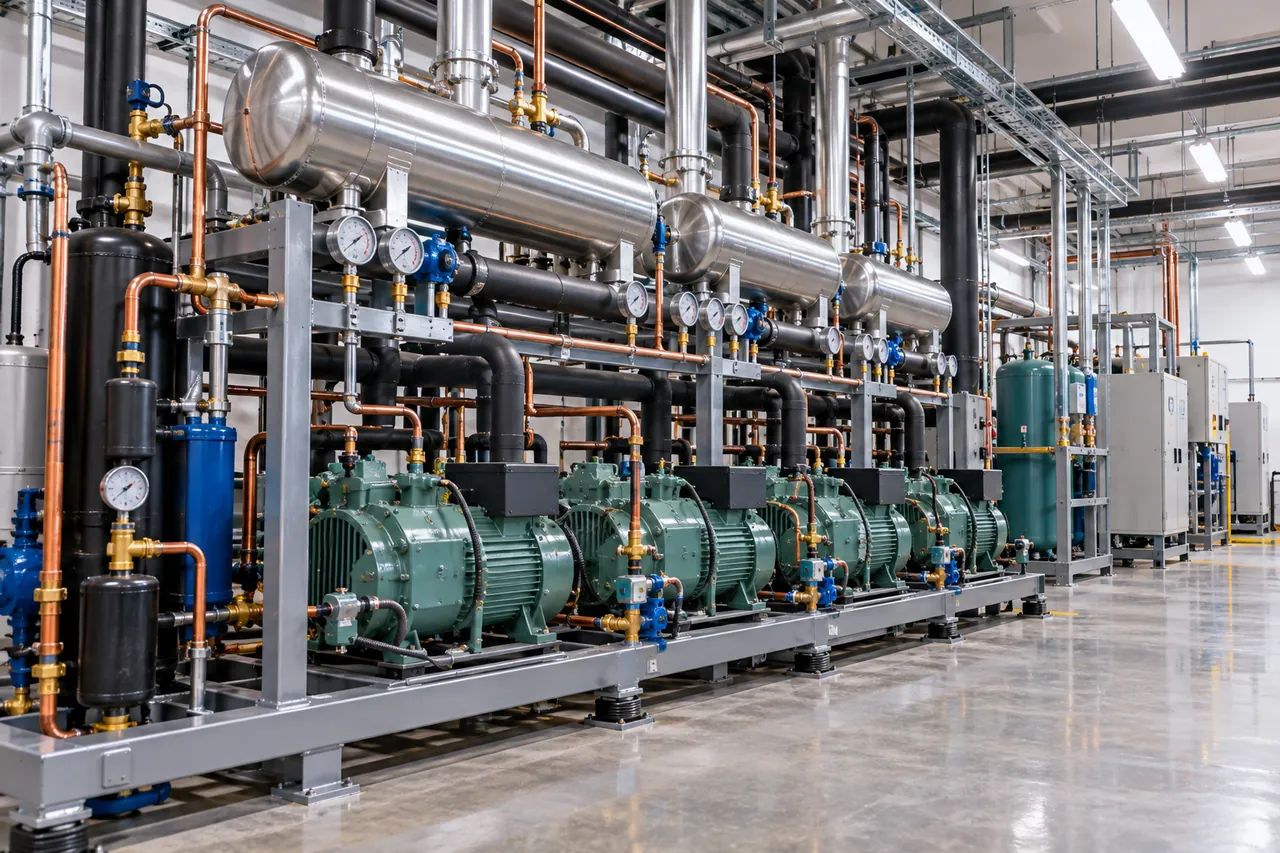
A rack refrigeration system is a central plant of 3–8 compressors on a shared frame that cools many display cases and cold rooms through one piping network. Modern supermarket racks increasingly use CO2 (R744), which has a GWP of 1 but runs at high pressure: about 28 bar (406 psi) at −8 °C evaporating and 80–120 bar (1,160–1,740 psi) on the high side in transcritical operation.
Key takeaways
- A refrigeration rack system replaces dozens of separate condensing units with one plant room, a shared receiver, oil management and a roof-mounted condenser or gas cooler.
- CO2 (R744) has a GWP of 1 and is non-flammable, but its critical point is only 31 °C (88 °F), so in warm weather it runs transcritical at roughly 80–120 bar.
- A transcritical booster system feeds medium-temperature cases at about −8 °C (18 °F) and low-temperature cases at about −30 °C (−22 °F) from one plant.
- Industrial ammonia (R717) systems are highly efficient with zero GWP but toxic; in the US, plants above 10,000 lb (4,536 kg) fall under OSHA PSM and EPA RMP rules.
- Hot climates reduce CO2 efficiency; parallel compression, ejectors and adiabatic gas coolers recover much of the loss.
- Small shops often do better with plug-in R290 cabinets, which need no plant room and hold a small sealed charge each.
What is a refrigeration rack system?
A refrigeration rack system is a group of compressors mounted on one frame with a common suction header, discharge header, liquid receiver and controls, serving many cold loads at once. Instead of each display case or cold room having its own condensing unit, all of them are piped back to a central plant.
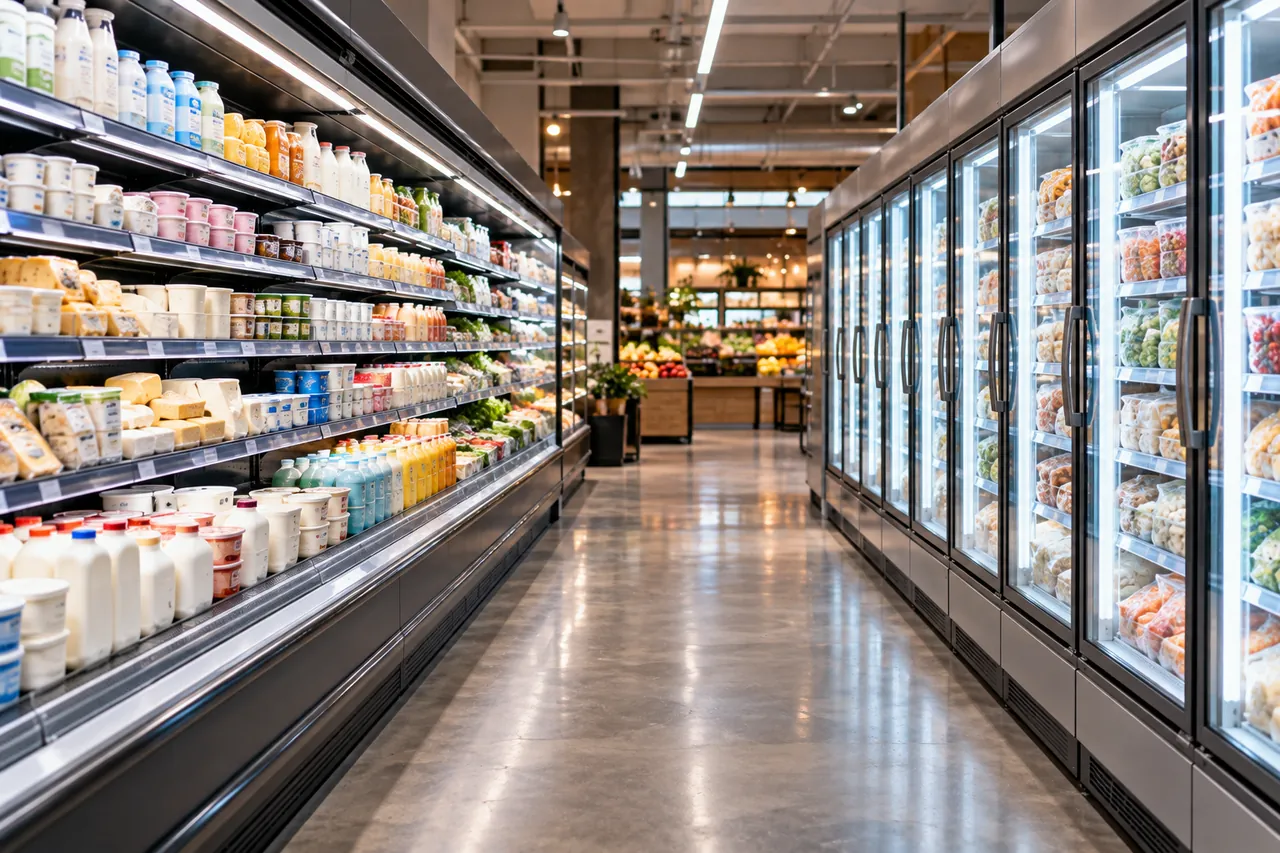
Supermarkets are the classic use. A mid-size store may have 30–80 metres of multideck and serve-over cases, several glass door freezers and four to ten cold rooms. Giving each its own condensing unit would mean dozens of noisy units on the roof or in the yard. A supermarket refrigeration rack system puts three to eight compressors in a plant room, sends heat to one remote condenser or gas cooler, and switches compressors on and off to match the load through the day.
Racks are one of four main system types in commercial and industrial refrigeration. For individual walk-ins, a split condensing unit is still the norm; see our walk-in cooler refrigeration system guide.
| System type | Typical capacity | Typical refrigerant | Charge size | Where used |
|---|---|---|---|---|
| Plug-in (self-contained) | 0.2–3 kW per cabinet | R290, R600a | Grams per cabinet, sealed | Shops, convenience stores, drinks merchandisers |
| Condensing unit (split) | 1–30 kW | R448A/R449A, R404A, R290, R744 | A few kg | Walk-ins, small cold rooms, restaurants |
| HFC rack (DX) | 20–300 kW | R404A, R448A/R449A, R407F | Often 100–1,000 kg in older stores | Supermarkets |
| CO2 transcritical booster | 20–500 kW+ | R744 | Hundreds of kg, GWP 1 | Supermarkets, distribution centres, cold stores |
| Ammonia (pumped or flooded) | 200 kW to several MW | R717 | Hundreds of kg to many tonnes | Large cold stores, food processing, ice plants |
| NH3/CO2 cascade | 300 kW to several MW | R717 high side, R744 low side | Ammonia kept in plant room | Freezer warehouses, blast freezing |
How does a refrigeration rack system work?
A rack works like one large split system with many evaporators: the compressors share one suction line from all cases, discharge into one condenser and feed liquid back out to each case's expansion valve. A typical refrigeration rack system diagram follows this path:
- Suction vapour from every display case and cold room returns through the suction main to a common suction header on the rack.
- A pressure controller starts and stops compressors, or varies the speed of a lead compressor, to hold a set suction pressure, for example about −10 °C (14 °F) saturated for medium-temperature cases.
- Compressors discharge into a header, then through an oil separator that returns oil to the compressors.
- Hot gas flows to a remote air-cooled condenser on the roof, or to a heat recovery coil for space or water heating.
- Liquid drains to a receiver, passes through a filter drier and sight glass, and is pumped by pressure through the liquid main to the store.
- At each case, an electronic or thermostatic expansion valve meters liquid into the evaporator; a case controller manages temperature and defrost.
Stores usually have at least two suction groups: medium temperature (MT) for chilled cases and cold rooms at about −8 °C to −12 °C evaporating, and low temperature (LT) for frozen food at about −30 °C to −35 °C (−22 °F to −31 °F). Compressor choice is covered in hermetic vs semi-hermetic vs scroll compressors; racks traditionally use semi-hermetic reciprocating compressors or banks of scrolls.
Advantages and drawbacks of racks
- Redundancy: if one compressor fails, the others keep running.
- Efficiency: compressors stage to match load, and waste heat can be recovered.
- Quiet sales floor: no compressors in the cases, so less heat and noise in the store.
- Drawback: long pipe runs and large charges. Older HFC racks were a major source of leaks, which is why leak checks and refrigerant choice matter; see our refrigerant leak guide.
What is CO2 refrigeration?
CO2 refrigeration uses carbon dioxide, refrigerant number R744, as the working fluid. It has a global warming potential (GWP) of 1, zero ozone depletion, is non-flammable and low-toxicity (safety class A1), and is cheap and widely available.
Its unusual property is a low critical temperature of 31.0 °C (87.8 °F) at about 73.8 bar (1,070 psi). Above that point CO2 cannot condense, no matter how high the pressure. So whenever the air reaching the gas cooler is warmer than roughly 25–27 °C (77–81 °F), a CO2 refrigeration system runs "transcritical": the high side becomes a gas cooler that cools supercritical CO2 rather than condensing it, at pressures of about 80–120 bar. In cool weather it runs subcritical, condensing like a normal system at about 45–65 bar.
EU F-gas rules, US EPA rules under the AIM Act and similar regulations elsewhere are restricting high-GWP HFCs in new centralised systems, which is why CO2 has become a common choice for new supermarket racks in Europe and is growing in North America and Asia.
CO2 refrigeration pressures
CO2 runs at far higher pressures than HFCs, so pipes, valves and vessels are specially rated. The CO2 refrigeration system pressures below are saturation pressures (absolute) compared with R404A:
| Saturation temperature | CO2 (R744) pressure | R404A pressure | Where it applies |
|---|---|---|---|
| −30 °C (−22 °F) | About 14 bar (207 psi) | About 2.1 bar (30 psi) | Low-temperature freezer suction |
| −8 °C (18 °F) | About 28 bar (406 psi) | About 4.5 bar (65 psi) | Medium-temperature suction |
| 0 °C (32 °F) | About 35 bar (507 psi) | About 6.1 bar (88 psi) | Flash gas / receiver range |
| +25 °C (77 °F) | About 64 bar (933 psi) | About 12.6 bar (183 psi) | Standstill pressure on a warm day |
| Above 31 °C (88 °F) | Supercritical, 80–120 bar (1,160–1,740 psi) operating | About 18–20 bar at 40–45 °C condensing | High side on hot days |
Because standstill pressure on a warm day can exceed the receiver's rating, CO2 systems have pressure relief valves and often a small auxiliary condensing unit that keeps the receiver cool during a power cut. High sides are typically designed for about 120 bar (1,740 psi) or more, receivers for about 45–60 bar.
How does a CO2 transcritical booster system work?
A transcritical booster system serves both chilled and frozen loads from one CO2 plant by compressing the low-temperature vapour in two steps. It is the standard CO2 layout for supermarkets.
- LT "booster" compressors draw vapour from frozen cases at about −30 °C (14 bar) and discharge it at MT suction pressure, about 28 bar.
- MT compressors draw that vapour together with the vapour from chilled cases at about −8 °C and compress it to gas cooler pressure.
- The gas cooler on the roof cools the CO2; in summer it is supercritical at 80–120 bar.
- A high-pressure electronic valve drops the pressure into a flash tank or receiver at about 35–40 bar, where liquid and flash gas separate.
- Liquid goes to all case expansion valves; flash gas is bypassed to MT suction, or compressed by a parallel compressor.
CO2 in hot climates
CO2 systems are least efficient when the gas cooler air is hot, because more of the refrigerant flashes to gas when the pressure is dropped. Several technologies close the gap with HFC systems in warm climates: parallel compression of flash gas, ejectors that recover expansion energy, adiabatic (water-sprayed) gas coolers and mechanical subcooling. Good designers will show the expected annual energy use for your climate, not just a peak rating.
Other CO2 configurations
- Subcritical CO2 cascade: CO2 on the low side, condensed by an HFC, R290 or ammonia high-stage system. Pressures stay below about 40 bar.
- CO2 as a volatile secondary fluid: pumped liquid CO2 cools the store while a small primary plant chills it.
- CO2 condensing units: small packaged transcritical units for single walk-ins and convenience stores.
How does industrial ammonia refrigeration work?
An industrial ammonia refrigeration system uses R717, which has a GWP of 0, excellent thermodynamic efficiency and very low cost, to cool large cold stores, freezer warehouses, meat and dairy plants and ice factories. Its drawbacks are toxicity and mild flammability (safety class B2L), so it is confined to plant rooms with trained operators.
The ammonia refrigeration process in a typical pumped-liquid plant runs as follows:
- Open-drive screw or reciprocating compressors draw ammonia vapour from a low-pressure receiver, sometimes called a recirculator or surge drum.
- Hot gas is condensed in an evaporative condenser on the roof.
- Liquid collects in a high-pressure receiver and is expanded into the low-pressure receiver.
- Ammonia pumps circulate cold liquid, typically at 3–4 times the evaporation rate, to flooded evaporators in the cold rooms and freezers.
- A liquid-vapour mix returns to the low-pressure receiver, where vapour goes to the compressors and liquid is recirculated.
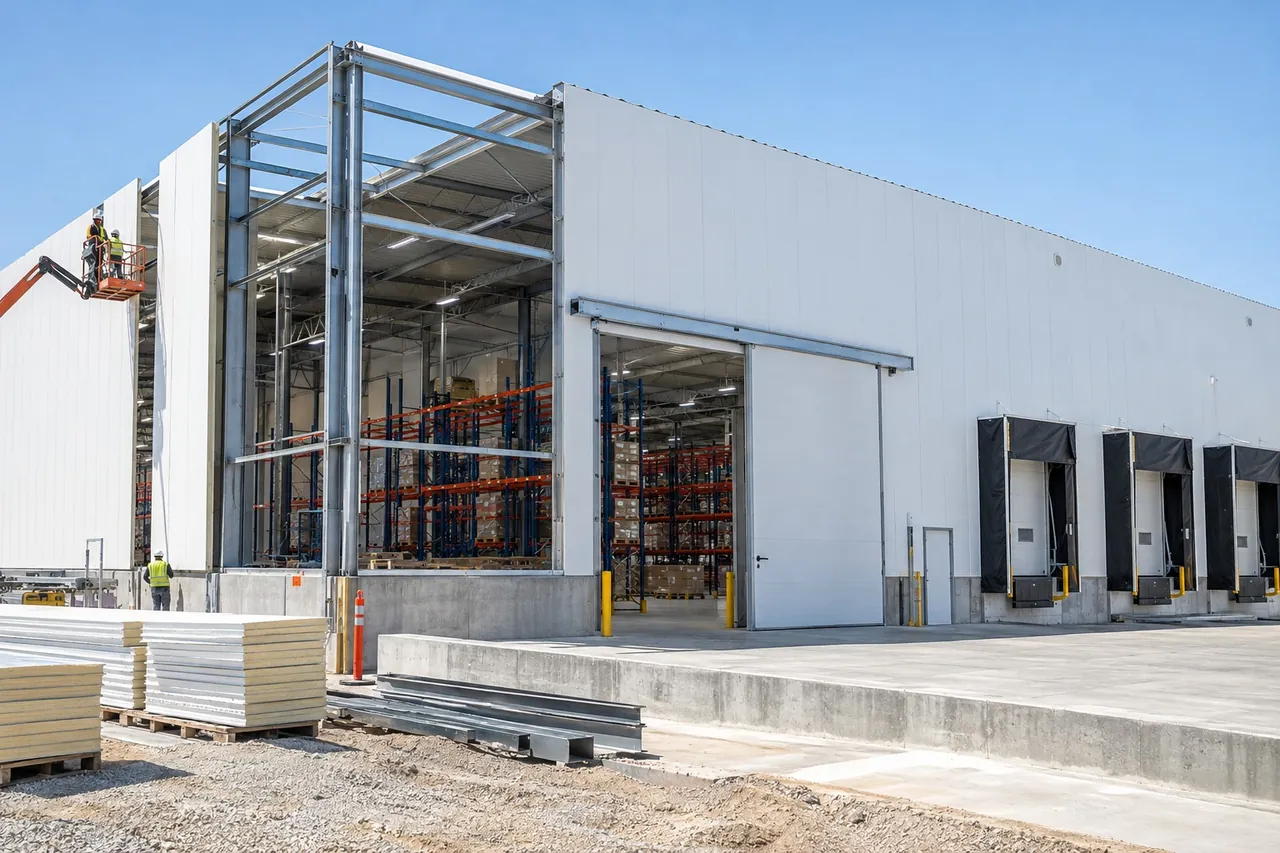
Ammonia plants follow IIAR standards in the US, EN 378 in Europe and ISO 5149 internationally. In the US, facilities with more than 10,000 lb (4,536 kg) of ammonia fall under OSHA Process Safety Management and the EPA Risk Management Program. To reduce the charge and keep ammonia out of occupied areas, many new cold stores use NH3/CO2 cascade systems or low-charge packaged ammonia chillers. Building the cold store envelope is covered in cold storage warehouse construction.
Industrial refrigeration equipment
Typical industrial refrigeration equipment and parts include screw and reciprocating compressor packages, evaporative or air-cooled condensers, gas coolers, high- and low-pressure receivers, oil separators, refrigerant pumps, ceiling or penthouse evaporators, valve stations, PLC controls, gas detection and relief systems. Good industrial refrigeration contractors handle design, installation, pressure testing, commissioning and service as one package.
Is a rack always the best option for a supermarket?
No. For small and medium shops, plug-in display cases with natural refrigerants are now a serious alternative to a central rack. Each cabinet carries its own small sealed R290 system, so there is no plant room, no long refrigerant piping and very little refrigerant to leak.
Plug-in cabinets do reject heat into the store, which raises air conditioning load in warm climates; larger installations solve this with water-loop cabinets that send heat to a roof dry cooler through a glycol circuit. Compare options in our guides to supermarket refrigeration equipment and R290 vs R404A display refrigerators.
| Factor | Central CO2 rack | Plug-in R290 cabinets |
|---|---|---|
| Best store size | Medium to large supermarkets | Convenience, small and medium stores |
| Installation | Plant room, piping, specialist contractor | Place, level and plug in |
| Heat in sales area | Low; heat recovered or rejected on roof | Higher, unless water-loop |
| Failure impact | Redundant compressors, but one plant serves all | One cabinet affected at a time |
| Flexibility | Layout changes need re-piping | Cabinets move with the layout |
| Skills needed | CO2-trained technicians | Hydrocarbon-trained technicians for sealed-system work |
How to choose between rack, CO2 and ammonia systems
Choose the system by total load, number of cold points, local refrigerant rules, climate and the technicians available to service it. Work through these points with your contractor:
- List every cold load with its temperature and capacity; size cold rooms with the cold room refrigeration load calculator.
- Check which refrigerants are allowed for new centralised systems in your country, and future phase-down dates.
- Under about 20–30 kW total, compare plug-in cabinets and individual condensing units before committing to a rack.
- For supermarkets, compare a CO2 transcritical booster with an HFO/HFC-blend rack on annual energy for your climate, including heat recovery.
- For large cold stores and processing plants, compare ammonia, NH3/CO2 cascade and CO2 on charge, safety rules, energy and staffing.
- Confirm local availability of trained CO2 or ammonia technicians and spare parts before deciding.
- Plan leak detection, monitoring and maintenance from day one.
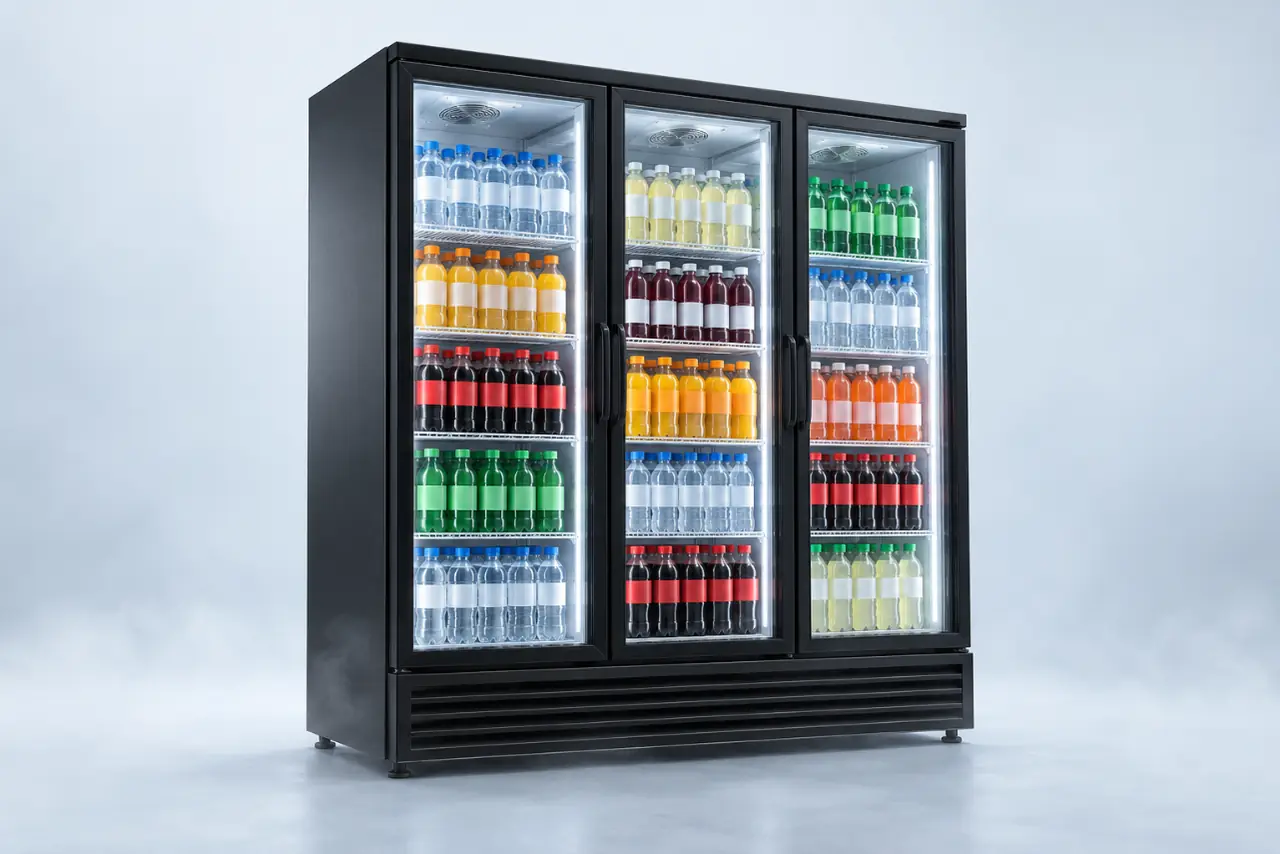
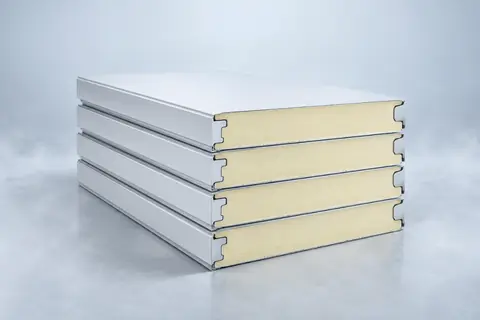
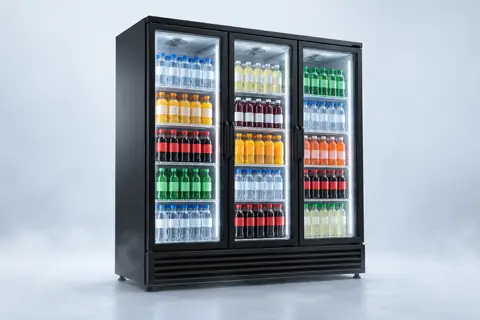
Be There does not build rack plants, but we supply the cold-side equipment that connects to them or replaces them: glass door display fridges with an R290 option, display freezers for −18 °C to −24 °C, and walk-in cold room kits with PU/PIR panels from 75 to 200 mm, supplied with their own condensing units or with evaporators ready for connection to a central plant. Send your store layout, temperatures and power supply through the inquiry form and we will quote FOB, CIF or DDP.