
Short answer
A hermetic compressor is welded shut and replaced as a unit, typically up to about 7.5 kW (10 HP); a semi-hermetic compressor is bolted together and can be repaired on site, from about 1.5 to 75 kW (2–100 HP); a scroll compressor uses two spiral scrolls instead of pistons, runs quieter with fewer moving parts and suits about 1–15 kW (1.5–20 HP) cold rooms.
Key takeaways
- Compressor types differ in two ways: the compression mechanism (reciprocating piston, rotary, scroll, screw) and the housing (hermetic, semi-hermetic or open drive).
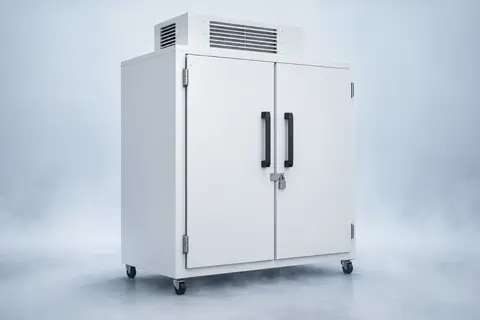
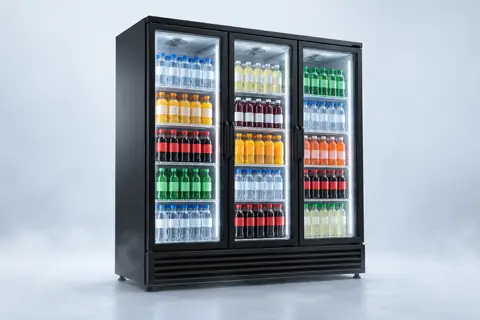
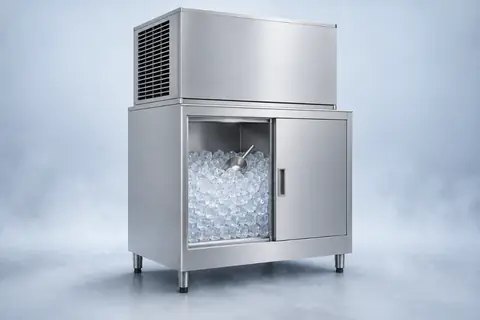
- Hermetic reciprocating and rotary compressors dominate fridges, display cases and ice machines up to about 7.5 kW (10 HP) motor size.
- Scroll compressors are the most common choice for walk-in coolers and freezers from about 1.5 to 20 HP; low-temperature models use vapour or liquid injection.
- Semi-hermetic reciprocating compressors, with 2–8 cylinders, are serviceable and suit supermarket racks, cold stores and two-stage systems to −40 °C (−40 °F).
- Screw compressors cover roughly 50 kW to over 1,000 kW of cooling for industrial and ammonia plants, with slide-valve capacity control from about 10% to 100%.
- A single-stage reciprocating compressor is practical up to a pressure ratio of about 10:1; beyond that, two-stage compression is more efficient.
What are the different types of refrigeration compressor?
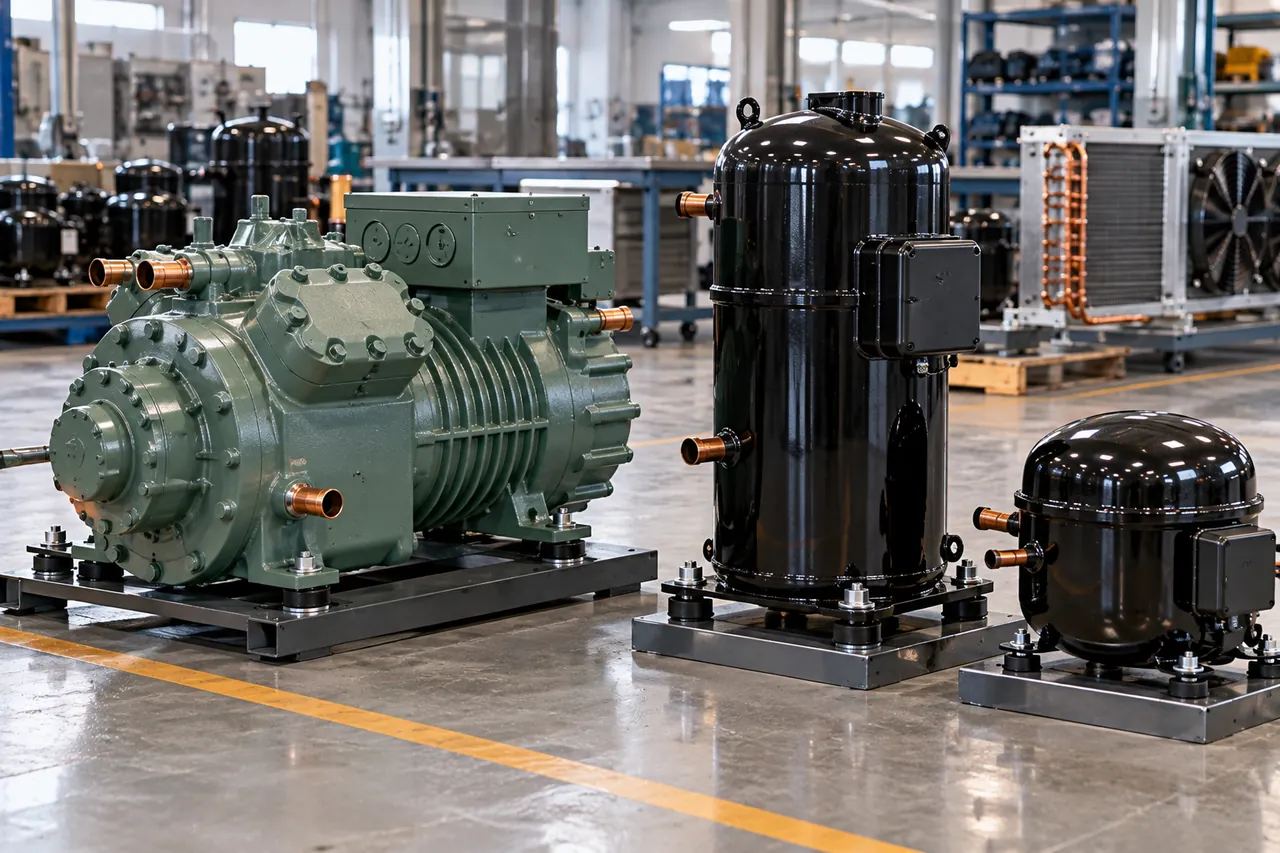
Refrigeration compressors are grouped in two ways: by how they compress the gas (reciprocating piston, rotary, scroll, screw or centrifugal) and by how the motor is enclosed (hermetic, semi-hermetic or open drive). A hermetic compressor, a semi hermetic compressor and an open compressor can all be reciprocating; a scroll is almost always hermetic.
The mechanism decides efficiency, noise and the capacity range; the housing decides whether the compressor can be repaired or must be replaced. If you need the basics of how a compressor moves heat first, read our refrigeration compressor guide. This article is about choosing between types.
| Type | Typical motor size | Main applications | Serviceable? | Capacity control |
|---|---|---|---|---|
| Hermetic reciprocating | About 0.1–7.5 kW (1/8–10 HP) | Fridges, reach-ins, display cases, ice machines, small walk-ins | No, replaced as a unit | On/off; some inverter models |
| Hermetic rotary | About 0.5–5 kW (2/3–7 HP) | Air conditioners, small cabinets, some heat pumps | No | Inverter common |
| Scroll (hermetic) | About 1–15 kW (1.5–20 HP) | Walk-in coolers and freezers, condensing units, racks, AC | No | On/off, digital modulation or inverter |
| Semi-hermetic reciprocating | About 1.5–75 kW (2–100 HP) | Supermarket racks, cold stores, blast rooms, two-stage low temp | Yes: valves, bearings, oil pump, motor | Cylinder unloading or inverter |
| Open reciprocating | From small to very large | Engine-driven truck units, ammonia plants | Yes | Speed, unloaders |
| Screw (semi-hermetic or open) | About 20–750 kW (30–1,000 HP) | Industrial cold stores, food processing, ammonia and CO2 plants | Yes, specialist | Slide valve about 10–100%, inverter |
| Centrifugal | Hundreds of kW and up | Large water chillers, district cooling | Specialist | Inlet vanes, speed |
Size bands overlap and vary by manufacturer and refrigerant, so treat these as typical ranges, not limits.
How does a reciprocating compressor operate?
A reciprocating compressor works like a small engine run backwards: a crankshaft drives pistons up and down in cylinders, and spring-steel reed or ring valves let refrigerant vapour in and out. Each revolution of the crank gives one suction stroke and one compression stroke per cylinder.
- Suction stroke: the piston moves down, cylinder pressure falls below suction pressure, the suction valve opens and low-pressure vapour from the evaporator fills the cylinder.
- Compression stroke: the piston moves up with both valves closed, squeezing the vapour and raising its pressure and temperature.
- Discharge: when cylinder pressure exceeds condensing pressure, the discharge valve opens and hot gas flows to the condenser.
- Re-expansion: a little gas trapped in the clearance space above the piston re-expands at the start of the next down-stroke before new vapour can enter.
That last step is the main limit of the reciprocating compressor working principle. The higher the pressure ratio between discharge and suction, the more of each stroke is wasted re-expanding clearance gas, so volumetric efficiency falls. That is why low-temperature freezers lose capacity faster than coolers, and why single-stage reciprocating compression is practical up to a pressure ratio of about 10:1. Below about −35 °C to −40 °C (−31 °F to −40 °F) evaporating, two-stage compressors or cascade systems are used.
Single-acting, single-stage and two-stage
Almost all refrigeration reciprocating compressors are single acting reciprocating compressors: the piston compresses on one side only. Double-acting designs, compressing on both sides of the piston, are found in large industrial process and gas compressors. A single stage reciprocating compressor compresses from suction to discharge in one step; a two-stage semi-hermetic uses some cylinders as the low stage and the rest as the high stage, with interstage cooling between them.
Reciprocating compressors in oil and gas
Searches for industrial, high-pressure or natural gas reciprocating compressors often mean process compressors built to API 618 for pipelines, refineries and gas processing. They use the same piston principle but compress hydrocarbons or air at pressures and sizes far beyond refrigeration. Be There does not supply process gas compressors; this guide covers refrigeration only.
What is a hermetic compressor?
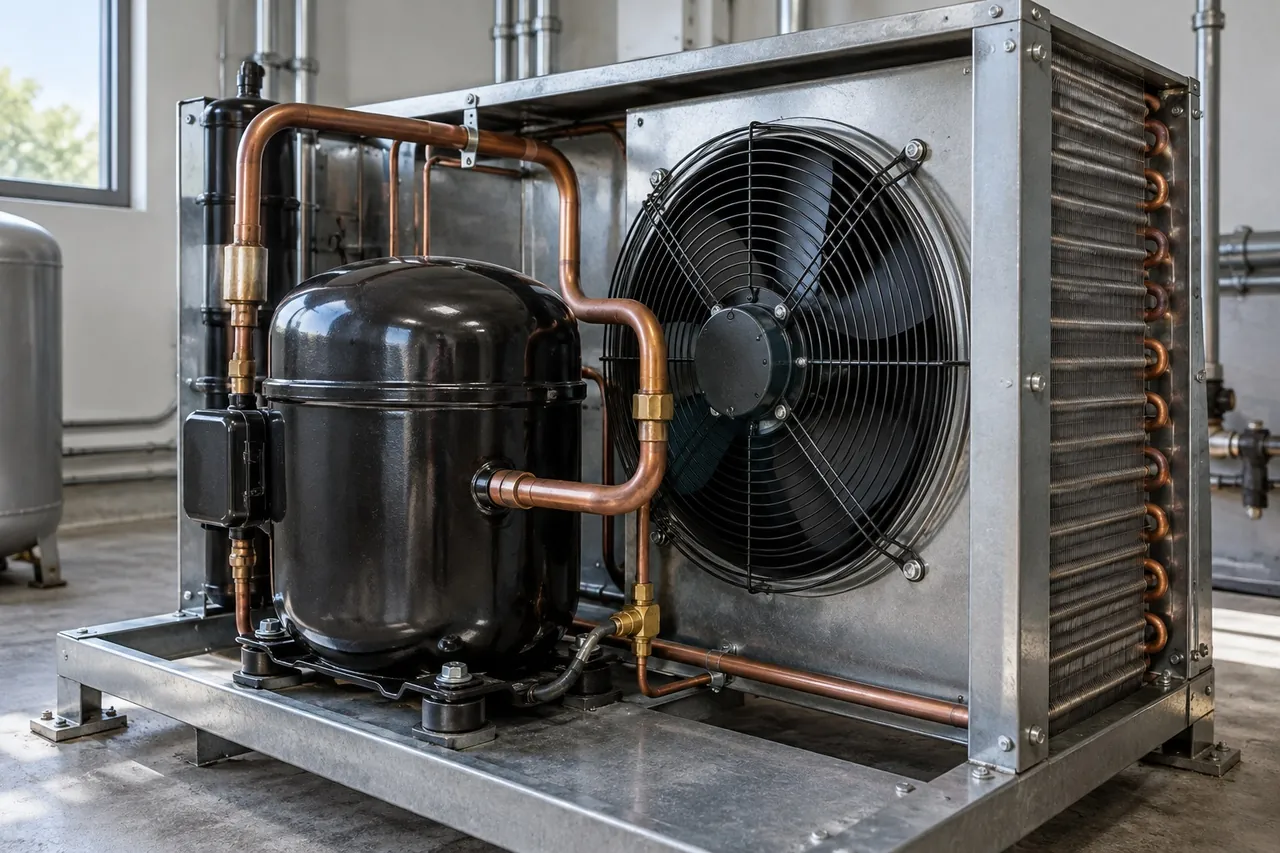
A hermetic compressor has the motor and compression mechanism sealed together inside a welded steel shell, with refrigerant vapour cooling the motor windings. It cannot be opened for repair; if it fails, the whole compressor is replaced.
The welded shell makes hermetic compressors compact, quiet, cheap and very leak-tight, because there is no shaft seal and no bolted gasket. That is why every domestic fridge, almost every plug-in commercial cabinet and most small condensing units use one. A hermetic reciprocating compressor is the standard in reach-in fridges, glass door merchandisers, display freezers and cube ice machines; small walk-ins up to about 3–4 HP often use one too.
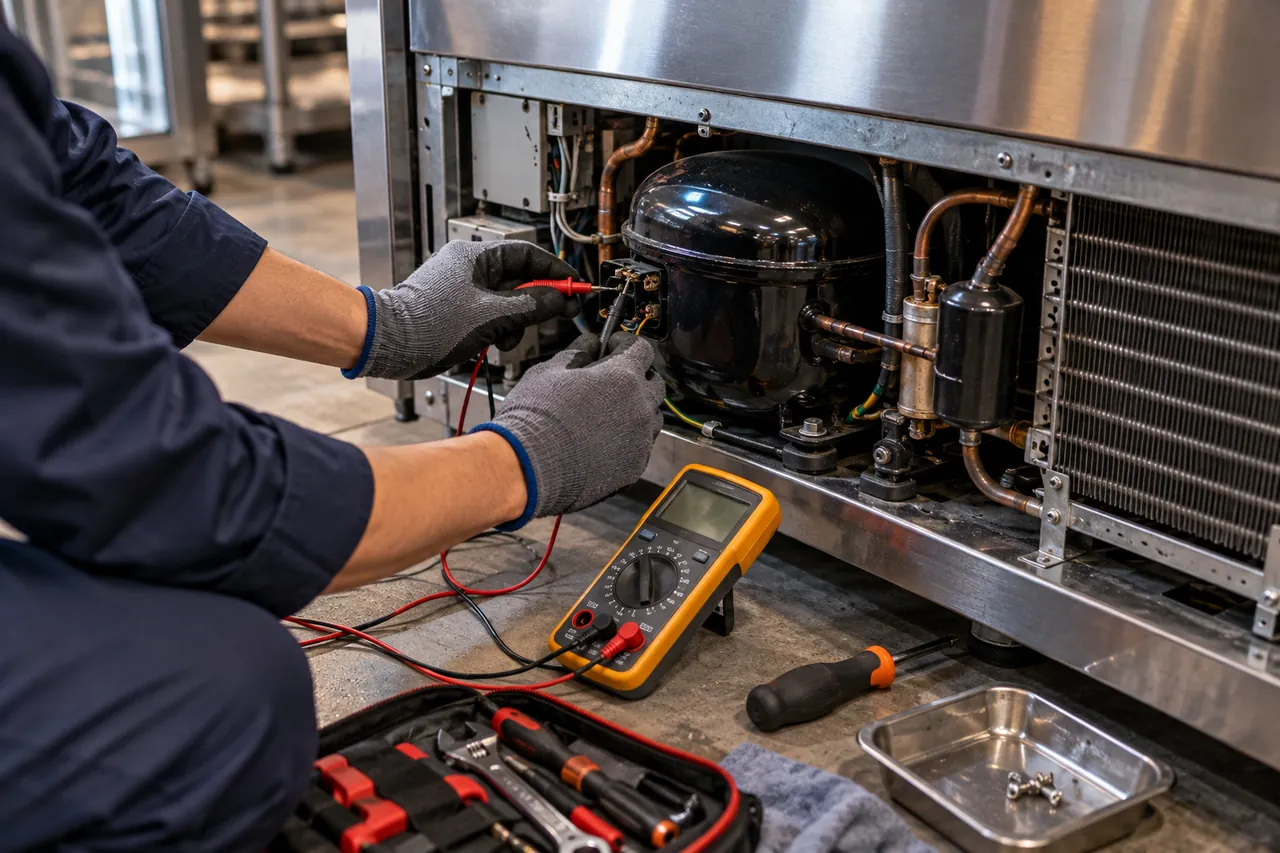
The trade-off is service: a burnt motor or broken valve means cutting out the compressor, flushing or cleaning the system if the motor burnt out, fitting a new compressor and filter drier, then evacuating and recharging. Diagnosis is covered in our compressor troubleshooting guide.
How can semi-hermetic compressors be characterized?
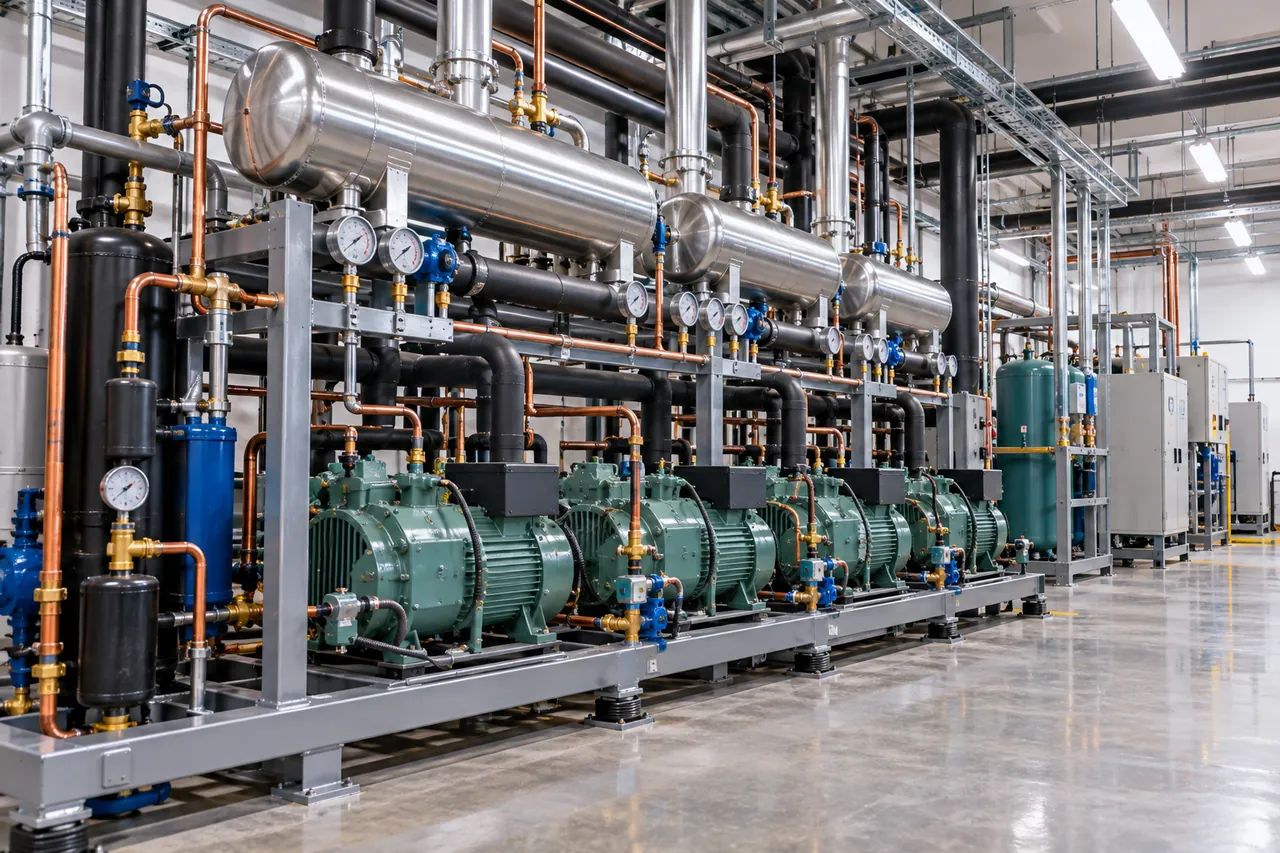
Semi-hermetic compressors are characterized by a bolted cast-iron housing that encloses both motor and compressor, cooled by suction gas, with gasketed covers that a technician can remove to repair valves, pistons, bearings, the oil pump or even rewind the motor. They combine the leak-tightness of a sealed motor with the serviceability of an open machine.
- Typically 2, 4, 6 or 8 cylinders, from about 2 to 100 HP.
- Robust: heavy crankcase, oil sump with sight glass, often an oil pump with pressure safety switch.
- Capacity control by cylinder unloading (switching off banks of cylinders) or by inverter speed control.
- Available as two-stage models for −40 °C (−40 °F) blast freezing and low-temperature storage.
- Repairable on site, which matters for remote locations and long-life installations.
Their downsides are cost, weight and size: a semi-hermetic is several times heavier than a scroll of similar capacity and usually needs crankcase heaters and more careful oil management. They remain the workhorse of supermarket rack systems, cold stores and blast rooms. For multi-compressor plants see rack and CO2 refrigeration systems.
What is a scroll compressor and why is it popular?
A scroll compressor uses two interleaved spiral scrolls, one fixed and one orbiting, to trap pockets of vapour at the outside and squeeze them towards the centre, where they discharge. It has no pistons, connecting rods or suction and discharge reed valves, so it has far fewer moving parts.
Compression is continuous rather than in pulses, which makes scrolls quiet and smooth with low vibration. Many designs let the scrolls separate slightly if liquid or debris enters, which gives better tolerance of small amounts of liquid than a reciprocating compressor. They are efficient at medium-temperature duties and are now the most common compressor in walk-in cooler and freezer condensing units from about 1.5 to 20 HP, as well as in air conditioning.
For low-temperature freezers, plain scrolls run very hot at high pressure ratios, so low-temperature scrolls use liquid or vapour injection to keep discharge temperature down. Capacity is fixed unless the scroll is inverter-driven or uses digital modulation. Scrolls are hermetic, so like other hermetics they are replaced rather than repaired.
What about screw and rotary compressors?
Screw compressors handle large industrial loads and rotary compressors handle small ones; both are rotary positive-displacement machines without pistons.
Screw compressors for refrigeration
A screw compressor traps gas between two meshing helical rotors, or one rotor and gate rotors in single-screw designs, and compresses it as it moves along the rotors. Screw compressors for refrigeration range from semi-hermetic units of about 30–150 HP to open-drive machines of several hundred to over a thousand horsepower. A slide valve gives smooth capacity control from about 10% to 100%, and oil injection seals and cools the rotors. They suit cold stores, food factories, ice plants and ammonia or CO2 systems. In screw compressor HVAC use, they drive air-cooled and water-cooled chillers.
Rotary compressors
Rolling-piston and rotary vane compressors are small hermetic units used mainly in room air conditioners, dehumidifiers and some small commercial cabinets. Most split air conditioners and heat pumps use rotary or scroll compressors, which answers most "AC compressor types" questions: rotary for small units, scroll for larger residential and light commercial, screw or centrifugal for big chillers.
When is an open-drive compressor used?
An open-drive compressor has its motor outside the compressor body, driving it through a shaft, coupling or belt, with a shaft seal to keep refrigerant in. It is used where the drive is not an electric motor, or where the refrigerant would attack copper motor windings.
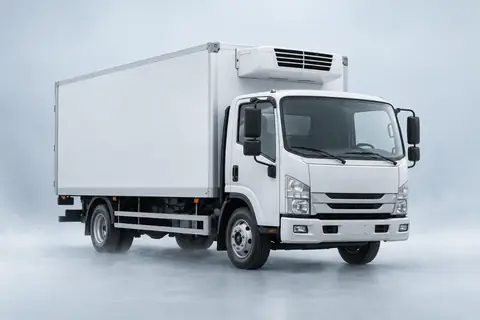
- Engine-driven truck and van refrigeration, where the vehicle engine drives the compressor by belt. See how truck refrigeration units work.
- Ammonia (R717) plants, because ammonia corrodes copper, so the motor must stay outside the refrigerant.
- Very large industrial machines where a separate high-efficiency motor or variable-speed drive is preferred.
The shaft seal is a wear item and a potential leak point, so open compressors need more maintenance than sealed ones.
How to choose a refrigeration compressor type
Choose the compressor by capacity at your actual evaporating temperature, the temperature range, how much the load varies, and whether you can get repair skills and spare parts locally. Use this guide as a starting point:
| Application | Typical cooling load | Usual compressor choice |
|---|---|---|
| Reach-in, display fridge or freezer, ice machine | 0.2–2 kW | Hermetic reciprocating or rotary, increasingly inverter |
| Walk-in cooler or freezer | 1.5–15 kW | Hermetic reciprocating (small) or scroll |
| Blast room or large freezer room | 5–40 kW | Semi-hermetic reciprocating, two-stage below about −35 °C |
| Supermarket rack | 20–300 kW | Multiple scrolls or semi-hermetic reciprocating; CO2 transcritical compressors |
| Industrial cold store or processing plant | 100 kW and above | Screw (semi-hermetic or open), often ammonia or CO2 |
| Truck or van reefer | 2–15 kW | Open reciprocating or scroll (engine-driven) or hermetic electric |
- Calculate the load with the cold room refrigeration load calculator, then check the compressor's rated capacity at your evaporating temperature and summer condensing temperature, not at a nominal point.
- Check the pressure ratio: very low temperatures need low-temperature scrolls with injection, two-stage semi-hermetics or a cascade.
- For loads that vary widely, prefer inverter, digital or multi-compressor control to avoid short-cycling.
- Match the refrigerant your market allows (R290, R448A/R449A, R744, R404A where still permitted) and the compressor's approval for it.
- Confirm voltage, phase and frequency: a 50 Hz compressor on 60 Hz runs about 20% faster and needs a different selection.
- Weigh serviceability: remote sites with skilled technicians may prefer semi-hermetics; urban sites with fast parts supply often choose scrolls.
For how the compressor fits with the condenser and evaporator in a walk-in, see the walk-in cooler refrigeration system guide. Be There supplies walk-in cooler and freezer kits with hermetic, scroll or semi-hermetic condensing units selected for your room temperature, ambient and power supply, and truck refrigeration units with engine-driven or electric compressors. Send your room or vehicle details through the inquiry form and we will quote FOB, CIF or DDP.