Short answer
A freezer ices up when moist room air gets in and freezes on cold surfaces, usually through a worn door gasket, a door left ajar, frequent openings or warm, unwrapped food. In frost-free freezers, ice usually means a failed defrost heater, sensor or timer, or a blocked drain. Defrost manual freezers when frost reaches about 6 mm (¼ in); it takes 1–3 hours.
Key takeaways
- Defrost a manual freezer when frost reaches about 6 mm (¼ in), typically one to three times a year.
- Using bowls of hot water in the closed cabinet, defrosting usually takes 1–3 hours; leaving the door open takes 6–12 hours.
- Ice on the floor of a frost-free freezer almost always means a blocked or frozen defrost drain.
- Automatic defrost runs about 1–4 times a day and ends when the coil reaches about +10 °C to +15 °C (50–59 °F).
- Never chip ice with metal tools: puncturing an evaporator plate or tube usually ends a freezer's life.
Why is my freezer icing up?
A freezer ices up because moist air gets inside and its water vapour freezes onto the coldest surfaces. The usual causes are a leaking door seal, a door left ajar or opened too often, warm or uncovered food, a humid room and, in frost-free freezers, a fault in the automatic defrost system or a blocked drain.
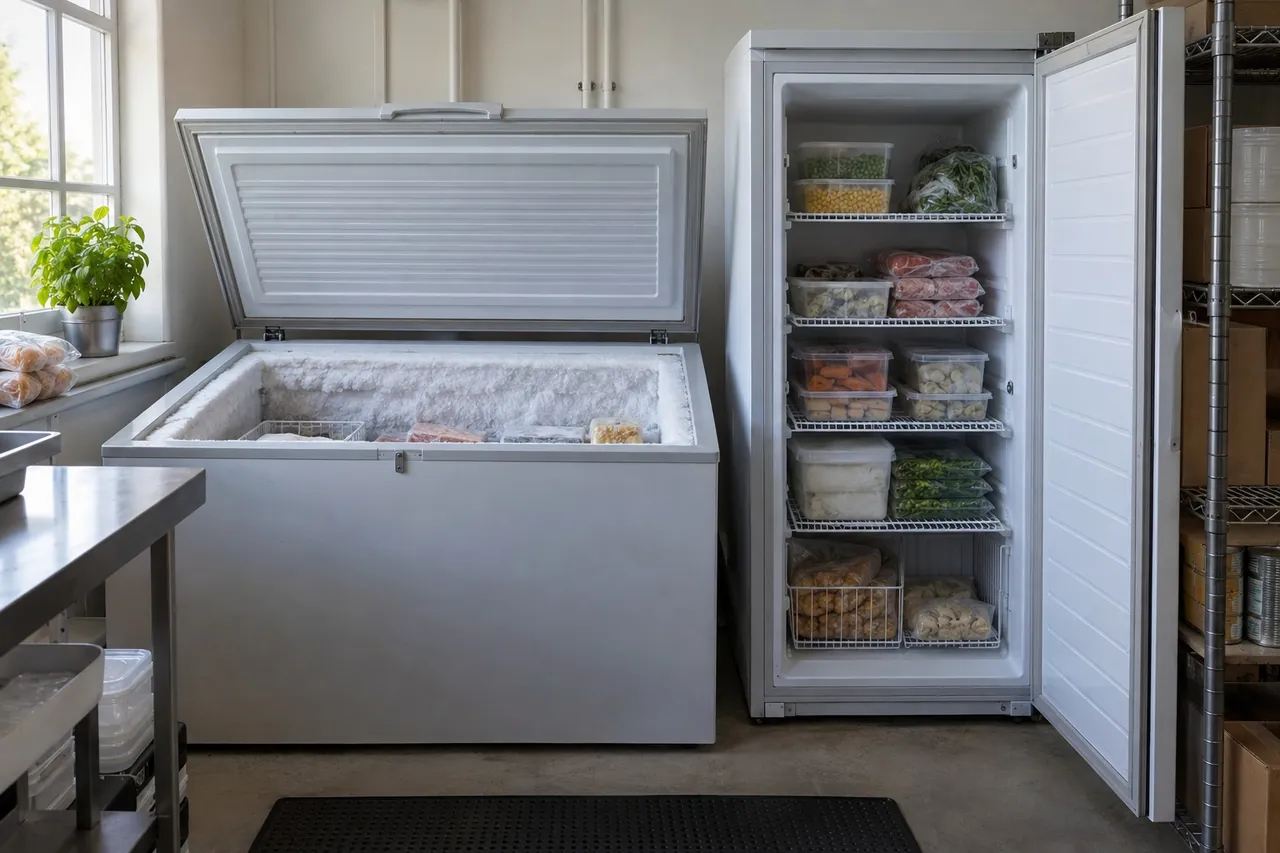
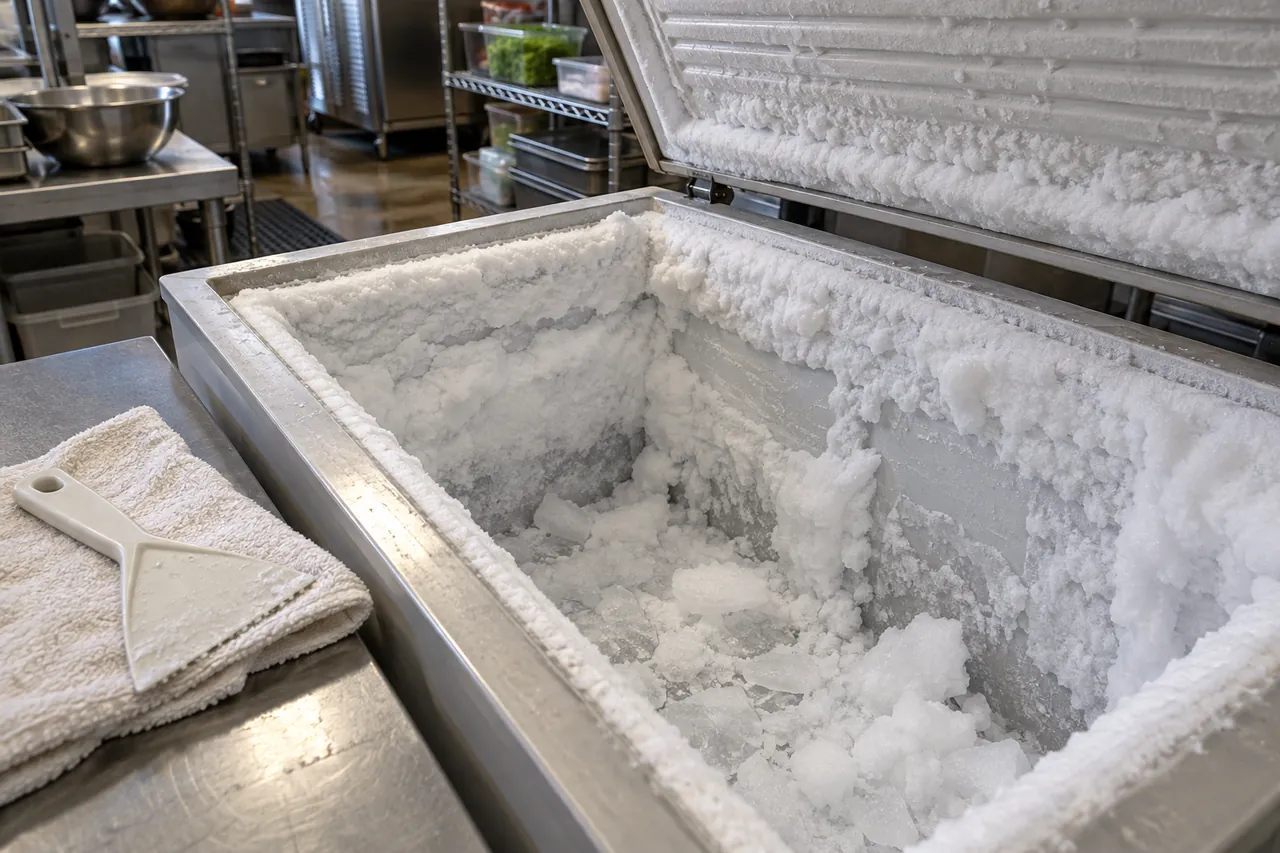
All freezers collect some frost: every time the door opens, room air at 20–30 °C (68–86 °F) and 50–70% relative humidity flows in, and its moisture ends up as ice on surfaces at −18 °C to −30 °C (0 °F to −22 °F). The question is how fast it builds. In a manual defrost freezer, a thin layer that grows to about 6 mm (¼ in) over a few months is normal. Ice build up in freezer cabinets that reaches that thickness in a few weeks, frost on food packs, or solid ice on the floor of a frost-free model are signs that something is wrong. For how the two defrost systems work, see frost free vs manual defrost freezers.
What causes frost in a freezer? Diagnosis by symptom
Where the ice forms tells you most about why it forms. Use this table to match the symptom to the likely cause before you defrost, otherwise the ice will simply come back.
| Symptom | Likely cause | Fix |
|---|---|---|
| Frost thickest near the door or lid opening | Worn, torn or dirty gasket; door not closing fully | Clean gasket; paper test; replace gasket; level the cabinet so the door self-closes |
| Even frost everywhere, building fast | Frequent or long door openings; humid room | Group picks, train staff, fit door alarm, reduce room humidity |
| Frost crystals on and inside food packs | Unwrapped or warm food; temperature swings | Wrap tightly, cool food before freezing, check thermostat |
| Ice on the floor or bottom of a frost-free freezer | Blocked or frozen defrost drain | Clear drain with warm water; check drain heater |
| Back panel coated in frost, freezer getting warmer | Defrost heater, termination thermostat or timer/control fault | Manual defrost, then test defrost components |
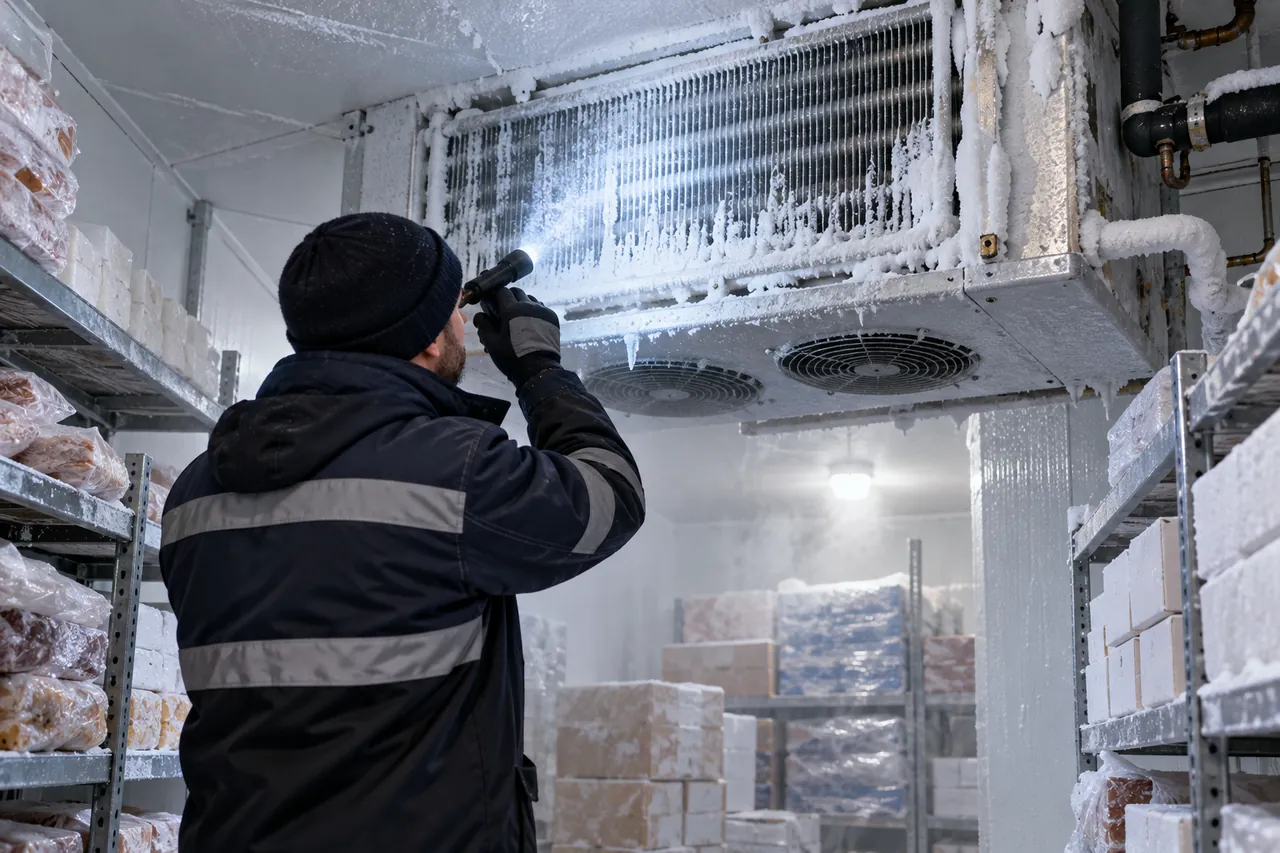
| Ice block on the evaporator of a walk-in or reach-in | Defrost too short or too infrequent; door left open; fan fault | Adjust defrost schedule; check heaters, fans and door closers |
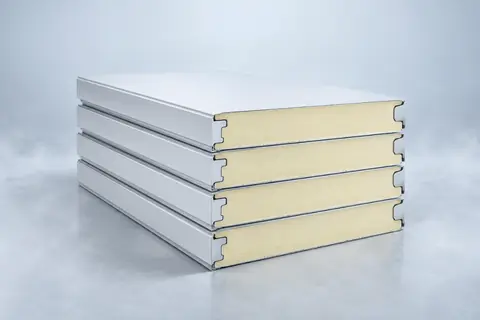
| Frost on the outside of the cabinet | Wet or damaged insulation, or failed door heater | Service call; check frame heater; insulation damage usually ends cabinet life |
Why does my freezer keep icing up at the bottom?
In a frost-free freezer, ice at the bottom almost always means melt water from the automatic defrost is not draining away. The water runs down the evaporator into a trough and a drain tube; if food debris blocks the tube, or the drain heater fails so the tube freezes, the water collects and refreezes as a sheet of ice on the floor of the cabinet or under the bottom drawer. Pour warm water slowly through the drain to clear it (some models need a back panel removed first), and if it blocks again within weeks, have the drain heater checked.
Why does my freezer keep frosting up after defrosting?
If a freezer keeps frosting up soon after you defrost it, the cause has not been fixed. Test the door gasket by closing the door on a sheet of paper at several points around the frame: it should resist being pulled out. Check that the cabinet leans very slightly backwards so the door swings shut by itself, and that no packaging or shelf edge stops it closing. In a hot, humid kitchen, check that the freezer is rated for that room, because constant running and condensation make frost worse.
How often should you defrost a freezer?
Defrost a manual freezer whenever frost reaches about 6 mm (¼ in) thick, which for most household and light-use freezers means one to three times a year. Frost-free and commercial freezers defrost automatically, typically 1–4 times a day, and should never need manual defrosting unless something has failed.
Frost is an insulator. Even a few millimetres on the cooling surfaces slows heat transfer, makes the compressor run longer and raises energy use; thick ice also reduces storage space and can stop doors and drawers closing, which makes the problem worse.
| Freezer type | Defrost method | Typical frequency |
|---|---|---|
| Manual chest freezer | Switch off and melt | Once or twice a year |
| Manual upright freezer | Switch off and melt | Two or three times a year |
| Frost-free household freezer | Automatic heater | Automatic, about 1–3 times a day |
| Commercial reach-in freezer | Automatic electric or hot-gas | Automatic, about 3–4 times a day, 15–30 minutes each |
| Walk-in freezer | Automatic electric or hot-gas on the evaporator | Automatic, typically 2–4 times a day |
How do you defrost a freezer? Step by step
To defrost a freezer, empty it into cool boxes or another freezer, switch it off and unplug it, catch the melt water with towels and trays, speed up melting with bowls of hot water, remove loose ice with a plastic scraper, then clean, dry and restart it before reloading.
- Plan: run stock down and defrost on a cool day or quiet shift. Have cool boxes, ice packs, towels, a shallow tray and a plastic scraper ready.
- Move the food: pack frozen food tightly together in cool boxes or another freezer. Tightly packed frozen food in a closed cool box stays frozen for several hours.
- Switch off and unplug. Never chip ice with power connected.
- Prepare for water: open the drain plug on a chest freezer and put a tray or hose under it; for an upright, lay towels on the floor of the cabinet and in front of it. This is how to defrost a freezer without getting water everywhere.
- Speed up melting: place pans of hot (not boiling) water on the shelves or floor and close the door for 10–15 minutes; replace the water as it cools. A fan blowing room air into the open cabinet also helps.
- Remove ice: lift off sheets as they loosen with a plastic or wooden scraper. Do not use knives, screwdrivers, heat guns or open flames: puncturing an evaporator plate or tube usually ends the freezer's life.
- Clean: wash with warm water and a little baking soda (about 1 tablespoon per litre), rinse and dry thoroughly. Wipe the door gasket and check it for splits.
- Restart: close the drain, switch on and wait until the cabinet reaches −18 °C (0 °F), usually 1–4 hours, before reloading.
How long does it take to defrost a freezer, and what is the fastest way?
Defrosting a freezer usually takes 1–3 hours with hot water bowls and a fan, or 6–12 hours if you simply switch it off and leave the door open. The quickest way to defrost a freezer safely is hot water bowls in the closed cabinet plus loosening ice with a plastic scraper as it softens.
| Method | Typical time (6 mm / ¼ in frost) | Notes |
|---|---|---|
| Switch off, door open, wait | 6–12 hours | Slowest; food must be stored elsewhere for longer |
| Fan blowing room air inside | 3–5 hours | Safe and simple |
| Bowls of hot water, door closed | 1–3 hours | Fastest safe method; replace water every 10–15 minutes |
| Hot water plus plastic scraper | 45 minutes–2 hours | Remove loose sheets as they lift; never force |
Thick ice of 25 mm (1 in) or more can take twice as long. Heat guns and hairdryers are often suggested, but combining electrical heaters with melt water is a shock hazard and concentrated heat can warp plastic liners, so they are best avoided.
Can you defrost a freezer without turning it off?
Not properly. A manual freezer has to warm above 0 °C (32 °F) for the ice to melt, which means stopping the compressor. Some fridge-freezers have a separate switch or a defrost button for the freezer section, which is the closest you can get to defrosting a fridge freezer without turning it off. Scraping loose frost from a running freezer with a plastic scraper is fine as a stop-gap, but it leaves hard ice on the plates.
What if a frost-free or commercial freezer is icing up?
A frost-free or commercial freezer that ices up has a fault in its automatic defrost, its drain or its door; the defrost heater, the defrost termination sensor, the defrost timer or controller, and the evaporator fan are the usual suspects.
An automatic defrost freezer uses a heater on or under the evaporator coil, switched on by a timer or electronic controller, and ended when a termination sensor sees the coil reach about +10 °C to +15 °C (50–59 °F). If the heater burns out or the sensor fails open, the coil frosts solid within a few days, airflow stops and the cabinet warms even though the compressor is running. Signs of evaporator coil icing up include a frosted back panel, weak airflow from the fan and freezer temperature creeping up over 1–3 days.
To recover, defrost manually so the coil is clear, then have a technician test the heater (continuity), the termination sensor and the defrost timer or controller settings. In walk-in freezers also check door closers, heated door frames, strip curtains and the number and length of defrosts set on the controller; our walk-in freezer troubleshooting guide and evaporator coil guide go deeper into defrost settings and coil design.
How do you prevent ice buildup in a freezer?
You prevent ice buildup by keeping moist air out: a good door seal, fewer and shorter door openings, wrapped and pre-cooled food, a correctly levelled cabinet and, for frost-free units, a clear drain and working defrost system.
- Clean gaskets weekly in commercial kitchens and check them monthly with the paper test.
- Close doors immediately; fit door alarms on reach-ins and walk-ins.
- Cool cooked food before freezing, ideally in a blast chiller, and wrap or lid everything.
- Keep the room cool and dry; avoid placing freezers next to dishwashers or steam.
- Keep the freezer two-thirds to 80% full, but never block the door or air vents.
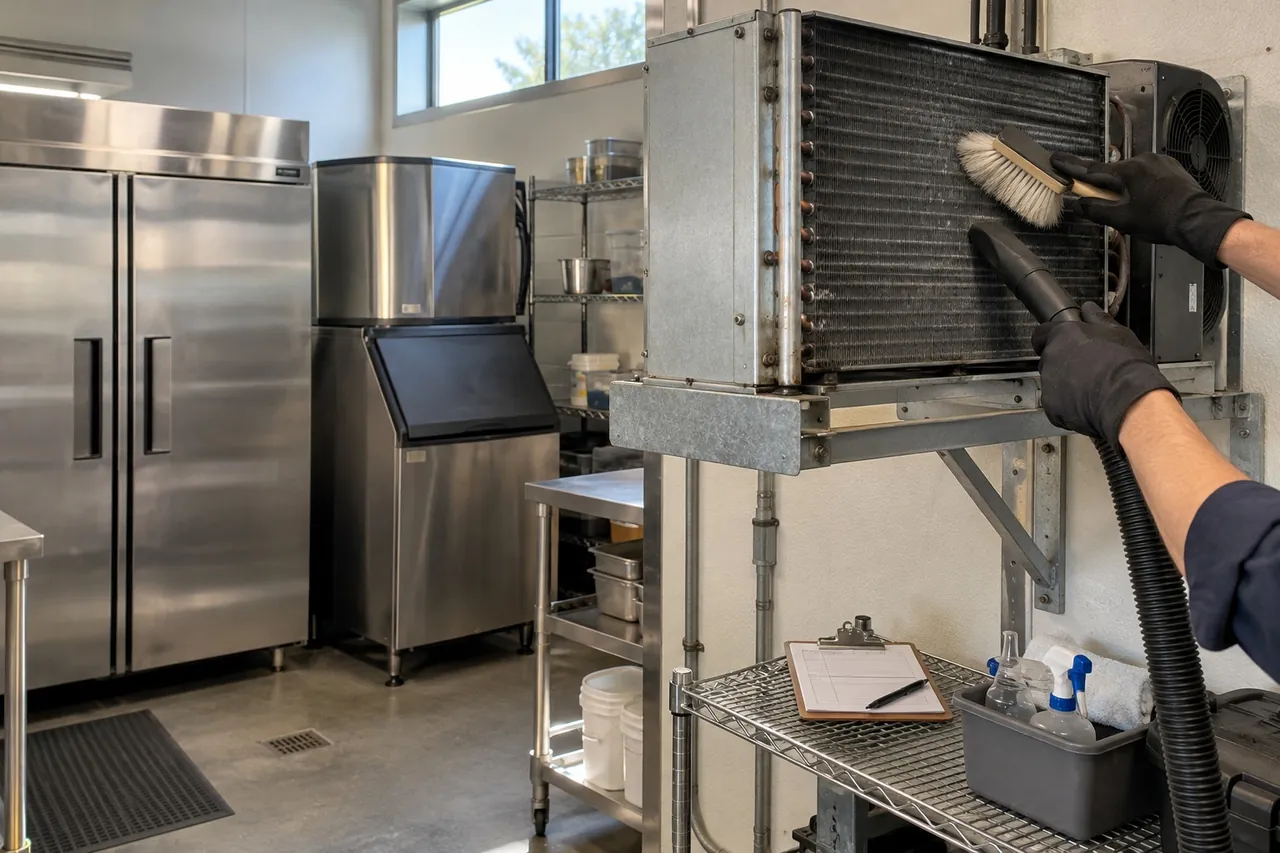
- Follow a routine like our commercial refrigeration maintenance checklist.
If a defrost has left you unsure whether food is still safe, see how long food lasts in a freezer without power.
Checklist: stop a freezer icing up
- Note where the ice forms: door, back wall, floor, coil or on food.
- Paper-test the gasket all the way round; clean or replace.
- Level the cabinet so the door closes on its own.
- Defrost manually once frost passes 6 mm (¼ in).
- On frost-free units, clear the drain and check the defrost heater, sensor and timer.
- Reduce door openings and room humidity; wrap and pre-cool food.
- If a commercial freezer ices repeatedly, call a refrigeration technician to check defrost settings and components.
Be There supplies commercial display freezers with automatic defrost and heated glass doors, and walk-in freezer rooms with electric-defrost evaporators, heated door frames and digital controllers set for your usage. If you are replacing freezers that ice up constantly, send your room size, temperature, voltage and door traffic through the inquiry form and we will quote FOB, CIF or DDP.