Short answer
A refrigerator compressor is an electrically driven pump that draws in low-pressure refrigerant vapour from the evaporator and compresses it to high pressure and temperature, typically 60–90 °C (140–195 °F) at discharge, so the condenser can release the heat outside. Fridges use small hermetic reciprocating or rotary compressors; walk-in cold rooms use hermetic, scroll or semi-hermetic compressors.
Key takeaways
- The compressor raises refrigerant pressure so heat absorbed inside the cabinet at about −30 °C to −5 °C can be released outside at 35–50 °C condensing temperature.
- Low-back-pressure (LBP) compressors suit freezers at about −35 °C to −10 °C evaporating; AC compressors are high-back-pressure models and cannot run a freezer.
- Hermetic compressors are sealed and replaced when they fail; semi-hermetic compressors can be opened and rebuilt.
- Variable-speed (inverter) compressors match output to load and typically use less energy at part load than fixed-speed units.
- Every commercial ice cream machine uses a compressor; freeze-bowl makers suit only small home batches.
What is a fridge compressor and what does it do?
A refrigerator compressor is the motor-driven pump at the centre of a refrigeration system. What a compressor does in a fridge is simple: it keeps refrigerant circulating and raises its pressure, so that heat absorbed inside the cabinet can be released outside at a higher temperature. Without it, the refrigerant would stop moving and the cabinet would warm to room temperature.
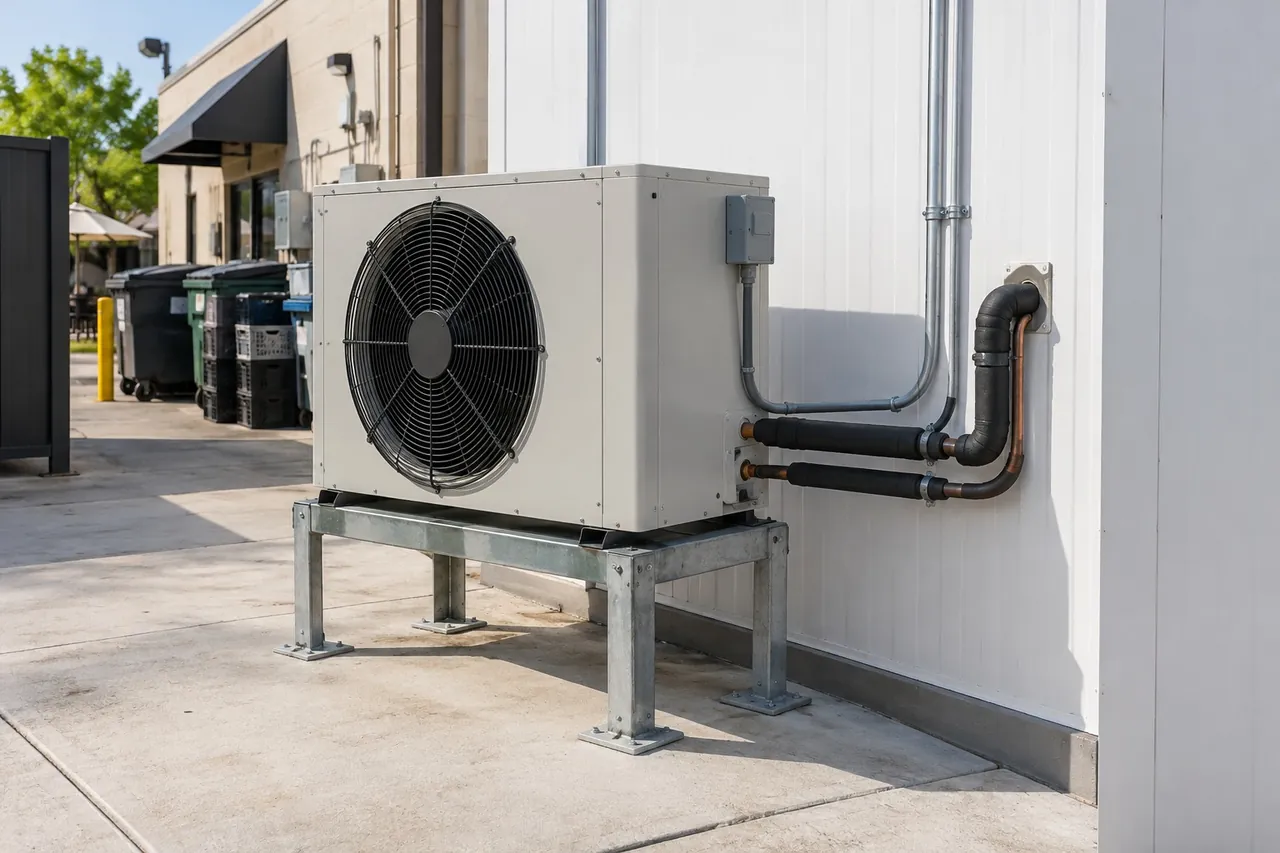
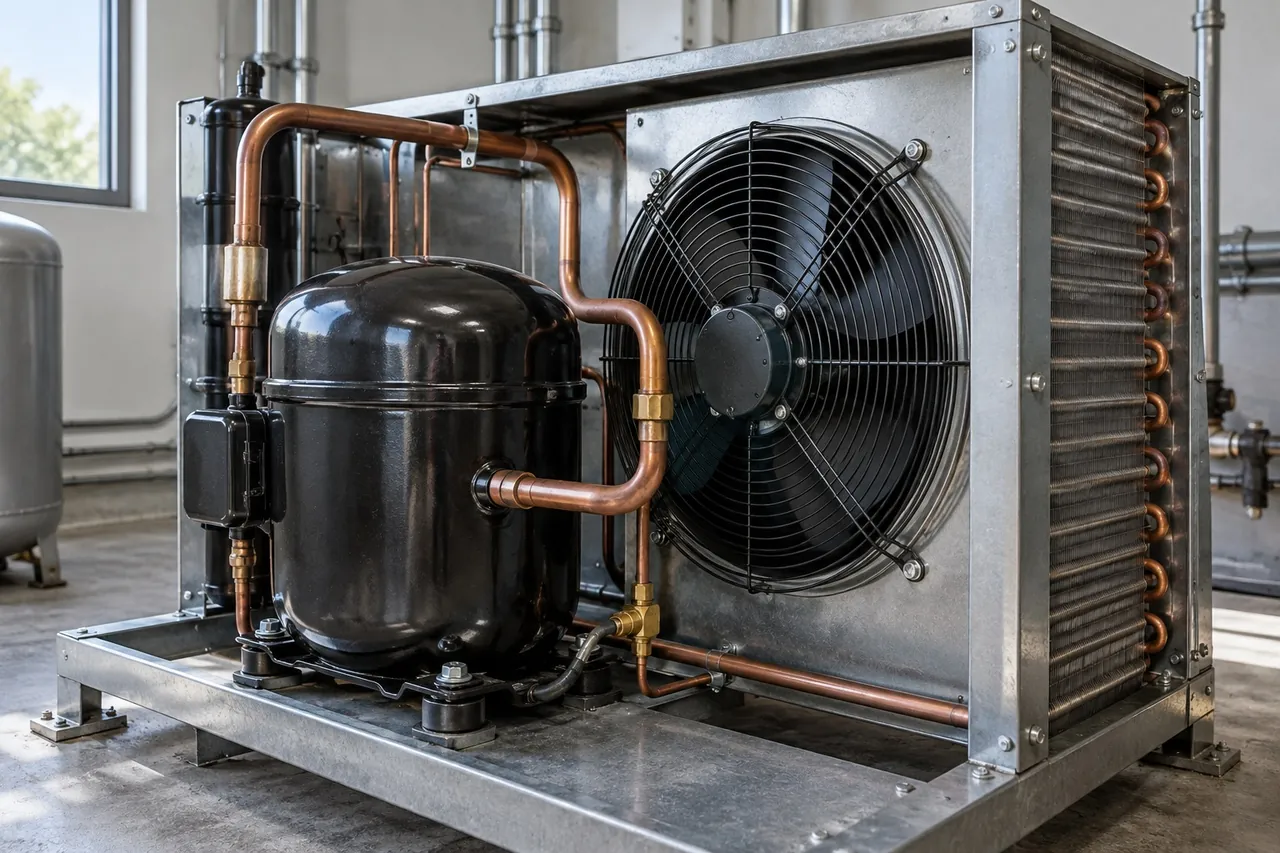
It is the black, dome-shaped part at the bottom rear of a household fridge, inside the machine compartment of a reach-in or display cabinet, and inside the condensing unit of a walk-in cooler. It usually uses most of the electricity the appliance consumes.
Think of the refrigeration loop as two sides. On the low-pressure side, liquid refrigerant boils in the evaporator at a low temperature and absorbs heat from the food space. On the high-pressure side, the vapour condenses in the condenser and gives that heat to the room or outdoor air. The compressor is the only part that moves refrigerant from the low side to the high side; the expansion valve or capillary tube lets it back. In a walk-in cooler or freezer the compressor sits in the condensing unit, matched to an evaporator inside the room.
How does a refrigerator compressor work?
Most fridge compressors work like a small piston pump. Step by step, here is how a fridge compressor works in each cycle:
- Suction: cool, low-pressure refrigerant vapour returns from the evaporator through the suction line and fills the cylinder as the piston moves down.
- Compression: the piston moves up, the suction valve closes and the vapour is squeezed into a smaller volume, raising its pressure and temperature.
- Discharge: when cylinder pressure exceeds condenser pressure, the discharge valve opens and hot gas, typically 60–90 °C (140–195 °F), flows to the condenser.
- Condensing and expansion: the condenser removes heat so the gas becomes liquid; the expansion device drops its pressure; and the liquid boils again in the evaporator.
The ratio between discharge and suction pressure, called the compression ratio, rises as the evaporator gets colder or the condenser gets hotter. That is why freezers work harder than fridges, and why any compressor loses capacity and efficiency when its condenser is dirty or the room is hot.
The thermostat or controller switches the compressor on and off to hold temperature. Inverter-driven compressors instead vary their speed, running slowly most of the time and faster after door openings or loading.
Refrigerator compressor components and the compressor motor
A typical hermetic fridge compressor contains these components inside a welded steel shell:
- Electric motor: the refrigeration compressor motor is a stator and rotor cooled by the returning suction gas. Small units are single-phase; larger commercial ones are often three-phase.
- Crankshaft, connecting rod and piston (reciprocating type), or a rolling piston (rotary) or two spiral scrolls (scroll type).
- Valve plate with thin reed suction and discharge valves.
- Oil sump: lubricating oil, compatible with the refrigerant, in the bottom of the shell.
- Suspension springs and mufflers that reduce noise and vibration.
- Connections: suction, discharge and process tubes, plus an electrical terminal block.
Outside the shell sit the start components: a start relay (current, voltage or PTC type), a thermal overload protector and, on many units, start and run capacitors. Inverter compressors replace these with an electronic drive board. Many "dead compressor" calls are actually failed relays, overloads or capacitors, which are cheap to replace, so test them before condemning the compressor.
Larger walk-in condensing units add a crankcase heater, high- and low-pressure switches and sometimes an oil-pressure safety control. These protect the compressor from liquid refrigerant and abnormal pressures.
Types of refrigeration compressors
Commercial refrigeration uses five main compressor types. Capacities below are typical, not limits.
| Type | Construction | Typical capacity | Common uses |
|---|---|---|---|
| Hermetic reciprocating | Piston, sealed welded shell | Below 0.1 HP to about 5 HP | Household and commercial fridges, freezers, ice machines, small walk-ins |
| Rotary | Rolling piston, sealed shell | About 0.1–5 HP | Air conditioners, some fridges and dehumidifiers |
| Scroll | Two interleaved spirals, sealed shell | About 1–15 HP | Walk-in coolers and freezers, condensing units, heat pumps |
| Semi-hermetic reciprocating | Bolted body, can be opened | About 2–60 HP | Larger cold rooms, racks, blast freezers |
| Screw | Twin rotors, semi-hermetic or open | About 30 HP and above | Industrial cold stores, process cooling, ammonia plants |
Any of the sealed types can be fixed-speed or variable-speed. Variable-speed compressors cost more but hold temperature tighter and typically save energy in equipment that spends most of its time at part load, such as display cabinets and walk-in coolers.
Refrigerant choice affects the compressor too. Natural refrigerants such as R290 (propane) and R600a (isobutane) are now common in plug-in cabinets, and CO2 in some larger systems; see R290 vs R404A for why.
Cooler compressor vs freezer compressor vs AC compressor
Compressors are designed for an application range, set by evaporating temperature. Using the wrong one is a common and expensive mistake.
| Application class | Evaporating temperature | Typical equipment |
|---|---|---|
| Low back pressure (LBP) | About −35 °C to −10 °C (−31 °F to 14 °F) | Compressor freezer units, walk-in freezers, ice cream machines |
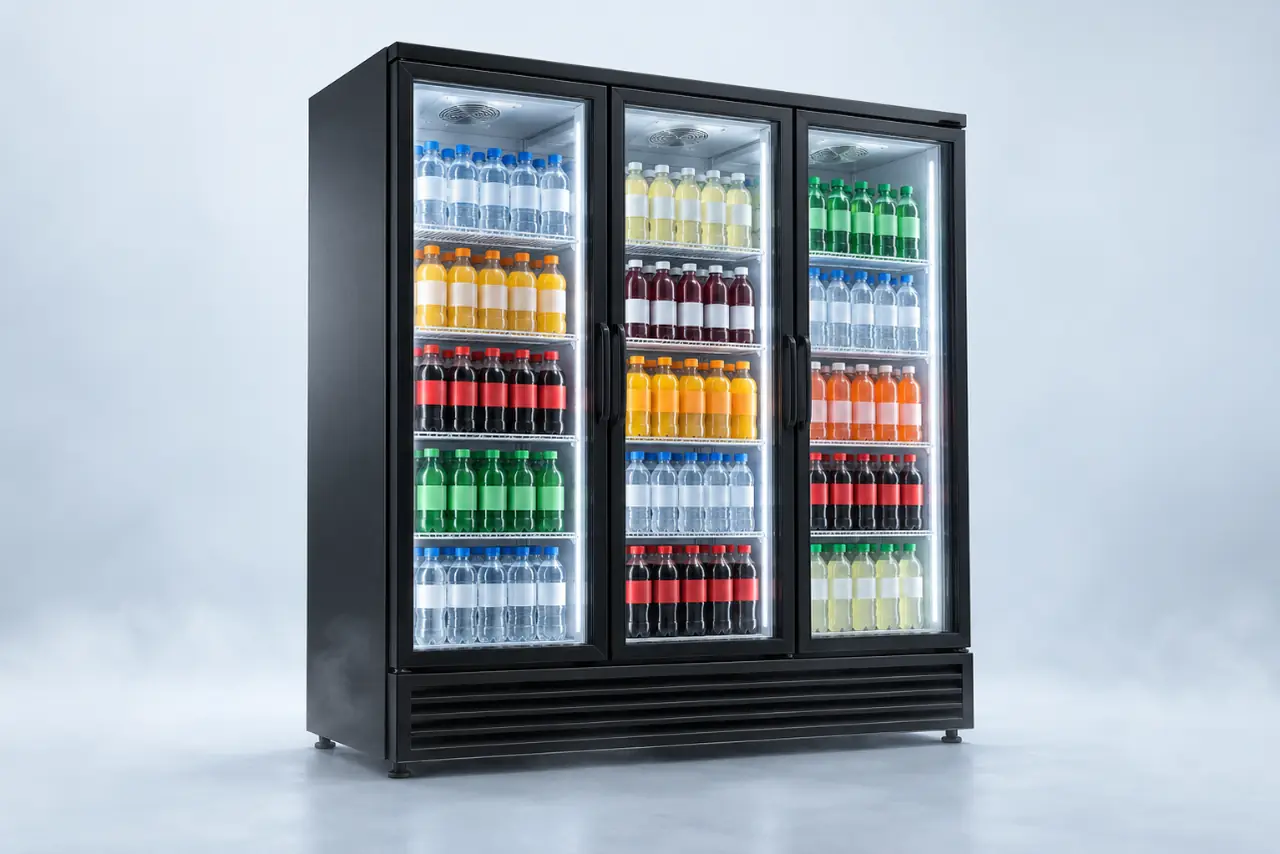
| Medium back pressure (MBP) | About −20 °C to 0 °C (−4 °F to 32 °F) | Cooler compressor units, walk-in coolers, display fridges |
| High back pressure (HBP) | About −5 °C to +15 °C (23–59 °F) | Air conditioners, dehumidifiers, water chillers |
An LBP compressor moves a large volume of thin, cold vapour; its motor is sized for low suction pressure. An AC (HBP) compressor expects dense, warmer vapour; at freezer temperatures its capacity collapses and its motor and oil return suffer. A new compressor for an AC system is therefore not a substitute for a refrigeration compressor, even when the horsepower label matches.
Some compressors cover LBP and MBP ranges, but the condensing unit, expansion valve and evaporator must still be selected for the design temperature. Our guide to walk-in cooler refrigeration systems explains how compressor, condensing unit and evaporator are matched.
Compressor ice cream makers and machines
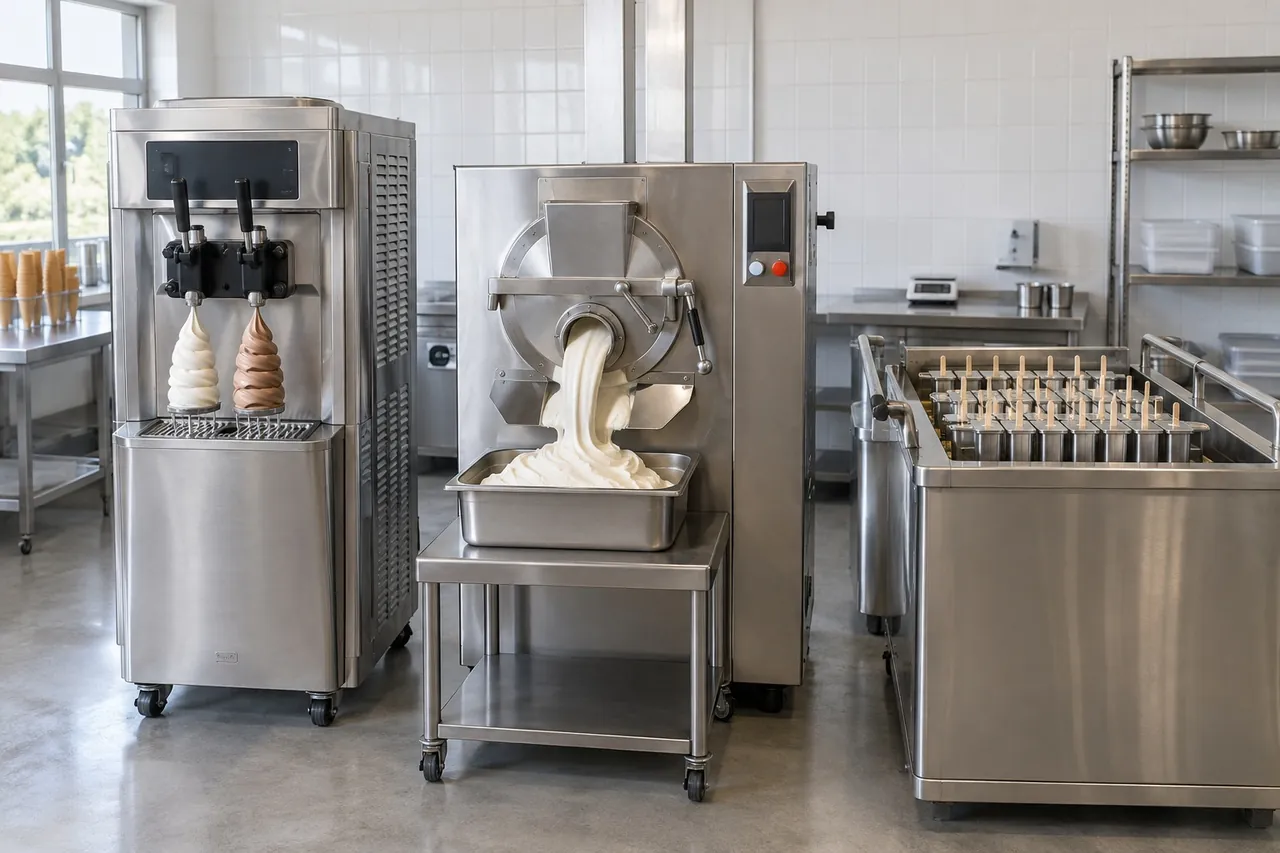
A compressor ice cream maker has its own built-in refrigeration system that chills the freezing bowl or cylinder while a dasher churns the mix. A freeze-bowl maker, by contrast, relies on a bowl pre-frozen in a household freezer for 12–24 hours and makes one batch before it needs re-freezing.
For a home user, a small ice cream maker with compressor is convenient because batches can be made back to back, typically 0.5–2 L at a time in 30–60 minutes. For a business, the "best compressor ice cream maker" question becomes a question of output and holding temperature:
- Soft serve machines freeze mix continuously in a refrigerated cylinder and serve at about −6 °C to −4 °C (21–25 °F); Be There soft serve machines produce about 18–36 L per hour.
- Batch freezers make hard ice cream, gelato and sorbet in batches for a display freezer or hardening room.
- Popsicle machines use a compressor to chill a calcium chloride brine tank to about −25 °C to −30 °C.
Every commercial compressor ice cream machine uses an LBP compressor, usually air-cooled on small models and water-cooled options on larger ones. Our commercial ice cream machine guide compares the three types.
Buying a new compressor: replacement, rebuilders and refrigerant
When a compressor fails, there are three routes:
- Like-for-like replacement. Hermetic and scroll compressors cannot be opened, so a failed one is replaced. Match refrigerant, application class (LBP/MBP/HBP), capacity at your operating conditions, voltage, phase and frequency, and start components. A wholesale AC compressor or generic "cooler compressor" from an AC compressor shop is not a substitute unless the data sheet matches the refrigeration duty.
- Rebuilt or remanufactured. Refrigeration compressor rebuilders and compressor remanufacturers repair larger semi-hermetic units by replacing valves, bearings, pistons and motor windings. It can make sense for compressors above about 10 HP.
- Replace the condensing unit. On older systems, or where the refrigerant is being phased down, a new condensing unit often costs little more than a compressor change and comes with a new condenser, controls and warranty.
Find the cause before fitting a new compressor: burnt windings, acid in the oil, liquid floodback, a dirty condenser or iced evaporator will destroy the replacement too. After a burnout, fit new filter driers and check the oil for acid.
On refrigerant: in many markets you cannot simply buy refrigerant online. In the US, most refrigerants for stationary equipment are sold only to EPA Section 608 certified technicians, and in the EU and UK handling F-gases requires certified personnel. Leave charging to a qualified technician.
Checklist: choosing equipment with the right compressor
When you buy a fridge, freezer, cold room or ice cream machine, the compressor inside is worth checking as carefully as the cabinet.
- Application class: LBP for freezers and ice cream; MBP for coolers and display fridges.
- Capacity at your conditions: cooling output at the design evaporating temperature and your hottest ambient, not just horsepower.
- Refrigerant: allowed in your market and serviceable by local technicians (for example R290, R404A replacements, R448A/R449A or CO2).
- Power supply: voltage, phase and frequency must match; a 50 Hz compressor on 60 Hz runs faster and draws more current.
- Type and speed: fixed-speed hermetic for simplicity; scroll or inverter for efficiency in larger or variable loads.
- Protection and spares: overload, pressure switches, crankcase heater on larger units, and access to start components.
Be There is an equipment manufacturer and exporter rather than an AC compressor supplier: we fit each walk-in cold room kit with a condensing unit selected for the room temperature, size and site climate, and state the compressor type, refrigerant and power supply on the quotation. Send your requirements through our inquiry form; ask for recommended spare parts at the same time.