Short answer
Mineral wool insulation is made by melting rock (basalt) or slag at about 1,500 °C (2,730 °F) and spinning it into fibres. Rock wool gives about R-3.7 to R-4.3 per inch in batts and boards, is non-combustible (Euroclass A1) and withstands over 1,000 °C. Rock wool sandwich panels typically reach A2-s1,d0 and fire resistance of about EI 30 to EI 120.
Key takeaways
- Rock wool (stone wool) is spun from melted basalt and slag; mineral wool is the umbrella term that also covers slag wool and, in Europe, glass wool.
- Rock wool batts give about R-15 in 3.5 in (89 mm), R-23 in 5.5 in (140 mm) and R-30 in about 7.25 in (184 mm).
- Compared with fiberglass, rock wool is denser, slightly higher in R per inch, better for fire and sound, and typically costs more per square foot.
- Rock wool is vapor-open: it does not need a vapor barrier itself, but walls in cold climate zones usually still need a vapor retarder on the warm side.
- In cold stores, rock wool panels are used for fire walls and plant rooms, while PU/PIR panels insulate the cold rooms, because PIR gives almost twice the R-value per inch and resists moisture.
What is mineral wool insulation, and what is rock wool made of?
Mineral wool insulation is a fibrous insulation made from molten minerals spun into fine fibres and bound with a small amount of resin. Rock wool (also called stone wool) is the most common type: it is made by melting volcanic rock such as basalt or diabase, often with recycled steel slag, at about 1,500 °C (2,730 °F), spinning the melt into fibres on fast-rotating wheels, adding binder and water repellent, and curing the mat into batts, rolls, boards or panel cores.
The result is a springy, greenish-grey to brown fibrous material with a density from about 30 kg/m³ (about 2 lb/ft³) for wall batts up to 200 kg/m³ (about 12 lb/ft³) for rigid roof boards. The trapped air between fibres does the insulating, and the stone fibres themselves do not burn.
Key properties of rock wool insulation:
- Thermal: about 0.033–0.040 W/(m·K), roughly R-3.7 to R-4.3 per inch in batts and boards.
- Fire: non-combustible, Euroclass A1 as a material; fibres withstand temperatures above 1,000 °C (1,832 °F).
- Moisture: water-repellent treated, vapor-open, and keeps its R-value once dried.
- Sound: dense fibres absorb sound well, which is why it is used in partitions and acoustic ceilings.
Rock wool is used as loose fill, batts between studs, rigid mineral wool board outside walls and on roofs, pipe and duct insulation, and as the non-combustible core of fire-rated sandwich panels.
Mineral wool vs rock wool vs stone wool vs glass wool
The names overlap, which causes confusion when buying:
| Term | Raw material | Typical R per inch | Max service temperature (approx.) | Notes |
|---|---|---|---|---|
| Rock wool / stone wool | Basalt, diabase, plus slag | R-3.7 to R-4.3 | 650–750 °C for technical grades; fibres survive above 1,000 °C | Same product, two names |
| Slag wool | Blast-furnace slag | R-3.7 to R-4.0 | Similar to rock wool | Common in US “mineral wool” products |
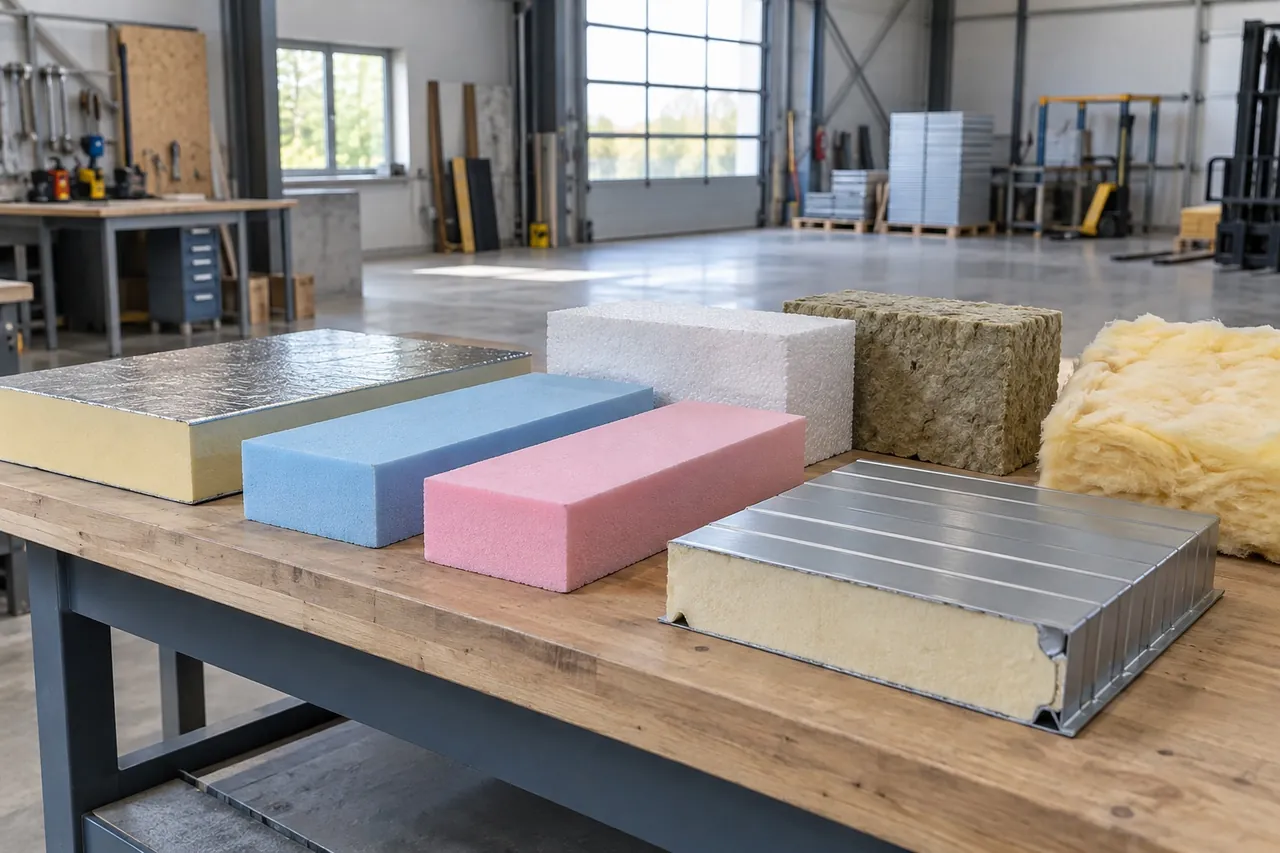
| Glass wool (fiberglass) | Sand and recycled glass | R-2.9 to R-3.8 | About 230–250 °C for building grades | Counted as mineral wool in Europe |
| Natural wool insulation (sheep’s wool) | Animal fibre | R-3.5 to R-3.8 | Combustible, treated with fire retardant | Not a mineral wool |
So mineral wool vs rock wool is not really a contest: in the US, “mineral wool” usually means rock or slag wool; in Europe and Asia, mineral wool covers rock wool and glass mineral wool. Stone wool vs rock wool is purely a naming difference.
Two other terms are not building insulation at all. Steel wool is an abrasive pad, not an insulation material. And “black wool insulation” is normally rock wool or glass wool faced with black glass tissue, used behind open rainscreen cladding and in acoustic ceilings where a dark face should not show.
What is the R-value of rock wool insulation?
Rock wool R value is about R-3.7 to R-4.3 per inch (RSI 0.65–0.76 per 25 mm). Common North American batt sizes are sold by R-value and friction-fit between studs at 16 in or 24 in centres (batt widths of about 15¼ in and 23 in):
| Product | Thickness | Fits | Typical use |
|---|---|---|---|
| Rock wool R15 batt | 3.5 in (89 mm) | 2×4 walls | Exterior and interior stud walls |
| R23 rock wool batt | 5.5 in (140 mm) | 2×6 walls | Exterior walls in cool climates |
| Rock wool R30 batt | about 7.25 in (184 mm) | 2×8 to 2×10 joists | Ceilings, floors, roofs |
| Rigid mineral wool insulation board | 1–4 in (25–100 mm) | Over sheathing or masonry | Continuous exterior insulation, R-4.0 to R-4.2 per inch |
| Blow-in mineral wool (loose fill) | Any depth | Attics, closed cavities | About R-3 per inch blown |
| Rock wool sandwich panel core | 50–200 mm (2–8 in) | Between steel skins | About R-3.2 to R-3.8 per inch |
The panel core rates slightly lower because the fibres are turned on edge (lamellas) to give the panel strength, which raises conductivity to about 0.038–0.045 W/(m·K).
For comparison, PIR gives R-6 to R-6.5 per inch, so a rock wool core needs roughly 1.6–1.9 times the thickness of a PIR core for the same insulation. Compare all materials in the insulation R-value chart.
Rock wool vs fiberglass: which is better?
Rock wool vs fiberglass is the most common comparison for wall and ceiling batts.
| Property | Rock wool | Fiberglass |
|---|---|---|
| R-value per inch (batts) | about R-3.7 to R-4.3 | about R-2.9 to R-3.8 |
| 2×4 / 2×6 batt | R-15 / R-23 | R-13 to R-15 / R-19 to R-21 |
| Density | Higher; stiff, friction-fits, cuts cleanly | Lighter; can sag or slump |
| Fire | Non-combustible; fibres survive above 1,000 °C | Glass fibres melt at much lower temperatures; paper facings burn |
| Moisture | Water-repellent, drains and dries | Loses R-value when wet; dries |
| Sound | Better absorption in partitions | Good |
| Cost | Higher, often about 25–50% more per square foot | Lowest-cost insulation |
Is rock wool better than fiberglass? For fire separation, sound control and walls where batts must stay in place, yes. For a large attic where cost per R-value matters most, fiberglass often wins. Both are non-combustible fibrous insulations that need careful fitting without gaps, and both irritate skin, so wear gloves, long sleeves and a dust mask. The International Agency for Research on Cancer has classified rock, slag and glass wool insulation fibres as Group 3 (not classifiable as to carcinogenicity in humans) since 2001.
For industrial and cold store buildings, neither batt is used inside the wall; the choice there is between rock wool and PU/PIR insulated panels.
Does rock wool need a vapor barrier?
Rock wool itself does not need a vapor barrier: it is vapor-open, does not rot, and dries out after wetting. The wall or roof assembly, though, may need a vapor retarder to stop warm, moist indoor air from condensing inside it.
- Cold climates: the US International Residential Code generally requires a Class I or II vapor retarder on the warm side of framed walls in climate zones 5, 6, 7, 8 and Marine 4. So for the question “does rock wool need a vapor barrier in zone 5?”, the usual answer is yes for the wall, unless enough continuous exterior insulation is used to keep the sheathing warm.
- Mixed and hot climates: a vapor retarder on the inside is often unnecessary or harmful; use a smart (variable-permeance) membrane if in doubt.
- Exterior mineral wool insulation: rigid rock wool board outside the sheathing is vapor-open, so walls can dry outward; it is often paired with a water-resistive barrier behind ventilated cladding.
- Faced rock wool insulation (foil or kraft) includes its own vapor retarder; install the facing toward the warm side.
In refrigerated rooms the vapor drive is strong and constant, from the warm outside toward the cold inside. Rock wool cores there depend completely on the steel skins and sealed joints as the vapor barrier; if moisture enters, it accumulates and freezes. That is one reason closed-cell PU or PIR is preferred for cold room insulation.
Rock wool sandwich panels: construction, weight and fire ratings
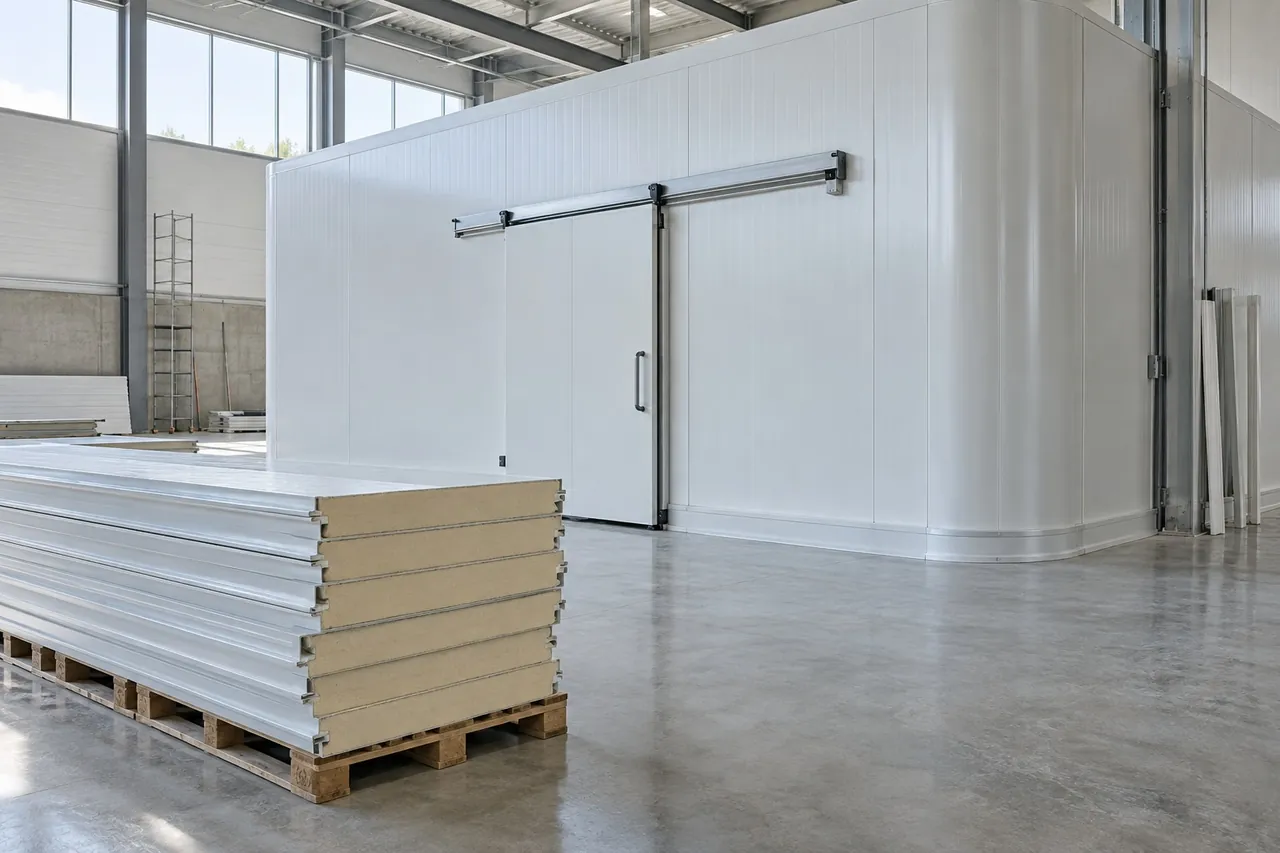
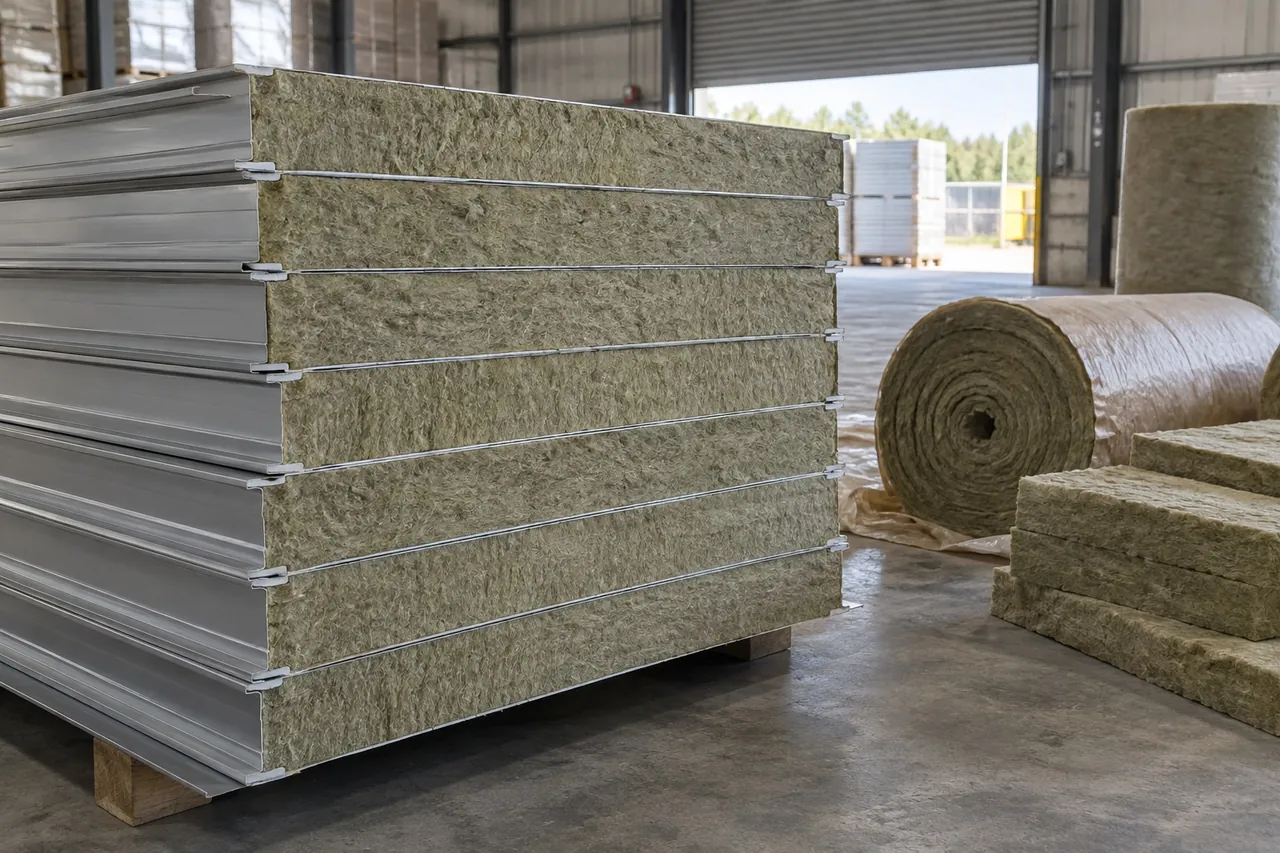
Rock wool panels (mineral wool panels) are sandwich panels with a core of high-density rock wool lamellas, typically 100–140 kg/m³, glued between two pre-painted steel skins. They are used for fire walls, fire-rated partitions, machine rooms, kitchens, escape corridors and industrial façades.
| Thickness | Approx. weight (0.5 mm skins) | Core R-value | Typical fire resistance (tested systems) |
|---|---|---|---|
| 50 mm (2 in) | about 13–15 kg/m² (2.7–3.1 lb/ft²) | about R-6.5 to R-7.5 | EI 30 |
| 75 mm (3 in) | about 16–18 kg/m² | about R-9.5 to R-11 | EI 30 to EI 60 |
| 100 mm (4 in) | about 19–22 kg/m² (3.9–4.5 lb/ft²) | about R-12.5 to R-15 | EI 60 to EI 90 |
| 150 mm (6 in) | about 23–29 kg/m² | about R-19 to R-22 | EI 90 to EI 120 |
For comparison, a 100 mm PU/PIR panel weighs about 11–13 kg/m² and gives about R-24 to R-26. Panels reach about A2-s1,d0 reaction to fire overall under EN 13501-1 (the adhesive keeps them just short of A1).
Fire resistance is a property of the tested system, not the core alone. The rating only applies with the same thickness, steel, joint, fixings, span and orientation that were tested, and the door, seals and penetrations must be rated too. Always ask for the test report and the classification document. Be There supplies rock wool boards and PU/PIR sandwich panels; if your project needs rock wool cored panels, state the fire rating on your inquiry and we will confirm what we can supply.
Rock wool or PIR panels for cold stores?
Most cold stores use both. The rule of thumb is PIR or PU for the cold envelope, rock wool where fire separation is required.
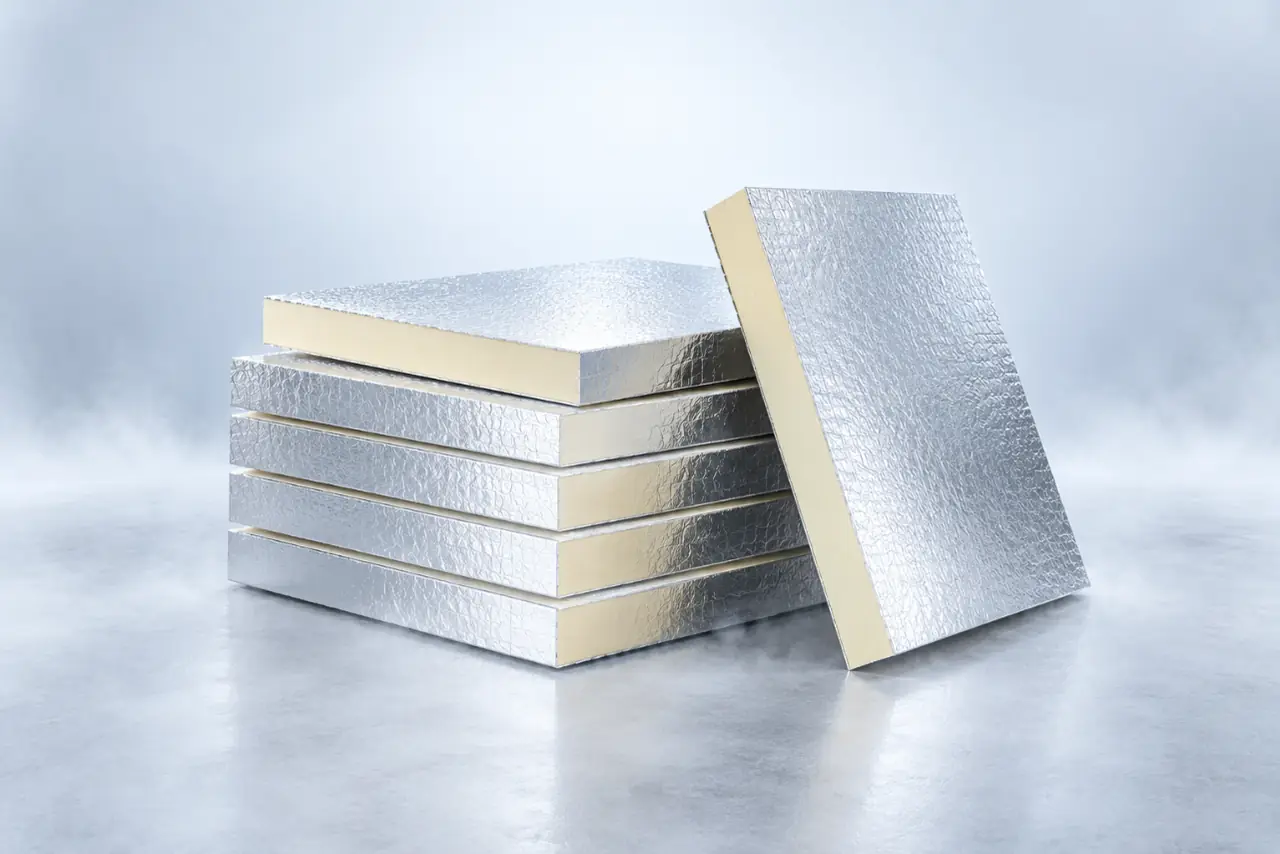
- Cold rooms and freezers: PU/PIR panels give about R-6 to R-6.5 per inch, are closed-cell so moisture cannot migrate through the core, and are about half the weight. A freezer at −20 °C (−4 °F) needs roughly 120–150 mm of PIR; the same insulation in rock wool would need about 220–280 mm. See the cold room panel thickness guide.
- Fire walls and compartments: rock wool panels between cold chambers, around the machine room and electrical rooms, along escape routes, and as fire break strips in long roofs.
- Above-zero processing rooms: rock wool panels are used in some food factories at +10 °C to +20 °C (50–68 °F), where insurers require non-combustible walls and the vapor drive is small.
- Hot rooms: kitchens, bakeries and drying rooms, where foam cores would be near their temperature limit.
If an insurer requires non-combustible construction throughout a refrigerated building, design the rock wool panels with fully sealed joints, extra thickness and close attention to vapor control, and accept higher running cost. For a fuller look at wall systems and fire classes see our insulated wall panels guide.
How much does rock wool insulation cost?
Rock wool insulation price depends on form and market. As a guide in the US:
- Batts installed: mineral wool typically costs about $1.40–$2.10 per square foot, compared with about $0.30–$2.10 for fiberglass batts – roughly 25–50% more than fiberglass for the same R-value at the material level.
- Rigid boards: higher-density boards for exterior continuous insulation cost several times more per R-value than batts, and usually more per R-value than foam boards, because of their weight and density.
- Rock wool sandwich panels: typically cost more than PU panels of the same thickness because of the heavier core, slower production and heavier freight, and need more thickness for the same R-value.
Prices vary with density, facing, thickness, quantity and freight. Shipping matters for rock wool: a container of boards or panels weighs far more than the same volume of PIR. If you are comparing mineral wool vs fiberglass cost for a building, also price the labour: rock wool batts friction-fit and cut faster, which offsets part of the material premium.
Be There quotes rock wool boards, PIR insulation boards and sandwich panels per order (FOB, CIF or DDP), with density, thickness and facing confirmed on the quotation.
How to choose rock wool or foam insulation: checklist
Answer these questions before you order:
- What does the fire strategy require? Non-combustible (A1/A2) material, a fire resistance period (EI 30–EI 120 or 1–2 hours), or only a reaction-to-fire class? Fire walls point to rock wool.
- What temperature is inside? Below about +5 °C (41 °F), PU/PIR panels are usually the better envelope; rock wool needs much more thickness and perfect vapor sealing.
- What R-value is needed? Divide by R-3.7 to R-4.3 per inch for rock wool boards or R-3.2 to R-3.8 for panel cores to get thickness.
- Is weight a problem? Rock wool panels weigh about 1.5–2 times as much as PU panels; check the roof structure and crane capacity.
- Is sound control important? Rock wool partitions absorb more sound.
- What documents does the authority need? Test reports, classification, declarations of performance.
Send us the rooms, temperatures and fire requirements through our inquiry form. Be There will reply within one working day with a proposal combining PU/PIR insulated panels and rock wool where your fire strategy needs it.