Short answer
An outdoor ice maker machine is an ice machine built and listed for outdoor use, with sealed electrics, stainless or coated casing and a wider operating range. Standard commercial ice machines are usually rated for about 10–43 °C (50–110 °F) air and must not freeze, so outdoors they lose 20–30% output in summer heat and need draining in winter unless the condenser alone goes outside.
Key takeaways
- Most commercial ice machines are rated for about 10–43 °C (50–110 °F) ambient and 5–32 °C (40–90 °F) water; outside that range they slow down, stop or freeze.
- Rated output is usually measured at 32 °C (90 °F) air and 21 °C (70 °F) water; at 38 °C (100 °F) air expect roughly 20–30% less ice.
- For hot or exposed sites, put the ice machine indoors and the remote air-cooled condenser outside; remote condensers are commonly rated down to about −29 °C (−20 °F).
- Outdoor-rated undercounter ice makers suit outdoor kitchens and pool bars but must be drained and winterised before temperatures drop below about 10 °C (50 °F).
- For public self-serve ice, use bagged ice in a lockable outdoor merchandiser, a vending kiosk or a dispenser, never an open bin.
- Use an RCD/GFCI-protected supply, shade, at least 150–300 mm (6–12 in) of air clearance and a drain that cannot freeze.
Can you put an ice machine outside?
Only if it is built and listed for outdoor use. A standard commercial ice machine placed outside will lose output in summer, can freeze its water lines and evaporator in winter, and may not be electrically safe in rain; most manufacturers void the warranty for an indoor machine installed outdoors.
An outdoor ice maker machine differs from an indoor one in three ways: sealed and weather-protected electrics, a casing and fittings that resist rain, UV and corrosion, and controls and refrigeration designed for a wider temperature range. These are mostly undercounter units of about 20–60 kg (45–130 lb) per day for outdoor kitchens, pool bars, rooftop terraces and boats. Larger outdoor ice production is usually done differently: by putting the machine in a shelter with its condenser outside, or by selling bagged ice from an outdoor merchandiser.
The same principles apply to fridges and freezers; our guide to outdoor refrigerators and freezers covers ambient ratings and weatherproofing in general. This guide deals with ice.
What temperatures can an ice machine work in?
Most commercial ice machines are designed for air between about 10 °C and 43 °C (50–110 °F) and water between about 5 °C and 32 °C (40–90 °F). Check the data plate or manual for the exact limits of your model; some hot-climate machines are rated higher.
Below the minimum, the harvest cycle may fail because the evaporator does not release ice, water in the pump, valve and lines can freeze and crack, and the machine may trip on low pressure. Above the maximum, head pressure climbs, output drops sharply and the compressor overheats. Air-cooled machines suffer most, because they reject heat into the same hot air; water-cooled machines are more stable but need a frost-free water supply. For more on condenser choice see air-cooled vs water-cooled ice machines.
| Air / water temperature | Typical effect on an air-cooled ice machine | Approximate output vs rating |
|---|---|---|
| Below 10 °C (50 °F) air | Slow or failed harvest, risk of frozen water lines | Unreliable; outside rating |
| 21 °C (70 °F) air, 10 °C (50 °F) water | Ideal conditions, short freeze cycles | About 120–130% |
| 32 °C (90 °F) air, 21 °C (70 °F) water | Standard rating point (AHRI 810 in the US) | 100% |
| 38 °C (100 °F) air, 27 °C (80 °F) water | Long freeze cycles, high head pressure | About 70–80% |
| 43 °C (110 °F) air or above | Near or past the limit; may trip on high pressure | About 60–70%, or shutdowns |
Figures are typical; each machine's manual gives its own capacity chart. When sizing for a hot outdoor bar, divide your daily demand by 0.75 as the ice machine size calculator does for hot rooms, and see ice machine capacity explained for how ratings work.
What makes an outdoor-rated ice maker different?
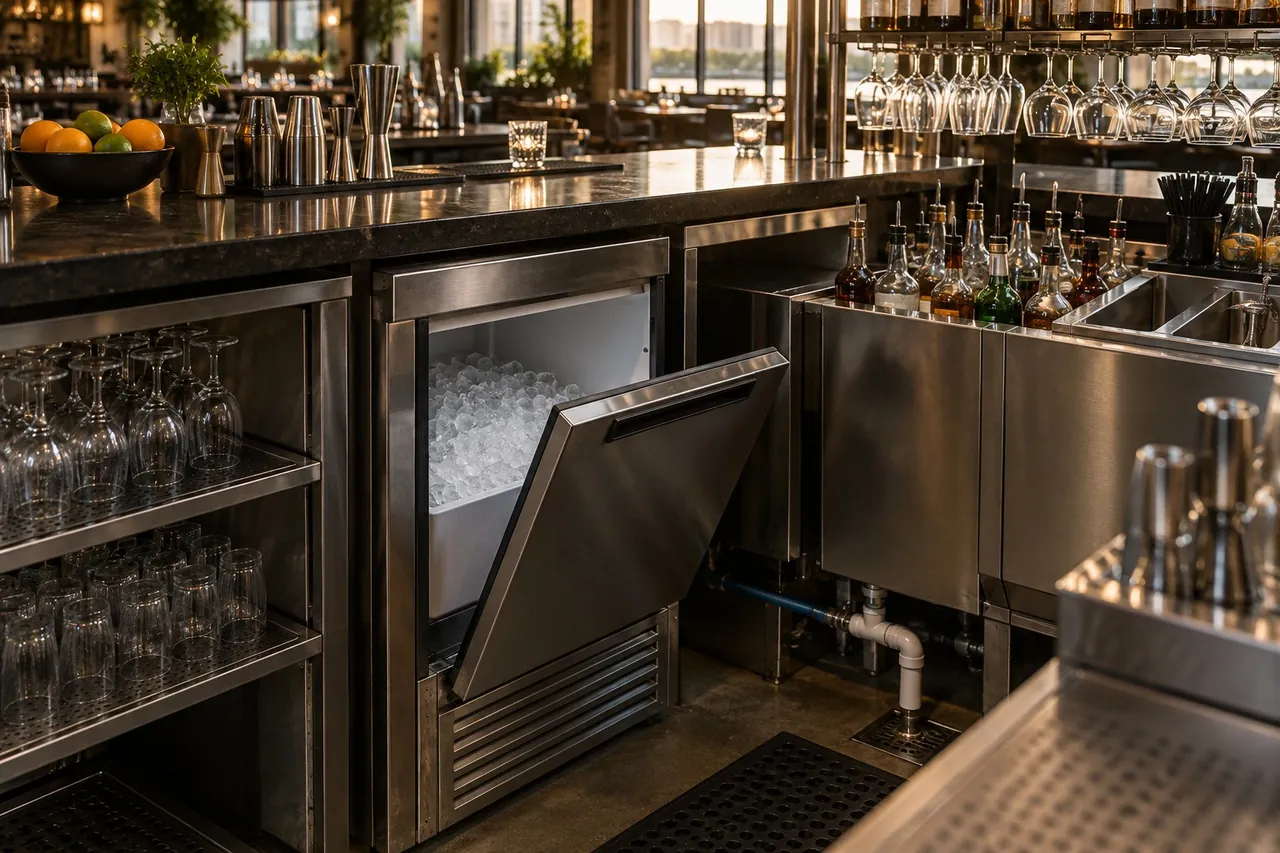
An outdoor-rated ice maker is designed, tested and listed for outdoor installation, usually as an outdoor ice maker undercounter unit for an outdoor kitchen or bar. The listing matters: in North America, look for a UL or ETL listing that explicitly covers outdoor use; in Europe, CE marking with a declared IP rating for water ingress.
- Casing: 304 stainless steel at minimum; 316 stainless near the sea or pools with salt chlorination.
- Electrics: sealed or gasketed control box and connections, an outdoor-rated cord or hard-wired supply, and an RCD/GFCI-protected circuit.
- Door and gaskets: UV-stable seals and a self-closing or latching door; a lock for public areas.
- Insulation: thicker bin insulation to reduce melt in hot sun.
- Condenser: front-breathing for built-in installation, with a coated coil for coastal sites.
- Drain: gravity drain or a built-in drain pump, plus a way to drain the whole water system for winter.
For built-in dimensions and drain options, see the under counter ice maker guide.
Small outdoor ice maker options
A small outdoor ice maker for a private terrace, food stall or boat usually means one of three things: an outdoor-listed undercounter unit making about 20–40 kg (45–90 lb) a day; a portable countertop ice maker used only in dry, shaded conditions and brought indoors after use; or simply an insulated ice chest filled from an indoor machine. Countertop units are not listed for outdoor use and have no refrigerated storage, so they suit occasional private use rather than a business. Marinas and coastal sites should choose 316 stainless and a coated condenser whatever the size, because salt spray corrodes standard fins and fixings within a few seasons.
What is the best outdoor ice maker?
The best outdoor ice maker is the one that is listed for outdoor use, makes enough ice at your hottest summer temperature, and can be drained easily for winter. Rank options by these criteria rather than by brand or reviews: outdoor listing and IP rating; output at 38 °C (100 °F), not just at the standard rating; bin capacity of at least half your daily need; stainless grade; front breathing for built-in use; drain arrangement; and local service support. Top rated outdoor ice makers on retail sites are often small residential units; for a commercial terrace or pool bar, compare them against a commercial machine in a shelter.
When should you use a remote condenser instead?
Use a remote condenser when the ice machine itself can stay indoors but you want the heat and noise outside, or when the room is too hot for a self-contained air-cooled machine. The ice-making head and bin sit in a kitchen, store room or bar back; only the condenser and fan go outdoors.
Remote condensers are built for outdoor weather and are commonly rated from about −29 °C to +49 °C (−20 °F to 120 °F) ambient, with controls that keep head pressure up in cold weather. They are usually mounted on a roof or wall within the line-length limit the manufacturer sets, often about 30 m (100 ft) or less, with limited rise. Remote systems need a refrigeration technician to install the line set, and are normally used on modular machines of about 200 kg (440 lb) per day and up.
This is the usual answer when a hotel, restaurant or petrol station asks for an ice machine outside: protect the ice maker, put the heat outdoors.
How do you install an ice machine outside?
Install an outdoor ice machine in shade, protected from direct rain, with free air flow, a frost-free water supply and a safe electrical connection. Follow these steps:
- Choose a shaded, sheltered spot. Direct sun on the casing and condenser can add several degrees to the effective ambient; a roof or canopy helps.
- Keep clearance for air: at least 150–300 mm (6–12 in) at the sides and back for rear-breathing units, or an unobstructed front grille for front-breathing built-ins. Do not let the condenser draw in its own hot exhaust.
- Level the machine on a firm, drained base so the water trough and bin drain correctly.
- Connect potable water through a filter, with a shut-off valve and the pipe protected from sun and frost. See our guide to ice machine water filters if your water is hard.
- Run the drain by gravity with an air gap to a drain that cannot freeze, or fit a drain pump.
- Use a dedicated RCD/GFCI-protected outdoor-rated circuit at the voltage on the data plate, installed by an electrician.
- Fit a lock if the machine is in a public or unattended area.
How to winterise an outdoor ice maker
- Switch off the machine before night temperatures fall below about 10 °C (50 °F), or as the manual specifies.
- Close the water supply and disconnect the inlet line.
- Empty and clean the bin, then drain the water trough, pump and inlet valve; some models have a winterise mode or drain plugs, others need compressed air to blow out the lines.
- Run a cleaning and sanitising cycle before storage, and leave the door slightly open to prevent mould.
- In spring, sanitise again, fit a new water filter and discard the first batches of ice.
How do self-serve ice stations work?
A self serve ice machine or station lets customers take ice without staff, using a dispenser, a vending kiosk or a lockable merchandiser of bagged ice. The rule for all of them is the same: the public must never reach into stored ice, because hands and scoops contaminate it.
| Self-serve option | How it works | Typical site | Outdoor? |
|---|---|---|---|
| Ice and water dispenser | Push-button or lever drops nugget or cube ice into a cup | Hotels, hospitals, offices, self-serve drinks | Usually indoors or under cover |
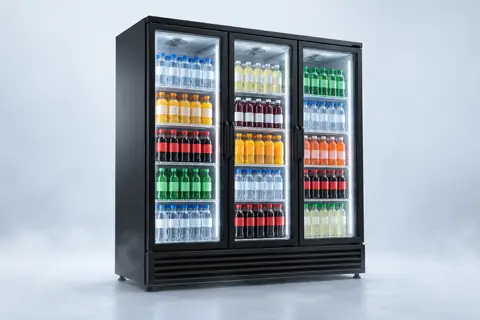
| Bagged ice merchandiser | Customer takes pre-bagged ice from a lockable freezer at −12 °C to −6 °C (10–21 °F) | Petrol stations, shops, campsites, marinas | Yes, with outdoor-rated models |
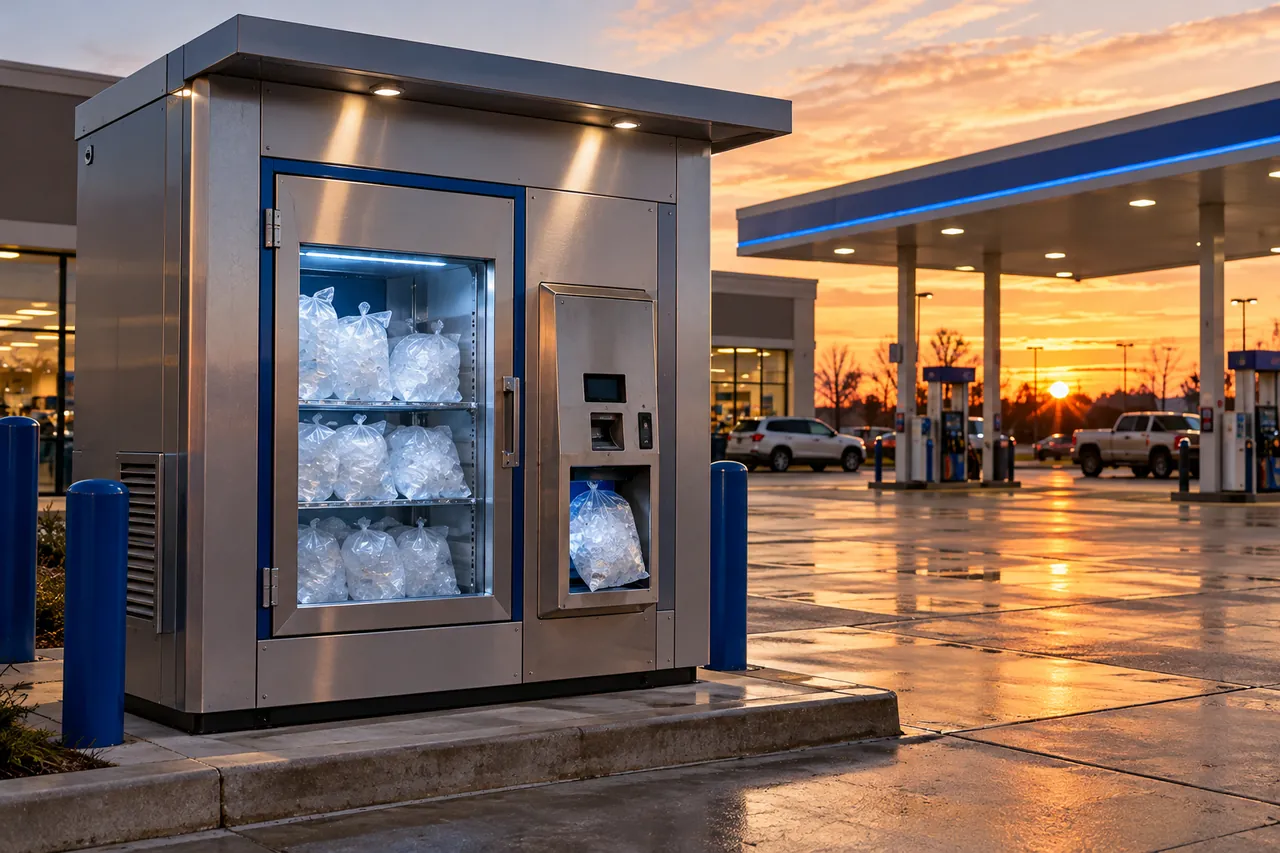
| Ice vending kiosk | Machine makes, bags or bulk-dispenses ice for payment, often with filtered water | Car parks, roadsides, fishing ports | Yes, purpose-built |
| Hotel corridor ice machine | Dispenser or bin with a scoop on a holder, guest access | Hotels and motels | Indoors or sheltered walkways |
Dispensers are covered in our commercial ice dispenser guide, and the economics of self-serve kiosks in the ice vending business guide. For bagged ice sold outdoors, see the bagged ice merchandiser buying guide: an outdoor ice merchandiser needs an outdoor ambient rating, lockable doors and auto-defrost. Searches for "self serve ice cream" usually mean self-serve frozen yogurt walls built from soft serve machines; those are a different category of equipment.
Outdoor ice freezers
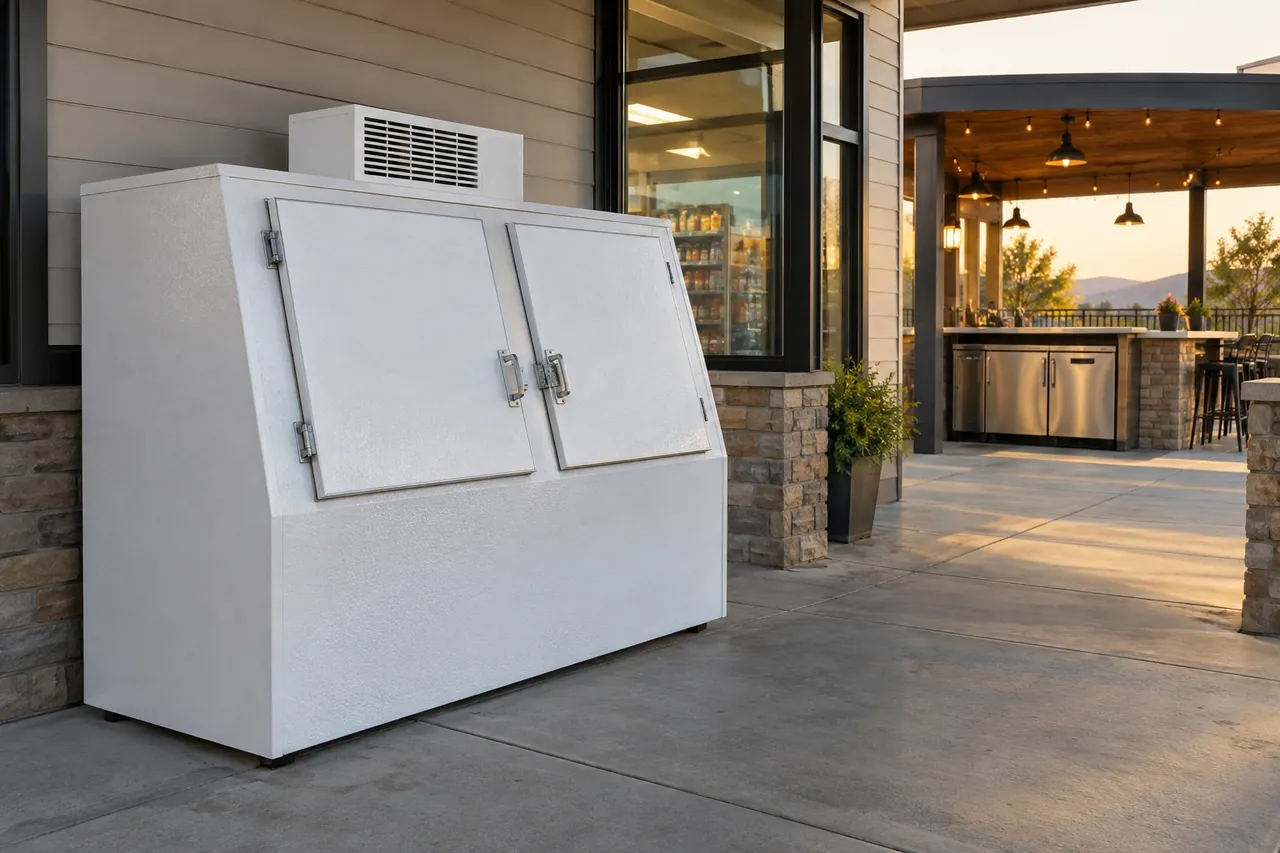
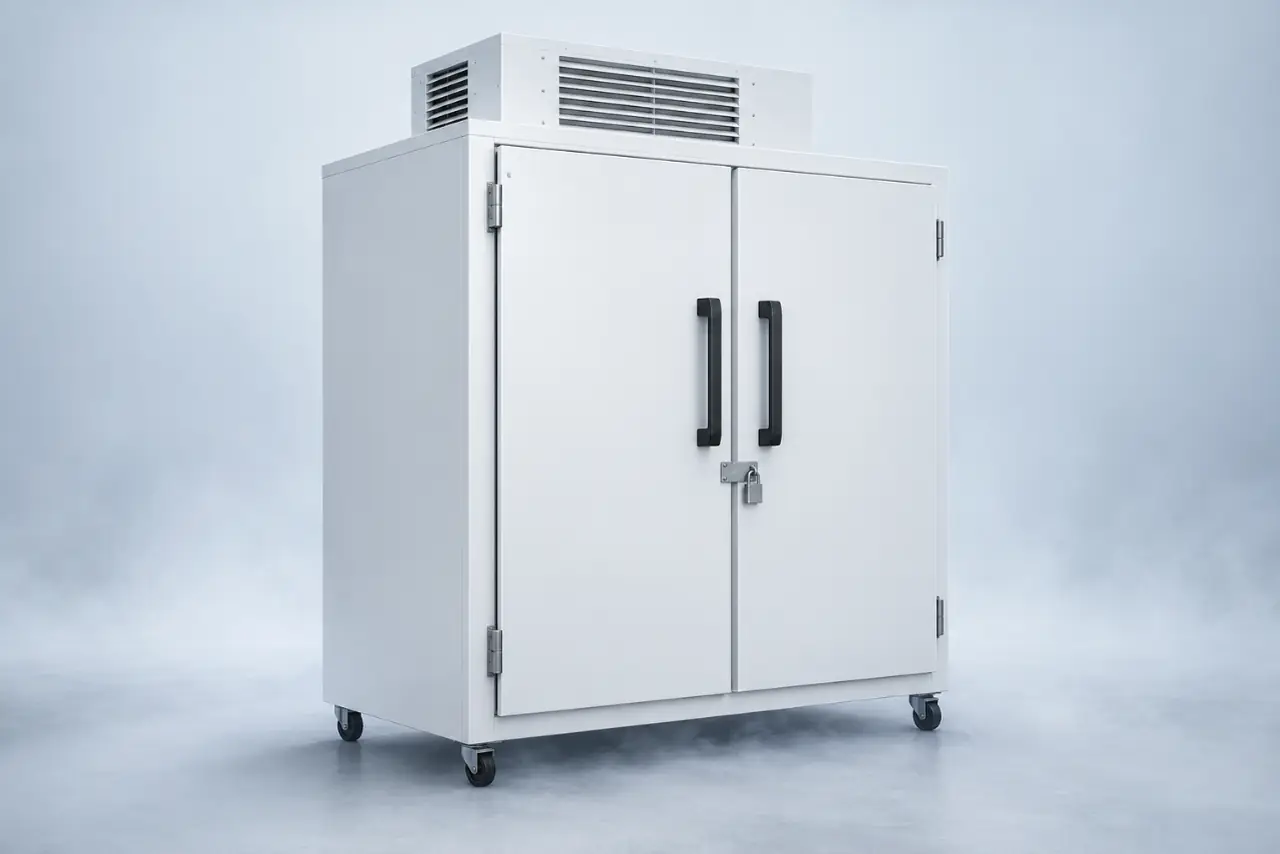
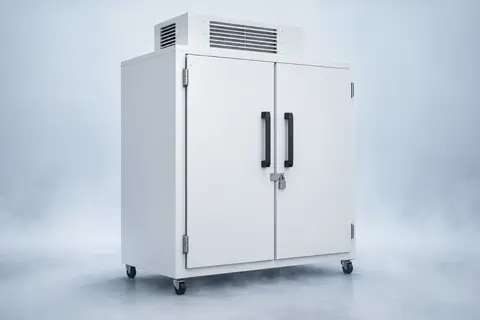
An outdoor ice freezer for bagged ice is a merchandiser, not an ice maker: it stores ice made elsewhere. It should hold −12 °C to −6 °C (10–21 °F), be rated for your summer ambient, sit in shade and stay locked. A used outdoor ice merchandiser for sale can be good value if it pulls down to temperature, its gaskets and locks work and its condenser is clean.
How to choose an outdoor ice machine setup
Pick the setup by how much ice you need, where it is used and who takes it. This checklist covers the main decisions:
- Estimate daily ice demand at peak, then divide by 0.75 for hot outdoor conditions.
- Under about 60 kg (130 lb) per day at a private or staff-only outdoor bar: an outdoor-listed undercounter ice maker.
- Over about 100–200 kg (220–440 lb) per day, or in very hot climates: a modular machine indoors or in a ventilated shelter, with a remote condenser or water-cooled condenser.
- For sale to the public: bagged ice in a lockable outdoor merchandiser, or a vending kiosk.
- Check listing and IP rating, stainless grade, drain arrangement, voltage and frequency, and winterising procedure.
- Plan cleaning at least every 6 months, more often outdoors where dust and pollen get in.
Be There supplies commercial ice machines from 25 kg (55 lb) to 20 t per day, air- or water-cooled, including cube ice machines in undercounter and modular formats, and weatherproof outdoor ice merchandisers holding about 30–100 ten-pound bags with lockable solid doors. Send your daily ice demand, site conditions, peak summer temperature and voltage through the inquiry form and we will quote FOB, CIF or DDP.